
Tips
ADHD and Codependency: 6 Signs and How to Heal
ADHD and Codependency: 6 Signs and How to Heal
If you have ADHD and feel like your relationships are always off-balance, like you are either giving too much or completely falling apart when someone pulls away, you are not imagining it. The ADHD brain is neurologically predisposed to patterns that look a lot like codependency. This is not a character flaw. It is a predictable outcome of how ADHD affects dopamine, emotional regulation, and executive function.
Codependency is broadly defined as an excessive reliance on another person for emotional wellbeing, often at the expense of your own needs and identity. For people with ADHD, the dynamic tends to emerge from very specific neurological pressure points: a brain that desperately seeks external validation to compensate for internal chaos, and a nervous system that experiences rejection as physical pain.
This guide covers the six most common signs of ADHD-related codependency and the strategies that actually help, starting with why standard codependency advice often misses the point for ADHD brains.
Key Takeaways
ADHD traits like rejection sensitivity, emotional dysregulation, and executive dysfunction directly fuel codependent relationship patterns.
Treating the ADHD itself is the first step, codependency interventions that ignore the neurological layer often fail.
Building external structure (using apps, routines, and tools like Lifestack) reduces the pressure to use relationships as a substitute for internal organization.
Why ADHD and Codependency Often Overlap
The connection starts with dopamine. The ADHD brain runs on a chronic dopamine deficit, which means ordinary tasks and interactions do not produce enough reward signal to sustain motivation. But being needed by someone? That produces a real neurochemical hit. Over time, caregiving or managing another person's life can become compulsive, not because it is chosen, but because it fills a gap the brain cannot fill any other way.
Add to that emotional dysregulation, which makes perceived rejection feel catastrophic rather than just uncomfortable. The technical term is rejection sensitive dysphoria (RSD): a wiring difference where social rejection triggers a level of distress that is physically overwhelming. People with RSD become skilled at anticipating and preventing rejection, which often looks like extreme people-pleasing, difficulty saying no, and organizing their entire behavior around keeping others happy.
Finally, executive dysfunction creates a real, practical reliance on partners. If you struggle to manage your time, finances, or daily tasks, it makes sense that you would lean heavily on someone who is organized. The line between healthy partnership and codependency blurs when that reliance becomes the glue holding the relationship together.
Sign 1: Your Worth Is Tied to What You Provide
If your sense of value in a relationship is almost entirely based on what you do for the other person, that is a core marker of codependency. For people with ADHD, this often develops out of years of feeling inadequate: failing to meet deadlines, forgetting important things, struggling with tasks others seem to do effortlessly. Becoming the person who "makes up for it" by being maximally useful feels like a fix.
The problem is that a sense of worth built on usefulness is fragile. When you are no longer needed, or when someone else does not seem to appreciate what you provide, it collapses completely. This drives the cycle of giving more, getting more exhausted, and becoming more resentful.
Sign 2: Rejection Sends You Into a Spiral
A text that goes unanswered for two hours. A tone of voice that seems slightly off. A partner who says they need some time alone. For most people, these are minor events. For someone with ADHD and high rejection sensitivity, they can trigger hours of anxiety, preemptive apologies, or complete emotional shutdown.
This is not dramatic. It is physiological. RSD is not about being oversensitive in a character sense; it is about a nervous system that processes social information differently. The intensity of the response is real, even when the triggering event is objectively small. Understanding this helps separate the pattern from a moral failing, and points toward treatments that actually address the mechanism rather than just telling someone to "calm down."
For more on how ADHD affects emotional experience, see our guide on ADHD and stress.
Sign 3: You Use the Relationship for Structure
Many people with ADHD use relationships as an external scaffold for their daily lives. A partner who reminds them of appointments, helps them remember commitments, or provides the routine that the ADHD brain cannot generate on its own. This is not inherently dysfunctional, everyone relies on other people for things. But it tips into codependency when the relationship becomes the only source of that structure.
When the relationship provides all the scaffolding, losing it (or even just experiencing conflict) can make daily functioning collapse. You cannot do laundry because your partner usually reminds you. You miss appointments because no one is checking in. The external structure was real, and losing it is genuinely disorienting, not just emotionally difficult.
The healthier path is building structure that does not depend on a single person. Lifestack is one tool that helps with this: it connects to your calendar and tasks, uses your energy data to schedule your day, and provides the kind of proactive, organized structure that the ADHD brain needs without requiring another person to carry the load. When your daily rhythm has an anchor that is not another human being, relationships become less fraught.
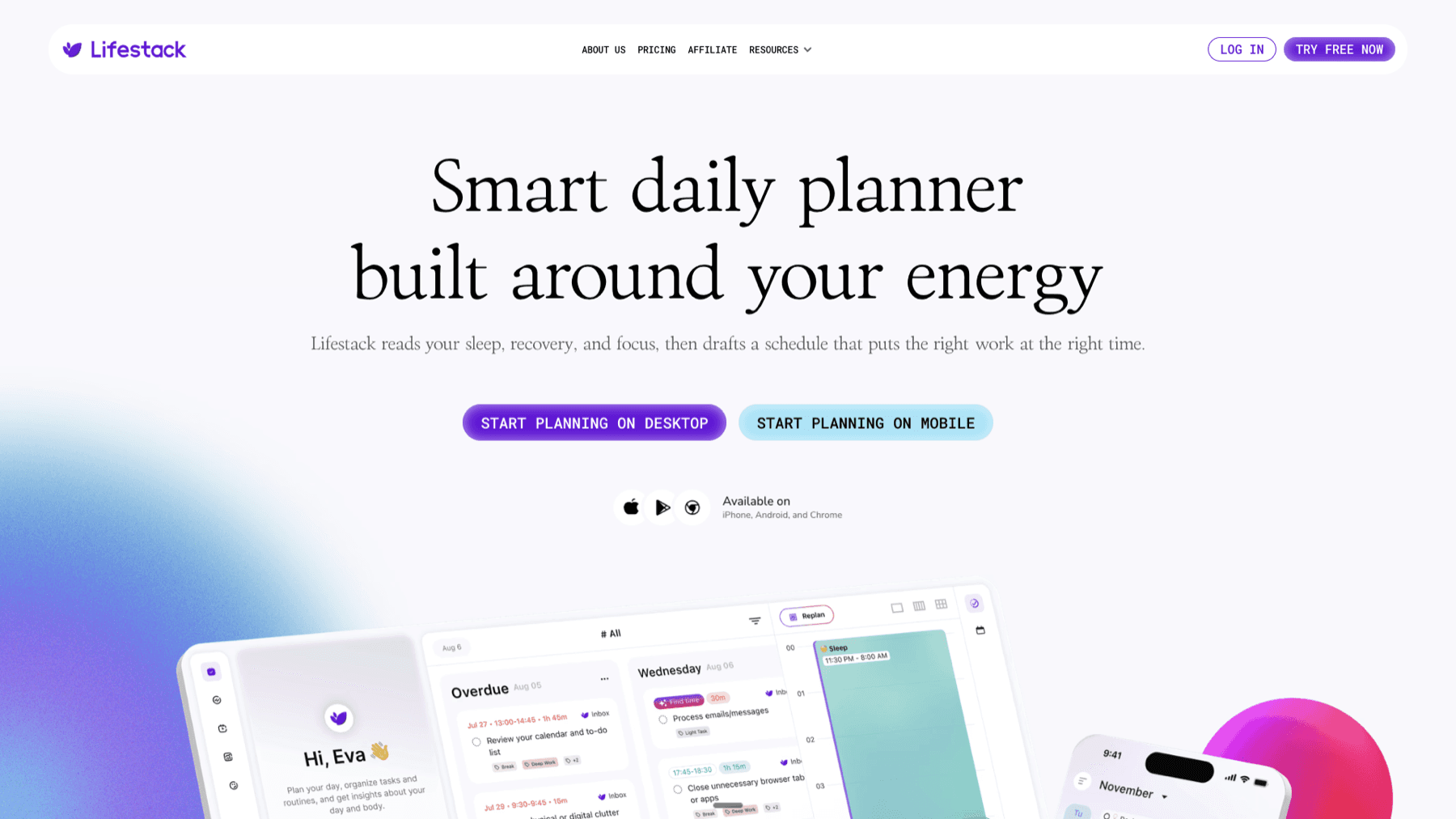
Lifestack is $7/month, $50/year, or $120 as a one-time lifetime purchase. Annual plans include a 7-day free trial.
Sign 4: You Lose Yourself in the Relationship
Codependency often means your own preferences, interests, and needs become invisible, first to your partner, then to yourself. For people with ADHD, this can happen quickly because the ADHD brain is easily drawn into whatever is most immediately activating. A partner's problems, moods, and needs can become more engaging than your own goals, which often feel abstract or distant.
Over time, you may not remember what you actually enjoy, want, or believe, separate from what the relationship requires. This is not just an ADHD problem, but ADHD accelerates it by making self-directed goals harder to maintain in the first place. For more on how ADHD affects goal-setting and self-direction, see our guide on ADHD goals.
Sign 5: You Cannot Stop Even When You Know You Should
One of the most confusing aspects of ADHD-related codependency is knowing intellectually that a pattern is harmful and being completely unable to change it. You can see the dynamic clearly. You can describe exactly what is happening. And then you do the same thing again the next day.
This is not weakness. It is what happens when a behavior is reinforced by neurochemistry. The relief of making someone else feel better, the rush of being needed, the temporary calm when the anxiety of rejection passes, these are powerful enough to override conscious intention. Standard advice about "just setting boundaries" tends to fail here because it treats this as a decision problem when it is actually a nervous system problem.
This is why addressing codependency without addressing ADHD specifically tends to produce limited results. Removing the neurological pressure (through medication, therapy targeting RSD, or both) changes the equation. For strategies that work with the ADHD brain rather than against it, see ADHD strategies for adults.
Sign 6: Your Physical Health Is Paying the Price
Chronic codependency is physically expensive. The constant vigilance, the hyperawareness of another person's emotional state, the suppression of your own needs, all of it activates a sustained low-grade stress response. Sleep quality drops. Immune function dips. Headaches, muscle tension, and fatigue compound.
People with ADHD already tend toward dysregulated sleep and fluctuating energy. Adding the physiological load of codependent caregiving makes it significantly worse. If you notice that your physical wellbeing has been steadily eroding without a clear medical explanation, the relationship dynamic is worth examining as a contributing factor.
How to Start Breaking the Cycle
The first and most important step is getting ADHD treated, whether that means medication, behavioral therapy, or both. Every other intervention sits on top of that foundation. Trying to fix codependency in an untreated ADHD brain is like trying to change a behavioral pattern while the neurological machinery generating it is still running at full speed.
After that, the goal is building structure that does not live inside any single relationship. This means external scaffolding: a calendar system, task tools, a daily routine that holds even when relationships get rocky. It also means building interests and sources of dopamine that exist independently. When your brain can get its reward signals from work, creative projects, exercise, or building something, relationships have to carry less of that chemical load.
Body doubling is a useful middle ground here, working alongside someone (in person or virtually) without making them responsible for your functioning. See our guide on body doubling for how to use it without creating new dependencies. For broader productivity approaches that work for the ADHD brain, our post on how to be productive with ADHD covers the full picture.
Best Tool for ADHD Structure and Independence
Lifestack is built specifically for how the ADHD brain works. It connects to your wearables and calendar, reads your real-time energy data, and builds a daily schedule that puts demanding tasks in your peak windows and light tasks in your troughs. That kind of organized, proactive structure reduces the pull toward using a relationship as your external brain, and makes it easier to show up in relationships from a place of choice rather than need.
Frequently Asked Questions
Can ADHD cause codependency?
ADHD does not directly cause codependency, but several ADHD traits create conditions where codependent patterns emerge easily: rejection sensitive dysphoria (which drives people-pleasing), emotional dysregulation (which makes conflict feel catastrophic), and executive dysfunction (which creates genuine reliance on partners for daily structure). These are neurological factors, not personal failures.
What does codependency look like in ADHD relationships?
Common patterns include one partner managing nearly all logistics (appointments, finances, reminders) while the other becomes increasingly dependent; one partner suppressing their own needs to manage the other's emotional state; and one partner's mood or stability determining both people's experience of a given day. Both partners can be in codependent roles simultaneously, though in different ways.
How is ADHD codependency different from regular codependency?
Standard codependency is primarily about learned emotional patterns, often from childhood. ADHD codependency has an additional neurological layer: the dopamine deficit that makes being needed feel genuinely rewarding, the RSD that makes rejection physically overwhelming, and the executive dysfunction that creates real dependency on others for daily functioning. Treatment that ignores the ADHD layer tends to produce limited results.
Can someone with ADHD have a healthy relationship?
Yes. ADHD makes certain relationship dynamics more likely, but it does not determine outcomes. What matters most is whether the ADHD is being treated, whether both partners understand the neurological context, and whether external structures (for scheduling, tasks, routines) reduce the pressure on the relationship itself to provide all of that scaffolding.
What type of therapy helps with ADHD and codependency?
Dialectical Behavior Therapy (DBT) is particularly useful because it targets emotional dysregulation and distress tolerance, both of which are relevant to ADHD-related codependency. ADHD-informed therapy that specifically addresses rejection sensitive dysphoria tends to be more effective than standard codependency treatment, which usually assumes the patterns are purely behavioral rather than neurological.
Is codependency common in people with ADHD?
Yes. Research and clinical observation consistently show higher rates of codependent relationship patterns among people with ADHD, particularly those with the combined or hyperactive-impulsive presentations. The overlap is highest in women with ADHD, who are more likely to have internalized ADHD symptoms and received late or missed diagnoses, leaving the neurological factors unaddressed for longer.
If you have ADHD and feel like your relationships are always off-balance, like you are either giving too much or completely falling apart when someone pulls away, you are not imagining it. The ADHD brain is neurologically predisposed to patterns that look a lot like codependency. This is not a character flaw. It is a predictable outcome of how ADHD affects dopamine, emotional regulation, and executive function.
Codependency is broadly defined as an excessive reliance on another person for emotional wellbeing, often at the expense of your own needs and identity. For people with ADHD, the dynamic tends to emerge from very specific neurological pressure points: a brain that desperately seeks external validation to compensate for internal chaos, and a nervous system that experiences rejection as physical pain.
This guide covers the six most common signs of ADHD-related codependency and the strategies that actually help, starting with why standard codependency advice often misses the point for ADHD brains.
Key Takeaways
ADHD traits like rejection sensitivity, emotional dysregulation, and executive dysfunction directly fuel codependent relationship patterns.
Treating the ADHD itself is the first step, codependency interventions that ignore the neurological layer often fail.
Building external structure (using apps, routines, and tools like Lifestack) reduces the pressure to use relationships as a substitute for internal organization.
Why ADHD and Codependency Often Overlap
The connection starts with dopamine. The ADHD brain runs on a chronic dopamine deficit, which means ordinary tasks and interactions do not produce enough reward signal to sustain motivation. But being needed by someone? That produces a real neurochemical hit. Over time, caregiving or managing another person's life can become compulsive, not because it is chosen, but because it fills a gap the brain cannot fill any other way.
Add to that emotional dysregulation, which makes perceived rejection feel catastrophic rather than just uncomfortable. The technical term is rejection sensitive dysphoria (RSD): a wiring difference where social rejection triggers a level of distress that is physically overwhelming. People with RSD become skilled at anticipating and preventing rejection, which often looks like extreme people-pleasing, difficulty saying no, and organizing their entire behavior around keeping others happy.
Finally, executive dysfunction creates a real, practical reliance on partners. If you struggle to manage your time, finances, or daily tasks, it makes sense that you would lean heavily on someone who is organized. The line between healthy partnership and codependency blurs when that reliance becomes the glue holding the relationship together.
Sign 1: Your Worth Is Tied to What You Provide
If your sense of value in a relationship is almost entirely based on what you do for the other person, that is a core marker of codependency. For people with ADHD, this often develops out of years of feeling inadequate: failing to meet deadlines, forgetting important things, struggling with tasks others seem to do effortlessly. Becoming the person who "makes up for it" by being maximally useful feels like a fix.
The problem is that a sense of worth built on usefulness is fragile. When you are no longer needed, or when someone else does not seem to appreciate what you provide, it collapses completely. This drives the cycle of giving more, getting more exhausted, and becoming more resentful.
Sign 2: Rejection Sends You Into a Spiral
A text that goes unanswered for two hours. A tone of voice that seems slightly off. A partner who says they need some time alone. For most people, these are minor events. For someone with ADHD and high rejection sensitivity, they can trigger hours of anxiety, preemptive apologies, or complete emotional shutdown.
This is not dramatic. It is physiological. RSD is not about being oversensitive in a character sense; it is about a nervous system that processes social information differently. The intensity of the response is real, even when the triggering event is objectively small. Understanding this helps separate the pattern from a moral failing, and points toward treatments that actually address the mechanism rather than just telling someone to "calm down."
For more on how ADHD affects emotional experience, see our guide on ADHD and stress.
Sign 3: You Use the Relationship for Structure
Many people with ADHD use relationships as an external scaffold for their daily lives. A partner who reminds them of appointments, helps them remember commitments, or provides the routine that the ADHD brain cannot generate on its own. This is not inherently dysfunctional, everyone relies on other people for things. But it tips into codependency when the relationship becomes the only source of that structure.
When the relationship provides all the scaffolding, losing it (or even just experiencing conflict) can make daily functioning collapse. You cannot do laundry because your partner usually reminds you. You miss appointments because no one is checking in. The external structure was real, and losing it is genuinely disorienting, not just emotionally difficult.
The healthier path is building structure that does not depend on a single person. Lifestack is one tool that helps with this: it connects to your calendar and tasks, uses your energy data to schedule your day, and provides the kind of proactive, organized structure that the ADHD brain needs without requiring another person to carry the load. When your daily rhythm has an anchor that is not another human being, relationships become less fraught.
Lifestack is $7/month, $50/year, or $120 as a one-time lifetime purchase. Annual plans include a 7-day free trial.
Sign 4: You Lose Yourself in the Relationship
Codependency often means your own preferences, interests, and needs become invisible, first to your partner, then to yourself. For people with ADHD, this can happen quickly because the ADHD brain is easily drawn into whatever is most immediately activating. A partner's problems, moods, and needs can become more engaging than your own goals, which often feel abstract or distant.
Over time, you may not remember what you actually enjoy, want, or believe, separate from what the relationship requires. This is not just an ADHD problem, but ADHD accelerates it by making self-directed goals harder to maintain in the first place. For more on how ADHD affects goal-setting and self-direction, see our guide on ADHD goals.
Sign 5: You Cannot Stop Even When You Know You Should
One of the most confusing aspects of ADHD-related codependency is knowing intellectually that a pattern is harmful and being completely unable to change it. You can see the dynamic clearly. You can describe exactly what is happening. And then you do the same thing again the next day.
This is not weakness. It is what happens when a behavior is reinforced by neurochemistry. The relief of making someone else feel better, the rush of being needed, the temporary calm when the anxiety of rejection passes, these are powerful enough to override conscious intention. Standard advice about "just setting boundaries" tends to fail here because it treats this as a decision problem when it is actually a nervous system problem.
This is why addressing codependency without addressing ADHD specifically tends to produce limited results. Removing the neurological pressure (through medication, therapy targeting RSD, or both) changes the equation. For strategies that work with the ADHD brain rather than against it, see ADHD strategies for adults.
Sign 6: Your Physical Health Is Paying the Price
Chronic codependency is physically expensive. The constant vigilance, the hyperawareness of another person's emotional state, the suppression of your own needs, all of it activates a sustained low-grade stress response. Sleep quality drops. Immune function dips. Headaches, muscle tension, and fatigue compound.
People with ADHD already tend toward dysregulated sleep and fluctuating energy. Adding the physiological load of codependent caregiving makes it significantly worse. If you notice that your physical wellbeing has been steadily eroding without a clear medical explanation, the relationship dynamic is worth examining as a contributing factor.
How to Start Breaking the Cycle
The first and most important step is getting ADHD treated, whether that means medication, behavioral therapy, or both. Every other intervention sits on top of that foundation. Trying to fix codependency in an untreated ADHD brain is like trying to change a behavioral pattern while the neurological machinery generating it is still running at full speed.
After that, the goal is building structure that does not live inside any single relationship. This means external scaffolding: a calendar system, task tools, a daily routine that holds even when relationships get rocky. It also means building interests and sources of dopamine that exist independently. When your brain can get its reward signals from work, creative projects, exercise, or building something, relationships have to carry less of that chemical load.
Body doubling is a useful middle ground here, working alongside someone (in person or virtually) without making them responsible for your functioning. See our guide on body doubling for how to use it without creating new dependencies. For broader productivity approaches that work for the ADHD brain, our post on how to be productive with ADHD covers the full picture.
Best Tool for ADHD Structure and Independence
Lifestack is built specifically for how the ADHD brain works. It connects to your wearables and calendar, reads your real-time energy data, and builds a daily schedule that puts demanding tasks in your peak windows and light tasks in your troughs. That kind of organized, proactive structure reduces the pull toward using a relationship as your external brain, and makes it easier to show up in relationships from a place of choice rather than need.
Frequently Asked Questions
Can ADHD cause codependency?
ADHD does not directly cause codependency, but several ADHD traits create conditions where codependent patterns emerge easily: rejection sensitive dysphoria (which drives people-pleasing), emotional dysregulation (which makes conflict feel catastrophic), and executive dysfunction (which creates genuine reliance on partners for daily structure). These are neurological factors, not personal failures.
What does codependency look like in ADHD relationships?
Common patterns include one partner managing nearly all logistics (appointments, finances, reminders) while the other becomes increasingly dependent; one partner suppressing their own needs to manage the other's emotional state; and one partner's mood or stability determining both people's experience of a given day. Both partners can be in codependent roles simultaneously, though in different ways.
How is ADHD codependency different from regular codependency?
Standard codependency is primarily about learned emotional patterns, often from childhood. ADHD codependency has an additional neurological layer: the dopamine deficit that makes being needed feel genuinely rewarding, the RSD that makes rejection physically overwhelming, and the executive dysfunction that creates real dependency on others for daily functioning. Treatment that ignores the ADHD layer tends to produce limited results.
Can someone with ADHD have a healthy relationship?
Yes. ADHD makes certain relationship dynamics more likely, but it does not determine outcomes. What matters most is whether the ADHD is being treated, whether both partners understand the neurological context, and whether external structures (for scheduling, tasks, routines) reduce the pressure on the relationship itself to provide all of that scaffolding.
What type of therapy helps with ADHD and codependency?
Dialectical Behavior Therapy (DBT) is particularly useful because it targets emotional dysregulation and distress tolerance, both of which are relevant to ADHD-related codependency. ADHD-informed therapy that specifically addresses rejection sensitive dysphoria tends to be more effective than standard codependency treatment, which usually assumes the patterns are purely behavioral rather than neurological.
Is codependency common in people with ADHD?
Yes. Research and clinical observation consistently show higher rates of codependent relationship patterns among people with ADHD, particularly those with the combined or hyperactive-impulsive presentations. The overlap is highest in women with ADHD, who are more likely to have internalized ADHD symptoms and received late or missed diagnoses, leaving the neurological factors unaddressed for longer.



FOLLOW ON
FOLLOW ON
FOLLOW ON


Copyright 2026 © Lifestack. All rights reserved
Copyright 2026 © Lifestack. All rights reserved

