
Weekly Recovery Checklist for Professionals Bouncing Back from Burnout
Weekly Recovery Checklist for Professionals Bouncing Back from Burnout
Apr 12, 2026
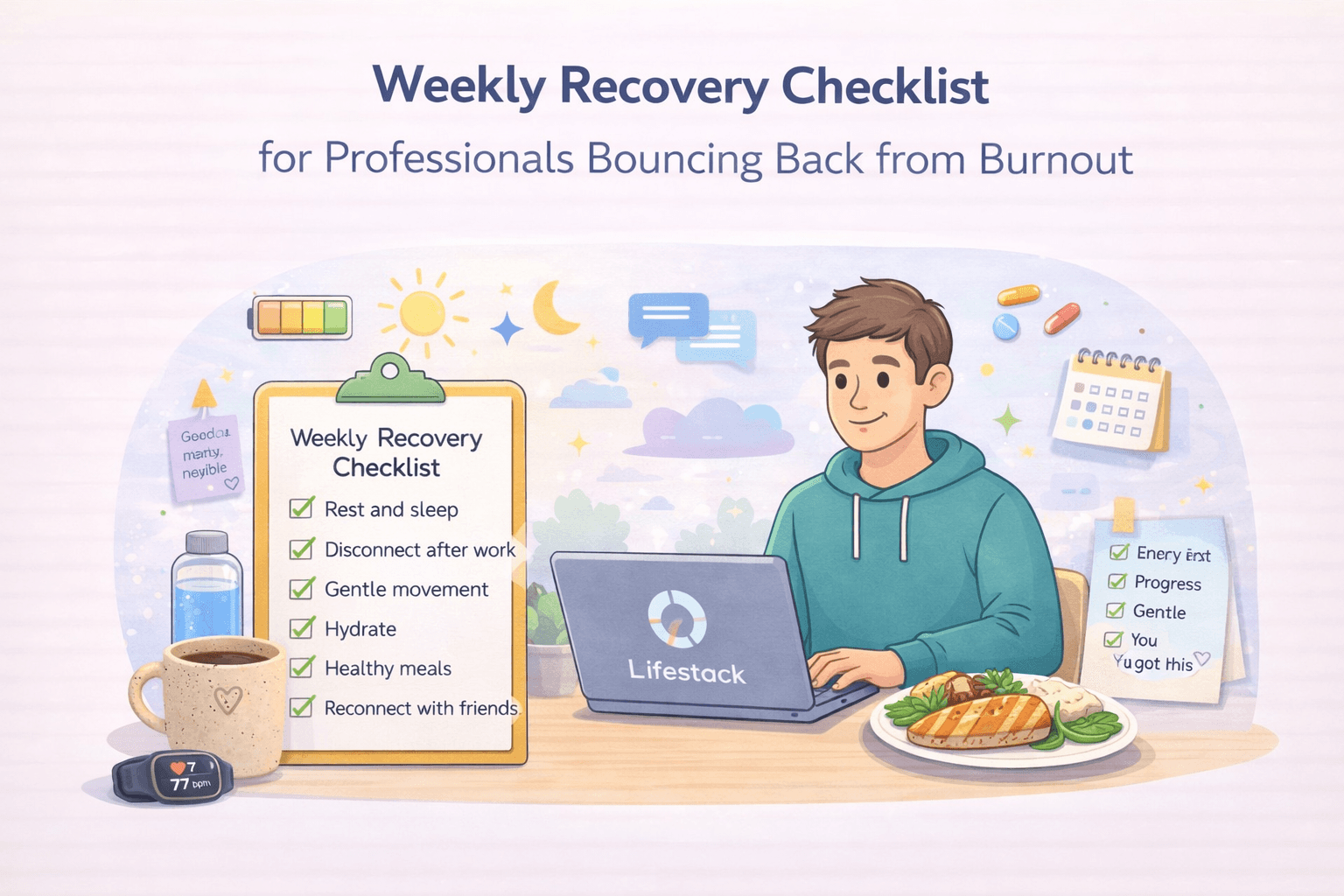
Reclaim Your Energy: The Foundation of Burnout Recovery
Burnout can feel like running on empty, but the good news is that recovery is absolutely achievable! The first step is to prioritize rest and recovery, not as a luxury, but as a non-negotiable part of your week. Think of it as essential maintenance for your most valuable asset: you! 🚀
Building a sustainable productivity system starts with understanding your energy levels. This is where tools like Lifestack can be a game-changer. By integrating with wearables, Lifestack can leverage insights like HRV burnout recovery data to help you understand when you're truly recharged and ready to tackle tasks. This isn't just about avoiding burnout; it's about optimizing your performance by working with your body's natural rhythms.
Here’s how to start building your recovery foundation:
Schedule Dedicated Rest: Block out time in your calendar specifically for relaxation, hobbies, or simply doing nothing. Treat these appointments with the same importance as client meetings.
Mindful Movement: Incorporate gentle exercise that energizes rather than depletes you. Think walks in nature, yoga, or stretching.
Nutrient-Rich Fueling: Pay attention to what you eat and drink. Hydration and balanced meals are crucial for energy restoration.
Digital Detox: Set boundaries around screen time, especially before bed, to improve sleep quality. 😴
Smart Scheduling for Sustainable Productivity
Figuring out how to recover from burnout schedule can feel overwhelming, especially when you're used to a packed agenda. The key is to create a schedule that supports your recovery, not hinders it. This is where intelligent tools can make a world of difference.
Lifestack's 'Auto-Schedule Routine To Calendar' feature is designed to take the guesswork out of this. It offers Automatic Calendar Scheduling, meaning you can input your desired recovery activities, and it will find the optimal slots in your existing calendar, avoiding conflicts. This Conflict-Aware Placement ensures your recovery time is protected. Plus, with External Calendar Sync to Google Calendar, your entire schedule, including recovery blocks, stays harmonized across your platforms.
Embrace these strategies for a smarter schedule:
Time Blocking for Recovery: Allocate specific blocks for rest, hobbies, and personal time. These are just as important as work tasks!
Energy-Aware Task Management: Use insights from your recovery data to schedule demanding tasks during your peak energy times and lighter tasks when your energy is lower.
Buffer Time: Always include buffer time between tasks and meetings to allow for transitions and unexpected interruptions. This prevents your schedule from becoming a source of stress. ⏳
By implementing these scheduling techniques, you're actively building a sustainable productivity system that prioritizes your well-being.
Leveraging AI and Tools for Your Burnout Recovery Journey
The path to burnout recovery is personal, and the right burnout recovery productivity tools can significantly ease the process. For busy professionals, integrating AI can provide personalized support and streamline your efforts.
Consider the capabilities of an AI planner for burnout recovery. Lifestack's 'Plan Entire Day AI Copilot' can help you optimize your day by suggesting the best times for tasks based on your energy levels and recovery needs. This is a powerful aspect of building a sustainable productivity system. Furthermore, features like HRV-Based Recovery Planning allow the AI to suggest adjustments to your schedule based on your physiological data, ensuring you're not pushing yourself too hard when you need rest. The Wearable Biometrics Integration is crucial here, feeding real-time data into the system.
Here’s how to make the most of these advanced tools:
Integrate Your Wearables: Connect your fitness trackers or smartwatches to get accurate HRV and sleep data. This is vital for effective HRV burnout recovery.
Utilize AI Planning: Let the AI suggest your daily schedule, prioritizing recovery and energy management.
Review Energy Heatmaps: Understand your personal energy patterns to better plan your work and rest periods.
Explore Returning to Work After Burnout Apps: Tools like Lifestack can act as your personal assistant, guiding you back to work with a focus on sustainable performance. 💡
By embracing these burnout recovery productivity tools, you're investing in a healthier, more productive future. Remember, returning to work after burnout is a marathon, not a sprint, and smart tools can help you pace yourself effectively.
Reclaim Your Energy: The Foundation of Burnout Recovery
Burnout can feel like running on empty, but the good news is that recovery is absolutely achievable! The first step is to prioritize rest and recovery, not as a luxury, but as a non-negotiable part of your week. Think of it as essential maintenance for your most valuable asset: you! 🚀
Building a sustainable productivity system starts with understanding your energy levels. This is where tools like Lifestack can be a game-changer. By integrating with wearables, Lifestack can leverage insights like HRV burnout recovery data to help you understand when you're truly recharged and ready to tackle tasks. This isn't just about avoiding burnout; it's about optimizing your performance by working with your body's natural rhythms.
Here’s how to start building your recovery foundation:
Schedule Dedicated Rest: Block out time in your calendar specifically for relaxation, hobbies, or simply doing nothing. Treat these appointments with the same importance as client meetings.
Mindful Movement: Incorporate gentle exercise that energizes rather than depletes you. Think walks in nature, yoga, or stretching.
Nutrient-Rich Fueling: Pay attention to what you eat and drink. Hydration and balanced meals are crucial for energy restoration.
Digital Detox: Set boundaries around screen time, especially before bed, to improve sleep quality. 😴
Smart Scheduling for Sustainable Productivity
Figuring out how to recover from burnout schedule can feel overwhelming, especially when you're used to a packed agenda. The key is to create a schedule that supports your recovery, not hinders it. This is where intelligent tools can make a world of difference.
Lifestack's 'Auto-Schedule Routine To Calendar' feature is designed to take the guesswork out of this. It offers Automatic Calendar Scheduling, meaning you can input your desired recovery activities, and it will find the optimal slots in your existing calendar, avoiding conflicts. This Conflict-Aware Placement ensures your recovery time is protected. Plus, with External Calendar Sync to Google Calendar, your entire schedule, including recovery blocks, stays harmonized across your platforms.
Embrace these strategies for a smarter schedule:
Time Blocking for Recovery: Allocate specific blocks for rest, hobbies, and personal time. These are just as important as work tasks!
Energy-Aware Task Management: Use insights from your recovery data to schedule demanding tasks during your peak energy times and lighter tasks when your energy is lower.
Buffer Time: Always include buffer time between tasks and meetings to allow for transitions and unexpected interruptions. This prevents your schedule from becoming a source of stress. ⏳
By implementing these scheduling techniques, you're actively building a sustainable productivity system that prioritizes your well-being.
Leveraging AI and Tools for Your Burnout Recovery Journey
The path to burnout recovery is personal, and the right burnout recovery productivity tools can significantly ease the process. For busy professionals, integrating AI can provide personalized support and streamline your efforts.
Consider the capabilities of an AI planner for burnout recovery. Lifestack's 'Plan Entire Day AI Copilot' can help you optimize your day by suggesting the best times for tasks based on your energy levels and recovery needs. This is a powerful aspect of building a sustainable productivity system. Furthermore, features like HRV-Based Recovery Planning allow the AI to suggest adjustments to your schedule based on your physiological data, ensuring you're not pushing yourself too hard when you need rest. The Wearable Biometrics Integration is crucial here, feeding real-time data into the system.
Here’s how to make the most of these advanced tools:
Integrate Your Wearables: Connect your fitness trackers or smartwatches to get accurate HRV and sleep data. This is vital for effective HRV burnout recovery.
Utilize AI Planning: Let the AI suggest your daily schedule, prioritizing recovery and energy management.
Review Energy Heatmaps: Understand your personal energy patterns to better plan your work and rest periods.
Explore Returning to Work After Burnout Apps: Tools like Lifestack can act as your personal assistant, guiding you back to work with a focus on sustainable performance. 💡
By embracing these burnout recovery productivity tools, you're investing in a healthier, more productive future. Remember, returning to work after burnout is a marathon, not a sprint, and smart tools can help you pace yourself effectively.



FOLLOW ON
FOLLOW ON
FOLLOW ON


Copyright 2026 © Lifestack. All rights reserved
Copyright 2026 © Lifestack. All rights reserved

