
Tips
Can Stress Cause Vertigo? What You Need to Know
Can Stress Cause Vertigo? What You Need to Know

Yes, stress can cause vertigo. It's not a metaphor or a soft connection; there are specific physiological mechanisms through which chronic stress disrupts the systems responsible for balance and spatial orientation. Stress-induced vertigo is common, often underrecognized, and in many cases resolvable by addressing the underlying stress rather than the vertigo itself.
The relationship works in both directions. Vertigo causes stress (it's frightening and disorienting), and stress causes vertigo. For people caught in this loop, treating the dizziness without addressing what's driving the stress response tends to produce temporary improvement at best. Understanding the mechanism helps clarify why that is and what actually works.
This guide covers how stress causes vertigo, the signs that your dizziness is stress-related rather than a primary vestibular problem, and six practical strategies for managing it.
Key Takeaways
Stress causes vertigo through two primary pathways: raised cortisol disrupts the inner ear's fluid regulation, and hyperventilation alters blood CO2 levels that affect balance processing in the brain
Stress-related vertigo is often intermittent and closely correlated with stress peaks, which distinguishes it from primary vestibular disorders that have more consistent patterns
If dizziness persists beyond a few days, is accompanied by hearing changes, or follows a head injury, a medical evaluation should precede behavioral interventions
How Stress Causes Vertigo: The Mechanisms
The vestibular system, which handles balance and spatial orientation, involves both the inner ear (primarily the semicircular canals and otolith organs) and parts of the brainstem and cerebellum that process balance signals. Stress affects both ends of this system.
The inner ear contains fluid called endolymph that responds to head movement and position changes. Cortisol, the primary stress hormone, affects the regulation of fluid and electrolytes throughout the body. Chronic high cortisol can alter endolymph composition and pressure, which disrupts how accurately the inner ear signals movement to the brain. This is thought to be one reason why conditions like Meniere's disease, which involves endolymph pressure abnormalities, often flare during stressful periods.
Hyperventilation is a second mechanism. During the stress response, breathing becomes shallower and faster, which reduces blood CO2 levels. Lower CO2 causes cerebral blood vessels to constrict, reducing blood flow to the parts of the brain that process balance information. This produces lightheadedness, dizziness, and the feeling that the room is spinning. People who hyperventilate during anxiety attacks often experience this directly.
The nervous system's sensitivity is a third factor. Chronic stress keeps the brain in a heightened state of arousal, making it more reactive to sensory inputs including vestibular signals. Normal variations in balance that a calm nervous system would filter out can feel dramatic in a sensitized state. This is sometimes called central sensitization, and it's why some people experience persistent dizziness even when no peripheral vestibular problem is present.
Signs Your Vertigo Is Stress-Related
Stress-related vertigo tends to be intermittent and temporally correlated with stress. If your dizziness reliably appears or worsens during periods of high pressure (before a deadline, during a conflict, when you're running on poor sleep) and improves when stress drops, that pattern points toward a stress-related cause rather than a primary vestibular disorder.
The character of the dizziness also differs. True benign paroxysmal positional vertigo (BPPV), caused by displaced calcium crystals in the inner ear, produces brief intense spinning with specific head positions (lying down, turning over in bed). Stress-related vertigo is more often described as a floating, unsteady, or rocking sensation rather than true rotational spinning, and it's not reliably triggered by position changes.
Accompanying anxiety symptoms strengthen the stress-related hypothesis: chest tightness, rapid heartbeat, shallow breathing, tingling in the hands or around the mouth (from hyperventilation). When these accompany dizziness, the nervous system is the most likely driver. The broader effects of stress on your body are relevant here: stress-related symptoms rarely appear in isolation.
When to See a Doctor First
Behavioral interventions are appropriate when vertigo is clearly stress-related. But several presentations warrant medical evaluation before assuming stress is the cause: vertigo accompanied by hearing loss, ear fullness, or ringing (which suggests Meniere's disease); vertigo following a head injury (possible concussion or inner ear damage); vertigo with sudden severe headache, vision changes, difficulty speaking, or weakness on one side (stroke symptoms that require emergency evaluation); and vertigo that is consistently triggered by specific head positions and doesn't respond to any behavioral intervention.
Primary care can perform basic vestibular testing and refer to an ear, nose, and throat specialist (ENT) or neurologist when indicated. The Epley maneuver, which repositions displaced calcium crystals in the inner ear, is highly effective for BPPV and can be performed in a primary care or physical therapy setting. If BPPV is the cause, the maneuver typically provides significant relief in one or two sessions.
1. Slow, Controlled Breathing
The fastest intervention for stress-induced vertigo is slow, controlled breathing, which directly addresses the hyperventilation component. Extending the exhale restores CO2 levels and reverses the cerebral vasoconstriction that produces dizziness.
A simple starting point: inhale for 4 counts, exhale for 6-8 counts. Do this for 3-5 cycles. Most people notice a significant reduction in dizziness within 2-3 minutes. The key is the extended exhale, not the inhale. Slow belly breathing (diaphragmatic rather than chest breathing) amplifies the effect by activating the parasympathetic nervous system more effectively. See the guide on breathing techniques for a fuller set of options and how they work.
2. Reduce Overall Stress Load
Managing stress-induced vertigo at the structural level means reducing the chronic stress that keeps the nervous system in a sensitized state. This sounds obvious but requires identifying the specific stressors driving the sympathetic activation, rather than generic stress reduction advice.
Workload, sleep quality, and the absence of recovery time are the three most common structural drivers in working adults. Mental fatigue accumulates when cognitive demands consistently exceed available recovery, and a fatigued nervous system is a sensitized one. Identifying and reducing unnecessary cognitive load (information inputs, low-priority decisions, context switching) reduces the background arousal level that makes the vestibular system reactive.
3. Improve Sleep Quality and Consistency
Poor sleep amplifies stress reactivity. A sleep-deprived nervous system has higher baseline cortisol, reduced emotional regulation, and less tolerance for the sensory variations that can trigger vertigo. Addressing the vertigo without addressing the sleep is working against yourself.
Consistent sleep and wake times are the highest-impact single change for stress-related sleep disruption. See the guide on sleep hygiene for the foundational practices, and wind-down routines for how to structure the transition from high-stress work to sleep-ready states. For people who experience racing thoughts and physical tension at bedtime (common with chronic stress), the wind-down period is particularly important.
4. Limit Caffeine and Alcohol
Both caffeine and alcohol directly affect the vestibular system, and both are commonly used as stress responses that ultimately worsen the underlying condition. Caffeine increases anxiety (which amplifies nervous system sensitization), and alcohol disrupts inner ear fluid regulation acutely, often producing vestibular symptoms the morning after consumption even without a full hangover.
If you're experiencing stress-related vertigo, a two-week trial of reduced caffeine (cutting to one cup of coffee in the morning, no caffeine after noon) and reduced or eliminated alcohol is a meaningful diagnostic and therapeutic experiment. Many people see significant reduction in dizziness within a week of this change alone.
5. Vestibular Rehabilitation Exercises
Vestibular rehabilitation therapy (VRT) is a physical therapy approach that uses specific exercises to retrain the balance system. For primary vestibular disorders, it's highly effective. For stress-related vertigo, it's useful because it reduces the nervous system's sensitivity to balance signals through habituation: repeated gentle exposure to the sensations that trigger anxiety, which reduces their capacity to do so over time.
Basic VRT exercises include gaze stabilization (focusing on a fixed point while moving the head slowly side to side), standing balance challenges (standing on one foot, standing on a soft surface, standing with eyes closed), and walking patterns that challenge the vestibular system without triggering acute distress. An audiologist or vestibular physical therapist can prescribe a specific protocol based on your symptoms.
6. Address the Anxiety Directly
For people whose vertigo is primarily anxiety-driven (the category sometimes called psychogenic dizziness or vestibular anxiety), directly treating the anxiety produces the most durable improvement. Cognitive behavioral therapy adapted for health anxiety is particularly effective: it addresses the fear-avoidance cycle where anxiety about the vertigo triggers the physiological changes that cause it.
For acute episodes, immediate anxiety reduction techniques can interrupt the cycle before it escalates. For chronic patterns, structured therapy or consultation with a psychiatrist about medication options (SSRIs are first-line for anxiety-related vestibular symptoms, not benzodiazepines, which address symptoms without the underlying anxiety and carry dependency risks) provides more sustained relief than behavioral techniques alone can achieve.
Best Tool for Managing Chronic Stress at Its Source
Stress-related vertigo often reflects a broader pattern: too much demand, too little recovery, insufficient time to decompress between high-pressure periods. The vertigo is a symptom; the chronic stress load is the condition worth treating. One of the most impactful structural changes for this is building a schedule that genuinely accounts for your recovery capacity, not just your availability.
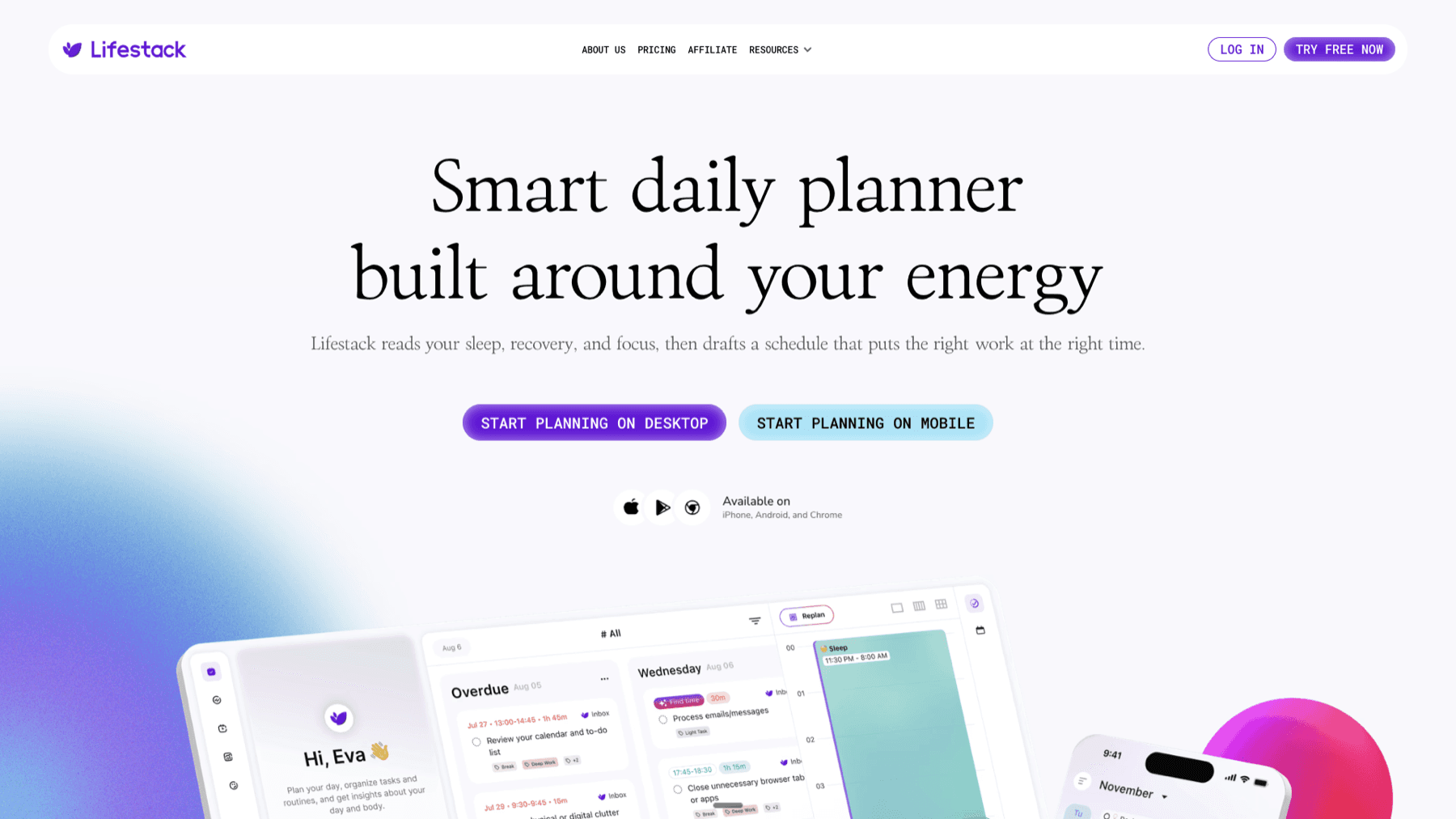
Lifestack is an AI planner that reads energy and recovery data from wearables (Oura Ring, WHOOP, Apple Watch, Garmin, Ultrahuman) and builds your schedule around your actual capacity. On days when your recovery data shows high stress or poor sleep, it protects low-energy windows and avoids stacking demanding tasks, so your nervous system gets recovery time built into the day rather than running at maximum until it can't. This is what energy-based scheduling looks like as a stress management tool: a calendar that works with your biology rather than ignoring it.
The personal energy management guide covers this approach in more depth. Lifestack starts at $7/month or $50/year with a 7-day free trial.
Frequently Asked Questions
Can stress and anxiety cause vertigo?
Yes. Both chronic stress and anxiety trigger physiological changes (raised cortisol, hyperventilation, nervous system sensitization) that directly affect the vestibular system and balance processing in the brain. Anxiety is particularly strongly associated with dizziness; vestibular symptoms are among the most common somatic complaints in people with anxiety disorders.
How long does stress-related vertigo last?
Acute stress-related dizziness typically resolves within minutes to hours once the acute stress response subsides. Chronic stress-related vertigo that persists across weeks reflects ongoing nervous system sensitization and typically requires addressing the underlying stress load rather than managing individual episodes. With effective stress management, most people see significant improvement within 2-4 weeks.
What is the difference between vertigo and dizziness?
Vertigo specifically refers to the false sensation of rotational movement, either you spinning or the room spinning. Dizziness is a broader term that includes lightheadedness, unsteadiness, and floating sensations that don't involve rotation. Stress more commonly produces dizziness and unsteadiness than true rotational vertigo, though it can cause both through the hyperventilation and inner ear fluid mechanisms described above.
Can stress vertigo go away on its own?
Yes, if the stress resolves. Stress-related vertigo that appears during a particularly high-pressure period often resolves when that period ends, without specific treatment. If the stress is chronic rather than situational, the vertigo tends to persist. Behavioral interventions (breathing, sleep, caffeine reduction) can reduce symptoms even while stress continues, but full resolution typically requires addressing the stress itself.
What is the fastest way to stop stress-related vertigo?
Slow extended exhalation (breathing out for twice as long as you breathe in) is the fastest intervention for acute stress-induced vertigo, because it directly reverses the hyperventilation-related component. Sitting or lying down in a quiet environment reduces sensory overload. Looking at a fixed point and focusing on it can help stabilize the disorienting quality of the sensation. These are symptom management tools; reducing the underlying stress load is what produces lasting change. See the guide on burnout stages if your stress level has been consistently high for months, as vertigo can be an early physical signal of accumulated overload.
Should I exercise if I have stress vertigo?
Yes, with appropriate caution. Regular aerobic exercise significantly reduces stress and anxiety, which addresses the root cause of stress-related vertigo. During acute dizziness episodes, strenuous exercise can make symptoms worse temporarily, so it's worth waiting for the acute episode to pass. Gentle exercise (walking, swimming, yoga) during less symptomatic periods is generally safe and beneficial. If vertigo is triggered by exertion specifically, that's a different pattern worth discussing with a doctor.
Yes, stress can cause vertigo. It's not a metaphor or a soft connection; there are specific physiological mechanisms through which chronic stress disrupts the systems responsible for balance and spatial orientation. Stress-induced vertigo is common, often underrecognized, and in many cases resolvable by addressing the underlying stress rather than the vertigo itself.
The relationship works in both directions. Vertigo causes stress (it's frightening and disorienting), and stress causes vertigo. For people caught in this loop, treating the dizziness without addressing what's driving the stress response tends to produce temporary improvement at best. Understanding the mechanism helps clarify why that is and what actually works.
This guide covers how stress causes vertigo, the signs that your dizziness is stress-related rather than a primary vestibular problem, and six practical strategies for managing it.
Key Takeaways
Stress causes vertigo through two primary pathways: raised cortisol disrupts the inner ear's fluid regulation, and hyperventilation alters blood CO2 levels that affect balance processing in the brain
Stress-related vertigo is often intermittent and closely correlated with stress peaks, which distinguishes it from primary vestibular disorders that have more consistent patterns
If dizziness persists beyond a few days, is accompanied by hearing changes, or follows a head injury, a medical evaluation should precede behavioral interventions
How Stress Causes Vertigo: The Mechanisms
The vestibular system, which handles balance and spatial orientation, involves both the inner ear (primarily the semicircular canals and otolith organs) and parts of the brainstem and cerebellum that process balance signals. Stress affects both ends of this system.
The inner ear contains fluid called endolymph that responds to head movement and position changes. Cortisol, the primary stress hormone, affects the regulation of fluid and electrolytes throughout the body. Chronic high cortisol can alter endolymph composition and pressure, which disrupts how accurately the inner ear signals movement to the brain. This is thought to be one reason why conditions like Meniere's disease, which involves endolymph pressure abnormalities, often flare during stressful periods.
Hyperventilation is a second mechanism. During the stress response, breathing becomes shallower and faster, which reduces blood CO2 levels. Lower CO2 causes cerebral blood vessels to constrict, reducing blood flow to the parts of the brain that process balance information. This produces lightheadedness, dizziness, and the feeling that the room is spinning. People who hyperventilate during anxiety attacks often experience this directly.
The nervous system's sensitivity is a third factor. Chronic stress keeps the brain in a heightened state of arousal, making it more reactive to sensory inputs including vestibular signals. Normal variations in balance that a calm nervous system would filter out can feel dramatic in a sensitized state. This is sometimes called central sensitization, and it's why some people experience persistent dizziness even when no peripheral vestibular problem is present.
Signs Your Vertigo Is Stress-Related
Stress-related vertigo tends to be intermittent and temporally correlated with stress. If your dizziness reliably appears or worsens during periods of high pressure (before a deadline, during a conflict, when you're running on poor sleep) and improves when stress drops, that pattern points toward a stress-related cause rather than a primary vestibular disorder.
The character of the dizziness also differs. True benign paroxysmal positional vertigo (BPPV), caused by displaced calcium crystals in the inner ear, produces brief intense spinning with specific head positions (lying down, turning over in bed). Stress-related vertigo is more often described as a floating, unsteady, or rocking sensation rather than true rotational spinning, and it's not reliably triggered by position changes.
Accompanying anxiety symptoms strengthen the stress-related hypothesis: chest tightness, rapid heartbeat, shallow breathing, tingling in the hands or around the mouth (from hyperventilation). When these accompany dizziness, the nervous system is the most likely driver. The broader effects of stress on your body are relevant here: stress-related symptoms rarely appear in isolation.
When to See a Doctor First
Behavioral interventions are appropriate when vertigo is clearly stress-related. But several presentations warrant medical evaluation before assuming stress is the cause: vertigo accompanied by hearing loss, ear fullness, or ringing (which suggests Meniere's disease); vertigo following a head injury (possible concussion or inner ear damage); vertigo with sudden severe headache, vision changes, difficulty speaking, or weakness on one side (stroke symptoms that require emergency evaluation); and vertigo that is consistently triggered by specific head positions and doesn't respond to any behavioral intervention.
Primary care can perform basic vestibular testing and refer to an ear, nose, and throat specialist (ENT) or neurologist when indicated. The Epley maneuver, which repositions displaced calcium crystals in the inner ear, is highly effective for BPPV and can be performed in a primary care or physical therapy setting. If BPPV is the cause, the maneuver typically provides significant relief in one or two sessions.
1. Slow, Controlled Breathing
The fastest intervention for stress-induced vertigo is slow, controlled breathing, which directly addresses the hyperventilation component. Extending the exhale restores CO2 levels and reverses the cerebral vasoconstriction that produces dizziness.
A simple starting point: inhale for 4 counts, exhale for 6-8 counts. Do this for 3-5 cycles. Most people notice a significant reduction in dizziness within 2-3 minutes. The key is the extended exhale, not the inhale. Slow belly breathing (diaphragmatic rather than chest breathing) amplifies the effect by activating the parasympathetic nervous system more effectively. See the guide on breathing techniques for a fuller set of options and how they work.
2. Reduce Overall Stress Load
Managing stress-induced vertigo at the structural level means reducing the chronic stress that keeps the nervous system in a sensitized state. This sounds obvious but requires identifying the specific stressors driving the sympathetic activation, rather than generic stress reduction advice.
Workload, sleep quality, and the absence of recovery time are the three most common structural drivers in working adults. Mental fatigue accumulates when cognitive demands consistently exceed available recovery, and a fatigued nervous system is a sensitized one. Identifying and reducing unnecessary cognitive load (information inputs, low-priority decisions, context switching) reduces the background arousal level that makes the vestibular system reactive.
3. Improve Sleep Quality and Consistency
Poor sleep amplifies stress reactivity. A sleep-deprived nervous system has higher baseline cortisol, reduced emotional regulation, and less tolerance for the sensory variations that can trigger vertigo. Addressing the vertigo without addressing the sleep is working against yourself.
Consistent sleep and wake times are the highest-impact single change for stress-related sleep disruption. See the guide on sleep hygiene for the foundational practices, and wind-down routines for how to structure the transition from high-stress work to sleep-ready states. For people who experience racing thoughts and physical tension at bedtime (common with chronic stress), the wind-down period is particularly important.
4. Limit Caffeine and Alcohol
Both caffeine and alcohol directly affect the vestibular system, and both are commonly used as stress responses that ultimately worsen the underlying condition. Caffeine increases anxiety (which amplifies nervous system sensitization), and alcohol disrupts inner ear fluid regulation acutely, often producing vestibular symptoms the morning after consumption even without a full hangover.
If you're experiencing stress-related vertigo, a two-week trial of reduced caffeine (cutting to one cup of coffee in the morning, no caffeine after noon) and reduced or eliminated alcohol is a meaningful diagnostic and therapeutic experiment. Many people see significant reduction in dizziness within a week of this change alone.
5. Vestibular Rehabilitation Exercises
Vestibular rehabilitation therapy (VRT) is a physical therapy approach that uses specific exercises to retrain the balance system. For primary vestibular disorders, it's highly effective. For stress-related vertigo, it's useful because it reduces the nervous system's sensitivity to balance signals through habituation: repeated gentle exposure to the sensations that trigger anxiety, which reduces their capacity to do so over time.
Basic VRT exercises include gaze stabilization (focusing on a fixed point while moving the head slowly side to side), standing balance challenges (standing on one foot, standing on a soft surface, standing with eyes closed), and walking patterns that challenge the vestibular system without triggering acute distress. An audiologist or vestibular physical therapist can prescribe a specific protocol based on your symptoms.
6. Address the Anxiety Directly
For people whose vertigo is primarily anxiety-driven (the category sometimes called psychogenic dizziness or vestibular anxiety), directly treating the anxiety produces the most durable improvement. Cognitive behavioral therapy adapted for health anxiety is particularly effective: it addresses the fear-avoidance cycle where anxiety about the vertigo triggers the physiological changes that cause it.
For acute episodes, immediate anxiety reduction techniques can interrupt the cycle before it escalates. For chronic patterns, structured therapy or consultation with a psychiatrist about medication options (SSRIs are first-line for anxiety-related vestibular symptoms, not benzodiazepines, which address symptoms without the underlying anxiety and carry dependency risks) provides more sustained relief than behavioral techniques alone can achieve.
Best Tool for Managing Chronic Stress at Its Source
Stress-related vertigo often reflects a broader pattern: too much demand, too little recovery, insufficient time to decompress between high-pressure periods. The vertigo is a symptom; the chronic stress load is the condition worth treating. One of the most impactful structural changes for this is building a schedule that genuinely accounts for your recovery capacity, not just your availability.
Lifestack is an AI planner that reads energy and recovery data from wearables (Oura Ring, WHOOP, Apple Watch, Garmin, Ultrahuman) and builds your schedule around your actual capacity. On days when your recovery data shows high stress or poor sleep, it protects low-energy windows and avoids stacking demanding tasks, so your nervous system gets recovery time built into the day rather than running at maximum until it can't. This is what energy-based scheduling looks like as a stress management tool: a calendar that works with your biology rather than ignoring it.
The personal energy management guide covers this approach in more depth. Lifestack starts at $7/month or $50/year with a 7-day free trial.
Frequently Asked Questions
Can stress and anxiety cause vertigo?
Yes. Both chronic stress and anxiety trigger physiological changes (raised cortisol, hyperventilation, nervous system sensitization) that directly affect the vestibular system and balance processing in the brain. Anxiety is particularly strongly associated with dizziness; vestibular symptoms are among the most common somatic complaints in people with anxiety disorders.
How long does stress-related vertigo last?
Acute stress-related dizziness typically resolves within minutes to hours once the acute stress response subsides. Chronic stress-related vertigo that persists across weeks reflects ongoing nervous system sensitization and typically requires addressing the underlying stress load rather than managing individual episodes. With effective stress management, most people see significant improvement within 2-4 weeks.
What is the difference between vertigo and dizziness?
Vertigo specifically refers to the false sensation of rotational movement, either you spinning or the room spinning. Dizziness is a broader term that includes lightheadedness, unsteadiness, and floating sensations that don't involve rotation. Stress more commonly produces dizziness and unsteadiness than true rotational vertigo, though it can cause both through the hyperventilation and inner ear fluid mechanisms described above.
Can stress vertigo go away on its own?
Yes, if the stress resolves. Stress-related vertigo that appears during a particularly high-pressure period often resolves when that period ends, without specific treatment. If the stress is chronic rather than situational, the vertigo tends to persist. Behavioral interventions (breathing, sleep, caffeine reduction) can reduce symptoms even while stress continues, but full resolution typically requires addressing the stress itself.
What is the fastest way to stop stress-related vertigo?
Slow extended exhalation (breathing out for twice as long as you breathe in) is the fastest intervention for acute stress-induced vertigo, because it directly reverses the hyperventilation-related component. Sitting or lying down in a quiet environment reduces sensory overload. Looking at a fixed point and focusing on it can help stabilize the disorienting quality of the sensation. These are symptom management tools; reducing the underlying stress load is what produces lasting change. See the guide on burnout stages if your stress level has been consistently high for months, as vertigo can be an early physical signal of accumulated overload.
Should I exercise if I have stress vertigo?
Yes, with appropriate caution. Regular aerobic exercise significantly reduces stress and anxiety, which addresses the root cause of stress-related vertigo. During acute dizziness episodes, strenuous exercise can make symptoms worse temporarily, so it's worth waiting for the acute episode to pass. Gentle exercise (walking, swimming, yoga) during less symptomatic periods is generally safe and beneficial. If vertigo is triggered by exertion specifically, that's a different pattern worth discussing with a doctor.



FOLLOW ON
FOLLOW ON
FOLLOW ON


Copyright 2026 © Lifestack. All rights reserved
Copyright 2026 © Lifestack. All rights reserved

