
Energy Pacing Guide: How to Plan Your Day When Your Energy Is Unpredictable
Energy Pacing Guide: How to Plan Your Day When Your Energy Is Unpredictable
Apr 14, 2026
Embrace Flexibility: Your New Productivity Mantra
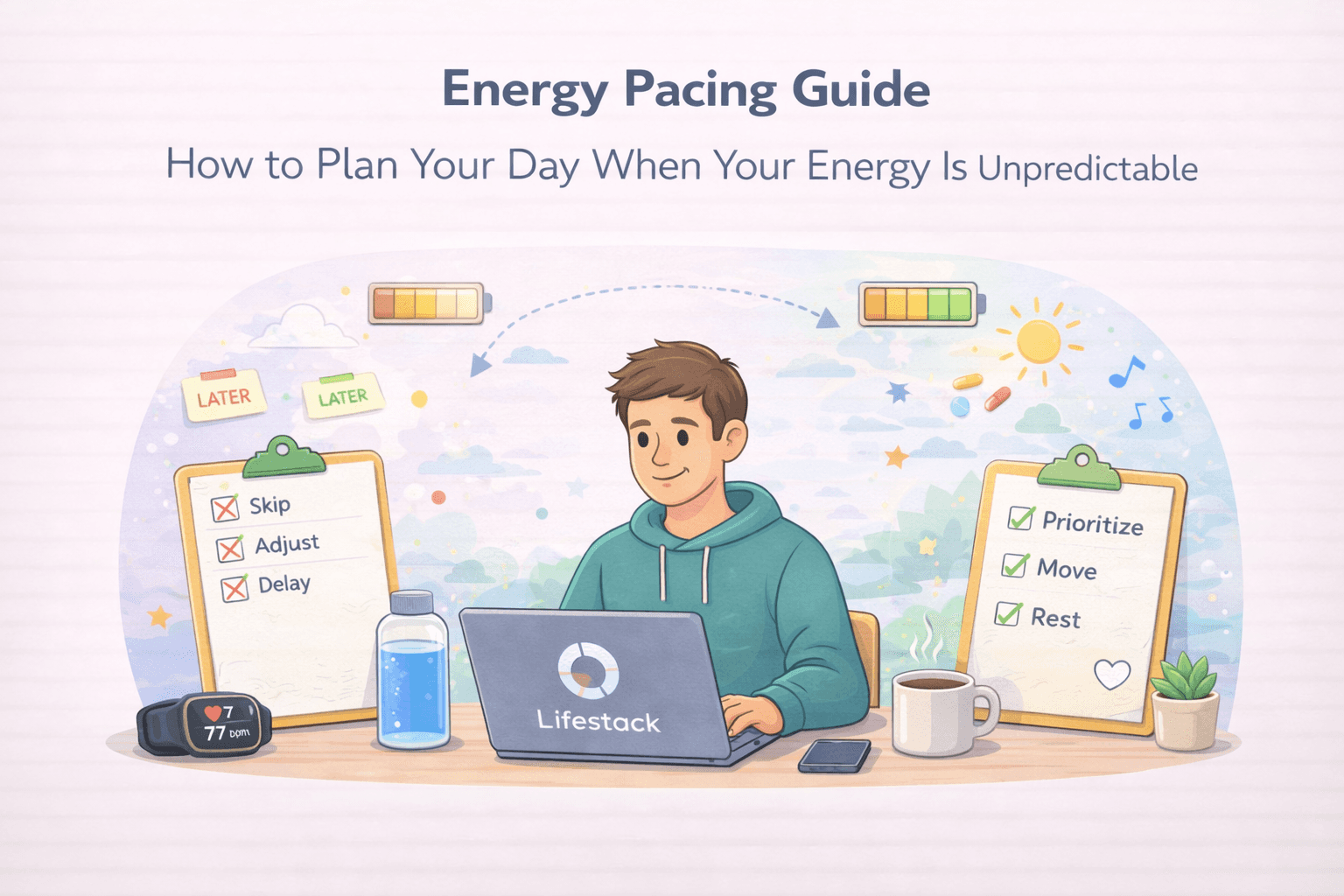
As a busy professional, you're used to a structured day. But when chronic fatigue or conditions like long COVID enter the picture, that structure can feel impossible to maintain. The key isn't to push through, but to adapt. Embracing a flexible planner for low energy days is crucial. Instead of rigid to-do lists, think about energy envelopes. When you have a surge, tackle demanding tasks. When energy dips, opt for lighter activities or rest. This is where understanding your personal energy patterns becomes paramount. Think of it as a dance with your body, not a battle. 💃
This shift in mindset is the first step towards effective energy management chronic illness. It allows you to be productive without depleting your reserves. Remember, sustainable productivity is the goal, not just checking off tasks. We'll explore how tools can support this new approach.
Here’s how to start thinking flexibly:
Identify your energy peaks and troughs: Keep a simple log for a week. Note when you feel most energetic and when you feel drained.
Categorize tasks by energy demand: High-energy tasks (presentations, complex problem-solving), medium-energy tasks (emails, planning), and low-energy tasks (reading, light admin).
Build buffer time: Always add extra time around appointments or demanding tasks, anticipating potential energy dips.
Leveraging Technology for Smarter Scheduling
The good news is you don't have to navigate this alone! Modern technology offers incredible support for those managing unpredictable energy levels. A dedicated productivity app chronic fatigue can be a game-changer. Tools designed for adaptive scheduling health conditions can help you build a sustainable routine. Instead of fighting against your body, you can work with it. 🤖
Lifestack's 'Auto-Schedule Routine To Calendar' feature is a prime example. It offers Automatic Calendar Scheduling, meaning you can input your routines, and it intelligently places them in your calendar, avoiding conflicts. This is a huge relief when you're trying to figure out how to manage low energy schedule. Furthermore, its Conflict-Aware Placement ensures that new entries don't clash with existing commitments, a vital feature for anyone with fluctuating energy.
Imagine this: you have a recurring meditation practice that you know helps your energy. You input it, and the app finds the best slot, even syncing with your Google Calendar via External Calendar Sync to Google Calendar. This seamless integration means your personal energy management efforts are reflected across your digital life. For more in-depth setup and how-to guides, check out the Lifestack knowledge base article on here.
These long COVID productivity tools and energy management chronic illness solutions are designed to give you back control.
Crafting Your Pacing Strategy: The Art of the Possible
Developing a robust pacing strategy chronic fatigue app can empower you to live a fuller life, even with energy limitations. It’s about making conscious choices that honor your body's needs while still allowing you to achieve your professional goals. This isn't about doing less; it's about doing things smarter. 🧠
Consider how Lifestack's features can support your pacing. The Energy Heatmap Visualizations can help you see patterns in your energy levels over time, allowing you to proactively plan around anticipated dips. If you integrate wearable biometrics, Wearable Biometrics Integration can provide real-time data to inform your daily decisions. For instance, if your wearable indicates low recovery, you might choose to swap a demanding meeting for a lighter task or schedule a rest period. This proactive approach is key to preventing burnout.
When you need to plan your day, the Plan Entire Day AI Copilot can be an invaluable ally. It can help you discover the best windows for tasks based on your available energy and existing commitments. This is particularly helpful when you're feeling overwhelmed and unsure where to start. The Task & Habit Integrations ensure that your essential self-care practices, like short breaks or mindful moments, are also factored into your schedule, reinforcing your pacing strategy.
Here’s a quick guide to building your pacing strategy:
Prioritize ruthlessly: Focus on what truly matters and delegate or defer the rest.
Schedule rest as non-negotiable: Treat rest periods with the same importance as meetings.
Listen to your body: Don't ignore early signs of fatigue. Adjust your plans accordingly.
Celebrate small wins: Acknowledge and appreciate your efforts, no matter how small they seem.
Embrace Flexibility: Your New Productivity Mantra
As a busy professional, you're used to a structured day. But when chronic fatigue or conditions like long COVID enter the picture, that structure can feel impossible to maintain. The key isn't to push through, but to adapt. Embracing a flexible planner for low energy days is crucial. Instead of rigid to-do lists, think about energy envelopes. When you have a surge, tackle demanding tasks. When energy dips, opt for lighter activities or rest. This is where understanding your personal energy patterns becomes paramount. Think of it as a dance with your body, not a battle. 💃
This shift in mindset is the first step towards effective energy management chronic illness. It allows you to be productive without depleting your reserves. Remember, sustainable productivity is the goal, not just checking off tasks. We'll explore how tools can support this new approach.
Here’s how to start thinking flexibly:
Identify your energy peaks and troughs: Keep a simple log for a week. Note when you feel most energetic and when you feel drained.
Categorize tasks by energy demand: High-energy tasks (presentations, complex problem-solving), medium-energy tasks (emails, planning), and low-energy tasks (reading, light admin).
Build buffer time: Always add extra time around appointments or demanding tasks, anticipating potential energy dips.
Leveraging Technology for Smarter Scheduling
The good news is you don't have to navigate this alone! Modern technology offers incredible support for those managing unpredictable energy levels. A dedicated productivity app chronic fatigue can be a game-changer. Tools designed for adaptive scheduling health conditions can help you build a sustainable routine. Instead of fighting against your body, you can work with it. 🤖
Lifestack's 'Auto-Schedule Routine To Calendar' feature is a prime example. It offers Automatic Calendar Scheduling, meaning you can input your routines, and it intelligently places them in your calendar, avoiding conflicts. This is a huge relief when you're trying to figure out how to manage low energy schedule. Furthermore, its Conflict-Aware Placement ensures that new entries don't clash with existing commitments, a vital feature for anyone with fluctuating energy.
Imagine this: you have a recurring meditation practice that you know helps your energy. You input it, and the app finds the best slot, even syncing with your Google Calendar via External Calendar Sync to Google Calendar. This seamless integration means your personal energy management efforts are reflected across your digital life. For more in-depth setup and how-to guides, check out the Lifestack knowledge base article on here.
These long COVID productivity tools and energy management chronic illness solutions are designed to give you back control.
Crafting Your Pacing Strategy: The Art of the Possible
Developing a robust pacing strategy chronic fatigue app can empower you to live a fuller life, even with energy limitations. It’s about making conscious choices that honor your body's needs while still allowing you to achieve your professional goals. This isn't about doing less; it's about doing things smarter. 🧠
Consider how Lifestack's features can support your pacing. The Energy Heatmap Visualizations can help you see patterns in your energy levels over time, allowing you to proactively plan around anticipated dips. If you integrate wearable biometrics, Wearable Biometrics Integration can provide real-time data to inform your daily decisions. For instance, if your wearable indicates low recovery, you might choose to swap a demanding meeting for a lighter task or schedule a rest period. This proactive approach is key to preventing burnout.
When you need to plan your day, the Plan Entire Day AI Copilot can be an invaluable ally. It can help you discover the best windows for tasks based on your available energy and existing commitments. This is particularly helpful when you're feeling overwhelmed and unsure where to start. The Task & Habit Integrations ensure that your essential self-care practices, like short breaks or mindful moments, are also factored into your schedule, reinforcing your pacing strategy.
Here’s a quick guide to building your pacing strategy:
Prioritize ruthlessly: Focus on what truly matters and delegate or defer the rest.
Schedule rest as non-negotiable: Treat rest periods with the same importance as meetings.
Listen to your body: Don't ignore early signs of fatigue. Adjust your plans accordingly.
Celebrate small wins: Acknowledge and appreciate your efforts, no matter how small they seem.



FOLLOW ON
FOLLOW ON
FOLLOW ON


Copyright 2026 © Lifestack. All rights reserved
Copyright 2026 © Lifestack. All rights reserved

