
Tips
Does Alcohol Increase Heart Rate While Sleeping?
Does Alcohol Increase Heart Rate While Sleeping?

Yes. Alcohol increases your resting heart rate during sleep, and the effect is measurable even from moderate consumption.
Most people know alcohol disrupts sleep quality in a general sense. Fewer know the specific mechanism: alcohol is a vasodilator that causes your heart to work harder to maintain blood pressure and circulation, raising your resting heart rate during what should be your body's most restful hours. This happens even when you feel like you slept well and didn't wake up.
This guide covers what the research and wearable data say about alcohol's effect on heart rate during sleep, why it happens, how long the effect lasts, and what you can do to reduce it.
Key Takeaways
Alcohol raises resting heart rate during sleep by an average of 4-5 beats per minute, based on data from over 600,000 wearable device users
Heart rate variability (HRV) also drops significantly, indicating reduced recovery quality even when total sleep time seems normal
The effect persists for most of the night and is worse with higher consumption, but stopping 3+ hours before bed reduces it meaningfully
Does Alcohol Increase Heart Rate During Sleep?
Yes, consistently. An analysis of data from over 600,000 Oura Ring members found that nights following alcohol consumption showed an average resting heart rate increase of 8.2% (+4.35 beats per minute) compared to alcohol-free nights. This isn't a minor fluctuation: a resting heart rate of 55 bpm becomes roughly 60 bpm, and resting heart rate of 70 bpm becomes about 76 bpm.
The increase isn't uniform across the night. Alcohol causes your heart rate to spike in the first half of sleep as your body metabolizes it. As the night progresses, some of the acute vasodilatory effect fades, but the recovery-phase disruption persists into the second half of the night through suppressed REM sleep and continued cortisol elevation.
Why Alcohol Raises Your Heart Rate During Sleep
Vasodilation. Alcohol causes blood vessels to widen (vasodilate), which lowers blood pressure temporarily. The heart compensates by beating faster to maintain adequate circulation. This mechanism is why people feel flushed and warm after drinking. At night, the heart has to work harder to manage this redistribution while simultaneously trying to slow down for deep sleep.
Cortisol release. As alcohol is metabolized, your body releases cortisol, a stress hormone that promotes alertness and raises heart rate. This typically happens in the second half of the night, when blood alcohol concentration drops. The cortisol spike is part of why many people who drink wake up at 3 or 4am feeling alert and then struggle to fall back asleep.
Diuretic effect. Alcohol suppresses antidiuretic hormone (ADH), causing increased urination. Mild dehydration triggers a compensatory increase in heart rate to maintain blood pressure, compounding the vasodilation effect.
Disrupted autonomic nervous system balance. Normal sleep involves a gradual shift toward parasympathetic nervous system dominance, which allows heart rate to drop and recovery processes to activate. Alcohol disrupts this shift, keeping the sympathetic ("fight or flight") system more active than it should be during sleep.
What the Data Shows: Alcohol and Sleep Metrics
The Oura Ring analysis covering January through October 2025 (600,000+ members) found that nights after drinking produced:
Resting heart rate up 8.2% (+4.35 bpm)
Heart rate variability down 15.6%
Total sleep reduced by 34.6 minutes (-5.0%)
REM sleep decreased by 15.26 minutes (-4.2%)
Deep sleep reduced by 5.42 minutes
Overall sleep score dropped 6.55 points (-6.8%)
The HRV drop is particularly significant. Heart rate variability is one of the best indicators of how well your body recovers overnight. A 15.6% drop means your nervous system is working significantly harder than usual, even if your total sleep time looks acceptable. For more on interpreting HRV data, see our guide on alcohol and heart rate variability.
How Long Does Alcohol Affect Heart Rate During Sleep?
The acute elevation in heart rate typically begins within 30 to 60 minutes of drinking and peaks when blood alcohol concentration is highest (generally 1 to 2 hours after consumption for most adults). During sleep, this corresponds to higher heart rate in the first two to three hours.
However, the effects don't disappear when alcohol is fully metabolized. The cortisol rebound and autonomic nervous system disruption can persist for 6 to 8 hours after the last drink. A person who stops drinking at 10pm may still experience disrupted sleep architecture and higher heart rate through 4am or later.
The amount consumed matters significantly. Research suggests the elevation is detectable even from one drink and scales with the number of drinks. A 2023 sleep study found that three drinks caused significantly more disruption than one drink, with the effect extending further into the second half of sleep.
How Alcohol Affects Other Sleep Metrics
REM sleep suppression. REM sleep is when most emotional consolidation and memory processing happens. Alcohol significantly suppresses REM in the first half of the night. As a compensatory rebound, REM often increases disproportionately in the second half, leading to vivid dreams or nightmares and lighter, more fragmented sleep. The net result is disrupted sleep architecture even when total sleep time seems normal.
Deep sleep reduction. Non-REM deep sleep (stages 3 and 4) is the physically restorative phase. While alcohol can initially seem to increase deep sleep in the first cycle, subsequent cycles show reduced deep sleep as the night progresses and the sedative effect wears off.
Sleep fragmentation. Increased urination from alcohol's diuretic effect causes partial or full awakenings. Many people don't remember these awakenings, but they show up clearly in wearable data as reduced sleep efficiency. Understanding how sleep quality affects daytime energy explains why drinking before bed often leads to fatigue despite apparent full nights of sleep.
How to Reduce Alcohol's Effect on Heart Rate During Sleep
Stop drinking at least 3 hours before bed. This is the most impactful single change. Giving your body time to metabolize alcohol before sleep significantly reduces the acute heart rate elevation during the first sleep cycles. The 3-hour window allows blood alcohol concentration to drop substantially before sleep onset.
Hydrate between and after drinks. Counteracting the diuretic effect reduces one of the compounding factors in higher heart rate and sleep fragmentation. A glass of water between alcoholic drinks and a large glass before bed helps.
Avoid drinking on consecutive nights. Your body needs recovery nights to restore baseline HRV and sleep architecture. One disrupted night followed by a recovery night is significantly better than two or three consecutive disrupted nights.
Track your data. If you use a wearable device, pay attention to your resting heart rate and HRV on nights after drinking compared to alcohol-free nights. The personalized data is often more motivating than generic statistics. Our guide on tracking fluctuating energy levels covers how to interpret and act on this kind of personal data.
Best Tool for Scheduling Around Sleep Quality
Poor sleep directly affects cognitive performance and energy the next day. If alcohol disrupted your recovery overnight, scheduling demanding work in the morning is a recipe for poor output and frustration.
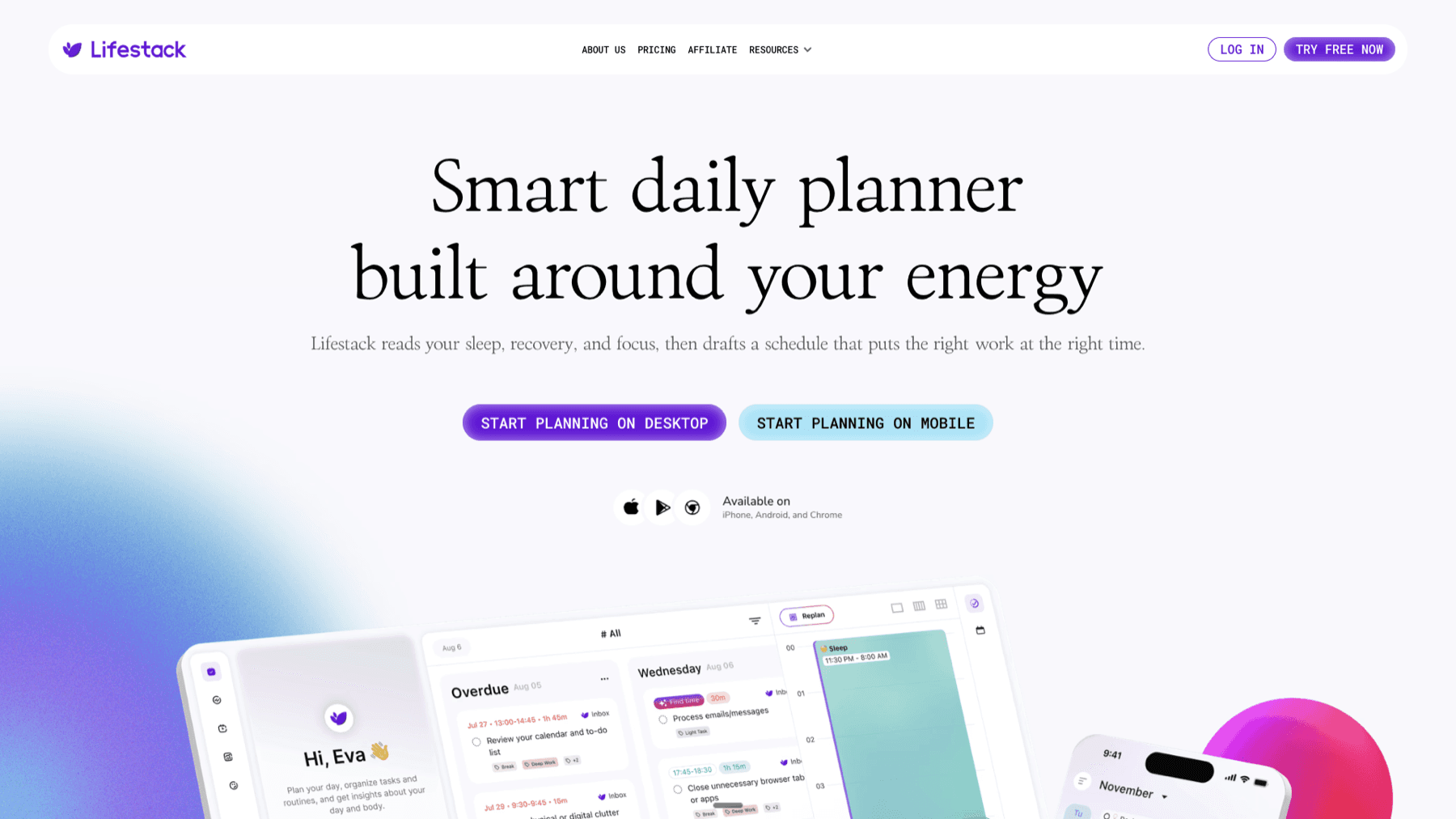
Lifestack is an AI scheduling app built around energy-aware planning. It learns your energy patterns and automatically schedules your most demanding tasks during your peak cognitive windows. On days following poor sleep, this kind of intelligent scheduling means your deep work doesn't get forced into hours when your brain isn't ready for it.
Lifestack syncs with Google Calendar, integrates with task tools, and runs on iOS, Android, and Chrome. Pricing starts at $7/month or $50/year, with a 7-day free trial on the annual plan.
For more on how sleep affects daily performance and how to build a schedule that accounts for it, see the guide on energy-based scheduling and our overview of using Oura Ring data for productivity planning.
Frequently Asked Questions
Does alcohol increase heart rate while sleeping?
Yes. Alcohol raises resting heart rate during sleep through vasodilation, cortisol release, and autonomic nervous system disruption. Data from 600,000+ wearable users shows an average increase of 8.2% (+4.35 bpm) on nights after drinking compared to alcohol-free nights.
How long does alcohol affect heart rate during sleep?
The acute elevation typically persists for the first 2 to 4 hours of sleep as alcohol is metabolized. However, the cortisol rebound and autonomic disruption can extend heart rate elevation and sleep fragmentation through 6 to 8 hours after the last drink.
Does one drink affect heart rate during sleep?
Yes, measurably, though the effect is smaller than with higher consumption. Research shows that even moderate drinking (one to two drinks) produces detectable heart rate elevation and HRV reduction during sleep compared to alcohol-free nights.
Can I do anything to reduce alcohol's effect on sleep heart rate?
Yes. The most effective strategies are stopping at least 3 hours before bed, staying hydrated throughout the evening, and avoiding consecutive nights of drinking. None of these eliminate the effect, but they meaningfully reduce it.
Is a faster heart rate during sleep after drinking dangerous?
For most healthy adults, the heart rate elevation from moderate drinking is uncomfortable and reduces sleep quality, but isn't medically dangerous. People with heart conditions, arrhythmias, or atrial fibrillation should speak with a doctor, as alcohol can trigger irregular heartbeat in susceptible individuals. If you notice unusually high heart rates, prolonged palpitations, or other concerning symptoms, consult a healthcare provider.
Does alcohol affect HRV during sleep?
Yes, significantly. The same Oura Ring dataset showed a 15.6% decrease in HRV on nights following alcohol consumption. HRV is one of the most sensitive indicators of recovery quality, and this drop indicates the body is working substantially harder overnight than it should be, even when total sleep time appears normal.
Yes. Alcohol increases your resting heart rate during sleep, and the effect is measurable even from moderate consumption.
Most people know alcohol disrupts sleep quality in a general sense. Fewer know the specific mechanism: alcohol is a vasodilator that causes your heart to work harder to maintain blood pressure and circulation, raising your resting heart rate during what should be your body's most restful hours. This happens even when you feel like you slept well and didn't wake up.
This guide covers what the research and wearable data say about alcohol's effect on heart rate during sleep, why it happens, how long the effect lasts, and what you can do to reduce it.
Key Takeaways
Alcohol raises resting heart rate during sleep by an average of 4-5 beats per minute, based on data from over 600,000 wearable device users
Heart rate variability (HRV) also drops significantly, indicating reduced recovery quality even when total sleep time seems normal
The effect persists for most of the night and is worse with higher consumption, but stopping 3+ hours before bed reduces it meaningfully
Does Alcohol Increase Heart Rate During Sleep?
Yes, consistently. An analysis of data from over 600,000 Oura Ring members found that nights following alcohol consumption showed an average resting heart rate increase of 8.2% (+4.35 beats per minute) compared to alcohol-free nights. This isn't a minor fluctuation: a resting heart rate of 55 bpm becomes roughly 60 bpm, and resting heart rate of 70 bpm becomes about 76 bpm.
The increase isn't uniform across the night. Alcohol causes your heart rate to spike in the first half of sleep as your body metabolizes it. As the night progresses, some of the acute vasodilatory effect fades, but the recovery-phase disruption persists into the second half of the night through suppressed REM sleep and continued cortisol elevation.
Why Alcohol Raises Your Heart Rate During Sleep
Vasodilation. Alcohol causes blood vessels to widen (vasodilate), which lowers blood pressure temporarily. The heart compensates by beating faster to maintain adequate circulation. This mechanism is why people feel flushed and warm after drinking. At night, the heart has to work harder to manage this redistribution while simultaneously trying to slow down for deep sleep.
Cortisol release. As alcohol is metabolized, your body releases cortisol, a stress hormone that promotes alertness and raises heart rate. This typically happens in the second half of the night, when blood alcohol concentration drops. The cortisol spike is part of why many people who drink wake up at 3 or 4am feeling alert and then struggle to fall back asleep.
Diuretic effect. Alcohol suppresses antidiuretic hormone (ADH), causing increased urination. Mild dehydration triggers a compensatory increase in heart rate to maintain blood pressure, compounding the vasodilation effect.
Disrupted autonomic nervous system balance. Normal sleep involves a gradual shift toward parasympathetic nervous system dominance, which allows heart rate to drop and recovery processes to activate. Alcohol disrupts this shift, keeping the sympathetic ("fight or flight") system more active than it should be during sleep.
What the Data Shows: Alcohol and Sleep Metrics
The Oura Ring analysis covering January through October 2025 (600,000+ members) found that nights after drinking produced:
Resting heart rate up 8.2% (+4.35 bpm)
Heart rate variability down 15.6%
Total sleep reduced by 34.6 minutes (-5.0%)
REM sleep decreased by 15.26 minutes (-4.2%)
Deep sleep reduced by 5.42 minutes
Overall sleep score dropped 6.55 points (-6.8%)
The HRV drop is particularly significant. Heart rate variability is one of the best indicators of how well your body recovers overnight. A 15.6% drop means your nervous system is working significantly harder than usual, even if your total sleep time looks acceptable. For more on interpreting HRV data, see our guide on alcohol and heart rate variability.
How Long Does Alcohol Affect Heart Rate During Sleep?
The acute elevation in heart rate typically begins within 30 to 60 minutes of drinking and peaks when blood alcohol concentration is highest (generally 1 to 2 hours after consumption for most adults). During sleep, this corresponds to higher heart rate in the first two to three hours.
However, the effects don't disappear when alcohol is fully metabolized. The cortisol rebound and autonomic nervous system disruption can persist for 6 to 8 hours after the last drink. A person who stops drinking at 10pm may still experience disrupted sleep architecture and higher heart rate through 4am or later.
The amount consumed matters significantly. Research suggests the elevation is detectable even from one drink and scales with the number of drinks. A 2023 sleep study found that three drinks caused significantly more disruption than one drink, with the effect extending further into the second half of sleep.
How Alcohol Affects Other Sleep Metrics
REM sleep suppression. REM sleep is when most emotional consolidation and memory processing happens. Alcohol significantly suppresses REM in the first half of the night. As a compensatory rebound, REM often increases disproportionately in the second half, leading to vivid dreams or nightmares and lighter, more fragmented sleep. The net result is disrupted sleep architecture even when total sleep time seems normal.
Deep sleep reduction. Non-REM deep sleep (stages 3 and 4) is the physically restorative phase. While alcohol can initially seem to increase deep sleep in the first cycle, subsequent cycles show reduced deep sleep as the night progresses and the sedative effect wears off.
Sleep fragmentation. Increased urination from alcohol's diuretic effect causes partial or full awakenings. Many people don't remember these awakenings, but they show up clearly in wearable data as reduced sleep efficiency. Understanding how sleep quality affects daytime energy explains why drinking before bed often leads to fatigue despite apparent full nights of sleep.
How to Reduce Alcohol's Effect on Heart Rate During Sleep
Stop drinking at least 3 hours before bed. This is the most impactful single change. Giving your body time to metabolize alcohol before sleep significantly reduces the acute heart rate elevation during the first sleep cycles. The 3-hour window allows blood alcohol concentration to drop substantially before sleep onset.
Hydrate between and after drinks. Counteracting the diuretic effect reduces one of the compounding factors in higher heart rate and sleep fragmentation. A glass of water between alcoholic drinks and a large glass before bed helps.
Avoid drinking on consecutive nights. Your body needs recovery nights to restore baseline HRV and sleep architecture. One disrupted night followed by a recovery night is significantly better than two or three consecutive disrupted nights.
Track your data. If you use a wearable device, pay attention to your resting heart rate and HRV on nights after drinking compared to alcohol-free nights. The personalized data is often more motivating than generic statistics. Our guide on tracking fluctuating energy levels covers how to interpret and act on this kind of personal data.
Best Tool for Scheduling Around Sleep Quality
Poor sleep directly affects cognitive performance and energy the next day. If alcohol disrupted your recovery overnight, scheduling demanding work in the morning is a recipe for poor output and frustration.
Lifestack is an AI scheduling app built around energy-aware planning. It learns your energy patterns and automatically schedules your most demanding tasks during your peak cognitive windows. On days following poor sleep, this kind of intelligent scheduling means your deep work doesn't get forced into hours when your brain isn't ready for it.
Lifestack syncs with Google Calendar, integrates with task tools, and runs on iOS, Android, and Chrome. Pricing starts at $7/month or $50/year, with a 7-day free trial on the annual plan.
For more on how sleep affects daily performance and how to build a schedule that accounts for it, see the guide on energy-based scheduling and our overview of using Oura Ring data for productivity planning.
Frequently Asked Questions
Does alcohol increase heart rate while sleeping?
Yes. Alcohol raises resting heart rate during sleep through vasodilation, cortisol release, and autonomic nervous system disruption. Data from 600,000+ wearable users shows an average increase of 8.2% (+4.35 bpm) on nights after drinking compared to alcohol-free nights.
How long does alcohol affect heart rate during sleep?
The acute elevation typically persists for the first 2 to 4 hours of sleep as alcohol is metabolized. However, the cortisol rebound and autonomic disruption can extend heart rate elevation and sleep fragmentation through 6 to 8 hours after the last drink.
Does one drink affect heart rate during sleep?
Yes, measurably, though the effect is smaller than with higher consumption. Research shows that even moderate drinking (one to two drinks) produces detectable heart rate elevation and HRV reduction during sleep compared to alcohol-free nights.
Can I do anything to reduce alcohol's effect on sleep heart rate?
Yes. The most effective strategies are stopping at least 3 hours before bed, staying hydrated throughout the evening, and avoiding consecutive nights of drinking. None of these eliminate the effect, but they meaningfully reduce it.
Is a faster heart rate during sleep after drinking dangerous?
For most healthy adults, the heart rate elevation from moderate drinking is uncomfortable and reduces sleep quality, but isn't medically dangerous. People with heart conditions, arrhythmias, or atrial fibrillation should speak with a doctor, as alcohol can trigger irregular heartbeat in susceptible individuals. If you notice unusually high heart rates, prolonged palpitations, or other concerning symptoms, consult a healthcare provider.
Does alcohol affect HRV during sleep?
Yes, significantly. The same Oura Ring dataset showed a 15.6% decrease in HRV on nights following alcohol consumption. HRV is one of the most sensitive indicators of recovery quality, and this drop indicates the body is working substantially harder overnight than it should be, even when total sleep time appears normal.



FOLLOW ON
FOLLOW ON
FOLLOW ON


Copyright 2026 © Lifestack. All rights reserved
Copyright 2026 © Lifestack. All rights reserved

