
Tips
Hormetic Stressors: What They Are and How to Use Them
Hormetic Stressors: What They Are and How to Use Them

What Is Hormesis?
Hormesis is the principle that a small dose of something harmful can actually make an organism stronger. The biology is well-established: controlled exposure to a low-level stressor triggers an adaptive response that leaves the system more resilient than before. Too little stressor, no adaptation. Too much, damage. The right dose, a strengthening effect.
The concept was formalized in toxicology but has since been extended to a wide range of biological systems. Exercise is the most obvious example: lifting weights tears muscle fibers (acute stress), and the repair process builds them back thicker (adaptation). The same dose-response principle applies to heat, cold, fasting, and certain phytonutrients.
Hormetic stressors are the specific inputs that trigger this adaptive response. Understanding which ones work, what doses produce benefit rather than harm, and how to stack and schedule them is the core of practical hormesis.
Exercise: The Original Hormetic Stressor
Exercise is the most studied hormetic stressor and the one with the clearest dose-response data. Resistance training produces muscle protein synthesis through controlled damage. Cardiovascular exercise strengthens the heart and improves mitochondrial density. High-intensity intervals produce adaptations in both systems simultaneously.
The hormetic window for exercise is wide for most people. The minimum effective dose for meaningful adaptations is relatively low (2-3 sessions per week of moderate intensity), and the damage threshold is high. Overtraining syndrome exists, but it requires sustained excess; most people who exercise regularly are well within the beneficial zone.
For the brain specifically, exercise produces neurochemical effects that include dopamine and norepinephrine release, BDNF (brain-derived neurotrophic factor) production, and reduced inflammation markers. These effects are why exercise is often described as one of the most reliable ways to increase sustainable energy. Timing exercise correctly relative to your other hormetic stressors and cognitive demands is part of getting the most from it, and when you work out affects how much benefit you extract.
Cold Exposure
Cold water immersion and cold showers have become widely discussed in the context of hormesis, and the underlying biology is real. Brief cold exposure (10-15 minutes in water around 50-60°F, or 10-12°C) triggers a catecholamine release, including significant increases in norepinephrine, that peaks during and shortly after the exposure.
The adaptive responses include: brown adipose tissue activation (metabolically active fat that generates heat), improved cold tolerance over repeated exposures, and reduced delayed onset muscle soreness when used after exercise. Mental alertness following cold exposure is immediate and consistently reported, likely driven by the catecholamine spike.
One nuance worth knowing: cold exposure immediately after strength training may blunt some of the muscle-building signal by reducing the inflammatory response that drives adaptation. If your goal is muscle growth, separate cold exposure from resistance training by several hours, or do cold in the morning and lift in the afternoon.
Heat Exposure (Sauna)
Regular sauna use is one of the more thoroughly researched hormetic interventions. Finnish epidemiological data shows associations between frequent sauna use (4-7 sessions per week) and reduced cardiovascular disease risk, lower all-cause mortality, and improved markers of inflammation. The mechanism includes heat shock protein production, improved vascular function, and growth hormone release.
A standard sauna session (15-20 minutes at 80-100°C / 175-212°F) produces core temperature increases that trigger heat shock proteins, which act as molecular chaperones that repair damaged proteins throughout the body. Repeated exposure builds this protective response cumulatively.
Heat and cold exposure can be combined in contrast therapy (alternating hot and cold), which produces its own vascular adaptation through repeated dilation and constriction. The acute effects on mood and alertness are strong; the longer-term adaptations accumulate over weeks of consistent use.
Intermittent Fasting
Fasting is a hormetic stressor through several mechanisms. Brief periods without food trigger autophagy (cellular cleanup of damaged components), increase BDNF, and improve insulin sensitivity. The 16:8 approach (16-hour fast, 8-hour eating window) is the most widely practiced format, and the evidence for its metabolic benefits is reasonably strong.
Fasting duration matters. Short fasts (14-18 hours) produce autophagy enhancement and metabolic flexibility. Longer fasts (24-72 hours) produce more dramatic effects but require more careful management. For most people integrating fasting as one tool among several hormetic stressors, the 16:8 approach offers meaningful adaptation without requiring significant schedule disruption.
The key variable with fasting and cognitive performance is timing. Many people find that fasted mornings produce sharper mental clarity for the first few hours. This is consistent with the norepinephrine increase that fasting triggers. But cognitive demand late in a fast can backfire, particularly for people managing blood sugar variability. Experiment with your own response rather than assuming the pattern is universal.
Phytonutrient Hormesis
Many plant compounds produce hormetic effects. Sulforaphane (from broccoli sprouts) activates the Nrf2 pathway, a master regulator of antioxidant response. Resveratrol (from red grapes and berries) activates sirtuins associated with longevity pathways. Quercetin, EGCG from green tea, and curcumin all show similar patterns: mild plant-derived stressors that activate protective cellular pathways.
The hormetic mechanism here is sometimes called "xenohormesis," the idea that plant stress molecules trigger adaptive responses in the animals that consume them. Plants produce these compounds in response to their own stressors (UV, drought, pathogens), and the organisms that eat them get the downstream adaptive signal.
Practical application: eating a variety of colorful, bitter, and cruciferous vegetables consistently delivers these compounds more reliably than supplements. Broccoli sprouts are one of the most concentrated natural sources of sulforaphane and worth including regularly if you're interested in this pathway.
How to Schedule Hormetic Stressors
Stacking hormetic stressors without adequate recovery between them stops being hormesis and becomes overload. The adaptive response requires a recovery window. Piling exercise, cold exposure, sauna, and an extended fast into the same day every day doesn't compound the benefits; it interferes with them.
A sensible approach treats hormetic stressors like training load: vary intensity across the week, build recovery days into the schedule, and align the more demanding stressors with days when your readiness is high. Personal energy management principles apply directly here: the same framework for scheduling cognitive work around energy levels works for scheduling physical stressors around recovery state.
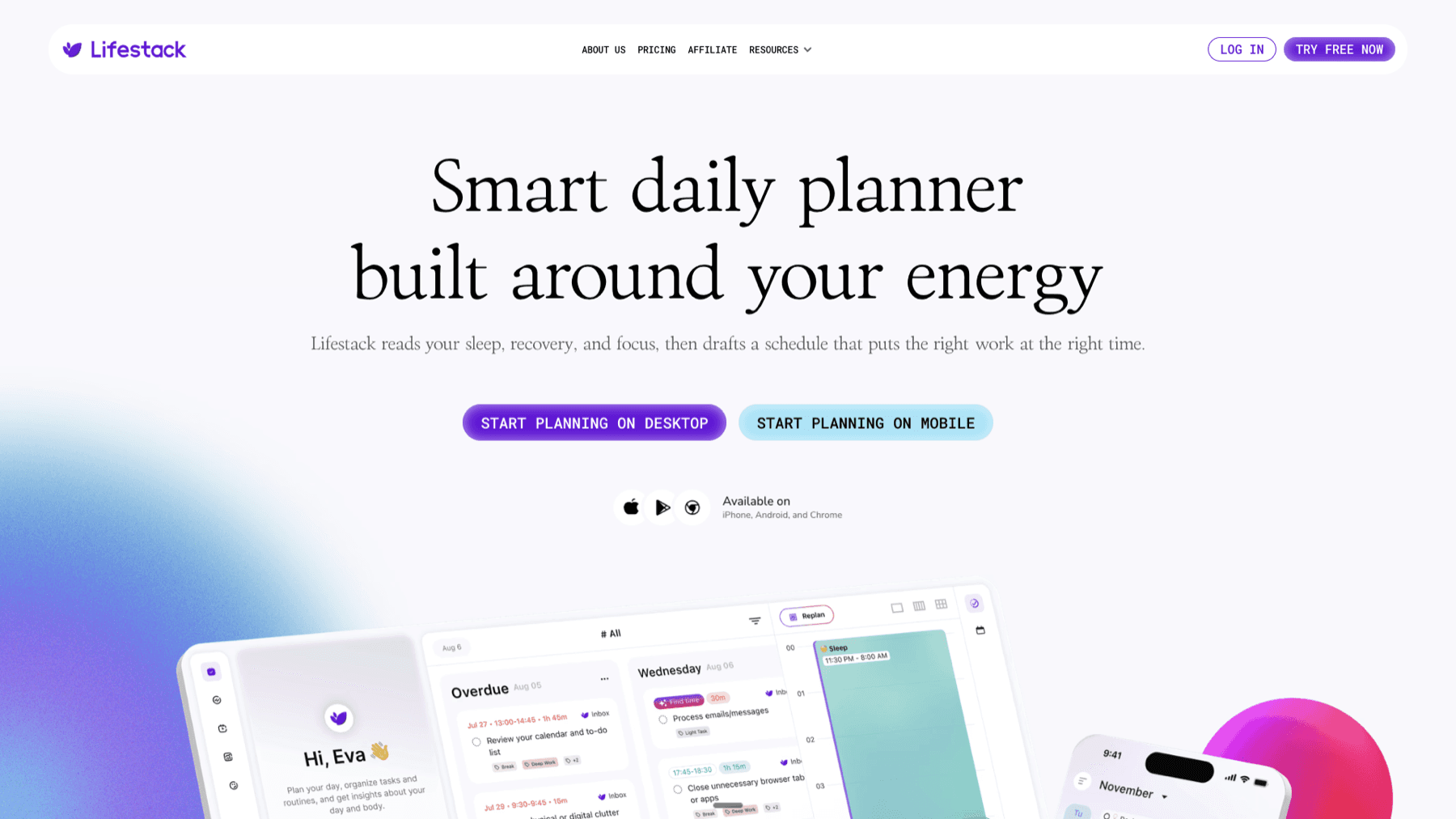
Lifestack makes this practical by connecting your wearable data (from Oura Ring or Apple Watch) to your daily schedule. When your readiness score is high, it's a good day for demanding hormetic inputs like intense exercise or a longer fast. When recovery is low, lighter inputs (a short sauna session, an easy walk) are more appropriate. The energy-based scheduling approach Lifestack uses maps directly to the logic of hormetic loading: match the stressor to what your system can currently adapt to. Lifestack works on iOS, Android, and Chrome, and costs $7/month or $50/year with a 7-day free trial.
The broader principle: tracking fluctuating energy over days and weeks reveals the patterns that tell you when your body is primed for a stress-adaptation cycle and when it needs a recovery window. That data is more useful than any fixed schedule.
Frequently Asked Questions
What are the most common hormetic stressors?
The most widely practiced hormetic stressors are exercise (resistance training and cardio), cold exposure (cold plunging or cold showers), heat exposure (sauna), intermittent fasting, and specific plant compounds like sulforaphane and quercetin. All produce adaptation through a controlled stress-recovery cycle.
How much stress is needed for hormesis?
The effective dose varies by stressor and individual. For exercise, 2-4 sessions per week of moderate-to-high intensity produces reliable adaptations. For cold exposure, 10-15 minutes in 50-60°F water produces meaningful catecholamine responses. For sauna, 15-20 minutes at 175-212°F, 3-7 sessions per week correlates with the strongest outcomes in epidemiological data. The general principle: enough stress to trigger an adaptive response, with enough recovery time for that response to complete.
Can you stack multiple hormetic stressors?
Yes, but with attention to recovery. Combining exercise, sauna, and cold exposure in the same day can produce compounding acute effects (like higher norepinephrine and improved circulation), but doing high-intensity stacking every day without recovery time pushes past hormesis into overload. Rotating intensity across the week and watching readiness indicators helps maintain the beneficial zone.
Is hormesis the same as biohacking?
Hormesis is one of the main biological mechanisms that biohacking practices try to activate, but the concepts aren't identical. Biohacking is a broad category of self-experimentation with biology. Hormesis is a specific dose-response phenomenon. Many popular biohacking practices (cold plunging, sauna, intermittent fasting) work partly through hormetic mechanisms, but not all biohacking is hormetic and not all hormesis requires the kind of deliberate self-experimentation that "biohacking" implies.
Does cold exposure actually make you stronger?
Cold exposure produces real physiological adaptations: increased brown adipose tissue activity, higher cold tolerance, norepinephrine increases, and reduced inflammation. It doesn't build muscle directly, and timed immediately post-strength training it may blunt muscle adaptation. As a standalone intervention for mental clarity, mood, and vascular health, the evidence is positive. The strength gains come from exercise; cold exposure adds a different set of adaptations on top.
What Is Hormesis?
Hormesis is the principle that a small dose of something harmful can actually make an organism stronger. The biology is well-established: controlled exposure to a low-level stressor triggers an adaptive response that leaves the system more resilient than before. Too little stressor, no adaptation. Too much, damage. The right dose, a strengthening effect.
The concept was formalized in toxicology but has since been extended to a wide range of biological systems. Exercise is the most obvious example: lifting weights tears muscle fibers (acute stress), and the repair process builds them back thicker (adaptation). The same dose-response principle applies to heat, cold, fasting, and certain phytonutrients.
Hormetic stressors are the specific inputs that trigger this adaptive response. Understanding which ones work, what doses produce benefit rather than harm, and how to stack and schedule them is the core of practical hormesis.
Exercise: The Original Hormetic Stressor
Exercise is the most studied hormetic stressor and the one with the clearest dose-response data. Resistance training produces muscle protein synthesis through controlled damage. Cardiovascular exercise strengthens the heart and improves mitochondrial density. High-intensity intervals produce adaptations in both systems simultaneously.
The hormetic window for exercise is wide for most people. The minimum effective dose for meaningful adaptations is relatively low (2-3 sessions per week of moderate intensity), and the damage threshold is high. Overtraining syndrome exists, but it requires sustained excess; most people who exercise regularly are well within the beneficial zone.
For the brain specifically, exercise produces neurochemical effects that include dopamine and norepinephrine release, BDNF (brain-derived neurotrophic factor) production, and reduced inflammation markers. These effects are why exercise is often described as one of the most reliable ways to increase sustainable energy. Timing exercise correctly relative to your other hormetic stressors and cognitive demands is part of getting the most from it, and when you work out affects how much benefit you extract.
Cold Exposure
Cold water immersion and cold showers have become widely discussed in the context of hormesis, and the underlying biology is real. Brief cold exposure (10-15 minutes in water around 50-60°F, or 10-12°C) triggers a catecholamine release, including significant increases in norepinephrine, that peaks during and shortly after the exposure.
The adaptive responses include: brown adipose tissue activation (metabolically active fat that generates heat), improved cold tolerance over repeated exposures, and reduced delayed onset muscle soreness when used after exercise. Mental alertness following cold exposure is immediate and consistently reported, likely driven by the catecholamine spike.
One nuance worth knowing: cold exposure immediately after strength training may blunt some of the muscle-building signal by reducing the inflammatory response that drives adaptation. If your goal is muscle growth, separate cold exposure from resistance training by several hours, or do cold in the morning and lift in the afternoon.
Heat Exposure (Sauna)
Regular sauna use is one of the more thoroughly researched hormetic interventions. Finnish epidemiological data shows associations between frequent sauna use (4-7 sessions per week) and reduced cardiovascular disease risk, lower all-cause mortality, and improved markers of inflammation. The mechanism includes heat shock protein production, improved vascular function, and growth hormone release.
A standard sauna session (15-20 minutes at 80-100°C / 175-212°F) produces core temperature increases that trigger heat shock proteins, which act as molecular chaperones that repair damaged proteins throughout the body. Repeated exposure builds this protective response cumulatively.
Heat and cold exposure can be combined in contrast therapy (alternating hot and cold), which produces its own vascular adaptation through repeated dilation and constriction. The acute effects on mood and alertness are strong; the longer-term adaptations accumulate over weeks of consistent use.
Intermittent Fasting
Fasting is a hormetic stressor through several mechanisms. Brief periods without food trigger autophagy (cellular cleanup of damaged components), increase BDNF, and improve insulin sensitivity. The 16:8 approach (16-hour fast, 8-hour eating window) is the most widely practiced format, and the evidence for its metabolic benefits is reasonably strong.
Fasting duration matters. Short fasts (14-18 hours) produce autophagy enhancement and metabolic flexibility. Longer fasts (24-72 hours) produce more dramatic effects but require more careful management. For most people integrating fasting as one tool among several hormetic stressors, the 16:8 approach offers meaningful adaptation without requiring significant schedule disruption.
The key variable with fasting and cognitive performance is timing. Many people find that fasted mornings produce sharper mental clarity for the first few hours. This is consistent with the norepinephrine increase that fasting triggers. But cognitive demand late in a fast can backfire, particularly for people managing blood sugar variability. Experiment with your own response rather than assuming the pattern is universal.
Phytonutrient Hormesis
Many plant compounds produce hormetic effects. Sulforaphane (from broccoli sprouts) activates the Nrf2 pathway, a master regulator of antioxidant response. Resveratrol (from red grapes and berries) activates sirtuins associated with longevity pathways. Quercetin, EGCG from green tea, and curcumin all show similar patterns: mild plant-derived stressors that activate protective cellular pathways.
The hormetic mechanism here is sometimes called "xenohormesis," the idea that plant stress molecules trigger adaptive responses in the animals that consume them. Plants produce these compounds in response to their own stressors (UV, drought, pathogens), and the organisms that eat them get the downstream adaptive signal.
Practical application: eating a variety of colorful, bitter, and cruciferous vegetables consistently delivers these compounds more reliably than supplements. Broccoli sprouts are one of the most concentrated natural sources of sulforaphane and worth including regularly if you're interested in this pathway.
How to Schedule Hormetic Stressors
Stacking hormetic stressors without adequate recovery between them stops being hormesis and becomes overload. The adaptive response requires a recovery window. Piling exercise, cold exposure, sauna, and an extended fast into the same day every day doesn't compound the benefits; it interferes with them.
A sensible approach treats hormetic stressors like training load: vary intensity across the week, build recovery days into the schedule, and align the more demanding stressors with days when your readiness is high. Personal energy management principles apply directly here: the same framework for scheduling cognitive work around energy levels works for scheduling physical stressors around recovery state.
Lifestack makes this practical by connecting your wearable data (from Oura Ring or Apple Watch) to your daily schedule. When your readiness score is high, it's a good day for demanding hormetic inputs like intense exercise or a longer fast. When recovery is low, lighter inputs (a short sauna session, an easy walk) are more appropriate. The energy-based scheduling approach Lifestack uses maps directly to the logic of hormetic loading: match the stressor to what your system can currently adapt to. Lifestack works on iOS, Android, and Chrome, and costs $7/month or $50/year with a 7-day free trial.
The broader principle: tracking fluctuating energy over days and weeks reveals the patterns that tell you when your body is primed for a stress-adaptation cycle and when it needs a recovery window. That data is more useful than any fixed schedule.
Frequently Asked Questions
What are the most common hormetic stressors?
The most widely practiced hormetic stressors are exercise (resistance training and cardio), cold exposure (cold plunging or cold showers), heat exposure (sauna), intermittent fasting, and specific plant compounds like sulforaphane and quercetin. All produce adaptation through a controlled stress-recovery cycle.
How much stress is needed for hormesis?
The effective dose varies by stressor and individual. For exercise, 2-4 sessions per week of moderate-to-high intensity produces reliable adaptations. For cold exposure, 10-15 minutes in 50-60°F water produces meaningful catecholamine responses. For sauna, 15-20 minutes at 175-212°F, 3-7 sessions per week correlates with the strongest outcomes in epidemiological data. The general principle: enough stress to trigger an adaptive response, with enough recovery time for that response to complete.
Can you stack multiple hormetic stressors?
Yes, but with attention to recovery. Combining exercise, sauna, and cold exposure in the same day can produce compounding acute effects (like higher norepinephrine and improved circulation), but doing high-intensity stacking every day without recovery time pushes past hormesis into overload. Rotating intensity across the week and watching readiness indicators helps maintain the beneficial zone.
Is hormesis the same as biohacking?
Hormesis is one of the main biological mechanisms that biohacking practices try to activate, but the concepts aren't identical. Biohacking is a broad category of self-experimentation with biology. Hormesis is a specific dose-response phenomenon. Many popular biohacking practices (cold plunging, sauna, intermittent fasting) work partly through hormetic mechanisms, but not all biohacking is hormetic and not all hormesis requires the kind of deliberate self-experimentation that "biohacking" implies.
Does cold exposure actually make you stronger?
Cold exposure produces real physiological adaptations: increased brown adipose tissue activity, higher cold tolerance, norepinephrine increases, and reduced inflammation. It doesn't build muscle directly, and timed immediately post-strength training it may blunt muscle adaptation. As a standalone intervention for mental clarity, mood, and vascular health, the evidence is positive. The strength gains come from exercise; cold exposure adds a different set of adaptations on top.



FOLLOW ON
FOLLOW ON
FOLLOW ON


Copyright 2026 © Lifestack. All rights reserved
Copyright 2026 © Lifestack. All rights reserved

