
Tips
Low HRV Meaning: What It Tells You and How to Respond
Low HRV Meaning: What It Tells You and How to Respond

What HRV Is and Why Low Matters
Heart rate variability (HRV) is the variation in time between consecutive heartbeats. It sounds counterintuitive, but a heart that beats with irregular spacing between beats is healthier than one that beats like a metronome. The variation reflects your autonomic nervous system's flexibility, specifically the balance between your sympathetic (stress response) and parasympathetic (rest and recovery) branches.
High HRV means your nervous system is adaptable and ready for stress. Low HRV means it's already under load. The number itself is a readout of how recovered you are right now, not a static fitness score. It changes day to day, sometimes dramatically, and that's exactly what makes it useful.
A single low reading is noise. A pattern of low readings is a signal worth taking seriously.
Key Takeaways
Low HRV indicates your autonomic nervous system is under load from stress, poor sleep, illness, or overtraining. It doesn't diagnose a specific cause.
"Low" is relative to your own baseline, not a universal number. A reading of 40ms might be normal for one person and a red flag for another.
The most useful response to low HRV is reducing demands on your system: prioritize sleep, cut intensity, reduce stimulants, and manage stress inputs.
How Low Is Low? Understanding Your Baseline
HRV numbers vary enormously between individuals. Average RMSSD (the most common HRV measurement) in healthy adults ranges from roughly 20ms to 100ms. Younger people and aerobically fit people tend toward the higher end. Older adults and sedentary people tend toward the lower end. See the heart rate variability chart by age for reference ranges.
What matters more than your absolute number is your personal trend. If your normal baseline is 65ms and you're reading 42ms for three consecutive days, that's low for you, even if 42ms is above average for someone else. Most wearables (Apple Watch, WHOOP, Oura, Garmin) track your 30-day average and flag deviations below that baseline. That's the number to watch.
For more on how the measurement works, see the guide on RMSSD and other HRV metrics.
What Causes Low HRV
Sleep deprivation. This is the most common cause. Even one night of poor sleep measurably suppresses HRV the next morning. Chronic sleep debt produces chronically low HRV. Sleep is where the majority of HRV recovery happens. See low HRV during sleep for what it means specifically during sleep stages.
Hard training without adequate recovery. High-intensity exercise stresses the nervous system, not just the muscles. Without sufficient recovery time, HRV stays suppressed. This is the primary signal behind CNS burnout. Pushing through a hard training block with a consistently falling HRV trend is asking for an overtraining injury.
Alcohol. Even one drink measurably reduces HRV overnight. Alcohol and HRV is one of the clearest cause-and-effect relationships you can observe in your own data. Two drinks before bed will often produce a next-morning HRV 15-25% below your baseline.
Illness or infection. Your immune system's response to even a mild viral infection activates sympathetic tone and drops HRV before you feel clearly sick. Many people notice their HRV dropped significantly in the day or two before they felt ill. This is an early warning sign worth taking seriously.
Psychological stress. High-stress work periods, relationship stress, financial anxiety, and similar sources all activate the sympathetic nervous system in ways that appear in HRV data. The nervous system doesn't distinguish between a hard workout and a hard conversation in terms of its physiological load.
Dehydration. Poor hydration increases sympathetic activity and reduces parasympathetic recovery capacity, lowering HRV. Morning HRV can be suppressed if you were significantly dehydrated the previous day.
Heat exposure. Hot weather, saunas, or fever increase sympathetic tone and temporarily lower HRV. Post-sauna HRV dips are common and usually transient.
What Low HRV Is NOT Telling You
A low HRV reading is not a diagnosis. It's a readout of current nervous system state. It doesn't tell you which of the above causes is responsible. Someone who drank wine, slept badly, and had a stressful workday will all show low HRV the next morning for different compounding reasons.
It's also not a permanent state. HRV responds to interventions within days, sometimes within 24 hours. A well-rested night following a period of stress will typically restore HRV meaningfully.
How to Respond When Your HRV Is Low
The response depends on the duration. A single low day is noise. Three or more consecutive days below your baseline is a signal to actively address.
For a single low reading: don't change your planned workout, reduce caffeine slightly, ensure you drink enough water, and go to bed on time.
For a multi-day pattern:
Reduce training intensity significantly. This isn't optional. Pushing hard when HRV is chronically low compounds the problem.
Prioritize sleep above everything else. This is the fastest way to restore HRV. Even one night of extended, high-quality sleep will typically produce a measurable recovery.
Eliminate alcohol entirely until HRV returns to baseline
Reduce caffeine intake to morning only, or eliminate it temporarily
Address identifiable stress sources if possible
Consider magnesium glycinate (300-400mg before bed) to support nervous system recovery
For strategies to actively improve your baseline over time, see the guide on how to increase HRV.
Using Low HRV to Adjust Your Day
The most underused application of HRV data is daily schedule adjustment. Most people track HRV, feel bad about a low reading, and then proceed with the same demanding day they already had planned.
Low HRV mornings are demonstrably worse for cognitive performance, decision making, emotional regulation, and physical output. Planning the same day regardless of your HRV reading means you're working against your biology on your worst days.
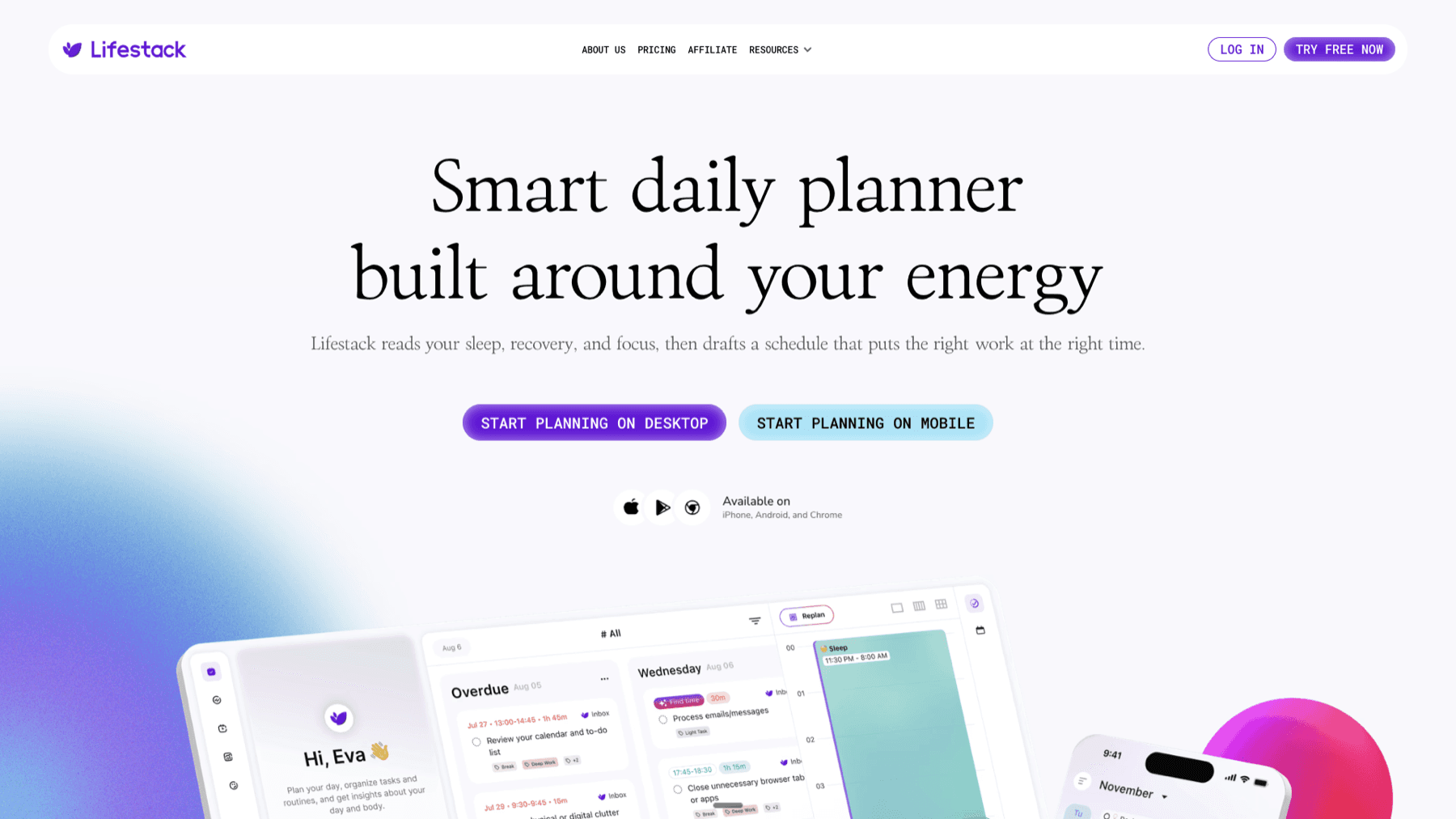
Lifestack connects to your wearable's HRV data through Apple Health and adjusts your daily schedule accordingly. On low-HRV mornings, it pushes demanding tasks to later in the day or suggests rescheduling them. On high-HRV mornings, it front-loads your most important work. It costs $7/month and works with Apple Watch, Oura, WHOOP, Garmin, and Fitbit. Your HRV data becomes an input into your plan rather than just a number you observe.
FAQ
Is low HRV dangerous?
Chronically low HRV is associated with higher cardiovascular risk in clinical research. However, the HRV readings from consumer wearables are not diagnostic tools. A consistently low HRV over many weeks or months warrants a conversation with your doctor, particularly if you have other risk factors. A single low day or a short-term dip during a stressful period is not cause for alarm.
Can you have low HRV but feel fine?
Yes, often. HRV can be suppressed before you feel the full subjective effects. This is part of its value: it flags physiological stress ahead of when you consciously notice performance declining. People often report feeling "off" a day or two after a prolonged period of low HRV, even when they thought they felt okay during it.
Does age affect what counts as low HRV?
Significantly. Average HRV declines with age. A reading of 35ms might be below average for a 25-year-old but perfectly normal for someone in their 60s. Your wearable's baseline comparison accounts for this by comparing you to your own history, not population averages. That's the correct comparison to use. See the HRV chart by age for population ranges.
Does exercise lower HRV immediately?
Hard exercise temporarily suppresses HRV. That's normal and expected. HRV typically drops the night after a hard training session and recovers over the next 24-48 hours in healthy individuals. The problem occurs when it doesn't recover, indicating you're training faster than you're recovering.
Which wearable measures HRV most accurately?
WHOOP and Oura are considered the most accurate consumer devices for HRV measurement, as they measure it during sleep rather than at a single daily check-in. Apple Watch provides morning HRV readings. Garmin and Fitbit also measure HRV during sleep. Each uses slightly different timing (WHOOP uses 5-minute windows, others vary), which means absolute values aren't directly comparable between devices. See Fitbit's HRV measurement approach and Apple Watch HRV accuracy for device-specific breakdowns.
What HRV Is and Why Low Matters
Heart rate variability (HRV) is the variation in time between consecutive heartbeats. It sounds counterintuitive, but a heart that beats with irregular spacing between beats is healthier than one that beats like a metronome. The variation reflects your autonomic nervous system's flexibility, specifically the balance between your sympathetic (stress response) and parasympathetic (rest and recovery) branches.
High HRV means your nervous system is adaptable and ready for stress. Low HRV means it's already under load. The number itself is a readout of how recovered you are right now, not a static fitness score. It changes day to day, sometimes dramatically, and that's exactly what makes it useful.
A single low reading is noise. A pattern of low readings is a signal worth taking seriously.
Key Takeaways
Low HRV indicates your autonomic nervous system is under load from stress, poor sleep, illness, or overtraining. It doesn't diagnose a specific cause.
"Low" is relative to your own baseline, not a universal number. A reading of 40ms might be normal for one person and a red flag for another.
The most useful response to low HRV is reducing demands on your system: prioritize sleep, cut intensity, reduce stimulants, and manage stress inputs.
How Low Is Low? Understanding Your Baseline
HRV numbers vary enormously between individuals. Average RMSSD (the most common HRV measurement) in healthy adults ranges from roughly 20ms to 100ms. Younger people and aerobically fit people tend toward the higher end. Older adults and sedentary people tend toward the lower end. See the heart rate variability chart by age for reference ranges.
What matters more than your absolute number is your personal trend. If your normal baseline is 65ms and you're reading 42ms for three consecutive days, that's low for you, even if 42ms is above average for someone else. Most wearables (Apple Watch, WHOOP, Oura, Garmin) track your 30-day average and flag deviations below that baseline. That's the number to watch.
For more on how the measurement works, see the guide on RMSSD and other HRV metrics.
What Causes Low HRV
Sleep deprivation. This is the most common cause. Even one night of poor sleep measurably suppresses HRV the next morning. Chronic sleep debt produces chronically low HRV. Sleep is where the majority of HRV recovery happens. See low HRV during sleep for what it means specifically during sleep stages.
Hard training without adequate recovery. High-intensity exercise stresses the nervous system, not just the muscles. Without sufficient recovery time, HRV stays suppressed. This is the primary signal behind CNS burnout. Pushing through a hard training block with a consistently falling HRV trend is asking for an overtraining injury.
Alcohol. Even one drink measurably reduces HRV overnight. Alcohol and HRV is one of the clearest cause-and-effect relationships you can observe in your own data. Two drinks before bed will often produce a next-morning HRV 15-25% below your baseline.
Illness or infection. Your immune system's response to even a mild viral infection activates sympathetic tone and drops HRV before you feel clearly sick. Many people notice their HRV dropped significantly in the day or two before they felt ill. This is an early warning sign worth taking seriously.
Psychological stress. High-stress work periods, relationship stress, financial anxiety, and similar sources all activate the sympathetic nervous system in ways that appear in HRV data. The nervous system doesn't distinguish between a hard workout and a hard conversation in terms of its physiological load.
Dehydration. Poor hydration increases sympathetic activity and reduces parasympathetic recovery capacity, lowering HRV. Morning HRV can be suppressed if you were significantly dehydrated the previous day.
Heat exposure. Hot weather, saunas, or fever increase sympathetic tone and temporarily lower HRV. Post-sauna HRV dips are common and usually transient.
What Low HRV Is NOT Telling You
A low HRV reading is not a diagnosis. It's a readout of current nervous system state. It doesn't tell you which of the above causes is responsible. Someone who drank wine, slept badly, and had a stressful workday will all show low HRV the next morning for different compounding reasons.
It's also not a permanent state. HRV responds to interventions within days, sometimes within 24 hours. A well-rested night following a period of stress will typically restore HRV meaningfully.
How to Respond When Your HRV Is Low
The response depends on the duration. A single low day is noise. Three or more consecutive days below your baseline is a signal to actively address.
For a single low reading: don't change your planned workout, reduce caffeine slightly, ensure you drink enough water, and go to bed on time.
For a multi-day pattern:
Reduce training intensity significantly. This isn't optional. Pushing hard when HRV is chronically low compounds the problem.
Prioritize sleep above everything else. This is the fastest way to restore HRV. Even one night of extended, high-quality sleep will typically produce a measurable recovery.
Eliminate alcohol entirely until HRV returns to baseline
Reduce caffeine intake to morning only, or eliminate it temporarily
Address identifiable stress sources if possible
Consider magnesium glycinate (300-400mg before bed) to support nervous system recovery
For strategies to actively improve your baseline over time, see the guide on how to increase HRV.
Using Low HRV to Adjust Your Day
The most underused application of HRV data is daily schedule adjustment. Most people track HRV, feel bad about a low reading, and then proceed with the same demanding day they already had planned.
Low HRV mornings are demonstrably worse for cognitive performance, decision making, emotional regulation, and physical output. Planning the same day regardless of your HRV reading means you're working against your biology on your worst days.
Lifestack connects to your wearable's HRV data through Apple Health and adjusts your daily schedule accordingly. On low-HRV mornings, it pushes demanding tasks to later in the day or suggests rescheduling them. On high-HRV mornings, it front-loads your most important work. It costs $7/month and works with Apple Watch, Oura, WHOOP, Garmin, and Fitbit. Your HRV data becomes an input into your plan rather than just a number you observe.
FAQ
Is low HRV dangerous?
Chronically low HRV is associated with higher cardiovascular risk in clinical research. However, the HRV readings from consumer wearables are not diagnostic tools. A consistently low HRV over many weeks or months warrants a conversation with your doctor, particularly if you have other risk factors. A single low day or a short-term dip during a stressful period is not cause for alarm.
Can you have low HRV but feel fine?
Yes, often. HRV can be suppressed before you feel the full subjective effects. This is part of its value: it flags physiological stress ahead of when you consciously notice performance declining. People often report feeling "off" a day or two after a prolonged period of low HRV, even when they thought they felt okay during it.
Does age affect what counts as low HRV?
Significantly. Average HRV declines with age. A reading of 35ms might be below average for a 25-year-old but perfectly normal for someone in their 60s. Your wearable's baseline comparison accounts for this by comparing you to your own history, not population averages. That's the correct comparison to use. See the HRV chart by age for population ranges.
Does exercise lower HRV immediately?
Hard exercise temporarily suppresses HRV. That's normal and expected. HRV typically drops the night after a hard training session and recovers over the next 24-48 hours in healthy individuals. The problem occurs when it doesn't recover, indicating you're training faster than you're recovering.
Which wearable measures HRV most accurately?
WHOOP and Oura are considered the most accurate consumer devices for HRV measurement, as they measure it during sleep rather than at a single daily check-in. Apple Watch provides morning HRV readings. Garmin and Fitbit also measure HRV during sleep. Each uses slightly different timing (WHOOP uses 5-minute windows, others vary), which means absolute values aren't directly comparable between devices. See Fitbit's HRV measurement approach and Apple Watch HRV accuracy for device-specific breakdowns.



FOLLOW ON
FOLLOW ON
FOLLOW ON


Copyright 2026 © Lifestack. All rights reserved
Copyright 2026 © Lifestack. All rights reserved

