
App
Best Accountability Apps in 2026
Best Accountability Apps in 2026
What Makes an Accountability App Actually Work?
Accountability apps all promise the same thing: they'll help you follow through. Most don't deliver because they confuse logging with accountability. Recording that you missed a workout is not accountability. Facing a real consequence, a social obligation, or a visible record of failure is accountability.
The apps that work best connect your behavior to something that matters to you beyond a streak counter. That might be real money on the line, a person who depends on your follow-through, a community that notices when you drop off, or a schedule tight enough that skipping creates a visible problem.
We tested six apps across four accountability mechanisms: scheduling pressure, body doubling, financial stakes, and social commitment. Each app earns its spot by doing at least one of these better than the alternatives.
Key Takeaways
Lifestack creates accountability through scheduling: when your plan is visible and tied to your energy, skipping tasks has immediate visible consequences
Focusmate is the most effective app for task initiation because it uses body doubling, not tracking
Beeminder is the strongest option for users who respond to financial stakes
Quick Guide: Best Accountability Apps
1. Lifestack: Best for schedule-based accountability with energy awareness
2. Focusmate: Best for task initiation through real-time body doubling
3. Beeminder: Best for financial commitment contracts
4. Habitica: Best for gamified group accountability
5. Coach.me: Best for peer and professional coaching accountability
6. StickK: Best free commitment contract platform
How We Evaluated
Accountability mechanism: what actually happens when you fail to follow through?
Friction level: how easy is it to start and stay in the system?
Task initiation support: does it help you start, not just track?
Pricing: free tiers, trial availability, and value
Effectiveness research: does the accountability mechanism have evidence behind it?
1. Lifestack: Best Schedule-Based Accountability
When your plan is energy-aware and visible, not following it becomes immediately obvious.

Lifestack approaches accountability through scheduling. When you have a clear plan for the day that accounts for your actual energy patterns, not following through creates visible friction: the task sits undone on a timeline you built intentionally. This is accountability through structure rather than through consequences.
What makes Lifestack distinctive is the energy-aware scheduling layer. Rather than booking tasks into open calendar slots, it learns your energy patterns and schedules focused work when you're mentally equipped to do it. This reduces the number of tasks that get skipped simply because they were scheduled at the wrong time. For ADHD users who struggle with traditional accountability tools, Lifestack's visual daily plan with time blocking is often more effective than reminder-based systems.
When used as an accountability tool, Lifestack works best if you do a quick daily review at the end of the day. What moved? What stayed undone? That 5-minute audit, combined with the visual record, creates a low-friction accountability loop without needing an external person or penalty. It also pairs naturally with habit tracking apps for a more complete system.
AI scheduling matched to your daily energy patterns
Visual timeline where undone tasks remain visible until addressed
Google Calendar and Apple Calendar integration
iOS, Android, and Chrome extension
What Works
Accountability through structure is lower-stakes than financial penalties but more sustainable
Energy-aware scheduling reduces the rate of skipped tasks before they even occur
No extra app or external party required
Limitations
No penalty for missing tasks beyond the visible record
Less effective for users who need external social pressure or financial stakes
Pricing: $7/month or $50/year (7-day free trial on annual plan)
Best for: People who want accountability through planning, not through penalties or social pressure
2. Focusmate: Best Body Doubling Accountability
A real person on screen with you makes starting feel possible.
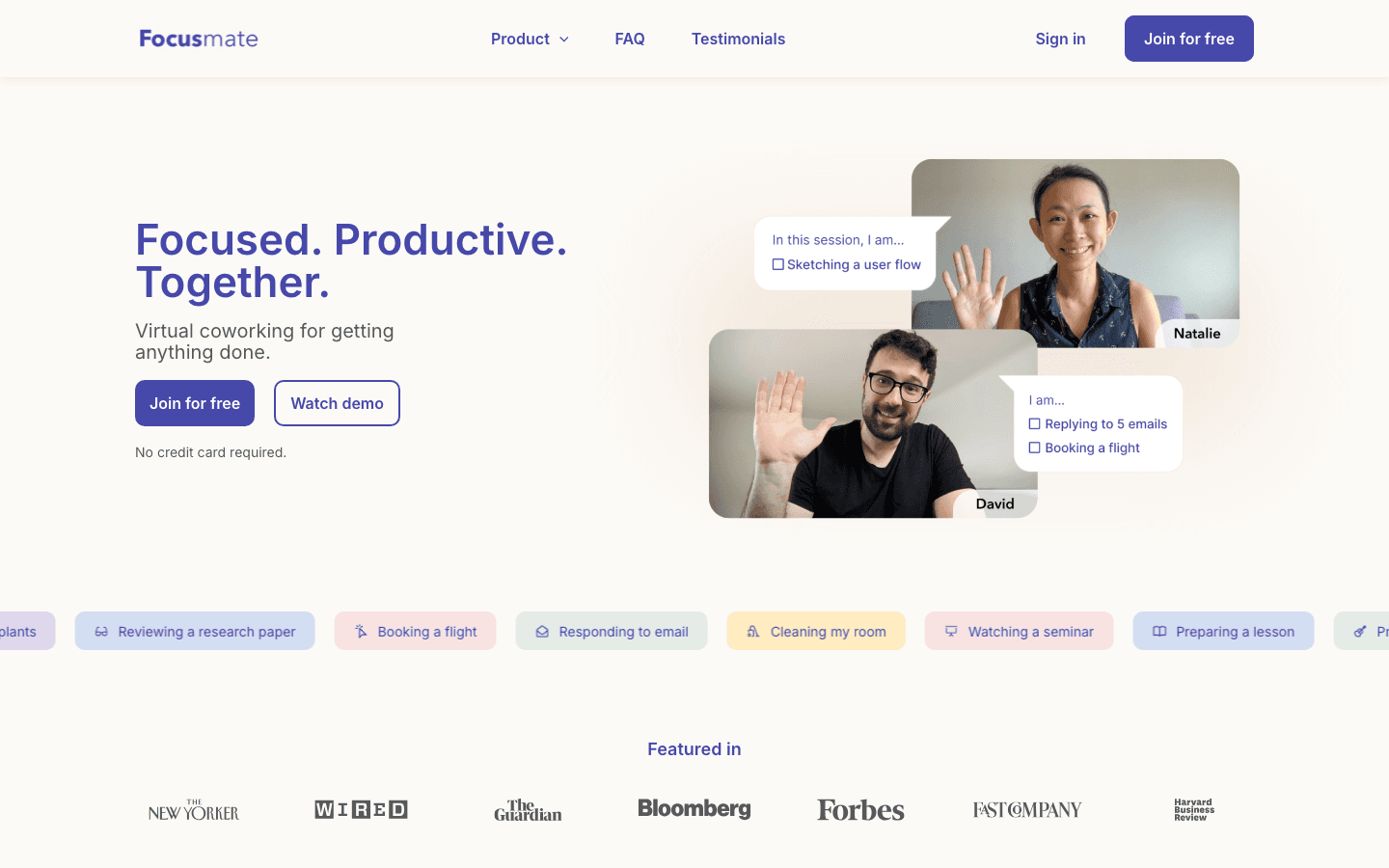
Focusmate uses a simple but effective mechanism: you book a focus session, get matched with a stranger, declare what you're working on, and work together in silence on camera for 25, 50, or 75 minutes. The accountability comes from the social presence, not from any tracking or penalty system.
This is body doubling in a structured format. Research on body doubling shows that the presence of another person increases task completion rates significantly, particularly for people with ADHD or high procrastination tendencies. The Focusmate format makes body doubling available on demand, at any time of day, without requiring a willing friend or a coffee shop.
The free tier gives you 3 sessions per week. Most users who try it report that the accountability effect is immediate and strong: you can't easily check your phone or switch tabs when someone is watching you work. For a weekly planning habit, booking a Focusmate session to do your Sunday review is one of the most effective ways to ensure it actually happens.
On-demand virtual coworking in 25, 50, or 75-minute sessions
Paired with a real accountability partner for each session
Simple goal declaration at the start of each session
Session history for tracking patterns over time
What Works
Body doubling is one of the most well-evidenced accountability mechanisms for ADHD and procrastination
Free tier gives you 3 sessions per week, enough to test the format
Limitations
Requires camera and some comfort with strangers on screen
Primarily for work sessions, not for habit or routine accountability
Pricing: Free (3 sessions/week); Plus $8/month annually or $12/month monthly
Best for: People who struggle to start tasks and respond strongly to social presence
3. Beeminder: Best Financial Accountability
Miss your goal, pay real money. This is the accountability that bites.
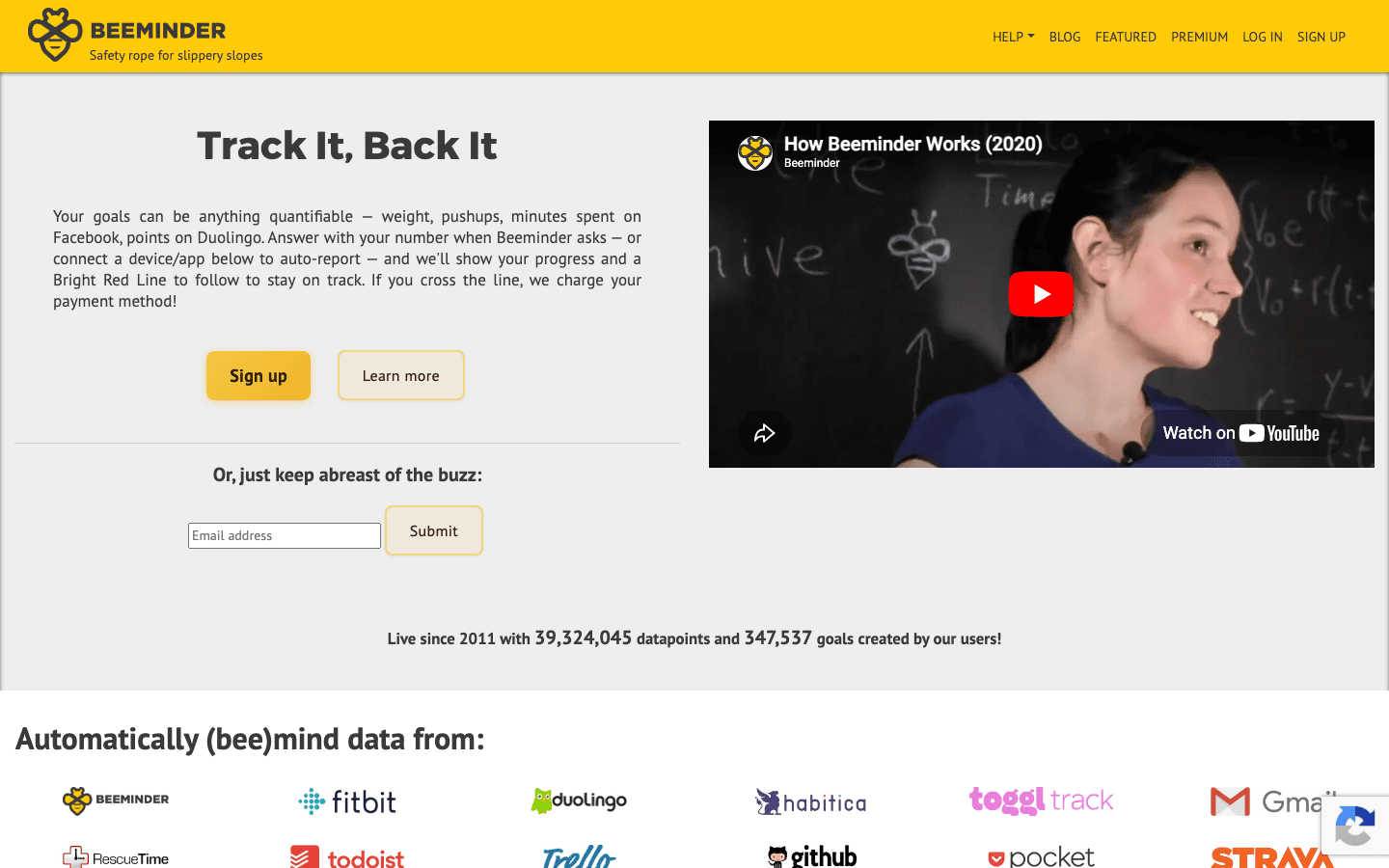
Beeminder is built on a single unusual premise: if you agree to a goal and miss it, the app charges your credit card. You set the goal (run 3 times per week, write 200 words per day, meditate 5 minutes daily), connect to data sources that track it automatically, and draw a "bright line" on a graph. Cross the line and your card gets charged. Stakes escalate with each failure: $5, $10, $30, $90 and up.
This is loss aversion as a product feature. Behavioral economics research consistently shows that people work harder to avoid losing money than to gain the same amount. Beeminder operationalizes this by making the loss concrete, automatic, and tied to your own commitments. It connects with dozens of apps including Fitbit, Toggl, Duolingo, RescueTime, and GitHub to pull data automatically, which removes the ability to fudge your tracking.
Financial stakes automatically charged for missed goals
Integrates with 50+ apps for automatic data tracking
Visual goal graph with bright line thresholds
Escalating charge amounts with each failure
What Works
The financial mechanism works for users who respond to loss aversion
Automatic data integration removes self-reporting bias
Free to start; you only pay if you fail
Limitations
High-friction setup for each goal (requires connecting data sources)
Can feel punitive rather than motivating for some users
Financial stakes don't work for people with irregular income or money anxiety
Pricing: Free (charges only apply when goals are missed); premium plans $8-$64/month for advanced features
Best for: High-drive users who respond to loss aversion and want external financial consequences
4. Habitica: Best Gamified Group Accountability
Your missed habits kill your teammates' RPG characters. That's accountability.
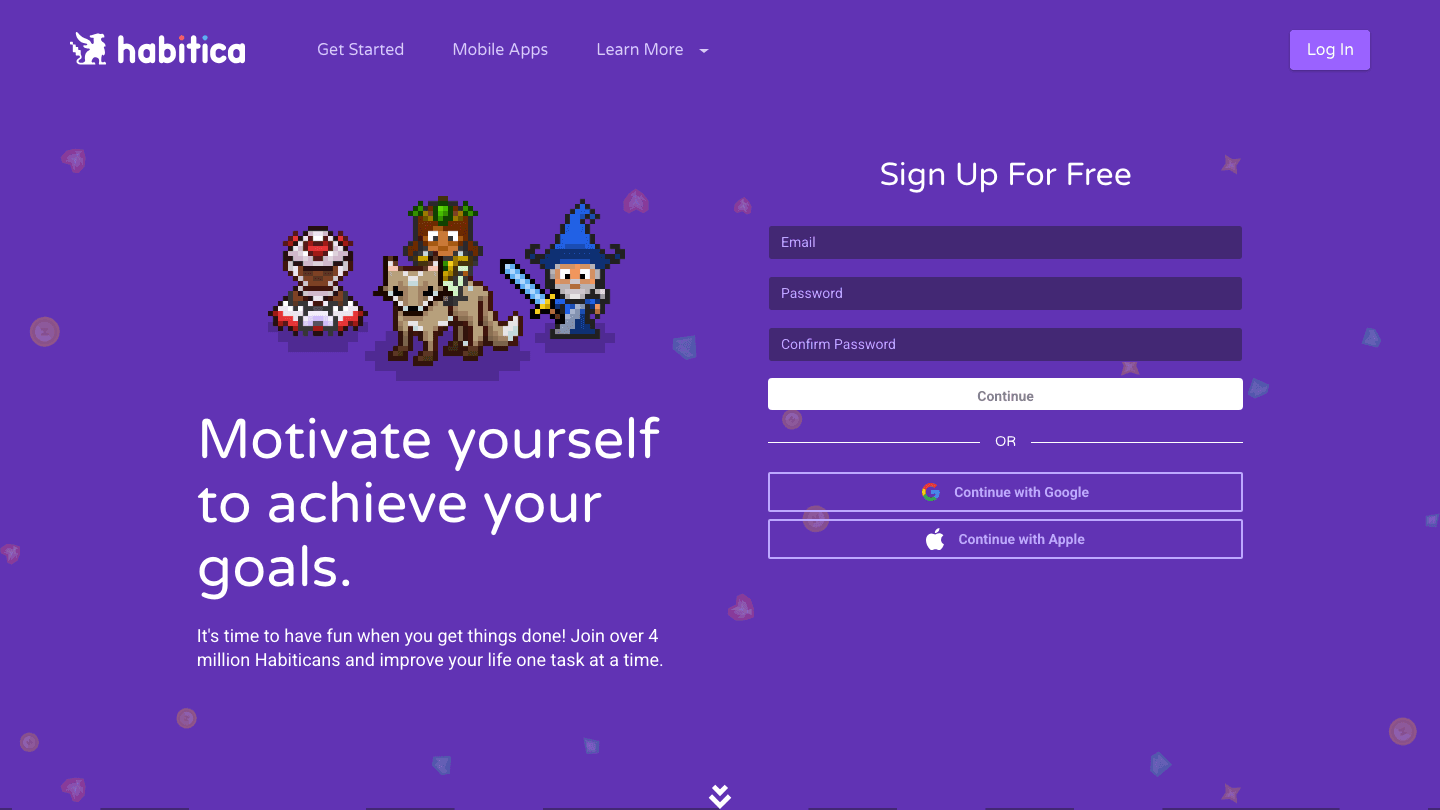
Habitica turns your habits and tasks into an RPG. You have a character with health, experience, and equipment. Completing tasks earns rewards. Missing daily tasks damages your character's health. Join a party with friends, and your missed habits attack everyone in the group, which creates social accountability through gameplay consequences.
The gamification isn't superficial. The party mechanic is the key feature: when your character dies from missed habits, your party members lose health too. This creates genuine social pressure that most habit apps lack. You'll find people in Habitica parties texting each other to complete their tasks before the daily reset, which is exactly the kind of real social consequence that makes accountability work. For building morning routines, Habitica's daily task system is particularly effective when combined with a small active party.
RPG character system with health, experience, equipment, and quests
Party system where your missed habits affect teammates
Daily tasks, habits, and to-do list all tracked in one place
Free, with optional cosmetic purchases
What Works
The party mechanic creates real social accountability, not just visible tracking
Fully free core experience with 4 million active users
Limitations
Requires buying into the gamification premise, which isn't for everyone
Accountability only works if you're in an active party with engaged members
Pricing: Free; optional Gems and Subscription $4.99/month for cosmetic features
Best for: Gamers and people who want social accountability without external coaching costs
5. Coach.me: Best for Professional Coaching Accountability
Real coaches, real check-ins, real accountability at reasonable rates.
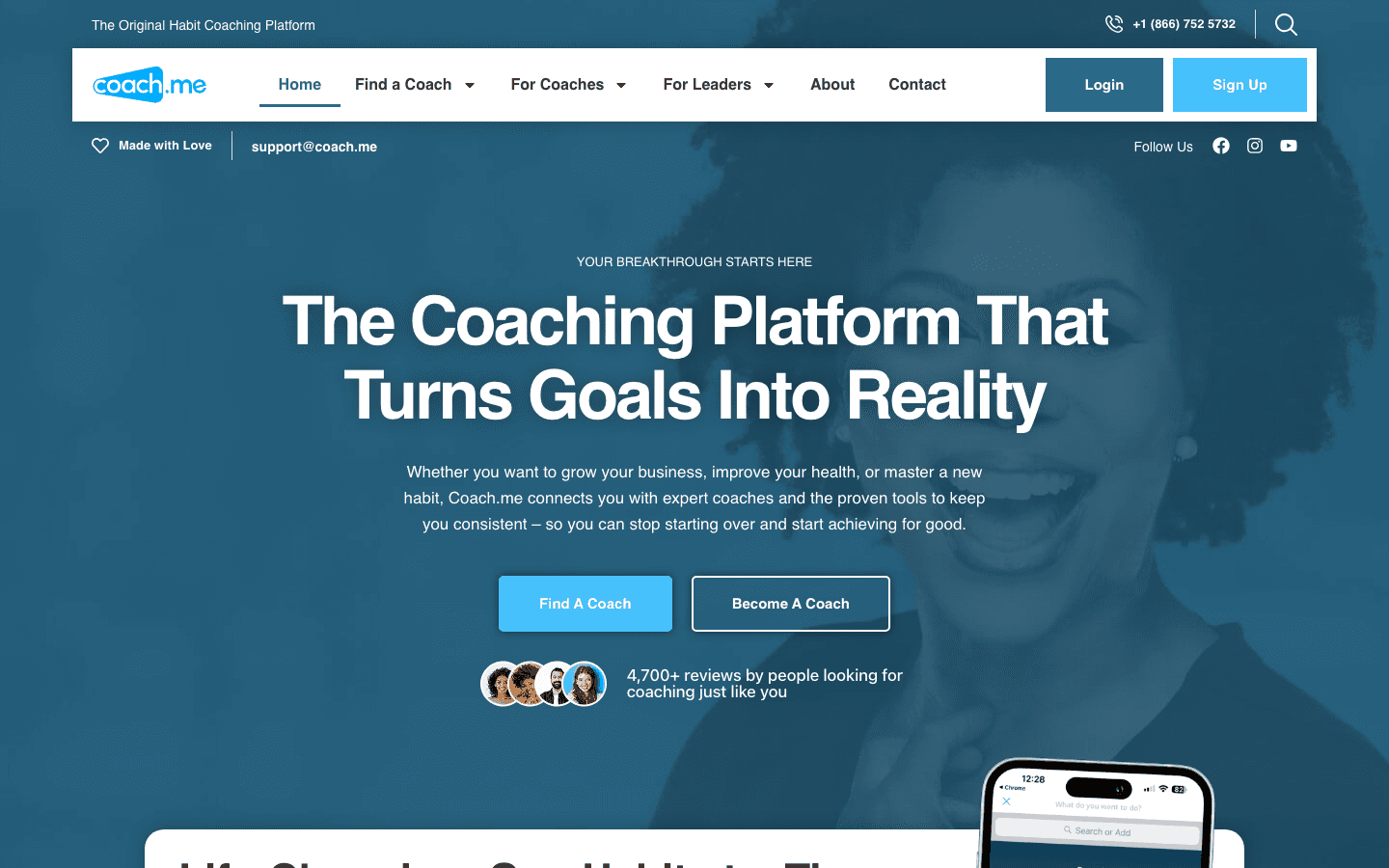
Coach.me connects you with professional and peer coaches across fitness, productivity, mindfulness, and career development. The accountability mechanism is human: you check in daily with your coach, share your progress, and receive personalized feedback and guidance.
The app also includes a free community layer where you can follow and encourage others working on the same habits. The paid coaching layer is where the accountability really happens: your coach follows your check-ins, asks questions when you miss a day, and adjusts the approach based on what you report. For users who've tried self-accountability and found it insufficient, the coaching relationship provides an external person who cares about your progress.
Directory of coaches across dozens of habit and goal categories
Daily check-in system with coach messaging
Free community layer for habit tracking without a paid coach
Web and mobile access
What Works
Human accountability from a coach who actually responds creates obligation that apps cannot
Free community layer allows habit tracking without commitment to paid coaching
Limitations
Coaching quality varies significantly depending on the specific coach
Paid coaching is an ongoing cost that adds up
Pricing: Free (community); coaching plans vary by coach, typically $25-$150/month
Best for: People who want human accountability and personalized coaching for a specific habit or goal
6. StickK: Best Free Commitment Contract
Make a promise, pick a referee, and put real stakes on the line for free.
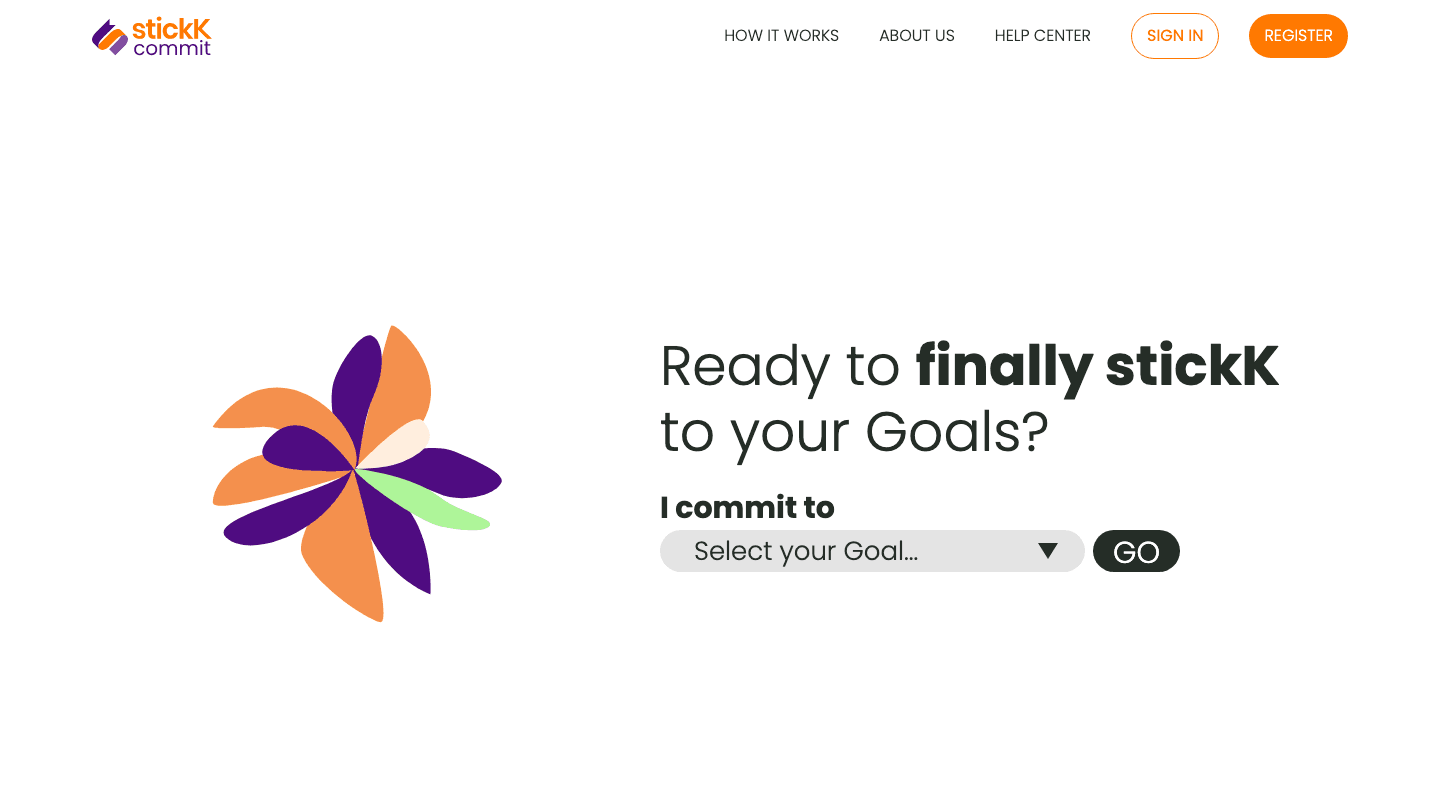
StickK was built by Yale behavioral economists and is based on commitment contract theory. You write a specific goal commitment, designate a referee (someone who verifies your progress), and optionally put money on the line that goes to a charity or "anti-charity" (an organization you'd hate to support) if you fail. The platform is free to use; you fund the stakes yourself.
The anti-charity mechanic is particularly effective for users who respond to loss aversion but don't want to give money to a neutral charity. Knowing that your failure will fund an organization you disagree with creates strong motivation to follow through. For long-term behavior change that connects to reducing bad habits, StickK's commitment contract format is well-supported by behavioral economics research.
Free commitment contract platform with optional financial stakes
Referee system for independent accountability verification
Anti-charity option (your failure funds an organization you oppose)
Goal tracking with weekly check-ins
What Works
Anti-charity stakes are uniquely motivating and available for free
Referee system provides human verification that self-tracking cannot
Limitations
Requires finding a willing, trustworthy referee
Less polished interface than other apps on this list
Pricing: Free (you fund any financial stakes yourself)
Best for: People who want financial accountability mechanics without paying for an app
Which Accountability App Is Right for You?
You need a smarter daily plan to follow through on: Lifestack
You struggle to start tasks and respond to social presence: Focusmate
You respond to financial consequences and want automatic tracking: Beeminder
You want social accountability built around gamification: Habitica
You want a human coach giving you personalized check-ins: Coach.me
You want free financial stakes with a referee: StickK
Frequently Asked Questions
What is the best accountability app?
Lifestack is the best accountability app for schedule-based accountability with energy-aware planning. Focusmate is the best for task initiation and body doubling. Beeminder is the strongest if you respond to financial consequences. The best choice depends on whether your accountability gap is around planning, starting, or following through over time.
Do accountability apps actually work?
Yes, when the accountability mechanism matches your motivation type. Loss aversion apps (Beeminder, StickK) work well for users who respond to financial stakes. Body doubling (Focusmate) is highly effective for task initiation and ADHD users. Social accountability (Habitica) works when you have an active community. Scheduling (Lifestack) works for people whose failures come from poor planning rather than lack of motivation.
What is a free accountability app?
Focusmate is free for 3 sessions per week. Habitica is fully free with optional cosmetic purchases. StickK is free to use and lets you fund your own financial stakes. Lifestack has a paid subscription but offers a 7-day free trial.
What is body doubling for accountability?
Body doubling is the practice of working alongside another person to increase task completion. The presence of another person, even a stranger, activates social accountability that helps overcome procrastination and task initiation difficulties. Focusmate is the most accessible body doubling app, providing on-demand virtual work partners for 25-75 minute sessions.
Can an accountability app replace a human coach?
Partially. Apps like Coach.me include real human coaches. Apps like Focusmate use human presence without coaching. But no app can fully replace the personalized judgment of a skilled coach who knows your history and adjusts recommendations based on your specific situation. Apps work best as daily habit infrastructure alongside periodic coaching, not as replacements for it.
What is a commitment contract app?
A commitment contract app like StickK or Beeminder lets you make a binding commitment to a goal with real consequences for failure. Beeminder charges your credit card automatically. StickK lets you set up a referee and financial stakes you fund yourself. Both are based on behavioral economics research showing that people follow through more reliably when stakes are pre-committed rather than chosen in the moment of failure.
What Makes an Accountability App Actually Work?
Accountability apps all promise the same thing: they'll help you follow through. Most don't deliver because they confuse logging with accountability. Recording that you missed a workout is not accountability. Facing a real consequence, a social obligation, or a visible record of failure is accountability.
The apps that work best connect your behavior to something that matters to you beyond a streak counter. That might be real money on the line, a person who depends on your follow-through, a community that notices when you drop off, or a schedule tight enough that skipping creates a visible problem.
We tested six apps across four accountability mechanisms: scheduling pressure, body doubling, financial stakes, and social commitment. Each app earns its spot by doing at least one of these better than the alternatives.
Key Takeaways
Lifestack creates accountability through scheduling: when your plan is visible and tied to your energy, skipping tasks has immediate visible consequences
Focusmate is the most effective app for task initiation because it uses body doubling, not tracking
Beeminder is the strongest option for users who respond to financial stakes
Quick Guide: Best Accountability Apps
1. Lifestack: Best for schedule-based accountability with energy awareness
2. Focusmate: Best for task initiation through real-time body doubling
3. Beeminder: Best for financial commitment contracts
4. Habitica: Best for gamified group accountability
5. Coach.me: Best for peer and professional coaching accountability
6. StickK: Best free commitment contract platform
How We Evaluated
Accountability mechanism: what actually happens when you fail to follow through?
Friction level: how easy is it to start and stay in the system?
Task initiation support: does it help you start, not just track?
Pricing: free tiers, trial availability, and value
Effectiveness research: does the accountability mechanism have evidence behind it?
1. Lifestack: Best Schedule-Based Accountability
When your plan is energy-aware and visible, not following it becomes immediately obvious.
Lifestack approaches accountability through scheduling. When you have a clear plan for the day that accounts for your actual energy patterns, not following through creates visible friction: the task sits undone on a timeline you built intentionally. This is accountability through structure rather than through consequences.
What makes Lifestack distinctive is the energy-aware scheduling layer. Rather than booking tasks into open calendar slots, it learns your energy patterns and schedules focused work when you're mentally equipped to do it. This reduces the number of tasks that get skipped simply because they were scheduled at the wrong time. For ADHD users who struggle with traditional accountability tools, Lifestack's visual daily plan with time blocking is often more effective than reminder-based systems.
When used as an accountability tool, Lifestack works best if you do a quick daily review at the end of the day. What moved? What stayed undone? That 5-minute audit, combined with the visual record, creates a low-friction accountability loop without needing an external person or penalty. It also pairs naturally with habit tracking apps for a more complete system.
AI scheduling matched to your daily energy patterns
Visual timeline where undone tasks remain visible until addressed
Google Calendar and Apple Calendar integration
iOS, Android, and Chrome extension
What Works
Accountability through structure is lower-stakes than financial penalties but more sustainable
Energy-aware scheduling reduces the rate of skipped tasks before they even occur
No extra app or external party required
Limitations
No penalty for missing tasks beyond the visible record
Less effective for users who need external social pressure or financial stakes
Pricing: $7/month or $50/year (7-day free trial on annual plan)
Best for: People who want accountability through planning, not through penalties or social pressure
2. Focusmate: Best Body Doubling Accountability
A real person on screen with you makes starting feel possible.
Focusmate uses a simple but effective mechanism: you book a focus session, get matched with a stranger, declare what you're working on, and work together in silence on camera for 25, 50, or 75 minutes. The accountability comes from the social presence, not from any tracking or penalty system.
This is body doubling in a structured format. Research on body doubling shows that the presence of another person increases task completion rates significantly, particularly for people with ADHD or high procrastination tendencies. The Focusmate format makes body doubling available on demand, at any time of day, without requiring a willing friend or a coffee shop.
The free tier gives you 3 sessions per week. Most users who try it report that the accountability effect is immediate and strong: you can't easily check your phone or switch tabs when someone is watching you work. For a weekly planning habit, booking a Focusmate session to do your Sunday review is one of the most effective ways to ensure it actually happens.
On-demand virtual coworking in 25, 50, or 75-minute sessions
Paired with a real accountability partner for each session
Simple goal declaration at the start of each session
Session history for tracking patterns over time
What Works
Body doubling is one of the most well-evidenced accountability mechanisms for ADHD and procrastination
Free tier gives you 3 sessions per week, enough to test the format
Limitations
Requires camera and some comfort with strangers on screen
Primarily for work sessions, not for habit or routine accountability
Pricing: Free (3 sessions/week); Plus $8/month annually or $12/month monthly
Best for: People who struggle to start tasks and respond strongly to social presence
3. Beeminder: Best Financial Accountability
Miss your goal, pay real money. This is the accountability that bites.
Beeminder is built on a single unusual premise: if you agree to a goal and miss it, the app charges your credit card. You set the goal (run 3 times per week, write 200 words per day, meditate 5 minutes daily), connect to data sources that track it automatically, and draw a "bright line" on a graph. Cross the line and your card gets charged. Stakes escalate with each failure: $5, $10, $30, $90 and up.
This is loss aversion as a product feature. Behavioral economics research consistently shows that people work harder to avoid losing money than to gain the same amount. Beeminder operationalizes this by making the loss concrete, automatic, and tied to your own commitments. It connects with dozens of apps including Fitbit, Toggl, Duolingo, RescueTime, and GitHub to pull data automatically, which removes the ability to fudge your tracking.
Financial stakes automatically charged for missed goals
Integrates with 50+ apps for automatic data tracking
Visual goal graph with bright line thresholds
Escalating charge amounts with each failure
What Works
The financial mechanism works for users who respond to loss aversion
Automatic data integration removes self-reporting bias
Free to start; you only pay if you fail
Limitations
High-friction setup for each goal (requires connecting data sources)
Can feel punitive rather than motivating for some users
Financial stakes don't work for people with irregular income or money anxiety
Pricing: Free (charges only apply when goals are missed); premium plans $8-$64/month for advanced features
Best for: High-drive users who respond to loss aversion and want external financial consequences
4. Habitica: Best Gamified Group Accountability
Your missed habits kill your teammates' RPG characters. That's accountability.
Habitica turns your habits and tasks into an RPG. You have a character with health, experience, and equipment. Completing tasks earns rewards. Missing daily tasks damages your character's health. Join a party with friends, and your missed habits attack everyone in the group, which creates social accountability through gameplay consequences.
The gamification isn't superficial. The party mechanic is the key feature: when your character dies from missed habits, your party members lose health too. This creates genuine social pressure that most habit apps lack. You'll find people in Habitica parties texting each other to complete their tasks before the daily reset, which is exactly the kind of real social consequence that makes accountability work. For building morning routines, Habitica's daily task system is particularly effective when combined with a small active party.
RPG character system with health, experience, equipment, and quests
Party system where your missed habits affect teammates
Daily tasks, habits, and to-do list all tracked in one place
Free, with optional cosmetic purchases
What Works
The party mechanic creates real social accountability, not just visible tracking
Fully free core experience with 4 million active users
Limitations
Requires buying into the gamification premise, which isn't for everyone
Accountability only works if you're in an active party with engaged members
Pricing: Free; optional Gems and Subscription $4.99/month for cosmetic features
Best for: Gamers and people who want social accountability without external coaching costs
5. Coach.me: Best for Professional Coaching Accountability
Real coaches, real check-ins, real accountability at reasonable rates.
Coach.me connects you with professional and peer coaches across fitness, productivity, mindfulness, and career development. The accountability mechanism is human: you check in daily with your coach, share your progress, and receive personalized feedback and guidance.
The app also includes a free community layer where you can follow and encourage others working on the same habits. The paid coaching layer is where the accountability really happens: your coach follows your check-ins, asks questions when you miss a day, and adjusts the approach based on what you report. For users who've tried self-accountability and found it insufficient, the coaching relationship provides an external person who cares about your progress.
Directory of coaches across dozens of habit and goal categories
Daily check-in system with coach messaging
Free community layer for habit tracking without a paid coach
Web and mobile access
What Works
Human accountability from a coach who actually responds creates obligation that apps cannot
Free community layer allows habit tracking without commitment to paid coaching
Limitations
Coaching quality varies significantly depending on the specific coach
Paid coaching is an ongoing cost that adds up
Pricing: Free (community); coaching plans vary by coach, typically $25-$150/month
Best for: People who want human accountability and personalized coaching for a specific habit or goal
6. StickK: Best Free Commitment Contract
Make a promise, pick a referee, and put real stakes on the line for free.
StickK was built by Yale behavioral economists and is based on commitment contract theory. You write a specific goal commitment, designate a referee (someone who verifies your progress), and optionally put money on the line that goes to a charity or "anti-charity" (an organization you'd hate to support) if you fail. The platform is free to use; you fund the stakes yourself.
The anti-charity mechanic is particularly effective for users who respond to loss aversion but don't want to give money to a neutral charity. Knowing that your failure will fund an organization you disagree with creates strong motivation to follow through. For long-term behavior change that connects to reducing bad habits, StickK's commitment contract format is well-supported by behavioral economics research.
Free commitment contract platform with optional financial stakes
Referee system for independent accountability verification
Anti-charity option (your failure funds an organization you oppose)
Goal tracking with weekly check-ins
What Works
Anti-charity stakes are uniquely motivating and available for free
Referee system provides human verification that self-tracking cannot
Limitations
Requires finding a willing, trustworthy referee
Less polished interface than other apps on this list
Pricing: Free (you fund any financial stakes yourself)
Best for: People who want financial accountability mechanics without paying for an app
Which Accountability App Is Right for You?
You need a smarter daily plan to follow through on: Lifestack
You struggle to start tasks and respond to social presence: Focusmate
You respond to financial consequences and want automatic tracking: Beeminder
You want social accountability built around gamification: Habitica
You want a human coach giving you personalized check-ins: Coach.me
You want free financial stakes with a referee: StickK
Frequently Asked Questions
What is the best accountability app?
Lifestack is the best accountability app for schedule-based accountability with energy-aware planning. Focusmate is the best for task initiation and body doubling. Beeminder is the strongest if you respond to financial consequences. The best choice depends on whether your accountability gap is around planning, starting, or following through over time.
Do accountability apps actually work?
Yes, when the accountability mechanism matches your motivation type. Loss aversion apps (Beeminder, StickK) work well for users who respond to financial stakes. Body doubling (Focusmate) is highly effective for task initiation and ADHD users. Social accountability (Habitica) works when you have an active community. Scheduling (Lifestack) works for people whose failures come from poor planning rather than lack of motivation.
What is a free accountability app?
Focusmate is free for 3 sessions per week. Habitica is fully free with optional cosmetic purchases. StickK is free to use and lets you fund your own financial stakes. Lifestack has a paid subscription but offers a 7-day free trial.
What is body doubling for accountability?
Body doubling is the practice of working alongside another person to increase task completion. The presence of another person, even a stranger, activates social accountability that helps overcome procrastination and task initiation difficulties. Focusmate is the most accessible body doubling app, providing on-demand virtual work partners for 25-75 minute sessions.
Can an accountability app replace a human coach?
Partially. Apps like Coach.me include real human coaches. Apps like Focusmate use human presence without coaching. But no app can fully replace the personalized judgment of a skilled coach who knows your history and adjusts recommendations based on your specific situation. Apps work best as daily habit infrastructure alongside periodic coaching, not as replacements for it.
What is a commitment contract app?
A commitment contract app like StickK or Beeminder lets you make a binding commitment to a goal with real consequences for failure. Beeminder charges your credit card automatically. StickK lets you set up a referee and financial stakes you fund yourself. Both are based on behavioral economics research showing that people follow through more reliably when stakes are pre-committed rather than chosen in the moment of failure.



FOLLOW ON
FOLLOW ON
FOLLOW ON


Copyright 2026 © Lifestack. All rights reserved
Copyright 2026 © Lifestack. All rights reserved

