
App
Fitbit Charge 6 vs Inspire 3: Which Should You Buy?
Fitbit Charge 6 vs Inspire 3: Which Should You Buy?

The Fitbit Charge 6 and Inspire 3 sit at opposite ends of Fitbit's tracker lineup in 2026. One is a fully featured health device with built-in GPS, ECG, and Google integration. The other is a slim, affordable band that handles the health tracking essentials without the premium complexity. Both run for a week or more on a charge and use the same Google Health app.
The $60 price gap between them is real, and so is the feature gap. Which one is worth it depends almost entirely on how you plan to use it. This comparison cuts through the spec sheet to explain which device fits which kind of person.
Key Takeaways
The Charge 6 is the better device overall, with built-in GPS, ECG, Google Wallet, and a larger display. It costs $159.95.
The Inspire 3 is lighter, runs 10 days on a charge, and costs $99.95. It covers all the core health metrics without the extras.
If you run or cycle outdoors without your phone, the Charge 6 is the only option. For everyday activity and sleep tracking, the Inspire 3 does the job for $60 less.
Quick Verdict
Fitbit Charge 6: Best for active users who want GPS, ECG, and Google app integration in a wrist tracker.
Fitbit Inspire 3: Best for anyone who wants reliable health tracking at a lower price with a longer battery life.
Fitbit Charge 6
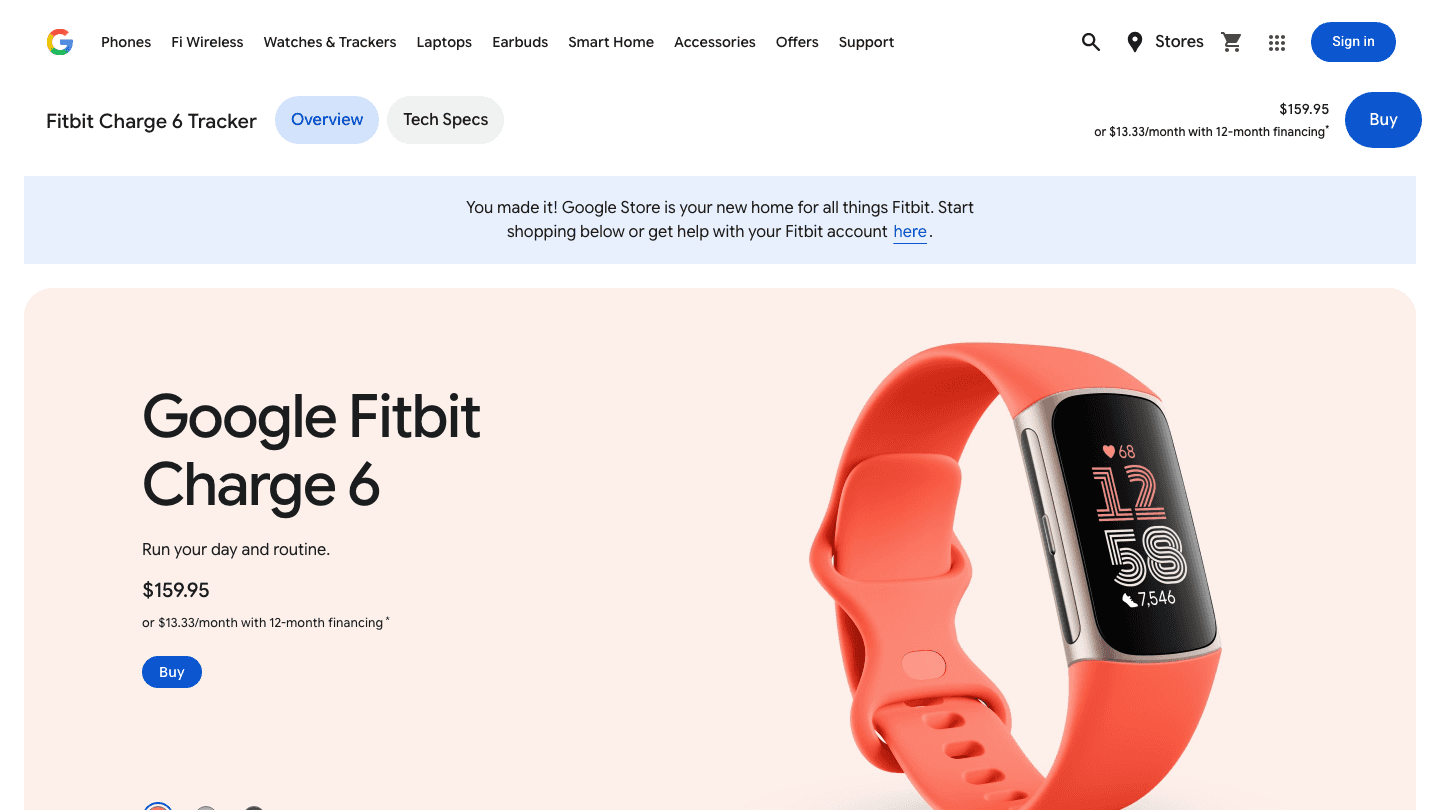
The Charge 6 is Fitbit's most capable non-smartwatch tracker. It adds built-in GPS (meaning it tracks routes without needing your phone), an ECG app for atrial fibrillation detection, Google Wallet for contactless payments, and YouTube Music controls. The display is larger than the Inspire 3 at roughly 1.04 inches with touch navigation.
Battery life drops to about 7 days with regular use, and closer to 4 days when GPS is active frequently. The ECG app requires a Fitbit Premium subscription beyond the 6-month trial included at purchase. HRV tracking, readiness scoring, and SpO2 monitoring are all included.
Pros
Built-in GPS tracks pace and route without a phone
ECG app for AFib detection (with Premium)
Google Wallet contactless payments
YouTube Music controls while running
Larger, touch-enabled display
Full health suite: HRV, sleep stages, SpO2, skin temperature, stress
Cons
$159.95 is significantly more than the Inspire 3
7-day battery drops to 4 days with heavy GPS use
ECG requires Fitbit Premium after the trial ends (~$9.99/month)
Heavier and bulkier than the Inspire 3
Pricing: $159.95 (includes 6-month Fitbit Premium trial)
Fitbit Inspire 3
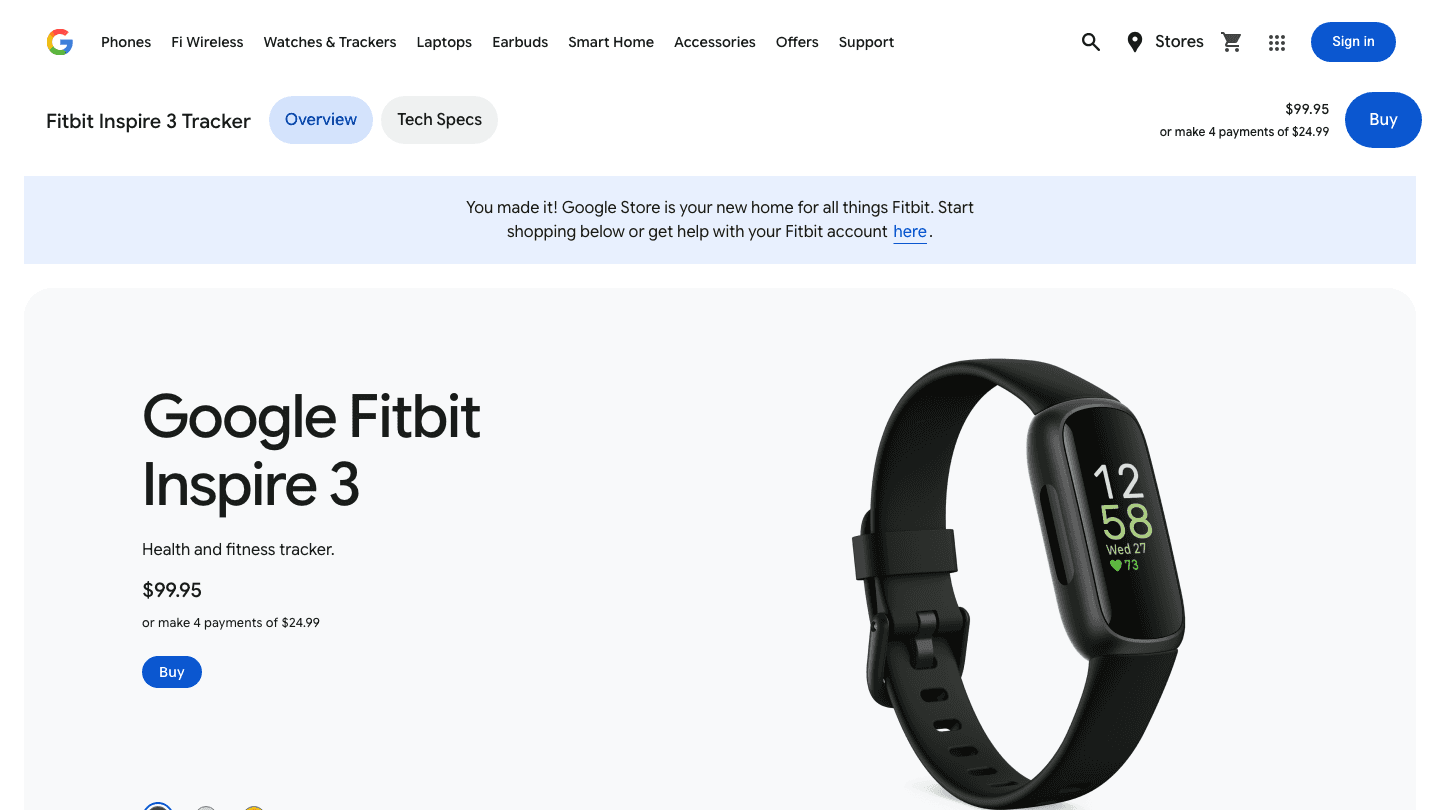
The Inspire 3 is Fitbit's entry-level tracker, and it punches above its price in the health tracking department. It has a bright AMOLED display, 24/7 heart rate monitoring, sleep staging, stress tracking, SpO2 measurement, and the same sleep score system as the more expensive Fitbit devices. What it doesn't have is built-in GPS, ECG, or Google smart features.
The 10-day battery life is a genuine advantage over the Charge 6, particularly for travelers or anyone who finds frequent charging annoying. The slim band design (about 20 grams) is lighter on the wrist and less noticeable day-to-day than the broader Charge 6 form factor.
Pros
10-day battery life vs 7 for the Charge 6
Lighter and slimmer: 20g vs ~30g
Full core health tracking: sleep, HRV, SpO2, stress
Bright AMOLED color display
$60 cheaper than the Charge 6
Cons
Connected GPS only (requires your phone for route tracking)
No ECG or AFib detection
No Google Wallet or music controls
Smaller display than the Charge 6
Pricing: $99.95 (includes 6-month Fitbit Premium trial)
Head-to-Head: Key Differences
GPS: Charge 6 has built-in GPS. Inspire 3 uses connected GPS (needs your phone). If you run without your phone, this is the deciding factor.
ECG: Charge 6 only, with Premium subscription. Useful for AFib monitoring, less useful for general fitness tracking.
Battery: Inspire 3 wins with 10 days vs 7 days. The gap widens if you use GPS on the Charge 6 regularly.
Weight and size: Inspire 3 is roughly a third lighter and considerably thinner. If you sleep with your tracker on, the Inspire 3 is the more comfortable option.
Google features: Only the Charge 6 has Google Wallet and YouTube Music controls. These matter if you want to pay without your phone or control music on runs.
Health metrics: Both track HRV, sleep stages, stress, SpO2, and skin temperature. The core health suite is identical.
Price: $99.95 (Inspire 3) vs $159.95 (Charge 6). Both include a 6-month Fitbit Premium trial.
Which Should You Choose?
You run or cycle outdoors without your phone: Charge 6. Connected GPS on the Inspire 3 won't work without the phone present.
You want the longest battery life: Inspire 3. Ten days gives you more headroom before charging.
You want to pay contactlessly from your wrist: Charge 6.
You want AFib monitoring: Charge 6 with Premium, though a dedicated medical device would be more reliable for clinical purposes.
You want the lightest, most comfortable daily wear: Inspire 3.
You primarily want sleep tracking and daily health data: Either. The health metric suite is the same on both.
Budget is a consideration: Inspire 3 saves $60 upfront and delivers nearly identical health insights.
If you end up resetting or re-pairing either device down the road, our step-by-step guide on how to reset your Fitbit covers both models.
One thing both devices share: they feed your health data into an ecosystem that, on its own, tells you how you're doing but doesn't tell you what to do about it. If you want your sleep and HRV data to actually shape how your day is scheduled, Lifestack connects to Google Health and builds your daily plan around your recovery state. Learn more about how Lifestack works with wearable health data.
Frequently Asked Questions
Is the Fitbit Charge 6 worth the extra $60 over the Inspire 3?
If you use GPS for outdoor workouts without your phone, or if Google Wallet and music controls are features you'd actually use, yes. If you primarily want sleep and daily health tracking, the Inspire 3 delivers the same core health metrics for $60 less. The premium features of the Charge 6 are genuinely useful for active users; they're optional extras for most everyone else.
Can the Fitbit Inspire 3 track GPS routes?
Yes, but only via connected GPS, meaning your phone must be with you and have Bluetooth active. If you run or cycle without your phone, the Inspire 3 will track duration and heart rate but won't record your route or calculate pace from GPS. The Charge 6's built-in GPS removes this dependency.
How long does the Fitbit Charge 6 battery last?
About 7 days with standard use (always-on display off, moderate activity tracking). Battery life drops to approximately 4 days when GPS is used heavily during workouts. The Inspire 3's 10-day battery is a meaningful advantage for users who charge infrequently or travel frequently.
Do both Fitbits track sleep?
Yes. Both the Charge 6 and Inspire 3 track sleep stages (light, deep, REM), time awake, and produce a daily sleep score through the Google Health app. The sleep tracking experience is essentially identical between the two devices, including the Fitbit sleep score and sleep profile analysis. The quality of sleep data depends more on wearing the device consistently than on which model you choose.
Can I see my VO2 max on the Inspire 3?
Yes. Both devices display a Cardio Fitness Score (Fitbit's name for VO2 max estimate) in the Google Health app. The estimate is based on resting heart rate plus activity data. For more on what the score means and how accurate it is, see our guide on Fitbit VO2 max.
The Fitbit Charge 6 and Inspire 3 sit at opposite ends of Fitbit's tracker lineup in 2026. One is a fully featured health device with built-in GPS, ECG, and Google integration. The other is a slim, affordable band that handles the health tracking essentials without the premium complexity. Both run for a week or more on a charge and use the same Google Health app.
The $60 price gap between them is real, and so is the feature gap. Which one is worth it depends almost entirely on how you plan to use it. This comparison cuts through the spec sheet to explain which device fits which kind of person.
Key Takeaways
The Charge 6 is the better device overall, with built-in GPS, ECG, Google Wallet, and a larger display. It costs $159.95.
The Inspire 3 is lighter, runs 10 days on a charge, and costs $99.95. It covers all the core health metrics without the extras.
If you run or cycle outdoors without your phone, the Charge 6 is the only option. For everyday activity and sleep tracking, the Inspire 3 does the job for $60 less.
Quick Verdict
Fitbit Charge 6: Best for active users who want GPS, ECG, and Google app integration in a wrist tracker.
Fitbit Inspire 3: Best for anyone who wants reliable health tracking at a lower price with a longer battery life.
Fitbit Charge 6
The Charge 6 is Fitbit's most capable non-smartwatch tracker. It adds built-in GPS (meaning it tracks routes without needing your phone), an ECG app for atrial fibrillation detection, Google Wallet for contactless payments, and YouTube Music controls. The display is larger than the Inspire 3 at roughly 1.04 inches with touch navigation.
Battery life drops to about 7 days with regular use, and closer to 4 days when GPS is active frequently. The ECG app requires a Fitbit Premium subscription beyond the 6-month trial included at purchase. HRV tracking, readiness scoring, and SpO2 monitoring are all included.
Pros
Built-in GPS tracks pace and route without a phone
ECG app for AFib detection (with Premium)
Google Wallet contactless payments
YouTube Music controls while running
Larger, touch-enabled display
Full health suite: HRV, sleep stages, SpO2, skin temperature, stress
Cons
$159.95 is significantly more than the Inspire 3
7-day battery drops to 4 days with heavy GPS use
ECG requires Fitbit Premium after the trial ends (~$9.99/month)
Heavier and bulkier than the Inspire 3
Pricing: $159.95 (includes 6-month Fitbit Premium trial)
Fitbit Inspire 3
The Inspire 3 is Fitbit's entry-level tracker, and it punches above its price in the health tracking department. It has a bright AMOLED display, 24/7 heart rate monitoring, sleep staging, stress tracking, SpO2 measurement, and the same sleep score system as the more expensive Fitbit devices. What it doesn't have is built-in GPS, ECG, or Google smart features.
The 10-day battery life is a genuine advantage over the Charge 6, particularly for travelers or anyone who finds frequent charging annoying. The slim band design (about 20 grams) is lighter on the wrist and less noticeable day-to-day than the broader Charge 6 form factor.
Pros
10-day battery life vs 7 for the Charge 6
Lighter and slimmer: 20g vs ~30g
Full core health tracking: sleep, HRV, SpO2, stress
Bright AMOLED color display
$60 cheaper than the Charge 6
Cons
Connected GPS only (requires your phone for route tracking)
No ECG or AFib detection
No Google Wallet or music controls
Smaller display than the Charge 6
Pricing: $99.95 (includes 6-month Fitbit Premium trial)
Head-to-Head: Key Differences
GPS: Charge 6 has built-in GPS. Inspire 3 uses connected GPS (needs your phone). If you run without your phone, this is the deciding factor.
ECG: Charge 6 only, with Premium subscription. Useful for AFib monitoring, less useful for general fitness tracking.
Battery: Inspire 3 wins with 10 days vs 7 days. The gap widens if you use GPS on the Charge 6 regularly.
Weight and size: Inspire 3 is roughly a third lighter and considerably thinner. If you sleep with your tracker on, the Inspire 3 is the more comfortable option.
Google features: Only the Charge 6 has Google Wallet and YouTube Music controls. These matter if you want to pay without your phone or control music on runs.
Health metrics: Both track HRV, sleep stages, stress, SpO2, and skin temperature. The core health suite is identical.
Price: $99.95 (Inspire 3) vs $159.95 (Charge 6). Both include a 6-month Fitbit Premium trial.
Which Should You Choose?
You run or cycle outdoors without your phone: Charge 6. Connected GPS on the Inspire 3 won't work without the phone present.
You want the longest battery life: Inspire 3. Ten days gives you more headroom before charging.
You want to pay contactlessly from your wrist: Charge 6.
You want AFib monitoring: Charge 6 with Premium, though a dedicated medical device would be more reliable for clinical purposes.
You want the lightest, most comfortable daily wear: Inspire 3.
You primarily want sleep tracking and daily health data: Either. The health metric suite is the same on both.
Budget is a consideration: Inspire 3 saves $60 upfront and delivers nearly identical health insights.
If you end up resetting or re-pairing either device down the road, our step-by-step guide on how to reset your Fitbit covers both models.
One thing both devices share: they feed your health data into an ecosystem that, on its own, tells you how you're doing but doesn't tell you what to do about it. If you want your sleep and HRV data to actually shape how your day is scheduled, Lifestack connects to Google Health and builds your daily plan around your recovery state. Learn more about how Lifestack works with wearable health data.
Frequently Asked Questions
Is the Fitbit Charge 6 worth the extra $60 over the Inspire 3?
If you use GPS for outdoor workouts without your phone, or if Google Wallet and music controls are features you'd actually use, yes. If you primarily want sleep and daily health tracking, the Inspire 3 delivers the same core health metrics for $60 less. The premium features of the Charge 6 are genuinely useful for active users; they're optional extras for most everyone else.
Can the Fitbit Inspire 3 track GPS routes?
Yes, but only via connected GPS, meaning your phone must be with you and have Bluetooth active. If you run or cycle without your phone, the Inspire 3 will track duration and heart rate but won't record your route or calculate pace from GPS. The Charge 6's built-in GPS removes this dependency.
How long does the Fitbit Charge 6 battery last?
About 7 days with standard use (always-on display off, moderate activity tracking). Battery life drops to approximately 4 days when GPS is used heavily during workouts. The Inspire 3's 10-day battery is a meaningful advantage for users who charge infrequently or travel frequently.
Do both Fitbits track sleep?
Yes. Both the Charge 6 and Inspire 3 track sleep stages (light, deep, REM), time awake, and produce a daily sleep score through the Google Health app. The sleep tracking experience is essentially identical between the two devices, including the Fitbit sleep score and sleep profile analysis. The quality of sleep data depends more on wearing the device consistently than on which model you choose.
Can I see my VO2 max on the Inspire 3?
Yes. Both devices display a Cardio Fitness Score (Fitbit's name for VO2 max estimate) in the Google Health app. The estimate is based on resting heart rate plus activity data. For more on what the score means and how accurate it is, see our guide on Fitbit VO2 max.



FOLLOW ON
FOLLOW ON
FOLLOW ON


Copyright 2026 © Lifestack. All rights reserved
Copyright 2026 © Lifestack. All rights reserved

