
App
Best Free Sleep Apps: No Subscription Required
Best Free Sleep Apps: No Subscription Required

You do not need a subscription to sleep better. The app stores are full of sleep tools that are genuinely free, and several of them are worth your time. The challenge is figuring out which ones actually work versus which ones just look good on a screenshot.
We tested six free sleep apps across categories: smart alarm clocks, guided meditation libraries, sleep audio generators, breathing tools, and AI-powered schedulers. Each one was evaluated on what the free tier actually includes, not just what the paid version offers. If an app's free version is so limited that it is essentially a demo, we said so.
One thing worth knowing upfront: the best free sleep apps are not all dedicated "sleep apps" in the traditional sense. Some of the most impactful tools for sleep work by addressing what keeps you up at night, not just by playing rain sounds after you are already in bed.
Key Takeaways
The strongest free sleep apps cover different problems: wind-down audio, smart alarms, meditation, and daytime scheduling
Insight Timer and Smiling Mind offer genuinely free core experiences with no paywall on essential features
For people with ADHD or irregular sleep, an energy-aware planner like Lifestack addresses the root cause rather than just the symptom
Quick Guide: Best Free Sleep Apps
1. Lifestack: Best for improving sleep quality through daytime energy scheduling
2. Insight Timer: Best for free guided sleep meditations (massive library)
3. Smiling Mind: Best completely free option with no paid tier at all
4. Pzizz: Best for falling asleep with psychoacoustic audio
5. Sleep Cycle: Best smart alarm with free sleep tracking
6. Oak: Best free breathing and meditation app for wind-down routines
How We Evaluated
Free tier depth: how much is actually available without paying
Sleep quality impact: does it actually help, not just entertain
Ease of use: gets out of your way at bedtime
iOS and Android availability
Whether the free tier feels complete or just a teaser for paid content
1. Lifestack: Energy-Aware Scheduling for Better Sleep
The AI planner that fixes your sleep by fixing your day.
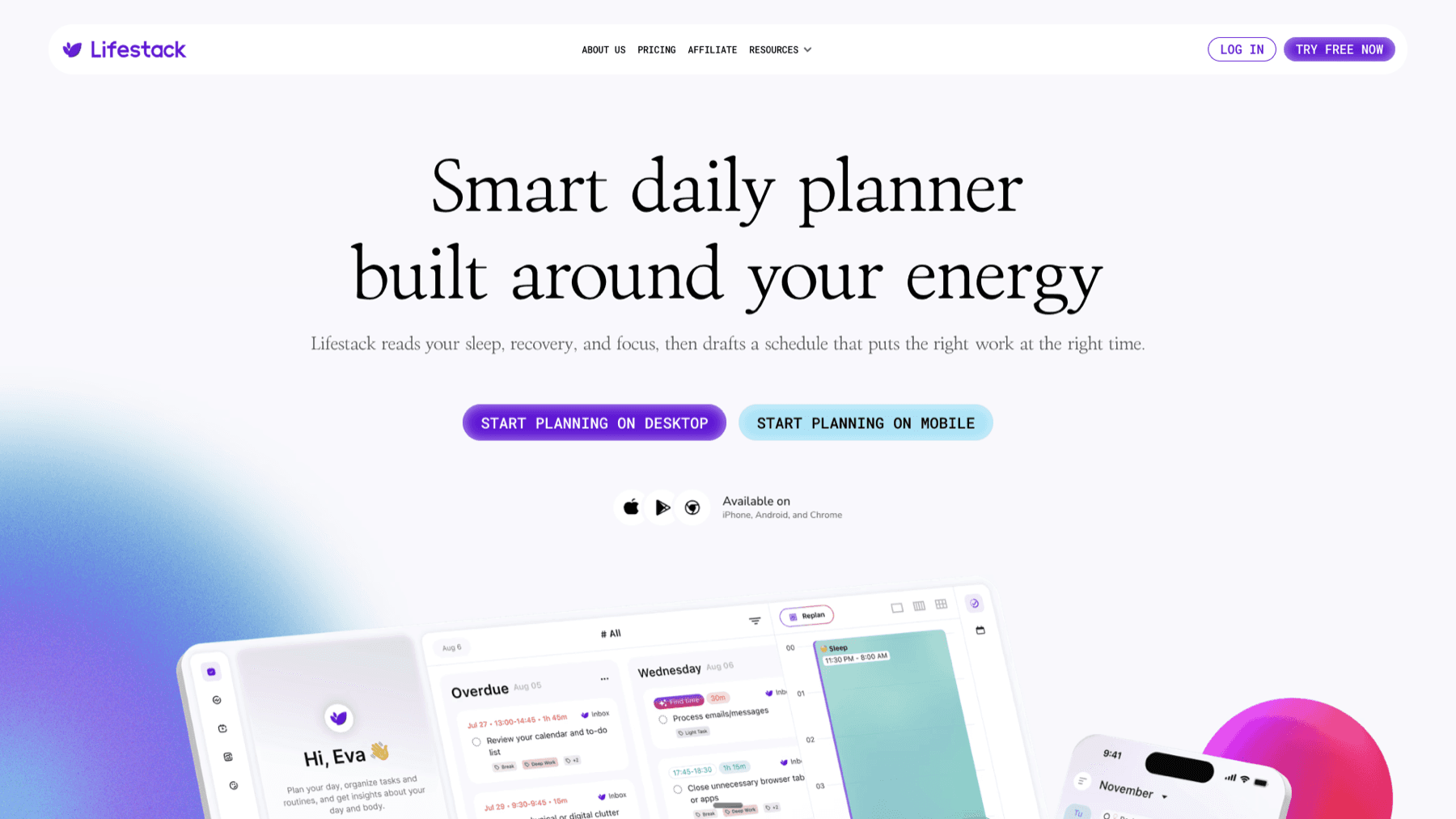
Lifestack approaches sleep differently from every other app on this list. Instead of playing sounds when you are already in bed, it works upstream: by scheduling your tasks, meetings, and focused work around your natural energy patterns during the day, it prevents the kind of cognitive overload that keeps people awake at night.
For people who lie in bed replaying unfinished tasks or worrying about tomorrow's schedule, Lifestack's auto-scheduling removes the mental load before you even reach your bedroom. It connects with Google Calendar and Apple Calendar, learns your energy rhythms, and builds a realistic daily plan that accounts for how your brain actually works. This matters especially for people with ADHD or irregular energy patterns whose sleep problems trace directly back to chaotic days.
Key Features
AI auto-scheduling that places tasks in your peak-energy windows
Integrates with Google Calendar, Apple Calendar, and major task apps
Energy tracking to identify your personal focus and rest patterns
Dynamic rescheduling when your day changes
What Works
Addresses the actual cause of many sleep problems (unresolved daytime cognitive load)
Reduces decision fatigue and end-of-day mental overflow
Syncs across devices with no setup friction
Limitations
7-day free trial on the annual plan, then requires subscription (unlike the fully-free apps below)
Not a bedtime audio or sleep tracking tool
Pricing: 7-day free trial (annual plan); $9.99/month or $49.99/year; lifetime option at $120
Best for: People whose sleep problems stem from busy, unstructured days or ADHD-related morning and evening dysregulation
2. Insight Timer: The Largest Free Sleep Meditation Library
Tens of thousands of free guided sleep sessions, no credit card required.
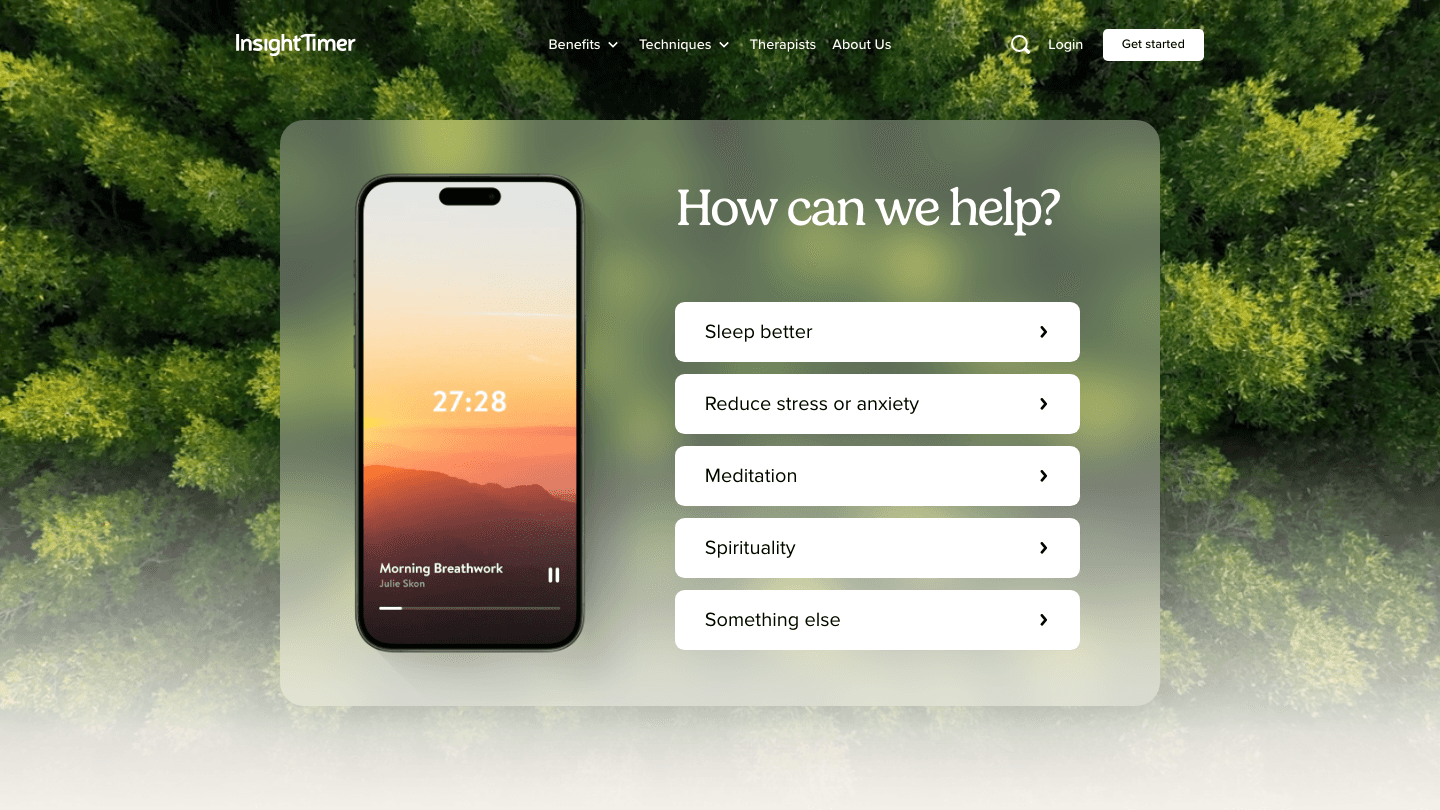
Insight Timer is the largest free meditation platform in the world, and its sleep section is one of the strongest free offerings anywhere in the app category. The free tier includes thousands of guided sleep meditations, sleep music tracks, sleep stories, and a basic meditation timer. You do not need to enter payment details to access the core library.
The quality varies by teacher, but the sheer volume means you can find content that fits your exact preferences: voice type, session length, style (body scan, visualization, breathwork), and even specific problems like racing thoughts or anxiety at bedtime.
What Works
Enormous free content library that does not feel gated
Searchable by duration, style, teacher, and problem
Active teacher community with new content added regularly
Available on iOS and Android
Limitations
No sleep tracking or smart alarm features
Courses and some premium teachers are locked behind Member Plus
App can feel overwhelming with so many options
Pricing: Free (core library); Member Plus subscription available for courses and premium content
Best for: Anyone who wants a wide variety of guided sleep meditations without paying anything
3. Smiling Mind: Completely Free, No Catch
A nonprofit sleep and mindfulness app that costs exactly nothing.
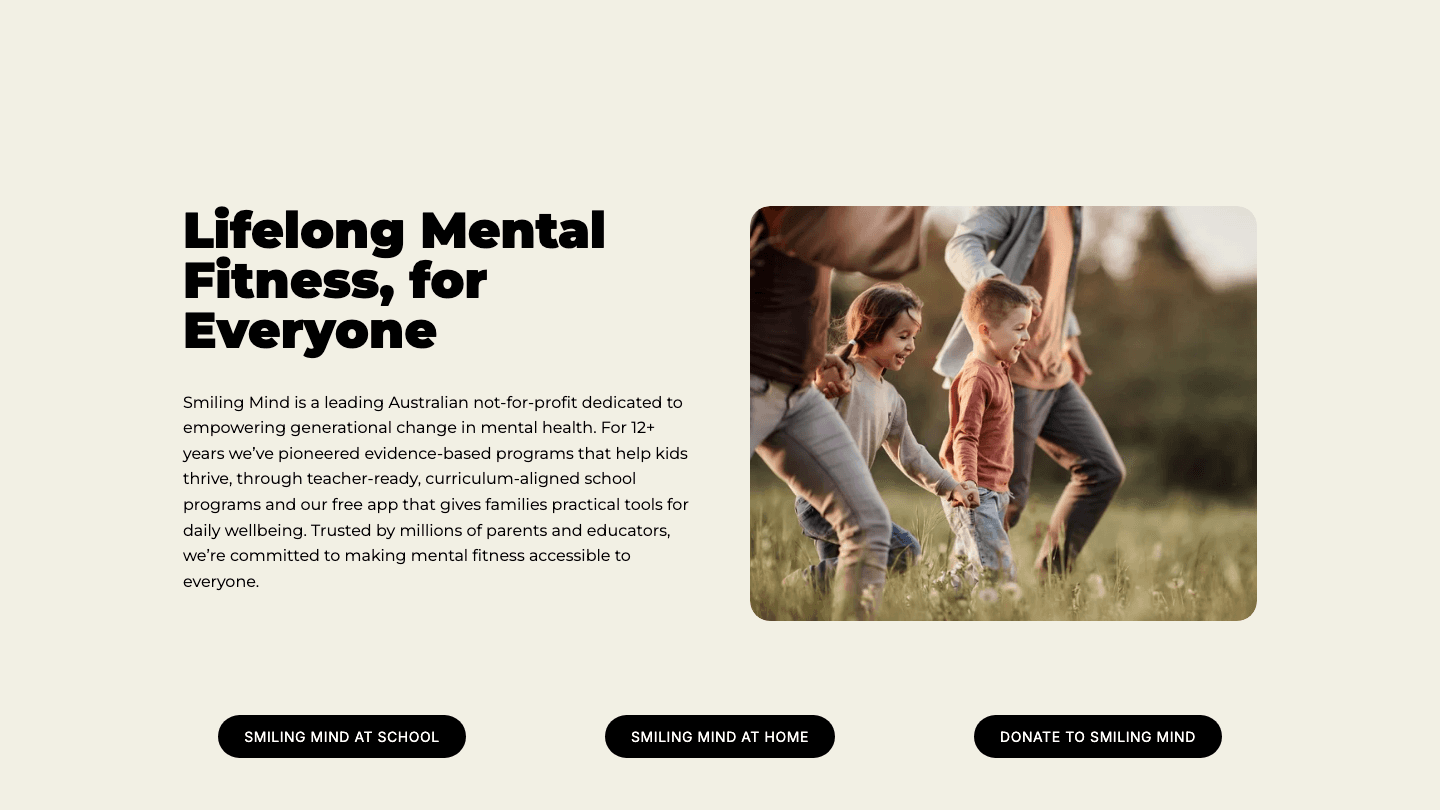
Smiling Mind is an Australian nonprofit that built a mindfulness and meditation app with zero monetization. There is no premium tier, no subscription, no ads, and no in-app purchases. Every program, including the sleep-specific meditations, is free.
The sleep programs are structured and evidence-based rather than endless ambient music. They cover sleep hygiene education, body scan techniques, and wind-down breathing exercises. The app is designed with input from psychologists and educators, which shows in the quality of the guided content.
What Works
Genuinely 100% free with no upsell
Structured programs with a clear beginning and end (not just an infinite library)
Clean, low-stimulus interface designed to help you wind down
Limitations
Smaller content library than Insight Timer
No sleep tracking, smart alarm, or audio generation
Primarily iOS-focused, Android version has fewer updates
Pricing: Completely free
Best for: People who want a no-cost, no-pressure mindfulness and sleep program
4. Pzizz: Psychoacoustic Sleep Audio
Algorithmically generated sleep audio designed to keep your brain from adapting to the sound.

Pzizz takes a different approach to sleep audio. Instead of looping the same track, it uses a psychoacoustic algorithm to generate audio that shifts subtly each session. The theory is that your brain adapts to repetitive sounds over time, reducing their effectiveness. Pzizz's dynamic audio prevents that adaptation.
The app covers three modes: sleep, nap, and focus. The sleep mode includes voiceover narration that fades out as you drift off, layered with music and sound effects tuned to help you disengage from wakefulness. It is notably different from traditional white noise apps.
What Works
Non-repetitive audio that stays effective over time
Separate sleep, nap, and focus modes
Timer-based playback so you are not leaving audio on all night
Limitations
Free tier has limited session count before prompting upgrade
Not suitable for people who dislike voice narration during sleep
No sleep tracking integration
Pricing: Free to download with premium content via in-app purchase
Best for: People who find standard white noise or looped tracks stop working after a few weeks
5. Sleep Cycle: Smart Alarm That Wakes You Gently
Free sleep tracking and a smart alarm that catches you at your lightest sleep phase.

Sleep Cycle uses your phone's microphone or accelerometer to detect sleep phases through the night. Instead of jolting you awake at a fixed time, it identifies a light sleep window within a 30-minute range before your alarm and wakes you then. The difference in how you feel waking from light versus deep sleep is noticeable.
The free version includes basic sleep tracking, the smart alarm feature, and sleep notes. Premium adds detailed sleep analysis, trends over time, and integration with health platforms. For most people, the free tier covers what they actually need.
What Works
Smart alarm works well and feels genuinely different from a standard alarm
Sleep stage tracking gives useful data even on the free tier
Gentle wake-up sounds included
Limitations
Deeper analytics and trends require premium subscription
Microphone-based tracking requires phone to stay on your bed or nightstand
Not a wind-down or meditation tool
Pricing: Free with basic features; premium subscription for advanced analytics (30-day free trial)
Best for: People who want smarter wake-up timing without paying anything upfront
6. Oak: Free Breathing and Meditation for Wind-Down
A clean, completely free breathing app with guided sleep meditations built in.
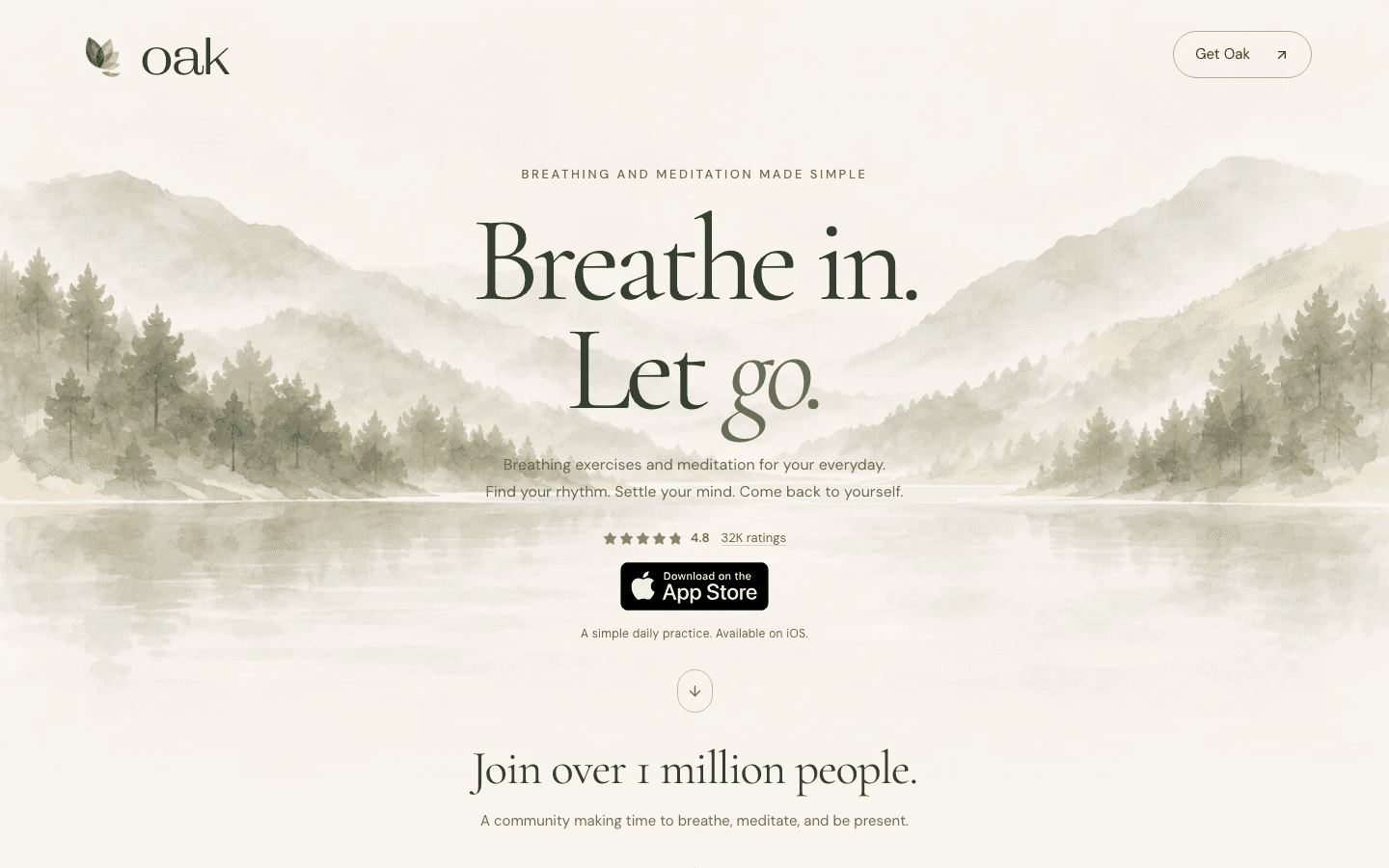
Oak is a free iOS meditation and breathing app that covers the basics extremely well: guided meditations, breathing exercises (box breathing, 4-7-8), and unguided sessions with ambient sound. There is no subscription, no freemium gate, and no pressure to upgrade.
The sleep and wind-down section includes body scan meditations and breathing patterns specifically chosen for activating the parasympathetic nervous system before bed. It is compact and focused, which is actually a feature when you want something that does one thing well without decision fatigue at 10pm.
What Works
Completely free with no in-app purchases
Excellent 4-7-8 and box breathing guides for pre-sleep routines
Simple, distraction-free design
Limitations
iOS only (no Android version)
Limited content library compared to Insight Timer
No sleep tracking or alarm features
Pricing: Free
Best for: iPhone users who want a straightforward, free breathing and wind-down tool
Which Free Sleep App Is Right for You?
Your sleep problem is a chaotic, overscheduled day: Lifestack (addresses the cause, not just the symptom)
You want the largest library of free guided meditations: Insight Timer
You want something 100% free with zero monetization: Smiling Mind or Oak
Standard sleep sounds have stopped working for you: Pzizz
You want a smarter alarm that wakes you at the right time: Sleep Cycle
You are on iPhone and want a no-fuss breathing app: Oak
For people with trouble falling asleep tied to overthinking or overstimulation, the most effective combination is Lifestack during the day (to reduce mental load) plus Insight Timer or Oak at night (to wind down). Using a scheduling tool alongside a wind-down app addresses both the cause and the symptom.
FAQ
Are there any completely free sleep apps with no subscription?
Yes. Smiling Mind and Oak are both completely free with no paid tier. Insight Timer also has a free core that does not require payment. Sleep Cycle and Pzizz are free to download but offer premium content upgrades.
Do free sleep apps actually work?
The research on sleep hygiene supports several approaches that free apps provide: relaxation techniques, controlled breathing, and sleep environment audio. Guided body scan meditations and breathing exercises have measurable effects on sleep onset time. Whether any specific app works depends on whether the techniques suit you personally.
What is the best free sleep app for ADHD?
For ADHD specifically, the problem is often not bedtime itself but the cognitive overload that arrives at bedtime from an unstructured day. ADHD sleep strategies work best when the day's demands are well-managed before you try to wind down. Lifestack addresses this upstream, while Insight Timer or Oak handle the actual wind-down routine.
Is Sleep Cycle free?
Sleep Cycle is free to download and includes basic sleep tracking and the smart alarm feature at no cost. Extended sleep trends, detailed analytics, and some sounds require a premium subscription. The core features are accessible without paying.
What is the difference between sleep tracking apps and sleep audio apps?
Sleep tracking apps (Sleep Cycle) monitor your sleep stages and help you wake at an optimal time. Sleep audio apps (Pzizz, Insight Timer, Oak) provide content to help you fall asleep faster. They solve different problems. The best approach often combines both: a wind-down audio routine at night and a sleep tracker to understand your patterns over time.
Can a planning app really improve sleep?
For people whose poor sleep traces back to stress, unfinished tasks, or racing thoughts about tomorrow, yes. Daily planning that offloads decisions and creates a clear end to the workday reduces the cognitive activation that makes it hard to fall asleep. Lifestack's energy-aware scheduling specifically helps create that daily closure, which many users report improving sleep quality over time.
You do not need a subscription to sleep better. The app stores are full of sleep tools that are genuinely free, and several of them are worth your time. The challenge is figuring out which ones actually work versus which ones just look good on a screenshot.
We tested six free sleep apps across categories: smart alarm clocks, guided meditation libraries, sleep audio generators, breathing tools, and AI-powered schedulers. Each one was evaluated on what the free tier actually includes, not just what the paid version offers. If an app's free version is so limited that it is essentially a demo, we said so.
One thing worth knowing upfront: the best free sleep apps are not all dedicated "sleep apps" in the traditional sense. Some of the most impactful tools for sleep work by addressing what keeps you up at night, not just by playing rain sounds after you are already in bed.
Key Takeaways
The strongest free sleep apps cover different problems: wind-down audio, smart alarms, meditation, and daytime scheduling
Insight Timer and Smiling Mind offer genuinely free core experiences with no paywall on essential features
For people with ADHD or irregular sleep, an energy-aware planner like Lifestack addresses the root cause rather than just the symptom
Quick Guide: Best Free Sleep Apps
1. Lifestack: Best for improving sleep quality through daytime energy scheduling
2. Insight Timer: Best for free guided sleep meditations (massive library)
3. Smiling Mind: Best completely free option with no paid tier at all
4. Pzizz: Best for falling asleep with psychoacoustic audio
5. Sleep Cycle: Best smart alarm with free sleep tracking
6. Oak: Best free breathing and meditation app for wind-down routines
How We Evaluated
Free tier depth: how much is actually available without paying
Sleep quality impact: does it actually help, not just entertain
Ease of use: gets out of your way at bedtime
iOS and Android availability
Whether the free tier feels complete or just a teaser for paid content
1. Lifestack: Energy-Aware Scheduling for Better Sleep
The AI planner that fixes your sleep by fixing your day.
Lifestack approaches sleep differently from every other app on this list. Instead of playing sounds when you are already in bed, it works upstream: by scheduling your tasks, meetings, and focused work around your natural energy patterns during the day, it prevents the kind of cognitive overload that keeps people awake at night.
For people who lie in bed replaying unfinished tasks or worrying about tomorrow's schedule, Lifestack's auto-scheduling removes the mental load before you even reach your bedroom. It connects with Google Calendar and Apple Calendar, learns your energy rhythms, and builds a realistic daily plan that accounts for how your brain actually works. This matters especially for people with ADHD or irregular energy patterns whose sleep problems trace directly back to chaotic days.
Key Features
AI auto-scheduling that places tasks in your peak-energy windows
Integrates with Google Calendar, Apple Calendar, and major task apps
Energy tracking to identify your personal focus and rest patterns
Dynamic rescheduling when your day changes
What Works
Addresses the actual cause of many sleep problems (unresolved daytime cognitive load)
Reduces decision fatigue and end-of-day mental overflow
Syncs across devices with no setup friction
Limitations
7-day free trial on the annual plan, then requires subscription (unlike the fully-free apps below)
Not a bedtime audio or sleep tracking tool
Pricing: 7-day free trial (annual plan); $9.99/month or $49.99/year; lifetime option at $120
Best for: People whose sleep problems stem from busy, unstructured days or ADHD-related morning and evening dysregulation
2. Insight Timer: The Largest Free Sleep Meditation Library
Tens of thousands of free guided sleep sessions, no credit card required.
Insight Timer is the largest free meditation platform in the world, and its sleep section is one of the strongest free offerings anywhere in the app category. The free tier includes thousands of guided sleep meditations, sleep music tracks, sleep stories, and a basic meditation timer. You do not need to enter payment details to access the core library.
The quality varies by teacher, but the sheer volume means you can find content that fits your exact preferences: voice type, session length, style (body scan, visualization, breathwork), and even specific problems like racing thoughts or anxiety at bedtime.
What Works
Enormous free content library that does not feel gated
Searchable by duration, style, teacher, and problem
Active teacher community with new content added regularly
Available on iOS and Android
Limitations
No sleep tracking or smart alarm features
Courses and some premium teachers are locked behind Member Plus
App can feel overwhelming with so many options
Pricing: Free (core library); Member Plus subscription available for courses and premium content
Best for: Anyone who wants a wide variety of guided sleep meditations without paying anything
3. Smiling Mind: Completely Free, No Catch
A nonprofit sleep and mindfulness app that costs exactly nothing.
Smiling Mind is an Australian nonprofit that built a mindfulness and meditation app with zero monetization. There is no premium tier, no subscription, no ads, and no in-app purchases. Every program, including the sleep-specific meditations, is free.
The sleep programs are structured and evidence-based rather than endless ambient music. They cover sleep hygiene education, body scan techniques, and wind-down breathing exercises. The app is designed with input from psychologists and educators, which shows in the quality of the guided content.
What Works
Genuinely 100% free with no upsell
Structured programs with a clear beginning and end (not just an infinite library)
Clean, low-stimulus interface designed to help you wind down
Limitations
Smaller content library than Insight Timer
No sleep tracking, smart alarm, or audio generation
Primarily iOS-focused, Android version has fewer updates
Pricing: Completely free
Best for: People who want a no-cost, no-pressure mindfulness and sleep program
4. Pzizz: Psychoacoustic Sleep Audio
Algorithmically generated sleep audio designed to keep your brain from adapting to the sound.
Pzizz takes a different approach to sleep audio. Instead of looping the same track, it uses a psychoacoustic algorithm to generate audio that shifts subtly each session. The theory is that your brain adapts to repetitive sounds over time, reducing their effectiveness. Pzizz's dynamic audio prevents that adaptation.
The app covers three modes: sleep, nap, and focus. The sleep mode includes voiceover narration that fades out as you drift off, layered with music and sound effects tuned to help you disengage from wakefulness. It is notably different from traditional white noise apps.
What Works
Non-repetitive audio that stays effective over time
Separate sleep, nap, and focus modes
Timer-based playback so you are not leaving audio on all night
Limitations
Free tier has limited session count before prompting upgrade
Not suitable for people who dislike voice narration during sleep
No sleep tracking integration
Pricing: Free to download with premium content via in-app purchase
Best for: People who find standard white noise or looped tracks stop working after a few weeks
5. Sleep Cycle: Smart Alarm That Wakes You Gently
Free sleep tracking and a smart alarm that catches you at your lightest sleep phase.
Sleep Cycle uses your phone's microphone or accelerometer to detect sleep phases through the night. Instead of jolting you awake at a fixed time, it identifies a light sleep window within a 30-minute range before your alarm and wakes you then. The difference in how you feel waking from light versus deep sleep is noticeable.
The free version includes basic sleep tracking, the smart alarm feature, and sleep notes. Premium adds detailed sleep analysis, trends over time, and integration with health platforms. For most people, the free tier covers what they actually need.
What Works
Smart alarm works well and feels genuinely different from a standard alarm
Sleep stage tracking gives useful data even on the free tier
Gentle wake-up sounds included
Limitations
Deeper analytics and trends require premium subscription
Microphone-based tracking requires phone to stay on your bed or nightstand
Not a wind-down or meditation tool
Pricing: Free with basic features; premium subscription for advanced analytics (30-day free trial)
Best for: People who want smarter wake-up timing without paying anything upfront
6. Oak: Free Breathing and Meditation for Wind-Down
A clean, completely free breathing app with guided sleep meditations built in.
Oak is a free iOS meditation and breathing app that covers the basics extremely well: guided meditations, breathing exercises (box breathing, 4-7-8), and unguided sessions with ambient sound. There is no subscription, no freemium gate, and no pressure to upgrade.
The sleep and wind-down section includes body scan meditations and breathing patterns specifically chosen for activating the parasympathetic nervous system before bed. It is compact and focused, which is actually a feature when you want something that does one thing well without decision fatigue at 10pm.
What Works
Completely free with no in-app purchases
Excellent 4-7-8 and box breathing guides for pre-sleep routines
Simple, distraction-free design
Limitations
iOS only (no Android version)
Limited content library compared to Insight Timer
No sleep tracking or alarm features
Pricing: Free
Best for: iPhone users who want a straightforward, free breathing and wind-down tool
Which Free Sleep App Is Right for You?
Your sleep problem is a chaotic, overscheduled day: Lifestack (addresses the cause, not just the symptom)
You want the largest library of free guided meditations: Insight Timer
You want something 100% free with zero monetization: Smiling Mind or Oak
Standard sleep sounds have stopped working for you: Pzizz
You want a smarter alarm that wakes you at the right time: Sleep Cycle
You are on iPhone and want a no-fuss breathing app: Oak
For people with trouble falling asleep tied to overthinking or overstimulation, the most effective combination is Lifestack during the day (to reduce mental load) plus Insight Timer or Oak at night (to wind down). Using a scheduling tool alongside a wind-down app addresses both the cause and the symptom.
FAQ
Are there any completely free sleep apps with no subscription?
Yes. Smiling Mind and Oak are both completely free with no paid tier. Insight Timer also has a free core that does not require payment. Sleep Cycle and Pzizz are free to download but offer premium content upgrades.
Do free sleep apps actually work?
The research on sleep hygiene supports several approaches that free apps provide: relaxation techniques, controlled breathing, and sleep environment audio. Guided body scan meditations and breathing exercises have measurable effects on sleep onset time. Whether any specific app works depends on whether the techniques suit you personally.
What is the best free sleep app for ADHD?
For ADHD specifically, the problem is often not bedtime itself but the cognitive overload that arrives at bedtime from an unstructured day. ADHD sleep strategies work best when the day's demands are well-managed before you try to wind down. Lifestack addresses this upstream, while Insight Timer or Oak handle the actual wind-down routine.
Is Sleep Cycle free?
Sleep Cycle is free to download and includes basic sleep tracking and the smart alarm feature at no cost. Extended sleep trends, detailed analytics, and some sounds require a premium subscription. The core features are accessible without paying.
What is the difference between sleep tracking apps and sleep audio apps?
Sleep tracking apps (Sleep Cycle) monitor your sleep stages and help you wake at an optimal time. Sleep audio apps (Pzizz, Insight Timer, Oak) provide content to help you fall asleep faster. They solve different problems. The best approach often combines both: a wind-down audio routine at night and a sleep tracker to understand your patterns over time.
Can a planning app really improve sleep?
For people whose poor sleep traces back to stress, unfinished tasks, or racing thoughts about tomorrow, yes. Daily planning that offloads decisions and creates a clear end to the workday reduces the cognitive activation that makes it hard to fall asleep. Lifestack's energy-aware scheduling specifically helps create that daily closure, which many users report improving sleep quality over time.



FOLLOW ON
FOLLOW ON
FOLLOW ON


Copyright 2026 © Lifestack. All rights reserved
Copyright 2026 © Lifestack. All rights reserved

