
Tips
How to Function on No Sleep: 8 Science-Backed Tips
How to Function on No Sleep: 8 Science-Backed Tips

You got three hours. Maybe less. You have a full day of meetings, decisions, and things that require a functioning brain. The bad news is that there's no way to fully override the cognitive cost of sleep deprivation. After 18-20 hours without sleep, your cognitive impairment roughly matches a blood alcohol level of 0.1%. The good news is that you can still make the day significantly more manageable with the right approach.
These tips won't make you feel like you slept. They'll help you function well enough to get through what matters and reduce the damage to the days that follow. Sleep deprivation and brain fog are tightly linked, and many of the interventions below work specifically by reducing that fog without introducing side effects that make tomorrow worse.
Key Takeaways
The most effective short-term interventions are sunlight, strategic caffeine, and a short nap, not willpower or more coffee.
Protect your cognitive resources: cancel or delay non-essential decisions, and save your clearest windows for the tasks that actually matter today.
Recovery sleep is the only real fix. Everything else is management. Plan for an early bedtime tonight.
1. Get Outside in Morning Sunlight
Light is the strongest signal your circadian system receives, and morning sunlight is the most effective way to increase alertness quickly without using stimulants. Bright light exposure suppresses melatonin and increases cortisol, shifting your alertness curve forward.
Ten to twenty minutes of outdoor light within an hour of waking is enough to have a measurable effect. If it's dark or overcast, going outside still helps, but a bright light therapy lamp positioned at arm's length (10,000 lux) is an indoor alternative. This is particularly useful on no-sleep days because your melatonin clearance is likely delayed and your alertness curve is shifted.
2. Use Caffeine Strategically, Not Continuously
The instinct on a bad sleep night is to mainline coffee from the moment you wake up. This usually backfires. Caffeine works by blocking adenosine receptors, but adenosine still accumulates while it's being blocked. When the caffeine clears, the accumulated adenosine hits all at once, causing a crash worse than if you'd had no caffeine at all.
A better approach: delay your first caffeine by 60-90 minutes after waking (this allows morning cortisol to peak naturally), then have another dose around late morning if needed. Caffeine stays in your system for 5-7 hours, so stop after early afternoon to avoid compounding tonight's sleep problems. A small amount of caffeine combined with a 20-minute nap (the "coffee nap") is more effective than either alone.
3. Take a Strategic Power Nap
A power nap of 10-20 minutes is one of the most effective single interventions for acute sleep deprivation. Short naps of this length produce a measurable improvement in alertness, reaction time, and mood, and because you stay in light sleep stages, you avoid sleep inertia (the groggy feeling after waking from deep sleep).
The optimal timing is early-to-mid afternoon, when there's a natural dip in alertness that occurs regardless of sleep quality. Schedule it before 3 p.m. to avoid interference with that night's sleep. If you can't sleep during a nap, even lying still with your eyes closed for 15 minutes produces some benefit through physical rest, even without actual sleep onset.
4. Move Your Body
Exercise is a reliable short-term alertness booster. Even a 10-minute brisk walk increases norepinephrine and dopamine, which improves focus and mood. A more intense session produces stronger and longer-lasting effects, though it should happen earlier in the day so it doesn't push your sleep timing later.
HIIT in particular has shown some protective effects against the cognitive impairment caused by sleep loss in research contexts. This isn't a replacement for sleep, but it's more effective than many people expect at clearing the immediate cognitive fog that comes with a bad night.
5. Protect Your Best Hours for What Actually Matters
Sleep deprivation affects some cognitive functions more than others. Working memory, sustained attention, and creative problem-solving take the biggest hit. Procedural tasks, familiar routines, and things you can do on autopilot are relatively spared.
This means task selection matters more than usual on a bad sleep day. Identify the one or two things that truly require your best thinking and protect the time when you're least depleted (usually mid-morning) for those. Push meetings that are primarily status updates, defer non-urgent decisions, and be honest with yourself about what can wait until tomorrow when you've recovered. On a no-sleep day, you are working with limited cognitive budget.
6. Eat for Steady Energy, Not a Quick Fix
The sugar rush approach to surviving a tired day is well-known and reliably counterproductive. High-glycemic foods produce a brief energy spike followed by a dip that worsens the cognitive fog you're already dealing with. Fat-heavy meals slow digestion in ways that pull blood flow away from your brain.
What actually helps: balanced meals with protein, complex carbohydrates, and healthy fats that keep blood glucose stable. Small, frequent meals are better than large ones on low-sleep days because they prevent the post-meal energy crashes. Staying well-hydrated also matters more than usual; dehydration compounds cognitive impairment and is an easy thing to address.
7. Sync Your Tasks with Your Circadian Rhythm
Even on a bad sleep night, your circadian system still produces predictable energy variations. Most people have a secondary alertness peak in mid-morning and another in early evening, with a significant dip in early-to-mid afternoon. These patterns are reduced in amplitude on no-sleep days but still present.
Knowing your personal circadian rhythm pattern lets you make better decisions about timing. If you have flexibility in your schedule, placing your hardest tasks during your personal peak (usually mid-morning for most chronotypes) and handling routine work during your circadian low gives you better outcomes than distributing tasks uniformly throughout the day. The guide on how to stay awake when tired has additional circadian-based strategies worth combining with this approach.
8. Commit to Recovery Sleep Tonight
This is the only intervention that actually fixes the problem. You can catch up on lost sleep, at least partially. The key is not putting it off. One night of recovery sleep won't restore everything, but it significantly reduces the deficit. Planning your recovery sleep as a genuine priority (not just hoping it happens) means protecting your evening from commitments that would push your bedtime later.
Set a target bedtime for tonight and work backward. Know when you need to stop screen exposure (45-60 minutes before), when to have your last caffeine (6+ hours before), and what you can cut from the evening to make the target bedtime real. The guide on how to fix your sleep schedule quickly covers the mechanics of resetting after disrupted nights.
Best Tool for Managing Low-Energy Days
When you're running on no sleep, the cost of figuring out what to work on when is higher than usual. Decision fatigue hits faster, and the temptation to fill your limited cognitive capacity with low-priority tasks is real. A planning system that makes those decisions for you matters more on bad days than good ones.
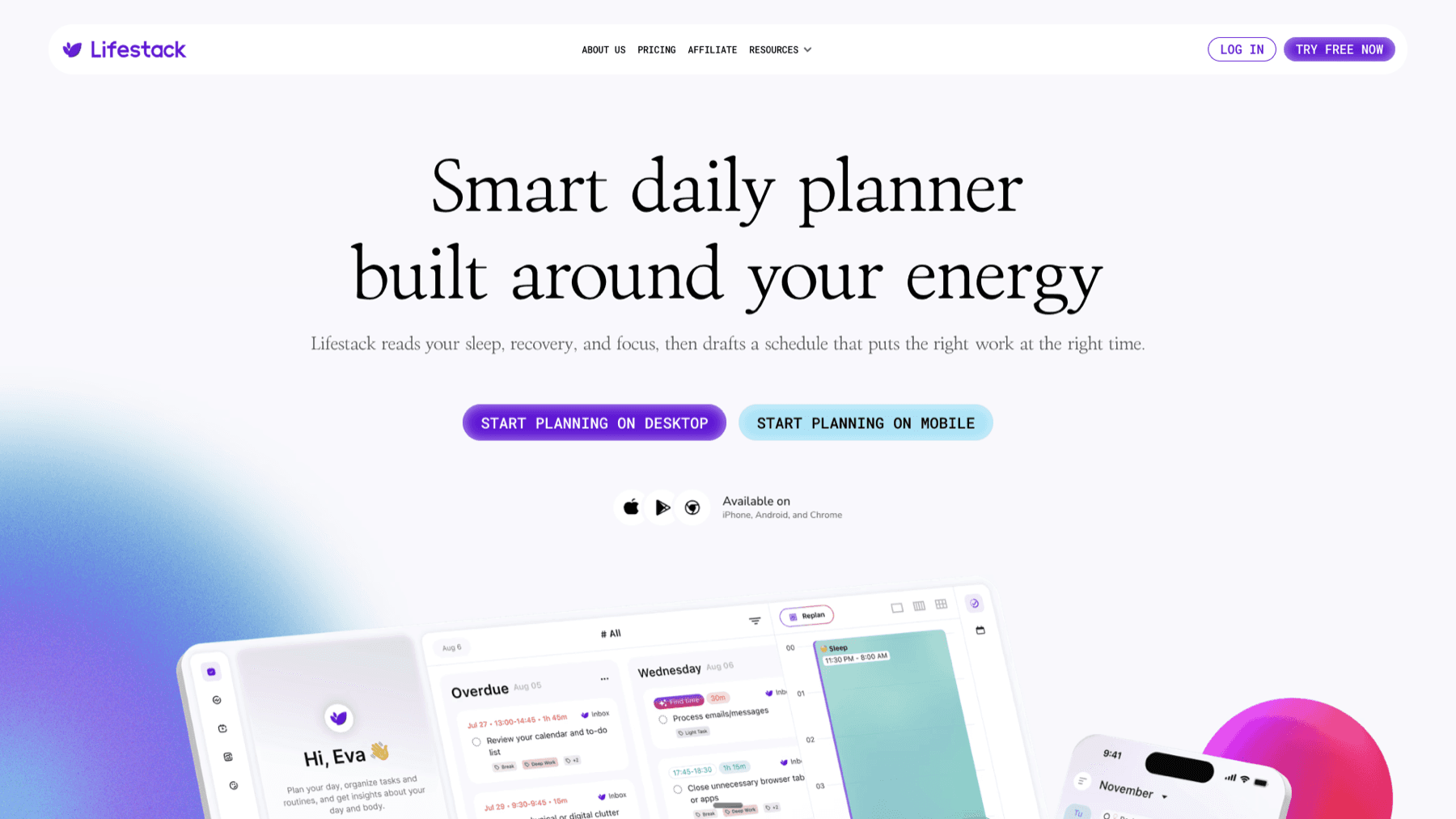
Lifestack is an AI planner that schedules tasks based on your energy levels throughout the day. On a day after a bad night, that means your most cognitively demanding tasks land during your actual peak window, not scattered throughout a day when you're already depleted. You can flag that you're running low and it adjusts the schedule. The energy-based scheduling approach it uses is specifically designed for days when your capacity isn't flat, which describes almost every bad-sleep day. Lifestack costs $7/month or $50/year, with a 7-day free trial. For more on the relationship between sleep and energy, that guide covers the physiology behind why these strategies work.
Frequently Asked Questions
Can you function normally on no sleep?
Not fully. After 18-20 hours without sleep, cognitive impairment is comparable to a blood alcohol level of 0.1%. You can get through a day with the right strategies, but demanding cognitive tasks will take longer, errors will increase, and emotional regulation will be harder. The goal is damage reduction, not restoration.
How do you stay alert after a sleepless night?
Morning sunlight, strategic caffeine (delayed 60-90 minutes after waking, stopped by early afternoon), a 10-20 minute nap if possible, and a brief bout of exercise are the most reliable short-term alertness interventions. Avoiding large meals and sugar spikes prevents secondary crashes. None of these replaces sleep but they meaningfully extend your functional window.
How many hours of sleep do you actually need to function?
Most adults need 7-9 hours for full cognitive function. Going below 6 hours produces measurable performance impairment even when you don't feel impaired. Sleep need is partially genetic; a small percentage of people genuinely function well on 6 hours, but most people who think they're fine on less have adapted to a lower baseline without realizing it.
Is it worse to sleep for 2 hours or not at all?
Generally, 2 hours of sleep is better than zero. Even brief sleep provides some adenosine clearance and allows for minimal restorative processes. The exception is if getting 2 hours means waking mid-sleep cycle in deep sleep, which can produce significant sleep inertia that takes 30-60 minutes to clear and can temporarily make you feel worse than not sleeping. A 20-minute nap avoids this by staying in light sleep stages.
Does caffeine actually help on no sleep?
Yes, but with important limits. Caffeine blocks adenosine receptors and temporarily restores alertness, but the adenosine keeps accumulating while it's blocked. When the caffeine clears, the accumulated adenosine causes a rebound crash. Strategic timing (delaying the first dose, stopping early afternoon) produces better results than continuous consumption throughout the day.
How do you recover from sleep deprivation quickly?
Prioritize an early bedtime the same day if possible. One full night of recovery sleep at your normal timing significantly reduces the cognitive deficit, though it doesn't fully erase it. Avoid the temptation to sleep in excessively the next morning if it means going to bed late the following night, which can cascade into a delayed schedule. The article on managing the afternoon slump has strategies for the most depleted part of sleep-deprived days.
You got three hours. Maybe less. You have a full day of meetings, decisions, and things that require a functioning brain. The bad news is that there's no way to fully override the cognitive cost of sleep deprivation. After 18-20 hours without sleep, your cognitive impairment roughly matches a blood alcohol level of 0.1%. The good news is that you can still make the day significantly more manageable with the right approach.
These tips won't make you feel like you slept. They'll help you function well enough to get through what matters and reduce the damage to the days that follow. Sleep deprivation and brain fog are tightly linked, and many of the interventions below work specifically by reducing that fog without introducing side effects that make tomorrow worse.
Key Takeaways
The most effective short-term interventions are sunlight, strategic caffeine, and a short nap, not willpower or more coffee.
Protect your cognitive resources: cancel or delay non-essential decisions, and save your clearest windows for the tasks that actually matter today.
Recovery sleep is the only real fix. Everything else is management. Plan for an early bedtime tonight.
1. Get Outside in Morning Sunlight
Light is the strongest signal your circadian system receives, and morning sunlight is the most effective way to increase alertness quickly without using stimulants. Bright light exposure suppresses melatonin and increases cortisol, shifting your alertness curve forward.
Ten to twenty minutes of outdoor light within an hour of waking is enough to have a measurable effect. If it's dark or overcast, going outside still helps, but a bright light therapy lamp positioned at arm's length (10,000 lux) is an indoor alternative. This is particularly useful on no-sleep days because your melatonin clearance is likely delayed and your alertness curve is shifted.
2. Use Caffeine Strategically, Not Continuously
The instinct on a bad sleep night is to mainline coffee from the moment you wake up. This usually backfires. Caffeine works by blocking adenosine receptors, but adenosine still accumulates while it's being blocked. When the caffeine clears, the accumulated adenosine hits all at once, causing a crash worse than if you'd had no caffeine at all.
A better approach: delay your first caffeine by 60-90 minutes after waking (this allows morning cortisol to peak naturally), then have another dose around late morning if needed. Caffeine stays in your system for 5-7 hours, so stop after early afternoon to avoid compounding tonight's sleep problems. A small amount of caffeine combined with a 20-minute nap (the "coffee nap") is more effective than either alone.
3. Take a Strategic Power Nap
A power nap of 10-20 minutes is one of the most effective single interventions for acute sleep deprivation. Short naps of this length produce a measurable improvement in alertness, reaction time, and mood, and because you stay in light sleep stages, you avoid sleep inertia (the groggy feeling after waking from deep sleep).
The optimal timing is early-to-mid afternoon, when there's a natural dip in alertness that occurs regardless of sleep quality. Schedule it before 3 p.m. to avoid interference with that night's sleep. If you can't sleep during a nap, even lying still with your eyes closed for 15 minutes produces some benefit through physical rest, even without actual sleep onset.
4. Move Your Body
Exercise is a reliable short-term alertness booster. Even a 10-minute brisk walk increases norepinephrine and dopamine, which improves focus and mood. A more intense session produces stronger and longer-lasting effects, though it should happen earlier in the day so it doesn't push your sleep timing later.
HIIT in particular has shown some protective effects against the cognitive impairment caused by sleep loss in research contexts. This isn't a replacement for sleep, but it's more effective than many people expect at clearing the immediate cognitive fog that comes with a bad night.
5. Protect Your Best Hours for What Actually Matters
Sleep deprivation affects some cognitive functions more than others. Working memory, sustained attention, and creative problem-solving take the biggest hit. Procedural tasks, familiar routines, and things you can do on autopilot are relatively spared.
This means task selection matters more than usual on a bad sleep day. Identify the one or two things that truly require your best thinking and protect the time when you're least depleted (usually mid-morning) for those. Push meetings that are primarily status updates, defer non-urgent decisions, and be honest with yourself about what can wait until tomorrow when you've recovered. On a no-sleep day, you are working with limited cognitive budget.
6. Eat for Steady Energy, Not a Quick Fix
The sugar rush approach to surviving a tired day is well-known and reliably counterproductive. High-glycemic foods produce a brief energy spike followed by a dip that worsens the cognitive fog you're already dealing with. Fat-heavy meals slow digestion in ways that pull blood flow away from your brain.
What actually helps: balanced meals with protein, complex carbohydrates, and healthy fats that keep blood glucose stable. Small, frequent meals are better than large ones on low-sleep days because they prevent the post-meal energy crashes. Staying well-hydrated also matters more than usual; dehydration compounds cognitive impairment and is an easy thing to address.
7. Sync Your Tasks with Your Circadian Rhythm
Even on a bad sleep night, your circadian system still produces predictable energy variations. Most people have a secondary alertness peak in mid-morning and another in early evening, with a significant dip in early-to-mid afternoon. These patterns are reduced in amplitude on no-sleep days but still present.
Knowing your personal circadian rhythm pattern lets you make better decisions about timing. If you have flexibility in your schedule, placing your hardest tasks during your personal peak (usually mid-morning for most chronotypes) and handling routine work during your circadian low gives you better outcomes than distributing tasks uniformly throughout the day. The guide on how to stay awake when tired has additional circadian-based strategies worth combining with this approach.
8. Commit to Recovery Sleep Tonight
This is the only intervention that actually fixes the problem. You can catch up on lost sleep, at least partially. The key is not putting it off. One night of recovery sleep won't restore everything, but it significantly reduces the deficit. Planning your recovery sleep as a genuine priority (not just hoping it happens) means protecting your evening from commitments that would push your bedtime later.
Set a target bedtime for tonight and work backward. Know when you need to stop screen exposure (45-60 minutes before), when to have your last caffeine (6+ hours before), and what you can cut from the evening to make the target bedtime real. The guide on how to fix your sleep schedule quickly covers the mechanics of resetting after disrupted nights.
Best Tool for Managing Low-Energy Days
When you're running on no sleep, the cost of figuring out what to work on when is higher than usual. Decision fatigue hits faster, and the temptation to fill your limited cognitive capacity with low-priority tasks is real. A planning system that makes those decisions for you matters more on bad days than good ones.
Lifestack is an AI planner that schedules tasks based on your energy levels throughout the day. On a day after a bad night, that means your most cognitively demanding tasks land during your actual peak window, not scattered throughout a day when you're already depleted. You can flag that you're running low and it adjusts the schedule. The energy-based scheduling approach it uses is specifically designed for days when your capacity isn't flat, which describes almost every bad-sleep day. Lifestack costs $7/month or $50/year, with a 7-day free trial. For more on the relationship between sleep and energy, that guide covers the physiology behind why these strategies work.
Frequently Asked Questions
Can you function normally on no sleep?
Not fully. After 18-20 hours without sleep, cognitive impairment is comparable to a blood alcohol level of 0.1%. You can get through a day with the right strategies, but demanding cognitive tasks will take longer, errors will increase, and emotional regulation will be harder. The goal is damage reduction, not restoration.
How do you stay alert after a sleepless night?
Morning sunlight, strategic caffeine (delayed 60-90 minutes after waking, stopped by early afternoon), a 10-20 minute nap if possible, and a brief bout of exercise are the most reliable short-term alertness interventions. Avoiding large meals and sugar spikes prevents secondary crashes. None of these replaces sleep but they meaningfully extend your functional window.
How many hours of sleep do you actually need to function?
Most adults need 7-9 hours for full cognitive function. Going below 6 hours produces measurable performance impairment even when you don't feel impaired. Sleep need is partially genetic; a small percentage of people genuinely function well on 6 hours, but most people who think they're fine on less have adapted to a lower baseline without realizing it.
Is it worse to sleep for 2 hours or not at all?
Generally, 2 hours of sleep is better than zero. Even brief sleep provides some adenosine clearance and allows for minimal restorative processes. The exception is if getting 2 hours means waking mid-sleep cycle in deep sleep, which can produce significant sleep inertia that takes 30-60 minutes to clear and can temporarily make you feel worse than not sleeping. A 20-minute nap avoids this by staying in light sleep stages.
Does caffeine actually help on no sleep?
Yes, but with important limits. Caffeine blocks adenosine receptors and temporarily restores alertness, but the adenosine keeps accumulating while it's blocked. When the caffeine clears, the accumulated adenosine causes a rebound crash. Strategic timing (delaying the first dose, stopping early afternoon) produces better results than continuous consumption throughout the day.
How do you recover from sleep deprivation quickly?
Prioritize an early bedtime the same day if possible. One full night of recovery sleep at your normal timing significantly reduces the cognitive deficit, though it doesn't fully erase it. Avoid the temptation to sleep in excessively the next morning if it means going to bed late the following night, which can cascade into a delayed schedule. The article on managing the afternoon slump has strategies for the most depleted part of sleep-deprived days.



FOLLOW ON
FOLLOW ON
FOLLOW ON


Copyright 2026 © Lifestack. All rights reserved
Copyright 2026 © Lifestack. All rights reserved

