
App
Rise Sleep Alternative: 5 Apps Worth Trying
Rise Sleep Alternative: 5 Apps Worth Trying

Why People Look for Rise Sleep Alternatives
Rise Sleep is built around two ideas: sleep debt and energy forecasting. It tracks how much sleep you owe your body over time, shows you a projected energy curve for the day based on your circadian rhythm, and suggests when to schedule demanding work versus low-effort tasks. For people who respond well to that kind of data visualization, it's a useful app.
The common reasons people switch: Rise Sleep requires a subscription for its core features, it doesn't integrate with calendars or task management systems, and the energy forecast is based primarily on circadian modeling rather than real wearable data from the individual user. For people who want their sleep and energy data to actually change what their day looks like, a tool that connects those signals to a schedule is more useful.
These five alternatives cover different parts of the spectrum, from apps that give you richer sleep data to one that actually puts your energy insights to work on your calendar.
Key Takeaways
Lifestack is the best Rise Sleep alternative if you want your energy data to automatically shape your schedule, not just inform it.
Oura and WHOOP give you more detailed and hardware-accurate sleep data than Rise, but neither turns that data into a schedule on your behalf.
Pillow and Sleep Cycle are solid free Rise Sleep alternatives for users who want sleep stage tracking and smart alarms without a subscription.
Quick Guide: Rise Sleep Alternatives
1. Lifestack: Best Rise Sleep alternative for scheduling around your energy automatically
2. Oura: Best hardware-based sleep and readiness tracking
3. Pillow: Best free Rise Sleep alternative on iOS
4. Sleep Cycle: Best smart alarm with sleep analysis
5. WHOOP: Best for athletes tracking strain and recovery
1. Lifestack: Best Rise Sleep Alternative for Action-Takers
The app that does something with your sleep and energy data, not just shows it to you.

Rise Sleep shows you when your energy will be high or low. Lifestack takes the next step: it reads your actual wearable data (Oura, Whoop, Fitbit, Garmin, Apple Health) and builds your daily task schedule around those signals automatically. High energy window in the morning? That's when Lifestack schedules your deepest work. Low recovery from last night? It shifts intensive tasks to a better slot and puts lower-effort items in the morning.
This is the gap Rise Sleep doesn't fill. Energy curves are useful for awareness, but awareness without scheduling integration leaves the hard work to you: look at the forecast, look at your task list, manually decide what goes where. Lifestack eliminates that manual step. It connects to your Google Calendar or Apple Calendar and auto-schedules your tasks, so the calendar reflects your biology rather than an optimistic projection you made on Monday morning.
Read more about how Lifestack works and the energy-based planning approach it uses.
Key Features
AI task scheduling based on wearable energy data (Oura, Whoop, Fitbit, Garmin, Apple Health)
Two-way sync with Google Calendar and Apple Calendar
Task capture via iOS and Android apps plus Chrome extension
Integrates with Todoist for pulling in existing task lists
What Works
Closes the loop from "I know my energy peaks" to "my schedule reflects those peaks"
Works with data from wearables you already own rather than requiring new hardware
Significantly less daily decision-making about when to do tasks
Limitations
Not a sleep tracking app itself (pairs with existing wearables)
No sleep debt visualization (Rise Sleep's primary feature)
Pricing: $7/month or $50/year (7-day free trial on annual plan)
Best for: Rise Sleep users who want their energy insights to automatically change what their day looks like, not just inform it.
2. Oura: Best Hardware-Based Sleep and Energy Tracking
The most accurate wrist-independent sleep tracker, with a strong readiness score.
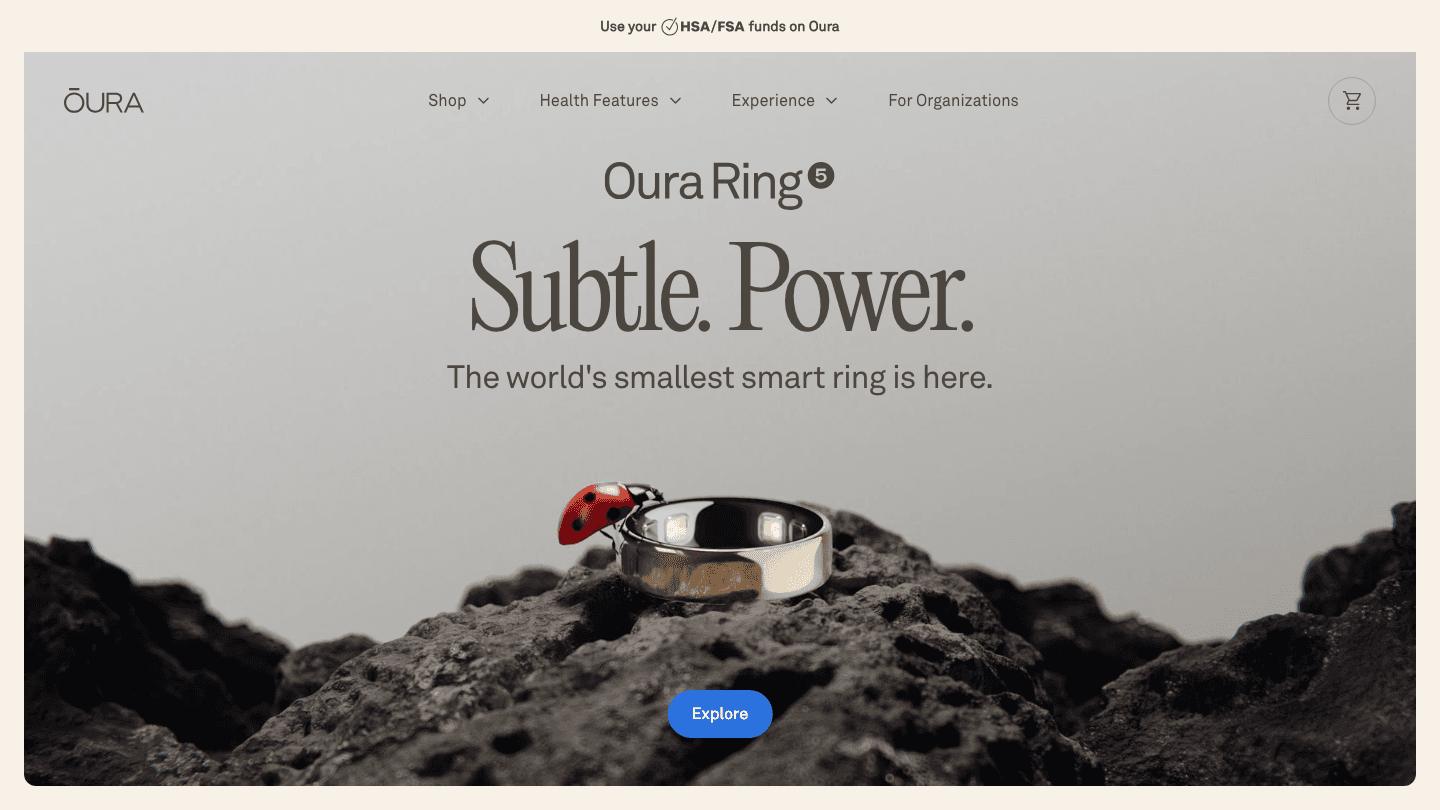
Oura is a smart ring (worn on the finger rather than the wrist) that tracks sleep stages, heart rate variability, skin temperature, and activity. Its sleep tracking accuracy is consistently rated higher than wrist-based devices because the finger provides a cleaner signal for optical heart rate measurement. The Oura app generates a daily Readiness Score that incorporates sleep quality, HRV trends, and recent activity, which functions similarly to Rise's energy forecast.
Oura doesn't have Rise's sleep debt tracking concept, but it does show your HRV trend over time, which serves as a proxy for cumulative recovery status. The app's period prediction feature and temperature-based health signals are also notable differentiators. For people who want more accurate raw data than Rise provides, Oura is a strong upgrade. If you already own an Oura Ring, check out the best apps to use with Oura to get more from your data.
What Works
More accurate sleep stage detection than wrist-based trackers
HRV and readiness scoring that functions like an energy forecast
Temperature sensing catches illness and cycle-related changes early
Long battery life (4 to 7 days)
Limitations
Requires hardware purchase (ring) in addition to app subscription
No calendar integration or task scheduling
Android experience is less polished than iOS
Pricing: Ring from ~$299; app membership ~$5.99/month (included free for first year)
Best for: Users who want more accurate sleep data than Rise provides and already use (or are willing to buy) a ring-form wearable.
3. Pillow: Best Free Rise Sleep Alternative on iOS
A solid sleep tracker that works with iPhone or Apple Watch, with no required subscription.
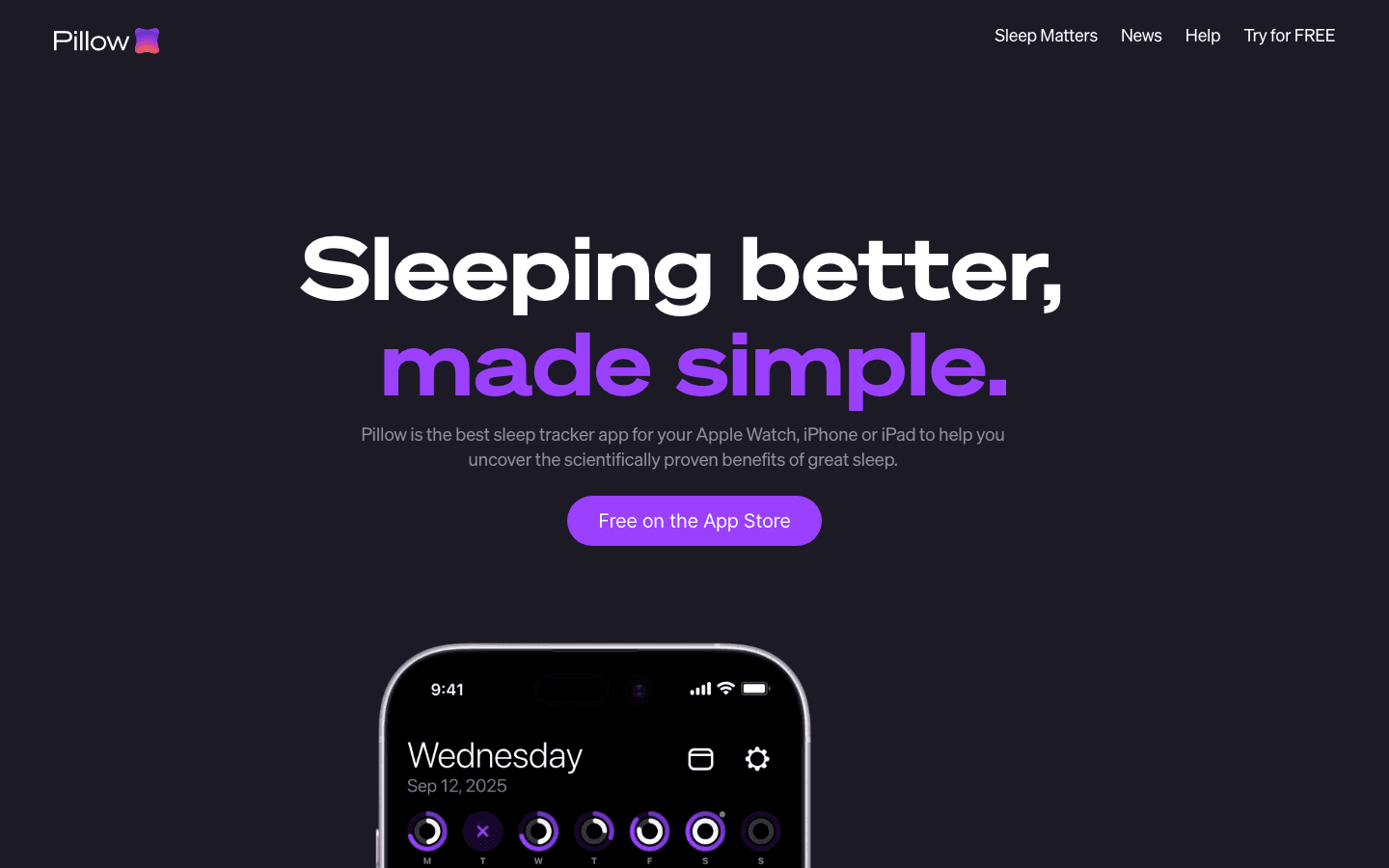
Pillow is an iOS sleep tracker that uses the iPhone microphone or Apple Watch sensors to detect sleep stages and record audio events (snoring, sleep talking, coughing). It generates a weekly sleep report and shows HRV data when used with Apple Watch. The core app is free, making it one of the better no-cost Rise Sleep alternatives for iPhone users who don't want a subscription.
Pillow lacks Rise's circadian energy forecasting and doesn't offer any scheduling integration, but its sleep stage analysis and audio recording are features Rise doesn't have. For someone who primarily wants to understand their sleep quality rather than optimize their schedule around it, Pillow covers the essentials without a paywall.
What Works
Free core app with sleep stage tracking
Audio recording for snoring and sleep sounds
Apple Watch and Apple Health integration
HRV tracking on Apple Watch-paired sessions
Limitations
iOS and Apple Watch only (no Android)
No energy forecasting or circadian rhythm visualization
No task scheduling or calendar integration
Pricing: Free (optional Premium in-app purchase)
Best for: iPhone users who want a free Rise Sleep alternative focused on sleep quality analysis rather than energy scheduling.
4. Sleep Cycle: Best Smart Alarm Alternative
The app that wakes you at the lightest point in your sleep cycle, with sleep analysis built in.

Sleep Cycle uses your phone's microphone or Apple Watch to detect movement and sound patterns during sleep, then identifies when you're in a lighter sleep phase and wakes you during that window (set up to 30 minutes before your target alarm time). The smart alarm is Sleep Cycle's primary differentiator and something Rise Sleep doesn't offer.
Sleep Cycle generates weekly sleep quality reports, tracks snoring, and provides a simple sleep score. It doesn't have the depth of HRV analysis that Oura or WHOOP offer, and it doesn't do energy forecasting, but for people whose main frustration with Rise is the subscription cost and whose primary need is better morning wake quality, Sleep Cycle is a practical alternative. It also integrates with Apple Health for sharing sleep data with other apps.
What Works
Smart alarm that wakes you during light sleep
Simple, low-friction setup (works with phone mic, no wearable required)
Weekly sleep quality trends
Snoring detection and recording
Limitations
No energy forecasting or circadian rhythm visualization
Less accurate sleep stage data than dedicated wearables
No scheduling integration
Pricing: Free download (Premium subscription available)
Best for: People who want a smart alarm and basic sleep tracking without wearable hardware or a high-cost subscription.
5. WHOOP: Best for Athletes and Recovery Tracking
The wearable built for people who train hard and need to know when to push and when to rest.

WHOOP is built around three metrics: strain (how hard your body worked), recovery (how ready you are to train), and sleep (how well you recovered overnight). The Recovery Score is WHOOP's equivalent of Rise's energy forecast, incorporating HRV, resting heart rate, sleep quality, and respiratory rate into a daily readiness percentage. It's particularly well-calibrated for athletic populations because its training load recommendations account for cumulative strain.
WHOOP requires a hardware subscription (the device and membership are bundled) and has no display on the device itself. All data lives in the app. For non-athletes, the emphasis on strain and training load makes WHOOP less relevant than Rise or Oura. For people who exercise frequently and want recovery data to guide training decisions, it's one of the better-designed options available. Check out the best sleep tracking apps if you want a broader comparison.
What Works
Detailed recovery scoring incorporating multiple physiological signals
Training strain tracking and cumulative load monitoring
Continuous heart rate and HRV monitoring (no display needed on the device)
Strong Android support alongside iOS
Limitations
Requires WHOOP hardware and ongoing membership
Overkill for sedentary users or those without regular training
No calendar or scheduling integration
No sleep debt visualization
Pricing: Membership model; hardware and app bundled (pricing varies by plan)
Best for: Athletes and active users who want to optimize training and recovery, not just sleep quality.
Which Rise Sleep Alternative Is Right for You?
If you want your energy data to actually change your schedule: Use Lifestack. It's the only option on this list that connects sleep and energy signals to automatic task scheduling on your calendar. The insight-to-action loop is built in.
If you want more accurate sleep data: Oura gives you the most precise sleep stage and HRV data of any app-based option. The ring form factor produces a cleaner signal than wrist devices.
If you want a free alternative: Pillow (iOS only) or Sleep Cycle cover the basics without a subscription. Neither matches Rise's energy forecasting, but they're solid for understanding sleep quality.
If you train regularly and care about recovery: WHOOP's strain and recovery model is built for athletes in a way that none of the other options are.
For most Rise Sleep users who want to do more with their energy data, Lifestack addresses the gap that Rise leaves open: it knows when your energy is high, and it automatically fills that window with your most important work. That's what Rise shows you in theory but doesn't do in practice. Learn more about personal energy management and how sleep affects your daily energy.
Rise Sleep Alternative FAQ
What is Rise Sleep?
Rise Sleep is a sleep and energy app that tracks sleep debt over time and generates a daily energy forecast based on your circadian rhythm. It shows you projected high and low energy windows throughout the day and provides guidance on sleep timing. The app uses a subscription model and doesn't require a wearable, using your phone for tracking.
Is there a free Rise Sleep alternative?
Yes. Pillow (iOS/Apple Watch) and Sleep Cycle both offer free core features without a required subscription. They don't replicate Rise's sleep debt visualization or circadian energy forecast, but they provide sleep stage tracking, sleep quality scoring, and (in Sleep Cycle's case) a smart alarm. For free basic sleep tracking, both are solid options.
What app shows sleep debt like Rise Sleep?
Rise Sleep's sleep debt concept is fairly unique among consumer apps. Oura tracks HRV trends over time, which functions as a proxy for cumulative sleep debt in practice. WHOOP's strain and recovery model also captures whether your body has been under-recovering. Neither frames it as "sleep debt hours" the way Rise does, but they provide equivalent information in a different format.
Does Lifestack replace Rise Sleep?
Lifestack and Rise Sleep solve adjacent but different problems. Rise shows you when your energy will be high or low. Lifestack reads your wearable data and builds your day's task schedule around those energy signals automatically. If your main goal is to see an energy forecast, Rise or Oura may be more relevant. If your main goal is to actually schedule your day around your energy, Lifestack is the better fit.
What's the best sleep tracking app in 2026?
For hardware-based tracking accuracy, Oura is consistently rated at the top. For schedule-integration (turning sleep data into a smarter daily plan), Lifestack has no direct competitors. For free phone-based tracking, Sleep Cycle and Pillow are reliable options. The right app depends on whether you want more data, smarter alarms, or a daily plan that reflects your recovery. See our full guide to the best sleep tracking apps for a broader comparison.
Why People Look for Rise Sleep Alternatives
Rise Sleep is built around two ideas: sleep debt and energy forecasting. It tracks how much sleep you owe your body over time, shows you a projected energy curve for the day based on your circadian rhythm, and suggests when to schedule demanding work versus low-effort tasks. For people who respond well to that kind of data visualization, it's a useful app.
The common reasons people switch: Rise Sleep requires a subscription for its core features, it doesn't integrate with calendars or task management systems, and the energy forecast is based primarily on circadian modeling rather than real wearable data from the individual user. For people who want their sleep and energy data to actually change what their day looks like, a tool that connects those signals to a schedule is more useful.
These five alternatives cover different parts of the spectrum, from apps that give you richer sleep data to one that actually puts your energy insights to work on your calendar.
Key Takeaways
Lifestack is the best Rise Sleep alternative if you want your energy data to automatically shape your schedule, not just inform it.
Oura and WHOOP give you more detailed and hardware-accurate sleep data than Rise, but neither turns that data into a schedule on your behalf.
Pillow and Sleep Cycle are solid free Rise Sleep alternatives for users who want sleep stage tracking and smart alarms without a subscription.
Quick Guide: Rise Sleep Alternatives
1. Lifestack: Best Rise Sleep alternative for scheduling around your energy automatically
2. Oura: Best hardware-based sleep and readiness tracking
3. Pillow: Best free Rise Sleep alternative on iOS
4. Sleep Cycle: Best smart alarm with sleep analysis
5. WHOOP: Best for athletes tracking strain and recovery
1. Lifestack: Best Rise Sleep Alternative for Action-Takers
The app that does something with your sleep and energy data, not just shows it to you.
Rise Sleep shows you when your energy will be high or low. Lifestack takes the next step: it reads your actual wearable data (Oura, Whoop, Fitbit, Garmin, Apple Health) and builds your daily task schedule around those signals automatically. High energy window in the morning? That's when Lifestack schedules your deepest work. Low recovery from last night? It shifts intensive tasks to a better slot and puts lower-effort items in the morning.
This is the gap Rise Sleep doesn't fill. Energy curves are useful for awareness, but awareness without scheduling integration leaves the hard work to you: look at the forecast, look at your task list, manually decide what goes where. Lifestack eliminates that manual step. It connects to your Google Calendar or Apple Calendar and auto-schedules your tasks, so the calendar reflects your biology rather than an optimistic projection you made on Monday morning.
Read more about how Lifestack works and the energy-based planning approach it uses.
Key Features
AI task scheduling based on wearable energy data (Oura, Whoop, Fitbit, Garmin, Apple Health)
Two-way sync with Google Calendar and Apple Calendar
Task capture via iOS and Android apps plus Chrome extension
Integrates with Todoist for pulling in existing task lists
What Works
Closes the loop from "I know my energy peaks" to "my schedule reflects those peaks"
Works with data from wearables you already own rather than requiring new hardware
Significantly less daily decision-making about when to do tasks
Limitations
Not a sleep tracking app itself (pairs with existing wearables)
No sleep debt visualization (Rise Sleep's primary feature)
Pricing: $7/month or $50/year (7-day free trial on annual plan)
Best for: Rise Sleep users who want their energy insights to automatically change what their day looks like, not just inform it.
2. Oura: Best Hardware-Based Sleep and Energy Tracking
The most accurate wrist-independent sleep tracker, with a strong readiness score.
Oura is a smart ring (worn on the finger rather than the wrist) that tracks sleep stages, heart rate variability, skin temperature, and activity. Its sleep tracking accuracy is consistently rated higher than wrist-based devices because the finger provides a cleaner signal for optical heart rate measurement. The Oura app generates a daily Readiness Score that incorporates sleep quality, HRV trends, and recent activity, which functions similarly to Rise's energy forecast.
Oura doesn't have Rise's sleep debt tracking concept, but it does show your HRV trend over time, which serves as a proxy for cumulative recovery status. The app's period prediction feature and temperature-based health signals are also notable differentiators. For people who want more accurate raw data than Rise provides, Oura is a strong upgrade. If you already own an Oura Ring, check out the best apps to use with Oura to get more from your data.
What Works
More accurate sleep stage detection than wrist-based trackers
HRV and readiness scoring that functions like an energy forecast
Temperature sensing catches illness and cycle-related changes early
Long battery life (4 to 7 days)
Limitations
Requires hardware purchase (ring) in addition to app subscription
No calendar integration or task scheduling
Android experience is less polished than iOS
Pricing: Ring from ~$299; app membership ~$5.99/month (included free for first year)
Best for: Users who want more accurate sleep data than Rise provides and already use (or are willing to buy) a ring-form wearable.
3. Pillow: Best Free Rise Sleep Alternative on iOS
A solid sleep tracker that works with iPhone or Apple Watch, with no required subscription.
Pillow is an iOS sleep tracker that uses the iPhone microphone or Apple Watch sensors to detect sleep stages and record audio events (snoring, sleep talking, coughing). It generates a weekly sleep report and shows HRV data when used with Apple Watch. The core app is free, making it one of the better no-cost Rise Sleep alternatives for iPhone users who don't want a subscription.
Pillow lacks Rise's circadian energy forecasting and doesn't offer any scheduling integration, but its sleep stage analysis and audio recording are features Rise doesn't have. For someone who primarily wants to understand their sleep quality rather than optimize their schedule around it, Pillow covers the essentials without a paywall.
What Works
Free core app with sleep stage tracking
Audio recording for snoring and sleep sounds
Apple Watch and Apple Health integration
HRV tracking on Apple Watch-paired sessions
Limitations
iOS and Apple Watch only (no Android)
No energy forecasting or circadian rhythm visualization
No task scheduling or calendar integration
Pricing: Free (optional Premium in-app purchase)
Best for: iPhone users who want a free Rise Sleep alternative focused on sleep quality analysis rather than energy scheduling.
4. Sleep Cycle: Best Smart Alarm Alternative
The app that wakes you at the lightest point in your sleep cycle, with sleep analysis built in.
Sleep Cycle uses your phone's microphone or Apple Watch to detect movement and sound patterns during sleep, then identifies when you're in a lighter sleep phase and wakes you during that window (set up to 30 minutes before your target alarm time). The smart alarm is Sleep Cycle's primary differentiator and something Rise Sleep doesn't offer.
Sleep Cycle generates weekly sleep quality reports, tracks snoring, and provides a simple sleep score. It doesn't have the depth of HRV analysis that Oura or WHOOP offer, and it doesn't do energy forecasting, but for people whose main frustration with Rise is the subscription cost and whose primary need is better morning wake quality, Sleep Cycle is a practical alternative. It also integrates with Apple Health for sharing sleep data with other apps.
What Works
Smart alarm that wakes you during light sleep
Simple, low-friction setup (works with phone mic, no wearable required)
Weekly sleep quality trends
Snoring detection and recording
Limitations
No energy forecasting or circadian rhythm visualization
Less accurate sleep stage data than dedicated wearables
No scheduling integration
Pricing: Free download (Premium subscription available)
Best for: People who want a smart alarm and basic sleep tracking without wearable hardware or a high-cost subscription.
5. WHOOP: Best for Athletes and Recovery Tracking
The wearable built for people who train hard and need to know when to push and when to rest.
WHOOP is built around three metrics: strain (how hard your body worked), recovery (how ready you are to train), and sleep (how well you recovered overnight). The Recovery Score is WHOOP's equivalent of Rise's energy forecast, incorporating HRV, resting heart rate, sleep quality, and respiratory rate into a daily readiness percentage. It's particularly well-calibrated for athletic populations because its training load recommendations account for cumulative strain.
WHOOP requires a hardware subscription (the device and membership are bundled) and has no display on the device itself. All data lives in the app. For non-athletes, the emphasis on strain and training load makes WHOOP less relevant than Rise or Oura. For people who exercise frequently and want recovery data to guide training decisions, it's one of the better-designed options available. Check out the best sleep tracking apps if you want a broader comparison.
What Works
Detailed recovery scoring incorporating multiple physiological signals
Training strain tracking and cumulative load monitoring
Continuous heart rate and HRV monitoring (no display needed on the device)
Strong Android support alongside iOS
Limitations
Requires WHOOP hardware and ongoing membership
Overkill for sedentary users or those without regular training
No calendar or scheduling integration
No sleep debt visualization
Pricing: Membership model; hardware and app bundled (pricing varies by plan)
Best for: Athletes and active users who want to optimize training and recovery, not just sleep quality.
Which Rise Sleep Alternative Is Right for You?
If you want your energy data to actually change your schedule: Use Lifestack. It's the only option on this list that connects sleep and energy signals to automatic task scheduling on your calendar. The insight-to-action loop is built in.
If you want more accurate sleep data: Oura gives you the most precise sleep stage and HRV data of any app-based option. The ring form factor produces a cleaner signal than wrist devices.
If you want a free alternative: Pillow (iOS only) or Sleep Cycle cover the basics without a subscription. Neither matches Rise's energy forecasting, but they're solid for understanding sleep quality.
If you train regularly and care about recovery: WHOOP's strain and recovery model is built for athletes in a way that none of the other options are.
For most Rise Sleep users who want to do more with their energy data, Lifestack addresses the gap that Rise leaves open: it knows when your energy is high, and it automatically fills that window with your most important work. That's what Rise shows you in theory but doesn't do in practice. Learn more about personal energy management and how sleep affects your daily energy.
Rise Sleep Alternative FAQ
What is Rise Sleep?
Rise Sleep is a sleep and energy app that tracks sleep debt over time and generates a daily energy forecast based on your circadian rhythm. It shows you projected high and low energy windows throughout the day and provides guidance on sleep timing. The app uses a subscription model and doesn't require a wearable, using your phone for tracking.
Is there a free Rise Sleep alternative?
Yes. Pillow (iOS/Apple Watch) and Sleep Cycle both offer free core features without a required subscription. They don't replicate Rise's sleep debt visualization or circadian energy forecast, but they provide sleep stage tracking, sleep quality scoring, and (in Sleep Cycle's case) a smart alarm. For free basic sleep tracking, both are solid options.
What app shows sleep debt like Rise Sleep?
Rise Sleep's sleep debt concept is fairly unique among consumer apps. Oura tracks HRV trends over time, which functions as a proxy for cumulative sleep debt in practice. WHOOP's strain and recovery model also captures whether your body has been under-recovering. Neither frames it as "sleep debt hours" the way Rise does, but they provide equivalent information in a different format.
Does Lifestack replace Rise Sleep?
Lifestack and Rise Sleep solve adjacent but different problems. Rise shows you when your energy will be high or low. Lifestack reads your wearable data and builds your day's task schedule around those energy signals automatically. If your main goal is to see an energy forecast, Rise or Oura may be more relevant. If your main goal is to actually schedule your day around your energy, Lifestack is the better fit.
What's the best sleep tracking app in 2026?
For hardware-based tracking accuracy, Oura is consistently rated at the top. For schedule-integration (turning sleep data into a smarter daily plan), Lifestack has no direct competitors. For free phone-based tracking, Sleep Cycle and Pillow are reliable options. The right app depends on whether you want more data, smarter alarms, or a daily plan that reflects your recovery. See our full guide to the best sleep tracking apps for a broader comparison.



FOLLOW ON
FOLLOW ON
FOLLOW ON


Copyright 2026 © Lifestack. All rights reserved
Copyright 2026 © Lifestack. All rights reserved

