
Tips
Sensory Overload: 7 Strategies to Calm Your Brain
Sensory Overload: 7 Strategies to Calm Your Brain

You're sitting in a coffee shop trying to get work done. Someone starts a loud phone call two tables away. The espresso machine fires up. A child knocks over a cup. And something in your brain just snaps. You can't read. You can't think. You want to leave your own skin.
That's sensory overload. And if you have ADHD, autism, or another form of neurodivergence, it hits harder and more often than most people realize.
Sensory overload happens when incoming sensory information exceeds your brain's ability to filter and process it. Most people have a built-in dimmer switch for sensory input. Neurodivergent brains often don't. The result is a system that goes from functional to flooded with little warning, and the fallout (the irritability, the shutdown, the exhaustion) can last hours.
This guide covers seven evidence-informed strategies to help you identify your triggers, protect your environment, and recover faster when overload hits anyway.
Key Takeaways
Sensory overload is a neurological processing difference, not a character flaw or fragility
Prevention works better than coping after the fact. Managing your sensory load proactively is the goal
Scheduling low-sensory recovery windows into your day reduces cumulative overload and protects your focus
1. Understand What's Actually Happening in Your Brain
Before you can manage sensory overload, it helps to understand why it happens. The brain has a system called sensory gating, a filtering mechanism that decides which incoming information is worth paying attention to and which to suppress. In ADHD and autistic brains, this gate is less efficient. More data gets through, more of the time.
This isn't a bug in your personality. It's a difference in how your nervous system processes the world. And it has real consequences: background noise that neurotypical people filter out unconsciously can register as equally loud and urgent as a conversation happening directly in front of you. Scratchy fabric doesn't just feel slightly annoying. It competes with your thoughts for attention.
Understanding this is important because it changes your strategy. You're not trying to "toughen up." You're managing a system that has different thresholds. That's a practical engineering problem, and it has practical solutions. Emotional dysregulation often follows close behind sensory overload, and the two are worth addressing together.
2. Map Your Sensory Triggers
Not all sensory input hits the same way. Most people with ADHD have a specific cluster of triggers: the particular sounds, textures, lights, or smells that reliably push them toward overload. The first step toward prevention is knowing exactly what yours are.
Keep a simple log for one week. After each instance of feeling overwhelmed or irritable, note what was in your environment. Was it sound, and specifically what kind? Visual clutter? Physical contact or clothing? Strong smells? Temperature? You'll likely see a pattern within a few days.
Once you know your specific triggers, you can make targeted changes instead of trying to control your entire sensory environment at once. Most people find they have two or three primary triggers that account for the majority of their overload episodes. Fix those first. This works better than vague advice to "reduce stimulation." ADHD and stress compound each other, so identifying sensory stressors also helps you catch stress earlier.
3. Control Your Environment Before You Break
The most effective sensory management happens before you hit overload, not during it. Once you're already flooded, making changes is much harder. Your executive function is impaired, decision-making is difficult, and you're more likely to do something regrettable than something therapeutic.
For sound, noise-canceling headphones are the single most effective tool most people with sensory issues own. They don't have to play music. The cancellation alone can drop ambient noise to a manageable level. Some people also find that brown noise creates a consistent auditory backdrop that prevents spikes from reaching them at all.
For light, keep a pair of tinted glasses or blue-light-blocking lenses accessible at your desk. Fluorescent lighting is a known trigger for many people with ADHD, and you can't always change your workplace lighting. Tinted lenses give you control within environments you can't modify. For tactile issues, pre-screen clothing before high-demand days. A tag or tight waistband that's tolerable on an easy day can tip you into overload on a stressful one.
4. Build a Sensory Escape Plan
You need a pre-decided plan for what to do when overload is coming, before it arrives. Not a vague intention to "take a break," but a specific location, a specific duration, and a specific set of actions.
Identify at least two low-sensory spaces you can reliably access: one at home, one wherever you work or spend your days. Your home option might be a dim room with the door closed. Your workplace option might be a bathroom stall, your car, or a rarely-used stairwell. The point is that you decide this in advance, when you're calm, so you don't have to figure it out when you're already overwhelmed.
The actions in your escape should be sensory-quieting rather than stimulating. That means dimming lights, removing headphones or switching to silence, and sitting still rather than scrolling your phone. Without a plan, most people reach for their phone during overload, which usually adds stimulation rather than reducing it. If you've noticed that overload sometimes leads to a full ADHD shutdown, having a structured escape route can interrupt that cycle earlier.
5. Use Movement to Reset Your Nervous System
After sensory overload hits, your nervous system needs a discharge. For most people, that discharge happens through movement. Not intense exercise necessarily, just deliberate physical activity that signals to your body that the threat has passed.
A ten-minute walk outside works well for most people. The combination of rhythmic movement, natural light, and reduced indoor stimulation tends to lower cortisol and bring the nervous system back toward baseline. Swimming, slow cycling, and yoga are also effective for people who find high-intensity exercise counterproductive during recovery.
What doesn't work: collapsing on the couch with the television on, which replaces one source of stimulation with another. The goal is reducing input, not replacing it. For a longer list of grounding options, calming activities for ADHD covers techniques specifically suited to neurodivergent nervous systems.
6. Schedule Recovery Time Like It's a Meeting
Most sensory overload isn't caused by a single catastrophic event. It builds up over hours and days. A morning of back-to-back meetings, a noisy commute, a loud lunch spot, and a fluorescent-lit afternoon add up to an overloaded evening, even if no single element was extreme.
The fix is treating recovery time as non-negotiable scheduled time, not as leftover scraps you take when everything else is done. Block out low-sensory time in your calendar the same way you'd block a meeting. Protect it from being scheduled over. Even thirty quiet minutes mid-afternoon can significantly reduce end-of-day overload.
Your morning routine matters here too. A loud, chaotic start to the day reduces your threshold for the rest of it. Building in ten to fifteen minutes of low-stimulation time before the noise starts. Before devices, before news, before other people's demands. It gives your system more buffer for what's coming.
7. Communicate Your Sensory Limits Clearly
One of the most underrated strategies is simply telling people what you need before overload happens, rather than trying to white-knuckle through environments that don't work for you.
This is hard for many people because it feels like admitting weakness. It isn't. It's the same thing as telling a colleague you're allergic to shellfish before they pick a lunch spot. Your brain has a real, physical threshold. People who know about it can help you manage it. People who don't will accidentally push you past it and then wonder why you seem irritable or disengaged.
You don't need to explain the neuroscience. Practical language works better: "I find it hard to focus when there's a lot of background noise. Would it be okay to move somewhere quieter?" or "I need about twenty minutes of quiet after a long meeting before I can engage properly." Clear, low-drama, and specific. Most people respond better to this than you'd expect.
Best Tool for Managing Sensory Overload
One thing that makes sensory overload worse: an unpredictable, chaotic schedule that keeps you on alert all day. When you don't know what's coming next, your nervous system stays in a low-level vigilance state that burns through your sensory tolerance faster.
Lifestack is an AI-powered daily planner that builds your schedule around your actual energy levels, using data from wearables like Oura Ring, WHOOP, and Apple Watch. On days when your HRV is low or your sleep was poor (both lower your sensory threshold), Lifestack can surface lighter tasks and protect your recovery windows automatically.
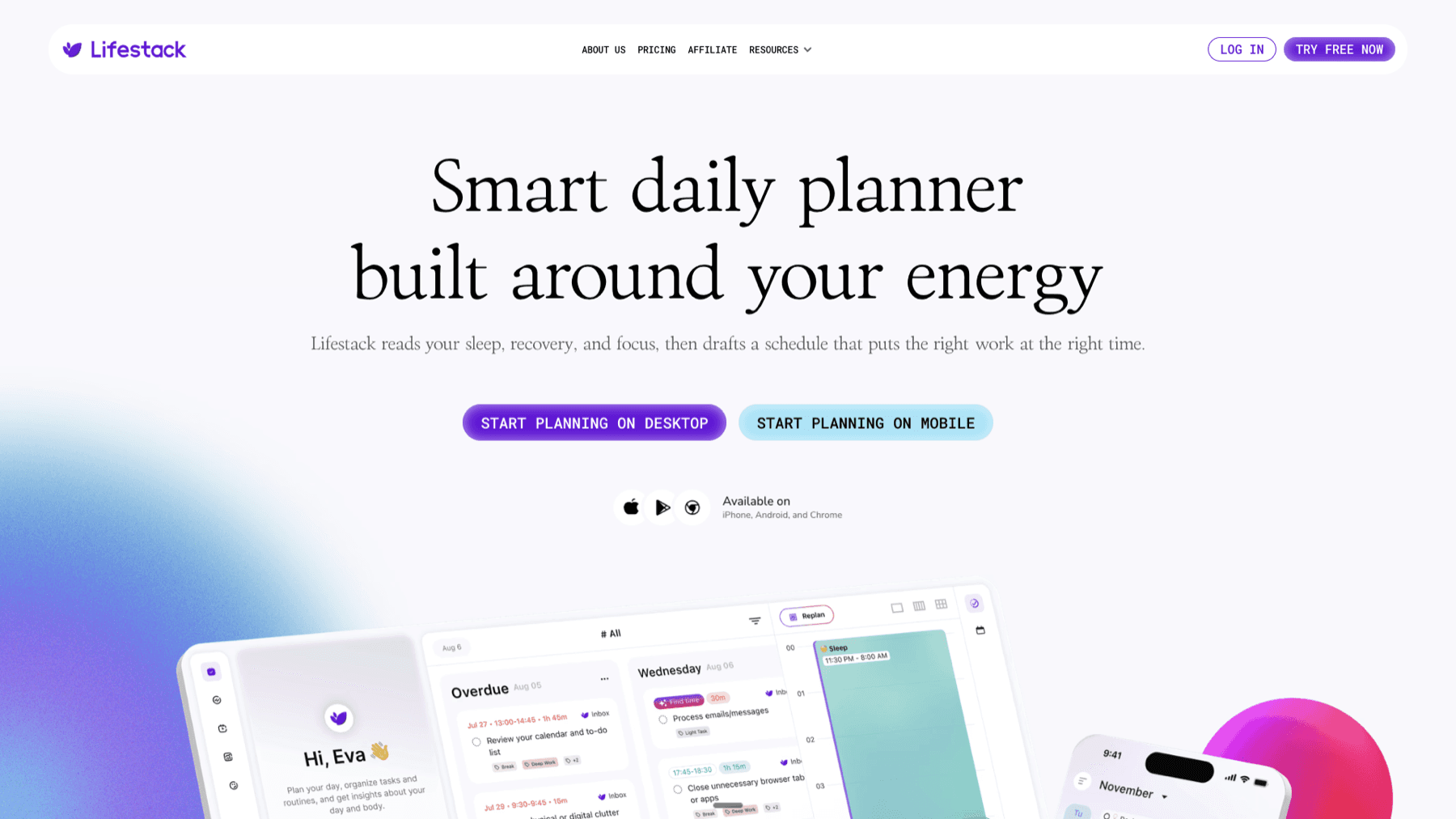
Instead of filling every available slot with demanding work, Lifestack accounts for the fact that your cognitive and sensory capacity fluctuates. It's the planning equivalent of knowing your sensory triggers. You're not guessing anymore. You're working with data. Pricing starts at $7/month, with an annual plan at $50/year and a lifetime option at $120.
For more practical ADHD strategies that pair well with managing sensory load, the ADHD hacks guide is worth reading alongside this one.
Frequently Asked Questions
What are the main signs of sensory overload?
Common signs include sudden irritability, difficulty concentrating, the urge to remove yourself from the environment, physical discomfort from ordinary stimuli (sound, light, touch), and feeling mentally overwhelmed without a clear cognitive reason. In more severe episodes, it can trigger shutdown or meltdown responses.
Is sensory overload more common in people with ADHD?
Yes. Research suggests that 40-60% of people with ADHD also have sensory processing differences. The same executive function deficits that affect attention and impulse control also affect sensory gating, the brain's ability to filter irrelevant input. This means more sensory information reaches conscious awareness, increasing the chance of overload.
How long does sensory overload last?
It varies depending on severity and how quickly you can reduce input. A mild episode with quick intervention can resolve in fifteen to thirty minutes. A severe episode without intervention can leave you fatigued and cognitively impaired for several hours. Recovery time also tends to be longer when overload has been building across the day rather than from a single acute event.
Can you build tolerance to sensory overload over time?
To a limited degree, and mostly through reducing cumulative load rather than habituating to high-stimulation environments. People who consistently manage their sensory environment, prioritize sleep, and schedule recovery time often report fewer and less severe episodes over time. This isn't tolerance in the traditional sense. Your brain doesn't change. You simply give it less to deal with overall.
What foods or supplements help with sensory sensitivity?
Some research supports omega-3 fatty acids, magnesium, and B vitamins as supportive for nervous system regulation, with anecdotal evidence from the ADHD community pointing to magnesium glycinate in particular. However, diet and supplements address background nervous system health, not acute overload. They're worth considering as part of overall nervous system support, but they won't substitute for environmental management strategies.
How is sensory overload different from sensory processing disorder?
Sensory processing disorder (SPD) is a clinical term describing a persistent pattern of difficulty processing sensory information. Sensory overload is a specific experience: an acute episode of being overwhelmed by sensory input. People without SPD can experience sensory overload in extreme circumstances. People with SPD experience overload more frequently and at lower thresholds. ADHD overlaps significantly with sensory processing difficulties, though the two are not the same diagnosis.
You're sitting in a coffee shop trying to get work done. Someone starts a loud phone call two tables away. The espresso machine fires up. A child knocks over a cup. And something in your brain just snaps. You can't read. You can't think. You want to leave your own skin.
That's sensory overload. And if you have ADHD, autism, or another form of neurodivergence, it hits harder and more often than most people realize.
Sensory overload happens when incoming sensory information exceeds your brain's ability to filter and process it. Most people have a built-in dimmer switch for sensory input. Neurodivergent brains often don't. The result is a system that goes from functional to flooded with little warning, and the fallout (the irritability, the shutdown, the exhaustion) can last hours.
This guide covers seven evidence-informed strategies to help you identify your triggers, protect your environment, and recover faster when overload hits anyway.
Key Takeaways
Sensory overload is a neurological processing difference, not a character flaw or fragility
Prevention works better than coping after the fact. Managing your sensory load proactively is the goal
Scheduling low-sensory recovery windows into your day reduces cumulative overload and protects your focus
1. Understand What's Actually Happening in Your Brain
Before you can manage sensory overload, it helps to understand why it happens. The brain has a system called sensory gating, a filtering mechanism that decides which incoming information is worth paying attention to and which to suppress. In ADHD and autistic brains, this gate is less efficient. More data gets through, more of the time.
This isn't a bug in your personality. It's a difference in how your nervous system processes the world. And it has real consequences: background noise that neurotypical people filter out unconsciously can register as equally loud and urgent as a conversation happening directly in front of you. Scratchy fabric doesn't just feel slightly annoying. It competes with your thoughts for attention.
Understanding this is important because it changes your strategy. You're not trying to "toughen up." You're managing a system that has different thresholds. That's a practical engineering problem, and it has practical solutions. Emotional dysregulation often follows close behind sensory overload, and the two are worth addressing together.
2. Map Your Sensory Triggers
Not all sensory input hits the same way. Most people with ADHD have a specific cluster of triggers: the particular sounds, textures, lights, or smells that reliably push them toward overload. The first step toward prevention is knowing exactly what yours are.
Keep a simple log for one week. After each instance of feeling overwhelmed or irritable, note what was in your environment. Was it sound, and specifically what kind? Visual clutter? Physical contact or clothing? Strong smells? Temperature? You'll likely see a pattern within a few days.
Once you know your specific triggers, you can make targeted changes instead of trying to control your entire sensory environment at once. Most people find they have two or three primary triggers that account for the majority of their overload episodes. Fix those first. This works better than vague advice to "reduce stimulation." ADHD and stress compound each other, so identifying sensory stressors also helps you catch stress earlier.
3. Control Your Environment Before You Break
The most effective sensory management happens before you hit overload, not during it. Once you're already flooded, making changes is much harder. Your executive function is impaired, decision-making is difficult, and you're more likely to do something regrettable than something therapeutic.
For sound, noise-canceling headphones are the single most effective tool most people with sensory issues own. They don't have to play music. The cancellation alone can drop ambient noise to a manageable level. Some people also find that brown noise creates a consistent auditory backdrop that prevents spikes from reaching them at all.
For light, keep a pair of tinted glasses or blue-light-blocking lenses accessible at your desk. Fluorescent lighting is a known trigger for many people with ADHD, and you can't always change your workplace lighting. Tinted lenses give you control within environments you can't modify. For tactile issues, pre-screen clothing before high-demand days. A tag or tight waistband that's tolerable on an easy day can tip you into overload on a stressful one.
4. Build a Sensory Escape Plan
You need a pre-decided plan for what to do when overload is coming, before it arrives. Not a vague intention to "take a break," but a specific location, a specific duration, and a specific set of actions.
Identify at least two low-sensory spaces you can reliably access: one at home, one wherever you work or spend your days. Your home option might be a dim room with the door closed. Your workplace option might be a bathroom stall, your car, or a rarely-used stairwell. The point is that you decide this in advance, when you're calm, so you don't have to figure it out when you're already overwhelmed.
The actions in your escape should be sensory-quieting rather than stimulating. That means dimming lights, removing headphones or switching to silence, and sitting still rather than scrolling your phone. Without a plan, most people reach for their phone during overload, which usually adds stimulation rather than reducing it. If you've noticed that overload sometimes leads to a full ADHD shutdown, having a structured escape route can interrupt that cycle earlier.
5. Use Movement to Reset Your Nervous System
After sensory overload hits, your nervous system needs a discharge. For most people, that discharge happens through movement. Not intense exercise necessarily, just deliberate physical activity that signals to your body that the threat has passed.
A ten-minute walk outside works well for most people. The combination of rhythmic movement, natural light, and reduced indoor stimulation tends to lower cortisol and bring the nervous system back toward baseline. Swimming, slow cycling, and yoga are also effective for people who find high-intensity exercise counterproductive during recovery.
What doesn't work: collapsing on the couch with the television on, which replaces one source of stimulation with another. The goal is reducing input, not replacing it. For a longer list of grounding options, calming activities for ADHD covers techniques specifically suited to neurodivergent nervous systems.
6. Schedule Recovery Time Like It's a Meeting
Most sensory overload isn't caused by a single catastrophic event. It builds up over hours and days. A morning of back-to-back meetings, a noisy commute, a loud lunch spot, and a fluorescent-lit afternoon add up to an overloaded evening, even if no single element was extreme.
The fix is treating recovery time as non-negotiable scheduled time, not as leftover scraps you take when everything else is done. Block out low-sensory time in your calendar the same way you'd block a meeting. Protect it from being scheduled over. Even thirty quiet minutes mid-afternoon can significantly reduce end-of-day overload.
Your morning routine matters here too. A loud, chaotic start to the day reduces your threshold for the rest of it. Building in ten to fifteen minutes of low-stimulation time before the noise starts. Before devices, before news, before other people's demands. It gives your system more buffer for what's coming.
7. Communicate Your Sensory Limits Clearly
One of the most underrated strategies is simply telling people what you need before overload happens, rather than trying to white-knuckle through environments that don't work for you.
This is hard for many people because it feels like admitting weakness. It isn't. It's the same thing as telling a colleague you're allergic to shellfish before they pick a lunch spot. Your brain has a real, physical threshold. People who know about it can help you manage it. People who don't will accidentally push you past it and then wonder why you seem irritable or disengaged.
You don't need to explain the neuroscience. Practical language works better: "I find it hard to focus when there's a lot of background noise. Would it be okay to move somewhere quieter?" or "I need about twenty minutes of quiet after a long meeting before I can engage properly." Clear, low-drama, and specific. Most people respond better to this than you'd expect.
Best Tool for Managing Sensory Overload
One thing that makes sensory overload worse: an unpredictable, chaotic schedule that keeps you on alert all day. When you don't know what's coming next, your nervous system stays in a low-level vigilance state that burns through your sensory tolerance faster.
Lifestack is an AI-powered daily planner that builds your schedule around your actual energy levels, using data from wearables like Oura Ring, WHOOP, and Apple Watch. On days when your HRV is low or your sleep was poor (both lower your sensory threshold), Lifestack can surface lighter tasks and protect your recovery windows automatically.
Instead of filling every available slot with demanding work, Lifestack accounts for the fact that your cognitive and sensory capacity fluctuates. It's the planning equivalent of knowing your sensory triggers. You're not guessing anymore. You're working with data. Pricing starts at $7/month, with an annual plan at $50/year and a lifetime option at $120.
For more practical ADHD strategies that pair well with managing sensory load, the ADHD hacks guide is worth reading alongside this one.
Frequently Asked Questions
What are the main signs of sensory overload?
Common signs include sudden irritability, difficulty concentrating, the urge to remove yourself from the environment, physical discomfort from ordinary stimuli (sound, light, touch), and feeling mentally overwhelmed without a clear cognitive reason. In more severe episodes, it can trigger shutdown or meltdown responses.
Is sensory overload more common in people with ADHD?
Yes. Research suggests that 40-60% of people with ADHD also have sensory processing differences. The same executive function deficits that affect attention and impulse control also affect sensory gating, the brain's ability to filter irrelevant input. This means more sensory information reaches conscious awareness, increasing the chance of overload.
How long does sensory overload last?
It varies depending on severity and how quickly you can reduce input. A mild episode with quick intervention can resolve in fifteen to thirty minutes. A severe episode without intervention can leave you fatigued and cognitively impaired for several hours. Recovery time also tends to be longer when overload has been building across the day rather than from a single acute event.
Can you build tolerance to sensory overload over time?
To a limited degree, and mostly through reducing cumulative load rather than habituating to high-stimulation environments. People who consistently manage their sensory environment, prioritize sleep, and schedule recovery time often report fewer and less severe episodes over time. This isn't tolerance in the traditional sense. Your brain doesn't change. You simply give it less to deal with overall.
What foods or supplements help with sensory sensitivity?
Some research supports omega-3 fatty acids, magnesium, and B vitamins as supportive for nervous system regulation, with anecdotal evidence from the ADHD community pointing to magnesium glycinate in particular. However, diet and supplements address background nervous system health, not acute overload. They're worth considering as part of overall nervous system support, but they won't substitute for environmental management strategies.
How is sensory overload different from sensory processing disorder?
Sensory processing disorder (SPD) is a clinical term describing a persistent pattern of difficulty processing sensory information. Sensory overload is a specific experience: an acute episode of being overwhelmed by sensory input. People without SPD can experience sensory overload in extreme circumstances. People with SPD experience overload more frequently and at lower thresholds. ADHD overlaps significantly with sensory processing difficulties, though the two are not the same diagnosis.



FOLLOW ON
FOLLOW ON
FOLLOW ON


Copyright 2026 © Lifestack. All rights reserved
Copyright 2026 © Lifestack. All rights reserved

