
Tips
Strattera vs Vyvanse: Which Is Right for You?
Strattera vs Vyvanse: Which Is Right for You?

Strattera and Vyvanse represent two very different approaches to treating ADHD. One is a non-stimulant that builds slowly over weeks. The other is a fast-acting stimulant that most people feel within the first hour. Both can be effective - but they're not interchangeable, and the right choice depends heavily on your specific situation, coexisting conditions, and what you've already tried.
This guide breaks down how each medication works, what the research says about their effectiveness, their side effect profiles, cost considerations, and the clinical scenarios where each tends to be the stronger choice.
Key Takeaways
Vyvanse is a stimulant with large effect sizes and rapid onset; most people notice a difference within hours of the first dose.
Strattera (now generic atomoxetine) is a non-stimulant with a smaller average effect size, but it's the preferred choice when anxiety, substance use history, or stimulant intolerance are factors.
Cost is a significant real-world consideration: generic atomoxetine is substantially cheaper than brand Vyvanse, though generic lisdexamfetamine became available in 2023.
Quick Verdict
Vyvanse: First-line choice for most adults with ADHD who can tolerate stimulants and don't have significant anxiety or substance use history. Faster, larger effect, more predictable response.
Strattera (atomoxetine): Better choice when stimulants are off the table due to anxiety, cardiovascular concerns, history of substance use, or stimulant side effects that don't improve with adjustments. Also the option when 24-hour coverage without peaks and valleys matters most.
Strattera (Atomoxetine): How It Works
Strattera was the first non-stimulant medication specifically approved for ADHD. The branded version from Eli Lilly was discontinued in the US in 2023, but generic atomoxetine is widely available and commonly prescribed. For simplicity, this guide refers to it as Strattera, but you'll likely receive the generic.
Atomoxetine works by selectively blocking the reuptake of norepinephrine in the prefrontal cortex. Unlike stimulants, it doesn't cause a surge in dopamine - which is why it doesn't produce the same acute "kick in" effect and also why it has essentially no abuse potential. It's not a controlled substance.
The practical tradeoff: it takes four to eight weeks to reach therapeutic effect. This is the single biggest complaint about Strattera from patients who switch to it from stimulants. The patience required during titration can be genuinely difficult, especially when executive function challenges are already affecting daily life.
One meaningful advantage: Strattera's effect is continuous throughout the 24-hour period, with no "wearing off" in the evening. People who struggle with stimulant rebound (the irritability or emotional crash as medication leaves the system) often find this valuable.
Typical dosing: Adults usually start at 40mg and titrate to 80-100mg. Maximum approved dose is 100mg/day.
Cost (2026): Generic atomoxetine typically runs $30-80/month through discount programs like GoodRx, depending on dose and pharmacy.
Vyvanse (Lisdexamfetamine): How It Works
Vyvanse is a prodrug - an inactive compound that becomes active amphetamine after being metabolized in the body. Specifically, the enzyme peptidase in the digestive system cleaves the lysine molecule attached to the amphetamine, releasing active d-amphetamine. This metabolic conversion process produces several clinical advantages: a smoother onset than immediate-release amphetamines, longer duration (typically 10-14 hours), and lower abuse potential because crushing or snorting the pill doesn't bypass the conversion process.
Effects begin within 60-90 minutes and most people feel a clear difference on the first dose. Effect sizes in clinical trials for stimulants are significantly larger than for non-stimulants - meta-analyses typically show effect sizes of 0.7-1.0 for stimulants versus 0.4-0.6 for atomoxetine.
Typical dosing: Starts at 20-30mg, titrated up to the effective dose. Maximum approved dose is 70mg/day.
Cost (2026): Brand Vyvanse runs $350-450+/month without insurance. Takeda's savings card can reduce this significantly for commercially insured patients. Generic lisdexamfetamine became available in 2023 and typically costs $60-120/month through discount programs - though availability varies by pharmacy.
Head-to-Head Comparison
Efficacy
Vyvanse wins on average effect size. Multiple meta-analyses confirm that stimulants produce larger reductions in ADHD symptom scores than non-stimulants. That said, "on average" hides a lot of individual variation - some people respond exceptionally well to atomoxetine, particularly when anxiety or emotional dysregulation are prominent symptoms alongside ADHD. For information on when non-stimulants are the right primary choice, our guide to non-stimulant ADHD medication covers this in depth.
Onset
Vyvanse: same day. Strattera: 4-8 weeks. This isn't a close call if immediate relief is the priority.
Duration
Strattera provides genuine 24-hour coverage without peaks and valleys. Vyvanse lasts 10-14 hours, which covers most of the waking day but does wear off in the evening for most people. If you need full-day coverage including evenings (parenting, social situations, evening work), Strattera's flatter profile is an advantage.
Side Effects
Both have appetite suppression, though it's often more pronounced with Vyvanse. Vyvanse can worsen anxiety in some people. Strattera commonly causes fatigue and nausea early in treatment, and is more likely to cause sexual side effects. Vyvanse is more likely to cause insomnia if taken too late in the day. Sleep disruption from ADHD medication is common enough to warrant its own attention - our post on ADHD as a sleep disorder covers the interaction.
Abuse Potential and Controlled Status
Vyvanse is a Schedule II controlled substance. Strattera is not controlled. For people with a personal or family history of substance use, Strattera is meaningfully safer - and this is often a decisive factor in prescribing decisions.
Anxiety Interactions
This is where the choice often tips. Stimulants can worsen anxiety in people who have both ADHD and an anxiety disorder. Atomoxetine doesn't carry this risk and actually has some evidence of modest anxiety reduction. When anxiety is a significant comorbidity, Strattera is frequently the right starting point, or the right addition to a lower stimulant dose.
Cardiovascular
Both medications increase heart rate and blood pressure. Stimulants do this more acutely. People with known cardiovascular conditions should discuss both options with a cardiologist before starting either. Strattera is generally contraindicated in narrow-angle glaucoma.
Which Should You Choose?
Choose Vyvanse if:
You need fast results and can't afford a 6-8 week titration period
Anxiety is not a significant issue for you
You've tried non-stimulants before and found them ineffective
Evening coverage matters less than daytime peak performance
You have insurance or access to the savings program
Choose Strattera (atomoxetine) if:
You have significant anxiety that stimulants might worsen
You have a history of substance use
You've tried multiple stimulants and experienced intolerable side effects
24-hour coverage with no rebound is a priority
Cost is a major concern and generic atomoxetine is more accessible
You're also dealing with task paralysis driven by anxiety - atomoxetine's anti-anxiety effect can help here specifically
One approach worth knowing about: combination therapy. Some clinicians prescribe a lower-dose stimulant alongside atomoxetine, using each to cover different aspects of ADHD symptom management. The combination can produce symptom reduction and side effect profiles that neither achieves alone.
A Note on Planning Tools
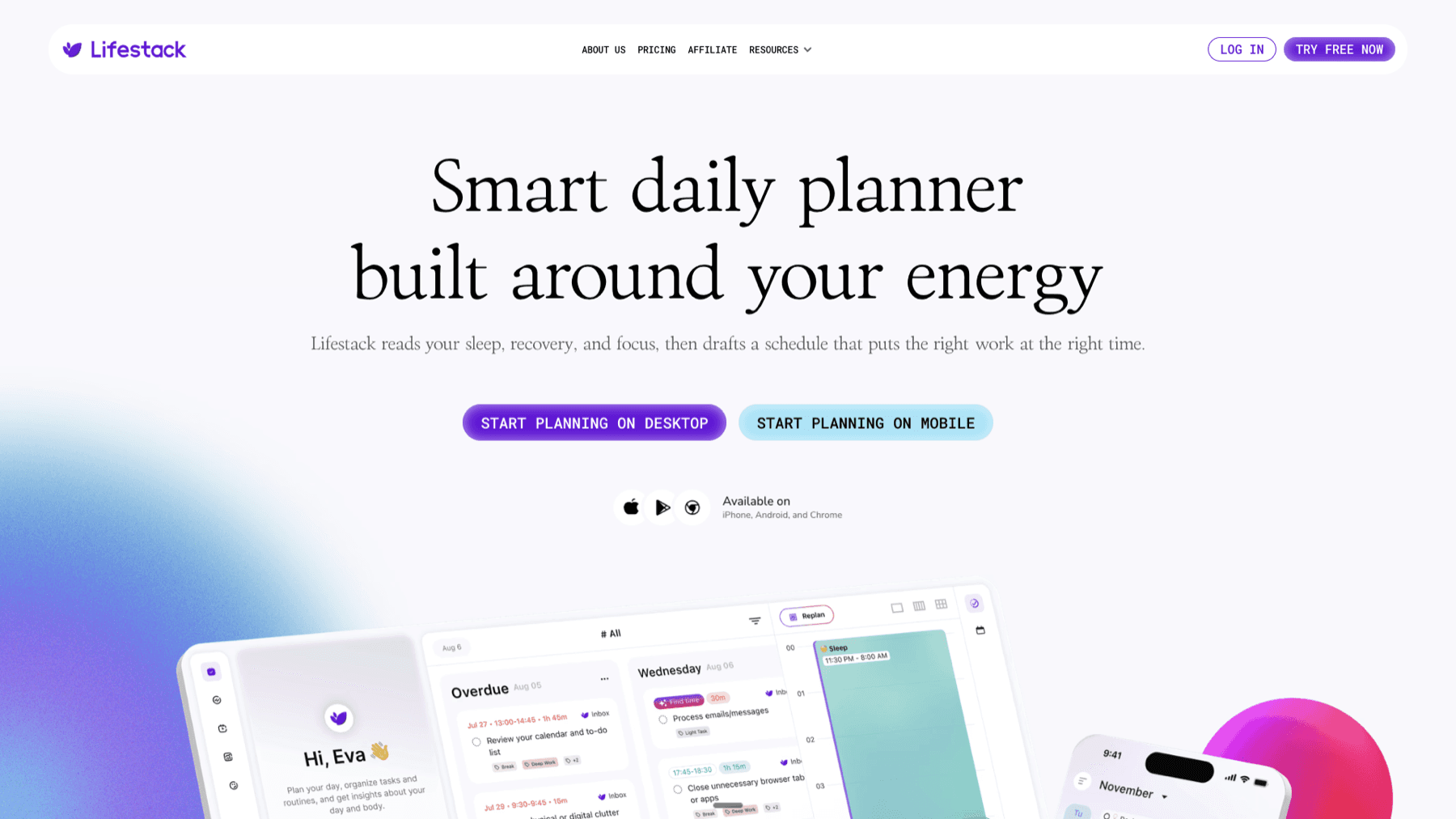
Whichever medication you end up on, pairing it with an energy-aware planning system tends to produce better day-to-day outcomes. If you want auto-scheduling that adapts to your sleep and recovery rather than treating every hour as equal, Lifestack does that - which is particularly useful when managing the variable energy that comes with ADHD, regardless of which medication you're on. Our roundup of best productivity apps for ADHD covers the broader landscape. The energy-based scheduling post explains the underlying approach.
Frequently Asked Questions
Is Strattera stronger than Vyvanse?
No - Vyvanse has larger average effect sizes in clinical trials. Strattera works for many people but produces more modest symptom reduction on average. That said, individual response varies, and Strattera is the stronger choice in specific situations (anxiety, substance use history, sensitivity to stimulants).
Can you take Strattera and Vyvanse together?
Some clinicians do prescribe combination therapy with lower doses of both. This is not a standard first-line approach but is used when monotherapy with either doesn't produce adequate results or acceptable side effects. This should only be done under close medical supervision with awareness of the combined cardiovascular and other effects.
How long does Strattera take to work compared to Vyvanse?
Vyvanse typically produces noticeable effects within 60-90 minutes of the first dose. Strattera takes 4-8 weeks of consistent dosing to reach therapeutic effect, with full benefit sometimes not apparent for 12 weeks. This difference is the most commonly cited reason people switch away from Strattera.
Which has fewer side effects, Strattera or Vyvanse?
They have different side effect profiles rather than clearly fewer. Strattera is more likely to cause fatigue, nausea, and sexual side effects. Vyvanse is more likely to cause insomnia, appetite suppression, and anxiety exacerbation. Which is "fewer" depends on which side effects matter most to you.
Is generic Vyvanse the same as brand Vyvanse?
Generic lisdexamfetamine contains the same active compound at the same dose and meets the FDA's bioequivalence standards. Some people report perceiving differences between brand and generic (which can happen with any medication), but there's no clinical evidence that the generic is less effective. Availability still varies by pharmacy.
Does Strattera cause weight loss like Vyvanse?
Both can cause appetite suppression and weight loss. Stimulants like Vyvanse tend to produce more pronounced appetite suppression, particularly at peak medication levels. Strattera's appetite effects are usually milder and more consistent throughout the day.
Strattera and Vyvanse represent two very different approaches to treating ADHD. One is a non-stimulant that builds slowly over weeks. The other is a fast-acting stimulant that most people feel within the first hour. Both can be effective - but they're not interchangeable, and the right choice depends heavily on your specific situation, coexisting conditions, and what you've already tried.
This guide breaks down how each medication works, what the research says about their effectiveness, their side effect profiles, cost considerations, and the clinical scenarios where each tends to be the stronger choice.
Key Takeaways
Vyvanse is a stimulant with large effect sizes and rapid onset; most people notice a difference within hours of the first dose.
Strattera (now generic atomoxetine) is a non-stimulant with a smaller average effect size, but it's the preferred choice when anxiety, substance use history, or stimulant intolerance are factors.
Cost is a significant real-world consideration: generic atomoxetine is substantially cheaper than brand Vyvanse, though generic lisdexamfetamine became available in 2023.
Quick Verdict
Vyvanse: First-line choice for most adults with ADHD who can tolerate stimulants and don't have significant anxiety or substance use history. Faster, larger effect, more predictable response.
Strattera (atomoxetine): Better choice when stimulants are off the table due to anxiety, cardiovascular concerns, history of substance use, or stimulant side effects that don't improve with adjustments. Also the option when 24-hour coverage without peaks and valleys matters most.
Strattera (Atomoxetine): How It Works
Strattera was the first non-stimulant medication specifically approved for ADHD. The branded version from Eli Lilly was discontinued in the US in 2023, but generic atomoxetine is widely available and commonly prescribed. For simplicity, this guide refers to it as Strattera, but you'll likely receive the generic.
Atomoxetine works by selectively blocking the reuptake of norepinephrine in the prefrontal cortex. Unlike stimulants, it doesn't cause a surge in dopamine - which is why it doesn't produce the same acute "kick in" effect and also why it has essentially no abuse potential. It's not a controlled substance.
The practical tradeoff: it takes four to eight weeks to reach therapeutic effect. This is the single biggest complaint about Strattera from patients who switch to it from stimulants. The patience required during titration can be genuinely difficult, especially when executive function challenges are already affecting daily life.
One meaningful advantage: Strattera's effect is continuous throughout the 24-hour period, with no "wearing off" in the evening. People who struggle with stimulant rebound (the irritability or emotional crash as medication leaves the system) often find this valuable.
Typical dosing: Adults usually start at 40mg and titrate to 80-100mg. Maximum approved dose is 100mg/day.
Cost (2026): Generic atomoxetine typically runs $30-80/month through discount programs like GoodRx, depending on dose and pharmacy.
Vyvanse (Lisdexamfetamine): How It Works
Vyvanse is a prodrug - an inactive compound that becomes active amphetamine after being metabolized in the body. Specifically, the enzyme peptidase in the digestive system cleaves the lysine molecule attached to the amphetamine, releasing active d-amphetamine. This metabolic conversion process produces several clinical advantages: a smoother onset than immediate-release amphetamines, longer duration (typically 10-14 hours), and lower abuse potential because crushing or snorting the pill doesn't bypass the conversion process.
Effects begin within 60-90 minutes and most people feel a clear difference on the first dose. Effect sizes in clinical trials for stimulants are significantly larger than for non-stimulants - meta-analyses typically show effect sizes of 0.7-1.0 for stimulants versus 0.4-0.6 for atomoxetine.
Typical dosing: Starts at 20-30mg, titrated up to the effective dose. Maximum approved dose is 70mg/day.
Cost (2026): Brand Vyvanse runs $350-450+/month without insurance. Takeda's savings card can reduce this significantly for commercially insured patients. Generic lisdexamfetamine became available in 2023 and typically costs $60-120/month through discount programs - though availability varies by pharmacy.
Head-to-Head Comparison
Efficacy
Vyvanse wins on average effect size. Multiple meta-analyses confirm that stimulants produce larger reductions in ADHD symptom scores than non-stimulants. That said, "on average" hides a lot of individual variation - some people respond exceptionally well to atomoxetine, particularly when anxiety or emotional dysregulation are prominent symptoms alongside ADHD. For information on when non-stimulants are the right primary choice, our guide to non-stimulant ADHD medication covers this in depth.
Onset
Vyvanse: same day. Strattera: 4-8 weeks. This isn't a close call if immediate relief is the priority.
Duration
Strattera provides genuine 24-hour coverage without peaks and valleys. Vyvanse lasts 10-14 hours, which covers most of the waking day but does wear off in the evening for most people. If you need full-day coverage including evenings (parenting, social situations, evening work), Strattera's flatter profile is an advantage.
Side Effects
Both have appetite suppression, though it's often more pronounced with Vyvanse. Vyvanse can worsen anxiety in some people. Strattera commonly causes fatigue and nausea early in treatment, and is more likely to cause sexual side effects. Vyvanse is more likely to cause insomnia if taken too late in the day. Sleep disruption from ADHD medication is common enough to warrant its own attention - our post on ADHD as a sleep disorder covers the interaction.
Abuse Potential and Controlled Status
Vyvanse is a Schedule II controlled substance. Strattera is not controlled. For people with a personal or family history of substance use, Strattera is meaningfully safer - and this is often a decisive factor in prescribing decisions.
Anxiety Interactions
This is where the choice often tips. Stimulants can worsen anxiety in people who have both ADHD and an anxiety disorder. Atomoxetine doesn't carry this risk and actually has some evidence of modest anxiety reduction. When anxiety is a significant comorbidity, Strattera is frequently the right starting point, or the right addition to a lower stimulant dose.
Cardiovascular
Both medications increase heart rate and blood pressure. Stimulants do this more acutely. People with known cardiovascular conditions should discuss both options with a cardiologist before starting either. Strattera is generally contraindicated in narrow-angle glaucoma.
Which Should You Choose?
Choose Vyvanse if:
You need fast results and can't afford a 6-8 week titration period
Anxiety is not a significant issue for you
You've tried non-stimulants before and found them ineffective
Evening coverage matters less than daytime peak performance
You have insurance or access to the savings program
Choose Strattera (atomoxetine) if:
You have significant anxiety that stimulants might worsen
You have a history of substance use
You've tried multiple stimulants and experienced intolerable side effects
24-hour coverage with no rebound is a priority
Cost is a major concern and generic atomoxetine is more accessible
You're also dealing with task paralysis driven by anxiety - atomoxetine's anti-anxiety effect can help here specifically
One approach worth knowing about: combination therapy. Some clinicians prescribe a lower-dose stimulant alongside atomoxetine, using each to cover different aspects of ADHD symptom management. The combination can produce symptom reduction and side effect profiles that neither achieves alone.
A Note on Planning Tools
Whichever medication you end up on, pairing it with an energy-aware planning system tends to produce better day-to-day outcomes. If you want auto-scheduling that adapts to your sleep and recovery rather than treating every hour as equal, Lifestack does that - which is particularly useful when managing the variable energy that comes with ADHD, regardless of which medication you're on. Our roundup of best productivity apps for ADHD covers the broader landscape. The energy-based scheduling post explains the underlying approach.
Frequently Asked Questions
Is Strattera stronger than Vyvanse?
No - Vyvanse has larger average effect sizes in clinical trials. Strattera works for many people but produces more modest symptom reduction on average. That said, individual response varies, and Strattera is the stronger choice in specific situations (anxiety, substance use history, sensitivity to stimulants).
Can you take Strattera and Vyvanse together?
Some clinicians do prescribe combination therapy with lower doses of both. This is not a standard first-line approach but is used when monotherapy with either doesn't produce adequate results or acceptable side effects. This should only be done under close medical supervision with awareness of the combined cardiovascular and other effects.
How long does Strattera take to work compared to Vyvanse?
Vyvanse typically produces noticeable effects within 60-90 minutes of the first dose. Strattera takes 4-8 weeks of consistent dosing to reach therapeutic effect, with full benefit sometimes not apparent for 12 weeks. This difference is the most commonly cited reason people switch away from Strattera.
Which has fewer side effects, Strattera or Vyvanse?
They have different side effect profiles rather than clearly fewer. Strattera is more likely to cause fatigue, nausea, and sexual side effects. Vyvanse is more likely to cause insomnia, appetite suppression, and anxiety exacerbation. Which is "fewer" depends on which side effects matter most to you.
Is generic Vyvanse the same as brand Vyvanse?
Generic lisdexamfetamine contains the same active compound at the same dose and meets the FDA's bioequivalence standards. Some people report perceiving differences between brand and generic (which can happen with any medication), but there's no clinical evidence that the generic is less effective. Availability still varies by pharmacy.
Does Strattera cause weight loss like Vyvanse?
Both can cause appetite suppression and weight loss. Stimulants like Vyvanse tend to produce more pronounced appetite suppression, particularly at peak medication levels. Strattera's appetite effects are usually milder and more consistent throughout the day.



FOLLOW ON
FOLLOW ON
FOLLOW ON


Copyright 2026 © Lifestack. All rights reserved
Copyright 2026 © Lifestack. All rights reserved

