
Device
Ultrahuman Ring Pro Review: Is It Worth $479?
Ultrahuman Ring Pro Review: Is It Worth $479?

What Is the Ultrahuman Ring Pro?
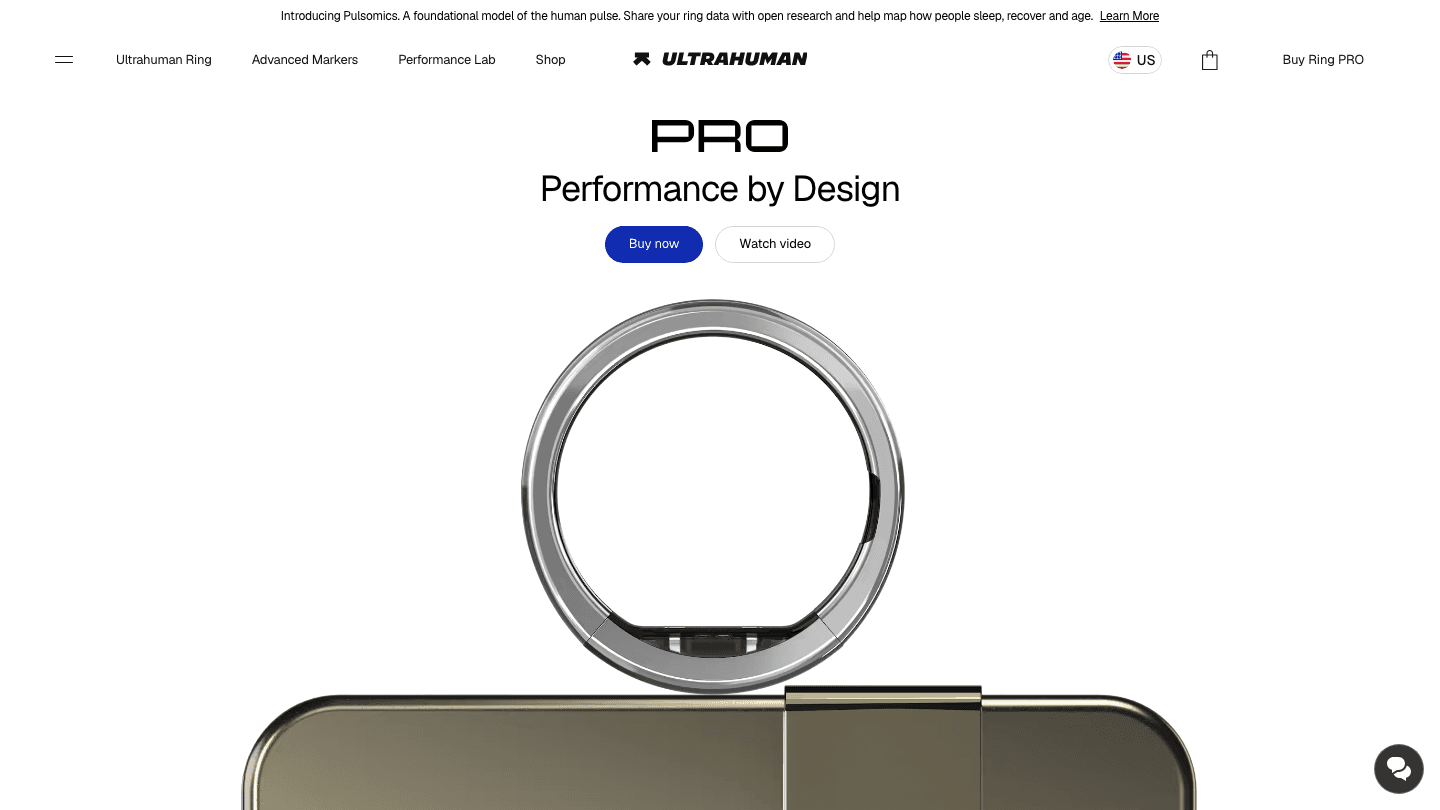
The Ultrahuman Ring Pro is a smart ring that tracks sleep, recovery, heart rate, HRV, body temperature, and metabolic activity from your finger -- with a 15-day battery and no required subscription. Released in early 2026, it's the flagship model above the Ring Air, built with a full titanium unibody and a dual-core processor that does some health analysis on the device itself.
The no-subscription model is the Ring Pro's most important differentiator. Oura Ring charges $5.99/month for access to most of its health data. The Ring Pro provides all core health insights free forever -- sleep scores, readiness, HRV, activity, and metabolic data all included in the purchase price. The only paid add-on is AFib detection at $4.90/month, which is optional.
At $479 ($349-$499 depending on the sale), it costs more upfront than the Ring Air ($349) and roughly the same as an Oura Ring ($299-$499). But over two years, the subscription savings against Oura add up to ~$144 -- which partially closes the price gap.
Key Takeaways
The Ring Pro's 15-day battery is the longest of any mainstream smart ring -- compared to 4-6 days on Ring Air and 5-7 days on Oura Ring 4
All core health data (sleep, HRV, recovery, activity) is free forever with no subscription. AFib detection is an optional $4.90/month add-on
The dual-core processor with on-device AI runs health analysis locally, reduces sync time to under 10 seconds, and stores 250 days of data on the ring itself
Design and Build Quality
The Ring Pro is a full titanium unibody -- not titanium-coated plastic or a titanium outer layer with resin interior (which is how the Ring Air is built). The construction is noticeably premium: heavier than a standard ring but not uncomfortable, with a PVD coating that holds up well to daily wear.
It's available in multiple sizes (5-14) and three finishes: Raw Titanium, Matte Black, and Bionic Gold. The ring is 2.65mm thick and weighs 3.3-4.8g depending on size. Water resistance is rated to 100 meters -- far beyond what daily use requires. It has the same profile as most smart rings: flat inner surface, rounded outer, optical sensor array on the interior.
One practical note: sizing matters a lot with smart rings. Ultrahuman ships a free sizing kit before purchase.
Battery Life: The Headline Feature
15 days on a single charge is the Ring Pro's standout claim, and it holds up in real-world testing. With consistent nightly sleep tracking and daytime activity logging, most users report 12-15 days before needing to charge. The optional PRO Charging Case (sold separately for $100) adds another 45 days of power in reserve -- which means you can go weeks without needing a wall outlet.
For comparison: the Ring Air gets 4-6 days, the Oura Ring 4 gets 5-7 days, and the RingConn Gen 2 Air claims up to 12 days. The Ring Pro leads the category on this metric without contest.
This matters practically because you can wear the Ring Pro during sleep without the anxiety of waking up to a dead ring. Charging anxiety is one of the real friction points in smart ring adoption, and the Ring Pro largely eliminates it.
Health Tracking Features
The Ring Pro tracks the full suite of smart ring health metrics: sleep stages (deep, REM, light, awake), HRV, resting heart rate, skin temperature, blood oxygen (SpO2), and stress index. Activity tracking covers steps, calories, distance, and active minutes.
The Metabolic Score is an Ultrahuman-specific metric that combines sleep quality, recovery, and activity patterns to estimate your metabolic health. The Ultrahuman app also provides a Morning Score (readiness for the day) and Movement Index (activity trend). For an in-depth look at how these metrics work in daily use, see our Ultrahuman Ring Air review -- the Ring Pro tracks the same data with additional processing power.
The dual-core processor adds a meaningful performance layer: health insights generate faster (some analyses complete on the device before syncing), and historical analysis runs against 250 days of stored data rather than what's cached in the app.
For dedicated sleep data, the Ring Pro is among the strongest options available -- see our smart rings for sleep tracking guide for a full comparison of the category.
Ultrahuman Jade: AI Health Insights
Jade is Ultrahuman's AI layer, available free to all Ring users. It surfaces contextual health insights based on your data patterns -- explanations of why your HRV is lower than usual, correlations between your sleep timing and morning scores, and recommendations for sleep hygiene or activity based on your trends.
It's useful rather than transformative. The insights are specific to your actual data (not generic health tips), which is meaningfully better than most wellness AI. But it's a summary and explanation layer, not a predictive coaching system. It answers "why is this happening" more than "what should I do differently."
The No-Subscription Model Explained
Ultrahuman's subscription structure is a deliberate differentiator against Oura:
Core health data: free forever. Sleep, HRV, recovery, activity, metabolic score, Jade AI insights -- all included in the purchase price for the life of the product.
AFib detection: $4.90/month optional add-on. This is a clinically significant feature for users who specifically want atrial fibrillation monitoring, but most users won't need it.
Over two years, not paying Oura's $5.99/month saves roughly $144 -- which partly offsets the Ring Pro's $130 premium over the Ring Air. Over three years it saves $216, which covers the entire price gap versus most Ring Air configurations.
Ring Pro vs Ring Air vs Oura Ring 4
vs Ring Air ($349): The Ring Air is the right choice if budget is the primary concern and you don't need 15-day battery or full titanium build. Both have the same no-subscription model for core data. Our Oura Ring vs Ultrahuman comparison covers the broader ecosystem context. For specifically Ring Air vs Ring Pro, the Ring Air review explains the tradeoffs.
vs Oura Ring 4 ($299-$499 + $5.99/month): Oura has a more polished app and a larger research dataset. The Ring Pro wins on battery life (15 days vs 5-7 days) and total cost of ownership (no subscription). For a detailed side-by-side, see our Oura vs Ultrahuman guide.
vs RingConn Gen 2: RingConn is the budget no-subscription alternative ($299, 12-day battery). It has less polished software and fewer advanced metrics, but is a reasonable choice for users who want subscription-free tracking without the Ring Pro's premium price. Our RingConn vs Ultrahuman comparison covers this.
Who Should Buy the Ultrahuman Ring Pro
Buy the Ring Pro if:
Battery life is a top priority and you want to charge once every two weeks
You want a premium build (full titanium) that looks and feels like fine jewelry
You plan to keep the ring for 2+ years and want no ongoing subscription costs
You use the PRO Charging Case and want near-monthly charging convenience
Consider alternatives if:
Budget is a primary concern: the Ring Air at $349 tracks the same core data for $130 less
You specifically want AFib monitoring already included: Oura Ring 4 and Apple Watch cover this
You want the most polished app experience in the category: Oura currently leads on app depth
Pair the Ring Pro with Lifestack

The Ring Pro gives you excellent sleep and recovery data. The gap most users hit is translating that data into a daily schedule that actually respects it. A readiness score doesn't tell you which tasks to do when.
Lifestack closes that loop. It reads your energy patterns and schedules your tasks and calendar blocks based on when you're actually equipped to do them. When your Ring Pro signals a recovery debt, Lifestack deprioritizes demanding focus work and front-loads lighter tasks. That's energy-based scheduling in practice -- not just knowing your readiness score, but acting on it. Plans start at $10/month.
Frequently Asked Questions
Does the Ultrahuman Ring Pro require a subscription?
No. All core health data -- sleep scores, HRV, recovery, activity, metabolic tracking, and Jade AI insights -- is free forever with no recurring fee. AFib detection is an optional add-on at $4.90/month. Most users will never need to pay a subscription.
How long does the Ultrahuman Ring Pro battery last?
Up to 15 days on a single charge with normal use (nightly sleep tracking and daily activity logging). With the optional PRO Charging Case ($100 separately), total power reserve extends to approximately 45 days between charges.
What sizes does the Ultrahuman Ring Pro come in?
Sizes 5 through 14. Ultrahuman ships a free sizing kit before purchase so you can find your correct size. Getting the right size is important for accurate sensor readings.
How does the Ring Pro compare to Oura Ring?
The Ring Pro has longer battery life (15 days vs 5-7 days) and no subscription for core data. Oura has a more polished app and the largest biometric dataset in the category. See our full Oura vs Ultrahuman comparison.
What is the Ultrahuman Ring Pro price?
$479 at standard pricing. The PRO Charging Case is sold separately for $100. The ring has appeared on sale for $349 during promotional periods. The Ring Air (lower-tier model) is $349.
Is the Ultrahuman Ring Pro worth it over the Ring Air?
If battery life matters and you plan to keep the ring for 2+ years, the Ring Pro is worth the $130 premium. If budget is a constraint or you're fine charging every 4-6 days, the Ring Air tracks the same core health metrics for less. See our Ring Air review for the full breakdown.
What Is the Ultrahuman Ring Pro?
The Ultrahuman Ring Pro is a smart ring that tracks sleep, recovery, heart rate, HRV, body temperature, and metabolic activity from your finger -- with a 15-day battery and no required subscription. Released in early 2026, it's the flagship model above the Ring Air, built with a full titanium unibody and a dual-core processor that does some health analysis on the device itself.
The no-subscription model is the Ring Pro's most important differentiator. Oura Ring charges $5.99/month for access to most of its health data. The Ring Pro provides all core health insights free forever -- sleep scores, readiness, HRV, activity, and metabolic data all included in the purchase price. The only paid add-on is AFib detection at $4.90/month, which is optional.
At $479 ($349-$499 depending on the sale), it costs more upfront than the Ring Air ($349) and roughly the same as an Oura Ring ($299-$499). But over two years, the subscription savings against Oura add up to ~$144 -- which partially closes the price gap.
Key Takeaways
The Ring Pro's 15-day battery is the longest of any mainstream smart ring -- compared to 4-6 days on Ring Air and 5-7 days on Oura Ring 4
All core health data (sleep, HRV, recovery, activity) is free forever with no subscription. AFib detection is an optional $4.90/month add-on
The dual-core processor with on-device AI runs health analysis locally, reduces sync time to under 10 seconds, and stores 250 days of data on the ring itself
Design and Build Quality
The Ring Pro is a full titanium unibody -- not titanium-coated plastic or a titanium outer layer with resin interior (which is how the Ring Air is built). The construction is noticeably premium: heavier than a standard ring but not uncomfortable, with a PVD coating that holds up well to daily wear.
It's available in multiple sizes (5-14) and three finishes: Raw Titanium, Matte Black, and Bionic Gold. The ring is 2.65mm thick and weighs 3.3-4.8g depending on size. Water resistance is rated to 100 meters -- far beyond what daily use requires. It has the same profile as most smart rings: flat inner surface, rounded outer, optical sensor array on the interior.
One practical note: sizing matters a lot with smart rings. Ultrahuman ships a free sizing kit before purchase.
Battery Life: The Headline Feature
15 days on a single charge is the Ring Pro's standout claim, and it holds up in real-world testing. With consistent nightly sleep tracking and daytime activity logging, most users report 12-15 days before needing to charge. The optional PRO Charging Case (sold separately for $100) adds another 45 days of power in reserve -- which means you can go weeks without needing a wall outlet.
For comparison: the Ring Air gets 4-6 days, the Oura Ring 4 gets 5-7 days, and the RingConn Gen 2 Air claims up to 12 days. The Ring Pro leads the category on this metric without contest.
This matters practically because you can wear the Ring Pro during sleep without the anxiety of waking up to a dead ring. Charging anxiety is one of the real friction points in smart ring adoption, and the Ring Pro largely eliminates it.
Health Tracking Features
The Ring Pro tracks the full suite of smart ring health metrics: sleep stages (deep, REM, light, awake), HRV, resting heart rate, skin temperature, blood oxygen (SpO2), and stress index. Activity tracking covers steps, calories, distance, and active minutes.
The Metabolic Score is an Ultrahuman-specific metric that combines sleep quality, recovery, and activity patterns to estimate your metabolic health. The Ultrahuman app also provides a Morning Score (readiness for the day) and Movement Index (activity trend). For an in-depth look at how these metrics work in daily use, see our Ultrahuman Ring Air review -- the Ring Pro tracks the same data with additional processing power.
The dual-core processor adds a meaningful performance layer: health insights generate faster (some analyses complete on the device before syncing), and historical analysis runs against 250 days of stored data rather than what's cached in the app.
For dedicated sleep data, the Ring Pro is among the strongest options available -- see our smart rings for sleep tracking guide for a full comparison of the category.
Ultrahuman Jade: AI Health Insights
Jade is Ultrahuman's AI layer, available free to all Ring users. It surfaces contextual health insights based on your data patterns -- explanations of why your HRV is lower than usual, correlations between your sleep timing and morning scores, and recommendations for sleep hygiene or activity based on your trends.
It's useful rather than transformative. The insights are specific to your actual data (not generic health tips), which is meaningfully better than most wellness AI. But it's a summary and explanation layer, not a predictive coaching system. It answers "why is this happening" more than "what should I do differently."
The No-Subscription Model Explained
Ultrahuman's subscription structure is a deliberate differentiator against Oura:
Core health data: free forever. Sleep, HRV, recovery, activity, metabolic score, Jade AI insights -- all included in the purchase price for the life of the product.
AFib detection: $4.90/month optional add-on. This is a clinically significant feature for users who specifically want atrial fibrillation monitoring, but most users won't need it.
Over two years, not paying Oura's $5.99/month saves roughly $144 -- which partly offsets the Ring Pro's $130 premium over the Ring Air. Over three years it saves $216, which covers the entire price gap versus most Ring Air configurations.
Ring Pro vs Ring Air vs Oura Ring 4
vs Ring Air ($349): The Ring Air is the right choice if budget is the primary concern and you don't need 15-day battery or full titanium build. Both have the same no-subscription model for core data. Our Oura Ring vs Ultrahuman comparison covers the broader ecosystem context. For specifically Ring Air vs Ring Pro, the Ring Air review explains the tradeoffs.
vs Oura Ring 4 ($299-$499 + $5.99/month): Oura has a more polished app and a larger research dataset. The Ring Pro wins on battery life (15 days vs 5-7 days) and total cost of ownership (no subscription). For a detailed side-by-side, see our Oura vs Ultrahuman guide.
vs RingConn Gen 2: RingConn is the budget no-subscription alternative ($299, 12-day battery). It has less polished software and fewer advanced metrics, but is a reasonable choice for users who want subscription-free tracking without the Ring Pro's premium price. Our RingConn vs Ultrahuman comparison covers this.
Who Should Buy the Ultrahuman Ring Pro
Buy the Ring Pro if:
Battery life is a top priority and you want to charge once every two weeks
You want a premium build (full titanium) that looks and feels like fine jewelry
You plan to keep the ring for 2+ years and want no ongoing subscription costs
You use the PRO Charging Case and want near-monthly charging convenience
Consider alternatives if:
Budget is a primary concern: the Ring Air at $349 tracks the same core data for $130 less
You specifically want AFib monitoring already included: Oura Ring 4 and Apple Watch cover this
You want the most polished app experience in the category: Oura currently leads on app depth
Pair the Ring Pro with Lifestack
The Ring Pro gives you excellent sleep and recovery data. The gap most users hit is translating that data into a daily schedule that actually respects it. A readiness score doesn't tell you which tasks to do when.
Lifestack closes that loop. It reads your energy patterns and schedules your tasks and calendar blocks based on when you're actually equipped to do them. When your Ring Pro signals a recovery debt, Lifestack deprioritizes demanding focus work and front-loads lighter tasks. That's energy-based scheduling in practice -- not just knowing your readiness score, but acting on it. Plans start at $10/month.
Frequently Asked Questions
Does the Ultrahuman Ring Pro require a subscription?
No. All core health data -- sleep scores, HRV, recovery, activity, metabolic tracking, and Jade AI insights -- is free forever with no recurring fee. AFib detection is an optional add-on at $4.90/month. Most users will never need to pay a subscription.
How long does the Ultrahuman Ring Pro battery last?
Up to 15 days on a single charge with normal use (nightly sleep tracking and daily activity logging). With the optional PRO Charging Case ($100 separately), total power reserve extends to approximately 45 days between charges.
What sizes does the Ultrahuman Ring Pro come in?
Sizes 5 through 14. Ultrahuman ships a free sizing kit before purchase so you can find your correct size. Getting the right size is important for accurate sensor readings.
How does the Ring Pro compare to Oura Ring?
The Ring Pro has longer battery life (15 days vs 5-7 days) and no subscription for core data. Oura has a more polished app and the largest biometric dataset in the category. See our full Oura vs Ultrahuman comparison.
What is the Ultrahuman Ring Pro price?
$479 at standard pricing. The PRO Charging Case is sold separately for $100. The ring has appeared on sale for $349 during promotional periods. The Ring Air (lower-tier model) is $349.
Is the Ultrahuman Ring Pro worth it over the Ring Air?
If battery life matters and you plan to keep the ring for 2+ years, the Ring Pro is worth the $130 premium. If budget is a constraint or you're fine charging every 4-6 days, the Ring Air tracks the same core health metrics for less. See our Ring Air review for the full breakdown.



FOLLOW ON
FOLLOW ON
FOLLOW ON


Copyright 2026 © Lifestack. All rights reserved
Copyright 2026 © Lifestack. All rights reserved

