
App
Oura Ring vs Ultrahuman: Which Smart Ring Wins?
Oura Ring vs Ultrahuman: Which Smart Ring Wins?

The Subscription Question
When you compare the Oura Ring 4 and the Ultrahuman Ring Air, the first thing you notice is the pricing structure. Both rings cost around $349 in their base configurations. But Oura charges $5.99/month for the membership that makes the ring useful, while Ultrahuman charges nothing after the initial purchase.
Over three years, that difference adds up to roughly $216 in additional spending on the Oura side. The ring hardware is similar. The apps are different. The total cost is very different.
That said, Oura and Ultrahuman are not identical products with different business models. The sleep tracking accuracy differs. The app depth differs. The additional features like cycle insights and metabolic scoring differ. This comparison breaks down what each ring actually does well and who should buy which one.
Key Takeaways
Oura Ring 4 wins on sleep staging accuracy, app depth, and menstrual cycle tracking maturity.
Ultrahuman Ring Air wins on total cost (no subscription), metabolic scoring, and form factor weight.
For most users who primarily want sleep and recovery insights, both deliver excellent data. The decision comes down to subscription tolerance and which specific features matter more to you.
Quick Verdict
Oura Ring 4: Best for users who want the most accurate sleep staging available in a ring and are willing to pay a monthly fee for the depth of the Oura app.
Ultrahuman Ring Air: Best for subscription-averse users who want solid recovery and metabolic tracking at a one-time price, especially if glucose monitoring interests you.
Oura Ring 4 Overview
The gold standard for ring-based sleep tracking.
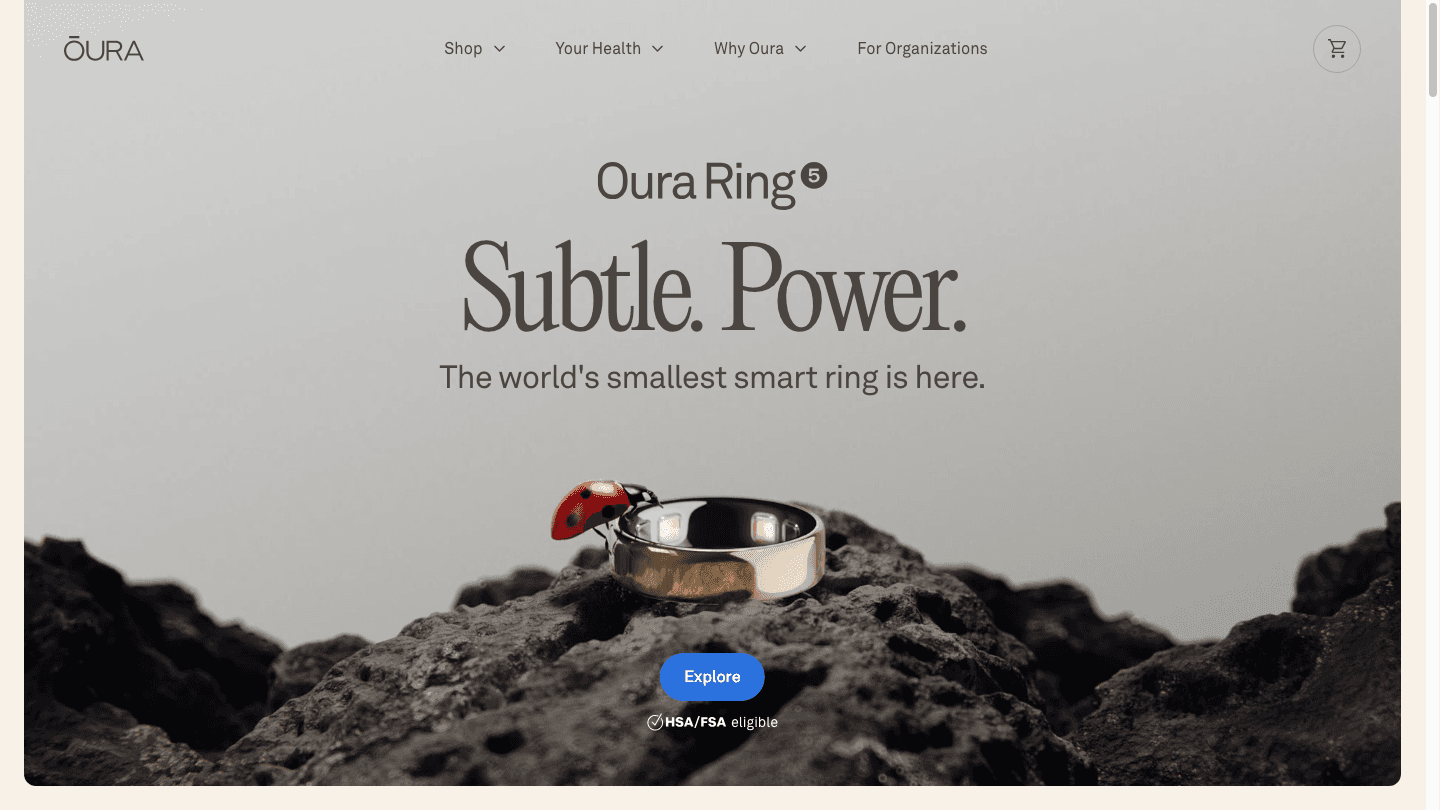
Oura Ring 4 is the current flagship from Oura, the company that essentially created the smart ring category. The hardware is a titanium ring with 8 LED sensors, and the form factor starts at $299 for basic finishes. The $5.99/month membership is required to access Readiness Scores, Sleep Scores, HRV trends, and cycle insights. Without it, the ring collects data you cannot fully interpret.
The core strength is sleep accuracy. Independent research has validated Oura's sleep staging against polysomnography at rates that exceed most wrist-based trackers. That edge is meaningful if you are making decisions based on your sleep architecture. For more detail on what you get and whether it is worth the price, see our full Oura Ring worth it review and our Oura Ring pricing breakdown.
Sleep staging (light, deep, REM), HRV, heart rate, SpO2, skin temperature
Readiness Score, Sleep Score, menstrual cycle insights
7-day battery, 100M water resistance
Sizes 4 to 15, multiple finishes
What Works:
Best-in-class sleep staging accuracy
Mature app with years of iteration
Temperature-based cycle tracking is among the most validated available
Limitations:
Mandatory $5.99/month subscription significantly increases lifetime cost
No metabolic or glucose integration
Heavier than Ultrahuman at 3-6g vs 2.4g
Pricing: $299 to $499 hardware + $5.99/month or $79/year membership. See full Oura Ring pricing. Compare Oura Ring 3 vs 4 if you are upgrading.
Best for: Sleep-focused users who want the most accurate ring-based staging and app depth, and are comfortable with ongoing subscription costs.
Ultrahuman Ring Air Overview
No subscription, metabolic focus, and the lightest ring on the market.
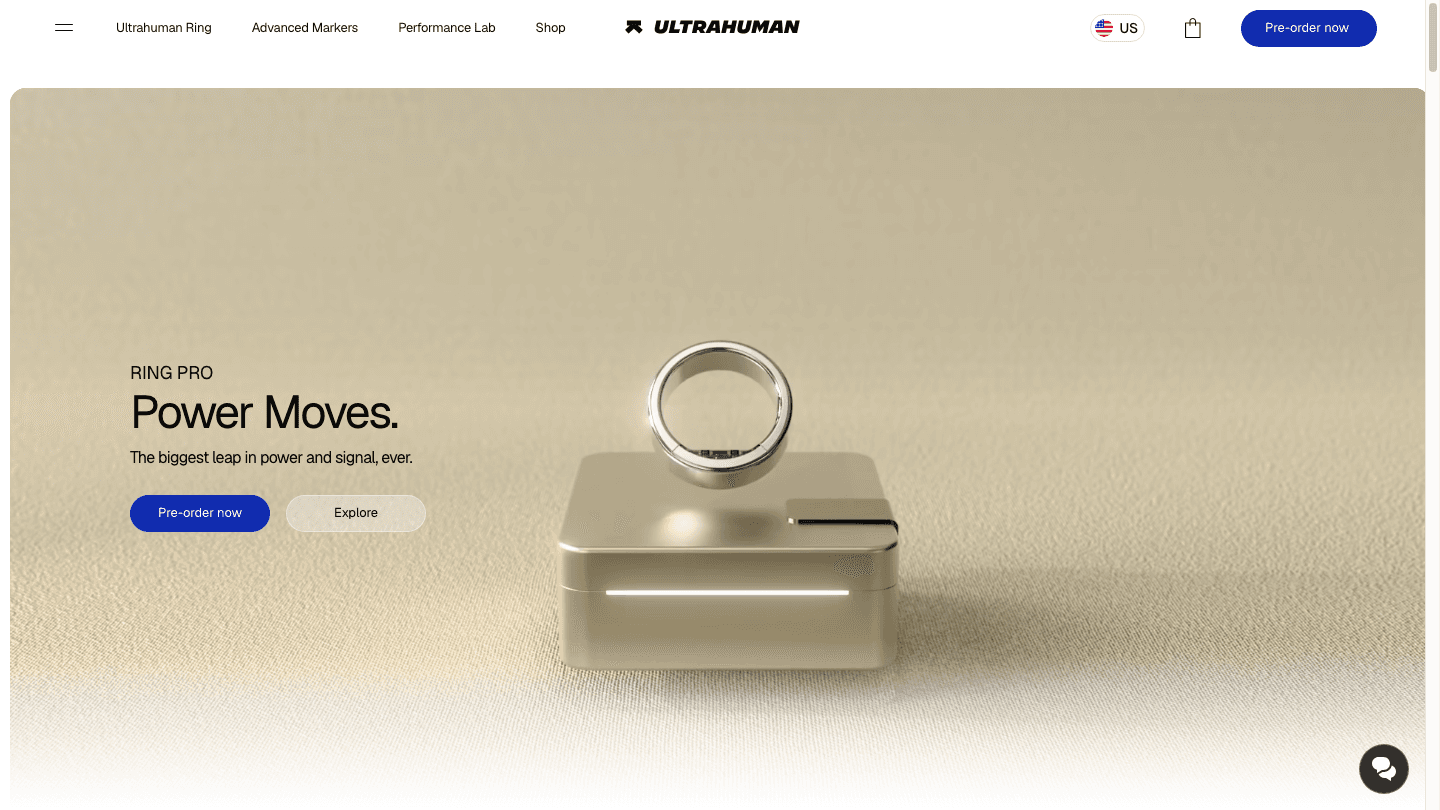
Ultrahuman entered the smart ring space with a direct challenge to Oura's subscription model: pay $349 once and get everything. The Ring Air weighs just 2.4g in aerospace titanium, which is significantly lighter than any Oura configuration. The app includes sleep staging, HRV, recovery scoring, skin temperature, and women's cycle tracking without a paywall.
The differentiator Ultrahuman is most proud of is its metabolic ecosystem. The Ultrahuman M1 continuous glucose monitor pairs with the ring to give a combined recovery-plus-metabolic-health picture that Oura does not offer. For users interested in metabolic health as part of their longevity stack, this integration is genuinely unique in the ring form factor.
Sleep staging, HRV, heart rate, SpO2, skin temperature, recovery score
No subscription required for any core features
PowerPlugs marketplace for additional data layers
Optional CGM (M1) integration for metabolic tracking
4-6 day battery, IP68 water resistance
What Works:
One-time pricing removes recurring cost pressure
Lightest ring on the market at 2.4g
Metabolic scoring and CGM integration is a unique differentiator
Limitations:
Sleep staging accuracy trails Oura in independent testing (75% vs 79%)
Smaller user community; app has had less time to iterate
IP68 (1M depth) vs Oura's 100M water resistance
Pricing: $349 one-time, all features included. No subscription.
Best for: Users who want solid recovery tracking without a subscription, or who are interested in adding metabolic data to their health stack.
Head-to-Head Comparison
Total 3-year cost: Ultrahuman wins. $349 flat vs Oura's $565+ (hardware + membership).
Sleep staging accuracy: Oura wins. Independent testing shows Oura at roughly 79% vs Ultrahuman at 75% against polysomnography.
HRV tracking: Comparable. Both use similar optical sensors. See our guide on HRV ranges by age and how to improve HRV for context on using this data effectively.
Metabolic data: Ultrahuman wins. CGM integration is unavailable on Oura.
Form factor weight: Ultrahuman wins at 2.4g vs Oura's 3-6g.
Water resistance: Oura wins at 100M vs Ultrahuman's IP68. Details in is Oura Ring waterproof.
Menstrual cycle tracking: Oura wins. Ultrahuman offers cycle insights but Oura's has more clinical validation.
App maturity: Oura wins. More years of iteration and a larger user data set for algorithmic personalization.
Battery life: Comparable. Oura advertises 7 days, Ultrahuman 4-6 days in real use. See Oura Ring battery life for real-world numbers.
Which Should You Choose?
Choose Oura Ring 4 if sleep staging accuracy is your primary metric, if you want mature cycle tracking, or if the depth of the Oura app is appealing and you are comfortable absorbing the subscription cost over time.
Choose Ultrahuman Ring Air if subscription fees bother you on principle, if you are interested in metabolic health as part of your tracking stack, or if wearing the lightest possible ring matters. The sleep data is solid; it is not as far behind Oura as the marketing suggests, and for most users the practical difference in daily readiness decisions is minimal.
For a broader view of smart ring options including budget picks, see alternatives to Oura Ring and Oura Ring competitors.
Making Your Recovery Data Actionable
Both rings give you daily readiness scores. Neither tells you what to do with them on a scheduling level. Lifestack bridges that gap: it reads your energy and recovery state and auto-schedules your day around it, placing high-demand work into your peak hours and protecting recovery space. Whether you are an Oura user or an Ultrahuman user, that data becomes more useful when it is connected to an actual plan.
Frequently Asked Questions
Is Oura Ring better than Ultrahuman?
For sleep staging accuracy and app maturity, yes. For total cost and metabolic tracking, no. Neither is objectively better. The right pick depends on which features you prioritize and whether a monthly subscription bothers you.
Does Ultrahuman Ring Air have a subscription?
No. All core features including sleep staging, HRV, recovery score, and women's cycle insights are included with the hardware purchase. There is no mandatory or optional subscription for the base app.
Which smart ring has the best sleep tracking?
Oura Ring 4 leads in sleep staging accuracy based on current independent testing against polysomnography. For comparison with WHOOP and other trackers, see our recovery score guide and the best sleep trackers in 2026.
Can Ultrahuman track blood pressure?
No. Neither Ultrahuman Ring Air nor Oura Ring 4 currently tracks blood pressure. Blood pressure insights remain an emerging feature in wearables and are not yet available in any ring-form-factor device at the time of writing.
Is the Ultrahuman Ring Air accurate for HRV?
Yes, for consumer use. Both Oura and Ultrahuman use optical sensors to measure HRV overnight. Neither matches the accuracy of a chest-strap ECG for clinical measurement, but both are consistent enough for tracking personal trends over time. See our guide on RMSSD and HRV metrics for what these numbers mean and how to interpret them.
The Subscription Question
When you compare the Oura Ring 4 and the Ultrahuman Ring Air, the first thing you notice is the pricing structure. Both rings cost around $349 in their base configurations. But Oura charges $5.99/month for the membership that makes the ring useful, while Ultrahuman charges nothing after the initial purchase.
Over three years, that difference adds up to roughly $216 in additional spending on the Oura side. The ring hardware is similar. The apps are different. The total cost is very different.
That said, Oura and Ultrahuman are not identical products with different business models. The sleep tracking accuracy differs. The app depth differs. The additional features like cycle insights and metabolic scoring differ. This comparison breaks down what each ring actually does well and who should buy which one.
Key Takeaways
Oura Ring 4 wins on sleep staging accuracy, app depth, and menstrual cycle tracking maturity.
Ultrahuman Ring Air wins on total cost (no subscription), metabolic scoring, and form factor weight.
For most users who primarily want sleep and recovery insights, both deliver excellent data. The decision comes down to subscription tolerance and which specific features matter more to you.
Quick Verdict
Oura Ring 4: Best for users who want the most accurate sleep staging available in a ring and are willing to pay a monthly fee for the depth of the Oura app.
Ultrahuman Ring Air: Best for subscription-averse users who want solid recovery and metabolic tracking at a one-time price, especially if glucose monitoring interests you.
Oura Ring 4 Overview
The gold standard for ring-based sleep tracking.
Oura Ring 4 is the current flagship from Oura, the company that essentially created the smart ring category. The hardware is a titanium ring with 8 LED sensors, and the form factor starts at $299 for basic finishes. The $5.99/month membership is required to access Readiness Scores, Sleep Scores, HRV trends, and cycle insights. Without it, the ring collects data you cannot fully interpret.
The core strength is sleep accuracy. Independent research has validated Oura's sleep staging against polysomnography at rates that exceed most wrist-based trackers. That edge is meaningful if you are making decisions based on your sleep architecture. For more detail on what you get and whether it is worth the price, see our full Oura Ring worth it review and our Oura Ring pricing breakdown.
Sleep staging (light, deep, REM), HRV, heart rate, SpO2, skin temperature
Readiness Score, Sleep Score, menstrual cycle insights
7-day battery, 100M water resistance
Sizes 4 to 15, multiple finishes
What Works:
Best-in-class sleep staging accuracy
Mature app with years of iteration
Temperature-based cycle tracking is among the most validated available
Limitations:
Mandatory $5.99/month subscription significantly increases lifetime cost
No metabolic or glucose integration
Heavier than Ultrahuman at 3-6g vs 2.4g
Pricing: $299 to $499 hardware + $5.99/month or $79/year membership. See full Oura Ring pricing. Compare Oura Ring 3 vs 4 if you are upgrading.
Best for: Sleep-focused users who want the most accurate ring-based staging and app depth, and are comfortable with ongoing subscription costs.
Ultrahuman Ring Air Overview
No subscription, metabolic focus, and the lightest ring on the market.
Ultrahuman entered the smart ring space with a direct challenge to Oura's subscription model: pay $349 once and get everything. The Ring Air weighs just 2.4g in aerospace titanium, which is significantly lighter than any Oura configuration. The app includes sleep staging, HRV, recovery scoring, skin temperature, and women's cycle tracking without a paywall.
The differentiator Ultrahuman is most proud of is its metabolic ecosystem. The Ultrahuman M1 continuous glucose monitor pairs with the ring to give a combined recovery-plus-metabolic-health picture that Oura does not offer. For users interested in metabolic health as part of their longevity stack, this integration is genuinely unique in the ring form factor.
Sleep staging, HRV, heart rate, SpO2, skin temperature, recovery score
No subscription required for any core features
PowerPlugs marketplace for additional data layers
Optional CGM (M1) integration for metabolic tracking
4-6 day battery, IP68 water resistance
What Works:
One-time pricing removes recurring cost pressure
Lightest ring on the market at 2.4g
Metabolic scoring and CGM integration is a unique differentiator
Limitations:
Sleep staging accuracy trails Oura in independent testing (75% vs 79%)
Smaller user community; app has had less time to iterate
IP68 (1M depth) vs Oura's 100M water resistance
Pricing: $349 one-time, all features included. No subscription.
Best for: Users who want solid recovery tracking without a subscription, or who are interested in adding metabolic data to their health stack.
Head-to-Head Comparison
Total 3-year cost: Ultrahuman wins. $349 flat vs Oura's $565+ (hardware + membership).
Sleep staging accuracy: Oura wins. Independent testing shows Oura at roughly 79% vs Ultrahuman at 75% against polysomnography.
HRV tracking: Comparable. Both use similar optical sensors. See our guide on HRV ranges by age and how to improve HRV for context on using this data effectively.
Metabolic data: Ultrahuman wins. CGM integration is unavailable on Oura.
Form factor weight: Ultrahuman wins at 2.4g vs Oura's 3-6g.
Water resistance: Oura wins at 100M vs Ultrahuman's IP68. Details in is Oura Ring waterproof.
Menstrual cycle tracking: Oura wins. Ultrahuman offers cycle insights but Oura's has more clinical validation.
App maturity: Oura wins. More years of iteration and a larger user data set for algorithmic personalization.
Battery life: Comparable. Oura advertises 7 days, Ultrahuman 4-6 days in real use. See Oura Ring battery life for real-world numbers.
Which Should You Choose?
Choose Oura Ring 4 if sleep staging accuracy is your primary metric, if you want mature cycle tracking, or if the depth of the Oura app is appealing and you are comfortable absorbing the subscription cost over time.
Choose Ultrahuman Ring Air if subscription fees bother you on principle, if you are interested in metabolic health as part of your tracking stack, or if wearing the lightest possible ring matters. The sleep data is solid; it is not as far behind Oura as the marketing suggests, and for most users the practical difference in daily readiness decisions is minimal.
For a broader view of smart ring options including budget picks, see alternatives to Oura Ring and Oura Ring competitors.
Making Your Recovery Data Actionable
Both rings give you daily readiness scores. Neither tells you what to do with them on a scheduling level. Lifestack bridges that gap: it reads your energy and recovery state and auto-schedules your day around it, placing high-demand work into your peak hours and protecting recovery space. Whether you are an Oura user or an Ultrahuman user, that data becomes more useful when it is connected to an actual plan.
Frequently Asked Questions
Is Oura Ring better than Ultrahuman?
For sleep staging accuracy and app maturity, yes. For total cost and metabolic tracking, no. Neither is objectively better. The right pick depends on which features you prioritize and whether a monthly subscription bothers you.
Does Ultrahuman Ring Air have a subscription?
No. All core features including sleep staging, HRV, recovery score, and women's cycle insights are included with the hardware purchase. There is no mandatory or optional subscription for the base app.
Which smart ring has the best sleep tracking?
Oura Ring 4 leads in sleep staging accuracy based on current independent testing against polysomnography. For comparison with WHOOP and other trackers, see our recovery score guide and the best sleep trackers in 2026.
Can Ultrahuman track blood pressure?
No. Neither Ultrahuman Ring Air nor Oura Ring 4 currently tracks blood pressure. Blood pressure insights remain an emerging feature in wearables and are not yet available in any ring-form-factor device at the time of writing.
Is the Ultrahuman Ring Air accurate for HRV?
Yes, for consumer use. Both Oura and Ultrahuman use optical sensors to measure HRV overnight. Neither matches the accuracy of a chest-strap ECG for clinical measurement, but both are consistent enough for tracking personal trends over time. See our guide on RMSSD and HRV metrics for what these numbers mean and how to interpret them.



FOLLOW ON
FOLLOW ON
FOLLOW ON


Copyright 2026 © Lifestack. All rights reserved
Copyright 2026 © Lifestack. All rights reserved

