
Tips
ADHD Burnout vs Autistic Burnout: Key Differences
ADHD Burnout vs Autistic Burnout: Key Differences

ADHD burnout and autistic burnout are often discussed as if they're the same thing, and when you're in the middle of either one, they can certainly feel the same: exhausted in a way that sleep doesn't fix, unable to do things that normally feel easy, like you've used up something essential and can't seem to refill it.
But the underlying causes are different, the warning signs tend to show up differently, and recovery requires different approaches. For people who have both ADHD and autism, sometimes called AuDHD, understanding which type of burnout is driving a particular episode can make the difference between a recovery strategy that helps and one that accidentally makes things worse.
This guide explains the key differences between ADHD burnout and autistic burnout, what causes each, and what actually helps with recovery. It's not a substitute for clinical support, but understanding the distinction is a good starting point.
Key Takeaways
ADHD burnout is often caused by sustained effort to compensate for executive function difficulties, with energy crashing when the compensating systems fail. Autistic burnout typically results from long-term masking and sensory overload.
ADHD burnout tends to come in waves and can recover relatively quickly once the acute stressor is removed. Autistic burnout often involves a slower, more complete loss of function that can last months or longer.
Recovery paths are different: ADHD burnout responds well to structure and executive function support. Autistic burnout requires reduced demands, increased predictability, and reduced sensory load.
What Is ADHD Burnout?
ADHD burnout happens when the mental and emotional effort of managing ADHD in a world that doesn't accommodate it has depleted your capacity to keep doing so. People with ADHD often develop elaborate workarounds for executive function challenges: elaborate reminder systems, hyperfocus on deadlines, compensating for forgetfulness with extra preparation, masking impulsive behavior in social settings.
These strategies work, but they cost more energy than the equivalent tasks cost neurotypical people. Over time, that extra cost accumulates. ADHD burnout is what happens when the account is overdrawn. You can't concentrate. Tasks that were manageable become impossible. Emotional regulation, already harder with ADHD, becomes even harder. The internal scaffolding you've built collapses and you're left with the raw ADHD symptoms plus profound exhaustion on top.
Common triggers include periods of sustained high demand with no recovery time, major life transitions (new job, new school, new relationship), failing to meet expectations (real or perceived), or simply the cumulative weight of years of chronic overextension without enough rest. If you want to understand where your burnout sits on the spectrum, the ADHD burnout quiz can help clarify it.
What Is Autistic Burnout?
Autistic burnout is a state of pervasive, long-term exhaustion caused by the sustained effort of adapting to a world built for neurotypical sensory, social, and cognitive systems. The defining feature that researchers and autistic people often point to is masking: suppressing or hiding autistic traits to pass as neurotypical in professional and social environments.
Masking is extraordinarily energy-intensive. It requires continuous real-time monitoring of social cues, body language, tone, and context while also managing the sensory environment, following conversation, and doing whatever the actual task is. For people who do this full-time, burnout isn't a question of if but when.
Autistic burnout often involves a significant loss of skills and abilities that were previously stable. People describe losing the ability to speak in full sentences (going "nonverbal" or "low-verbal"), forgetting how to do familiar tasks, struggling with basic self-care, and needing profound levels of isolation to start recovering. It's distinct from depression, though they can co-occur, in that the primary driver is the specific environmental mismatch rather than internal mood dysregulation.
Key Differences Between ADHD and Autistic Burnout
The clearest distinction is in what depletes the system:
Primary drain for ADHD burnout: Executive function compensation. The effort of staying organized, managing time, following through, and managing impulses at a level that masks the ADHD.
Primary drain for autistic burnout: Sensory load and social masking. The effort of processing a sensory environment that's often too loud, too bright, or too unpredictable, while simultaneously running real-time social performance.
Recovery pace is another key difference. ADHD burnout often responds quickly to removing the acute stressor and getting genuine rest. If the pressure lifts, the energy often starts returning within days to weeks. Autistic burnout tends to require a much longer recovery arc. Months is common. Complete relief of demands and deep reduction of sensory load is often necessary before function starts returning, and pushing through typically extends rather than shortens the recovery.
The experience of "low stimulation" also differs. For someone in ADHD burnout, some external structure and low-demand engagement can feel helpful, because ADHD can shift toward understimulation without enough input. For someone in autistic burnout, more stimulation of almost any kind makes things worse. Quiet, predictable, low-demand environments are typically what autistic burnout needs.
AuDHD: When You Have Both
A meaningful proportion of autistic people also have ADHD, and vice versa. The combination, increasingly referred to as AuDHD, creates a particularly complex burnout profile because both drain systems are active simultaneously.
The result can be internally contradictory: part of you needs more stimulation and external structure to prevent the ADHD understimulation that makes burnout worse, while another part needs quiet and reduced demands to address the autistic component. Navigating this requires tracking which dimension is more activated at a given time, which takes practice and often benefits from professional support.
AuDHD burnout also tends to be harder to recognize because the symptoms can mask each other. High autistic burnout can suppress the hyperactivity and externalized ADHD symptoms, making the presentation look like depression or extreme fatigue without the diagnostic markers either condition would show in isolation. ADHD understimulation is a related concept that's worth understanding alongside burnout for AuDHD individuals.
Recovery Strategies for ADHD Burnout
The most important first step is identifying and removing the primary stressor if possible. If you've been pushing through with inadequate support systems, the recovery path involves building more sustainable support, not finding more willpower to push harder.
Practical strategies that tend to help:
Reduce the number of decisions you're responsible for each day. Decision fatigue compounds ADHD burnout quickly.
Build external structure (calendars, task managers, phone alerts) to offload executive function rather than relying on internal effort.
Protect sleep aggressively. Sleep deprivation is one of the biggest accelerators of ADHD burnout, and recovery without adequate sleep is nearly impossible.
Allow hyperfocus and flow states to happen naturally rather than trying to force consistent steady output. Working with your ADHD brain's energy patterns rather than against them reduces the daily compensation cost.
If you have access to ADHD coaching or therapy, burnout recovery is an appropriate time to use it.
The best ADHD daily planner apps can meaningfully reduce the executive function overhead that drives burnout by handling the organization and scheduling work that costs extra energy for ADHD brains.
Recovery Strategies for Autistic Burnout
Autistic burnout recovery centers on one core principle: reduce demands and sensory load to the minimum sustainable level, and hold that until the system starts recovering. Trying to push through autistic burnout, particularly trying to maintain masking during it, typically extends the recovery significantly.
Practical strategies:
Identify and stop masking behaviors that feel non-essential. In safe environments with trusted people, dropping the performance of neurotypicality allows the nervous system to rest.
Reduce sensory demands: quieter spaces, reduced lighting if fluorescents are difficult, less social interaction, no unnecessary screens.
Increase predictability and routine. Autistic burnout often makes unpredictability much harder to tolerate. Knowing what each hour of the day holds reduces the cognitive load of navigating uncertainty.
Say no to new commitments. Not rescheduling them. Actually declining them during recovery.
Engage with low-demand sensory activities that are personally regulating, whether that's a specific texture, a familiar piece of music, or a highly routine physical activity.
For the planning side of autistic burnout recovery, day planning strategies for ADHD and autism covers approaches that accommodate neurodivergent executive function rather than fighting it.
How Energy-Aware Scheduling Helps Both Types
One theme common to both ADHD and autistic burnout is the mismatch between energy availability and task demands. Both types involve doing high-cost work at the wrong time, whether that's masking during periods of sensory overload or pushing through executive function tasks when the compensating capacity is depleted.
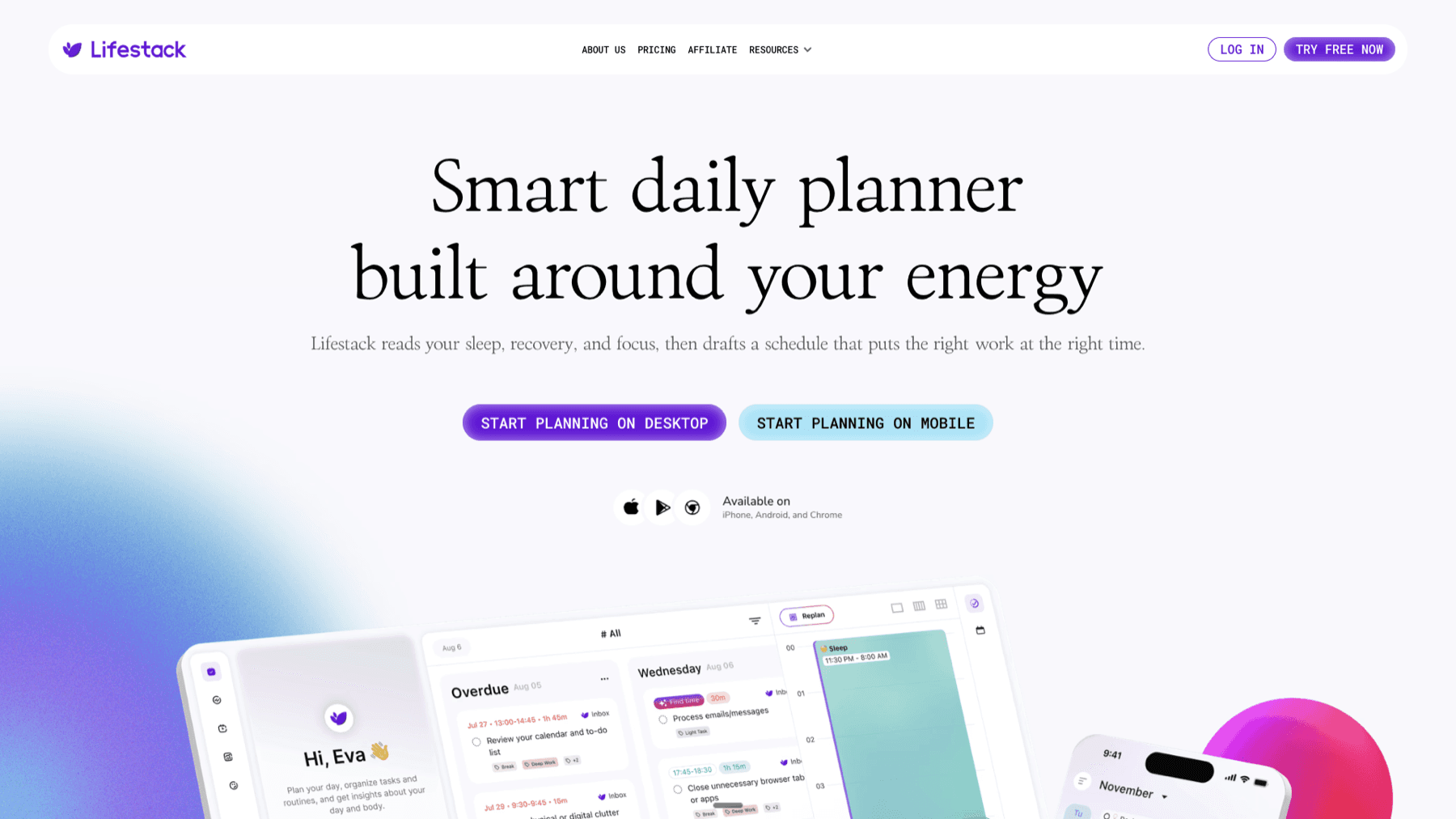
Lifestack is a daily planner that builds your schedule around your energy rather than just your calendar. It reads biometric data from wearables (Oura Ring, Garmin, Apple Watch) and identifies when your cognitive capacity is highest, then schedules your demanding tasks there. For ADHD brains, this reduces the compensation cost of doing hard things during low-energy windows. For autistic individuals, it protects the predictability of the day structure while adapting to actual recovery states rather than demanding the same output regardless of how depleted the system is.
Predictability and reduced daily decision-making are particularly valuable during burnout recovery for both types. Lifestack costs $7/month or $50/year with a 7-day free trial. For a broader look at apps that support ADHD-friendly focus and scheduling, see the best ADHD apps for focus.
Frequently Asked Questions
What is ADHD burnout?
ADHD burnout is a state of physical and emotional exhaustion that results from the sustained extra effort required to manage ADHD in environments not designed for it. It commonly follows extended periods of overcompensating for executive function challenges without adequate rest or support. Symptoms include extreme fatigue, difficulty concentrating, emotional dysregulation, loss of motivation, and the feeling that strategies that previously worked are no longer accessible.
What is autistic burnout?
Autistic burnout is a state of pervasive, long-term exhaustion caused by chronic sensory overload and the sustained effort of masking autistic traits to fit neurotypical environments. It often involves a significant and temporary loss of previously held skills and abilities, including speech, executive function, and the capacity for social interaction. Autistic burnout typically requires a longer recovery period than ADHD burnout and responds to reduced demands, sensory accommodation, and masking reduction.
How do I know if I have ADHD burnout or autistic burnout?
Ask what has been costing the most energy before the burnout started. If it was managing tasks, staying organized, controlling impulses, and keeping up with responsibilities despite a racing mind, the burnout is more likely ADHD-driven. If it was managing social environments, sensory input, adapting to changing expectations, and maintaining a neurotypical social performance, it's more likely autistic burnout. For people with both ADHD and autism, both drivers may be present simultaneously.
How long does autistic burnout last?
Autistic burnout duration varies widely but is typically longer than ADHD burnout. Many autistic people report burnout episodes lasting months, and in some cases a year or more when demands aren't reduced quickly enough. Recovery tends to require genuine demand reduction and sensory accommodation, not just rest while maintaining the same level of masking and environmental load. Trying to push through usually extends rather than shortens the recovery.
Can you have both ADHD burnout and autistic burnout at the same time?
Yes. People with both ADHD and autism (AuDHD) can experience both types simultaneously, which creates a more complex recovery profile. The two types can also interact: autistic burnout that reduces the ability to mask can remove a coping strategy for ADHD, making ADHD symptoms more visible and harder to manage. Working with a clinician who understands both conditions is valuable for navigating recovery in this situation.
What helps with ADHD burnout recovery?
The most effective recovery approach involves removing or significantly reducing the primary stressor, building external structure to replace exhausted internal compensating systems, protecting sleep, and pacing activity rather than forcing consistent output. Apps and tools that handle executive function tasks (planning, reminders, scheduling) reduce the daily compensation cost that drives burnout. For practical strategies, managing low-energy periods covers approaches that apply directly to burnout recovery days.
ADHD burnout and autistic burnout are often discussed as if they're the same thing, and when you're in the middle of either one, they can certainly feel the same: exhausted in a way that sleep doesn't fix, unable to do things that normally feel easy, like you've used up something essential and can't seem to refill it.
But the underlying causes are different, the warning signs tend to show up differently, and recovery requires different approaches. For people who have both ADHD and autism, sometimes called AuDHD, understanding which type of burnout is driving a particular episode can make the difference between a recovery strategy that helps and one that accidentally makes things worse.
This guide explains the key differences between ADHD burnout and autistic burnout, what causes each, and what actually helps with recovery. It's not a substitute for clinical support, but understanding the distinction is a good starting point.
Key Takeaways
ADHD burnout is often caused by sustained effort to compensate for executive function difficulties, with energy crashing when the compensating systems fail. Autistic burnout typically results from long-term masking and sensory overload.
ADHD burnout tends to come in waves and can recover relatively quickly once the acute stressor is removed. Autistic burnout often involves a slower, more complete loss of function that can last months or longer.
Recovery paths are different: ADHD burnout responds well to structure and executive function support. Autistic burnout requires reduced demands, increased predictability, and reduced sensory load.
What Is ADHD Burnout?
ADHD burnout happens when the mental and emotional effort of managing ADHD in a world that doesn't accommodate it has depleted your capacity to keep doing so. People with ADHD often develop elaborate workarounds for executive function challenges: elaborate reminder systems, hyperfocus on deadlines, compensating for forgetfulness with extra preparation, masking impulsive behavior in social settings.
These strategies work, but they cost more energy than the equivalent tasks cost neurotypical people. Over time, that extra cost accumulates. ADHD burnout is what happens when the account is overdrawn. You can't concentrate. Tasks that were manageable become impossible. Emotional regulation, already harder with ADHD, becomes even harder. The internal scaffolding you've built collapses and you're left with the raw ADHD symptoms plus profound exhaustion on top.
Common triggers include periods of sustained high demand with no recovery time, major life transitions (new job, new school, new relationship), failing to meet expectations (real or perceived), or simply the cumulative weight of years of chronic overextension without enough rest. If you want to understand where your burnout sits on the spectrum, the ADHD burnout quiz can help clarify it.
What Is Autistic Burnout?
Autistic burnout is a state of pervasive, long-term exhaustion caused by the sustained effort of adapting to a world built for neurotypical sensory, social, and cognitive systems. The defining feature that researchers and autistic people often point to is masking: suppressing or hiding autistic traits to pass as neurotypical in professional and social environments.
Masking is extraordinarily energy-intensive. It requires continuous real-time monitoring of social cues, body language, tone, and context while also managing the sensory environment, following conversation, and doing whatever the actual task is. For people who do this full-time, burnout isn't a question of if but when.
Autistic burnout often involves a significant loss of skills and abilities that were previously stable. People describe losing the ability to speak in full sentences (going "nonverbal" or "low-verbal"), forgetting how to do familiar tasks, struggling with basic self-care, and needing profound levels of isolation to start recovering. It's distinct from depression, though they can co-occur, in that the primary driver is the specific environmental mismatch rather than internal mood dysregulation.
Key Differences Between ADHD and Autistic Burnout
The clearest distinction is in what depletes the system:
Primary drain for ADHD burnout: Executive function compensation. The effort of staying organized, managing time, following through, and managing impulses at a level that masks the ADHD.
Primary drain for autistic burnout: Sensory load and social masking. The effort of processing a sensory environment that's often too loud, too bright, or too unpredictable, while simultaneously running real-time social performance.
Recovery pace is another key difference. ADHD burnout often responds quickly to removing the acute stressor and getting genuine rest. If the pressure lifts, the energy often starts returning within days to weeks. Autistic burnout tends to require a much longer recovery arc. Months is common. Complete relief of demands and deep reduction of sensory load is often necessary before function starts returning, and pushing through typically extends rather than shortens the recovery.
The experience of "low stimulation" also differs. For someone in ADHD burnout, some external structure and low-demand engagement can feel helpful, because ADHD can shift toward understimulation without enough input. For someone in autistic burnout, more stimulation of almost any kind makes things worse. Quiet, predictable, low-demand environments are typically what autistic burnout needs.
AuDHD: When You Have Both
A meaningful proportion of autistic people also have ADHD, and vice versa. The combination, increasingly referred to as AuDHD, creates a particularly complex burnout profile because both drain systems are active simultaneously.
The result can be internally contradictory: part of you needs more stimulation and external structure to prevent the ADHD understimulation that makes burnout worse, while another part needs quiet and reduced demands to address the autistic component. Navigating this requires tracking which dimension is more activated at a given time, which takes practice and often benefits from professional support.
AuDHD burnout also tends to be harder to recognize because the symptoms can mask each other. High autistic burnout can suppress the hyperactivity and externalized ADHD symptoms, making the presentation look like depression or extreme fatigue without the diagnostic markers either condition would show in isolation. ADHD understimulation is a related concept that's worth understanding alongside burnout for AuDHD individuals.
Recovery Strategies for ADHD Burnout
The most important first step is identifying and removing the primary stressor if possible. If you've been pushing through with inadequate support systems, the recovery path involves building more sustainable support, not finding more willpower to push harder.
Practical strategies that tend to help:
Reduce the number of decisions you're responsible for each day. Decision fatigue compounds ADHD burnout quickly.
Build external structure (calendars, task managers, phone alerts) to offload executive function rather than relying on internal effort.
Protect sleep aggressively. Sleep deprivation is one of the biggest accelerators of ADHD burnout, and recovery without adequate sleep is nearly impossible.
Allow hyperfocus and flow states to happen naturally rather than trying to force consistent steady output. Working with your ADHD brain's energy patterns rather than against them reduces the daily compensation cost.
If you have access to ADHD coaching or therapy, burnout recovery is an appropriate time to use it.
The best ADHD daily planner apps can meaningfully reduce the executive function overhead that drives burnout by handling the organization and scheduling work that costs extra energy for ADHD brains.
Recovery Strategies for Autistic Burnout
Autistic burnout recovery centers on one core principle: reduce demands and sensory load to the minimum sustainable level, and hold that until the system starts recovering. Trying to push through autistic burnout, particularly trying to maintain masking during it, typically extends the recovery significantly.
Practical strategies:
Identify and stop masking behaviors that feel non-essential. In safe environments with trusted people, dropping the performance of neurotypicality allows the nervous system to rest.
Reduce sensory demands: quieter spaces, reduced lighting if fluorescents are difficult, less social interaction, no unnecessary screens.
Increase predictability and routine. Autistic burnout often makes unpredictability much harder to tolerate. Knowing what each hour of the day holds reduces the cognitive load of navigating uncertainty.
Say no to new commitments. Not rescheduling them. Actually declining them during recovery.
Engage with low-demand sensory activities that are personally regulating, whether that's a specific texture, a familiar piece of music, or a highly routine physical activity.
For the planning side of autistic burnout recovery, day planning strategies for ADHD and autism covers approaches that accommodate neurodivergent executive function rather than fighting it.
How Energy-Aware Scheduling Helps Both Types
One theme common to both ADHD and autistic burnout is the mismatch between energy availability and task demands. Both types involve doing high-cost work at the wrong time, whether that's masking during periods of sensory overload or pushing through executive function tasks when the compensating capacity is depleted.
Lifestack is a daily planner that builds your schedule around your energy rather than just your calendar. It reads biometric data from wearables (Oura Ring, Garmin, Apple Watch) and identifies when your cognitive capacity is highest, then schedules your demanding tasks there. For ADHD brains, this reduces the compensation cost of doing hard things during low-energy windows. For autistic individuals, it protects the predictability of the day structure while adapting to actual recovery states rather than demanding the same output regardless of how depleted the system is.
Predictability and reduced daily decision-making are particularly valuable during burnout recovery for both types. Lifestack costs $7/month or $50/year with a 7-day free trial. For a broader look at apps that support ADHD-friendly focus and scheduling, see the best ADHD apps for focus.
Frequently Asked Questions
What is ADHD burnout?
ADHD burnout is a state of physical and emotional exhaustion that results from the sustained extra effort required to manage ADHD in environments not designed for it. It commonly follows extended periods of overcompensating for executive function challenges without adequate rest or support. Symptoms include extreme fatigue, difficulty concentrating, emotional dysregulation, loss of motivation, and the feeling that strategies that previously worked are no longer accessible.
What is autistic burnout?
Autistic burnout is a state of pervasive, long-term exhaustion caused by chronic sensory overload and the sustained effort of masking autistic traits to fit neurotypical environments. It often involves a significant and temporary loss of previously held skills and abilities, including speech, executive function, and the capacity for social interaction. Autistic burnout typically requires a longer recovery period than ADHD burnout and responds to reduced demands, sensory accommodation, and masking reduction.
How do I know if I have ADHD burnout or autistic burnout?
Ask what has been costing the most energy before the burnout started. If it was managing tasks, staying organized, controlling impulses, and keeping up with responsibilities despite a racing mind, the burnout is more likely ADHD-driven. If it was managing social environments, sensory input, adapting to changing expectations, and maintaining a neurotypical social performance, it's more likely autistic burnout. For people with both ADHD and autism, both drivers may be present simultaneously.
How long does autistic burnout last?
Autistic burnout duration varies widely but is typically longer than ADHD burnout. Many autistic people report burnout episodes lasting months, and in some cases a year or more when demands aren't reduced quickly enough. Recovery tends to require genuine demand reduction and sensory accommodation, not just rest while maintaining the same level of masking and environmental load. Trying to push through usually extends rather than shortens the recovery.
Can you have both ADHD burnout and autistic burnout at the same time?
Yes. People with both ADHD and autism (AuDHD) can experience both types simultaneously, which creates a more complex recovery profile. The two types can also interact: autistic burnout that reduces the ability to mask can remove a coping strategy for ADHD, making ADHD symptoms more visible and harder to manage. Working with a clinician who understands both conditions is valuable for navigating recovery in this situation.
What helps with ADHD burnout recovery?
The most effective recovery approach involves removing or significantly reducing the primary stressor, building external structure to replace exhausted internal compensating systems, protecting sleep, and pacing activity rather than forcing consistent output. Apps and tools that handle executive function tasks (planning, reminders, scheduling) reduce the daily compensation cost that drives burnout. For practical strategies, managing low-energy periods covers approaches that apply directly to burnout recovery days.



FOLLOW ON
FOLLOW ON
FOLLOW ON


Copyright 2026 © Lifestack. All rights reserved
Copyright 2026 © Lifestack. All rights reserved

