
Device
Apple Watch Series 11 vs Ultra 3: Which to Buy?
Apple Watch Series 11 vs Ultra 3: Which to Buy?

Two Apple Watches. Four hundred dollars difference. Very different use cases. The choice between the Apple Watch Series 11 and the Apple Watch Ultra 3 is not primarily about which is better. It is about which is right for what you actually do.
The Series 11 starts at $399 and is the everyday Apple Watch: well-designed, capable, and appropriate for 90% of people who want a smartwatch with fitness tracking. The Ultra 3 starts at $799 and is built for a different kind of athlete: ultramarathon runners, open-water swimmers, mountaineers, and anyone who pushes hardware to its limits in extreme conditions.
If you are trying to decide between them, the answer usually comes down to whether you will actually use what the Ultra 3 adds. This comparison covers every meaningful difference between the two watches to help you reach that answer.
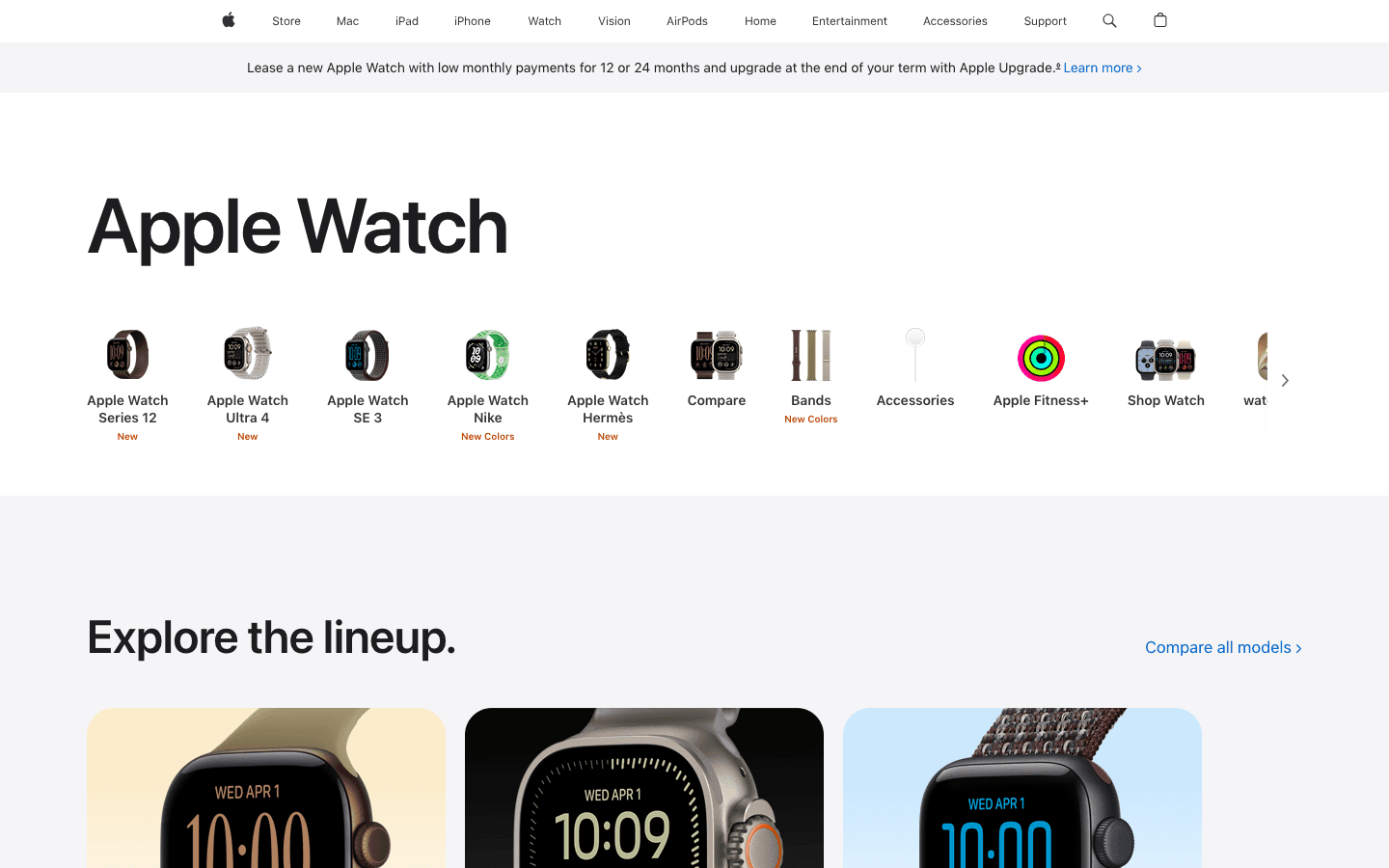
Note: as of late 2026, Apple's current lineup has moved to the Series 12 and Ultra 4. The Series 11 and Ultra 3 may still be available at reduced prices through third-party retailers or Apple refurbished stock. All specs and prices below reflect the Series 11 and Ultra 3 at their original launch configurations.
Key Takeaways
The Series 11 is the right watch for 90% of people. At $399 it handles daily fitness tracking, sleep, workouts, and smart notifications without compromise
The Ultra 3 is for endurance athletes, outdoor adventurers, and anyone who needs 42+ hour GPS battery, 100m water resistance, or an Action Button for precision sport control
The $400 price difference is only worth paying if you will regularly use the Ultra 3's sport-specific features and genuinely need the extended battery
Quick Verdict
Apple Watch Series 11: Best Apple Watch for daily use, health tracking, and anyone who wants a capable smartwatch without a premium price
Apple Watch Ultra 3: Best Apple Watch for endurance athletes, outdoor sports, and situations where battery life and durability are non-negotiable
Apple Watch Series 11 Overview
The Series 11 comes in 42mm and 46mm cases in aluminum or titanium. The aluminum versions start at $399 and cover the practical needs of most users. Titanium starts higher and adds corrosion resistance and a premium feel without changing any of the core functionality.
The display hits 2,000 nits brightness and is readable in direct sunlight. Battery life is 24 hours with Always-On Display enabled, stretching to 38 hours in Low Power Mode. For most people, a daily charging habit keeps the watch at 100% and makes the 24-hour limit a non-issue. The S9 chip is fast, Siri runs entirely on-device for privacy-sensitive queries, and double-tap gestures work reliably.
Pros: More affordable at $399, lighter weight (30-43g), available in 42mm for smaller wrists, full smartwatch features, Apple Health, watchOS integration, crash and fall detection.
Cons: 24-hour GPS battery limits multiday tracking without charging, 50m water resistance is fine for swimming but not diving, no Action Button for precision sport shortcuts, no extra bright 3,000-nit display.
Pricing: Starts at $399 (aluminum 42mm). Titanium models start higher. Check Apple refurbished or third-party retailers for discounted pricing in late 2026.
Apple Watch Ultra 3 Overview
The Ultra 3 is 49mm in Grade 5 titanium, full stop. There are no other size or material options. At 61.6 grams it is roughly twice the weight of the aluminum Series 11, and the larger case means it fits better on larger wrists. The build quality is immediately apparent: flat sapphire crystal display, raised bezel protecting the screen, and an orange-accented Action Button on the left side.
The display reaches 3,000 nits, which is meaningfully brighter than the Series 11 in peak sunlight and genuinely useful for outdoor athletes reading workout metrics mid-effort. Battery life is 42 hours of GPS tracking in standard mode and up to 72 hours in Low Power Mode, which opens up multiday tracking and ultra-endurance events. Water resistance is rated to 100 meters, covering recreational diving and serious water sports that would exceed the Series 11's limits. Read the full Apple Watch Ultra 3 review for a deep dive on specific performance testing.
Pros: 42-hour GPS battery (72h low power), 100m water resistance, Action Button for precision sport shortcuts, 3,000-nit display, titanium build, dual-frequency GPS for better tracking in challenging environments.
Cons: $799 starting price, 61.6g weight (heavy for daily wear), 49mm only (too large for smaller wrists), bulkier profile not suited to formal or professional settings.
Pricing: Starts at $799. One case size and material only: 49mm titanium.
Head-to-Head Comparison
Price: Series 11 from $399 vs Ultra 3 from $799. The Ultra 3 costs exactly twice as much at entry.
Battery (GPS): Series 11: 24 hours. Ultra 3: 42 hours. Low Power Mode: 38h vs 72h. Ultra 3 wins decisively for endurance events.
Display brightness: Series 11: 2,000 nits. Ultra 3: 3,000 nits. Meaningful difference in direct midday sunlight during outdoor workouts.
Water resistance: Series 11: 50m. Ultra 3: 100m. Series 11 covers swimming. Ultra 3 covers recreational diving and water sports.
GPS accuracy: Both use multi-constellation GPS. The Ultra 3 adds dual-frequency (L1+L5) GPS for improved accuracy in cities and deep terrain, which matters for trail running and mountaineering.
Weight: Series 11 (aluminum 42mm): 30.3g. Ultra 3: 61.6g. The weight difference is real and noticeable when wearing the Ultra 3 all day.
Size: Series 11: 42mm or 46mm. Ultra 3: 49mm only. Smaller wrists will find the Ultra 3 too large.
Action Button: Ultra 3 only. Customizable for precision control of workouts, diving modes, and shortcuts. A genuine advantage for serious athletes.
Build: Series 11 in aluminum starts at $399. Ultra 3 is titanium only. Both use sapphire glass on higher-end configurations.
Which Should You Choose?
Get the Series 11 if: you want a great everyday smartwatch, your longest workouts are under 6 hours, you primarily train in swimming pools rather than ocean diving, and paying $400 more for features you will not fully use feels wasteful. For the best smartwatch for iPhone users in general, the Series 11 remains the strongest recommendation for most people.
Get the Ultra 3 if: you run ultramarathons or do triathlon events lasting over 10 hours, you freedive or do open-water swimming where 100m water resistance matters, you do multi-day hikes or mountaineering where charging is not possible, or you genuinely need the precision control of the Action Button. The price is only justified by frequent use of what it adds.
If the $400 price difference makes you hesitate, that hesitation is probably telling you something. The Ultra 3 is not a better everyday watch. It is a better extreme sports watch. People who need it know they need it without having to think very hard about it. See also how Apple Watch compares to Garmin if you are also considering a dedicated GPS running watch alongside the Apple ecosystem. For a different angle on Apple Watch accuracy, Apple Watch sleep tracking accuracy covers real-world measurement quality.
A Note on the Current Generation
Apple launched the Series 12 and Ultra 4 in late 2026. The Series 12 starts at $399 with improved chip performance and additional health sensors. The Ultra 4 starts at $799 with a refined titanium design and longer battery. If you are buying new, the current generation is a better long-term investment. The Series 11 and Ultra 3 may be worth buying at a significant discount of $100 or more off original pricing, but check availability carefully before purchasing.
One More Thing Worth Knowing
Both watches generate detailed health data: sleep, heart rate, activity, and VO2 max estimates. Apple Watch VO2 max tracking is particularly useful for runners building aerobic fitness. Where both watches fall short is in helping you use that data to plan your actual day. If your workout data shows a high training load, that should change how you schedule work and rest. Lifestack does exactly that: it is an AI planner that schedules your tasks around your energy levels so demanding cognitive work lands in your peak windows and lighter tasks fill recovery periods. Plans start at $50 per year with a 7-day free trial.
Frequently Asked Questions
Is the Apple Watch Series 11 still worth buying in 2026?
Yes, if found at a significant discount. The Series 12 is the current generation at the same starting price. At $50-100 below the Series 12, the Series 11 remains a capable watch. At the same price, buy the Series 12 for longer software support and current hardware.
What is the biggest difference between Series 11 and Ultra 3?
Battery life and durability. The Ultra 3 delivers 42 hours of GPS (vs 24h) and 100m water resistance (vs 50m). Those differences matter for endurance athletes and outdoor adventurers. For everyday use, the Series 11 is functionally equivalent in all the ways that matter daily.
Can I swim with both Apple Watch Series 11 and Ultra 3?
Yes. The Series 11 handles pool swimming at 50m water resistance. The Ultra 3 handles recreational diving and water sports at 100m. Neither is rated for professional diving equipment.
Does the Apple Watch Ultra 3 work with smaller wrists?
The Ultra 3 comes in 49mm only. On smaller wrists (typically under 165mm wrist circumference), the case can look disproportionately large and feel heavy. Most people with smaller wrists are better served by the Series 11 in 42mm.
What replaced the Apple Watch Series 11 and Ultra 3?
The Apple Watch Series 12 replaced the Series 11, and the Apple Watch Ultra 4 replaced the Ultra 3. Both were announced in late 2026 at the same starting prices ($399 and $799 respectively). See also WHOOP vs Apple Watch for a comparison against a dedicated recovery-focused alternative.
Two Apple Watches. Four hundred dollars difference. Very different use cases. The choice between the Apple Watch Series 11 and the Apple Watch Ultra 3 is not primarily about which is better. It is about which is right for what you actually do.
The Series 11 starts at $399 and is the everyday Apple Watch: well-designed, capable, and appropriate for 90% of people who want a smartwatch with fitness tracking. The Ultra 3 starts at $799 and is built for a different kind of athlete: ultramarathon runners, open-water swimmers, mountaineers, and anyone who pushes hardware to its limits in extreme conditions.
If you are trying to decide between them, the answer usually comes down to whether you will actually use what the Ultra 3 adds. This comparison covers every meaningful difference between the two watches to help you reach that answer.
Note: as of late 2026, Apple's current lineup has moved to the Series 12 and Ultra 4. The Series 11 and Ultra 3 may still be available at reduced prices through third-party retailers or Apple refurbished stock. All specs and prices below reflect the Series 11 and Ultra 3 at their original launch configurations.
Key Takeaways
The Series 11 is the right watch for 90% of people. At $399 it handles daily fitness tracking, sleep, workouts, and smart notifications without compromise
The Ultra 3 is for endurance athletes, outdoor adventurers, and anyone who needs 42+ hour GPS battery, 100m water resistance, or an Action Button for precision sport control
The $400 price difference is only worth paying if you will regularly use the Ultra 3's sport-specific features and genuinely need the extended battery
Quick Verdict
Apple Watch Series 11: Best Apple Watch for daily use, health tracking, and anyone who wants a capable smartwatch without a premium price
Apple Watch Ultra 3: Best Apple Watch for endurance athletes, outdoor sports, and situations where battery life and durability are non-negotiable
Apple Watch Series 11 Overview
The Series 11 comes in 42mm and 46mm cases in aluminum or titanium. The aluminum versions start at $399 and cover the practical needs of most users. Titanium starts higher and adds corrosion resistance and a premium feel without changing any of the core functionality.
The display hits 2,000 nits brightness and is readable in direct sunlight. Battery life is 24 hours with Always-On Display enabled, stretching to 38 hours in Low Power Mode. For most people, a daily charging habit keeps the watch at 100% and makes the 24-hour limit a non-issue. The S9 chip is fast, Siri runs entirely on-device for privacy-sensitive queries, and double-tap gestures work reliably.
Pros: More affordable at $399, lighter weight (30-43g), available in 42mm for smaller wrists, full smartwatch features, Apple Health, watchOS integration, crash and fall detection.
Cons: 24-hour GPS battery limits multiday tracking without charging, 50m water resistance is fine for swimming but not diving, no Action Button for precision sport shortcuts, no extra bright 3,000-nit display.
Pricing: Starts at $399 (aluminum 42mm). Titanium models start higher. Check Apple refurbished or third-party retailers for discounted pricing in late 2026.
Apple Watch Ultra 3 Overview
The Ultra 3 is 49mm in Grade 5 titanium, full stop. There are no other size or material options. At 61.6 grams it is roughly twice the weight of the aluminum Series 11, and the larger case means it fits better on larger wrists. The build quality is immediately apparent: flat sapphire crystal display, raised bezel protecting the screen, and an orange-accented Action Button on the left side.
The display reaches 3,000 nits, which is meaningfully brighter than the Series 11 in peak sunlight and genuinely useful for outdoor athletes reading workout metrics mid-effort. Battery life is 42 hours of GPS tracking in standard mode and up to 72 hours in Low Power Mode, which opens up multiday tracking and ultra-endurance events. Water resistance is rated to 100 meters, covering recreational diving and serious water sports that would exceed the Series 11's limits. Read the full Apple Watch Ultra 3 review for a deep dive on specific performance testing.
Pros: 42-hour GPS battery (72h low power), 100m water resistance, Action Button for precision sport shortcuts, 3,000-nit display, titanium build, dual-frequency GPS for better tracking in challenging environments.
Cons: $799 starting price, 61.6g weight (heavy for daily wear), 49mm only (too large for smaller wrists), bulkier profile not suited to formal or professional settings.
Pricing: Starts at $799. One case size and material only: 49mm titanium.
Head-to-Head Comparison
Price: Series 11 from $399 vs Ultra 3 from $799. The Ultra 3 costs exactly twice as much at entry.
Battery (GPS): Series 11: 24 hours. Ultra 3: 42 hours. Low Power Mode: 38h vs 72h. Ultra 3 wins decisively for endurance events.
Display brightness: Series 11: 2,000 nits. Ultra 3: 3,000 nits. Meaningful difference in direct midday sunlight during outdoor workouts.
Water resistance: Series 11: 50m. Ultra 3: 100m. Series 11 covers swimming. Ultra 3 covers recreational diving and water sports.
GPS accuracy: Both use multi-constellation GPS. The Ultra 3 adds dual-frequency (L1+L5) GPS for improved accuracy in cities and deep terrain, which matters for trail running and mountaineering.
Weight: Series 11 (aluminum 42mm): 30.3g. Ultra 3: 61.6g. The weight difference is real and noticeable when wearing the Ultra 3 all day.
Size: Series 11: 42mm or 46mm. Ultra 3: 49mm only. Smaller wrists will find the Ultra 3 too large.
Action Button: Ultra 3 only. Customizable for precision control of workouts, diving modes, and shortcuts. A genuine advantage for serious athletes.
Build: Series 11 in aluminum starts at $399. Ultra 3 is titanium only. Both use sapphire glass on higher-end configurations.
Which Should You Choose?
Get the Series 11 if: you want a great everyday smartwatch, your longest workouts are under 6 hours, you primarily train in swimming pools rather than ocean diving, and paying $400 more for features you will not fully use feels wasteful. For the best smartwatch for iPhone users in general, the Series 11 remains the strongest recommendation for most people.
Get the Ultra 3 if: you run ultramarathons or do triathlon events lasting over 10 hours, you freedive or do open-water swimming where 100m water resistance matters, you do multi-day hikes or mountaineering where charging is not possible, or you genuinely need the precision control of the Action Button. The price is only justified by frequent use of what it adds.
If the $400 price difference makes you hesitate, that hesitation is probably telling you something. The Ultra 3 is not a better everyday watch. It is a better extreme sports watch. People who need it know they need it without having to think very hard about it. See also how Apple Watch compares to Garmin if you are also considering a dedicated GPS running watch alongside the Apple ecosystem. For a different angle on Apple Watch accuracy, Apple Watch sleep tracking accuracy covers real-world measurement quality.
A Note on the Current Generation
Apple launched the Series 12 and Ultra 4 in late 2026. The Series 12 starts at $399 with improved chip performance and additional health sensors. The Ultra 4 starts at $799 with a refined titanium design and longer battery. If you are buying new, the current generation is a better long-term investment. The Series 11 and Ultra 3 may be worth buying at a significant discount of $100 or more off original pricing, but check availability carefully before purchasing.
One More Thing Worth Knowing
Both watches generate detailed health data: sleep, heart rate, activity, and VO2 max estimates. Apple Watch VO2 max tracking is particularly useful for runners building aerobic fitness. Where both watches fall short is in helping you use that data to plan your actual day. If your workout data shows a high training load, that should change how you schedule work and rest. Lifestack does exactly that: it is an AI planner that schedules your tasks around your energy levels so demanding cognitive work lands in your peak windows and lighter tasks fill recovery periods. Plans start at $50 per year with a 7-day free trial.
Frequently Asked Questions
Is the Apple Watch Series 11 still worth buying in 2026?
Yes, if found at a significant discount. The Series 12 is the current generation at the same starting price. At $50-100 below the Series 12, the Series 11 remains a capable watch. At the same price, buy the Series 12 for longer software support and current hardware.
What is the biggest difference between Series 11 and Ultra 3?
Battery life and durability. The Ultra 3 delivers 42 hours of GPS (vs 24h) and 100m water resistance (vs 50m). Those differences matter for endurance athletes and outdoor adventurers. For everyday use, the Series 11 is functionally equivalent in all the ways that matter daily.
Can I swim with both Apple Watch Series 11 and Ultra 3?
Yes. The Series 11 handles pool swimming at 50m water resistance. The Ultra 3 handles recreational diving and water sports at 100m. Neither is rated for professional diving equipment.
Does the Apple Watch Ultra 3 work with smaller wrists?
The Ultra 3 comes in 49mm only. On smaller wrists (typically under 165mm wrist circumference), the case can look disproportionately large and feel heavy. Most people with smaller wrists are better served by the Series 11 in 42mm.
What replaced the Apple Watch Series 11 and Ultra 3?
The Apple Watch Series 12 replaced the Series 11, and the Apple Watch Ultra 4 replaced the Ultra 3. Both were announced in late 2026 at the same starting prices ($399 and $799 respectively). See also WHOOP vs Apple Watch for a comparison against a dedicated recovery-focused alternative.



FOLLOW ON
FOLLOW ON
FOLLOW ON


Copyright 2026 © Lifestack. All rights reserved
Copyright 2026 © Lifestack. All rights reserved

