
App
WHOOP vs Apple Watch: Which Is Better in 2026?
WHOOP vs Apple Watch: Which Is Better in 2026?

WHOOP and Apple Watch are built on fundamentally different philosophies, and the comparison matters more than most wearable decisions because choosing the wrong one for your life means paying a lot of money for a device you'll stop checking.
WHOOP is a screenless recovery tracker built for one thing: understanding how well your body is recovering and whether you're ready to push hard. It does this through continuous 24/7 monitoring, a subscription model that includes hardware, and a coaching system built around sleep, HRV, and training strain. There's no GPS, no notifications, no app store. It doesn't try to be anything other than a recovery tool.
Apple Watch is the opposite. It's a computer on your wrist that also happens to track health data. The Series 12 added a full Health Sensing System with frequent HRV measurement, readiness scores, sleep apnea detection, and ECG. But it also handles notifications, Apple Pay, Siri, third-party apps, and everything else the Apple ecosystem offers. It requires daily charging and an iPhone.
Both are excellent at what they do. The question is what you actually need.
Key Takeaways
WHOOP 5.0 offers 14-day battery life, continuous 24/7 biometric monitoring, and deep recovery coaching through a subscription model ($199-$359/year, hardware included).
Apple Watch Series 12 ($399 one-time) provides medical-grade health features including ECG, sleep apnea detection, and FDA clearances, plus full smartwatch functionality, but requires daily charging.
For serious athletes focused purely on recovery optimization, WHOOP wins. For iPhone users who want a capable health companion without a subscription, Apple Watch wins.
Quick Verdict
WHOOP: Built for athletes and people who want to obsess about recovery data. The screenless design means it never distracts you, but it also does nothing else. Best for people training consistently and wanting long-term physiological trend data.
Apple Watch: Built for iPhone users who want health monitoring alongside a full smartwatch experience. More versatile, more features, but requires daily charging and works only with iPhone.
WHOOP 5.0 Overview
WHOOP recently released WHOOP 5.0 as their current flagship tracker. The device itself is screenless by design, with six sensors measuring heart rate, HRV, skin temperature, blood oxygen, respiration rate, and accelerometry 24 hours a day. Without a screen to check notifications or browse apps, the only thing you do with WHOOP is wear it. That sounds like a limitation until you realize it's also the point.
The WHOOP app translates continuous biometric data into three daily scores: recovery (how ready you are today), sleep (quality and consistency of last night's rest), and strain (how hard you pushed yesterday and today). These feed a coaching layer that tells you whether to train hard, go easy, or rest. Over time, WHOOP builds a personalized baseline for your physiology rather than comparing you to population averages. Our full WHOOP Life Review covers the subscription tiers in detail.
What WHOOP Does Well
14-day battery life in the 5.0 (can charge while wearing via a slide-on battery pack)
Six sensors for continuous 24/7 monitoring without gaps from charging breaks
Detailed strain scoring across every activity, including non-workout activities that add cardiovascular load
Personalized recovery coaching that improves as it learns your individual baselines
Works with both iPhone and Android
Screenless design means zero distraction from the data you care about
WHOOP Limitations
No screen, no GPS, no smartwatch features, no Apple Pay, no third-party apps
Ongoing subscription required: One at $199/year, Peak at $239/year, Life at $359/year
No FDA-cleared medical features (no ECG, no sleep apnea detection, no fall detection)
If you stop paying, the device stops working. You're renting access to your own health data.
Useful only if you consistently engage with the app and coaching data
Pricing: No upfront device cost. Membership: One $199/year | Peak $239/year | Life $359/year
Best for: Athletes and fitness-focused individuals who want pure recovery coaching without smartwatch distraction, and who are willing to commit to a subscription.
Apple Watch Series 12 Overview
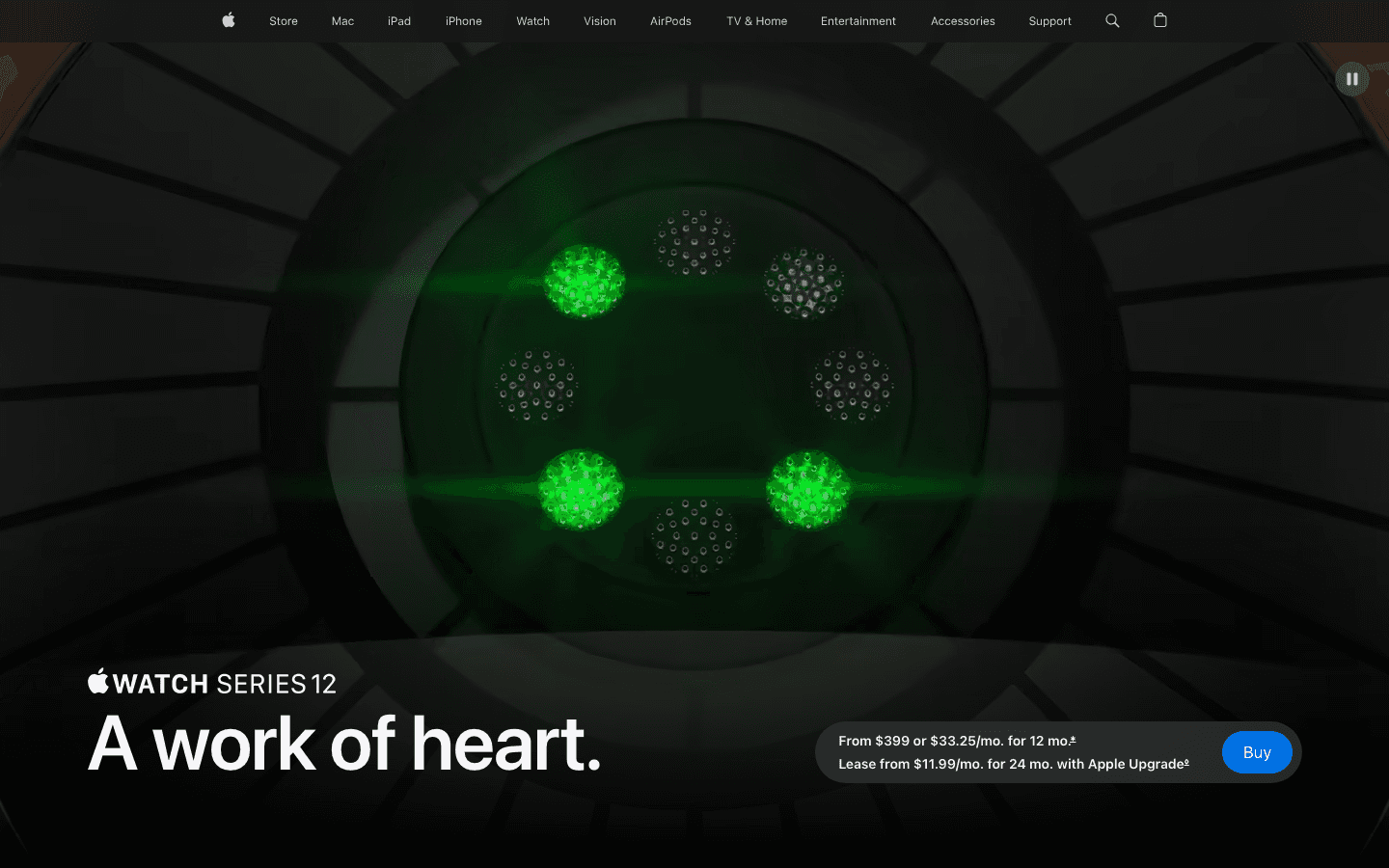
The Apple Watch Series 12 is where Apple's health ambitions and their smartwatch business most clearly overlap. The Health Sensing System introduced with this generation includes continuous heart rate readings every five seconds, HRV measurements as frequently as every five minutes, readiness scores, sleep staging, and FDA-cleared sleep apnea and hypertension notifications. For a one-time purchase at $399, that's a significant amount of health monitoring capability.
Where Apple Watch Series 12 pulls ahead of WHOOP is in medical-grade features. The ECG app, crash detection, fall detection, and the FDA clearances for sleep apnea monitoring are things WHOOP doesn't have and may never have. For people with specific health concerns or anyone who values the medical safety net, those features are meaningful. And that's before counting everything else: Apple Pay, Siri, the App Store, iMessage from your wrist, AirPods handoff.
What Apple Watch Does Well
FDA-cleared medical features: ECG, sleep apnea detection, fall detection, crash detection
No subscription required after the initial purchase
Full smartwatch functionality including notifications, Apple Pay, and the App Store
More refined readiness and health scoring in Series 12 than previous generations
watchOS is polished, fast, and has the largest smartwatch app library available
Apple Watch Limitations
18-24 hours battery life requires daily charging, creating measurement gaps in 24/7 tracking
iPhone only (no Android support)
Recovery coaching is less detailed than WHOOP's athlete-grade strain and baseline personalization
The constant screen and notifications can undermine the focus that recovery-minded athletes are often trying to protect
Pricing: SE 3 from $249 | Series 12 from $399 | Ultra 4 from $799 (no ongoing subscription)
Best for: iPhone users who want medical-grade health monitoring alongside a complete smartwatch experience, without paying a recurring subscription.
Head-to-Head: WHOOP vs Apple Watch
Recovery Tracking Depth
WHOOP wins on recovery specialization. The strain scoring system, which tracks cardiovascular load across all daily activities, and the personalized baseline approach produce more detailed recovery guidance than Apple Watch currently offers. Apple Watch Series 12's readiness scores are meaningful and improving, but WHOOP has been doing this for years longer and builds on a model calibrated to your individual physiology over time. If recovery data is the whole point, WHOOP is the better tool.
Battery Life and Data Continuity
WHOOP wins clearly. Fourteen days on a charge versus 18-24 hours means WHOOP generates continuous data where Apple Watch has daily gaps. Those gaps matter more than they might seem: HRV during sleep, resting heart rate overnight, and recovery data collected while your Apple Watch charges are all measurements you're missing. For athletes tracking longitudinal trends, continuous data is meaningfully better than interrupted data. See our roundup of best sleep trackers in 2026 for how both compare on overnight monitoring.
Medical-Grade Features
Apple Watch wins, and it's not a close contest on this dimension. WHOOP has no FDA-cleared features. Apple Watch Series 12 has ECG, sleep apnea detection, fall detection, and crash detection. For people who are buying a wearable partly for safety or medical monitoring reasons, Apple Watch is the only reasonable choice between these two.
Cost Over Time
This is where the comparison gets interesting. Apple Watch Series 12 is $399 once. WHOOP One is $199/year. Over two years, WHOOP costs $398, which is roughly the same as Apple Watch. Over three years, WHOOP One costs $597 and Apple Watch is still $399. The higher WHOOP tiers (Peak at $239/year, Life at $359/year) become meaningfully more expensive over time. If you stop your WHOOP membership, the device stops working. If you buy an Apple Watch, you own it.
Smartwatch Features
Apple Watch wins by default. WHOOP has no screen, no notifications, no GPS, no payment system, no app store. If you need any of that from your wrist, WHOOP isn't your device. Many athletes wear WHOOP specifically because it doesn't have these features, keeping the wrist free from distraction during training and recovery. But for anyone who needs a watch to handle daily communication and tasks, Apple Watch is the only option between these two. See our picks for the best Apple Watch apps for what's worth installing.
Sleep Tracking
Both track sleep stages. WHOOP's approach is more detailed on the strain and recovery coaching side. Apple Watch Series 12 added sleep apnea detection (FDA-cleared) that WHOOP doesn't have. For pure sleep staging accuracy, WHOOP's continuous 24/7 monitoring with no charging gaps gives it an advantage. For medical-grade sleep monitoring, Apple Watch is the stronger choice. Our dedicated post on Apple Watch sleep tracking covers accuracy in detail.
Which Should You Choose?
Choose WHOOP if: You're training seriously and want to optimize recovery. You have an Android phone. You want a screenless device that never distracts you. You're comfortable with a subscription model and will actually engage with the coaching data it provides.
Choose Apple Watch if: You have an iPhone and want one device for health monitoring plus smartwatch functionality. You value medical-grade features (ECG, sleep apnea detection). You don't want a recurring subscription. You want the safety features (fall detection, crash detection) alongside health tracking.
Consider both if: You're a competitive athlete who needs WHOOP's recovery depth and also uses iPhone heavily. Some athletes wear WHOOP on one wrist and Apple Watch on the other. It's expensive, but each device does its job better than the other can.
If you're comparing to other recovery-focused trackers, our WHOOP vs Oura Ring comparison and guide to best WHOOP competitors are useful starting points.
One More Thing Worth Knowing
Whichever device you choose, the data is only useful if you act on it. Both WHOOP and Apple Watch tell you your recovery score and suggest how hard to push. Neither of them integrates with your actual schedule to reschedule a demanding meeting when you're running low on recovery, or protect your calendar on high-readiness days so demanding work can happen then. Lifestack does this: it reads your wearable recovery data and builds your daily schedule around when your body is actually ready for demanding tasks.
Frequently Asked Questions
Is WHOOP worth it if you already have an Apple Watch?
It depends on how deeply you engage with recovery data. If you're already using Apple Watch's readiness scores and finding them actionable, adding WHOOP may not add enough to justify the subscription cost. If you feel like Apple Watch's recovery insights are superficial and you want the detail that WHOOP provides, especially the strain tracking and personalized coaching, then yes, the combination makes sense for serious athletes. The continuous overnight data WHOOP captures during Apple Watch's charging window is also a real advantage.
Can WHOOP replace Apple Watch?
For iPhone users who rely on smartwatch features, no. WHOOP has no screen, no notifications, no Apple Pay, and no apps. It replaces the health and recovery tracking function of Apple Watch, not the smartwatch function. If you only use your Apple Watch for health tracking and find the notifications distracting, WHOOP could theoretically replace it. But most iPhone users rely on Apple Watch for more than health data.
Does WHOOP have a one-time purchase option?
No. WHOOP requires an active membership. If you cancel, the device stops working and you lose access to your data dashboard. This is the most significant financial distinction from Apple Watch, which you buy once and own outright. The WHOOP membership tiers range from $199/year (One) to $359/year (Life). Our detailed breakdown of WHOOP Peak vs Life covers what each tier actually includes.
Which has better HRV tracking?
Both track HRV, but in different ways. WHOOP measures HRV during a defined overnight period and uses it as the primary input into your daily recovery score. Apple Watch Series 12 measures HRV as frequently as every five minutes, but aggregates it into readiness scores rather than displaying raw HRV data. WHOOP gives you more visibility into your HRV trends over time; Apple Watch gives you more frequent measurements but less coaching around what they mean.
Which is better for sleep tracking?
WHOOP's continuous monitoring gives it an edge for sleep staging data since it never needs to be removed to charge. Apple Watch Series 12 adds FDA-cleared sleep apnea detection that WHOOP doesn't have. The right answer depends on what matters more: longitudinal sleep stage trends (WHOOP) or medical-grade sleep disorder detection (Apple Watch).
WHOOP and Apple Watch are built on fundamentally different philosophies, and the comparison matters more than most wearable decisions because choosing the wrong one for your life means paying a lot of money for a device you'll stop checking.
WHOOP is a screenless recovery tracker built for one thing: understanding how well your body is recovering and whether you're ready to push hard. It does this through continuous 24/7 monitoring, a subscription model that includes hardware, and a coaching system built around sleep, HRV, and training strain. There's no GPS, no notifications, no app store. It doesn't try to be anything other than a recovery tool.
Apple Watch is the opposite. It's a computer on your wrist that also happens to track health data. The Series 12 added a full Health Sensing System with frequent HRV measurement, readiness scores, sleep apnea detection, and ECG. But it also handles notifications, Apple Pay, Siri, third-party apps, and everything else the Apple ecosystem offers. It requires daily charging and an iPhone.
Both are excellent at what they do. The question is what you actually need.
Key Takeaways
WHOOP 5.0 offers 14-day battery life, continuous 24/7 biometric monitoring, and deep recovery coaching through a subscription model ($199-$359/year, hardware included).
Apple Watch Series 12 ($399 one-time) provides medical-grade health features including ECG, sleep apnea detection, and FDA clearances, plus full smartwatch functionality, but requires daily charging.
For serious athletes focused purely on recovery optimization, WHOOP wins. For iPhone users who want a capable health companion without a subscription, Apple Watch wins.
Quick Verdict
WHOOP: Built for athletes and people who want to obsess about recovery data. The screenless design means it never distracts you, but it also does nothing else. Best for people training consistently and wanting long-term physiological trend data.
Apple Watch: Built for iPhone users who want health monitoring alongside a full smartwatch experience. More versatile, more features, but requires daily charging and works only with iPhone.
WHOOP 5.0 Overview
WHOOP recently released WHOOP 5.0 as their current flagship tracker. The device itself is screenless by design, with six sensors measuring heart rate, HRV, skin temperature, blood oxygen, respiration rate, and accelerometry 24 hours a day. Without a screen to check notifications or browse apps, the only thing you do with WHOOP is wear it. That sounds like a limitation until you realize it's also the point.
The WHOOP app translates continuous biometric data into three daily scores: recovery (how ready you are today), sleep (quality and consistency of last night's rest), and strain (how hard you pushed yesterday and today). These feed a coaching layer that tells you whether to train hard, go easy, or rest. Over time, WHOOP builds a personalized baseline for your physiology rather than comparing you to population averages. Our full WHOOP Life Review covers the subscription tiers in detail.
What WHOOP Does Well
14-day battery life in the 5.0 (can charge while wearing via a slide-on battery pack)
Six sensors for continuous 24/7 monitoring without gaps from charging breaks
Detailed strain scoring across every activity, including non-workout activities that add cardiovascular load
Personalized recovery coaching that improves as it learns your individual baselines
Works with both iPhone and Android
Screenless design means zero distraction from the data you care about
WHOOP Limitations
No screen, no GPS, no smartwatch features, no Apple Pay, no third-party apps
Ongoing subscription required: One at $199/year, Peak at $239/year, Life at $359/year
No FDA-cleared medical features (no ECG, no sleep apnea detection, no fall detection)
If you stop paying, the device stops working. You're renting access to your own health data.
Useful only if you consistently engage with the app and coaching data
Pricing: No upfront device cost. Membership: One $199/year | Peak $239/year | Life $359/year
Best for: Athletes and fitness-focused individuals who want pure recovery coaching without smartwatch distraction, and who are willing to commit to a subscription.
Apple Watch Series 12 Overview
The Apple Watch Series 12 is where Apple's health ambitions and their smartwatch business most clearly overlap. The Health Sensing System introduced with this generation includes continuous heart rate readings every five seconds, HRV measurements as frequently as every five minutes, readiness scores, sleep staging, and FDA-cleared sleep apnea and hypertension notifications. For a one-time purchase at $399, that's a significant amount of health monitoring capability.
Where Apple Watch Series 12 pulls ahead of WHOOP is in medical-grade features. The ECG app, crash detection, fall detection, and the FDA clearances for sleep apnea monitoring are things WHOOP doesn't have and may never have. For people with specific health concerns or anyone who values the medical safety net, those features are meaningful. And that's before counting everything else: Apple Pay, Siri, the App Store, iMessage from your wrist, AirPods handoff.
What Apple Watch Does Well
FDA-cleared medical features: ECG, sleep apnea detection, fall detection, crash detection
No subscription required after the initial purchase
Full smartwatch functionality including notifications, Apple Pay, and the App Store
More refined readiness and health scoring in Series 12 than previous generations
watchOS is polished, fast, and has the largest smartwatch app library available
Apple Watch Limitations
18-24 hours battery life requires daily charging, creating measurement gaps in 24/7 tracking
iPhone only (no Android support)
Recovery coaching is less detailed than WHOOP's athlete-grade strain and baseline personalization
The constant screen and notifications can undermine the focus that recovery-minded athletes are often trying to protect
Pricing: SE 3 from $249 | Series 12 from $399 | Ultra 4 from $799 (no ongoing subscription)
Best for: iPhone users who want medical-grade health monitoring alongside a complete smartwatch experience, without paying a recurring subscription.
Head-to-Head: WHOOP vs Apple Watch
Recovery Tracking Depth
WHOOP wins on recovery specialization. The strain scoring system, which tracks cardiovascular load across all daily activities, and the personalized baseline approach produce more detailed recovery guidance than Apple Watch currently offers. Apple Watch Series 12's readiness scores are meaningful and improving, but WHOOP has been doing this for years longer and builds on a model calibrated to your individual physiology over time. If recovery data is the whole point, WHOOP is the better tool.
Battery Life and Data Continuity
WHOOP wins clearly. Fourteen days on a charge versus 18-24 hours means WHOOP generates continuous data where Apple Watch has daily gaps. Those gaps matter more than they might seem: HRV during sleep, resting heart rate overnight, and recovery data collected while your Apple Watch charges are all measurements you're missing. For athletes tracking longitudinal trends, continuous data is meaningfully better than interrupted data. See our roundup of best sleep trackers in 2026 for how both compare on overnight monitoring.
Medical-Grade Features
Apple Watch wins, and it's not a close contest on this dimension. WHOOP has no FDA-cleared features. Apple Watch Series 12 has ECG, sleep apnea detection, fall detection, and crash detection. For people who are buying a wearable partly for safety or medical monitoring reasons, Apple Watch is the only reasonable choice between these two.
Cost Over Time
This is where the comparison gets interesting. Apple Watch Series 12 is $399 once. WHOOP One is $199/year. Over two years, WHOOP costs $398, which is roughly the same as Apple Watch. Over three years, WHOOP One costs $597 and Apple Watch is still $399. The higher WHOOP tiers (Peak at $239/year, Life at $359/year) become meaningfully more expensive over time. If you stop your WHOOP membership, the device stops working. If you buy an Apple Watch, you own it.
Smartwatch Features
Apple Watch wins by default. WHOOP has no screen, no notifications, no GPS, no payment system, no app store. If you need any of that from your wrist, WHOOP isn't your device. Many athletes wear WHOOP specifically because it doesn't have these features, keeping the wrist free from distraction during training and recovery. But for anyone who needs a watch to handle daily communication and tasks, Apple Watch is the only option between these two. See our picks for the best Apple Watch apps for what's worth installing.
Sleep Tracking
Both track sleep stages. WHOOP's approach is more detailed on the strain and recovery coaching side. Apple Watch Series 12 added sleep apnea detection (FDA-cleared) that WHOOP doesn't have. For pure sleep staging accuracy, WHOOP's continuous 24/7 monitoring with no charging gaps gives it an advantage. For medical-grade sleep monitoring, Apple Watch is the stronger choice. Our dedicated post on Apple Watch sleep tracking covers accuracy in detail.
Which Should You Choose?
Choose WHOOP if: You're training seriously and want to optimize recovery. You have an Android phone. You want a screenless device that never distracts you. You're comfortable with a subscription model and will actually engage with the coaching data it provides.
Choose Apple Watch if: You have an iPhone and want one device for health monitoring plus smartwatch functionality. You value medical-grade features (ECG, sleep apnea detection). You don't want a recurring subscription. You want the safety features (fall detection, crash detection) alongside health tracking.
Consider both if: You're a competitive athlete who needs WHOOP's recovery depth and also uses iPhone heavily. Some athletes wear WHOOP on one wrist and Apple Watch on the other. It's expensive, but each device does its job better than the other can.
If you're comparing to other recovery-focused trackers, our WHOOP vs Oura Ring comparison and guide to best WHOOP competitors are useful starting points.
One More Thing Worth Knowing
Whichever device you choose, the data is only useful if you act on it. Both WHOOP and Apple Watch tell you your recovery score and suggest how hard to push. Neither of them integrates with your actual schedule to reschedule a demanding meeting when you're running low on recovery, or protect your calendar on high-readiness days so demanding work can happen then. Lifestack does this: it reads your wearable recovery data and builds your daily schedule around when your body is actually ready for demanding tasks.
Frequently Asked Questions
Is WHOOP worth it if you already have an Apple Watch?
It depends on how deeply you engage with recovery data. If you're already using Apple Watch's readiness scores and finding them actionable, adding WHOOP may not add enough to justify the subscription cost. If you feel like Apple Watch's recovery insights are superficial and you want the detail that WHOOP provides, especially the strain tracking and personalized coaching, then yes, the combination makes sense for serious athletes. The continuous overnight data WHOOP captures during Apple Watch's charging window is also a real advantage.
Can WHOOP replace Apple Watch?
For iPhone users who rely on smartwatch features, no. WHOOP has no screen, no notifications, no Apple Pay, and no apps. It replaces the health and recovery tracking function of Apple Watch, not the smartwatch function. If you only use your Apple Watch for health tracking and find the notifications distracting, WHOOP could theoretically replace it. But most iPhone users rely on Apple Watch for more than health data.
Does WHOOP have a one-time purchase option?
No. WHOOP requires an active membership. If you cancel, the device stops working and you lose access to your data dashboard. This is the most significant financial distinction from Apple Watch, which you buy once and own outright. The WHOOP membership tiers range from $199/year (One) to $359/year (Life). Our detailed breakdown of WHOOP Peak vs Life covers what each tier actually includes.
Which has better HRV tracking?
Both track HRV, but in different ways. WHOOP measures HRV during a defined overnight period and uses it as the primary input into your daily recovery score. Apple Watch Series 12 measures HRV as frequently as every five minutes, but aggregates it into readiness scores rather than displaying raw HRV data. WHOOP gives you more visibility into your HRV trends over time; Apple Watch gives you more frequent measurements but less coaching around what they mean.
Which is better for sleep tracking?
WHOOP's continuous monitoring gives it an edge for sleep staging data since it never needs to be removed to charge. Apple Watch Series 12 adds FDA-cleared sleep apnea detection that WHOOP doesn't have. The right answer depends on what matters more: longitudinal sleep stage trends (WHOOP) or medical-grade sleep disorder detection (Apple Watch).



FOLLOW ON
FOLLOW ON
FOLLOW ON


Copyright 2026 © Lifestack. All rights reserved
Copyright 2026 © Lifestack. All rights reserved

