
Tips
WHOOP vs Oura Ring: Which Is Better in 2026?
WHOOP vs Oura Ring: Which Is Better in 2026?

Both WHOOP and Oura Ring track recovery, sleep, and readiness. Both cost real money. Both have loyal followings. And if you ask someone who uses one which is better, they will almost certainly tell you theirs is.
The honest answer is that they are optimized for different things. Which one is right for you depends almost entirely on what you are trying to measure and how you want to wear it.
This comparison covers features, accuracy, pricing, and the practical differences between the two devices, so you can make a clear call without wading through marketing copy.
Key Takeaways
WHOOP includes the hardware with its membership and focuses on performance coaching and strain tracking; Oura requires an upfront hardware purchase and focuses on sleep quality and readiness
WHOOP membership costs $199 to $359 per year with the device included; Oura Ring 5 hardware starts at $399 plus $5.99/month or $69.99/year for the membership
Choose WHOOP if you train hard and want continuous coaching; choose Oura Ring if you prioritize sleep data, discretion, and lower ongoing costs
Quick Verdict
WHOOP: Best for performance athletes and people who want their tracker to coach them through training load and recovery
Oura Ring: Best for people who prioritize sleep tracking, want a discreet form factor, or carry the ring long enough that the lower subscription offsets the hardware cost
WHOOP Overview
WHOOP is a subscription-based fitness tracker that includes the hardware as part of the membership. You pay monthly or annually, and the device is yours to use for the length of your subscription. There is no upfront device purchase.
The device is a wristband with no screen. All data is viewed in the WHOOP app. The design philosophy is intentional: no display means no distraction, no notifications, no interaction. The wristband measures continuously, including during sleep, and syncs to the app throughout the day.
WHOOP's core metric is Strain, a measure of cardiovascular load that accumulates over the day. Paired with a Recovery score each morning, the app tells you whether today is a day to push hard, take it easy, or rest. The WHOOP sleep tracker feeds into Recovery by measuring duration, consistency, and sleep stages.
WHOOP Key Features
Continuous heart rate and HRV monitoring 24/7
Daily Recovery score based on HRV, resting heart rate, sleep quality, and respiratory rate
Strain Coach with real-time feedback during workouts
Sleep coaching with recommended bedtime and wake windows
Skin temperature monitoring (WHOOP 4.0 and later)
Blood oxygen monitoring (SpO2)
No screen; app-only interface
WHOOP Pros
No upfront hardware cost; device included with membership
Strong performance coaching layer: strain, recovery, and training load in one system
Waterproof and suitable for contact sports
Active health coaching community and team features
WHOOP Limitations
12-month minimum commitment required on first join
No screen means you cannot glance at time, notifications, or stats without your phone
Subscription is ongoing; if you cancel, you lose the device
Less granular sleep staging than Oura in some independent comparisons
WHOOP Pricing
Hardware is included with membership. See the full breakdown in our WHOOP Peak vs Life comparison:
One: $199/year (about $16.58/month) or $25/month after the 12-month commitment
Peak: $239/year or $30/month
Life: $359/year or $40/month
Oura Ring Overview
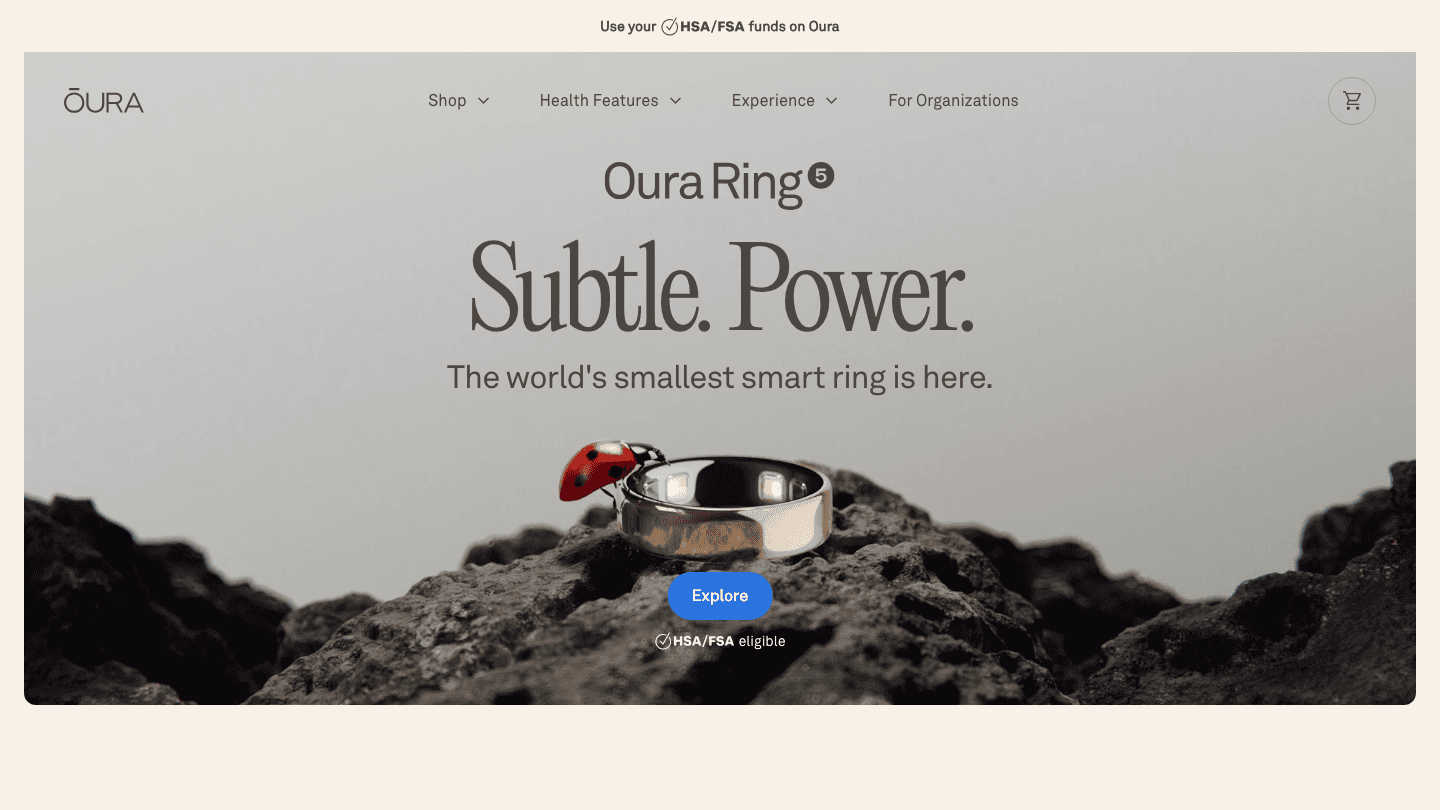
Oura Ring is a smart ring that sits on your finger and tracks biometrics continuously. It looks like a plain titanium ring and most people who see it will not know it is a health tracker. That discretion is part of the appeal.
Unlike WHOOP, Oura requires a separate hardware purchase. The Ring 5 starts at $399 and goes up to $499 for premium finishes. After the first free month, a membership subscription is required to access the full data set.
Oura's primary orientation is sleep and readiness. The app delivers three daily scores: Sleep, Activity, and Readiness. The Readiness score integrates sleep quality, HRV trends, body temperature deviation, and recent activity to tell you how recovered you are. The HRV data Oura captures overnight is among the most detailed available in a consumer wearable.
Oura Ring Key Features
Ring form factor: wearable anywhere without looking like a fitness tracker
Sleep tracking with detailed stage breakdown (Light, Deep, REM, Awake)
Daily Readiness Score based on HRV, body temperature, and recovery metrics
Body temperature deviation tracking for illness detection and menstrual cycle insights
Blood oxygen monitoring
Activity tracking with automatic detection
Cycle Insights and pregnancy heart rate guidance (with compatible membership tiers)
Oura Ring Pros
Discreet form factor: no wristband, no screen, no obvious "wearable" appearance
Best-in-class sleep staging and temperature tracking in most independent reviews
Lower ongoing subscription cost ($5.99/month) once you own the hardware
No commitment period: cancel the membership anytime, keep the ring
Oura Ring Limitations
High upfront cost: Ring 5 starts at $399 before subscription
Ring sizing is permanent; if your fingers change, you need to buy a new ring
Less performance coaching than WHOOP: no real-time strain feedback
Cannot be worn during contact sports the way a wristband can
Oura Ring Pricing
Full breakdown at Oura Ring pricing explained:
Ring 5 hardware: $399 (base finishes) or $499 (premium finishes)
Membership: $5.99/month or $69.99/year
First month free with ring purchase
Head-to-Head: WHOOP vs Oura Ring
Form Factor
WHOOP wears on your wrist and is always visible as a fitness tracker. Oura Ring wears on your finger and is indistinguishable from regular jewelry. If discretion matters, Oura wins by design. If you want something that can take hits during sport, WHOOP's soft wristband holds up better than a titanium ring on your fingers.
Sleep Tracking
Both track sleep stages, duration, and quality. Independent comparisons generally give Oura an edge in sleep staging accuracy, partly because finger-based PPG sensors are closer to arterial blood flow than wrist sensors. WHOOP's sleep data is solid and feeds cleanly into its Recovery score, but users who come to WHOOP from Oura typically note the sleep staging feels slightly less granular. Explore the best sleep tracking apps if you want to compare both against other options.
Recovery and HRV
Both produce daily recovery scores from HRV and related metrics. WHOOP's Recovery score pairs explicitly with its Strain metric, making it a coaching system: your Recovery tells you how much Strain to take on today. Oura's Readiness score is more of a status report, excellent for understanding your body but without the coaching layer around training load.
Activity and Workouts
WHOOP is meaningfully better here. Its Strain Coach tracks real-time cardiovascular load during workouts and tells you when you are in different training zones. Oura detects activity automatically and gives you an Activity score, but it does not coach workouts. If you train seriously, WHOOP gives you much more to work with during the session itself.
Total Cost of Ownership
WHOOP's first year at the One tier is $199 with the device included. Oura Ring 5's first year is $399 hardware plus $69.99 subscription, or roughly $469. After year one, WHOOP stays at $199/year; Oura drops to $69.99/year. By year three, Oura is cheaper overall if you keep the ring and stay on the annual plan. The crossover point is around year two for the entry tiers.
Which Should You Choose?
Choose WHOOP if:
You train hard and want to track training load and recovery as a system
You prefer not to pay upfront for hardware
You want real-time workout coaching and strain feedback
You are comfortable with a wristband that is always visible
Choose Oura Ring if:
Sleep quality and temperature tracking are your primary goals
You want a discreet tracker that does not look like a fitness device
You plan to keep the ring for two or more years, making the long-term cost lower
You want flexibility to cancel the subscription without losing the hardware
One More Tool Worth Knowing
Both WHOOP and Oura tell you how recovered you are. Neither tells you how to structure your day around that information. If your WHOOP Recovery is 68% or your Oura Readiness says take it easy, that is useful, but it does not automatically move your meetings or clear afternoon space for rest.
Lifestack fills that gap. It reads your energy patterns across the day and schedules your tasks and workouts for when your capacity is actually there, integrating recovery signals with your real calendar. Think of it as the execution layer that sits alongside either wearable through an Apple Health integration.
Frequently Asked Questions
Is WHOOP or Oura Ring more accurate?
Most independent comparisons put Oura ahead on sleep staging accuracy, attributed to the finger-based sensor position. WHOOP tends to perform better for real-time workout metrics and strain tracking. Both are consumer-grade devices and neither matches clinical accuracy, but both are reliable enough for trend-based health monitoring.
Can you use WHOOP and Oura Ring together?
Yes, and some dedicated health optimizers do wear both to compare data. Practically, most people find one is sufficient. If you want the most complete picture, some pair Oura for sleep and overnight recovery with a separate workout app during training, which accomplishes a similar thing at lower cost than two subscriptions.
Does WHOOP or Oura Ring work with Apple Health?
Both apps integrate with Apple Health for data export. WHOOP exports workout, sleep, and HRV data. Oura exports sleep, readiness, activity, and temperature data. You can pull both data sets into a single Apple Health view if you use both devices.
Which is better for sleep tracking, WHOOP or Oura Ring?
Oura Ring generally receives higher marks for sleep tracking in independent reviews, with more granular sleep stage breakdowns and a body temperature sensor that adds context WHOOP lacks. WHOOP's sleep data is good and integrates tightly into its Recovery system, but users who specifically prioritize sleep as a metric tend to prefer Oura.
Is there a cheaper alternative to both WHOOP and Oura Ring?
Yes. The Ultrahuman Ring AIR, Fitbit Sense, and Garmin devices all track HRV and recovery at lower price points. Each has different tradeoffs in form factor, data depth, and coaching features. If cost is the primary concern, our list of the best sleep tracking apps covers the full range of options.
Both WHOOP and Oura Ring track recovery, sleep, and readiness. Both cost real money. Both have loyal followings. And if you ask someone who uses one which is better, they will almost certainly tell you theirs is.
The honest answer is that they are optimized for different things. Which one is right for you depends almost entirely on what you are trying to measure and how you want to wear it.
This comparison covers features, accuracy, pricing, and the practical differences between the two devices, so you can make a clear call without wading through marketing copy.
Key Takeaways
WHOOP includes the hardware with its membership and focuses on performance coaching and strain tracking; Oura requires an upfront hardware purchase and focuses on sleep quality and readiness
WHOOP membership costs $199 to $359 per year with the device included; Oura Ring 5 hardware starts at $399 plus $5.99/month or $69.99/year for the membership
Choose WHOOP if you train hard and want continuous coaching; choose Oura Ring if you prioritize sleep data, discretion, and lower ongoing costs
Quick Verdict
WHOOP: Best for performance athletes and people who want their tracker to coach them through training load and recovery
Oura Ring: Best for people who prioritize sleep tracking, want a discreet form factor, or carry the ring long enough that the lower subscription offsets the hardware cost
WHOOP Overview
WHOOP is a subscription-based fitness tracker that includes the hardware as part of the membership. You pay monthly or annually, and the device is yours to use for the length of your subscription. There is no upfront device purchase.
The device is a wristband with no screen. All data is viewed in the WHOOP app. The design philosophy is intentional: no display means no distraction, no notifications, no interaction. The wristband measures continuously, including during sleep, and syncs to the app throughout the day.
WHOOP's core metric is Strain, a measure of cardiovascular load that accumulates over the day. Paired with a Recovery score each morning, the app tells you whether today is a day to push hard, take it easy, or rest. The WHOOP sleep tracker feeds into Recovery by measuring duration, consistency, and sleep stages.
WHOOP Key Features
Continuous heart rate and HRV monitoring 24/7
Daily Recovery score based on HRV, resting heart rate, sleep quality, and respiratory rate
Strain Coach with real-time feedback during workouts
Sleep coaching with recommended bedtime and wake windows
Skin temperature monitoring (WHOOP 4.0 and later)
Blood oxygen monitoring (SpO2)
No screen; app-only interface
WHOOP Pros
No upfront hardware cost; device included with membership
Strong performance coaching layer: strain, recovery, and training load in one system
Waterproof and suitable for contact sports
Active health coaching community and team features
WHOOP Limitations
12-month minimum commitment required on first join
No screen means you cannot glance at time, notifications, or stats without your phone
Subscription is ongoing; if you cancel, you lose the device
Less granular sleep staging than Oura in some independent comparisons
WHOOP Pricing
Hardware is included with membership. See the full breakdown in our WHOOP Peak vs Life comparison:
One: $199/year (about $16.58/month) or $25/month after the 12-month commitment
Peak: $239/year or $30/month
Life: $359/year or $40/month
Oura Ring Overview
Oura Ring is a smart ring that sits on your finger and tracks biometrics continuously. It looks like a plain titanium ring and most people who see it will not know it is a health tracker. That discretion is part of the appeal.
Unlike WHOOP, Oura requires a separate hardware purchase. The Ring 5 starts at $399 and goes up to $499 for premium finishes. After the first free month, a membership subscription is required to access the full data set.
Oura's primary orientation is sleep and readiness. The app delivers three daily scores: Sleep, Activity, and Readiness. The Readiness score integrates sleep quality, HRV trends, body temperature deviation, and recent activity to tell you how recovered you are. The HRV data Oura captures overnight is among the most detailed available in a consumer wearable.
Oura Ring Key Features
Ring form factor: wearable anywhere without looking like a fitness tracker
Sleep tracking with detailed stage breakdown (Light, Deep, REM, Awake)
Daily Readiness Score based on HRV, body temperature, and recovery metrics
Body temperature deviation tracking for illness detection and menstrual cycle insights
Blood oxygen monitoring
Activity tracking with automatic detection
Cycle Insights and pregnancy heart rate guidance (with compatible membership tiers)
Oura Ring Pros
Discreet form factor: no wristband, no screen, no obvious "wearable" appearance
Best-in-class sleep staging and temperature tracking in most independent reviews
Lower ongoing subscription cost ($5.99/month) once you own the hardware
No commitment period: cancel the membership anytime, keep the ring
Oura Ring Limitations
High upfront cost: Ring 5 starts at $399 before subscription
Ring sizing is permanent; if your fingers change, you need to buy a new ring
Less performance coaching than WHOOP: no real-time strain feedback
Cannot be worn during contact sports the way a wristband can
Oura Ring Pricing
Full breakdown at Oura Ring pricing explained:
Ring 5 hardware: $399 (base finishes) or $499 (premium finishes)
Membership: $5.99/month or $69.99/year
First month free with ring purchase
Head-to-Head: WHOOP vs Oura Ring
Form Factor
WHOOP wears on your wrist and is always visible as a fitness tracker. Oura Ring wears on your finger and is indistinguishable from regular jewelry. If discretion matters, Oura wins by design. If you want something that can take hits during sport, WHOOP's soft wristband holds up better than a titanium ring on your fingers.
Sleep Tracking
Both track sleep stages, duration, and quality. Independent comparisons generally give Oura an edge in sleep staging accuracy, partly because finger-based PPG sensors are closer to arterial blood flow than wrist sensors. WHOOP's sleep data is solid and feeds cleanly into its Recovery score, but users who come to WHOOP from Oura typically note the sleep staging feels slightly less granular. Explore the best sleep tracking apps if you want to compare both against other options.
Recovery and HRV
Both produce daily recovery scores from HRV and related metrics. WHOOP's Recovery score pairs explicitly with its Strain metric, making it a coaching system: your Recovery tells you how much Strain to take on today. Oura's Readiness score is more of a status report, excellent for understanding your body but without the coaching layer around training load.
Activity and Workouts
WHOOP is meaningfully better here. Its Strain Coach tracks real-time cardiovascular load during workouts and tells you when you are in different training zones. Oura detects activity automatically and gives you an Activity score, but it does not coach workouts. If you train seriously, WHOOP gives you much more to work with during the session itself.
Total Cost of Ownership
WHOOP's first year at the One tier is $199 with the device included. Oura Ring 5's first year is $399 hardware plus $69.99 subscription, or roughly $469. After year one, WHOOP stays at $199/year; Oura drops to $69.99/year. By year three, Oura is cheaper overall if you keep the ring and stay on the annual plan. The crossover point is around year two for the entry tiers.
Which Should You Choose?
Choose WHOOP if:
You train hard and want to track training load and recovery as a system
You prefer not to pay upfront for hardware
You want real-time workout coaching and strain feedback
You are comfortable with a wristband that is always visible
Choose Oura Ring if:
Sleep quality and temperature tracking are your primary goals
You want a discreet tracker that does not look like a fitness device
You plan to keep the ring for two or more years, making the long-term cost lower
You want flexibility to cancel the subscription without losing the hardware
One More Tool Worth Knowing
Both WHOOP and Oura tell you how recovered you are. Neither tells you how to structure your day around that information. If your WHOOP Recovery is 68% or your Oura Readiness says take it easy, that is useful, but it does not automatically move your meetings or clear afternoon space for rest.
Lifestack fills that gap. It reads your energy patterns across the day and schedules your tasks and workouts for when your capacity is actually there, integrating recovery signals with your real calendar. Think of it as the execution layer that sits alongside either wearable through an Apple Health integration.
Frequently Asked Questions
Is WHOOP or Oura Ring more accurate?
Most independent comparisons put Oura ahead on sleep staging accuracy, attributed to the finger-based sensor position. WHOOP tends to perform better for real-time workout metrics and strain tracking. Both are consumer-grade devices and neither matches clinical accuracy, but both are reliable enough for trend-based health monitoring.
Can you use WHOOP and Oura Ring together?
Yes, and some dedicated health optimizers do wear both to compare data. Practically, most people find one is sufficient. If you want the most complete picture, some pair Oura for sleep and overnight recovery with a separate workout app during training, which accomplishes a similar thing at lower cost than two subscriptions.
Does WHOOP or Oura Ring work with Apple Health?
Both apps integrate with Apple Health for data export. WHOOP exports workout, sleep, and HRV data. Oura exports sleep, readiness, activity, and temperature data. You can pull both data sets into a single Apple Health view if you use both devices.
Which is better for sleep tracking, WHOOP or Oura Ring?
Oura Ring generally receives higher marks for sleep tracking in independent reviews, with more granular sleep stage breakdowns and a body temperature sensor that adds context WHOOP lacks. WHOOP's sleep data is good and integrates tightly into its Recovery system, but users who specifically prioritize sleep as a metric tend to prefer Oura.
Is there a cheaper alternative to both WHOOP and Oura Ring?
Yes. The Ultrahuman Ring AIR, Fitbit Sense, and Garmin devices all track HRV and recovery at lower price points. Each has different tradeoffs in form factor, data depth, and coaching features. If cost is the primary concern, our list of the best sleep tracking apps covers the full range of options.



FOLLOW ON
FOLLOW ON
FOLLOW ON


Copyright 2026 © Lifestack. All rights reserved
Copyright 2026 © Lifestack. All rights reserved

