
App
Best Apps for Apple Health and Apple Watch in 2026
Best Apps for Apple Health and Apple Watch in 2026
The best apps for health on iPhone work alongside Apple Health rather than replacing it. Apple Health is the central record, aggregating your steps, heart rate, sleep, nutrition, workouts, and blood oxygen from your iPhone, Apple Watch, and connected devices into a single privacy-protected database. The apps below use that data to actually do something with it.
Each one is designed to work with Apple Health, filling a gap the platform doesn't cover on its own: a smarter daily schedule, deeper nutrition analysis, detailed sleep stages from your Apple Watch, structured workout tracking, or guided meditation practice. Apple Health records what you do; these apps help you do it better.
We picked six apps based on how deeply they integrate with Apple Health, how actively they're developed in 2026, and how genuinely useful they are alongside an existing Apple Health setup.
All apps tested with Apple Health on iOS in 2026. Pricing verified at time of publication.
Key Takeaways
Lifestack reads your Apple Health data to build a daily task schedule around your energy patterns, turning passive health monitoring into active daily planning.
AutoSleep is the most powerful Apple Watch sleep tracking upgrade available, giving Apple Health far more sleep detail than the native app captures.
MyFitnessPal, Strava, Cronometer, and Headspace each fill a specific gap in what Apple Health tracks or coaches.
Quick Guide
All six apps work on iPhone and connect to Apple Health. Four also have dedicated Apple Watch apps that feed data directly into your health record.
Lifestack: Best for turning Apple Health data into a smarter daily schedule
MyFitnessPal: Best calorie and macro tracker for Apple Health users
Strava: Best workout logging for runners and cyclists
AutoSleep: Best Apple Watch sleep tracker with deep Apple Health integration
Headspace: Best guided meditation app for stress and sleep
Cronometer: Best for precise micronutrient tracking
1. Lifestack: Best for Energy-Aware Daily Scheduling
Plans your day around what Apple Health knows about your energy levels.

Apple Health records your sleep quality, heart rate variability, activity rings, and stress signals throughout the day. Lifestack makes those signals useful at the schedule level. It builds your daily task plan around your energy patterns, placing demanding cognitive work in your high-focus windows and routine tasks in lower-energy periods.
This is the missing layer for most Apple Health users. Your Apple Watch can tell you that you had a poor night's sleep and your HRV is down. Lifestack adjusts today's plan so you're not trying to tackle deep work when your body is running low. It's energy-aware scheduling that turns health data into a concrete, actionable daily schedule rather than a passive dashboard. Plans start at $9.99/month or $49.99/year with a 7-day free trial on the annual plan.
Schedules tasks around personal energy and health patterns
Two-way Apple Calendar and Google Calendar sync
AI day planning that adapts to your schedule and health changes
Works alongside Apple Health data for smarter decisions
Clean daily plan view with task reminders
Limitations: Integrates through calendar and behavior patterns rather than direct Apple HealthKit API access.
Pricing: $9.99/month, $49.99/year (7-day free trial on annual plan), or $120 lifetime.
Best for: Apple Health users who want their health data reflected in a smarter daily task schedule.
2. MyFitnessPal: Best Nutrition Tracker
Fills Apple Health's nutrition gap with the largest food database available.
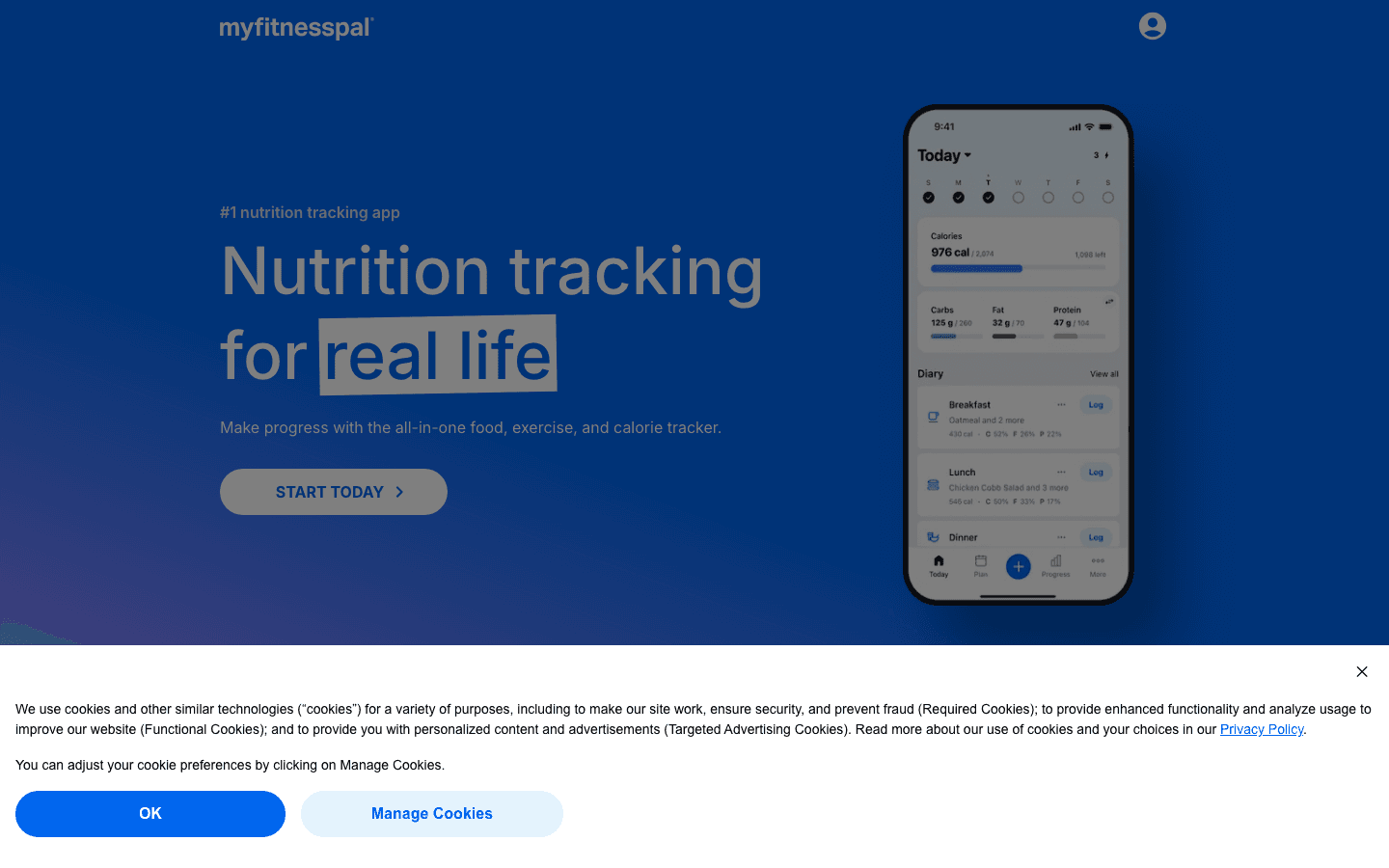
MyFitnessPal connects directly to Apple Health and syncs calorie intake, nutrition data, and workout calories in both directions. Food logged in MyFitnessPal appears in Apple Health's nutrition summary; workouts and active calories from Apple Watch update MyFitnessPal's calorie burn. The integration is one of the most reliable in the Apple ecosystem.
The food database covers over 14 million items with accurate barcode scanning for most packaged foods. For Apple Health users who want to understand their nutrition alongside their activity and health data, pairing MyFitnessPal with Apple Health provides the food tracking layer that Apple's built-in nutrition records don't offer at the same level of depth or convenience.
Direct Apple Health sync for calories and nutrition data
14+ million food database with barcode scanning
Macro and calorie goal tracking with daily progress
Restaurant and recipe logging
Premium: custom macros, meal planning, detailed analytics
Limitations: Some user-submitted food database entries are inaccurate. Premium required for advanced macro features.
Pricing: Free tier available. Premium $19.99/month or $79.99/year.
Best for: Apple Health users who want accurate calorie and macro tracking synced with their health data.
3. Strava: Best Workout Logging for Runners and Cyclists
Detailed GPS workout analysis and community features that Apple Health alone can't provide.
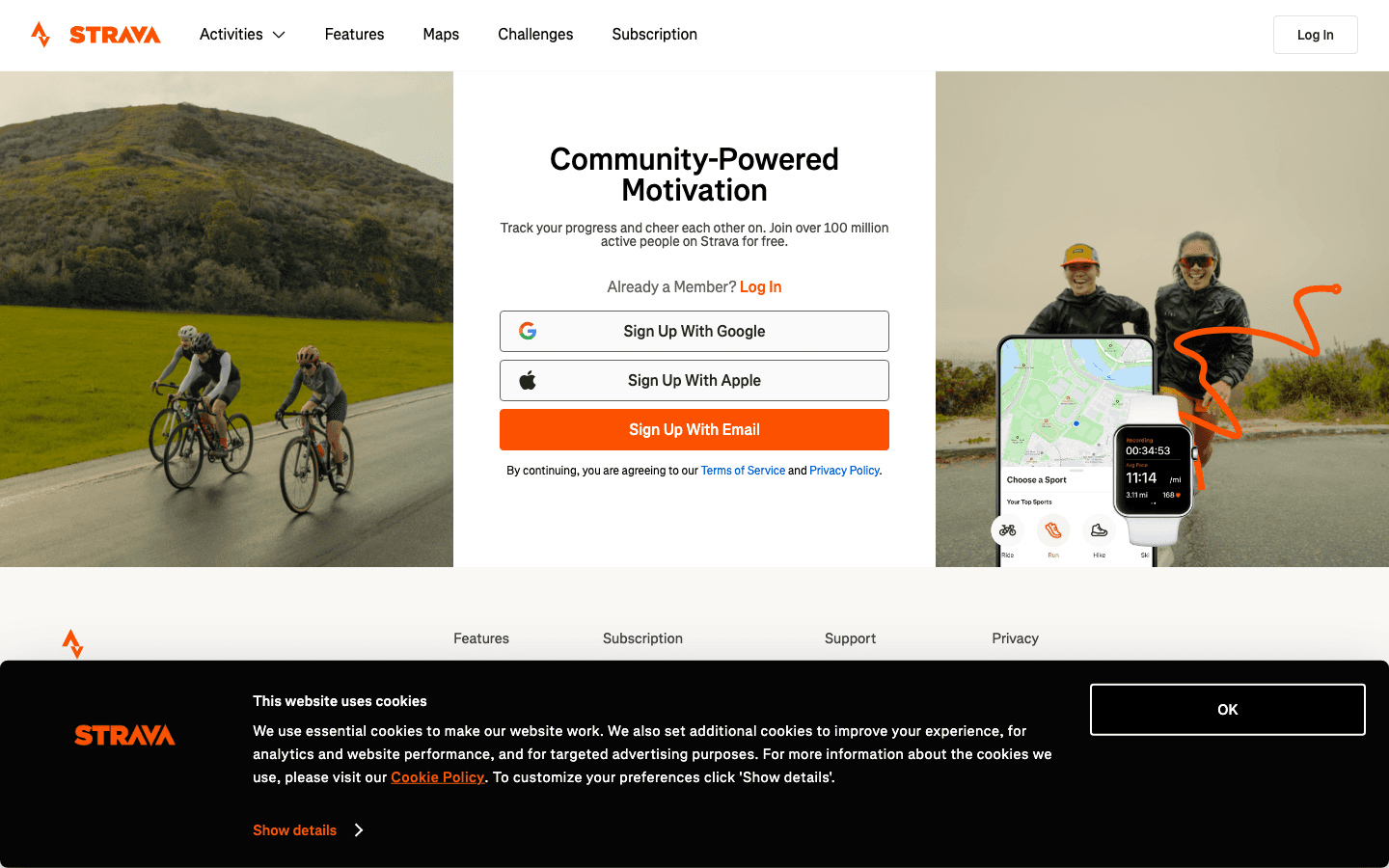
Strava is the standard for serious runners, cyclists, and triathletes. It logs GPS routes, pace, elevation, heart rate zones, cadence, and power data at a level that Apple's Workout app doesn't come close to matching, and it connects to a social community where segments, clubs, and leaderboards drive long-term training consistency.
Workouts recorded via Apple Watch can sync directly to Strava, where they appear with full GPS maps and performance analysis. Apple Health receives summary workout data back from Strava. The combination covers both sides: Apple Health as the health data hub, Strava as the dedicated training analysis layer.
GPS route logging with pace, elevation, and heart rate zones
Segment leaderboards and personal records
Training load analysis and fitness trend tracking
Social features: clubs, challenges, and segment competitions
Syncs with Apple Watch and Apple Health
Limitations: Most analysis features require subscription. Route mapping and segment data are the primary value adds.
Pricing: Free tier (basic tracking). Subscription $11.99/month or $79.99/year.
Best for: Runners, cyclists, and swimmers who want detailed GPS workout analysis and community accountability alongside Apple Health.
4. AutoSleep: Best Apple Watch Sleep Tracker
Significantly more sleep detail than native Apple Watch tracking, synced to Apple Health.
Apple Watch's built-in sleep tracking gives you a basic sleep duration and respiration rate summary. AutoSleep gives you significantly more: sleep quality scores, time in each sleep stage (light, deep, REM), heart rate during sleep, sleep latency, readiness scores, and detailed trend analysis across weeks and months. All of this syncs to Apple Health and is accessible through Apple's Health app.
AutoSleep runs passively on your Apple Watch without any buttons to press at bedtime. The app detects when you fall asleep automatically and begins tracking. For Apple Health users who want to understand their sleep at the level that wearable health research actually uses, AutoSleep is the most complete option available on Apple Watch in 2026.
Automatic sleep detection, no buttons required
Sleep stage analysis: light, deep, and REM tracking
Heart rate and HRV during sleep
Readiness score for the next day based on sleep quality
Full Apple Health sync with detailed sleep category data
Limitations: Apple Watch required. iOS only. Some users find the interface takes time to learn.
Pricing: $7.99 one-time purchase. No subscription.
Best for: Apple Watch users who want detailed sleep stage analysis synced to Apple Health, beyond what native tracking provides.
5. Headspace: Best Guided Meditation App
Structured meditation programs that act on what Apple Health's stress and sleep data is showing you.
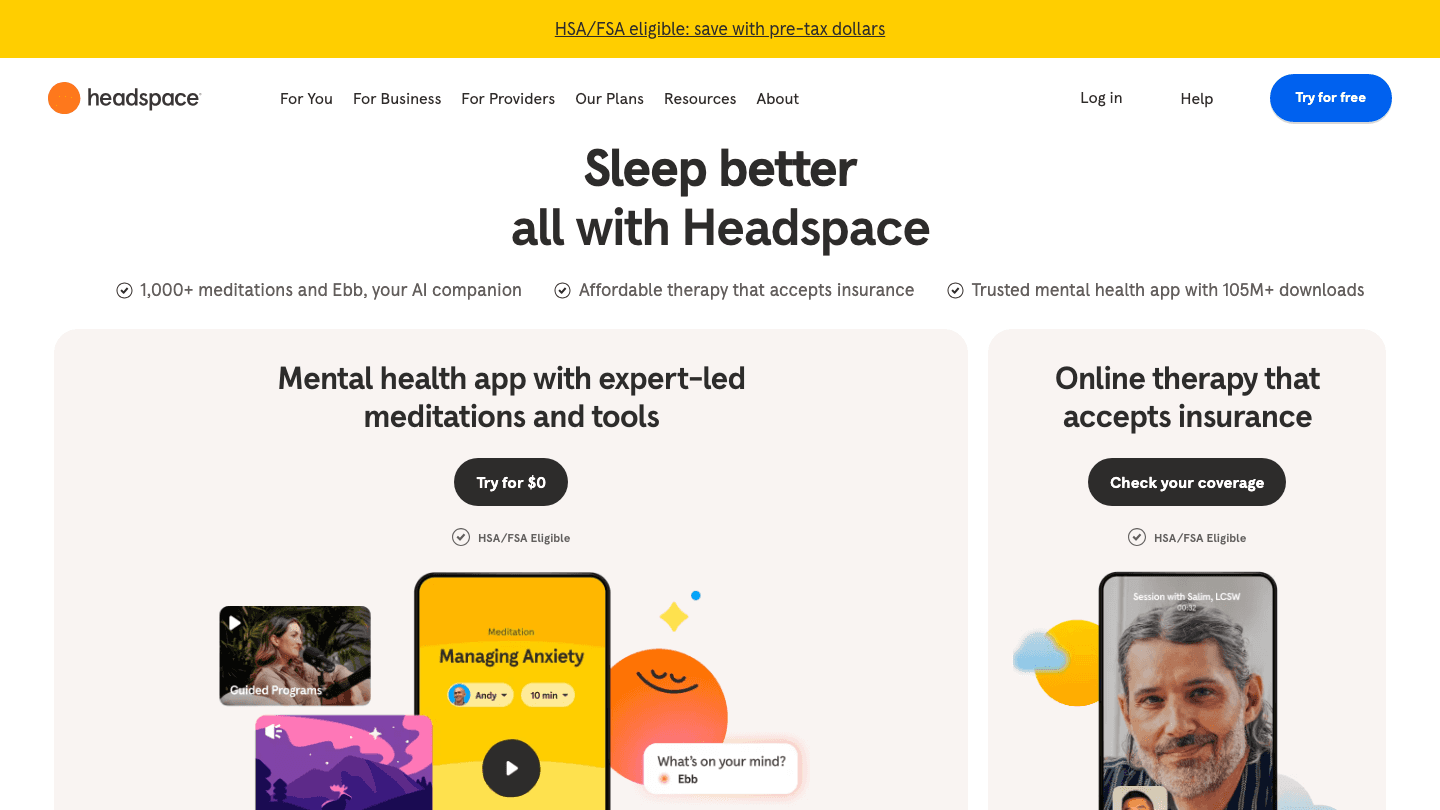
Apple Health tracks stress indicators (HRV, resting heart rate), sleep quality, and mindful minutes. Headspace provides the structured practice to improve those metrics. Meditation sessions completed in Headspace count toward Apple Health's mindfulness minutes. Sleep soundscapes and wind-down exercises tie directly to the sleep quality data Apple Watch captures.
The app's structured course approach works better for building a meditation practice than the more freeform library format that some competitors use. Specific programs address anxiety, sleep problems, focus, and stress, all of which have corresponding data points in Apple Health that make the feedback loop tangible.
Structured meditation courses from beginner to advanced
Sleep content including sleepcasts and wind-down exercises
Mindful minutes synced to Apple Health
Stress and anxiety-specific programs
Progress tracking and streak visualization
Limitations: Most content requires subscription. No direct HRV or heart rate integration.
Pricing: Free trial available. Subscription $69.99/year.
Best for: Apple Health users who want structured meditation programs that complement what their health data is measuring.
6. Cronometer: Best for Micronutrient Tracking
80+ nutrients tracked with scientific accuracy, synced to Apple Health.
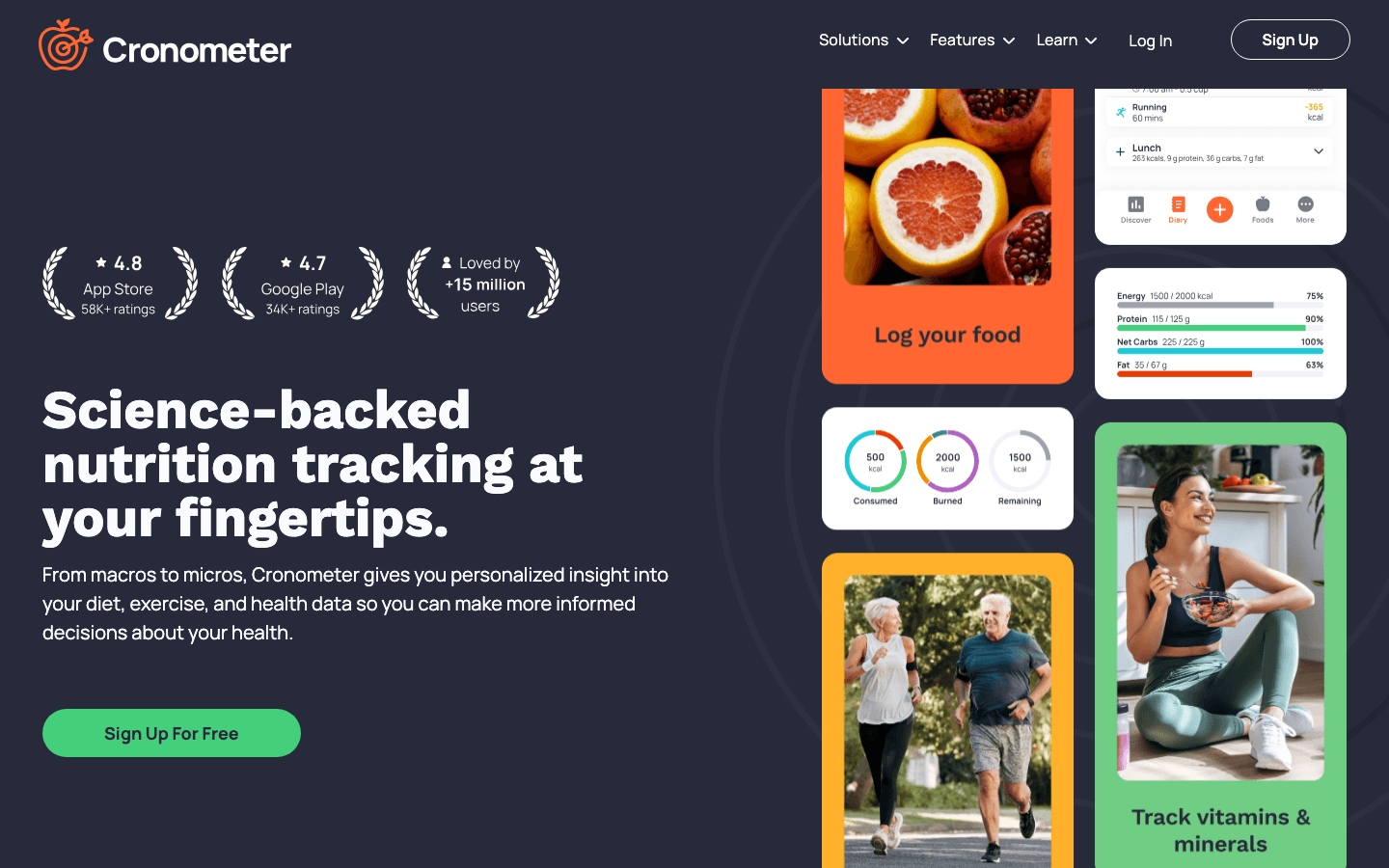
Cronometer goes beyond calories and macros to track over 80 individual micronutrients: vitamins, minerals, fatty acids, and amino acids. This level of detail isn't available in any other nutrition app at the same accuracy level. For Apple Health users who are optimizing for athletic performance, managing a health condition, or following a specific dietary protocol, Cronometer provides the nutritional analysis layer that makes the data actionable.
Cronometer syncs with Apple Health for active calories and workout data, correlating nutrition intake with activity patterns. The same principles that make it valuable for Fitbit users apply here: understanding the nutritional foundation behind your health metrics gives you better information for improving them.
80+ micronutrient tracking including individual vitamins and minerals
Scientific-grade verified food database
Apple Health sync for activity and calorie data
Custom nutrient targets and percentage tracking
Biometric logging to correlate nutrition with health outcomes
Limitations: More complex than MyFitnessPal. Food database is smaller but more accurate.
Pricing: Free tier available. Gold $10.99/month or $59.99/year.
Best for: Apple Health users who want precise micronutrient tracking beyond basic calorie and macro counting.
Building Your Apple Health App Stack
Start with Lifestack to translate your energy and health data into a smarter daily plan
Add MyFitnessPal for calorie tracking or Cronometer if you need micronutrient precision
Use Strava if you do structured running, cycling, or swimming training
Add AutoSleep to get detailed sleep stage data from your Apple Watch
Use Headspace to act on what Apple Health's stress and sleep data tells you
Frequently Asked Questions
What apps work best with Apple Health?
The most useful Apple Health companion apps fill specific gaps: Lifestack for intelligent daily scheduling, MyFitnessPal for nutrition tracking, Strava for workout analysis, AutoSleep for deep sleep tracking, and Headspace for mindfulness and stress management. Together they create a complete health and productivity stack around the data Apple Health already collects.
Can third-party apps read my Apple Health data?
Yes. Apple Health uses HealthKit to allow approved third-party apps to read and write health data with your permission. When you connect an app to Apple Health, you choose exactly which data types it can access. Your health data stays on your iPhone and Apple's servers, and each app sees only the categories you authorize.
Does MyFitnessPal sync with Apple Health?
Yes. MyFitnessPal has direct Apple Health integration that syncs calorie intake, nutrition data, and workout calories in both directions. Setting up MyFitnessPal with Apple Health takes a few minutes in both apps' settings.
What is the best sleep tracking app for Apple Watch?
AutoSleep is the most capable Apple Watch sleep tracker available in 2026. It provides sleep stage analysis, HRV tracking during sleep, and a readiness score, all synced to Apple Health. The native Apple Watch sleep tracking gives you duration and respiration rate. AutoSleep gives you significantly more actionable data at a one-time cost of $7.99.
What are the best health and fitness apps for Apple?
The best health and fitness apps for Apple devices vary by goal. For scheduling and energy management: Lifestack. For nutrition: MyFitnessPal or Cronometer. For workout tracking: Strava. For sleep: AutoSleep. For mindfulness and stress: Headspace. All of these connect to Apple Health and work on both iPhone and Apple Watch where available.
What is the best health app for iPhone?
The best health app for iPhone depends on your main goal. Apple Health is the hub that connects everything. From there, Lifestack is the strongest pick if you want daily scheduling built around your energy, MyFitnessPal or Cronometer for nutrition tracking, AutoSleep for detailed sleep data, and Strava for workout analysis. For a full breakdown of the best iPhone health apps, see our guide to the best health apps for iPhone.
Which apps work best with Apple Watch health features?
AutoSleep is the strongest Apple Watch health app for sleep, giving you sleep stages, HRV, and a readiness score beyond what the native tracking captures. Strava pairs with Apple Watch to give GPS-level workout detail. Headspace logs your mindful minutes through Apple Watch. Lifestack reads your Apple Watch recovery and energy data to plan your day around your actual health state, not a fixed schedule.
How do I get more out of Apple Health?
The most useful additions: a nutrition tracker (MyFitnessPal or Cronometer) to add food logging, AutoSleep for deeper sleep analysis from Apple Watch, Strava for detailed workout tracking, and a planning app like Lifestack to turn your health patterns into a smarter daily schedule. Apple Health becomes significantly more useful when you can see how your nutrition, sleep, and activity patterns connect to your daily performance.
The best apps for health on iPhone work alongside Apple Health rather than replacing it. Apple Health is the central record, aggregating your steps, heart rate, sleep, nutrition, workouts, and blood oxygen from your iPhone, Apple Watch, and connected devices into a single privacy-protected database. The apps below use that data to actually do something with it.
Each one is designed to work with Apple Health, filling a gap the platform doesn't cover on its own: a smarter daily schedule, deeper nutrition analysis, detailed sleep stages from your Apple Watch, structured workout tracking, or guided meditation practice. Apple Health records what you do; these apps help you do it better.
We picked six apps based on how deeply they integrate with Apple Health, how actively they're developed in 2026, and how genuinely useful they are alongside an existing Apple Health setup.
All apps tested with Apple Health on iOS in 2026. Pricing verified at time of publication.
Key Takeaways
Lifestack reads your Apple Health data to build a daily task schedule around your energy patterns, turning passive health monitoring into active daily planning.
AutoSleep is the most powerful Apple Watch sleep tracking upgrade available, giving Apple Health far more sleep detail than the native app captures.
MyFitnessPal, Strava, Cronometer, and Headspace each fill a specific gap in what Apple Health tracks or coaches.
Quick Guide
All six apps work on iPhone and connect to Apple Health. Four also have dedicated Apple Watch apps that feed data directly into your health record.
Lifestack: Best for turning Apple Health data into a smarter daily schedule
MyFitnessPal: Best calorie and macro tracker for Apple Health users
Strava: Best workout logging for runners and cyclists
AutoSleep: Best Apple Watch sleep tracker with deep Apple Health integration
Headspace: Best guided meditation app for stress and sleep
Cronometer: Best for precise micronutrient tracking
1. Lifestack: Best for Energy-Aware Daily Scheduling
Plans your day around what Apple Health knows about your energy levels.
Apple Health records your sleep quality, heart rate variability, activity rings, and stress signals throughout the day. Lifestack makes those signals useful at the schedule level. It builds your daily task plan around your energy patterns, placing demanding cognitive work in your high-focus windows and routine tasks in lower-energy periods.
This is the missing layer for most Apple Health users. Your Apple Watch can tell you that you had a poor night's sleep and your HRV is down. Lifestack adjusts today's plan so you're not trying to tackle deep work when your body is running low. It's energy-aware scheduling that turns health data into a concrete, actionable daily schedule rather than a passive dashboard. Plans start at $9.99/month or $49.99/year with a 7-day free trial on the annual plan.
Schedules tasks around personal energy and health patterns
Two-way Apple Calendar and Google Calendar sync
AI day planning that adapts to your schedule and health changes
Works alongside Apple Health data for smarter decisions
Clean daily plan view with task reminders
Limitations: Integrates through calendar and behavior patterns rather than direct Apple HealthKit API access.
Pricing: $9.99/month, $49.99/year (7-day free trial on annual plan), or $120 lifetime.
Best for: Apple Health users who want their health data reflected in a smarter daily task schedule.
2. MyFitnessPal: Best Nutrition Tracker
Fills Apple Health's nutrition gap with the largest food database available.
MyFitnessPal connects directly to Apple Health and syncs calorie intake, nutrition data, and workout calories in both directions. Food logged in MyFitnessPal appears in Apple Health's nutrition summary; workouts and active calories from Apple Watch update MyFitnessPal's calorie burn. The integration is one of the most reliable in the Apple ecosystem.
The food database covers over 14 million items with accurate barcode scanning for most packaged foods. For Apple Health users who want to understand their nutrition alongside their activity and health data, pairing MyFitnessPal with Apple Health provides the food tracking layer that Apple's built-in nutrition records don't offer at the same level of depth or convenience.
Direct Apple Health sync for calories and nutrition data
14+ million food database with barcode scanning
Macro and calorie goal tracking with daily progress
Restaurant and recipe logging
Premium: custom macros, meal planning, detailed analytics
Limitations: Some user-submitted food database entries are inaccurate. Premium required for advanced macro features.
Pricing: Free tier available. Premium $19.99/month or $79.99/year.
Best for: Apple Health users who want accurate calorie and macro tracking synced with their health data.
3. Strava: Best Workout Logging for Runners and Cyclists
Detailed GPS workout analysis and community features that Apple Health alone can't provide.
Strava is the standard for serious runners, cyclists, and triathletes. It logs GPS routes, pace, elevation, heart rate zones, cadence, and power data at a level that Apple's Workout app doesn't come close to matching, and it connects to a social community where segments, clubs, and leaderboards drive long-term training consistency.
Workouts recorded via Apple Watch can sync directly to Strava, where they appear with full GPS maps and performance analysis. Apple Health receives summary workout data back from Strava. The combination covers both sides: Apple Health as the health data hub, Strava as the dedicated training analysis layer.
GPS route logging with pace, elevation, and heart rate zones
Segment leaderboards and personal records
Training load analysis and fitness trend tracking
Social features: clubs, challenges, and segment competitions
Syncs with Apple Watch and Apple Health
Limitations: Most analysis features require subscription. Route mapping and segment data are the primary value adds.
Pricing: Free tier (basic tracking). Subscription $11.99/month or $79.99/year.
Best for: Runners, cyclists, and swimmers who want detailed GPS workout analysis and community accountability alongside Apple Health.
4. AutoSleep: Best Apple Watch Sleep Tracker
Significantly more sleep detail than native Apple Watch tracking, synced to Apple Health.
Apple Watch's built-in sleep tracking gives you a basic sleep duration and respiration rate summary. AutoSleep gives you significantly more: sleep quality scores, time in each sleep stage (light, deep, REM), heart rate during sleep, sleep latency, readiness scores, and detailed trend analysis across weeks and months. All of this syncs to Apple Health and is accessible through Apple's Health app.
AutoSleep runs passively on your Apple Watch without any buttons to press at bedtime. The app detects when you fall asleep automatically and begins tracking. For Apple Health users who want to understand their sleep at the level that wearable health research actually uses, AutoSleep is the most complete option available on Apple Watch in 2026.
Automatic sleep detection, no buttons required
Sleep stage analysis: light, deep, and REM tracking
Heart rate and HRV during sleep
Readiness score for the next day based on sleep quality
Full Apple Health sync with detailed sleep category data
Limitations: Apple Watch required. iOS only. Some users find the interface takes time to learn.
Pricing: $7.99 one-time purchase. No subscription.
Best for: Apple Watch users who want detailed sleep stage analysis synced to Apple Health, beyond what native tracking provides.
5. Headspace: Best Guided Meditation App
Structured meditation programs that act on what Apple Health's stress and sleep data is showing you.
Apple Health tracks stress indicators (HRV, resting heart rate), sleep quality, and mindful minutes. Headspace provides the structured practice to improve those metrics. Meditation sessions completed in Headspace count toward Apple Health's mindfulness minutes. Sleep soundscapes and wind-down exercises tie directly to the sleep quality data Apple Watch captures.
The app's structured course approach works better for building a meditation practice than the more freeform library format that some competitors use. Specific programs address anxiety, sleep problems, focus, and stress, all of which have corresponding data points in Apple Health that make the feedback loop tangible.
Structured meditation courses from beginner to advanced
Sleep content including sleepcasts and wind-down exercises
Mindful minutes synced to Apple Health
Stress and anxiety-specific programs
Progress tracking and streak visualization
Limitations: Most content requires subscription. No direct HRV or heart rate integration.
Pricing: Free trial available. Subscription $69.99/year.
Best for: Apple Health users who want structured meditation programs that complement what their health data is measuring.
6. Cronometer: Best for Micronutrient Tracking
80+ nutrients tracked with scientific accuracy, synced to Apple Health.
Cronometer goes beyond calories and macros to track over 80 individual micronutrients: vitamins, minerals, fatty acids, and amino acids. This level of detail isn't available in any other nutrition app at the same accuracy level. For Apple Health users who are optimizing for athletic performance, managing a health condition, or following a specific dietary protocol, Cronometer provides the nutritional analysis layer that makes the data actionable.
Cronometer syncs with Apple Health for active calories and workout data, correlating nutrition intake with activity patterns. The same principles that make it valuable for Fitbit users apply here: understanding the nutritional foundation behind your health metrics gives you better information for improving them.
80+ micronutrient tracking including individual vitamins and minerals
Scientific-grade verified food database
Apple Health sync for activity and calorie data
Custom nutrient targets and percentage tracking
Biometric logging to correlate nutrition with health outcomes
Limitations: More complex than MyFitnessPal. Food database is smaller but more accurate.
Pricing: Free tier available. Gold $10.99/month or $59.99/year.
Best for: Apple Health users who want precise micronutrient tracking beyond basic calorie and macro counting.
Building Your Apple Health App Stack
Start with Lifestack to translate your energy and health data into a smarter daily plan
Add MyFitnessPal for calorie tracking or Cronometer if you need micronutrient precision
Use Strava if you do structured running, cycling, or swimming training
Add AutoSleep to get detailed sleep stage data from your Apple Watch
Use Headspace to act on what Apple Health's stress and sleep data tells you
Frequently Asked Questions
What apps work best with Apple Health?
The most useful Apple Health companion apps fill specific gaps: Lifestack for intelligent daily scheduling, MyFitnessPal for nutrition tracking, Strava for workout analysis, AutoSleep for deep sleep tracking, and Headspace for mindfulness and stress management. Together they create a complete health and productivity stack around the data Apple Health already collects.
Can third-party apps read my Apple Health data?
Yes. Apple Health uses HealthKit to allow approved third-party apps to read and write health data with your permission. When you connect an app to Apple Health, you choose exactly which data types it can access. Your health data stays on your iPhone and Apple's servers, and each app sees only the categories you authorize.
Does MyFitnessPal sync with Apple Health?
Yes. MyFitnessPal has direct Apple Health integration that syncs calorie intake, nutrition data, and workout calories in both directions. Setting up MyFitnessPal with Apple Health takes a few minutes in both apps' settings.
What is the best sleep tracking app for Apple Watch?
AutoSleep is the most capable Apple Watch sleep tracker available in 2026. It provides sleep stage analysis, HRV tracking during sleep, and a readiness score, all synced to Apple Health. The native Apple Watch sleep tracking gives you duration and respiration rate. AutoSleep gives you significantly more actionable data at a one-time cost of $7.99.
What are the best health and fitness apps for Apple?
The best health and fitness apps for Apple devices vary by goal. For scheduling and energy management: Lifestack. For nutrition: MyFitnessPal or Cronometer. For workout tracking: Strava. For sleep: AutoSleep. For mindfulness and stress: Headspace. All of these connect to Apple Health and work on both iPhone and Apple Watch where available.
What is the best health app for iPhone?
The best health app for iPhone depends on your main goal. Apple Health is the hub that connects everything. From there, Lifestack is the strongest pick if you want daily scheduling built around your energy, MyFitnessPal or Cronometer for nutrition tracking, AutoSleep for detailed sleep data, and Strava for workout analysis. For a full breakdown of the best iPhone health apps, see our guide to the best health apps for iPhone.
Which apps work best with Apple Watch health features?
AutoSleep is the strongest Apple Watch health app for sleep, giving you sleep stages, HRV, and a readiness score beyond what the native tracking captures. Strava pairs with Apple Watch to give GPS-level workout detail. Headspace logs your mindful minutes through Apple Watch. Lifestack reads your Apple Watch recovery and energy data to plan your day around your actual health state, not a fixed schedule.
How do I get more out of Apple Health?
The most useful additions: a nutrition tracker (MyFitnessPal or Cronometer) to add food logging, AutoSleep for deeper sleep analysis from Apple Watch, Strava for detailed workout tracking, and a planning app like Lifestack to turn your health patterns into a smarter daily schedule. Apple Health becomes significantly more useful when you can see how your nutrition, sleep, and activity patterns connect to your daily performance.



FOLLOW ON
FOLLOW ON
FOLLOW ON


Copyright 2026 © Lifestack. All rights reserved
Copyright 2026 © Lifestack. All rights reserved

