
Device
How Much Is a WHOOP Membership?
How Much Is a WHOOP Membership?

WHOOP membership costs $199 to $359 per year, with the device included in your subscription. The WHOOP One starts at $199 per year for current-generation hardware, the WHOOP Peak is $239 per year, and the WHOOP Life is $359 per year with medical-grade hardware. WHOOP does not sell the tracker separately; the device comes with the plan.
WHOOP offers three active membership tiers, all billed annually. Monthly billing is available only to existing members after completing a 12-month commitment; new members start with an annual plan. There is also a legacy option using older WHOOP 4.0 hardware at $149 per year.
Here is exactly what each plan costs and what you get with it.
Key Takeaways
WHOOP membership ranges from $149/year (legacy hardware) to $359/year (WHOOP MG), with hardware included in the subscription
The WHOOP One at $199/year is the entry point for current-generation hardware (WHOOP 5.0)
All tiers include the same core health tracking; higher tiers add better hardware, wireless charging, and advanced features like blood pressure insights and ECG
WHOOP Membership Pricing Breakdown

WHOOP currently offers three active membership tiers, plus a legacy option. All prices are for US customers as of 2026.
WHOOP One: $199/year
The entry-level current-generation plan. Includes a WHOOP 5.0 device, standard wired charger, and a Jet Black CoreKnit band. Effective monthly cost works out to approximately $16.58 when billed annually. This is the right plan for most new members evaluating WHOOP for the first time.
WHOOP Peak: $239/year
The mid-tier plan. Includes a WHOOP 5.0 device, wireless PowerPack charger, and an Onyx SuperKnit band. Also adds Healthspan tracking, pace of aging metrics, and a real-time stress monitor not available on the One tier. The wireless PowerPack is the upgrade that matters most here: it allows charging the device while you wear it, which eliminates the gap in tracking that comes from having to remove the strap to charge. Effective monthly cost works out to approximately $19.92.
WHOOP Life: $359/year
The premium plan. Includes the WHOOP MG device (medical-grade hardware), wireless PowerPack, and a SuperKnit Luxe band. The WHOOP MG adds daily blood pressure insights, a Heart Screener with ECG and irregular heart rhythm notifications, blood oxygen saturation monitoring, and skin temperature tracking at clinical precision. Effective monthly cost works out to approximately $29.92. This tier targets athletes and people who want medical-grade health data.
WHOOP Life + Labs: $708/year
The top tier, adding two annual bloodwork panels to everything in WHOOP Life. Each panel covers 122+ biomarkers with a clinician-reviewed action plan, giving you lab results alongside your wearable data in one place. For most users, the standard WHOOP Life at $359 covers all tracking needs; the Labs tier makes sense for people actively managing health with a physician or who want to track biomarker trends over time.
Budget Option: WHOOP 4.0 at $149/year
WHOOP offers a $149/year legacy membership with certified pre-owned WHOOP 4.0 hardware. The 4.0 is the previous generation, but all core tracking features (sleep stages, HRV, recovery score, strain) are present. For people who primarily care about sleep and recovery data rather than the newest hardware, this is a meaningful cost saving. Check whoop.com for current availability as legacy hardware stock may be limited.
What Is Included in Every Tier
Regardless of which membership you choose, all tiers include access to the same core WHOOP analytics:
Sleep tracking with stage detection (light, deep, REM) and sleep coaching
Daily recovery score based on HRV, resting heart rate, sleep performance, and respiratory rate
Strain score tracking daily cardiovascular load
24/7 heart rate monitoring
Monthly health reports with trend data
Coaching and insights in the app
The differences between tiers are hardware (WHOOP 5.0 vs WHOOP MG), charger (wired vs wireless PowerPack), band quality, and the advanced health features unlocked at higher tiers (stress monitor on Peak; blood pressure insights, ECG, and SpO2 precision on Life). The app experience and core analytics are the same across all tiers. If sleep and recovery data is what you are primarily after, the WHOOP One at $199 or the legacy 4.0 at $149 give you the same recovery readings as the $359 Life plan.
Is WHOOP Worth the Membership Cost?
The value calculation depends on how you use the data. WHOOP's sleep and recovery scores are among the most detailed available on a consumer wearable. The HRV trending is particularly useful for athletes and people managing training load. If you check the app daily and adjust your behavior based on what it shows, the data is genuinely actionable.
Where many people get less value: they check their recovery score, see a low number, and then proceed with their planned day anyway. The score becomes information you passively observe rather than something that changes your behavior. At $199 or more per year, you need to be the kind of person who will actually adapt your schedule based on what the device shows. See our guide on how to track sleep effectively and whether wearable data changes behavior for most users.
For context, the best sleep tracking alternatives include Oura Ring (similar annual cost) and Apple Watch (higher upfront, lower ongoing). WHOOP's continuous wear design (no watch face, just the strap) is its main physical differentiator for people who prefer minimal wrist presence during training.
Getting More From Your WHOOP Data
The gap between owning a WHOOP and making the most of it is the scheduling layer. Lifestack reads your sleep and recovery data and auto-schedules your day around it: when your WHOOP shows a low recovery score, demanding cognitive tasks get pushed to a better window automatically. You do not have to manually adjust your calendar every morning based on how you feel.
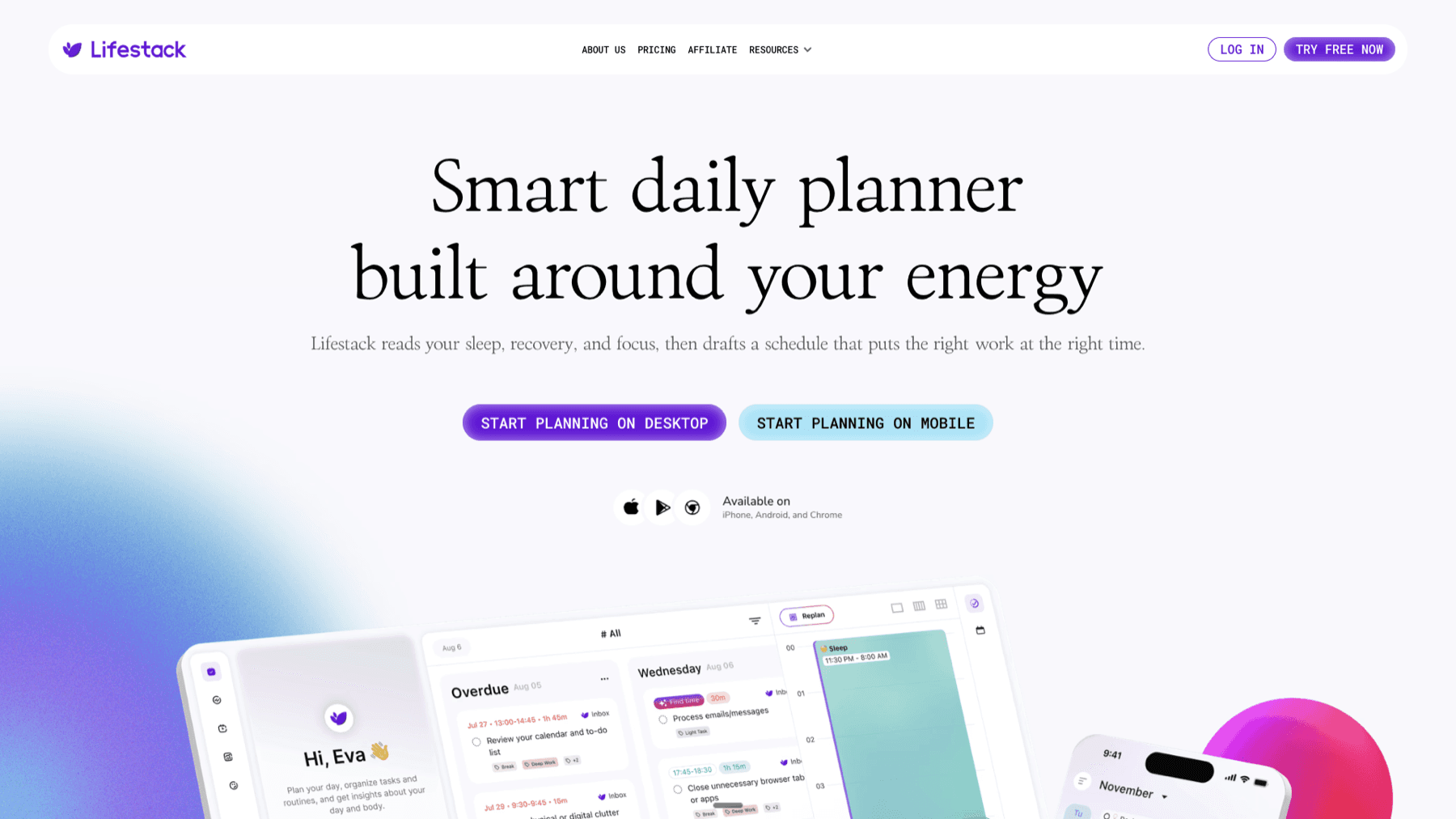
This is the operational piece that most wearable advice skips. Your WHOOP tells you your recovery score. Lifestack acts on it, adjusting which tasks get scheduled at which times based on your actual capacity for the day. The energy calendar approach turns passive recovery data into an active scheduling system. Plans start at $7/month or $50/year. If you are already paying for a WHOOP membership to understand your energy, pairing it with Lifestack is what closes the loop between data and execution. See more on how sleep quality affects your energy and why tracking it matters.
Frequently Asked Questions
How much does WHOOP cost per month?
The effective monthly cost when billed annually: WHOOP One is about $16.58/month ($199/year), WHOOP Peak is about $19.92/month ($239/year), and WHOOP Life is about $29.92/month ($359/year). Monthly billing is available only to existing members after completing a 12-month commitment; new members must start with an annual plan. The legacy WHOOP 4.0 plan at $149/year works out to about $12.42/month.
Is WHOOP hardware free with membership?
Yes. WHOOP does not sell the hardware separately. The device (WHOOP 5.0 or WHOOP MG) is included with the membership. If you cancel your membership, you keep the device but lose access to the app analytics that make it useful. This is a deliberate part of WHOOP's business model.
What is the cheapest WHOOP membership?
The cheapest option is $149/year with certified pre-owned WHOOP 4.0 hardware, subject to availability at whoop.com. Among current-generation hardware plans, the WHOOP One at $199/year is the entry point. The 4.0 hardware still tracks sleep, HRV, and recovery with the same core accuracy as the 5.0 for general wellness purposes.
Does WHOOP offer a free trial?
WHOOP has offered free trial periods periodically. Check whoop.com for current promotions. The standard model is that you pay for a membership and receive the device as part of it.
What is the difference between WHOOP 5.0 and WHOOP MG?
The WHOOP MG (medical-grade) adds daily blood pressure insights, a Heart Screener with ECG and irregular heart rhythm notifications, plus blood oxygen saturation and skin temperature monitoring at higher precision. It comes with the WHOOP Life plan at $359/year and targets athletes who want clinical-grade data and people managing health conditions. For general sleep and heart rate zone tracking, the standard WHOOP 5.0 in the One and Peak tiers is sufficient and comes at a significantly lower annual price.
How does WHOOP compare to the Oura Ring in cost?
Both cost around $300-400 per year total. Oura Ring Gen 3 requires a one-time hardware purchase (around $299-399) plus a $5.99/month subscription. WHOOP bundles hardware into the annual membership at $199-359/year. For people who want to try and switch between wearables, WHOOP's lower upfront cost (membership rather than hardware purchase) can be more flexible. For long-term use, the lifetime cost is comparable. See our sleep tracking apps guide for a full comparison.
WHOOP membership costs $199 to $359 per year, with the device included in your subscription. The WHOOP One starts at $199 per year for current-generation hardware, the WHOOP Peak is $239 per year, and the WHOOP Life is $359 per year with medical-grade hardware. WHOOP does not sell the tracker separately; the device comes with the plan.
WHOOP offers three active membership tiers, all billed annually. Monthly billing is available only to existing members after completing a 12-month commitment; new members start with an annual plan. There is also a legacy option using older WHOOP 4.0 hardware at $149 per year.
Here is exactly what each plan costs and what you get with it.
Key Takeaways
WHOOP membership ranges from $149/year (legacy hardware) to $359/year (WHOOP MG), with hardware included in the subscription
The WHOOP One at $199/year is the entry point for current-generation hardware (WHOOP 5.0)
All tiers include the same core health tracking; higher tiers add better hardware, wireless charging, and advanced features like blood pressure insights and ECG
WHOOP Membership Pricing Breakdown
WHOOP currently offers three active membership tiers, plus a legacy option. All prices are for US customers as of 2026.
WHOOP One: $199/year
The entry-level current-generation plan. Includes a WHOOP 5.0 device, standard wired charger, and a Jet Black CoreKnit band. Effective monthly cost works out to approximately $16.58 when billed annually. This is the right plan for most new members evaluating WHOOP for the first time.
WHOOP Peak: $239/year
The mid-tier plan. Includes a WHOOP 5.0 device, wireless PowerPack charger, and an Onyx SuperKnit band. Also adds Healthspan tracking, pace of aging metrics, and a real-time stress monitor not available on the One tier. The wireless PowerPack is the upgrade that matters most here: it allows charging the device while you wear it, which eliminates the gap in tracking that comes from having to remove the strap to charge. Effective monthly cost works out to approximately $19.92.
WHOOP Life: $359/year
The premium plan. Includes the WHOOP MG device (medical-grade hardware), wireless PowerPack, and a SuperKnit Luxe band. The WHOOP MG adds daily blood pressure insights, a Heart Screener with ECG and irregular heart rhythm notifications, blood oxygen saturation monitoring, and skin temperature tracking at clinical precision. Effective monthly cost works out to approximately $29.92. This tier targets athletes and people who want medical-grade health data.
WHOOP Life + Labs: $708/year
The top tier, adding two annual bloodwork panels to everything in WHOOP Life. Each panel covers 122+ biomarkers with a clinician-reviewed action plan, giving you lab results alongside your wearable data in one place. For most users, the standard WHOOP Life at $359 covers all tracking needs; the Labs tier makes sense for people actively managing health with a physician or who want to track biomarker trends over time.
Budget Option: WHOOP 4.0 at $149/year
WHOOP offers a $149/year legacy membership with certified pre-owned WHOOP 4.0 hardware. The 4.0 is the previous generation, but all core tracking features (sleep stages, HRV, recovery score, strain) are present. For people who primarily care about sleep and recovery data rather than the newest hardware, this is a meaningful cost saving. Check whoop.com for current availability as legacy hardware stock may be limited.
What Is Included in Every Tier
Regardless of which membership you choose, all tiers include access to the same core WHOOP analytics:
Sleep tracking with stage detection (light, deep, REM) and sleep coaching
Daily recovery score based on HRV, resting heart rate, sleep performance, and respiratory rate
Strain score tracking daily cardiovascular load
24/7 heart rate monitoring
Monthly health reports with trend data
Coaching and insights in the app
The differences between tiers are hardware (WHOOP 5.0 vs WHOOP MG), charger (wired vs wireless PowerPack), band quality, and the advanced health features unlocked at higher tiers (stress monitor on Peak; blood pressure insights, ECG, and SpO2 precision on Life). The app experience and core analytics are the same across all tiers. If sleep and recovery data is what you are primarily after, the WHOOP One at $199 or the legacy 4.0 at $149 give you the same recovery readings as the $359 Life plan.
Is WHOOP Worth the Membership Cost?
The value calculation depends on how you use the data. WHOOP's sleep and recovery scores are among the most detailed available on a consumer wearable. The HRV trending is particularly useful for athletes and people managing training load. If you check the app daily and adjust your behavior based on what it shows, the data is genuinely actionable.
Where many people get less value: they check their recovery score, see a low number, and then proceed with their planned day anyway. The score becomes information you passively observe rather than something that changes your behavior. At $199 or more per year, you need to be the kind of person who will actually adapt your schedule based on what the device shows. See our guide on how to track sleep effectively and whether wearable data changes behavior for most users.
For context, the best sleep tracking alternatives include Oura Ring (similar annual cost) and Apple Watch (higher upfront, lower ongoing). WHOOP's continuous wear design (no watch face, just the strap) is its main physical differentiator for people who prefer minimal wrist presence during training.
Getting More From Your WHOOP Data
The gap between owning a WHOOP and making the most of it is the scheduling layer. Lifestack reads your sleep and recovery data and auto-schedules your day around it: when your WHOOP shows a low recovery score, demanding cognitive tasks get pushed to a better window automatically. You do not have to manually adjust your calendar every morning based on how you feel.
This is the operational piece that most wearable advice skips. Your WHOOP tells you your recovery score. Lifestack acts on it, adjusting which tasks get scheduled at which times based on your actual capacity for the day. The energy calendar approach turns passive recovery data into an active scheduling system. Plans start at $7/month or $50/year. If you are already paying for a WHOOP membership to understand your energy, pairing it with Lifestack is what closes the loop between data and execution. See more on how sleep quality affects your energy and why tracking it matters.
Frequently Asked Questions
How much does WHOOP cost per month?
The effective monthly cost when billed annually: WHOOP One is about $16.58/month ($199/year), WHOOP Peak is about $19.92/month ($239/year), and WHOOP Life is about $29.92/month ($359/year). Monthly billing is available only to existing members after completing a 12-month commitment; new members must start with an annual plan. The legacy WHOOP 4.0 plan at $149/year works out to about $12.42/month.
Is WHOOP hardware free with membership?
Yes. WHOOP does not sell the hardware separately. The device (WHOOP 5.0 or WHOOP MG) is included with the membership. If you cancel your membership, you keep the device but lose access to the app analytics that make it useful. This is a deliberate part of WHOOP's business model.
What is the cheapest WHOOP membership?
The cheapest option is $149/year with certified pre-owned WHOOP 4.0 hardware, subject to availability at whoop.com. Among current-generation hardware plans, the WHOOP One at $199/year is the entry point. The 4.0 hardware still tracks sleep, HRV, and recovery with the same core accuracy as the 5.0 for general wellness purposes.
Does WHOOP offer a free trial?
WHOOP has offered free trial periods periodically. Check whoop.com for current promotions. The standard model is that you pay for a membership and receive the device as part of it.
What is the difference between WHOOP 5.0 and WHOOP MG?
The WHOOP MG (medical-grade) adds daily blood pressure insights, a Heart Screener with ECG and irregular heart rhythm notifications, plus blood oxygen saturation and skin temperature monitoring at higher precision. It comes with the WHOOP Life plan at $359/year and targets athletes who want clinical-grade data and people managing health conditions. For general sleep and heart rate zone tracking, the standard WHOOP 5.0 in the One and Peak tiers is sufficient and comes at a significantly lower annual price.
How does WHOOP compare to the Oura Ring in cost?
Both cost around $300-400 per year total. Oura Ring Gen 3 requires a one-time hardware purchase (around $299-399) plus a $5.99/month subscription. WHOOP bundles hardware into the annual membership at $199-359/year. For people who want to try and switch between wearables, WHOOP's lower upfront cost (membership rather than hardware purchase) can be more flexible. For long-term use, the lifetime cost is comparable. See our sleep tracking apps guide for a full comparison.



FOLLOW ON
FOLLOW ON
FOLLOW ON


Copyright 2026 © Lifestack. All rights reserved
Copyright 2026 © Lifestack. All rights reserved

