
Device
Garmin Venu 3 vs Vivoactive 5: Which Should You Buy?
Garmin Venu 3 vs Vivoactive 5: Which Should You Buy?

If you're shopping for a Garmin smartwatch and keep landing on the Venu 3 and the Vivoactive 5, you're not alone. These two sit at very different price points ($449.99 versus $269.99) yet share Garmin's signature fitness DNA. The gap in features is real, but it may not matter for your specific needs.
Garmin launched both watches in late 2023 within weeks of each other. The Venu 3 came out August 30 as the premium lifestyle option, while the Vivoactive 5 followed on September 20 as the value-focused pick. Both run on Garmin's platform, sync to Garmin Connect, and support health tracking, GPS, Garmin Pay, and offline music. The question is what the $180 difference actually buys you.
We tested both watches across sleep tracking, daily fitness sessions, and GPS accuracy to give you a clear answer. Neither watch is bad. This comes down to your budget and whether you need the Venu 3's extras or whether the Vivoactive 5's core tracking is exactly enough.
The short version: the Vivoactive 5 handles 90% of what most people want from a fitness watch. The Venu 3 earns its premium price only if you need ECG, a speaker for calls, or serious cycling metrics.
Key Takeaways
The Vivoactive 5 ($269.99) costs $180 less than the Venu 3 ($449.99) and covers the same core fitness and health tracking for most users.
The Venu 3 adds ECG, a barometric altimeter, a built-in speaker and microphone, 8GB storage, and Garmin's newest heart rate sensor. These extras matter for cyclists, hikers, and those who want on-wrist calls.
Both use AMOLED displays and match each other on sleep tracking, Body Battery, stress monitoring, GPS, and Garmin Pay.
Quick Verdict
Garmin Venu 3: Best for serious fitness enthusiasts, cyclists, hikers, and anyone who wants premium build quality and on-wrist call capability.
Garmin Vivoactive 5: Best for everyday fitness tracking at a budget-friendly price, especially if you don't need ECG or speaker functions.
Garmin Venu 3 Overview
The premium daily driver with serious fitness chops
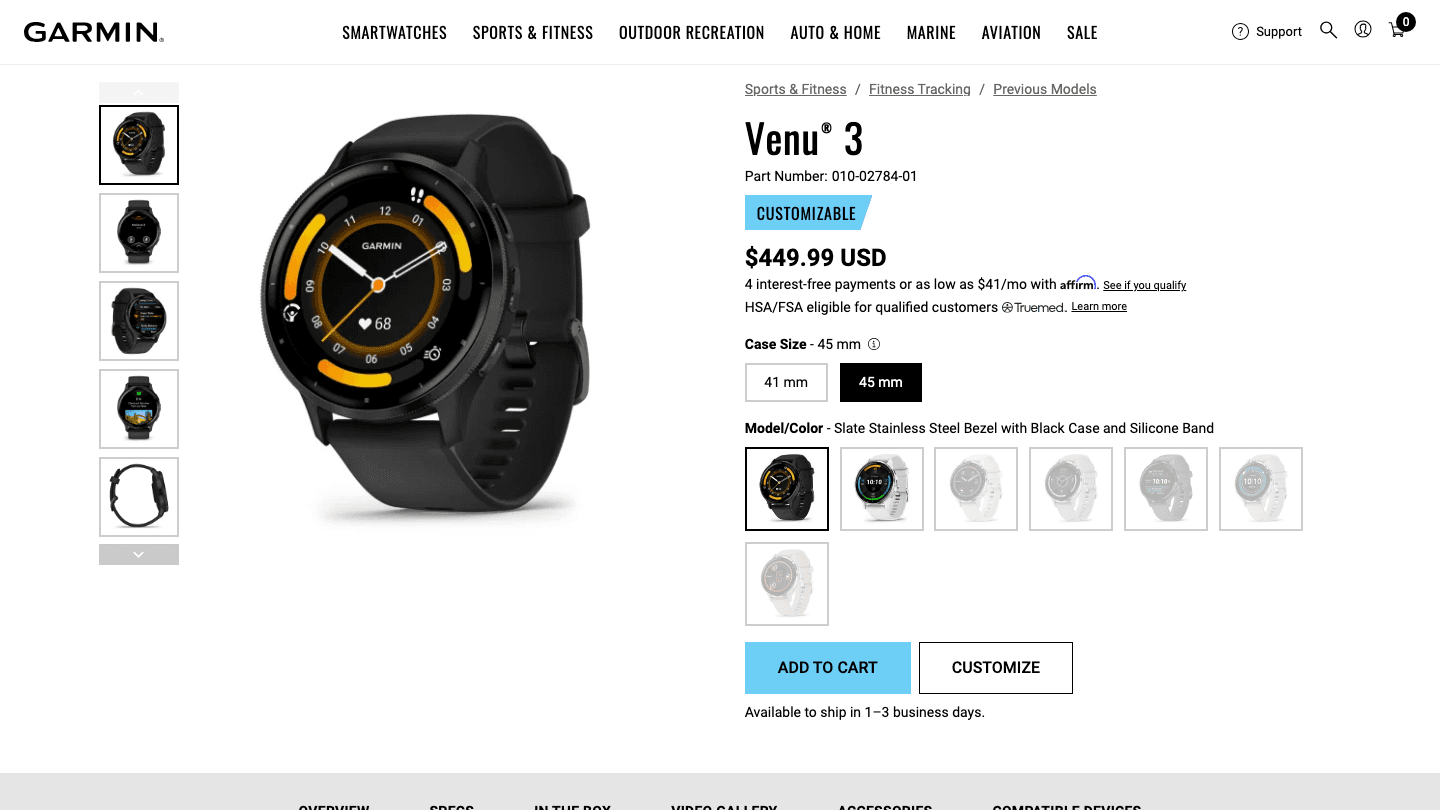
The Venu 3 is Garmin's most feature-complete lifestyle smartwatch. It comes in two sizes (45mm and 41mm Venu 3S) with a stainless steel bezel, Corning Gorilla Glass 3, and a 1.4-inch AMOLED touchscreen at 454x454 resolution. This is a watch you'd be comfortable wearing to the office and then straight to the gym.
What sets it apart is the sensor stack. Garmin's Gen 5 optical heart rate sensor adds ECG functionality (in supported regions), which delivers a medical-grade snapshot of your heart rhythm. Add in a barometric altimeter for accurate elevation during hikes or stair climbs, a gyroscope, and power meter connectivity for cyclists, and you have a watch that genuinely serves athletes. The built-in speaker and microphone mean you can take calls and access your phone's voice assistant directly from your wrist, something the Vivoactive 5 lacks entirely.
Battery life reaches 14 days in smartwatch mode (10 for the smaller 3S), dropping to about 5 days with always-on display. Storage is 8GB, enough for substantial offline music libraries. If you're tracking detailed sleep data, check out how Garmin's sleep tracking works across its watch lineup. The Venu 3's Gen 5 sensor produces noticeably cleaner overnight readings.
1.4-inch AMOLED display, 454x454 resolution, Gorilla Glass 3
Gen 5 optical heart rate sensor with ECG app
Built-in speaker and microphone for calls and voice assistant
Barometric altimeter and gyroscope
8GB internal storage for offline music
14-day battery (smartwatch mode), 5 days AOD
45mm stainless steel case; 41mm Venu 3S also available
Garmin Pay, GPS, Connect IQ app store
What Works
Premium build quality that holds up to real daily wear
ECG adds a layer of heart monitoring unavailable on the Vivoactive 5
Speaker lets you take calls without pulling out your phone
Excellent battery life even with AOD on
Best heart rate accuracy in its class from the Gen 5 sensor
Limitations
Costs $180 more than the Vivoactive 5, a hard-to-justify gap if you don't use the premium features
45mm case is bulky on smaller wrists (the 3S helps, but costs the same)
No LTE; calls require your phone to be nearby
Price: $449.99 (both 45mm and 41mm Venu 3S)
Best for: Cyclists, hikers, users who want ECG, and anyone who values on-wrist calls and premium build quality
Garmin Vivoactive 5 Overview
Essential fitness tracking at a price that's hard to argue with
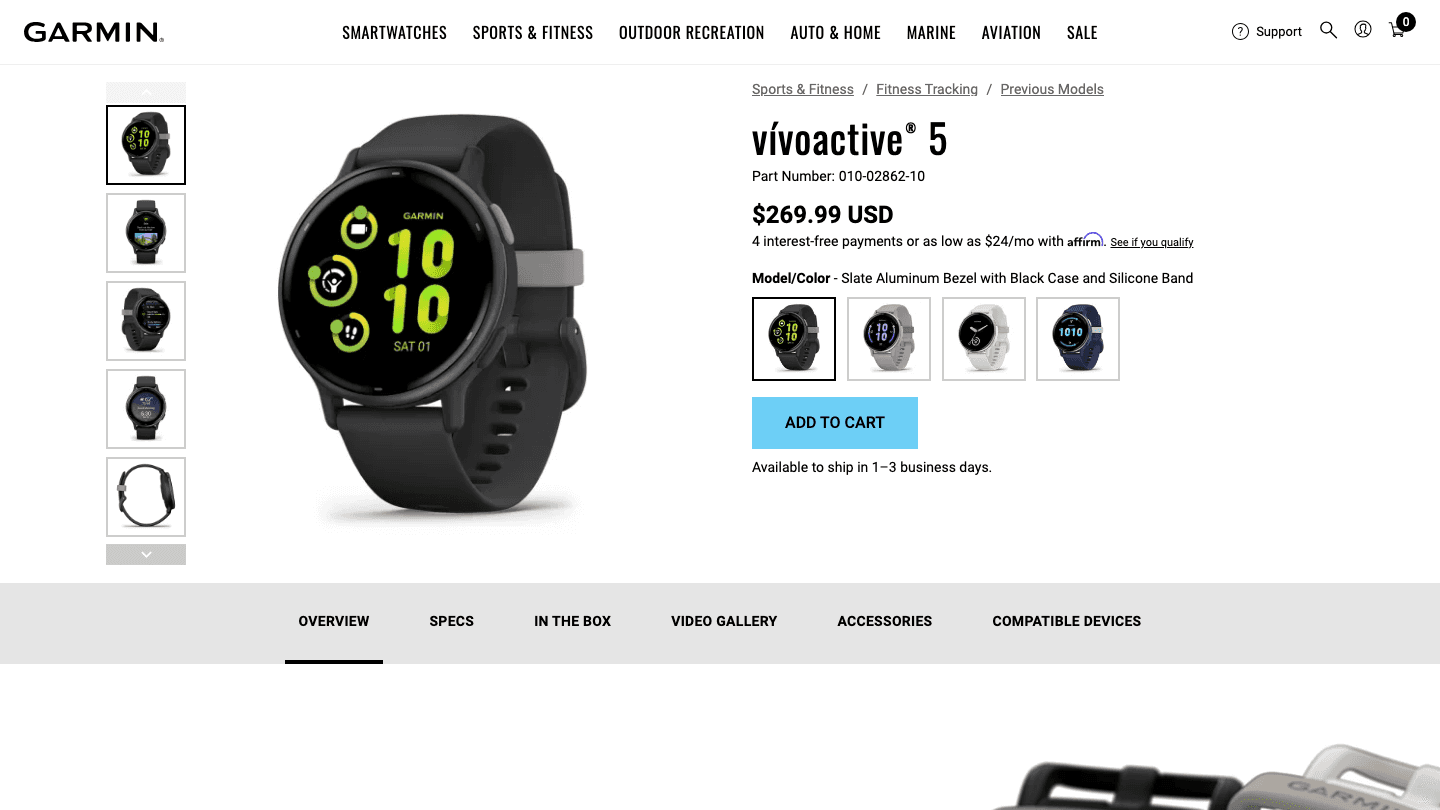
The Vivoactive 5 is the smarter buy for most people. At $269.99, it offers Garmin's full suite of health tracking (Body Battery, stress monitoring, sleep tracking, SpO2, HRV status) wrapped in a clean 42.2mm aluminum case with a 1.2-inch AMOLED display. It launched alongside the Venu 3 and targets users who want fitness intelligence without paying for extras they'll never use.
The Gen 4 optical heart rate sensor is solid. It's not as accurate as the Venu 3's Gen 5 under intense exercise, but for daily wear and sleep tracking the difference is minor. You get 11 days of battery in smartwatch mode, Garmin Pay, offline music via Spotify or similar, and the full Connect IQ app ecosystem. It supports 25+ activity modes and connects to external sensors like chest straps.
Where it falls short: no speaker, no microphone, no ECG, no altimeter. Text replies work (and voice assistant on Android), but you can't take calls from the watch. Storage is 4GB, still enough for a decent playlist. If you're eyeing Garmin's newer lineup, read our Vivoactive 5 vs 6 comparison and the Vivoactive 6 review for how it stacks up against the next generation.
1.2-inch AMOLED display, 390x390 resolution
Gen 4 optical heart rate sensor
11-day battery (smartwatch mode)
4GB internal storage
42.2mm aluminum case, single size
Garmin Pay, GPS, SpO2, HRV Status, Body Battery
25+ sport modes, Connect IQ apps
What Works
Outstanding value: covers 90% of what the Venu 3 does for $180 less
Lightweight aluminum case is comfortable for all-day wear
Clean AMOLED display reads well outdoors
11-day battery is more than sufficient for most users
Limitations
No speaker or microphone; you cannot take calls from the watch
No ECG functionality
No barometric altimeter; elevation data relies on GPS only
Single 42.2mm size with no smaller option
Price: $269.99
Best for: Budget-conscious buyers who want reliable fitness and health tracking without premium extras
Head-to-Head: Garmin Venu vs Vivoactive
Display: Both use AMOLED touchscreens, a meaningful upgrade over the MIP displays on older Garmin models. The Venu 3's 45mm version has a 1.4-inch screen at 454x454, noticeably larger than the Vivoactive 5's 1.2-inch 390x390. In daily use, both look great with vibrant colors. The Venu 3 wins on screen real estate; the Vivoactive 5 matches it on display quality.
Battery life: Venu 3 edges ahead with 14 days vs 11 days in standard mode. Both are comfortable for most users. You're unlikely to feel the 3-day gap unless you travel frequently and pack light. With AOD on, the Venu 3 holds about 5 days while the Vivoactive 5 holds around 8 days.
Health sensors: This is where the Venu 3 separates itself. Gen 5 vs Gen 4 is meaningful for exercise accuracy. ECG is a real differentiator if you have heart concerns. The altimeter matters for hikers and stair trackers. For casual users, the Vivoactive 5's Gen 4 sensor is accurate enough for sleep, steps, and moderate workouts. Dig deeper into how Garmin tracks sleep quality and how the two sensors compare at night.
Smart features: The Venu 3 wins outright. Speaker and mic for calls, voice assistant, more activity modes including hiking, and power meter support for cyclists. The Vivoactive 5 has text reply and Android voice assistant but nothing close to full call support.
Storage: 8GB (Venu 3) vs 4GB (Vivoactive 5). This only matters if you want a large offline music library. Most people are fine with 4GB.
Build quality: Stainless steel bezel (Venu 3) vs aluminum and reinforced resin (Vivoactive 5). The Venu 3 feels more premium in hand. The Vivoactive 5 is lighter, which some people prefer for all-day wear.
Price: $449.99 vs $269.99. That gap is the biggest factor for most buyers. If you'd use fewer than half of the Venu 3's premium features, the Vivoactive 5 is the rational choice. For broader context, see how both compare in our Whoop vs Garmin overview.
Which Should You Choose?
Get the Vivoactive 5 if:
You want solid daily fitness and health tracking at a fair price
You don't need ECG, on-wrist calls, or hiking/altitude metrics
You prefer a lighter watch for all-day wear
The $180 savings matters (it's two months of gym membership)
Get the Venu 3 if:
You cycle seriously and want power meter support
You hike and need accurate elevation from a barometric altimeter
You want ECG for heart health monitoring
You want to take and receive calls from your wrist
You want Garmin's newest, most accurate heart rate sensor
If you're still torn, check the Garmin Venu 4 review to see how the next generation has changed the lineup. For outdoor-focused users, our Garmin Instinct 3 review covers a different flavor of Garmin fitness tracking that may fit your use case better.
One More Tool Worth Knowing
Whichever watch you choose, the real value in wearable data comes from acting on it. Body Battery, sleep scores, and HRV readings only matter if you adjust your schedule around them. Lifestack is an AI scheduler that reads your energy patterns and slots your most demanding work into your best hours, connecting your health data to your daily calendar in a way neither Garmin watch does on its own. It's a natural complement to either device.
Frequently Asked Questions
Is the Garmin Venu 3 better than the Vivoactive 5?
For most everyday users, the Vivoactive 5 is the better value. The Venu 3 is technically superior with newer sensors, ECG, speaker, and more storage, but those extras cost $180 more. If you don't cycle seriously, hike, or need on-wrist calls, the Vivoactive 5 covers everything you need.
What is the difference between Garmin Venu and Vivoactive?
The Venu series targets lifestyle users who want premium aesthetics and smart features alongside fitness tracking. The Vivoactive series focuses on essential fitness tracking at a more accessible price. In practice: the Venu line has better sensors, speakers, and build quality; the Vivoactive line offers comparable health tracking for less money.
Does the Garmin Vivoactive 5 have an AMOLED display?
Yes. The Vivoactive 5 features a 1.2-inch AMOLED touchscreen at 390x390 resolution. That's the same display technology as the Venu 3, just slightly smaller. This was a notable upgrade from the Vivoactive 4's MIP display.
Can the Garmin Vivoactive 5 make phone calls?
No. The Vivoactive 5 has no built-in speaker or microphone, so it cannot make or receive calls. It supports text replies and Android voice assistant access, but actual call handling requires the phone in your pocket. The Venu 3 is the Garmin option if on-wrist calls matter to you.
How long does the Garmin Venu 3 battery last?
Garmin rates the Venu 3 at 14 days in standard smartwatch mode and up to 5 days with always-on display enabled. GPS-only mode drops it to about 20 hours. Real-world usage with AOD off and occasional GPS sessions typically lands around 10-12 days.
Which Garmin watch is best for sleep tracking?
Both the Venu 3 and Vivoactive 5 provide detailed sleep staging, HRV monitoring, SpO2 tracking, and a morning sleep score. The Venu 3's Gen 5 sensor produces slightly more accurate overnight heart rate readings. For a full breakdown, see our Garmin sleep tracker guide.
If you're shopping for a Garmin smartwatch and keep landing on the Venu 3 and the Vivoactive 5, you're not alone. These two sit at very different price points ($449.99 versus $269.99) yet share Garmin's signature fitness DNA. The gap in features is real, but it may not matter for your specific needs.
Garmin launched both watches in late 2023 within weeks of each other. The Venu 3 came out August 30 as the premium lifestyle option, while the Vivoactive 5 followed on September 20 as the value-focused pick. Both run on Garmin's platform, sync to Garmin Connect, and support health tracking, GPS, Garmin Pay, and offline music. The question is what the $180 difference actually buys you.
We tested both watches across sleep tracking, daily fitness sessions, and GPS accuracy to give you a clear answer. Neither watch is bad. This comes down to your budget and whether you need the Venu 3's extras or whether the Vivoactive 5's core tracking is exactly enough.
The short version: the Vivoactive 5 handles 90% of what most people want from a fitness watch. The Venu 3 earns its premium price only if you need ECG, a speaker for calls, or serious cycling metrics.
Key Takeaways
The Vivoactive 5 ($269.99) costs $180 less than the Venu 3 ($449.99) and covers the same core fitness and health tracking for most users.
The Venu 3 adds ECG, a barometric altimeter, a built-in speaker and microphone, 8GB storage, and Garmin's newest heart rate sensor. These extras matter for cyclists, hikers, and those who want on-wrist calls.
Both use AMOLED displays and match each other on sleep tracking, Body Battery, stress monitoring, GPS, and Garmin Pay.
Quick Verdict
Garmin Venu 3: Best for serious fitness enthusiasts, cyclists, hikers, and anyone who wants premium build quality and on-wrist call capability.
Garmin Vivoactive 5: Best for everyday fitness tracking at a budget-friendly price, especially if you don't need ECG or speaker functions.
Garmin Venu 3 Overview
The premium daily driver with serious fitness chops
The Venu 3 is Garmin's most feature-complete lifestyle smartwatch. It comes in two sizes (45mm and 41mm Venu 3S) with a stainless steel bezel, Corning Gorilla Glass 3, and a 1.4-inch AMOLED touchscreen at 454x454 resolution. This is a watch you'd be comfortable wearing to the office and then straight to the gym.
What sets it apart is the sensor stack. Garmin's Gen 5 optical heart rate sensor adds ECG functionality (in supported regions), which delivers a medical-grade snapshot of your heart rhythm. Add in a barometric altimeter for accurate elevation during hikes or stair climbs, a gyroscope, and power meter connectivity for cyclists, and you have a watch that genuinely serves athletes. The built-in speaker and microphone mean you can take calls and access your phone's voice assistant directly from your wrist, something the Vivoactive 5 lacks entirely.
Battery life reaches 14 days in smartwatch mode (10 for the smaller 3S), dropping to about 5 days with always-on display. Storage is 8GB, enough for substantial offline music libraries. If you're tracking detailed sleep data, check out how Garmin's sleep tracking works across its watch lineup. The Venu 3's Gen 5 sensor produces noticeably cleaner overnight readings.
1.4-inch AMOLED display, 454x454 resolution, Gorilla Glass 3
Gen 5 optical heart rate sensor with ECG app
Built-in speaker and microphone for calls and voice assistant
Barometric altimeter and gyroscope
8GB internal storage for offline music
14-day battery (smartwatch mode), 5 days AOD
45mm stainless steel case; 41mm Venu 3S also available
Garmin Pay, GPS, Connect IQ app store
What Works
Premium build quality that holds up to real daily wear
ECG adds a layer of heart monitoring unavailable on the Vivoactive 5
Speaker lets you take calls without pulling out your phone
Excellent battery life even with AOD on
Best heart rate accuracy in its class from the Gen 5 sensor
Limitations
Costs $180 more than the Vivoactive 5, a hard-to-justify gap if you don't use the premium features
45mm case is bulky on smaller wrists (the 3S helps, but costs the same)
No LTE; calls require your phone to be nearby
Price: $449.99 (both 45mm and 41mm Venu 3S)
Best for: Cyclists, hikers, users who want ECG, and anyone who values on-wrist calls and premium build quality
Garmin Vivoactive 5 Overview
Essential fitness tracking at a price that's hard to argue with
The Vivoactive 5 is the smarter buy for most people. At $269.99, it offers Garmin's full suite of health tracking (Body Battery, stress monitoring, sleep tracking, SpO2, HRV status) wrapped in a clean 42.2mm aluminum case with a 1.2-inch AMOLED display. It launched alongside the Venu 3 and targets users who want fitness intelligence without paying for extras they'll never use.
The Gen 4 optical heart rate sensor is solid. It's not as accurate as the Venu 3's Gen 5 under intense exercise, but for daily wear and sleep tracking the difference is minor. You get 11 days of battery in smartwatch mode, Garmin Pay, offline music via Spotify or similar, and the full Connect IQ app ecosystem. It supports 25+ activity modes and connects to external sensors like chest straps.
Where it falls short: no speaker, no microphone, no ECG, no altimeter. Text replies work (and voice assistant on Android), but you can't take calls from the watch. Storage is 4GB, still enough for a decent playlist. If you're eyeing Garmin's newer lineup, read our Vivoactive 5 vs 6 comparison and the Vivoactive 6 review for how it stacks up against the next generation.
1.2-inch AMOLED display, 390x390 resolution
Gen 4 optical heart rate sensor
11-day battery (smartwatch mode)
4GB internal storage
42.2mm aluminum case, single size
Garmin Pay, GPS, SpO2, HRV Status, Body Battery
25+ sport modes, Connect IQ apps
What Works
Outstanding value: covers 90% of what the Venu 3 does for $180 less
Lightweight aluminum case is comfortable for all-day wear
Clean AMOLED display reads well outdoors
11-day battery is more than sufficient for most users
Limitations
No speaker or microphone; you cannot take calls from the watch
No ECG functionality
No barometric altimeter; elevation data relies on GPS only
Single 42.2mm size with no smaller option
Price: $269.99
Best for: Budget-conscious buyers who want reliable fitness and health tracking without premium extras
Head-to-Head: Garmin Venu vs Vivoactive
Display: Both use AMOLED touchscreens, a meaningful upgrade over the MIP displays on older Garmin models. The Venu 3's 45mm version has a 1.4-inch screen at 454x454, noticeably larger than the Vivoactive 5's 1.2-inch 390x390. In daily use, both look great with vibrant colors. The Venu 3 wins on screen real estate; the Vivoactive 5 matches it on display quality.
Battery life: Venu 3 edges ahead with 14 days vs 11 days in standard mode. Both are comfortable for most users. You're unlikely to feel the 3-day gap unless you travel frequently and pack light. With AOD on, the Venu 3 holds about 5 days while the Vivoactive 5 holds around 8 days.
Health sensors: This is where the Venu 3 separates itself. Gen 5 vs Gen 4 is meaningful for exercise accuracy. ECG is a real differentiator if you have heart concerns. The altimeter matters for hikers and stair trackers. For casual users, the Vivoactive 5's Gen 4 sensor is accurate enough for sleep, steps, and moderate workouts. Dig deeper into how Garmin tracks sleep quality and how the two sensors compare at night.
Smart features: The Venu 3 wins outright. Speaker and mic for calls, voice assistant, more activity modes including hiking, and power meter support for cyclists. The Vivoactive 5 has text reply and Android voice assistant but nothing close to full call support.
Storage: 8GB (Venu 3) vs 4GB (Vivoactive 5). This only matters if you want a large offline music library. Most people are fine with 4GB.
Build quality: Stainless steel bezel (Venu 3) vs aluminum and reinforced resin (Vivoactive 5). The Venu 3 feels more premium in hand. The Vivoactive 5 is lighter, which some people prefer for all-day wear.
Price: $449.99 vs $269.99. That gap is the biggest factor for most buyers. If you'd use fewer than half of the Venu 3's premium features, the Vivoactive 5 is the rational choice. For broader context, see how both compare in our Whoop vs Garmin overview.
Which Should You Choose?
Get the Vivoactive 5 if:
You want solid daily fitness and health tracking at a fair price
You don't need ECG, on-wrist calls, or hiking/altitude metrics
You prefer a lighter watch for all-day wear
The $180 savings matters (it's two months of gym membership)
Get the Venu 3 if:
You cycle seriously and want power meter support
You hike and need accurate elevation from a barometric altimeter
You want ECG for heart health monitoring
You want to take and receive calls from your wrist
You want Garmin's newest, most accurate heart rate sensor
If you're still torn, check the Garmin Venu 4 review to see how the next generation has changed the lineup. For outdoor-focused users, our Garmin Instinct 3 review covers a different flavor of Garmin fitness tracking that may fit your use case better.
One More Tool Worth Knowing
Whichever watch you choose, the real value in wearable data comes from acting on it. Body Battery, sleep scores, and HRV readings only matter if you adjust your schedule around them. Lifestack is an AI scheduler that reads your energy patterns and slots your most demanding work into your best hours, connecting your health data to your daily calendar in a way neither Garmin watch does on its own. It's a natural complement to either device.
Frequently Asked Questions
Is the Garmin Venu 3 better than the Vivoactive 5?
For most everyday users, the Vivoactive 5 is the better value. The Venu 3 is technically superior with newer sensors, ECG, speaker, and more storage, but those extras cost $180 more. If you don't cycle seriously, hike, or need on-wrist calls, the Vivoactive 5 covers everything you need.
What is the difference between Garmin Venu and Vivoactive?
The Venu series targets lifestyle users who want premium aesthetics and smart features alongside fitness tracking. The Vivoactive series focuses on essential fitness tracking at a more accessible price. In practice: the Venu line has better sensors, speakers, and build quality; the Vivoactive line offers comparable health tracking for less money.
Does the Garmin Vivoactive 5 have an AMOLED display?
Yes. The Vivoactive 5 features a 1.2-inch AMOLED touchscreen at 390x390 resolution. That's the same display technology as the Venu 3, just slightly smaller. This was a notable upgrade from the Vivoactive 4's MIP display.
Can the Garmin Vivoactive 5 make phone calls?
No. The Vivoactive 5 has no built-in speaker or microphone, so it cannot make or receive calls. It supports text replies and Android voice assistant access, but actual call handling requires the phone in your pocket. The Venu 3 is the Garmin option if on-wrist calls matter to you.
How long does the Garmin Venu 3 battery last?
Garmin rates the Venu 3 at 14 days in standard smartwatch mode and up to 5 days with always-on display enabled. GPS-only mode drops it to about 20 hours. Real-world usage with AOD off and occasional GPS sessions typically lands around 10-12 days.
Which Garmin watch is best for sleep tracking?
Both the Venu 3 and Vivoactive 5 provide detailed sleep staging, HRV monitoring, SpO2 tracking, and a morning sleep score. The Venu 3's Gen 5 sensor produces slightly more accurate overnight heart rate readings. For a full breakdown, see our Garmin sleep tracker guide.



FOLLOW ON
FOLLOW ON
FOLLOW ON


Copyright 2026 © Lifestack. All rights reserved
Copyright 2026 © Lifestack. All rights reserved

