
Device
Garmin Vivoactive 5 vs 6: Should You Upgrade?
Garmin Vivoactive 5 vs 6: Should You Upgrade?

The Garmin Vivoactive line has always targeted the space between fitness tracker and full-featured smartwatch. The Vivoactive 5 launched in 2023 as a solid entry in that space: AMOLED display, solid health tracking, GPS, Garmin Pay, and music storage. The Vivoactive 6 arrived in April 2025 with a $30 premium and a focused list of hardware upgrades.
The $30 price gap is small enough that for anyone buying new, the Vivoactive 6 is the obvious choice. The more useful question is whether Vivoactive 5 owners should upgrade, and the answer depends on how much you use GPS in complex environments and whether a brighter display matters to you.
Key Takeaways
The Vivoactive 6 costs $299.99 vs $269.99 for the Vivoactive 5. For a new purchase, the 6 is the clear buy.
Multi-band GPS in the Vivoactive 6 improves accuracy in cities, forests, and complex outdoor terrain. The Vivoactive 5 uses single-band GPS.
The Vivoactive 6's display peaks at 1,500 nits vs the Vivoactive 5's 1,000 nits: a meaningful difference in direct sunlight.
Quick Verdict
Garmin Vivoactive 5: Still a capable watch. If found at a significant discount (under $200), a solid value. The features you'll miss are real but not essential for casual users.
Garmin Vivoactive 6: The better watch at only $30 more. Buy it unless you specifically find the Vivoactive 5 deeply discounted.
Garmin Vivoactive 5 Overview
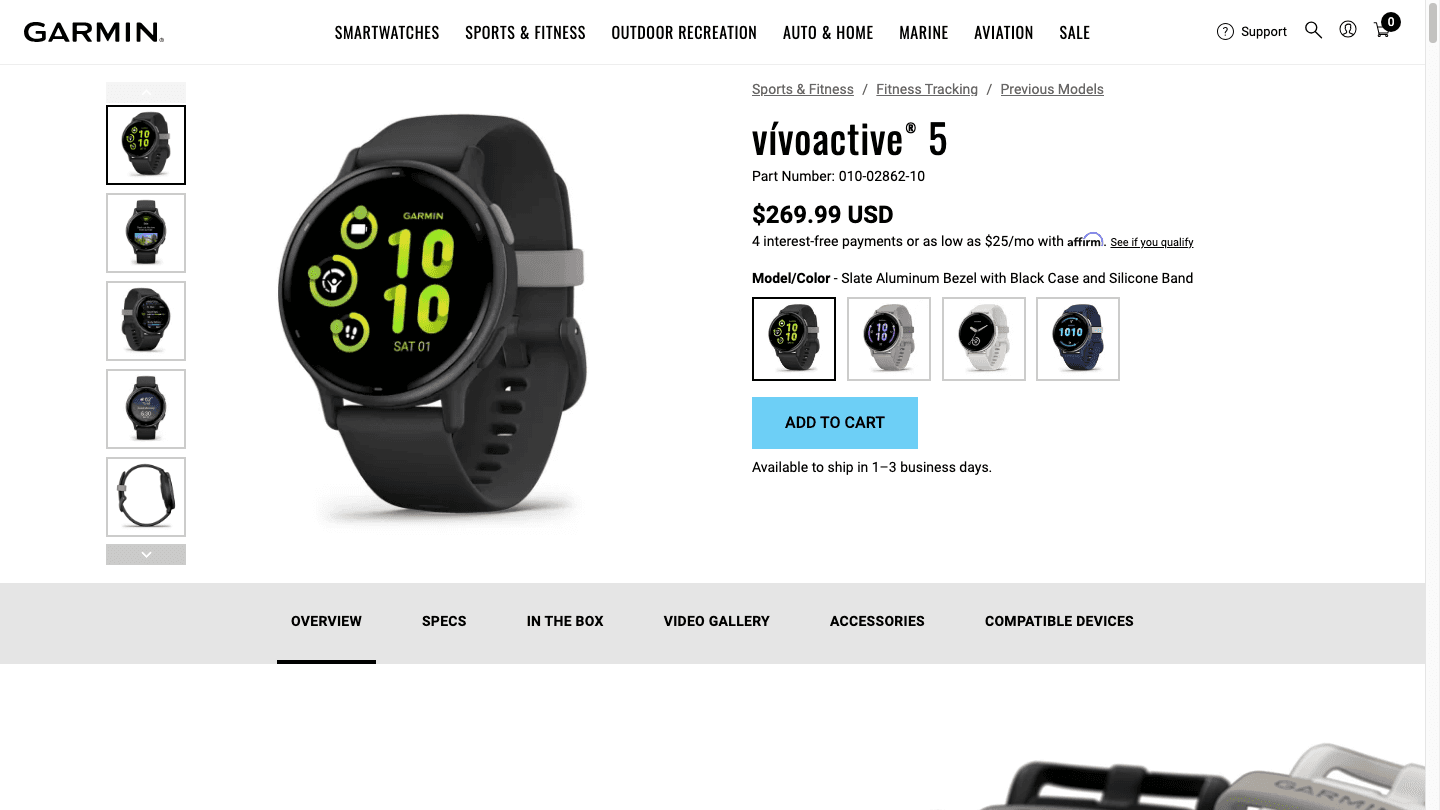
The Vivoactive 5 launched in September 2023 with a 1.2-inch AMOLED display at 390x390 resolution in a 42mm aluminum case. It runs Garmin's full health platform: Body Battery, sleep tracking with HRV status, Training Readiness, SpO2, skin temperature, and stress tracking. Garmin Pay, 4GB music storage, and Spotify download support are included.
The Vivoactive 5's GPS covers the standard multi-GNSS lineup (GPS, GLONASS, Galileo, BeiDou) with a single-band receiver. In open conditions, this is accurate and reliable. In technical outdoor environments like dense forests or downtown areas with tall buildings, single-band GPS can drift compared to multi-band alternatives.
Battery life is rated at 11 days in smartwatch mode and 17 hours in GPS mode. Real-world smartwatch life lands around 8-10 days with typical health tracking active.
What the Vivoactive 5 Does Well
Full Garmin health platform: Body Battery, HRV, Training Readiness, sleep stages
4GB music storage with Spotify and Amazon Music support
Garmin Pay for contactless payments
Strong battery life at 11 days smartwatch mode
Lightweight at 33g in a 42mm case
Where It Falls Short
Single-band GPS is less accurate in challenging outdoor environments
1,000-nit display is adequate but struggles in direct midday sun vs the Vivoactive 6
4GB storage limits your music library compared to the Vivoactive 6's 8GB
Fewer sport modes than the Vivoactive 6
Pricing: Garmin Vivoactive 5: $269.99 (available while stock lasts; no longer the current model).
Best for: Casual fitness trackers who want Garmin's health platform in a stylish package, especially at a discounted price.
Garmin Vivoactive 6 Overview
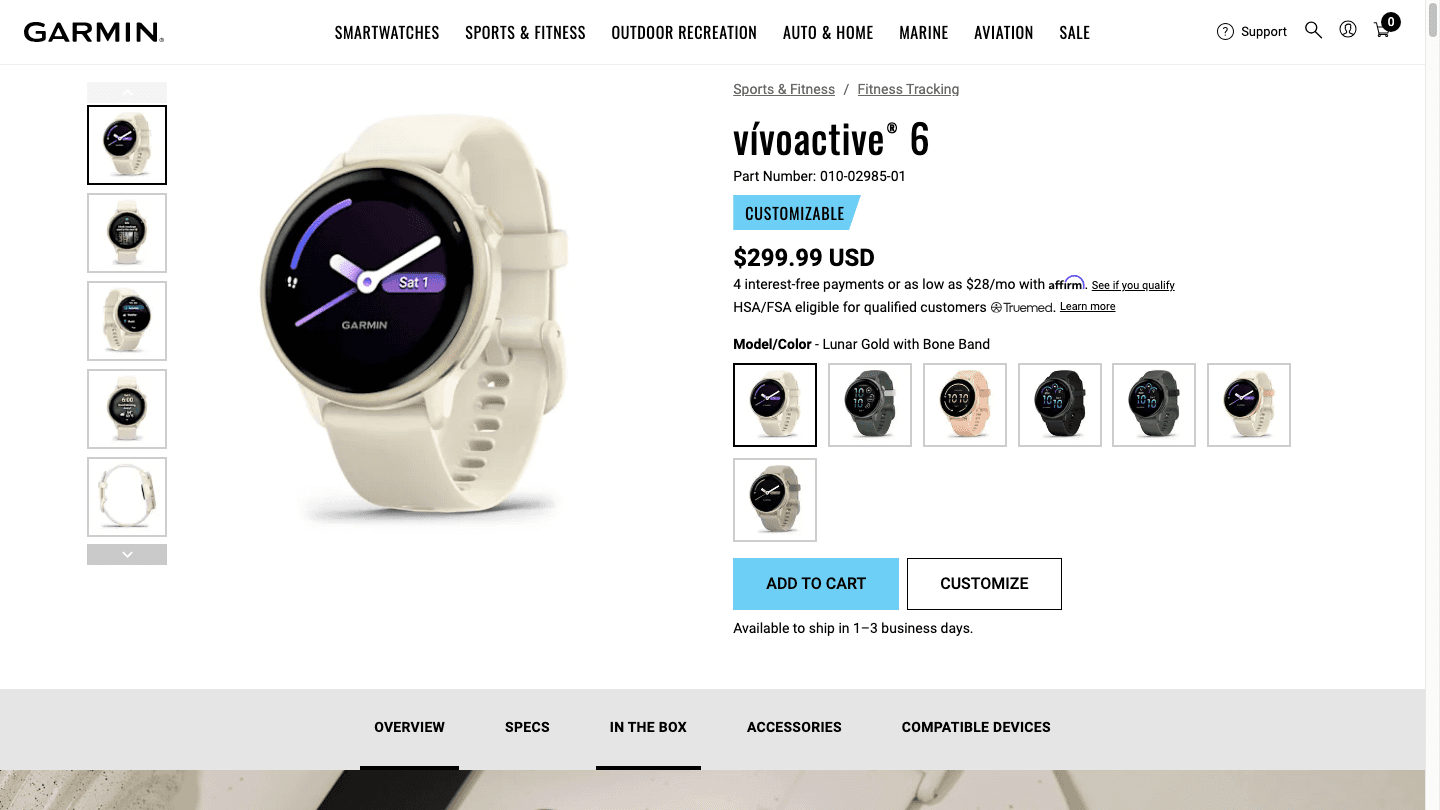
The Vivoactive 6 launched in April 2025 with the same 1.2-inch AMOLED display and 42mm case size, but with meaningful hardware upgrades throughout. The display now peaks at 1,500 nits (vs 1,000 on the Vivoactive 5) and the case is 0.2mm thinner at 10.9mm. Storage doubles to 8GB, supporting larger music libraries and more data retention for multi-sport athletes.
The GPS is the most impactful change. Multi-band GPS with SatIQ automatically selects the best satellite constellation and frequency for your current environment. In side-by-side testing in urban environments and on forested trails, the Vivoactive 6 holds a tighter line than the Vivoactive 5.
New sport profiles include trail running, obstacle course racing, winter sports (skiing, snowboarding), and motor sports, bringing the total to over 90 activities. A "Morning Report" feature delivers a daily summary of sleep, Body Battery, and forecast on the watch face. Smart alarm can wake you in a light sleep phase within a set window.
The health platform is identical to the Vivoactive 5: same sensors, same Body Battery, same HRV and Training Readiness algorithms. The upgrade is entirely in the hardware.
What the Vivoactive 6 Does Well
Multi-band GPS with SatIQ for accurate tracking in technical terrain
1,500-nit display, genuinely readable in direct sunlight
8GB music storage, double the Vivoactive 5
90+ sport modes including trail running, winter sports, and obstacle racing
Smart alarm and Morning Report for daily readiness context
Where It Falls Short
At $299.99, it's priced close to the Garmin Venu 4 ($549.99) only at sale prices
Same 11-day battery life as the Vivoactive 5, despite the hardware upgrades
Pricing: Garmin Vivoactive 6: $299.99.
Best for: Outdoor athletes who want accurate GPS tracking in technical terrain, users who want Garmin's health platform with a bright AMOLED display, and anyone upgrading from an older Vivoactive.
Head-to-Head: Vivoactive 5 vs Vivoactive 6
GPS Accuracy
The biggest real-world difference. Multi-band GPS in the Vivoactive 6 is particularly valuable for trail runners, hikers, and urban athletes where single-band GPS tends to drift. If you run on open roads or use GPS primarily for distance and pace tracking in flat terrain, the difference is small. In technical environments, the Vivoactive 6's GPS holds a noticeably more accurate line.
Display
The Vivoactive 5's 1,000-nit display is fine indoors and under shade. At midday on a sunny trail, it strains readability. The Vivoactive 6's 1,500-nit display resolves this. If you wear your watch primarily indoors or in low light, the difference is unnoticeable. If you train outdoors regularly, the brighter display matters.
Storage and Sport Modes
4GB vs 8GB makes the most difference if you keep a large offline music library. For users with a standard playlist, 4GB is usually sufficient. The expanded sport modes in the Vivoactive 6 matter primarily if you participate in winter sports, obstacle racing, or trail running at a level where accurate sport-specific metrics are useful.
Health Features
Identical. Both watches run the same Garmin health platform with Body Battery, HRV status, Training Readiness, sleep stages, stress tracking, and SpO2. The sensors are the same. For both, see our guides on Garmin Body Battery, the Garmin sleep tracker, and the best apps to use with Garmin.
Which Should You Choose?
Buy the Vivoactive 6 if you're shopping new. The $30 premium buys multi-band GPS, a brighter display, double the storage, and more sport modes. Unless you find the Vivoactive 5 deeply discounted (under $200), the 6 is the clear value.
Buy the Vivoactive 5 if you find it at a significant discount and your use is primarily indoor fitness tracking, casual walking, and health monitoring. The GPS and display limitations matter less for these use cases.
Upgrade from Vivoactive 5 to 6 if you trail run or hike in wooded terrain where GPS accuracy is important, or if the display readability in sunlight genuinely bothers you. Skip the upgrade if your Vivoactive 5 is meeting your needs.
For a full picture of how the Vivoactive 6 compares to other Garmin options at higher price points, see our Garmin Vivoactive 6 review and our Garmin watch comparison guide. If you're deciding between Garmin and Apple Watch at this price, see our Garmin vs Apple Watch breakdown.
Once you've chosen your watch, the data it collects is most useful when paired with actual planning. Lifestack reads your Garmin's Body Battery and Training Readiness scores and builds your schedule around them, blocking recovery time on low-readiness days and scheduling demanding work when your energy is genuinely high.
Frequently Asked Questions
Is the Garmin Vivoactive 6 worth upgrading from the Vivoactive 5?
Yes, if you trail run, hike in technical terrain, or train outdoors regularly. The multi-band GPS is the most meaningful upgrade and delivers noticeably better accuracy in complex environments. For casual indoor or road-based use, the improvements are real but not essential.
What is the price difference between Vivoactive 5 and 6?
The Vivoactive 5 lists at $269.99 and the Vivoactive 6 at $299.99, a $30 difference. Given the upgrades included, the Vivoactive 6 is the better value unless you find the Vivoactive 5 at a steep discount.
Does the Garmin Vivoactive 6 have multi-band GPS?
Yes. The Vivoactive 6 uses multi-band GPS with SatIQ, which automatically selects the best satellite constellation and frequency for the environment. The Vivoactive 5 uses standard single-band GPS.
What sport modes does the Garmin Vivoactive 6 add over the Vivoactive 5?
The Vivoactive 6 adds trail running, obstacle course racing, winter sports (skiing, snowboarding), motor sports, and several cycling variants, bringing the total to 90+ activity profiles vs the Vivoactive 5's smaller set.
How does the Vivoactive 6 compare to the Garmin Venu 4?
The Garmin Venu 4 ($549.99) offers a larger, brighter AMOLED display (2,000 nits), a stainless steel case, a built-in flashlight, and a speaker for calls. The Vivoactive 6 ($299.99) is smaller, lighter, and $250 less. Both have multi-band GPS and the same Garmin health platform. The Venu 4 is the premium lifestyle watch; the Vivoactive 6 is the sport-focused value option. See the full Garmin Vivoactive 6 review for extended testing details.
The Garmin Vivoactive line has always targeted the space between fitness tracker and full-featured smartwatch. The Vivoactive 5 launched in 2023 as a solid entry in that space: AMOLED display, solid health tracking, GPS, Garmin Pay, and music storage. The Vivoactive 6 arrived in April 2025 with a $30 premium and a focused list of hardware upgrades.
The $30 price gap is small enough that for anyone buying new, the Vivoactive 6 is the obvious choice. The more useful question is whether Vivoactive 5 owners should upgrade, and the answer depends on how much you use GPS in complex environments and whether a brighter display matters to you.
Key Takeaways
The Vivoactive 6 costs $299.99 vs $269.99 for the Vivoactive 5. For a new purchase, the 6 is the clear buy.
Multi-band GPS in the Vivoactive 6 improves accuracy in cities, forests, and complex outdoor terrain. The Vivoactive 5 uses single-band GPS.
The Vivoactive 6's display peaks at 1,500 nits vs the Vivoactive 5's 1,000 nits: a meaningful difference in direct sunlight.
Quick Verdict
Garmin Vivoactive 5: Still a capable watch. If found at a significant discount (under $200), a solid value. The features you'll miss are real but not essential for casual users.
Garmin Vivoactive 6: The better watch at only $30 more. Buy it unless you specifically find the Vivoactive 5 deeply discounted.
Garmin Vivoactive 5 Overview
The Vivoactive 5 launched in September 2023 with a 1.2-inch AMOLED display at 390x390 resolution in a 42mm aluminum case. It runs Garmin's full health platform: Body Battery, sleep tracking with HRV status, Training Readiness, SpO2, skin temperature, and stress tracking. Garmin Pay, 4GB music storage, and Spotify download support are included.
The Vivoactive 5's GPS covers the standard multi-GNSS lineup (GPS, GLONASS, Galileo, BeiDou) with a single-band receiver. In open conditions, this is accurate and reliable. In technical outdoor environments like dense forests or downtown areas with tall buildings, single-band GPS can drift compared to multi-band alternatives.
Battery life is rated at 11 days in smartwatch mode and 17 hours in GPS mode. Real-world smartwatch life lands around 8-10 days with typical health tracking active.
What the Vivoactive 5 Does Well
Full Garmin health platform: Body Battery, HRV, Training Readiness, sleep stages
4GB music storage with Spotify and Amazon Music support
Garmin Pay for contactless payments
Strong battery life at 11 days smartwatch mode
Lightweight at 33g in a 42mm case
Where It Falls Short
Single-band GPS is less accurate in challenging outdoor environments
1,000-nit display is adequate but struggles in direct midday sun vs the Vivoactive 6
4GB storage limits your music library compared to the Vivoactive 6's 8GB
Fewer sport modes than the Vivoactive 6
Pricing: Garmin Vivoactive 5: $269.99 (available while stock lasts; no longer the current model).
Best for: Casual fitness trackers who want Garmin's health platform in a stylish package, especially at a discounted price.
Garmin Vivoactive 6 Overview
The Vivoactive 6 launched in April 2025 with the same 1.2-inch AMOLED display and 42mm case size, but with meaningful hardware upgrades throughout. The display now peaks at 1,500 nits (vs 1,000 on the Vivoactive 5) and the case is 0.2mm thinner at 10.9mm. Storage doubles to 8GB, supporting larger music libraries and more data retention for multi-sport athletes.
The GPS is the most impactful change. Multi-band GPS with SatIQ automatically selects the best satellite constellation and frequency for your current environment. In side-by-side testing in urban environments and on forested trails, the Vivoactive 6 holds a tighter line than the Vivoactive 5.
New sport profiles include trail running, obstacle course racing, winter sports (skiing, snowboarding), and motor sports, bringing the total to over 90 activities. A "Morning Report" feature delivers a daily summary of sleep, Body Battery, and forecast on the watch face. Smart alarm can wake you in a light sleep phase within a set window.
The health platform is identical to the Vivoactive 5: same sensors, same Body Battery, same HRV and Training Readiness algorithms. The upgrade is entirely in the hardware.
What the Vivoactive 6 Does Well
Multi-band GPS with SatIQ for accurate tracking in technical terrain
1,500-nit display, genuinely readable in direct sunlight
8GB music storage, double the Vivoactive 5
90+ sport modes including trail running, winter sports, and obstacle racing
Smart alarm and Morning Report for daily readiness context
Where It Falls Short
At $299.99, it's priced close to the Garmin Venu 4 ($549.99) only at sale prices
Same 11-day battery life as the Vivoactive 5, despite the hardware upgrades
Pricing: Garmin Vivoactive 6: $299.99.
Best for: Outdoor athletes who want accurate GPS tracking in technical terrain, users who want Garmin's health platform with a bright AMOLED display, and anyone upgrading from an older Vivoactive.
Head-to-Head: Vivoactive 5 vs Vivoactive 6
GPS Accuracy
The biggest real-world difference. Multi-band GPS in the Vivoactive 6 is particularly valuable for trail runners, hikers, and urban athletes where single-band GPS tends to drift. If you run on open roads or use GPS primarily for distance and pace tracking in flat terrain, the difference is small. In technical environments, the Vivoactive 6's GPS holds a noticeably more accurate line.
Display
The Vivoactive 5's 1,000-nit display is fine indoors and under shade. At midday on a sunny trail, it strains readability. The Vivoactive 6's 1,500-nit display resolves this. If you wear your watch primarily indoors or in low light, the difference is unnoticeable. If you train outdoors regularly, the brighter display matters.
Storage and Sport Modes
4GB vs 8GB makes the most difference if you keep a large offline music library. For users with a standard playlist, 4GB is usually sufficient. The expanded sport modes in the Vivoactive 6 matter primarily if you participate in winter sports, obstacle racing, or trail running at a level where accurate sport-specific metrics are useful.
Health Features
Identical. Both watches run the same Garmin health platform with Body Battery, HRV status, Training Readiness, sleep stages, stress tracking, and SpO2. The sensors are the same. For both, see our guides on Garmin Body Battery, the Garmin sleep tracker, and the best apps to use with Garmin.
Which Should You Choose?
Buy the Vivoactive 6 if you're shopping new. The $30 premium buys multi-band GPS, a brighter display, double the storage, and more sport modes. Unless you find the Vivoactive 5 deeply discounted (under $200), the 6 is the clear value.
Buy the Vivoactive 5 if you find it at a significant discount and your use is primarily indoor fitness tracking, casual walking, and health monitoring. The GPS and display limitations matter less for these use cases.
Upgrade from Vivoactive 5 to 6 if you trail run or hike in wooded terrain where GPS accuracy is important, or if the display readability in sunlight genuinely bothers you. Skip the upgrade if your Vivoactive 5 is meeting your needs.
For a full picture of how the Vivoactive 6 compares to other Garmin options at higher price points, see our Garmin Vivoactive 6 review and our Garmin watch comparison guide. If you're deciding between Garmin and Apple Watch at this price, see our Garmin vs Apple Watch breakdown.
Once you've chosen your watch, the data it collects is most useful when paired with actual planning. Lifestack reads your Garmin's Body Battery and Training Readiness scores and builds your schedule around them, blocking recovery time on low-readiness days and scheduling demanding work when your energy is genuinely high.
Frequently Asked Questions
Is the Garmin Vivoactive 6 worth upgrading from the Vivoactive 5?
Yes, if you trail run, hike in technical terrain, or train outdoors regularly. The multi-band GPS is the most meaningful upgrade and delivers noticeably better accuracy in complex environments. For casual indoor or road-based use, the improvements are real but not essential.
What is the price difference between Vivoactive 5 and 6?
The Vivoactive 5 lists at $269.99 and the Vivoactive 6 at $299.99, a $30 difference. Given the upgrades included, the Vivoactive 6 is the better value unless you find the Vivoactive 5 at a steep discount.
Does the Garmin Vivoactive 6 have multi-band GPS?
Yes. The Vivoactive 6 uses multi-band GPS with SatIQ, which automatically selects the best satellite constellation and frequency for the environment. The Vivoactive 5 uses standard single-band GPS.
What sport modes does the Garmin Vivoactive 6 add over the Vivoactive 5?
The Vivoactive 6 adds trail running, obstacle course racing, winter sports (skiing, snowboarding), motor sports, and several cycling variants, bringing the total to 90+ activity profiles vs the Vivoactive 5's smaller set.
How does the Vivoactive 6 compare to the Garmin Venu 4?
The Garmin Venu 4 ($549.99) offers a larger, brighter AMOLED display (2,000 nits), a stainless steel case, a built-in flashlight, and a speaker for calls. The Vivoactive 6 ($299.99) is smaller, lighter, and $250 less. Both have multi-band GPS and the same Garmin health platform. The Venu 4 is the premium lifestyle watch; the Vivoactive 6 is the sport-focused value option. See the full Garmin Vivoactive 6 review for extended testing details.



FOLLOW ON
FOLLOW ON
FOLLOW ON


Copyright 2026 © Lifestack. All rights reserved
Copyright 2026 © Lifestack. All rights reserved

