
Tips
How Much Caffeine Is in a Cup of Coffee?
How Much Caffeine Is in a Cup of Coffee?

A standard 8-ounce cup of drip coffee contains about 95-130mg of caffeine, but the actual amount varies significantly based on how it's brewed, how much coffee was used, and the bean type. Espresso has more caffeine per ounce but less per serving than most drip cups. Cold brew has more than both. These differences matter more than most people realize, especially if you're timing caffeine to avoid disrupting sleep.
Key Takeaways
An 8oz drip coffee averages 95-130mg of caffeine; a 12oz coffee averages 150-200mg
A single espresso shot (1oz) contains ~63mg; a double shot contains ~126mg, less than most drip servings
Cold brew concentrate has the highest caffeine density of common coffee preparations, often exceeding 200mg per serving
Caffeine by Brewing Method
The table below shows average caffeine ranges per standard serving size for common coffee preparations:
Drip coffee (8oz): 95-165mg. This is the standard reference point. The wide range reflects differences in coffee-to-water ratio and brew time. Most commercially brewed drip coffee falls around 120-130mg per 8oz.
Espresso (1oz single shot): 58-75mg, average ~63mg. Concentrated but small volume.
Espresso (2oz double shot): 116-150mg, average ~126mg.
Americano (8oz): 94-150mg. Hot water dilutes a double espresso, bringing it close to drip caffeine territory.
Latte or cappuccino (12oz): 63-126mg. The caffeine comes from one or two espresso shots; the milk adds volume, not caffeine.
Cold brew (8oz, standard): 155-230mg. Cold brew typically uses a higher coffee-to-water ratio and steeps longer, producing more caffeine extraction per ounce.
Cold brew concentrate (undiluted, 8oz): 500-700mg. Meant to be diluted 1:1 with water or milk. Do not drink undiluted.
Instant coffee (8oz): 27-173mg, average ~57mg. High variability; most instant coffee is lighter on caffeine than drip.
Decaf coffee (8oz): 2-15mg. Not zero caffeine, contrary to common belief. The decaffeination process removes most but not all caffeine.
Why Caffeine Content Varies So Much
Coffee-to-water ratio. More coffee grounds per cup means more caffeine extraction. A "strong" drip coffee made with 1.5x the standard ratio can have 50-70% more caffeine than the same cup made at standard strength.
Roast level. Light roasts contain slightly more caffeine than dark roasts by weight, because roasting breaks down caffeine over time. The difference is small (10-15%), but it contradicts the common assumption that dark roasts are stronger. Dark roasts have more intense flavor but slightly less caffeine per gram.
Bean variety. Coffea canephora (canephora) beans contain roughly twice the caffeine of Arabica beans. Most specialty coffee is Arabica; most lower-cost coffee blends use canephora-variety beans. If your cheap drip coffee feels stronger than your specialty pour-over, bean variety is likely a factor.
Brew time and temperature. Longer contact time and higher temperature both extract more caffeine. Cold brew compensates for cold temperature with extremely long steep times (12-24 hours), which is why it ends up with more caffeine than hot brew methods despite the temperature difference.
How Much Caffeine Is Too Much?
The FDA's safe upper limit for healthy adults is 400mg per day, roughly four 8oz cups of regular drip coffee. At that level, most adults experience benefits (improved alertness, reaction time) without significant adverse effects. Above 400mg, the risk of anxiety, heart palpitations, and disrupted sleep rises significantly. See our detailed breakdown in how much caffeine is too much.
Individual tolerance varies. Genetic differences in the CYP1A2 enzyme affect how quickly caffeine is metabolized. Fast metabolizers clear caffeine significantly faster than slow metabolizers, which is why some people sleep fine after a 3pm coffee and others find it affects sleep even with a noon cutoff.
Caffeine Timing and Sleep
Caffeine has an average half-life of 5-7 hours. For a 10pm bedtime, a coffee at 2pm still has roughly half its caffeine active at 9pm. The 10-3-2-1-0 sleep rule structures this as a 10-hour cutoff: no caffeine 10 hours before bed.
The practical implication: if you drink cold brew at 1pm (200mg), by 9pm you may still have 100mg of caffeine active. That's roughly equivalent to a full cup of instant coffee. Sleep quality data from wearables often shows the effect even when it's not subjectively noticeable. Our guide on how to sleep better at night covers caffeine timing alongside other evidence-based strategies.
The Caffeine Nap: Using Caffeine Strategically
A caffeine nap (drinking coffee immediately before a 20-minute nap) times the caffeine absorption to coincide with waking up, since caffeine takes 20-30 minutes to absorb and peak. The nap clears adenosine while caffeine prevents it from rebinding. Studies show caffeine naps outperform either coffee or naps alone for alertness recovery. See our guide on the caffeine nap for how to do this correctly without it disrupting nighttime sleep.
Caffeine and Focus
Caffeine improves sustained attention, reaction time, and working memory at doses of 40-300mg. The effect is strongest for tasks requiring vigilance and information processing under conditions of fatigue. For tasks requiring creativity or divergent thinking, the evidence is less clear. See our summary of research on whether caffeine helps you focus.
Best Tool for Caffeine-Aware Scheduling
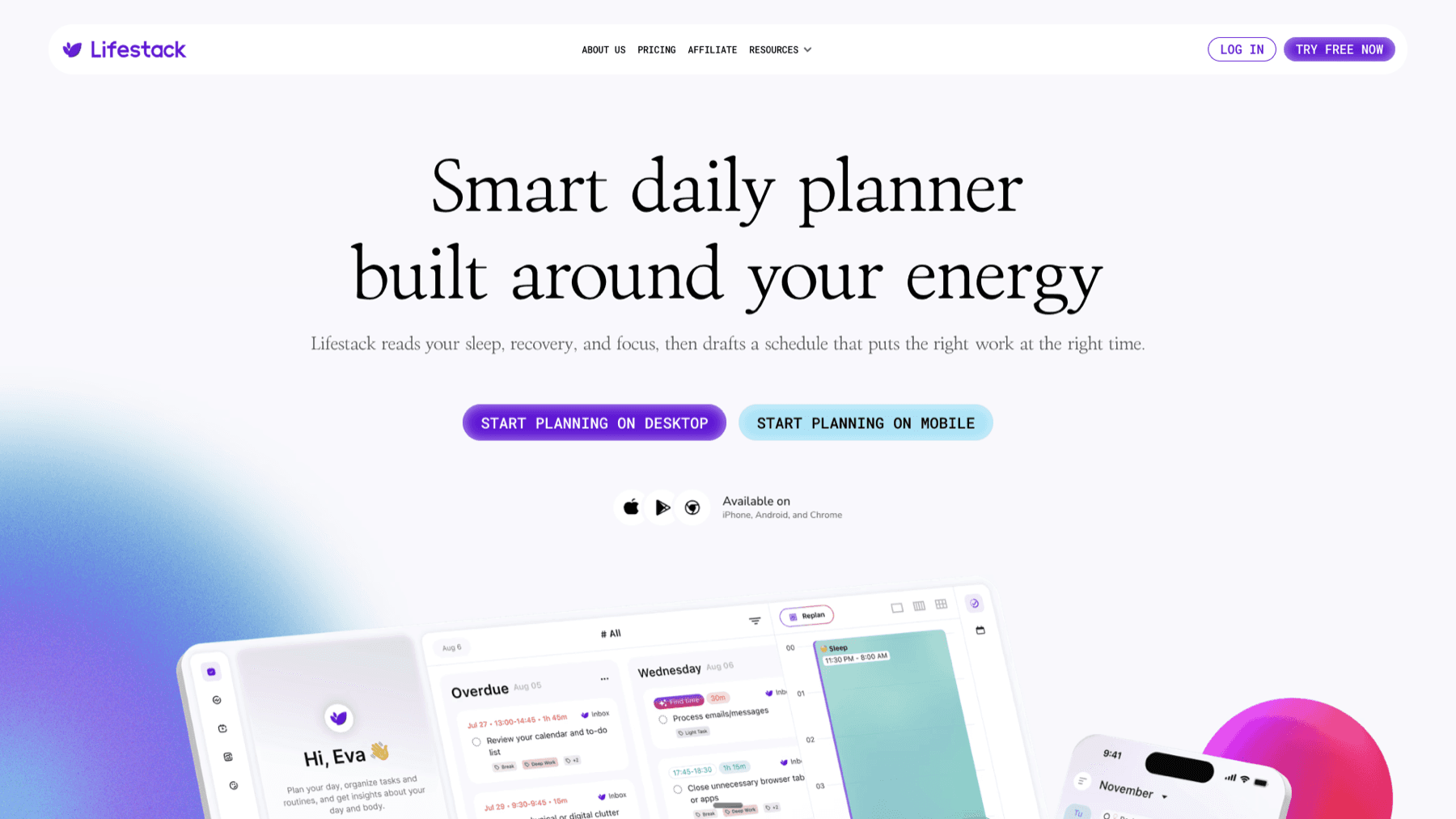
Caffeine timing is one input into when you're able to do your best work. Lifestack reads your wearable's sleep and HRV data to identify your natural peak focus windows and schedules cognitively demanding tasks into those slots automatically. This takes the guesswork out of timing your caffeine relative to your most important work. Plans start at $9.99/month or $49.99/year.
Frequently Asked Questions
How many mg of caffeine is in a cup of coffee?
An 8-ounce drip coffee averages 95-130mg of caffeine, with a typical commercial preparation around 120mg. Espresso (1oz single shot) contains ~63mg. Cold brew (8oz) typically contains 155-230mg. Instant coffee averages ~57mg per 8oz serving. Decaf contains 2-15mg.
Does a large coffee have more caffeine than espresso?
Yes, in most cases. A 12oz drip coffee contains 150-200mg of caffeine. A double espresso shot (the standard for most espresso-based drinks) contains ~126mg. Despite espresso's higher caffeine concentration per ounce, a standard drip coffee serving has more total caffeine than a standard espresso serving because of the larger volume.
Does dark roast have more caffeine than light roast?
No. Light roast has slightly more caffeine by weight because the roasting process breaks down caffeine over time. The difference is small (around 10-15%) and would be imperceptible in a normal brewing scenario. Dark roasts taste stronger and more bitter, which creates the perception of more caffeine, but the actual caffeine content is marginally lower.
How long does caffeine from coffee stay in your system?
Caffeine has an average half-life of 5-7 hours in healthy adults. This means half the caffeine from an 8am coffee is still in your system at 1-3pm. Genetic variation in caffeine metabolism affects this significantly: fast metabolizers may clear caffeine in 3-4 hours; slow metabolizers can take 10+ hours. Pregnancy, liver conditions, and some medications also affect metabolism rate.
Is 200mg of caffeine a lot?
200mg is roughly two 8oz cups of drip coffee, two double espressos, or one standard serving of cold brew. It's within the safe range for most healthy adults (FDA limit is 400mg/day) and produces meaningful alertness benefits. For context, a 12oz energy drink typically contains 80-160mg, putting two cups of drip coffee in the same range as one or two energy drinks.
A standard 8-ounce cup of drip coffee contains about 95-130mg of caffeine, but the actual amount varies significantly based on how it's brewed, how much coffee was used, and the bean type. Espresso has more caffeine per ounce but less per serving than most drip cups. Cold brew has more than both. These differences matter more than most people realize, especially if you're timing caffeine to avoid disrupting sleep.
Key Takeaways
An 8oz drip coffee averages 95-130mg of caffeine; a 12oz coffee averages 150-200mg
A single espresso shot (1oz) contains ~63mg; a double shot contains ~126mg, less than most drip servings
Cold brew concentrate has the highest caffeine density of common coffee preparations, often exceeding 200mg per serving
Caffeine by Brewing Method
The table below shows average caffeine ranges per standard serving size for common coffee preparations:
Drip coffee (8oz): 95-165mg. This is the standard reference point. The wide range reflects differences in coffee-to-water ratio and brew time. Most commercially brewed drip coffee falls around 120-130mg per 8oz.
Espresso (1oz single shot): 58-75mg, average ~63mg. Concentrated but small volume.
Espresso (2oz double shot): 116-150mg, average ~126mg.
Americano (8oz): 94-150mg. Hot water dilutes a double espresso, bringing it close to drip caffeine territory.
Latte or cappuccino (12oz): 63-126mg. The caffeine comes from one or two espresso shots; the milk adds volume, not caffeine.
Cold brew (8oz, standard): 155-230mg. Cold brew typically uses a higher coffee-to-water ratio and steeps longer, producing more caffeine extraction per ounce.
Cold brew concentrate (undiluted, 8oz): 500-700mg. Meant to be diluted 1:1 with water or milk. Do not drink undiluted.
Instant coffee (8oz): 27-173mg, average ~57mg. High variability; most instant coffee is lighter on caffeine than drip.
Decaf coffee (8oz): 2-15mg. Not zero caffeine, contrary to common belief. The decaffeination process removes most but not all caffeine.
Why Caffeine Content Varies So Much
Coffee-to-water ratio. More coffee grounds per cup means more caffeine extraction. A "strong" drip coffee made with 1.5x the standard ratio can have 50-70% more caffeine than the same cup made at standard strength.
Roast level. Light roasts contain slightly more caffeine than dark roasts by weight, because roasting breaks down caffeine over time. The difference is small (10-15%), but it contradicts the common assumption that dark roasts are stronger. Dark roasts have more intense flavor but slightly less caffeine per gram.
Bean variety. Coffea canephora (canephora) beans contain roughly twice the caffeine of Arabica beans. Most specialty coffee is Arabica; most lower-cost coffee blends use canephora-variety beans. If your cheap drip coffee feels stronger than your specialty pour-over, bean variety is likely a factor.
Brew time and temperature. Longer contact time and higher temperature both extract more caffeine. Cold brew compensates for cold temperature with extremely long steep times (12-24 hours), which is why it ends up with more caffeine than hot brew methods despite the temperature difference.
How Much Caffeine Is Too Much?
The FDA's safe upper limit for healthy adults is 400mg per day, roughly four 8oz cups of regular drip coffee. At that level, most adults experience benefits (improved alertness, reaction time) without significant adverse effects. Above 400mg, the risk of anxiety, heart palpitations, and disrupted sleep rises significantly. See our detailed breakdown in how much caffeine is too much.
Individual tolerance varies. Genetic differences in the CYP1A2 enzyme affect how quickly caffeine is metabolized. Fast metabolizers clear caffeine significantly faster than slow metabolizers, which is why some people sleep fine after a 3pm coffee and others find it affects sleep even with a noon cutoff.
Caffeine Timing and Sleep
Caffeine has an average half-life of 5-7 hours. For a 10pm bedtime, a coffee at 2pm still has roughly half its caffeine active at 9pm. The 10-3-2-1-0 sleep rule structures this as a 10-hour cutoff: no caffeine 10 hours before bed.
The practical implication: if you drink cold brew at 1pm (200mg), by 9pm you may still have 100mg of caffeine active. That's roughly equivalent to a full cup of instant coffee. Sleep quality data from wearables often shows the effect even when it's not subjectively noticeable. Our guide on how to sleep better at night covers caffeine timing alongside other evidence-based strategies.
The Caffeine Nap: Using Caffeine Strategically
A caffeine nap (drinking coffee immediately before a 20-minute nap) times the caffeine absorption to coincide with waking up, since caffeine takes 20-30 minutes to absorb and peak. The nap clears adenosine while caffeine prevents it from rebinding. Studies show caffeine naps outperform either coffee or naps alone for alertness recovery. See our guide on the caffeine nap for how to do this correctly without it disrupting nighttime sleep.
Caffeine and Focus
Caffeine improves sustained attention, reaction time, and working memory at doses of 40-300mg. The effect is strongest for tasks requiring vigilance and information processing under conditions of fatigue. For tasks requiring creativity or divergent thinking, the evidence is less clear. See our summary of research on whether caffeine helps you focus.
Best Tool for Caffeine-Aware Scheduling
Caffeine timing is one input into when you're able to do your best work. Lifestack reads your wearable's sleep and HRV data to identify your natural peak focus windows and schedules cognitively demanding tasks into those slots automatically. This takes the guesswork out of timing your caffeine relative to your most important work. Plans start at $9.99/month or $49.99/year.
Frequently Asked Questions
How many mg of caffeine is in a cup of coffee?
An 8-ounce drip coffee averages 95-130mg of caffeine, with a typical commercial preparation around 120mg. Espresso (1oz single shot) contains ~63mg. Cold brew (8oz) typically contains 155-230mg. Instant coffee averages ~57mg per 8oz serving. Decaf contains 2-15mg.
Does a large coffee have more caffeine than espresso?
Yes, in most cases. A 12oz drip coffee contains 150-200mg of caffeine. A double espresso shot (the standard for most espresso-based drinks) contains ~126mg. Despite espresso's higher caffeine concentration per ounce, a standard drip coffee serving has more total caffeine than a standard espresso serving because of the larger volume.
Does dark roast have more caffeine than light roast?
No. Light roast has slightly more caffeine by weight because the roasting process breaks down caffeine over time. The difference is small (around 10-15%) and would be imperceptible in a normal brewing scenario. Dark roasts taste stronger and more bitter, which creates the perception of more caffeine, but the actual caffeine content is marginally lower.
How long does caffeine from coffee stay in your system?
Caffeine has an average half-life of 5-7 hours in healthy adults. This means half the caffeine from an 8am coffee is still in your system at 1-3pm. Genetic variation in caffeine metabolism affects this significantly: fast metabolizers may clear caffeine in 3-4 hours; slow metabolizers can take 10+ hours. Pregnancy, liver conditions, and some medications also affect metabolism rate.
Is 200mg of caffeine a lot?
200mg is roughly two 8oz cups of drip coffee, two double espressos, or one standard serving of cold brew. It's within the safe range for most healthy adults (FDA limit is 400mg/day) and produces meaningful alertness benefits. For context, a 12oz energy drink typically contains 80-160mg, putting two cups of drip coffee in the same range as one or two energy drinks.



FOLLOW ON
FOLLOW ON
FOLLOW ON


Copyright 2026 © Lifestack. All rights reserved
Copyright 2026 © Lifestack. All rights reserved

