
App
Best Mood Tracker Apps in 2026
Best Mood Tracker Apps in 2026

Mood tracking is one of the simplest habits with a surprisingly large payoff. When you log how you feel consistently, patterns that are invisible in the moment become obvious over time. You notice that your mood drops every Sunday evening, or that you feel better on days when you sleep before 11 p.m., or that certain people reliably drain you while others lift you up.
The apps below cover different approaches: quick emoji-based logs, AI-assisted journaling, self-care gamification, and structured reflection. The right one depends on how much time you want to spend and what you want to get out of it.
Key Takeaways
Daylio is the fastest way to log mood with no writing required, making it the easiest habit to maintain.
Reflectly and Stoic are better suited to users who want structured prompts and guided journaling alongside mood data.
Lifestack turns mood and recovery data into a practical daily schedule, connecting emotional state to how your day is planned.
Quick Guide: Best Mood Tracker Apps
Lifestack: Best for connecting mood and energy to your daily schedule
Daylio: Best quick mood log with zero writing required
Reflectly: Best AI-guided journaling with mood tracking
Finch: Best for turning self-care into a gentle daily routine
Stoic: Best structured journaling for building mental resilience
1. Lifestack
Best for: turning mood and energy data into a daily plan that works with how you actually feel

Lifestack is a daily planning app that reads your wearable data and uses it to schedule your tasks when you're most capable of doing them. Connect an Oura Ring, Apple Watch, or Garmin, and Lifestack sees your sleep quality, recovery score, and energy levels each morning. Your schedule then adjusts based on that data.
Where most mood trackers stop at logging, Lifestack closes the loop. Your recovery and energy data becomes input to your energy-aware calendar, meaning the days you're running low get lighter deep-work demands, and the days you're sharp get protected for your most important projects. For anyone who notices their mood and productivity are tightly linked, this is the app that makes that connection actionable.
Key Features: Wearable integration, energy-based auto-scheduling, task prioritization, calendar sync, iOS and Android apps
What Works: The only app on this list that connects emotional state to actual scheduling decisions. Strong wearable integrations. Clean mobile experience.
Limitations: Requires a wearable for the core scheduling intelligence. Not designed purely as a mood journal.
Pricing: $7/month, $50/year, or $120 lifetime
Best for: Anyone who wants their recovery and energy data to actually change how their day is planned
2. Daylio
Best for: quick, no-writing mood logs you'll actually keep up with
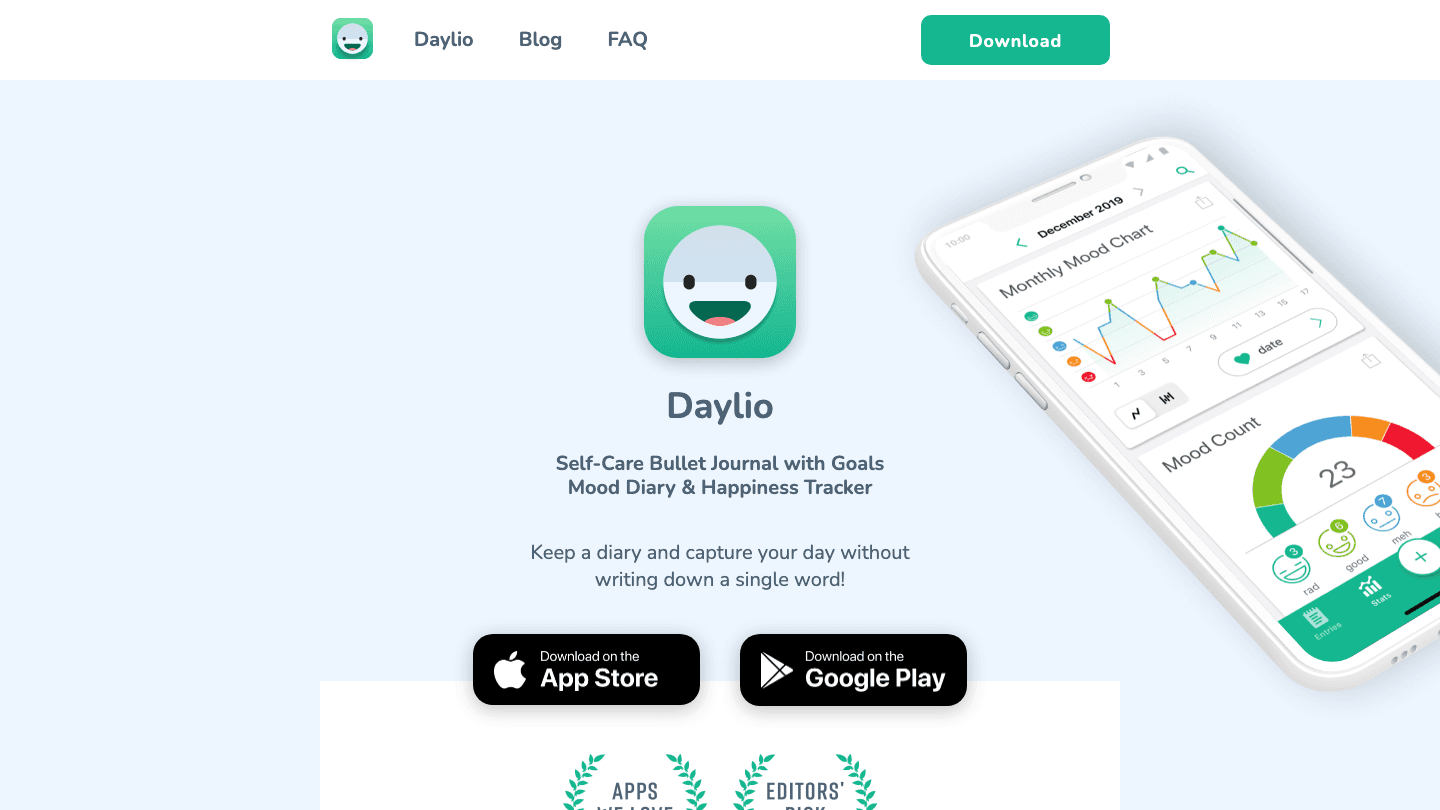
Daylio is built around a single insight: most people won't journal daily because writing takes effort. Daylio replaces writing with emoji-based mood selection and activity tags. Tap how you're feeling, tap what you did, and you're done in 15 seconds. No blank page, no sentence construction.
Over time, Daylio builds mood charts, identifies correlations between activities and emotions, and creates a "Year in Pixels" visualization. Premium adds reminders, advanced stats, and backup options. With over 20 million users, it's the most popular pure mood tracker available, and its retention stats suggest the low-friction approach works.
Key Features: Emoji mood selection, activity tagging, mood charts and correlation analysis, Year in Pixels, goal tracking, habit tracker (premium), PIN protection
What Works: Fastest daily log of any app here. Analytics are surprisingly deep once you have a few weeks of data. Completely private by default.
Limitations: No guided reflection or prompts. Free tier limits some analytics features. Less useful for users who want to process emotions through writing.
Pricing: Free to download; Premium available via in-app purchase
Best for: People who want to track mood consistently without committing to journaling
3. Reflectly
Best for: AI-guided journaling that helps you process difficult thoughts
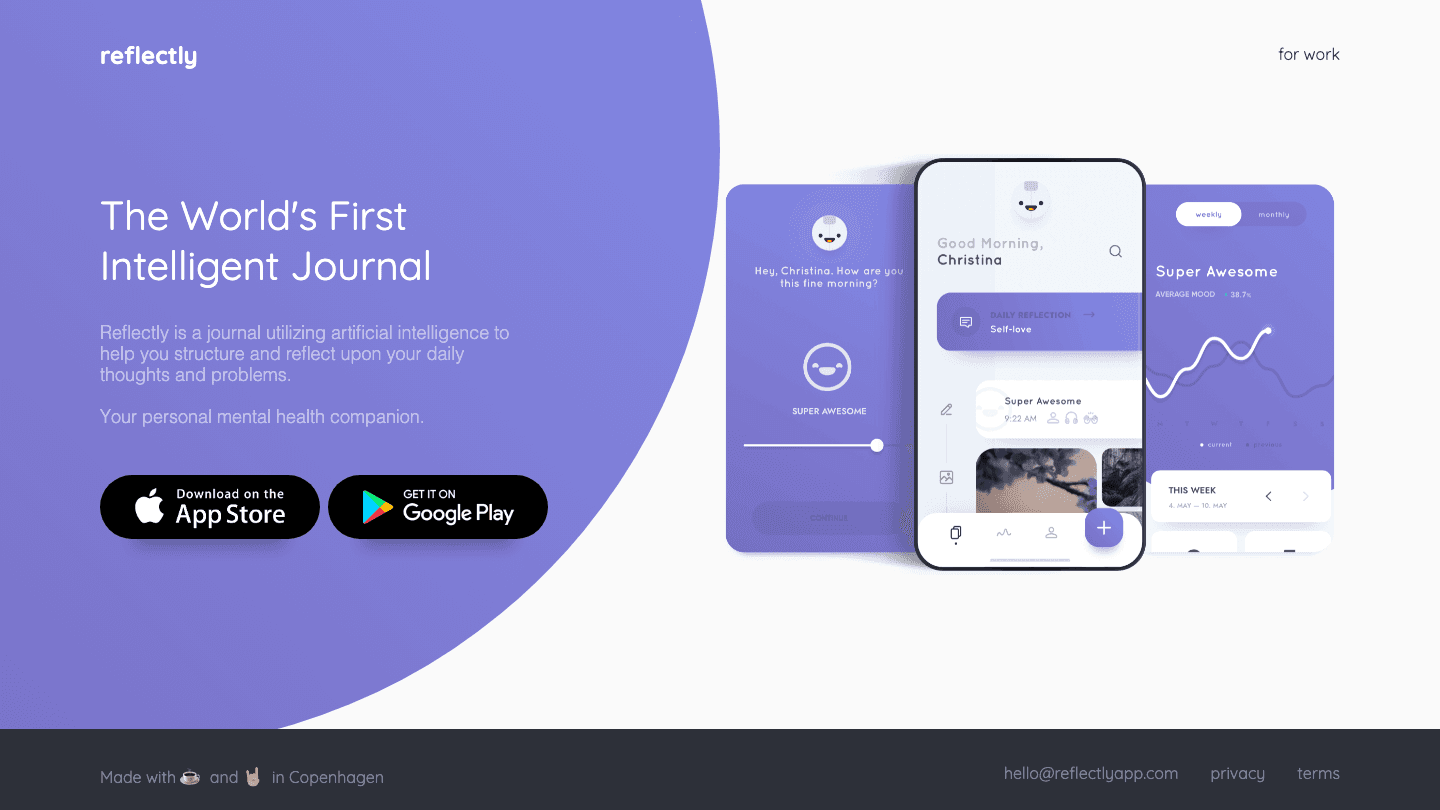
Reflectly uses AI to guide your journaling entries. Rather than opening to a blank page, the app asks questions based on what you've shared before, steering you toward deeper reflection when you're stuck in a loop and pulling back when you need space. The mood tracking is woven into the journaling process rather than separated from it.
For users who want to process what they're feeling rather than just log it, Reflectly's question-based format makes daily journaling significantly more manageable. The AI model learns your patterns over time and adjusts its prompts accordingly.
Key Features: AI-guided journaling, mood tracking, personalized daily prompts, weekly check-ins, mood analytics, photo attachments
What Works: The AI questioning is more useful than a blank journal for people who struggle with where to start. Good for emotional processing and building self-awareness.
Limitations: Requires more time than a quick mood log. Premium required for full AI features. Works best for users willing to engage with the prompts honestly.
Pricing: Free to download; Premium subscription available via in-app purchase
Best for: Users who want guided reflection and find blank-page journaling difficult to sustain
4. Finch
Best for: gentle daily self-care check-ins built around a virtual pet
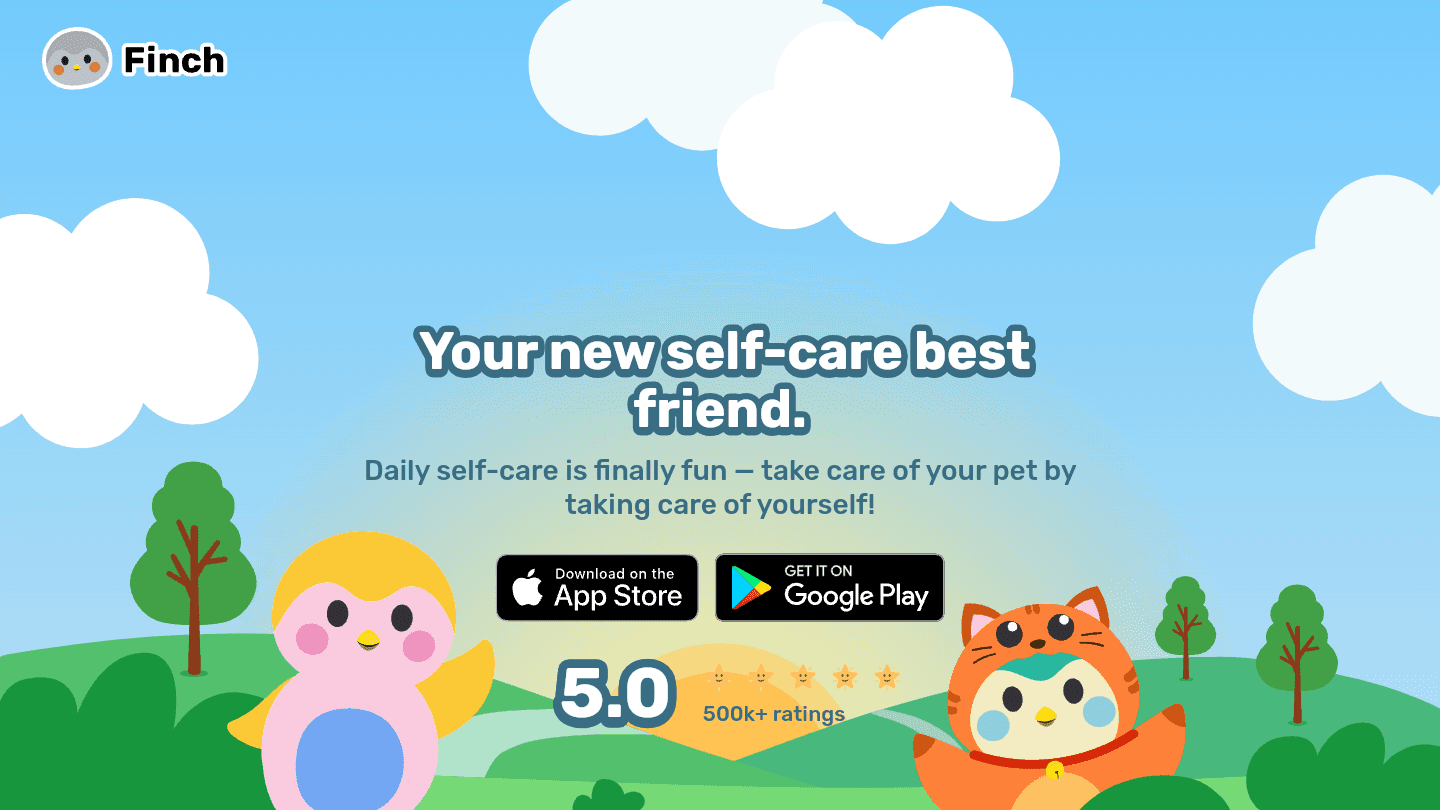
Finch is a self-care app built around a virtual bird that grows when you complete daily check-ins. Each day, you answer reflective questions, set intentions, and log how you're doing. As you maintain the habit, your Finch grows and earns accessories. It can visit friends' Finch accounts, building a gentle social accountability loop.
Finch is particularly effective for users who struggle with traditional self-care because the gamification removes the clinical feel. It's less analytical than Daylio and less structured than Stoic, but for users who need a warm, low-pressure entry point into mood tracking and daily reflection, it works well alongside a habit tracking system.
Key Features: Daily mood and wellness check-ins, virtual pet growth mechanic, breathing exercises, goal setting, reflective prompts, social bird visits
What Works: The gamification is genuinely motivating for users who don't respond well to data-heavy apps. Low pressure, warm tone. Effective for building a daily self-care habit.
Limitations: Less analytical than Daylio or Reflectly. The pet mechanic won't appeal to everyone. Limited mood data export.
Pricing: Free to download; Finch Plus subscription available via in-app purchase
Best for: Users who find traditional wellness apps cold or clinical and want a warmer daily check-in ritual
5. Stoic
Best for: structured morning and evening journaling with mood tracking built in
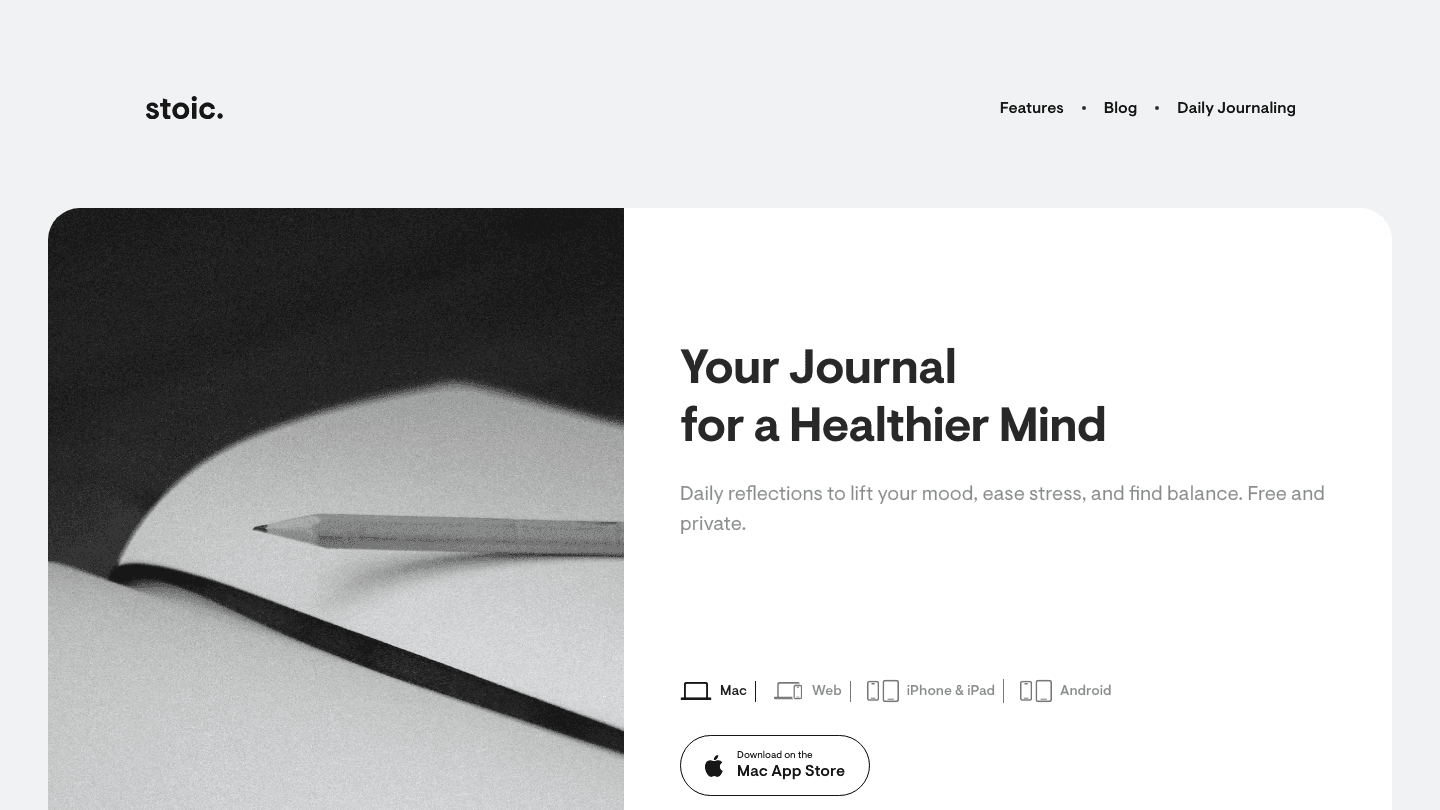
Stoic structures daily journaling around morning intentions and evening reflections. The app provides specific prompts, breathing exercises, and mood tracking within a minimal, distraction-free interface. It's grounded in cognitive-behavioral and Stoic philosophy principles, focusing on separating what you can control from what you can't.
For users who want a daily planning rhythm that includes emotional grounding, Stoic fits naturally into a morning routine. The structured format is more opinionated than Reflectly but also more consistent. Mood data from Stoic can inform your circadian awareness when combined with other health tracking.
Key Features: Morning and evening journal prompts, CBT-based exercises, mood logging, breathing techniques, progress statistics, minimal dark design
What Works: Structured format is easier to maintain than open-ended journaling. Philosophy-based framing is genuinely useful for anxiety and rumination. Clean interface with no noise.
Limitations: Opinionated format won't suit everyone. Primarily iOS-focused. Less social or gamified than Finch.
Pricing: Free to download; Stoic+ subscription available via in-app purchase
Best for: Users who want structured morning and evening routines with built-in mood tracking
Which Mood Tracker Is Right for You?
You want your mood data to change how your day is planned: Lifestack
You want the fastest possible daily log: Daylio
You want AI to guide your journaling: Reflectly
You need a warm, low-pressure entry point to daily wellness: Finch
You want structured morning and evening reflection: Stoic
FAQ
What is mood tracking?
Mood tracking is the practice of logging your emotional state at regular intervals, typically daily, along with activities, sleep, or other contextual factors. Over time, the data reveals patterns that are hard to see from day to day but become clear in aggregate. For example, you might discover that your mood reliably drops after two consecutive days of poor sleep, or lifts on days when you exercise.
What is the best free mood tracking app?
Daylio is the strongest free mood tracker for most users. Its free tier covers daily mood logging, activity tags, and basic charts. Finch and Reflectly also have usable free tiers. Stoic offers a free version with core journaling features.
Can mood tracking help with anxiety or depression?
Mood tracking apps are not a substitute for professional mental health care. However, consistent tracking can help you and a therapist identify triggers, measure treatment effectiveness, and communicate more precisely about your emotional experience. Apps like Stoic that incorporate CBT techniques are designed to complement therapeutic approaches, not replace them.
How long should I track my mood before seeing patterns?
Most apps suggest 2 to 4 weeks of consistent logging before patterns become statistically meaningful. Daylio specifically shows monthly summaries that start to surface correlations after 30 days. The longer you track, the more accurate the insights, but even two weeks of data is more useful than none.
How is Lifestack different from a mood tracker?
Lifestack doesn't ask you to log your mood manually. Instead, it reads recovery and energy data automatically from your wearable device and uses that data to adjust your daily schedule. Where a mood tracker helps you understand how you feel, Lifestack uses similar data to build your day around your energy level, turning passive insight into active planning.
Mood tracking is one of the simplest habits with a surprisingly large payoff. When you log how you feel consistently, patterns that are invisible in the moment become obvious over time. You notice that your mood drops every Sunday evening, or that you feel better on days when you sleep before 11 p.m., or that certain people reliably drain you while others lift you up.
The apps below cover different approaches: quick emoji-based logs, AI-assisted journaling, self-care gamification, and structured reflection. The right one depends on how much time you want to spend and what you want to get out of it.
Key Takeaways
Daylio is the fastest way to log mood with no writing required, making it the easiest habit to maintain.
Reflectly and Stoic are better suited to users who want structured prompts and guided journaling alongside mood data.
Lifestack turns mood and recovery data into a practical daily schedule, connecting emotional state to how your day is planned.
Quick Guide: Best Mood Tracker Apps
Lifestack: Best for connecting mood and energy to your daily schedule
Daylio: Best quick mood log with zero writing required
Reflectly: Best AI-guided journaling with mood tracking
Finch: Best for turning self-care into a gentle daily routine
Stoic: Best structured journaling for building mental resilience
1. Lifestack
Best for: turning mood and energy data into a daily plan that works with how you actually feel
Lifestack is a daily planning app that reads your wearable data and uses it to schedule your tasks when you're most capable of doing them. Connect an Oura Ring, Apple Watch, or Garmin, and Lifestack sees your sleep quality, recovery score, and energy levels each morning. Your schedule then adjusts based on that data.
Where most mood trackers stop at logging, Lifestack closes the loop. Your recovery and energy data becomes input to your energy-aware calendar, meaning the days you're running low get lighter deep-work demands, and the days you're sharp get protected for your most important projects. For anyone who notices their mood and productivity are tightly linked, this is the app that makes that connection actionable.
Key Features: Wearable integration, energy-based auto-scheduling, task prioritization, calendar sync, iOS and Android apps
What Works: The only app on this list that connects emotional state to actual scheduling decisions. Strong wearable integrations. Clean mobile experience.
Limitations: Requires a wearable for the core scheduling intelligence. Not designed purely as a mood journal.
Pricing: $7/month, $50/year, or $120 lifetime
Best for: Anyone who wants their recovery and energy data to actually change how their day is planned
2. Daylio
Best for: quick, no-writing mood logs you'll actually keep up with
Daylio is built around a single insight: most people won't journal daily because writing takes effort. Daylio replaces writing with emoji-based mood selection and activity tags. Tap how you're feeling, tap what you did, and you're done in 15 seconds. No blank page, no sentence construction.
Over time, Daylio builds mood charts, identifies correlations between activities and emotions, and creates a "Year in Pixels" visualization. Premium adds reminders, advanced stats, and backup options. With over 20 million users, it's the most popular pure mood tracker available, and its retention stats suggest the low-friction approach works.
Key Features: Emoji mood selection, activity tagging, mood charts and correlation analysis, Year in Pixels, goal tracking, habit tracker (premium), PIN protection
What Works: Fastest daily log of any app here. Analytics are surprisingly deep once you have a few weeks of data. Completely private by default.
Limitations: No guided reflection or prompts. Free tier limits some analytics features. Less useful for users who want to process emotions through writing.
Pricing: Free to download; Premium available via in-app purchase
Best for: People who want to track mood consistently without committing to journaling
3. Reflectly
Best for: AI-guided journaling that helps you process difficult thoughts
Reflectly uses AI to guide your journaling entries. Rather than opening to a blank page, the app asks questions based on what you've shared before, steering you toward deeper reflection when you're stuck in a loop and pulling back when you need space. The mood tracking is woven into the journaling process rather than separated from it.
For users who want to process what they're feeling rather than just log it, Reflectly's question-based format makes daily journaling significantly more manageable. The AI model learns your patterns over time and adjusts its prompts accordingly.
Key Features: AI-guided journaling, mood tracking, personalized daily prompts, weekly check-ins, mood analytics, photo attachments
What Works: The AI questioning is more useful than a blank journal for people who struggle with where to start. Good for emotional processing and building self-awareness.
Limitations: Requires more time than a quick mood log. Premium required for full AI features. Works best for users willing to engage with the prompts honestly.
Pricing: Free to download; Premium subscription available via in-app purchase
Best for: Users who want guided reflection and find blank-page journaling difficult to sustain
4. Finch
Best for: gentle daily self-care check-ins built around a virtual pet
Finch is a self-care app built around a virtual bird that grows when you complete daily check-ins. Each day, you answer reflective questions, set intentions, and log how you're doing. As you maintain the habit, your Finch grows and earns accessories. It can visit friends' Finch accounts, building a gentle social accountability loop.
Finch is particularly effective for users who struggle with traditional self-care because the gamification removes the clinical feel. It's less analytical than Daylio and less structured than Stoic, but for users who need a warm, low-pressure entry point into mood tracking and daily reflection, it works well alongside a habit tracking system.
Key Features: Daily mood and wellness check-ins, virtual pet growth mechanic, breathing exercises, goal setting, reflective prompts, social bird visits
What Works: The gamification is genuinely motivating for users who don't respond well to data-heavy apps. Low pressure, warm tone. Effective for building a daily self-care habit.
Limitations: Less analytical than Daylio or Reflectly. The pet mechanic won't appeal to everyone. Limited mood data export.
Pricing: Free to download; Finch Plus subscription available via in-app purchase
Best for: Users who find traditional wellness apps cold or clinical and want a warmer daily check-in ritual
5. Stoic
Best for: structured morning and evening journaling with mood tracking built in
Stoic structures daily journaling around morning intentions and evening reflections. The app provides specific prompts, breathing exercises, and mood tracking within a minimal, distraction-free interface. It's grounded in cognitive-behavioral and Stoic philosophy principles, focusing on separating what you can control from what you can't.
For users who want a daily planning rhythm that includes emotional grounding, Stoic fits naturally into a morning routine. The structured format is more opinionated than Reflectly but also more consistent. Mood data from Stoic can inform your circadian awareness when combined with other health tracking.
Key Features: Morning and evening journal prompts, CBT-based exercises, mood logging, breathing techniques, progress statistics, minimal dark design
What Works: Structured format is easier to maintain than open-ended journaling. Philosophy-based framing is genuinely useful for anxiety and rumination. Clean interface with no noise.
Limitations: Opinionated format won't suit everyone. Primarily iOS-focused. Less social or gamified than Finch.
Pricing: Free to download; Stoic+ subscription available via in-app purchase
Best for: Users who want structured morning and evening routines with built-in mood tracking
Which Mood Tracker Is Right for You?
You want your mood data to change how your day is planned: Lifestack
You want the fastest possible daily log: Daylio
You want AI to guide your journaling: Reflectly
You need a warm, low-pressure entry point to daily wellness: Finch
You want structured morning and evening reflection: Stoic
FAQ
What is mood tracking?
Mood tracking is the practice of logging your emotional state at regular intervals, typically daily, along with activities, sleep, or other contextual factors. Over time, the data reveals patterns that are hard to see from day to day but become clear in aggregate. For example, you might discover that your mood reliably drops after two consecutive days of poor sleep, or lifts on days when you exercise.
What is the best free mood tracking app?
Daylio is the strongest free mood tracker for most users. Its free tier covers daily mood logging, activity tags, and basic charts. Finch and Reflectly also have usable free tiers. Stoic offers a free version with core journaling features.
Can mood tracking help with anxiety or depression?
Mood tracking apps are not a substitute for professional mental health care. However, consistent tracking can help you and a therapist identify triggers, measure treatment effectiveness, and communicate more precisely about your emotional experience. Apps like Stoic that incorporate CBT techniques are designed to complement therapeutic approaches, not replace them.
How long should I track my mood before seeing patterns?
Most apps suggest 2 to 4 weeks of consistent logging before patterns become statistically meaningful. Daylio specifically shows monthly summaries that start to surface correlations after 30 days. The longer you track, the more accurate the insights, but even two weeks of data is more useful than none.
How is Lifestack different from a mood tracker?
Lifestack doesn't ask you to log your mood manually. Instead, it reads recovery and energy data automatically from your wearable device and uses that data to adjust your daily schedule. Where a mood tracker helps you understand how you feel, Lifestack uses similar data to build your day around your energy level, turning passive insight into active planning.



FOLLOW ON
FOLLOW ON
FOLLOW ON


Copyright 2026 © Lifestack. All rights reserved
Copyright 2026 © Lifestack. All rights reserved

