
App
Best Routinery Alternatives in 2026
Best Routinery Alternatives in 2026

Why Switch from Routinery?
Routinery built its following on one feature: a step-by-step routine timer that guides you through each part of your morning (or evening) with countdown timers and chimes. For people who need structure to start the day, it works well. But it has a ceiling. It doesn't schedule around your calendar. It doesn't learn your energy patterns. It can't tell you that Tuesday at 9am is a bad time to schedule a focused work block because you have a meeting at 9:30.
The apps below go further. Some replace Routinery's timer-based approach with something more visual. Others integrate directly with your calendar so your routine becomes part of your actual day, not a separate app you run before the real day begins.
We tested each one against the use cases where Routinery typically falls short: calendar integration, ADHD support, energy-aware scheduling, and long-term habit building beyond the morning routine window.
Key Takeaways
Lifestack is the best Routinery alternative for people who want their routines to fit into a real calendar with energy-aware scheduling
Tiimo is the closest match to Routinery's visual, timer-based approach but adds ADHD-specific design and won Apple's 2025 iPhone App of the Year
Structured and TickTick both offer free tiers with more scheduling depth than Routinery's paid plan
Quick Guide: Best Routinery Alternatives
1. Lifestack: Best for calendar-integrated, energy-aware scheduling
2. Tiimo: Best direct Routinery replacement with ADHD-first design
3. Structured: Best visual daily timeline
4. Fabulous: Best for habit coaching and behavioral motivation
5. TickTick: Best free option with full task and habit management
How We Evaluated
Calendar integration: can routines live inside your actual schedule?
ADHD support: visual timers, low-friction entry, energy awareness
Habit tracking: beyond the morning routine to full-day habit management
Pricing: free tiers, trial availability, and value for paid plans
Cross-platform: iOS, Android, and web access
1. Lifestack: Best Calendar-Integrated Routine Planner
Routines that adapt to your real energy, not just your scheduled time slots.

Routinery's core limitation is that it runs parallel to your calendar. You complete your morning routine in Routinery, then switch over to your calendar app to figure out the rest of the day. Lifestack removes that friction by combining scheduling and routine-building in one system.
Lifestack is an AI-powered daily planner that integrates with Google Calendar and Apple Calendar. It schedules your tasks and recurring habits based on when you have the mental energy to actually do them, not just when a time slot is empty. The result is a daily plan that includes your morning routine, your deep work blocks, and your administrative tasks arranged in an order that matches how your brain actually works across the day.
Where Routinery is timer-driven, Lifestack is calendar-driven. You're not locked into a rigid sequence of steps with countdown timers. Instead, you have a visual day plan that shows exactly what's next and how long it takes. This works especially well for people who need visual structure but also need flexibility when the day doesn't go as planned.
AI scheduling matched to daily energy patterns, not just open calendar slots
Google Calendar and Apple Calendar integration
Recurring tasks and habits built into the same daily view as meetings
iOS, Android, and Chrome extension
What Works
The only alternative here that actively accounts for your energy level when scheduling routines
Routines live inside your real calendar, not a separate app
More affordable than Routinery's annual plan
Limitations
No step-by-step countdown timers (different philosophy from Routinery)
Less visual gamification than Fabulous or Tiimo
Pricing: $7/month or $50/year (7-day free trial on annual plan)
Best for: People who want routines integrated into their full daily schedule with energy-aware planning
2. Tiimo: Best Direct Routinery Replacement
Apple's 2025 iPhone App of the Year. Visual timers and ADHD-first design.

If what you love about Routinery is the visual, timer-based step-through approach, Tiimo is the most direct replacement. Built by and for neurodivergent people, Tiimo turns your day into a color-coded timeline where each activity gets a visual countdown timer, a gentle sound cue, and a customizable icon. It won Apple's iPhone App of the Year in 2025 and has since added AI planning features that make it significantly more capable than Routinery.
The design is intentionally calm. Timers count down visually rather than numerically, reducing the anxiety that some ADHD users experience with aggressive countdown displays. You can set up recurring morning and evening routines, and the app sends a reminder as each step begins. The AI planning layer helps suggest when to schedule tasks based on your patterns, which is a meaningful upgrade over Routinery's static approach.
Visual countdown timers with gentle sound cues for each routine step
Color-coded timeline view for the full day
AI planning features added in 2025
Built specifically for ADHD, autism, and neurodivergent users
iOS and Android, with web app support
What Works
Most similar to Routinery's core experience but considerably more polished
ADHD-first design choices reduce overwhelm during routine transitions
Award-winning product with active development
Limitations
More expensive than Routinery on the annual plan
No energy-aware scheduling or deep calendar integration
Pricing: Free tier available; $54/year ($12/month); 7-day free trial on annual plan
Best for: Routinery users who want a more polished, ADHD-designed timer-and-routine experience
3. Structured: Best Visual Daily Timeline
Time-blocked scheduling with a clean visual layout. No overwhelming feature set.
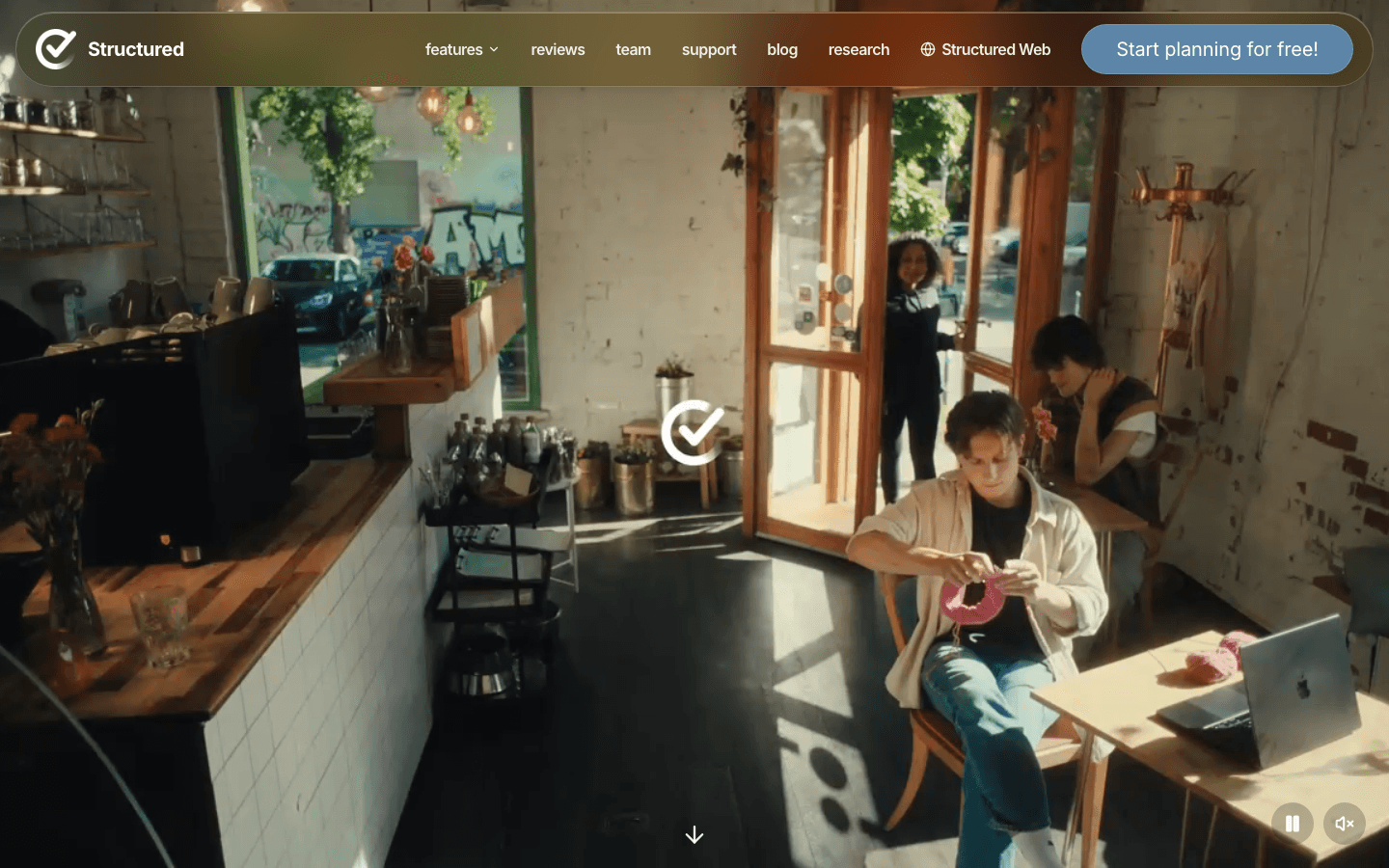
Structured takes a different approach to routines. Rather than a step-by-step timer, it shows your entire day as a vertical color-coded timeline where each task or routine block appears proportional to its duration. This makes time feel concrete in a way that Routinery's sequential approach doesn't. You can see at a glance whether your morning routine takes 45 minutes or 2 hours, and where that leaves the rest of your day.
It syncs with Apple Calendar and Google Calendar, so work meetings and personal routine blocks appear on the same timeline. Adding tasks is fast (under five seconds per task), and the visual result is immediately useful. It doesn't have countdown timers between steps, so if that's the specific feature you're replacing from Routinery, Tiimo or Lifestack will serve you better. But for visual day planning that pairs well with a visual schedule system, Structured is hard to beat at this price.
Vertical color-coded timeline with proportional task blocks
Apple Calendar and Google Calendar sync
Low-friction task entry (under 5 seconds)
iOS native with web app
What Works
The visual timeline format makes time blindness much more manageable
Near-lifetime pricing ($32.99) makes it one of the best value routine planners available
Limitations
No countdown timers or audio cues between routine steps
Android support is limited compared to iOS
Pricing: Free; Pro $29.99/year or $32.99 lifetime
Best for: Visual thinkers who want to see their routine in a full-day timeline context
4. Fabulous: Best for Habit Coaching and Motivation
Behavioral science meets morning routine building.

Fabulous approaches routines through the lens of behavioral science. Developed with guidance from Duke University researchers, the app builds habits in stages rather than asking you to adopt a full routine on day one. You start with one small commitment, build consistency, then add the next habit when the first has taken hold.
The morning routine builder is the core product. You build a sequence of habits with associated reminders, and Fabulous coaches you with short guided journeys that explain the psychology behind each habit. This is more motivating than Routinery's timer-only approach if you want to understand why you're doing what you're doing, not just be prompted to do it. It's worth reading our full Fabulous alternatives guide if you're comparing between the two. The app works alongside habit tracking for a fuller picture of long-term behavior change.
Guided journey system that builds habits incrementally
Morning, afternoon, and evening routine builders
Behavioral coaching content grounded in research
iOS and Android
What Works
The gradual habit-building approach has stronger evidence than timer-only apps
More motivating for people who want context and coaching, not just reminders
Limitations
No calendar integration or energy-aware scheduling
Coaching style can feel preachy if you prefer minimal instruction
Pricing: Free trial; $39.99/year
Best for: People who want guided habit-building with behavioral coaching, not just a timer
5. TickTick: Best Free Routinery Alternative
Task manager with built-in habit tracking and a strong free tier.
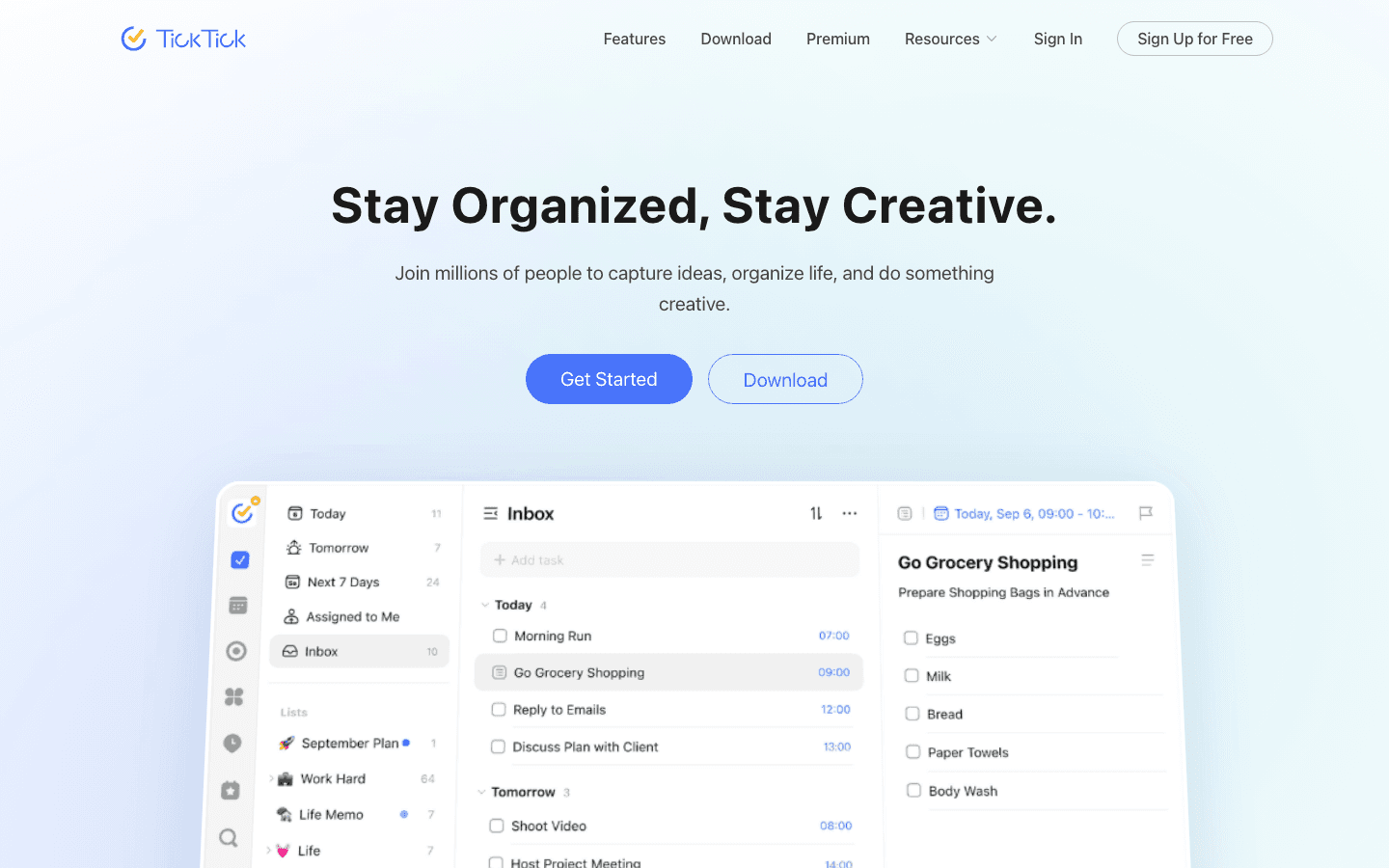
TickTick is primarily a task manager, but its habit tracking module and daily planner view make it a capable Routinery alternative for people who want one app for tasks, routines, and habits. The free tier covers most of what you'd use it for daily: unlimited tasks, basic habits, calendar view, and a Pomodoro timer built in.
Setting up a daily routine in TickTick means creating recurring tasks at specific times. It's less visual than Tiimo or Structured, and there are no countdown timer cues to guide you from step to step. But for people who find Routinery's interface limiting and want a real task manager underneath their routine, TickTick gives you both without paying twice. For a weekly planning habit, TickTick's calendar view is particularly useful.
Built-in habit tracker with streak tracking and statistics
Pomodoro timer built into the task view
Calendar view for scheduling recurring routine tasks
iOS, Android, Mac, Windows, and web, all synced
What Works
Best free tier of any app on this list for routine and task management combined
Cross-platform coverage is broader than any other alternative here
Limitations
Less visual than Routinery, Tiimo, or Structured
Habit and routine features are secondary to task management
Pricing: Free; Premium $27.99/year
Best for: People who want a single free app that combines routine scheduling with real task management
Which Routinery Alternative Is Right for You?
You want routines inside your actual calendar with energy-aware scheduling: Lifestack
You want the same visual timer experience as Routinery, but better: Tiimo
You want to see your whole day on one visual timeline: Structured
You want to understand and build habits, not just be timed through them: Fabulous
You want a free option that also handles tasks: TickTick
Frequently Asked Questions
What is the best Routinery alternative?
Lifestack is the best Routinery alternative for people who want their routines integrated into a full daily schedule with energy-aware scheduling. Tiimo is the best direct replacement for Routinery's visual timer-based format, particularly for neurodivergent users.
Is there a free Routinery alternative?
Yes. TickTick has a generous free tier that covers routine scheduling through recurring tasks and built-in habit tracking. Structured also has a free version with calendar sync. Tiimo has a free tier with limited features.
What makes Routinery different from other routine apps?
Routinery's core feature is a step-by-step countdown timer that guides you through each habit in sequence with visual and audio cues. Most alternatives use timeline views, habit lists, or calendar blocks instead of step-by-step timers. Tiimo is the closest match to Routinery's timer-first approach.
Which routine app is best for ADHD?
Tiimo was built specifically for neurodivergent users and won Apple's 2025 iPhone App of the Year. Lifestack's energy-aware scheduling is also highly effective for ADHD time blindness. Structured's visual timeline format helps make time feel concrete.
Can TickTick replace Routinery?
Partially. TickTick can schedule recurring tasks at specific times and track habits with streaks, but it lacks the visual countdown timer that Routinery uses to guide you through each step. If the timer feature is important to you, Tiimo is a better match. If you mostly want reminders and tracking, TickTick is excellent and free.
Is Routinery worth the subscription?
Routinery costs $7.99/month or $39.99/year. At that price, Lifestack ($50/year) offers significantly more depth with calendar integration and energy-aware scheduling. Structured ($32.99 lifetime) and TickTick ($27.99/year) are both cheaper with comparable or better routine-tracking capabilities.
Why Switch from Routinery?
Routinery built its following on one feature: a step-by-step routine timer that guides you through each part of your morning (or evening) with countdown timers and chimes. For people who need structure to start the day, it works well. But it has a ceiling. It doesn't schedule around your calendar. It doesn't learn your energy patterns. It can't tell you that Tuesday at 9am is a bad time to schedule a focused work block because you have a meeting at 9:30.
The apps below go further. Some replace Routinery's timer-based approach with something more visual. Others integrate directly with your calendar so your routine becomes part of your actual day, not a separate app you run before the real day begins.
We tested each one against the use cases where Routinery typically falls short: calendar integration, ADHD support, energy-aware scheduling, and long-term habit building beyond the morning routine window.
Key Takeaways
Lifestack is the best Routinery alternative for people who want their routines to fit into a real calendar with energy-aware scheduling
Tiimo is the closest match to Routinery's visual, timer-based approach but adds ADHD-specific design and won Apple's 2025 iPhone App of the Year
Structured and TickTick both offer free tiers with more scheduling depth than Routinery's paid plan
Quick Guide: Best Routinery Alternatives
1. Lifestack: Best for calendar-integrated, energy-aware scheduling
2. Tiimo: Best direct Routinery replacement with ADHD-first design
3. Structured: Best visual daily timeline
4. Fabulous: Best for habit coaching and behavioral motivation
5. TickTick: Best free option with full task and habit management
How We Evaluated
Calendar integration: can routines live inside your actual schedule?
ADHD support: visual timers, low-friction entry, energy awareness
Habit tracking: beyond the morning routine to full-day habit management
Pricing: free tiers, trial availability, and value for paid plans
Cross-platform: iOS, Android, and web access
1. Lifestack: Best Calendar-Integrated Routine Planner
Routines that adapt to your real energy, not just your scheduled time slots.
Routinery's core limitation is that it runs parallel to your calendar. You complete your morning routine in Routinery, then switch over to your calendar app to figure out the rest of the day. Lifestack removes that friction by combining scheduling and routine-building in one system.
Lifestack is an AI-powered daily planner that integrates with Google Calendar and Apple Calendar. It schedules your tasks and recurring habits based on when you have the mental energy to actually do them, not just when a time slot is empty. The result is a daily plan that includes your morning routine, your deep work blocks, and your administrative tasks arranged in an order that matches how your brain actually works across the day.
Where Routinery is timer-driven, Lifestack is calendar-driven. You're not locked into a rigid sequence of steps with countdown timers. Instead, you have a visual day plan that shows exactly what's next and how long it takes. This works especially well for people who need visual structure but also need flexibility when the day doesn't go as planned.
AI scheduling matched to daily energy patterns, not just open calendar slots
Google Calendar and Apple Calendar integration
Recurring tasks and habits built into the same daily view as meetings
iOS, Android, and Chrome extension
What Works
The only alternative here that actively accounts for your energy level when scheduling routines
Routines live inside your real calendar, not a separate app
More affordable than Routinery's annual plan
Limitations
No step-by-step countdown timers (different philosophy from Routinery)
Less visual gamification than Fabulous or Tiimo
Pricing: $7/month or $50/year (7-day free trial on annual plan)
Best for: People who want routines integrated into their full daily schedule with energy-aware planning
2. Tiimo: Best Direct Routinery Replacement
Apple's 2025 iPhone App of the Year. Visual timers and ADHD-first design.
If what you love about Routinery is the visual, timer-based step-through approach, Tiimo is the most direct replacement. Built by and for neurodivergent people, Tiimo turns your day into a color-coded timeline where each activity gets a visual countdown timer, a gentle sound cue, and a customizable icon. It won Apple's iPhone App of the Year in 2025 and has since added AI planning features that make it significantly more capable than Routinery.
The design is intentionally calm. Timers count down visually rather than numerically, reducing the anxiety that some ADHD users experience with aggressive countdown displays. You can set up recurring morning and evening routines, and the app sends a reminder as each step begins. The AI planning layer helps suggest when to schedule tasks based on your patterns, which is a meaningful upgrade over Routinery's static approach.
Visual countdown timers with gentle sound cues for each routine step
Color-coded timeline view for the full day
AI planning features added in 2025
Built specifically for ADHD, autism, and neurodivergent users
iOS and Android, with web app support
What Works
Most similar to Routinery's core experience but considerably more polished
ADHD-first design choices reduce overwhelm during routine transitions
Award-winning product with active development
Limitations
More expensive than Routinery on the annual plan
No energy-aware scheduling or deep calendar integration
Pricing: Free tier available; $54/year ($12/month); 7-day free trial on annual plan
Best for: Routinery users who want a more polished, ADHD-designed timer-and-routine experience
3. Structured: Best Visual Daily Timeline
Time-blocked scheduling with a clean visual layout. No overwhelming feature set.
Structured takes a different approach to routines. Rather than a step-by-step timer, it shows your entire day as a vertical color-coded timeline where each task or routine block appears proportional to its duration. This makes time feel concrete in a way that Routinery's sequential approach doesn't. You can see at a glance whether your morning routine takes 45 minutes or 2 hours, and where that leaves the rest of your day.
It syncs with Apple Calendar and Google Calendar, so work meetings and personal routine blocks appear on the same timeline. Adding tasks is fast (under five seconds per task), and the visual result is immediately useful. It doesn't have countdown timers between steps, so if that's the specific feature you're replacing from Routinery, Tiimo or Lifestack will serve you better. But for visual day planning that pairs well with a visual schedule system, Structured is hard to beat at this price.
Vertical color-coded timeline with proportional task blocks
Apple Calendar and Google Calendar sync
Low-friction task entry (under 5 seconds)
iOS native with web app
What Works
The visual timeline format makes time blindness much more manageable
Near-lifetime pricing ($32.99) makes it one of the best value routine planners available
Limitations
No countdown timers or audio cues between routine steps
Android support is limited compared to iOS
Pricing: Free; Pro $29.99/year or $32.99 lifetime
Best for: Visual thinkers who want to see their routine in a full-day timeline context
4. Fabulous: Best for Habit Coaching and Motivation
Behavioral science meets morning routine building.
Fabulous approaches routines through the lens of behavioral science. Developed with guidance from Duke University researchers, the app builds habits in stages rather than asking you to adopt a full routine on day one. You start with one small commitment, build consistency, then add the next habit when the first has taken hold.
The morning routine builder is the core product. You build a sequence of habits with associated reminders, and Fabulous coaches you with short guided journeys that explain the psychology behind each habit. This is more motivating than Routinery's timer-only approach if you want to understand why you're doing what you're doing, not just be prompted to do it. It's worth reading our full Fabulous alternatives guide if you're comparing between the two. The app works alongside habit tracking for a fuller picture of long-term behavior change.
Guided journey system that builds habits incrementally
Morning, afternoon, and evening routine builders
Behavioral coaching content grounded in research
iOS and Android
What Works
The gradual habit-building approach has stronger evidence than timer-only apps
More motivating for people who want context and coaching, not just reminders
Limitations
No calendar integration or energy-aware scheduling
Coaching style can feel preachy if you prefer minimal instruction
Pricing: Free trial; $39.99/year
Best for: People who want guided habit-building with behavioral coaching, not just a timer
5. TickTick: Best Free Routinery Alternative
Task manager with built-in habit tracking and a strong free tier.
TickTick is primarily a task manager, but its habit tracking module and daily planner view make it a capable Routinery alternative for people who want one app for tasks, routines, and habits. The free tier covers most of what you'd use it for daily: unlimited tasks, basic habits, calendar view, and a Pomodoro timer built in.
Setting up a daily routine in TickTick means creating recurring tasks at specific times. It's less visual than Tiimo or Structured, and there are no countdown timer cues to guide you from step to step. But for people who find Routinery's interface limiting and want a real task manager underneath their routine, TickTick gives you both without paying twice. For a weekly planning habit, TickTick's calendar view is particularly useful.
Built-in habit tracker with streak tracking and statistics
Pomodoro timer built into the task view
Calendar view for scheduling recurring routine tasks
iOS, Android, Mac, Windows, and web, all synced
What Works
Best free tier of any app on this list for routine and task management combined
Cross-platform coverage is broader than any other alternative here
Limitations
Less visual than Routinery, Tiimo, or Structured
Habit and routine features are secondary to task management
Pricing: Free; Premium $27.99/year
Best for: People who want a single free app that combines routine scheduling with real task management
Which Routinery Alternative Is Right for You?
You want routines inside your actual calendar with energy-aware scheduling: Lifestack
You want the same visual timer experience as Routinery, but better: Tiimo
You want to see your whole day on one visual timeline: Structured
You want to understand and build habits, not just be timed through them: Fabulous
You want a free option that also handles tasks: TickTick
Frequently Asked Questions
What is the best Routinery alternative?
Lifestack is the best Routinery alternative for people who want their routines integrated into a full daily schedule with energy-aware scheduling. Tiimo is the best direct replacement for Routinery's visual timer-based format, particularly for neurodivergent users.
Is there a free Routinery alternative?
Yes. TickTick has a generous free tier that covers routine scheduling through recurring tasks and built-in habit tracking. Structured also has a free version with calendar sync. Tiimo has a free tier with limited features.
What makes Routinery different from other routine apps?
Routinery's core feature is a step-by-step countdown timer that guides you through each habit in sequence with visual and audio cues. Most alternatives use timeline views, habit lists, or calendar blocks instead of step-by-step timers. Tiimo is the closest match to Routinery's timer-first approach.
Which routine app is best for ADHD?
Tiimo was built specifically for neurodivergent users and won Apple's 2025 iPhone App of the Year. Lifestack's energy-aware scheduling is also highly effective for ADHD time blindness. Structured's visual timeline format helps make time feel concrete.
Can TickTick replace Routinery?
Partially. TickTick can schedule recurring tasks at specific times and track habits with streaks, but it lacks the visual countdown timer that Routinery uses to guide you through each step. If the timer feature is important to you, Tiimo is a better match. If you mostly want reminders and tracking, TickTick is excellent and free.
Is Routinery worth the subscription?
Routinery costs $7.99/month or $39.99/year. At that price, Lifestack ($50/year) offers significantly more depth with calendar integration and energy-aware scheduling. Structured ($32.99 lifetime) and TickTick ($27.99/year) are both cheaper with comparable or better routine-tracking capabilities.



FOLLOW ON
FOLLOW ON
FOLLOW ON


Copyright 2026 © Lifestack. All rights reserved
Copyright 2026 © Lifestack. All rights reserved

