
Tips
Why Do I Fall Asleep After I Eat?
Why Do I Fall Asleep After I Eat?

You finish lunch, get back to your desk, and 20 minutes later you're fighting to keep your eyes open. It's one of the most common midday complaints, and most people chalk it up to the food itself. But the real picture is more interesting than that.
Post-meal drowsiness has several overlapping causes: digestive hormones, blood sugar dynamics, your circadian rhythm, and meal composition all play roles. Food doesn't put you to sleep; it interacts with systems that were already primed to reduce alertness in the early afternoon. Understanding how those systems work makes it much easier to change what happens after you eat.
Key Takeaways
Post-meal sleepiness is partly biological (circadian dip) and partly driven by meal size and composition
Large meals with high refined carbohydrate content produce the most pronounced drowsiness
Scheduling high-focus work before lunch and lower-stakes tasks afterward works with your biology rather than against it
The Circadian Rhythm Connection
The most underappreciated factor in post-meal drowsiness is that it would happen even if you skipped lunch. Your circadian rhythm produces two natural low-alertness windows every 24 hours: one in the early morning hours and one roughly between 1 and 4 p.m. Eating a meal in that window amplifies an effect that's already happening.
This is why many cultures developed an afternoon rest period independently of each other. The siesta isn't a cultural quirk; it's a response to something real in human biology. Circadian rhythm tracking apps can show you exactly when your alertness peaks and dips so you can plan your day around it rather than getting blindsided by the afternoon crash.
If your post-meal sleepiness feels extreme or hits at unusual times, a disrupted circadian rhythm may be contributing. Resetting your circadian rhythm through light exposure and sleep timing can shift when the dip hits and how severe it feels.
What Food Actually Does
Eating triggers a cascade of hormonal responses. Insulin rises to handle glucose, cholecystokinin (CCK) is released by the small intestine to signal satiety, and blood flow shifts toward the digestive system. All of these processes have knock-on effects that promote drowsiness.
Insulin can lower levels of orexin, a neurotransmitter that promotes wakefulness. CCK signals fatigue. Blood redistribution toward the gut reduces peripheral circulation slightly. None of these effects is dramatic on its own, but together they add meaningfully to the dip that's already being produced by your circadian rhythm.
Meal composition matters significantly here. A large meal with a lot of refined carbohydrates (white bread, pasta, rice, sugary drinks) produces a sharper insulin spike, which amplifies the drowsiness effect. A smaller meal with protein, fiber, and fat produces a gentler response with less of a drop afterward.
The Blood Sugar Role
Refined carbohydrates cause blood sugar to rise quickly and then fall, and the falling phase is where people often feel the worst. The drop in blood glucose after a carb-heavy meal is interpreted by the brain as low fuel, which produces fatigue and reduced motivation even when you've eaten plenty of calories overall.
This cycle is different from the circadian effect and responds more directly to what you eat. Swapping refined carbs for complex ones (whole grains, legumes, vegetables) slows the absorption curve, produces a flatter blood sugar response, and significantly reduces the crash. Protein at lunch also helps because it promotes serotonin and tyrosine balance in ways that support more stable alertness.
Sleep's effect on energy levels is also relevant here: people carrying sleep debt are more sensitive to blood sugar swings, which means the post-meal crash hits harder when you're already tired.
Tryptophan and the Sleep Connection
You've probably heard that turkey makes you sleepy because of tryptophan. The tryptophan story is real but commonly misapplied. Tryptophan is a precursor to serotonin and melatonin, both of which promote sleep and calm. It's present in many protein sources, not just turkey.
The mechanism that makes tryptophan more active at lunch isn't just about how much you eat. Carbohydrates trigger insulin, which clears competing amino acids from the bloodstream. That leaves tryptophan with less competition crossing the blood-brain barrier, so more of it gets into the brain and more serotonin gets produced. The carbohydrate does the work; the tryptophan in the protein provides the raw material.
This is one reason high-protein, moderate-carb lunches tend to produce less sleepiness than high-carb lunches. The tryptophan is still present, but without the carbohydrate-driven insulin spike, less of it crosses into the brain in the afternoon window.
Practical Ways to Reduce Post-Meal Sleepiness
Eat smaller lunches. Large meals require more digestive resources and produce stronger hormonal responses. You don't need to eat less overall; distributing food across more meals or adding a mid-morning snack reduces the size of the midday meal and its associated crash.
Reduce refined carbs at lunch. This doesn't require an extreme diet change. Swapping white bread for a whole grain option, skipping the sugary drink, or adding more vegetables and protein to a typical lunch produces a noticeably different afternoon. Meal composition matters more than calorie count for afternoon energy.
Schedule around the dip rather than against it. If the early afternoon is inevitably lower energy, put tasks there that are lighter and more routine. Save creative and analytical work for the morning. Energy-based calendar planning structures your day around this explicitly, and it pays off more than trying to caffeinate through the crash.
Get outside briefly after eating. Even a 10-minute walk after lunch increases blood glucose clearance, gives your body a chance to use the energy it just ingested, and provides the kind of light exposure and movement that promotes afternoon alertness. It also happens to be one of the simplest and most consistently effective midday energy interventions.
When Should You Be Concerned?
For most people, some degree of post-meal sleepiness is normal. But when it's extreme, when you feel genuinely unable to function after eating or frequently need to sleep right after meals, it can indicate something worth looking into.
Conditions associated with more pronounced post-meal fatigue include reactive hypoglycemia (blood sugar drops more steeply than normal after eating), sleep apnea (which compounds any mild drowsiness signal into a severe one), type 2 diabetes or insulin resistance, and certain thyroid conditions. If the sleepiness is severe enough to interfere with daily function or accompanied by other symptoms, a doctor is the right next step.
Chronic sleep deprivation amplifies post-meal drowsiness in most people. If you're consistently short on sleep, the same lunch that produces a mild dip on an eight-hour night may produce a much harder crash on six hours. Addressing the sleep side first often reduces the post-meal problem considerably. Whether 8 hours is actually enough depends on the individual, but most people do better than they think on the right amount of good sleep.
Best Tool for Managing Post-Meal Energy
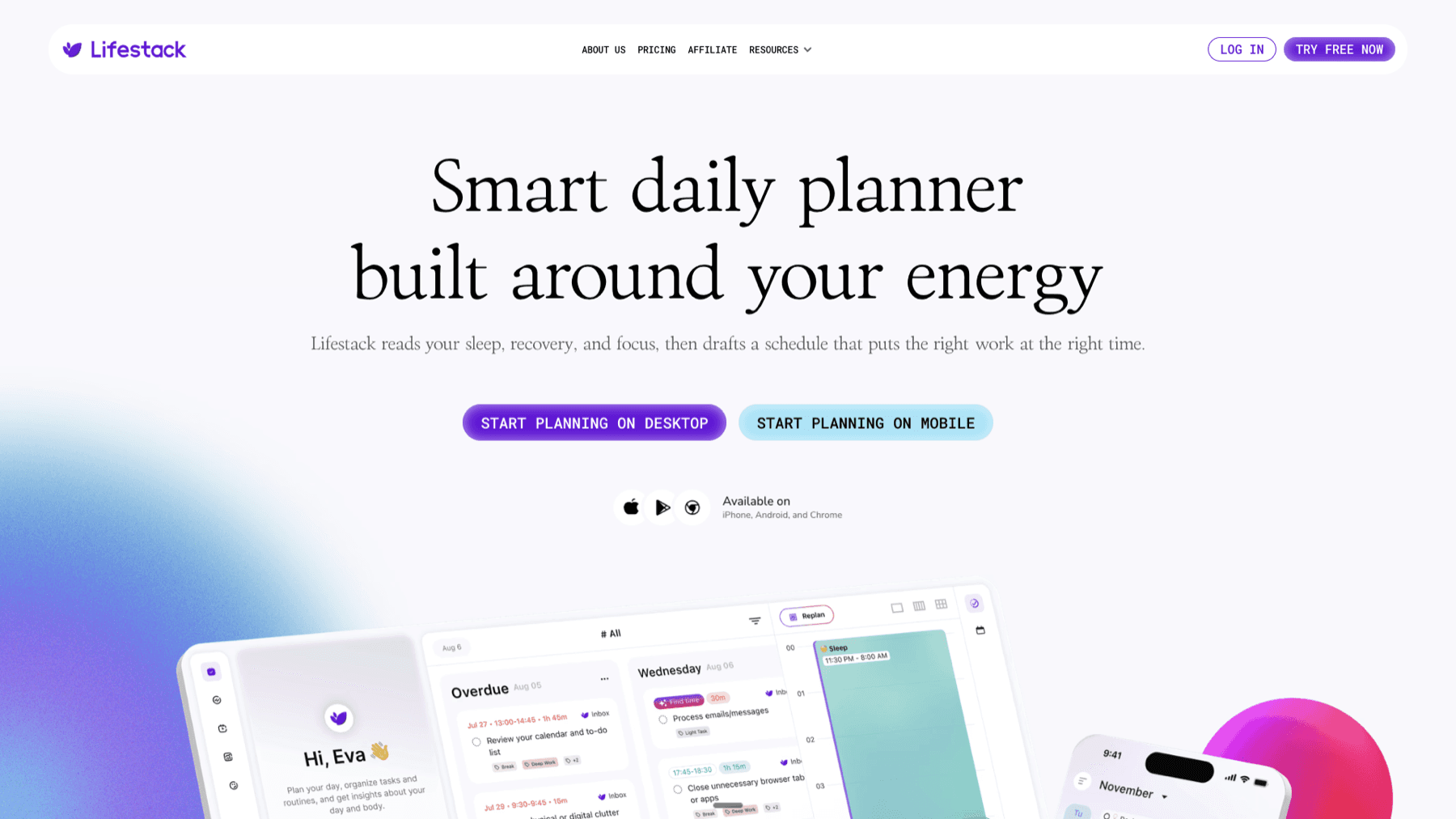
If the post-meal slump keeps derailing your afternoon productivity, the structural fix is scheduling around it rather than fighting it. Lifestack is designed for exactly this: it learns your energy patterns and automatically schedules demanding tasks in your peak hours, so you're not facing complex analytical work at 2 p.m. when your body wants to rest.
The result is a schedule that works with your biology instead of constantly fighting it. Your best work happens when your energy is highest, and the low-stakes tasks fill the afternoon dip. Learn more in the Lifestack introduction and see how it applies to managing low-energy periods more broadly. Lifestack costs $7/month or $50/year, with a 7-day free trial.
FAQ
Why do I fall asleep after eating even when I'm not tired?
The hormonal response to eating promotes drowsiness independent of how tired you already are. The early afternoon circadian dip compounds this. Even a well-rested person may feel a mild dip after a large lunch; the effect is amplified by meal size, composition, and pre-existing sleep debt.
Is it bad to feel sleepy after eating?
Mild post-meal drowsiness is normal. Extreme sleepiness that prevents functioning, or sleepiness after small meals, may be worth discussing with a doctor, as it can indicate conditions like reactive hypoglycemia, sleep apnea, or blood sugar dysregulation.
What foods make you sleepy after eating?
High glycemic index foods (white rice, white bread, sugary drinks, pastries) tend to produce the strongest post-meal crash due to the sharp blood sugar spike and subsequent drop. Large portions of any food amplify the effect. High-protein, high-fiber, lower-carb meals tend to produce the least post-meal drowsiness.
Does coffee help with post-meal sleepiness?
It can, temporarily. But caffeine taken after lunch stays in your system through bedtime for most people. Caffeine's half-life is roughly 5 to 7 hours, so a 2 p.m. coffee may still be affecting your sleep at 9 p.m. Using caffeine as a regular post-lunch fix can gradually deepen the sleep debt that's making the crash worse to begin with.
Should I nap after eating?
Short naps (10 to 20 minutes) taken in the early afternoon can be restorative without disrupting nighttime sleep. Longer naps or naps taken late in the afternoon interfere with sleep pressure and make it harder to fall asleep at night. If you nap, keep it brief and schedule it before 3 p.m.
You finish lunch, get back to your desk, and 20 minutes later you're fighting to keep your eyes open. It's one of the most common midday complaints, and most people chalk it up to the food itself. But the real picture is more interesting than that.
Post-meal drowsiness has several overlapping causes: digestive hormones, blood sugar dynamics, your circadian rhythm, and meal composition all play roles. Food doesn't put you to sleep; it interacts with systems that were already primed to reduce alertness in the early afternoon. Understanding how those systems work makes it much easier to change what happens after you eat.
Key Takeaways
Post-meal sleepiness is partly biological (circadian dip) and partly driven by meal size and composition
Large meals with high refined carbohydrate content produce the most pronounced drowsiness
Scheduling high-focus work before lunch and lower-stakes tasks afterward works with your biology rather than against it
The Circadian Rhythm Connection
The most underappreciated factor in post-meal drowsiness is that it would happen even if you skipped lunch. Your circadian rhythm produces two natural low-alertness windows every 24 hours: one in the early morning hours and one roughly between 1 and 4 p.m. Eating a meal in that window amplifies an effect that's already happening.
This is why many cultures developed an afternoon rest period independently of each other. The siesta isn't a cultural quirk; it's a response to something real in human biology. Circadian rhythm tracking apps can show you exactly when your alertness peaks and dips so you can plan your day around it rather than getting blindsided by the afternoon crash.
If your post-meal sleepiness feels extreme or hits at unusual times, a disrupted circadian rhythm may be contributing. Resetting your circadian rhythm through light exposure and sleep timing can shift when the dip hits and how severe it feels.
What Food Actually Does
Eating triggers a cascade of hormonal responses. Insulin rises to handle glucose, cholecystokinin (CCK) is released by the small intestine to signal satiety, and blood flow shifts toward the digestive system. All of these processes have knock-on effects that promote drowsiness.
Insulin can lower levels of orexin, a neurotransmitter that promotes wakefulness. CCK signals fatigue. Blood redistribution toward the gut reduces peripheral circulation slightly. None of these effects is dramatic on its own, but together they add meaningfully to the dip that's already being produced by your circadian rhythm.
Meal composition matters significantly here. A large meal with a lot of refined carbohydrates (white bread, pasta, rice, sugary drinks) produces a sharper insulin spike, which amplifies the drowsiness effect. A smaller meal with protein, fiber, and fat produces a gentler response with less of a drop afterward.
The Blood Sugar Role
Refined carbohydrates cause blood sugar to rise quickly and then fall, and the falling phase is where people often feel the worst. The drop in blood glucose after a carb-heavy meal is interpreted by the brain as low fuel, which produces fatigue and reduced motivation even when you've eaten plenty of calories overall.
This cycle is different from the circadian effect and responds more directly to what you eat. Swapping refined carbs for complex ones (whole grains, legumes, vegetables) slows the absorption curve, produces a flatter blood sugar response, and significantly reduces the crash. Protein at lunch also helps because it promotes serotonin and tyrosine balance in ways that support more stable alertness.
Sleep's effect on energy levels is also relevant here: people carrying sleep debt are more sensitive to blood sugar swings, which means the post-meal crash hits harder when you're already tired.
Tryptophan and the Sleep Connection
You've probably heard that turkey makes you sleepy because of tryptophan. The tryptophan story is real but commonly misapplied. Tryptophan is a precursor to serotonin and melatonin, both of which promote sleep and calm. It's present in many protein sources, not just turkey.
The mechanism that makes tryptophan more active at lunch isn't just about how much you eat. Carbohydrates trigger insulin, which clears competing amino acids from the bloodstream. That leaves tryptophan with less competition crossing the blood-brain barrier, so more of it gets into the brain and more serotonin gets produced. The carbohydrate does the work; the tryptophan in the protein provides the raw material.
This is one reason high-protein, moderate-carb lunches tend to produce less sleepiness than high-carb lunches. The tryptophan is still present, but without the carbohydrate-driven insulin spike, less of it crosses into the brain in the afternoon window.
Practical Ways to Reduce Post-Meal Sleepiness
Eat smaller lunches. Large meals require more digestive resources and produce stronger hormonal responses. You don't need to eat less overall; distributing food across more meals or adding a mid-morning snack reduces the size of the midday meal and its associated crash.
Reduce refined carbs at lunch. This doesn't require an extreme diet change. Swapping white bread for a whole grain option, skipping the sugary drink, or adding more vegetables and protein to a typical lunch produces a noticeably different afternoon. Meal composition matters more than calorie count for afternoon energy.
Schedule around the dip rather than against it. If the early afternoon is inevitably lower energy, put tasks there that are lighter and more routine. Save creative and analytical work for the morning. Energy-based calendar planning structures your day around this explicitly, and it pays off more than trying to caffeinate through the crash.
Get outside briefly after eating. Even a 10-minute walk after lunch increases blood glucose clearance, gives your body a chance to use the energy it just ingested, and provides the kind of light exposure and movement that promotes afternoon alertness. It also happens to be one of the simplest and most consistently effective midday energy interventions.
When Should You Be Concerned?
For most people, some degree of post-meal sleepiness is normal. But when it's extreme, when you feel genuinely unable to function after eating or frequently need to sleep right after meals, it can indicate something worth looking into.
Conditions associated with more pronounced post-meal fatigue include reactive hypoglycemia (blood sugar drops more steeply than normal after eating), sleep apnea (which compounds any mild drowsiness signal into a severe one), type 2 diabetes or insulin resistance, and certain thyroid conditions. If the sleepiness is severe enough to interfere with daily function or accompanied by other symptoms, a doctor is the right next step.
Chronic sleep deprivation amplifies post-meal drowsiness in most people. If you're consistently short on sleep, the same lunch that produces a mild dip on an eight-hour night may produce a much harder crash on six hours. Addressing the sleep side first often reduces the post-meal problem considerably. Whether 8 hours is actually enough depends on the individual, but most people do better than they think on the right amount of good sleep.
Best Tool for Managing Post-Meal Energy
If the post-meal slump keeps derailing your afternoon productivity, the structural fix is scheduling around it rather than fighting it. Lifestack is designed for exactly this: it learns your energy patterns and automatically schedules demanding tasks in your peak hours, so you're not facing complex analytical work at 2 p.m. when your body wants to rest.
The result is a schedule that works with your biology instead of constantly fighting it. Your best work happens when your energy is highest, and the low-stakes tasks fill the afternoon dip. Learn more in the Lifestack introduction and see how it applies to managing low-energy periods more broadly. Lifestack costs $7/month or $50/year, with a 7-day free trial.
FAQ
Why do I fall asleep after eating even when I'm not tired?
The hormonal response to eating promotes drowsiness independent of how tired you already are. The early afternoon circadian dip compounds this. Even a well-rested person may feel a mild dip after a large lunch; the effect is amplified by meal size, composition, and pre-existing sleep debt.
Is it bad to feel sleepy after eating?
Mild post-meal drowsiness is normal. Extreme sleepiness that prevents functioning, or sleepiness after small meals, may be worth discussing with a doctor, as it can indicate conditions like reactive hypoglycemia, sleep apnea, or blood sugar dysregulation.
What foods make you sleepy after eating?
High glycemic index foods (white rice, white bread, sugary drinks, pastries) tend to produce the strongest post-meal crash due to the sharp blood sugar spike and subsequent drop. Large portions of any food amplify the effect. High-protein, high-fiber, lower-carb meals tend to produce the least post-meal drowsiness.
Does coffee help with post-meal sleepiness?
It can, temporarily. But caffeine taken after lunch stays in your system through bedtime for most people. Caffeine's half-life is roughly 5 to 7 hours, so a 2 p.m. coffee may still be affecting your sleep at 9 p.m. Using caffeine as a regular post-lunch fix can gradually deepen the sleep debt that's making the crash worse to begin with.
Should I nap after eating?
Short naps (10 to 20 minutes) taken in the early afternoon can be restorative without disrupting nighttime sleep. Longer naps or naps taken late in the afternoon interfere with sleep pressure and make it harder to fall asleep at night. If you nap, keep it brief and schedule it before 3 p.m.



FOLLOW ON
FOLLOW ON
FOLLOW ON


Copyright 2026 © Lifestack. All rights reserved
Copyright 2026 © Lifestack. All rights reserved

