
Tips
Why Do I Get Sleepy When I Drive?
Why Do I Get Sleepy When I Drive?

You've just left the highway on-ramp with a full coffee. You're not particularly tired, or at least you weren't twenty minutes ago. And then, somewhere around mile thirty, your eyelids start to feel heavier. The road blurs slightly. You turn the radio up, open a window. Nothing really helps. Why does driving make you sleepy, even when you weren't sleepy before you got in the car?
The answer involves a few overlapping systems: vestibular signals from a moving vehicle that your brain reads as a cue to sleep, the monotony of sustained attention on a single task, circadian dips that align with common driving windows, and underlying sleep debt that the stillness of driving finally surfaces. Each of these is distinct, and they often stack.
Key Takeaways
Low-frequency vibrations from a moving vehicle actively trigger sleep-promoting signals in the brain, which is why you get sleepy driving even when you felt fine beforehand.
Sleep debt is the most common underlying cause. Driving often reveals fatigue that daily stimulation (movement, tasks, social interaction) was masking.
The afternoon circadian dip (roughly 1pm to 3pm) and early morning window (2am to 5am) are the highest-risk periods for drowsy driving.
The Vibration Effect: Why the Car Makes You Sleepy
A 2019 study from RMIT University found that low-frequency vibrations produced by a moving car at highway speeds actively stimulate sleepiness. The vibrations fall in the range of 0.5 to 2Hz, which is the same frequency range that rocks a baby to sleep. The body reads these vibrations through the vestibular system and interprets them as a signal that it's time to reduce alertness.
In the study, participants' heart rate variability shifted toward parasympathetic dominance (rest mode) within 15 minutes of being in a vibrating vehicle. By 30 minutes, they showed measurable reductions in reaction time. This happens regardless of whether you're tired, and it's not something willpower easily overrides. The physical signal from the car is real and physiologically meaningful to your nervous system.
Sleep Debt: The Most Common Reason
For most people, getting sleepy while driving comes down to sleep debt. During a typical day, movement, task switching, social interaction, and light exposure all provide alerting signals that keep tiredness at bay. When you sit in a dim, vibrating car on a monotonous road, those signals disappear and the debt surfaces.
The CDC estimates that roughly 35% of American adults sleep fewer than 7 hours per night. Driving in that state means you're one set of missing alerting signals away from experiencing the fatigue you've been carrying. See our guide on how to calculate your sleep debt to understand how it accumulates. The fix isn't to drink more coffee before the drive. It's to lower the debt before you get behind the wheel.
Circadian Rhythm Dips and When You Drive
Your body has two natural windows of peak sleepiness each day. The first and most dangerous is between 2am and 5am, when your core body temperature is at its lowest and sleep pressure is highest. The second is the early-to-mid afternoon, roughly 1pm to 3pm, a dip that is built into human circadian biology regardless of whether you eat lunch or not.
Most drowsy driving accidents happen during these two windows, according to data from the National Highway Traffic Safety Administration. If you regularly drive during either of those periods, you're fighting your own biology. Understanding your circadian rhythm and scheduling drives outside your personal low points is one of the highest-impact adjustments you can make. Your chronotype also matters: night owls are at significantly higher risk for morning drives, and early birds for late-night ones.
Why You Feel Sleepy Even When You Don't Feel Tired
Monotony suppresses alertness even without underlying fatigue. Sustained attention on a single, unchanging stimulus, which is essentially what highway driving demands, reduces activity in the arousal centers of the brain over time. This is called vigilance decrement. You started the drive alert and engaged. Twenty minutes of identical sensory input later, your brain has reduced its arousal level because nothing new has happened.
This is distinct from sleep debt. It's a feature of how the brain allocates attention. The solution is to change the sensory input: a different podcast, a phone call (hands-free), a stop, or a route with more variation. These provide novelty, which activates alertness without requiring you to have slept more.
Warning Signs You're Too Drowsy to Drive
Drowsy driving is particularly dangerous because the subjective sense of impairment lags behind the actual impairment. By the time you feel dangerously tired, you've usually been impaired for some time. Warning signs to take seriously:
Frequent yawning or rubbing your eyes
Difficulty keeping your head up
Lane drifting or swerving
Missing a turn, sign, or exit you know well
Difficulty remembering the last few miles of road
Microsleeps (brief involuntary episodes of sleep that last one to thirty seconds) even without awareness
If you notice two or more of these, the appropriate response is to stop. A rest stop, a parking lot, anywhere to pull over and rest.
How to Stay Alert While Driving
The caffeine nap. Drink a coffee (or equivalent caffeine dose), then immediately take a 15-20 minute nap. Caffeine takes about 20-30 minutes to absorb, so you wake from the nap just as the caffeine is taking effect. It's more effective than either alone. See our guide to the caffeine nap for the full protocol.
Stop every two hours on long drives. Get out of the car, walk for five minutes. Physical movement resets the alerting signals that the monotony of driving suppresses. The break doesn't need to be long to have an effect.
Avoid driving during your circadian dip. If you can control when you drive, avoid the 1pm to 3pm and 2am to 5am windows. The afternoon slump is predictable and largely independent of sleep quality.
Keep the car cool. Warmth promotes sleep. A slightly cool interior (around 65-68F) provides a continuous alerting signal. This is the same principle as keeping your sleep environment cool for better rest.
Change the audio input. Talking on a hands-free call is more alerting than music alone because conversation requires active processing. An engaging podcast works similarly. Music you know by heart activates less cognitive processing than novel or complex audio.
Don't use open windows as a fix. Opening a window or turning the radio up provides momentary stimulation that fades within minutes. It treats a symptom, not the cause.
Lower your sleep debt before a long drive. For a drive that matters, the most effective preparation is adequate sleep the night before. That sounds obvious, but the research is consistent: no amount of caffeine or in-drive interventions substitutes for being genuinely rested at the start. See our guide to sleep hygiene practices to build the habits that make this reliable rather than aspirational.
Planning Your Day Around Your Energy State
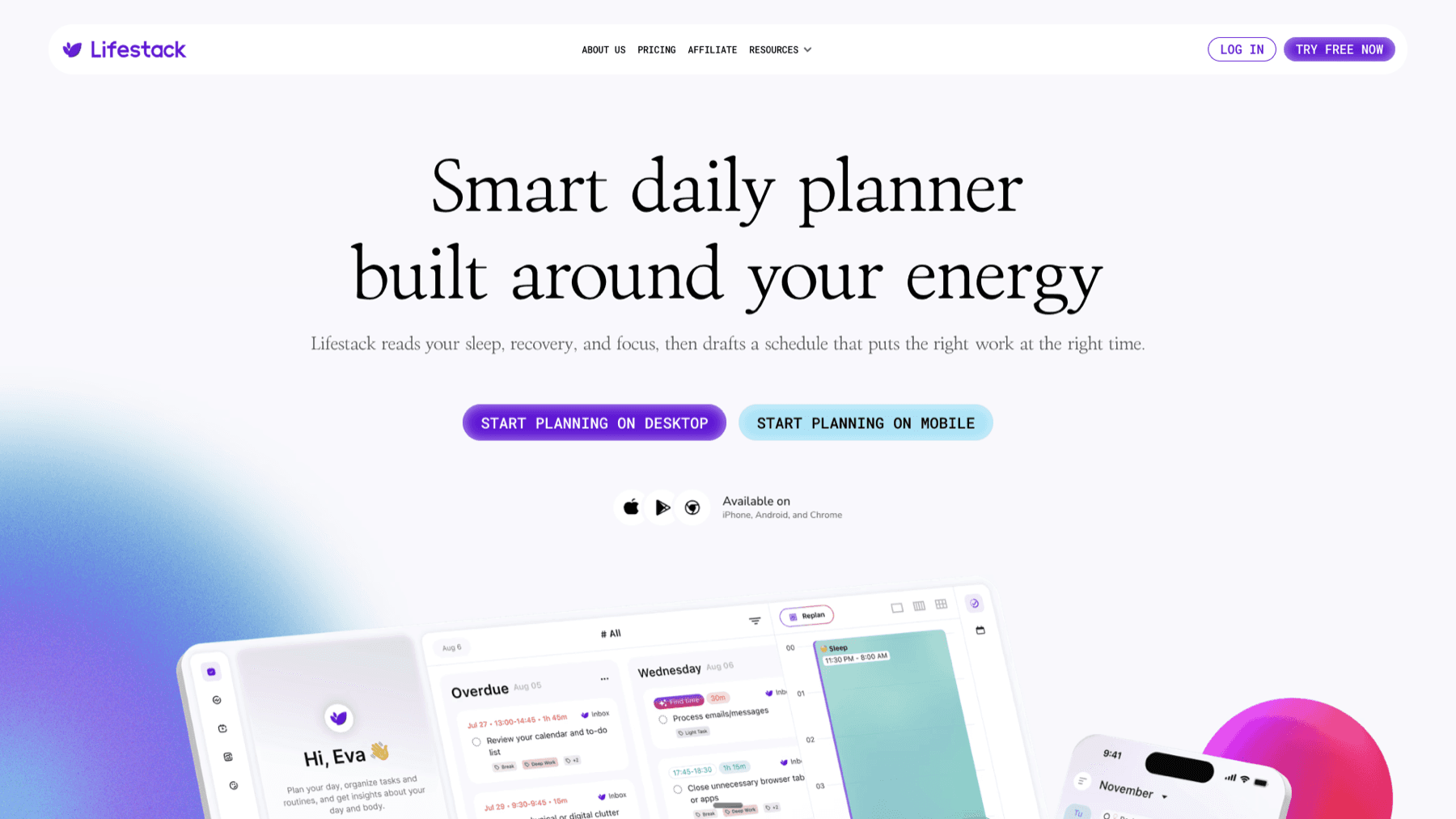
If you drive regularly for work, commuting, or long trips, your driving windows are part of your daily schedule. Lifestack is an AI scheduling app that reads your wearable data each morning (Oura, Whoop, Garmin, Apple Health, Fitbit) to understand your current energy and recovery state. When you've accumulated sleep debt or your HRV is suppressed, Lifestack adjusts your task plan for that day. This doesn't directly schedule your drives, but it gives you a daily energy picture you can use to decide when a long drive makes sense and when you'd be better off resting, delegating, or splitting the trip. Knowing you're at 60% readiness before a three-hour drive is actionable information in a way that general tiredness isn't. See how energy-based scheduling works for a deeper look at planning around your actual capacity. Lifestack is $10/month or $50/year.
Frequently Asked Questions
Why do I get sleepy when I drive but not when I'm at home?
Driving produces low-frequency vibrations (0.5-2Hz) that the vestibular system interprets as a sleep-promoting signal. At home, you also have more sensory variety, freedom to move, and typically more light. The car strips away the alerting stimuli and adds a physical sleep trigger.
Is getting sleepy while driving a sign of a sleep disorder?
Not necessarily. It's common even in well-rested people due to the vibration effect and vigilance decrement on monotonous roads. If you become dangerously sleepy on very short drives, fall asleep immediately when you stop, or have other signs of excessive daytime sleepiness, a sleep disorder like sleep apnea or narcolepsy is worth ruling out with a doctor.
How do I stop feeling sleepy while driving long distances?
The most effective strategies: a caffeine nap before you start, stopping every two hours, keeping the car cool, changing audio input, and driving during your natural high-energy windows. None of these is as effective as being well-rested to begin with.
Why do I only get sleepy on highways, not in city traffic?
City driving requires continuous, reactive attention: other cars, pedestrians, lights, turns. That novelty keeps your arousal level up. Highway driving is monotonous sustained attention on an unchanging scene. The vigilance decrement kicks in much faster when there's nothing new to process.
Can caffeine prevent drowsy driving?
Caffeine helps but has limits. It can reduce subjective sleepiness for two to four hours and modestly improve reaction time. It doesn't offset significant sleep debt. At some threshold of deprivation, caffeine can no longer maintain alertness adequately. It's a short-term bridge, not a replacement for sleep.
You've just left the highway on-ramp with a full coffee. You're not particularly tired, or at least you weren't twenty minutes ago. And then, somewhere around mile thirty, your eyelids start to feel heavier. The road blurs slightly. You turn the radio up, open a window. Nothing really helps. Why does driving make you sleepy, even when you weren't sleepy before you got in the car?
The answer involves a few overlapping systems: vestibular signals from a moving vehicle that your brain reads as a cue to sleep, the monotony of sustained attention on a single task, circadian dips that align with common driving windows, and underlying sleep debt that the stillness of driving finally surfaces. Each of these is distinct, and they often stack.
Key Takeaways
Low-frequency vibrations from a moving vehicle actively trigger sleep-promoting signals in the brain, which is why you get sleepy driving even when you felt fine beforehand.
Sleep debt is the most common underlying cause. Driving often reveals fatigue that daily stimulation (movement, tasks, social interaction) was masking.
The afternoon circadian dip (roughly 1pm to 3pm) and early morning window (2am to 5am) are the highest-risk periods for drowsy driving.
The Vibration Effect: Why the Car Makes You Sleepy
A 2019 study from RMIT University found that low-frequency vibrations produced by a moving car at highway speeds actively stimulate sleepiness. The vibrations fall in the range of 0.5 to 2Hz, which is the same frequency range that rocks a baby to sleep. The body reads these vibrations through the vestibular system and interprets them as a signal that it's time to reduce alertness.
In the study, participants' heart rate variability shifted toward parasympathetic dominance (rest mode) within 15 minutes of being in a vibrating vehicle. By 30 minutes, they showed measurable reductions in reaction time. This happens regardless of whether you're tired, and it's not something willpower easily overrides. The physical signal from the car is real and physiologically meaningful to your nervous system.
Sleep Debt: The Most Common Reason
For most people, getting sleepy while driving comes down to sleep debt. During a typical day, movement, task switching, social interaction, and light exposure all provide alerting signals that keep tiredness at bay. When you sit in a dim, vibrating car on a monotonous road, those signals disappear and the debt surfaces.
The CDC estimates that roughly 35% of American adults sleep fewer than 7 hours per night. Driving in that state means you're one set of missing alerting signals away from experiencing the fatigue you've been carrying. See our guide on how to calculate your sleep debt to understand how it accumulates. The fix isn't to drink more coffee before the drive. It's to lower the debt before you get behind the wheel.
Circadian Rhythm Dips and When You Drive
Your body has two natural windows of peak sleepiness each day. The first and most dangerous is between 2am and 5am, when your core body temperature is at its lowest and sleep pressure is highest. The second is the early-to-mid afternoon, roughly 1pm to 3pm, a dip that is built into human circadian biology regardless of whether you eat lunch or not.
Most drowsy driving accidents happen during these two windows, according to data from the National Highway Traffic Safety Administration. If you regularly drive during either of those periods, you're fighting your own biology. Understanding your circadian rhythm and scheduling drives outside your personal low points is one of the highest-impact adjustments you can make. Your chronotype also matters: night owls are at significantly higher risk for morning drives, and early birds for late-night ones.
Why You Feel Sleepy Even When You Don't Feel Tired
Monotony suppresses alertness even without underlying fatigue. Sustained attention on a single, unchanging stimulus, which is essentially what highway driving demands, reduces activity in the arousal centers of the brain over time. This is called vigilance decrement. You started the drive alert and engaged. Twenty minutes of identical sensory input later, your brain has reduced its arousal level because nothing new has happened.
This is distinct from sleep debt. It's a feature of how the brain allocates attention. The solution is to change the sensory input: a different podcast, a phone call (hands-free), a stop, or a route with more variation. These provide novelty, which activates alertness without requiring you to have slept more.
Warning Signs You're Too Drowsy to Drive
Drowsy driving is particularly dangerous because the subjective sense of impairment lags behind the actual impairment. By the time you feel dangerously tired, you've usually been impaired for some time. Warning signs to take seriously:
Frequent yawning or rubbing your eyes
Difficulty keeping your head up
Lane drifting or swerving
Missing a turn, sign, or exit you know well
Difficulty remembering the last few miles of road
Microsleeps (brief involuntary episodes of sleep that last one to thirty seconds) even without awareness
If you notice two or more of these, the appropriate response is to stop. A rest stop, a parking lot, anywhere to pull over and rest.
How to Stay Alert While Driving
The caffeine nap. Drink a coffee (or equivalent caffeine dose), then immediately take a 15-20 minute nap. Caffeine takes about 20-30 minutes to absorb, so you wake from the nap just as the caffeine is taking effect. It's more effective than either alone. See our guide to the caffeine nap for the full protocol.
Stop every two hours on long drives. Get out of the car, walk for five minutes. Physical movement resets the alerting signals that the monotony of driving suppresses. The break doesn't need to be long to have an effect.
Avoid driving during your circadian dip. If you can control when you drive, avoid the 1pm to 3pm and 2am to 5am windows. The afternoon slump is predictable and largely independent of sleep quality.
Keep the car cool. Warmth promotes sleep. A slightly cool interior (around 65-68F) provides a continuous alerting signal. This is the same principle as keeping your sleep environment cool for better rest.
Change the audio input. Talking on a hands-free call is more alerting than music alone because conversation requires active processing. An engaging podcast works similarly. Music you know by heart activates less cognitive processing than novel or complex audio.
Don't use open windows as a fix. Opening a window or turning the radio up provides momentary stimulation that fades within minutes. It treats a symptom, not the cause.
Lower your sleep debt before a long drive. For a drive that matters, the most effective preparation is adequate sleep the night before. That sounds obvious, but the research is consistent: no amount of caffeine or in-drive interventions substitutes for being genuinely rested at the start. See our guide to sleep hygiene practices to build the habits that make this reliable rather than aspirational.
Planning Your Day Around Your Energy State
If you drive regularly for work, commuting, or long trips, your driving windows are part of your daily schedule. Lifestack is an AI scheduling app that reads your wearable data each morning (Oura, Whoop, Garmin, Apple Health, Fitbit) to understand your current energy and recovery state. When you've accumulated sleep debt or your HRV is suppressed, Lifestack adjusts your task plan for that day. This doesn't directly schedule your drives, but it gives you a daily energy picture you can use to decide when a long drive makes sense and when you'd be better off resting, delegating, or splitting the trip. Knowing you're at 60% readiness before a three-hour drive is actionable information in a way that general tiredness isn't. See how energy-based scheduling works for a deeper look at planning around your actual capacity. Lifestack is $10/month or $50/year.
Frequently Asked Questions
Why do I get sleepy when I drive but not when I'm at home?
Driving produces low-frequency vibrations (0.5-2Hz) that the vestibular system interprets as a sleep-promoting signal. At home, you also have more sensory variety, freedom to move, and typically more light. The car strips away the alerting stimuli and adds a physical sleep trigger.
Is getting sleepy while driving a sign of a sleep disorder?
Not necessarily. It's common even in well-rested people due to the vibration effect and vigilance decrement on monotonous roads. If you become dangerously sleepy on very short drives, fall asleep immediately when you stop, or have other signs of excessive daytime sleepiness, a sleep disorder like sleep apnea or narcolepsy is worth ruling out with a doctor.
How do I stop feeling sleepy while driving long distances?
The most effective strategies: a caffeine nap before you start, stopping every two hours, keeping the car cool, changing audio input, and driving during your natural high-energy windows. None of these is as effective as being well-rested to begin with.
Why do I only get sleepy on highways, not in city traffic?
City driving requires continuous, reactive attention: other cars, pedestrians, lights, turns. That novelty keeps your arousal level up. Highway driving is monotonous sustained attention on an unchanging scene. The vigilance decrement kicks in much faster when there's nothing new to process.
Can caffeine prevent drowsy driving?
Caffeine helps but has limits. It can reduce subjective sleepiness for two to four hours and modestly improve reaction time. It doesn't offset significant sleep debt. At some threshold of deprivation, caffeine can no longer maintain alertness adequately. It's a short-term bridge, not a replacement for sleep.



FOLLOW ON
FOLLOW ON
FOLLOW ON


Copyright 2026 © Lifestack. All rights reserved
Copyright 2026 © Lifestack. All rights reserved

