
App
Best AI Health Apps That Analyze Your Data
Best AI Health Apps That Analyze Your Data

Your health generates more data than ever before. Your wearable tracks sleep stages, heart rate variability, and recovery scores. Your phone logs your steps, exercise, and nutrition. The problem is that raw data is not the same as useful information. The AI health apps in this list close that gap: they take the numbers your body produces and turn them into actionable guidance for your day.
The category has evolved considerably. Early fitness apps were glorified spreadsheets. Today's best AI health apps use machine learning to identify patterns across weeks of data, flag anomalies before they become problems, and give personalized recommendations that adjust as your data does.
We evaluated these five apps on how well they actually use your data, not just how much of it they collect. The best health data analysis is worthless if it sits in a dashboard you check once a week. The apps below turn data into decisions.
Key Takeaways
The best AI health apps do not just track data: they interpret it and recommend specific actions based on your personal patterns
Lifestack stands out by connecting health data to your actual daily schedule, not just a readiness score
Most of these apps work best in combination: a wearable for biometric data, a nutrition tracker for intake, and a planner that uses both
Quick Guide
1. Lifestack: best for using health data to plan your actual day
2. Oura Ring: best for sleep and readiness analytics
3. WHOOP: best for strain and recovery coaching
4. Cronometer: best for micronutrient and nutrition analysis
5. Noom: best for AI-driven behavioral wellness coaching
How We Evaluated
Depth of AI analysis: does it surface patterns or just display totals?
Actionability: does the data translate into something you can do today?
Personalization: does the app learn from your individual history or apply generic benchmarks?
Integration: does it connect with other health data sources you already use?
Pricing relative to value delivered
1. Lifestack
AI daily planner that builds your schedule around your health data

Lifestack does something the other apps on this list do not: it takes your health data and uses it to build your actual daily schedule. Connect your Oura Ring, Apple Watch, WHOOP, or Garmin, and Lifestack reads your nightly sleep and recovery scores, then plans the next day's tasks around your real cognitive capacity.
On a high-recovery morning, it schedules demanding creative and analytical work in your peak window. On a low-recovery morning, it restructures the day so lighter tasks absorb the hours when your brain cannot perform at full capacity. This is energy-based planning driven by real biometric data, not a generic morning routine template.
Key Features: wearable integration (Oura, Apple Watch, WHOOP, Garmin), AI task scheduling by energy level, daily plan built from recovery data, iOS and Android apps, Chrome extension
What Works: the only app that turns health data into a working daily plan; wearable sync is automatic; scheduling adapts day-to-day as your recovery data changes
Limitations: requires a wearable for the health-data-driven features; currently focused on individual use rather than team scheduling
Pricing: $7/month or $50/year, with a 7-day free trial on the annual plan.
Best for: anyone who wants their health data to drive their work schedule, not just their fitness dashboard.
2. Oura Ring
Sleep and readiness analytics with one of the most accurate wearable sensors available
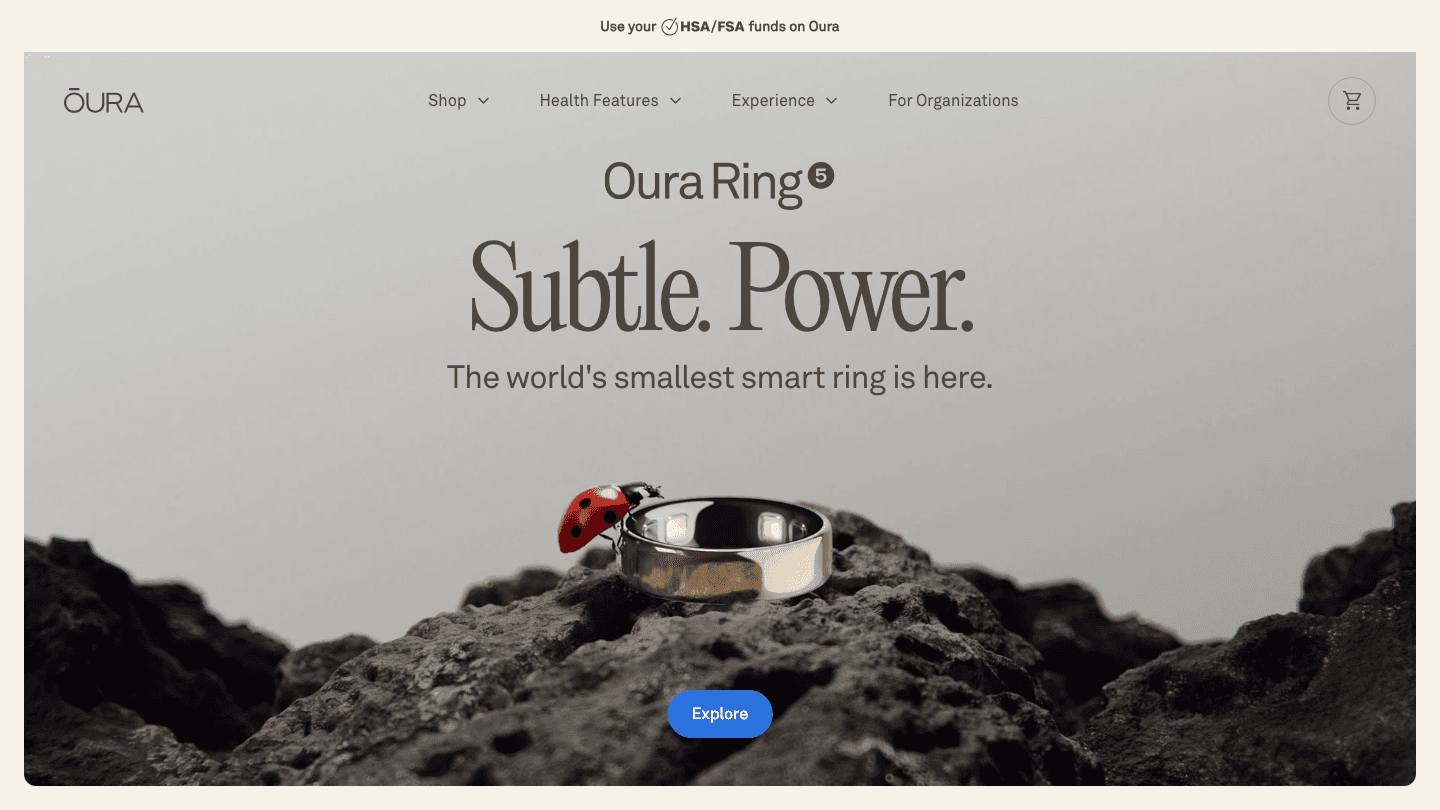
Oura Ring has built its reputation on the quality of its sleep data. The ring form factor puts sensors in continuous contact with your finger, producing more accurate heart rate and HRV readings than wrist-based wearables for most people. The AI layer analyzes this data overnight and produces a Readiness Score each morning that summarizes your recovery status across sleep, resting heart rate, HRV, body temperature, and recent activity balance.
The app's AI is strongest in pattern recognition over weeks. It can tell you when your HRV has been trending down across multiple days before you consciously feel run-down, flag unusually high resting heart rates that often precede illness, and show which specific sleep behaviors correlate with your highest-readiness mornings. See what to use with Oura for how to extend these insights into your daily planning.
What Works: ring sensor accuracy; longitudinal pattern analysis; body temperature trending for illness early warning
Limitations: the ring hardware is an additional cost; readiness score gives a number but limited daily scheduling guidance
Pricing: $5.99/month or $69.99/year (first month free). Oura Ring hardware sold separately.
Best for: people who want the highest-accuracy sleep and readiness data from a wearable.
3. WHOOP
Recovery and strain analytics with an AI coach for performance optimization
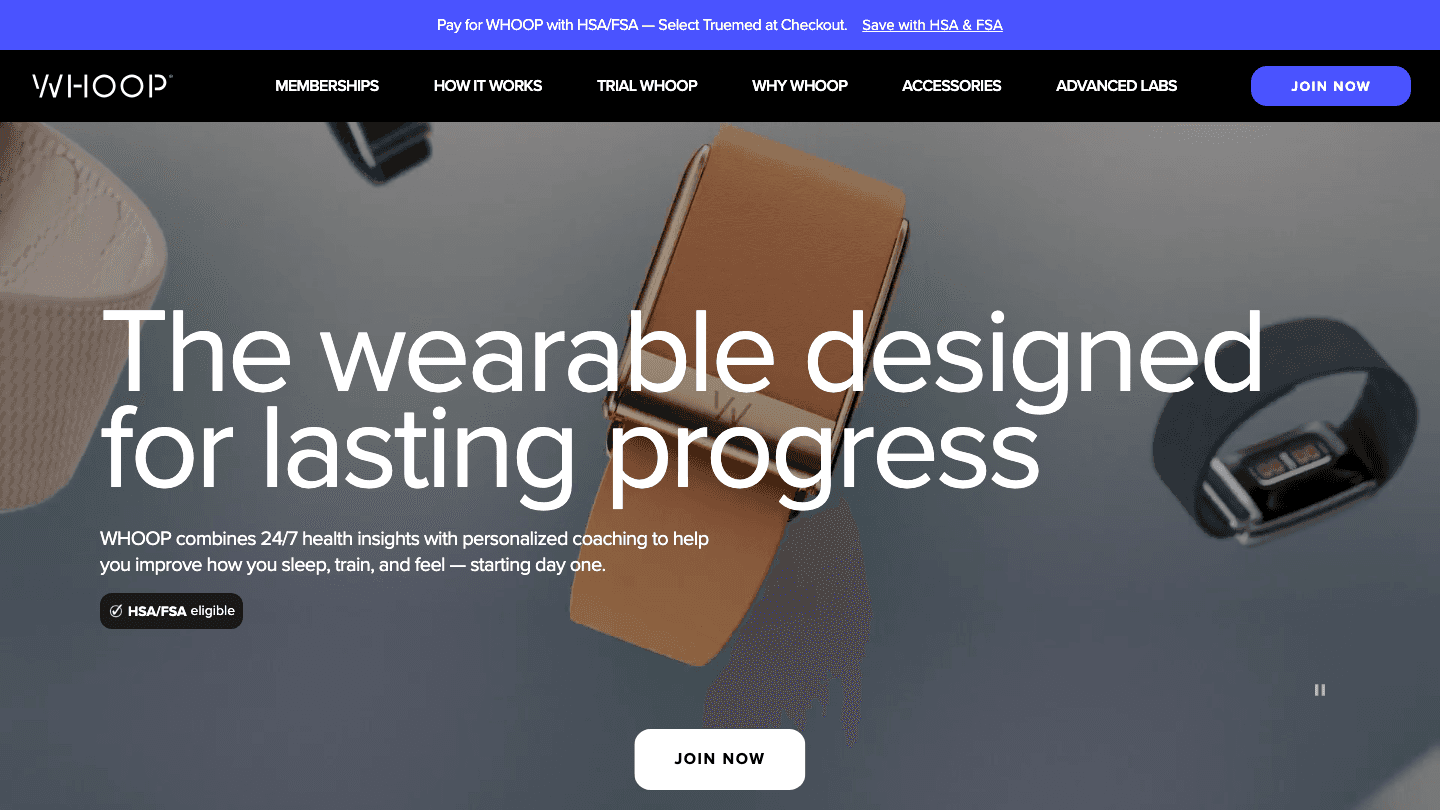
WHOOP takes a different angle: where Oura focuses on readiness, WHOOP focuses on the balance between strain and recovery. Every workout adds to your Strain Score; your recovery score each morning tells you how much capacity you have left before you risk overtraining. The AI layer produces personalized recommendations about whether to push or hold back on a given day based on this running balance.
WHOOP Coach is the app's conversational AI feature: it can answer questions about your data, explain why your recovery was low on a specific night, and give personalized recommendations based on your history. See apps that work with WHOOP for ways to integrate this data into your broader workflow.
What Works: strain-recovery balance tracking; WHOOP Coach conversational AI; strong for athletes and people with high-output training schedules
Limitations: subscription model includes the hardware, which means a recurring commitment; less useful for people who do not train regularly
Pricing: subscription-based with hardware included. Visit whoop.com for current membership pricing.
Best for: athletes and high-output individuals who want to optimize their training and recovery balance.
4. Cronometer
Micronutrient-level nutrition tracking with data-driven dietary analysis
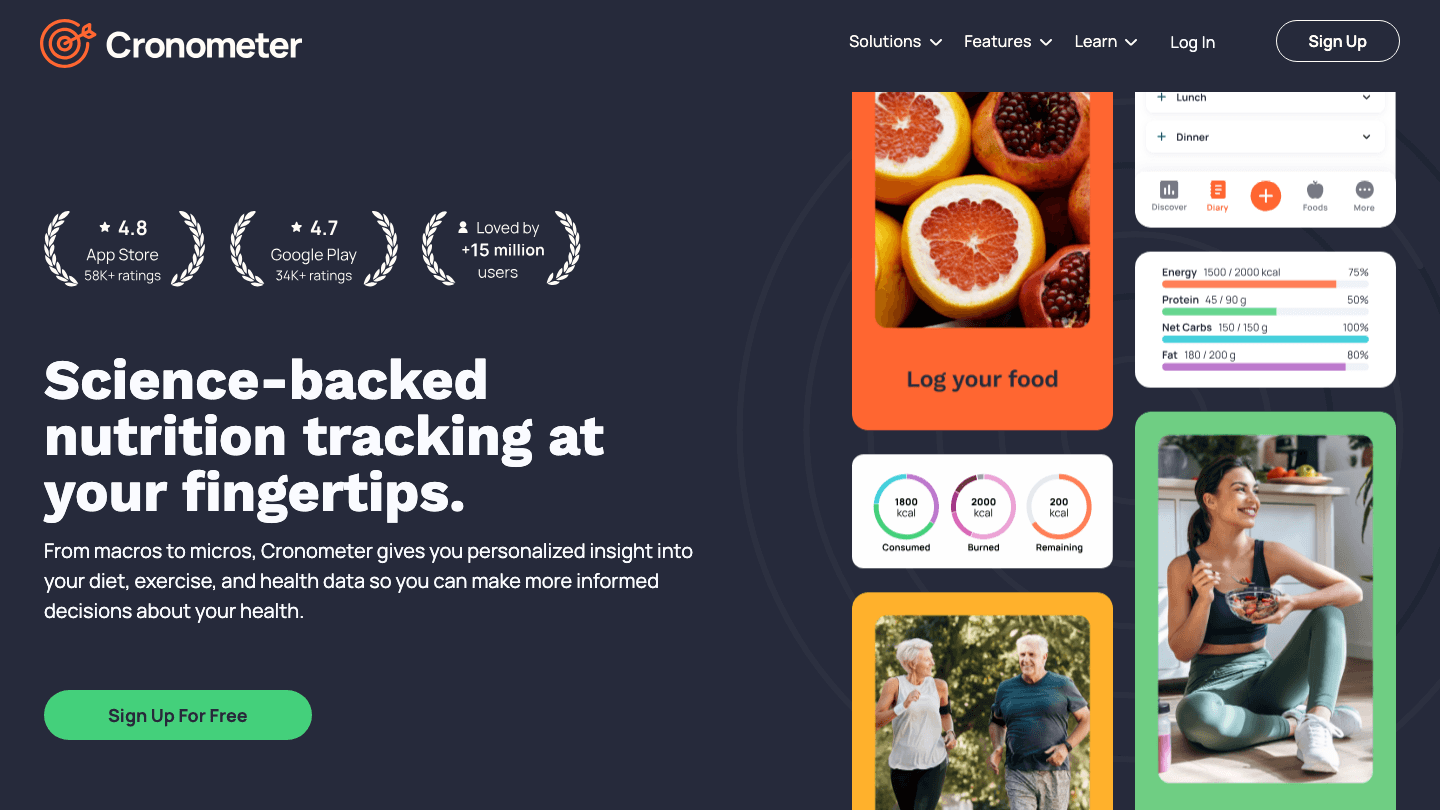
Cronometer goes deeper than most nutrition apps into micronutrient data. Where most calorie counters stop at macros, Cronometer tracks more than 80 nutrients including vitamins, minerals, and amino acids, and surfaces deficiencies that standard food logs miss entirely. The AI layer flags when your dietary pattern suggests consistent gaps in specific nutrients and gives recommendations based on your logged intake history.
The Oracle feature (Gold tier) uses AI to answer nutrition questions based on your personal data, giving personalized answers rather than generic dietary guidelines. For anyone trying to understand how their diet affects their recovery score or daily energy, the combination of detailed tracking and AI interpretation makes Cronometer one of the most analytically serious nutrition apps available.
What Works: micronutrient depth that most apps lack; Oracle AI for personalized nutrition questions; clean data visualization
Limitations: logging requires manual entry; the free tier is functional but the AI features require Gold
Pricing: free tier available. Gold plan at $4.99/month or $59.99/year.
Best for: people who want granular nutrition analysis beyond calorie and macro tracking.
5. Noom
AI-powered behavior change coaching for sustainable weight and wellness goals
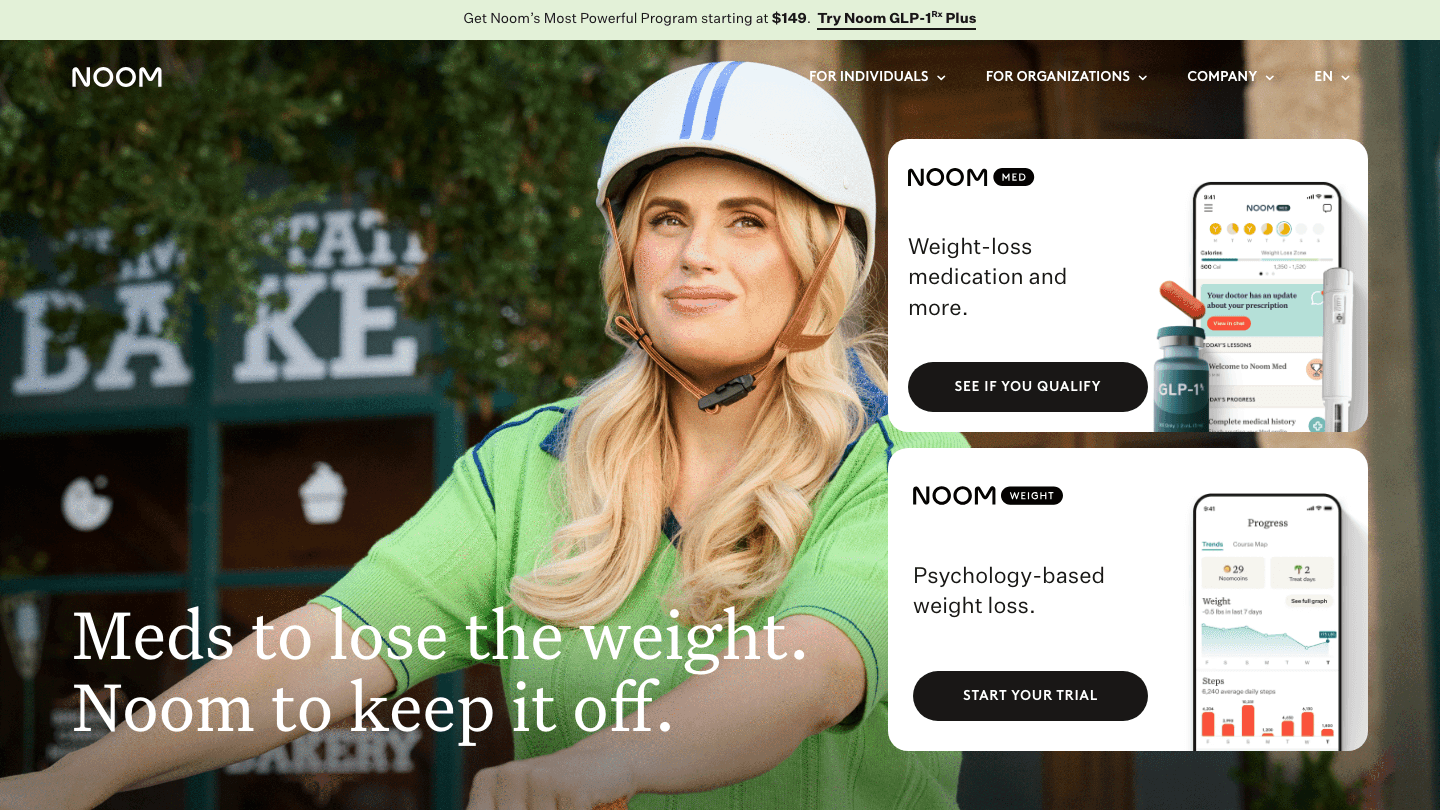
Noom takes a psychological approach to wellness rather than a purely metrics-driven one. It uses your logged food data, activity patterns, and questionnaire responses to identify the behavioral patterns that drive your habits, then delivers AI coaching designed to change those patterns rather than just tracking outcomes. The AI adapts the coaching curriculum based on what the data suggests is most relevant to your specific situation.
Where the other apps on this list focus primarily on biometric data, Noom focuses on behavior and mindset data. It is the most appropriate tool for someone whose primary wellness challenge is consistency and habit formation rather than biometric optimization.
What Works: psychology-based coaching that addresses root causes rather than just symptoms; adaptive AI curriculum; strong for people who have tried tracking apps and found them insufficient on their own
Limitations: more coaching-focused than data-analytics-focused; pricing is higher than most apps on this list
Pricing: from $17.42/month on the annual plan (billed at $209/year).
Best for: people who want behavior change coaching with AI personalization, not just data dashboards.
Which AI Health App Is Right for You?
You want health data to drive your daily work schedule: Lifestack
You want the most accurate sleep and readiness data: Oura Ring
You train hard and want to optimize strain vs. recovery: WHOOP
You want deep nutrition and micronutrient analysis: Cronometer
You want behavioral coaching that uses your data to change habits: Noom
You want to combine data sources for a complete picture: use Lifestack with Oura or WHOOP for planning, and Cronometer for nutrition tracking
FAQ
What are AI health apps?
AI health apps use machine learning to analyze health data, identify patterns, and deliver personalized recommendations. Unlike basic fitness trackers that display totals, AI health apps interpret your data in context: comparing today's metrics to your personal baseline, flagging trends before they become problems, and suggesting specific actions based on your history rather than generic benchmarks.
How do AI health apps use your data?
Most AI health apps collect data from wearable sensors (heart rate, HRV, sleep stages, temperature), manual inputs (food logs, mood, symptoms), and calendar or activity data. The AI layer analyzes this data to find correlations, detect anomalies, and produce personalized scores or recommendations. The best AI health apps connect those insights to actions you can take the same day.
Can AI health apps actually improve your health?
The evidence is mixed for passive use, but strong for active use. Apps that give you actionable daily guidance, and that you actually follow, do improve outcomes. Apps that sit in your library generating dashboards you occasionally review have less impact. The distinction is between apps that analyze your data for you versus apps that give you something specific to do with it.
Which AI health app is best for beginners?
Lifestack is a strong starting point because it has a clear daily output: a schedule. You do not need to interpret a dashboard or decide what the data means. The app does that and presents a concrete plan. For nutrition beginners, Cronometer's free tier provides detailed analysis without requiring a financial commitment upfront.
Do AI health apps work without a wearable?
Some do. Cronometer and Noom work entirely without wearable hardware. Lifestack, Oura, and WHOOP deliver their most useful features when paired with a wearable that provides continuous biometric data. If you do not have a wearable, Cronometer and Noom are the strongest standalone options. Lifestack also works with Apple Health data from an iPhone, which captures step count and basic activity even without a dedicated wearable.
Your health generates more data than ever before. Your wearable tracks sleep stages, heart rate variability, and recovery scores. Your phone logs your steps, exercise, and nutrition. The problem is that raw data is not the same as useful information. The AI health apps in this list close that gap: they take the numbers your body produces and turn them into actionable guidance for your day.
The category has evolved considerably. Early fitness apps were glorified spreadsheets. Today's best AI health apps use machine learning to identify patterns across weeks of data, flag anomalies before they become problems, and give personalized recommendations that adjust as your data does.
We evaluated these five apps on how well they actually use your data, not just how much of it they collect. The best health data analysis is worthless if it sits in a dashboard you check once a week. The apps below turn data into decisions.
Key Takeaways
The best AI health apps do not just track data: they interpret it and recommend specific actions based on your personal patterns
Lifestack stands out by connecting health data to your actual daily schedule, not just a readiness score
Most of these apps work best in combination: a wearable for biometric data, a nutrition tracker for intake, and a planner that uses both
Quick Guide
1. Lifestack: best for using health data to plan your actual day
2. Oura Ring: best for sleep and readiness analytics
3. WHOOP: best for strain and recovery coaching
4. Cronometer: best for micronutrient and nutrition analysis
5. Noom: best for AI-driven behavioral wellness coaching
How We Evaluated
Depth of AI analysis: does it surface patterns or just display totals?
Actionability: does the data translate into something you can do today?
Personalization: does the app learn from your individual history or apply generic benchmarks?
Integration: does it connect with other health data sources you already use?
Pricing relative to value delivered
1. Lifestack
AI daily planner that builds your schedule around your health data
Lifestack does something the other apps on this list do not: it takes your health data and uses it to build your actual daily schedule. Connect your Oura Ring, Apple Watch, WHOOP, or Garmin, and Lifestack reads your nightly sleep and recovery scores, then plans the next day's tasks around your real cognitive capacity.
On a high-recovery morning, it schedules demanding creative and analytical work in your peak window. On a low-recovery morning, it restructures the day so lighter tasks absorb the hours when your brain cannot perform at full capacity. This is energy-based planning driven by real biometric data, not a generic morning routine template.
Key Features: wearable integration (Oura, Apple Watch, WHOOP, Garmin), AI task scheduling by energy level, daily plan built from recovery data, iOS and Android apps, Chrome extension
What Works: the only app that turns health data into a working daily plan; wearable sync is automatic; scheduling adapts day-to-day as your recovery data changes
Limitations: requires a wearable for the health-data-driven features; currently focused on individual use rather than team scheduling
Pricing: $7/month or $50/year, with a 7-day free trial on the annual plan.
Best for: anyone who wants their health data to drive their work schedule, not just their fitness dashboard.
2. Oura Ring
Sleep and readiness analytics with one of the most accurate wearable sensors available
Oura Ring has built its reputation on the quality of its sleep data. The ring form factor puts sensors in continuous contact with your finger, producing more accurate heart rate and HRV readings than wrist-based wearables for most people. The AI layer analyzes this data overnight and produces a Readiness Score each morning that summarizes your recovery status across sleep, resting heart rate, HRV, body temperature, and recent activity balance.
The app's AI is strongest in pattern recognition over weeks. It can tell you when your HRV has been trending down across multiple days before you consciously feel run-down, flag unusually high resting heart rates that often precede illness, and show which specific sleep behaviors correlate with your highest-readiness mornings. See what to use with Oura for how to extend these insights into your daily planning.
What Works: ring sensor accuracy; longitudinal pattern analysis; body temperature trending for illness early warning
Limitations: the ring hardware is an additional cost; readiness score gives a number but limited daily scheduling guidance
Pricing: $5.99/month or $69.99/year (first month free). Oura Ring hardware sold separately.
Best for: people who want the highest-accuracy sleep and readiness data from a wearable.
3. WHOOP
Recovery and strain analytics with an AI coach for performance optimization
WHOOP takes a different angle: where Oura focuses on readiness, WHOOP focuses on the balance between strain and recovery. Every workout adds to your Strain Score; your recovery score each morning tells you how much capacity you have left before you risk overtraining. The AI layer produces personalized recommendations about whether to push or hold back on a given day based on this running balance.
WHOOP Coach is the app's conversational AI feature: it can answer questions about your data, explain why your recovery was low on a specific night, and give personalized recommendations based on your history. See apps that work with WHOOP for ways to integrate this data into your broader workflow.
What Works: strain-recovery balance tracking; WHOOP Coach conversational AI; strong for athletes and people with high-output training schedules
Limitations: subscription model includes the hardware, which means a recurring commitment; less useful for people who do not train regularly
Pricing: subscription-based with hardware included. Visit whoop.com for current membership pricing.
Best for: athletes and high-output individuals who want to optimize their training and recovery balance.
4. Cronometer
Micronutrient-level nutrition tracking with data-driven dietary analysis
Cronometer goes deeper than most nutrition apps into micronutrient data. Where most calorie counters stop at macros, Cronometer tracks more than 80 nutrients including vitamins, minerals, and amino acids, and surfaces deficiencies that standard food logs miss entirely. The AI layer flags when your dietary pattern suggests consistent gaps in specific nutrients and gives recommendations based on your logged intake history.
The Oracle feature (Gold tier) uses AI to answer nutrition questions based on your personal data, giving personalized answers rather than generic dietary guidelines. For anyone trying to understand how their diet affects their recovery score or daily energy, the combination of detailed tracking and AI interpretation makes Cronometer one of the most analytically serious nutrition apps available.
What Works: micronutrient depth that most apps lack; Oracle AI for personalized nutrition questions; clean data visualization
Limitations: logging requires manual entry; the free tier is functional but the AI features require Gold
Pricing: free tier available. Gold plan at $4.99/month or $59.99/year.
Best for: people who want granular nutrition analysis beyond calorie and macro tracking.
5. Noom
AI-powered behavior change coaching for sustainable weight and wellness goals
Noom takes a psychological approach to wellness rather than a purely metrics-driven one. It uses your logged food data, activity patterns, and questionnaire responses to identify the behavioral patterns that drive your habits, then delivers AI coaching designed to change those patterns rather than just tracking outcomes. The AI adapts the coaching curriculum based on what the data suggests is most relevant to your specific situation.
Where the other apps on this list focus primarily on biometric data, Noom focuses on behavior and mindset data. It is the most appropriate tool for someone whose primary wellness challenge is consistency and habit formation rather than biometric optimization.
What Works: psychology-based coaching that addresses root causes rather than just symptoms; adaptive AI curriculum; strong for people who have tried tracking apps and found them insufficient on their own
Limitations: more coaching-focused than data-analytics-focused; pricing is higher than most apps on this list
Pricing: from $17.42/month on the annual plan (billed at $209/year).
Best for: people who want behavior change coaching with AI personalization, not just data dashboards.
Which AI Health App Is Right for You?
You want health data to drive your daily work schedule: Lifestack
You want the most accurate sleep and readiness data: Oura Ring
You train hard and want to optimize strain vs. recovery: WHOOP
You want deep nutrition and micronutrient analysis: Cronometer
You want behavioral coaching that uses your data to change habits: Noom
You want to combine data sources for a complete picture: use Lifestack with Oura or WHOOP for planning, and Cronometer for nutrition tracking
FAQ
What are AI health apps?
AI health apps use machine learning to analyze health data, identify patterns, and deliver personalized recommendations. Unlike basic fitness trackers that display totals, AI health apps interpret your data in context: comparing today's metrics to your personal baseline, flagging trends before they become problems, and suggesting specific actions based on your history rather than generic benchmarks.
How do AI health apps use your data?
Most AI health apps collect data from wearable sensors (heart rate, HRV, sleep stages, temperature), manual inputs (food logs, mood, symptoms), and calendar or activity data. The AI layer analyzes this data to find correlations, detect anomalies, and produce personalized scores or recommendations. The best AI health apps connect those insights to actions you can take the same day.
Can AI health apps actually improve your health?
The evidence is mixed for passive use, but strong for active use. Apps that give you actionable daily guidance, and that you actually follow, do improve outcomes. Apps that sit in your library generating dashboards you occasionally review have less impact. The distinction is between apps that analyze your data for you versus apps that give you something specific to do with it.
Which AI health app is best for beginners?
Lifestack is a strong starting point because it has a clear daily output: a schedule. You do not need to interpret a dashboard or decide what the data means. The app does that and presents a concrete plan. For nutrition beginners, Cronometer's free tier provides detailed analysis without requiring a financial commitment upfront.
Do AI health apps work without a wearable?
Some do. Cronometer and Noom work entirely without wearable hardware. Lifestack, Oura, and WHOOP deliver their most useful features when paired with a wearable that provides continuous biometric data. If you do not have a wearable, Cronometer and Noom are the strongest standalone options. Lifestack also works with Apple Health data from an iPhone, which captures step count and basic activity even without a dedicated wearable.



FOLLOW ON
FOLLOW ON
FOLLOW ON


Copyright 2026 © Lifestack. All rights reserved
Copyright 2026 © Lifestack. All rights reserved

