
App
5 Best AI Health Apps to Optimize Your Wellness
5 Best AI Health Apps to Optimize Your Wellness

AI is changing what health apps can do. A few years ago, health apps tracked what happened. Today, the best ones tell you what it means and what to do about it. Your sleep data becomes a recovery recommendation. Your nutrition logs become meal suggestions. Your daily energy patterns become a work schedule built around when you're actually capable of hard thinking.
Not all apps marketed as AI health tools live up to the label. For this list, we focused on apps that use AI in a way that actually changes your behavior, not just ones that have a chatbot tacked onto a spreadsheet. Each pick covers a different domain: daily scheduling, recovery, fitness, nutrition, and weight management. Together they cover the major levers most people have control over when it comes to their wellbeing.
Prices verified June 2026.
Key Takeaways
The best AI health apps in 2026 don't just log data. They use it to make decisions, build schedules, and give recommendations that adapt to your actual patterns.
Lifestack leads this list because it bridges health data and productivity, turning your sleep and recovery signals into a smarter daily work schedule.
Oura and WHOOP are the strongest recovery-focused tools for understanding how your body is responding to stress, training, and sleep. MyFitnessPal and Noom cover the nutrition and behavior-change sides of the equation.
1. Lifestack
The AI daily planner that schedules your work around your health data.
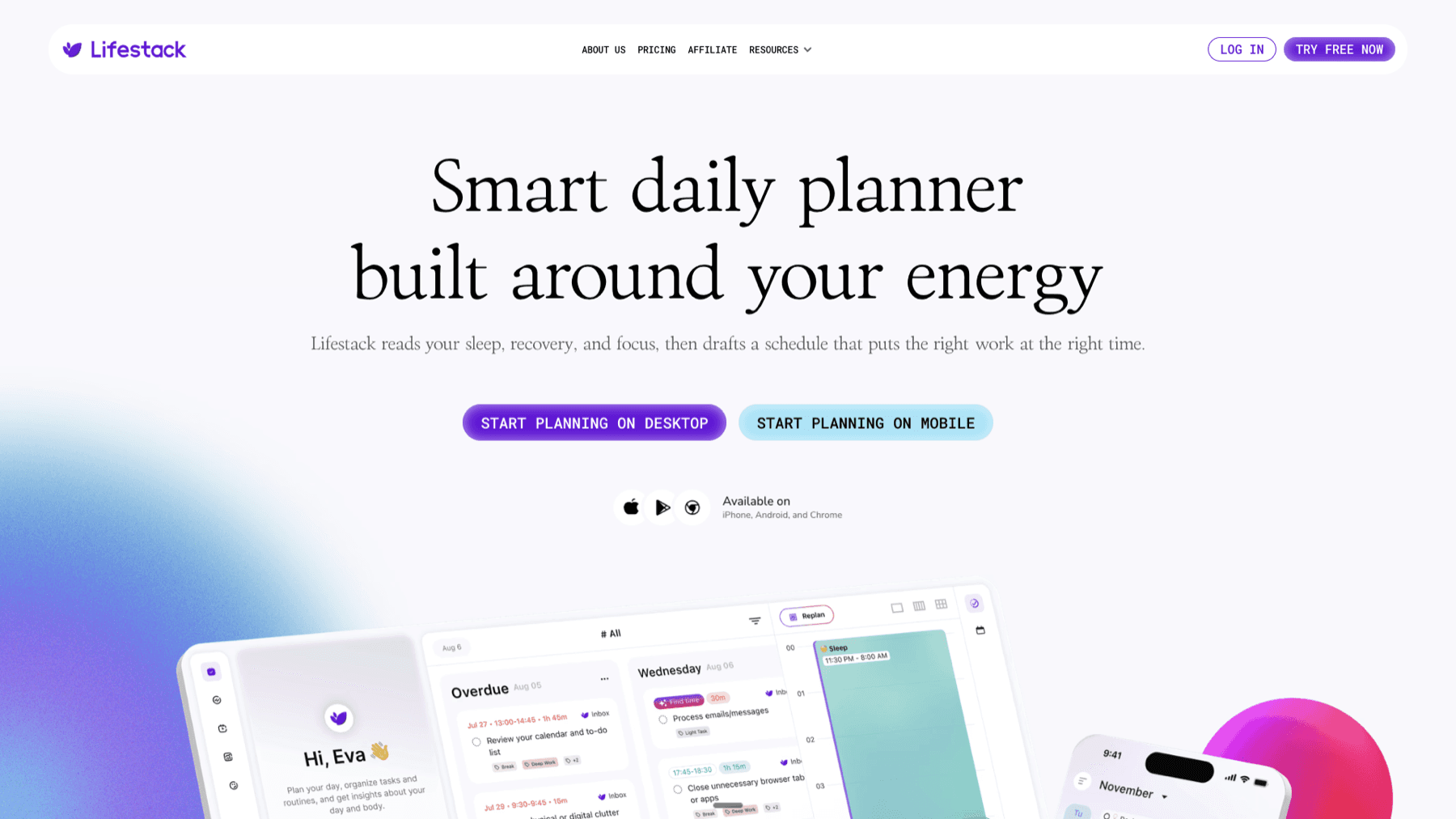
Most health apps end at the data. Lifestack starts there. It reads your sleep quality, recovery signals, and energy patterns, then builds a daily work schedule around what your body is actually capable of on any given day. When last night's sleep was poor and your recovery is low, Lifestack moves demanding cognitive work out of the afternoon and protects your morning for focused tasks. When you're well-rested and sharp, it front-loads the hard things.
The app connects to Google Calendar, Outlook, and Apple Calendar. It has iOS and Android apps plus a Chrome extension for desktop workers. The AI scheduling layer handles the daily decision that most people get wrong: matching the right work to the right time. See how this approach differs from traditional time-blocking in the guide to energy-based planning.
Key Features: AI auto-scheduling based on energy and sleep data, calendar integration (Google, Outlook, Apple), task management with priorities, Chrome extension, iOS and Android apps
What Works: Turns passive health data into active scheduling decisions; adjusts in real time when plans change or energy shifts unexpectedly
Limitations: Focused on scheduling and daily planning, not workout tracking or nutrition; health data comes from wearable integrations rather than direct hardware
Pricing: $7/month, $50/year (7-day free trial), or $120 one-time lifetime. See the full list of the best AI planner apps for alternatives.
Best for: Anyone using a wearable (Oura, WHOOP, Apple Watch, Garmin) who wants their health data to actually change how their work day is scheduled.
2. Oura Ring
The most accurate sleep and recovery tracker, with an AI readiness score that guides your daily effort.
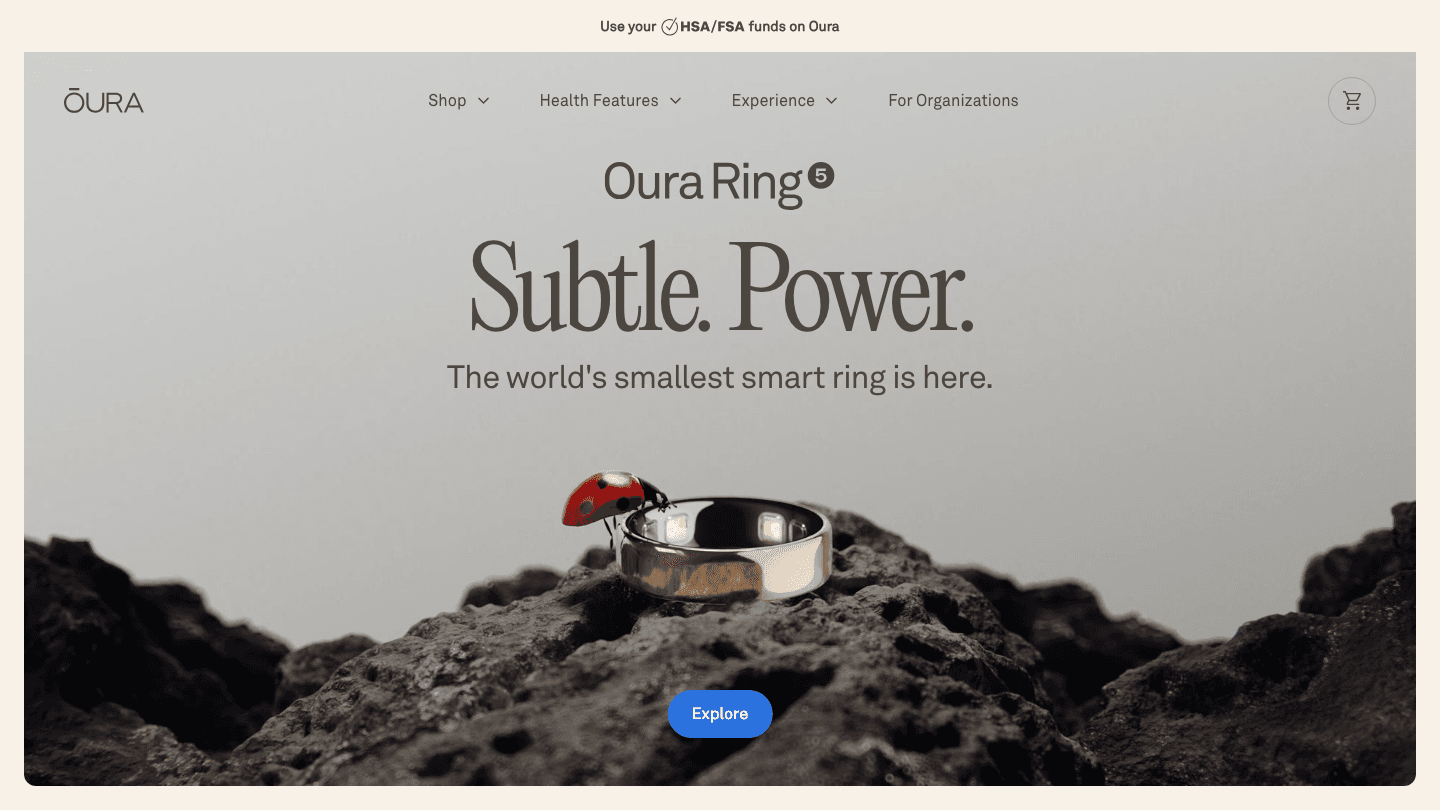
The Oura Ring tracks sleep stages, resting heart rate, heart rate variability, skin temperature, and activity across the day. Its AI Readiness Score synthesizes these signals into a single daily number that tells you how prepared your body is for stress or training. Unlike some wearables that give you data without interpretation, Oura's recommendations are specific: rest today, moderate effort is fine, or go ahead and push.
The fourth-generation ring is significantly smaller and more accurate than earlier versions, with better sleep stage detection and improved activity tracking. Oura's app handles data visualization well: trends over time show how lifestyle changes affect your recovery and sleep quality, which is where most of the behavior-change value lives. For a deeper look at pairing Oura with other tools, see the guide to the best apps to use with Oura Ring.
Key Features: Sleep stage tracking (REM, light, deep), Readiness Score, heart rate variability, skin temperature trends, menstrual cycle insights, activity tracking, Apple Health sync
What Works: Best-in-class sleep stage accuracy; Readiness Score is genuinely predictive; discreet ring form factor is more comfortable for nightly tracking than wrist-worn devices
Limitations: Requires a hardware purchase; membership is an additional ongoing cost; GPS tracking is via phone (the ring has no GPS)
Pricing: Ring hardware $299-$549 (one-time). Membership $5.99/month or $69.99/year. First month free for new members.
Best for: Anyone who wants the most complete picture of sleep and recovery quality, and wants that data to inform their energy decisions throughout the day. See also the guide to using Oura Ring for productivity.
3. WHOOP
The performance-focused recovery tracker with AI coaching for athletes and high-output professionals.
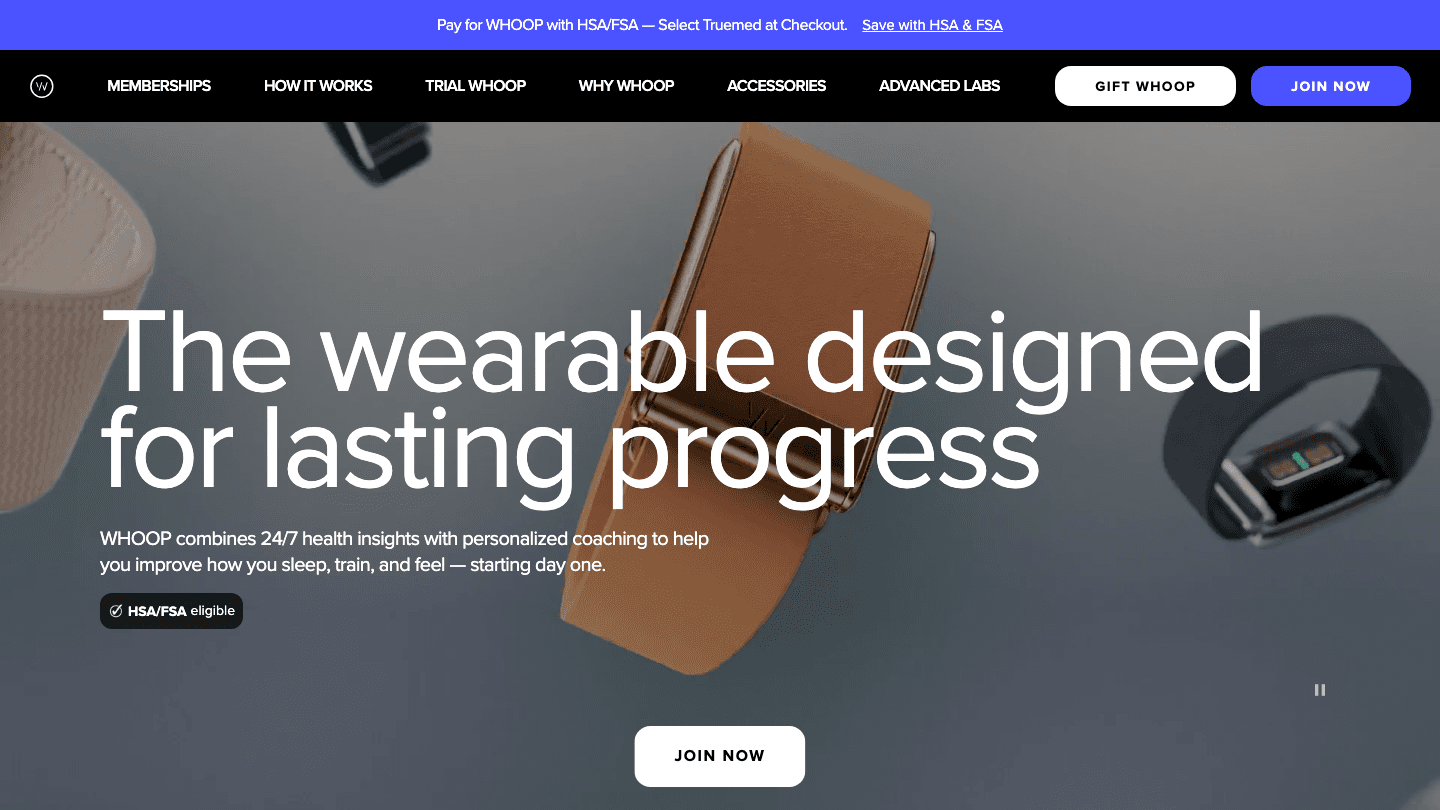
WHOOP takes a training-load approach to health monitoring. Rather than just tracking sleep and giving a readiness number, WHOOP calculates your daily Strain, measures your Recovery (as a percentage of your full capacity), and shows whether your training over recent weeks is building fitness or accumulating too much fatigue. The AI coaching layer uses these signals to recommend how hard to push on any given day.
The wristband includes no screen, which keeps it slim and forces all interaction through the app, where the data visualization is best-in-class. WHOOP's sleep coaching gives specific bedtime recommendations to meet your recovery targets, and the journal feature lets you log behaviors (alcohol, supplements, stress) and see their statistical effect on your recovery over time. For the best companion apps, see the guide to top WHOOP companion apps.
Key Features: Strain and Recovery scores, sleep performance tracking, AI behavior coaching, journal with statistical correlation, 24/7 heart rate and HRV monitoring, Apple Health sync
What Works: Best for athletes who want to understand training load and recovery. Journal correlations are genuinely useful for spotting what actually affects your sleep and recovery
Limitations: Subscription model with no screen means the hardware is less useful without the app. Primarily useful for people who train consistently
Pricing: Hardware included with membership. WHOOP One $199/year; WHOOP Peak $239/year; WHOOP Life $359/year.
Best for: Athletes, active professionals, and anyone who wants to understand the relationship between their training, sleep, and daily performance capacity.
4. MyFitnessPal
The most complete nutrition tracker, now with AI meal planning and personalized recommendations.
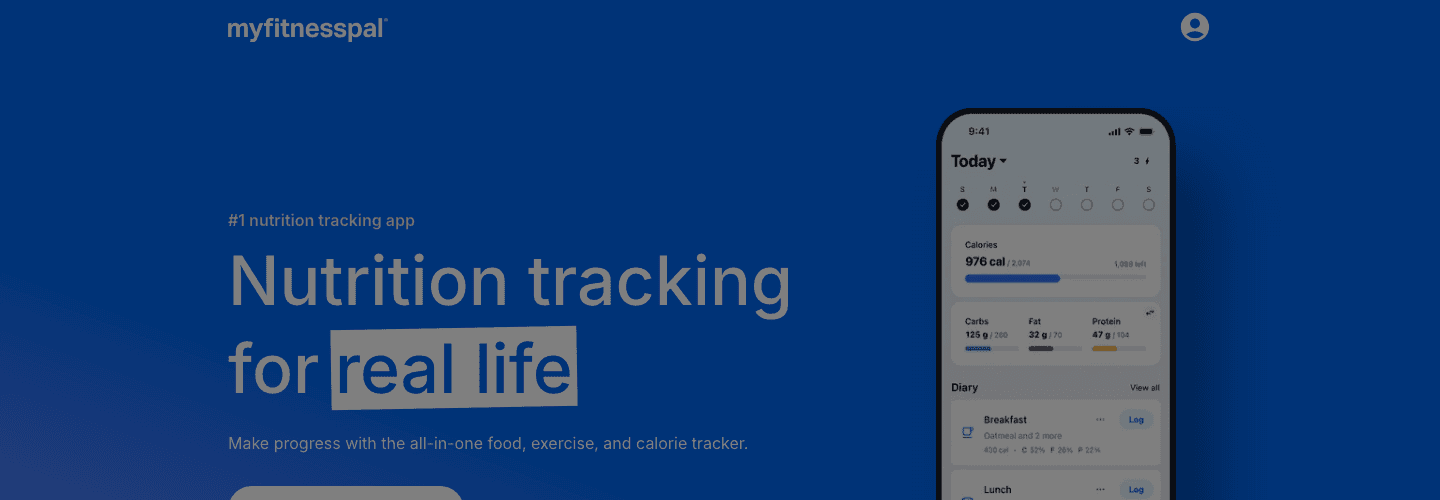
MyFitnessPal has added significant AI features to what was already the most complete food database in the category. The AI meal planning tool suggests meals based on your calorie and macro goals, previous food logs, and dietary preferences. The barcode scanner identifies packaged foods instantly. Restaurant entries cover most major chains.
The platform connects to Apple Health, Garmin, Fitbit, and most major wearables to sync calorie burn and activity data, giving you a complete picture of energy in versus energy out. For users tracking macros alongside recovery data from Oura or WHOOP, the integration creates a feedback loop between nutrition and recovery quality. See the full guide to getting more from MyFitnessPal for integration ideas.
Key Features: 14 million+ food database, AI meal planning, barcode scanner, macro and micronutrient tracking, wearable integrations (Apple Health, Garmin, Fitbit), recipe importing, restaurant database
What Works: Best food database available; AI meal suggestions are useful for people who struggle with meal variety; wearable integrations are reliable
Limitations: Premium features are expensive; free tier has become more limited in recent updates; some AI features are still maturing
Pricing: Free (core tracking); Premium $9.99/month or $79.99/year.
Best for: Anyone focused on nutrition tracking, macro management, or understanding the relationship between what they eat and how they feel and perform.
5. Noom
AI-powered behavior-change coaching for long-term weight and health management.
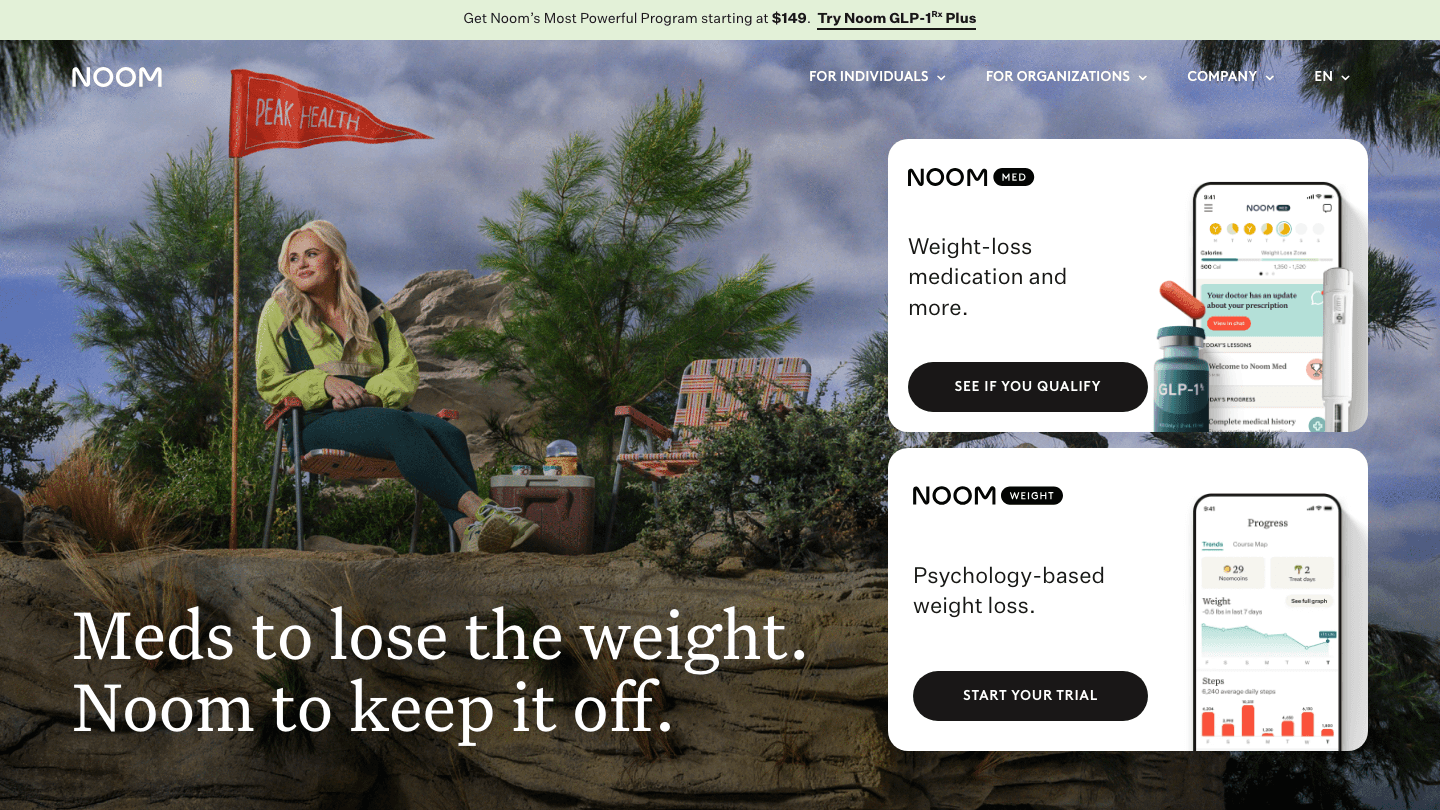
Noom is different from the other apps on this list because its primary AI layer is behavioral, not biometric. Rather than tracking your physiology, it focuses on understanding and changing the psychological patterns behind eating behavior. Daily lessons, habit tracking, a human health coach, and an AI coach work together to address the reasons people gain weight, not just the calories.
The food logging system uses a color-coding approach (green, yellow, orange foods) rather than strict calorie limits, which reduces the cognitive burden of tracking without abandoning structure. Noom's AI personalizes your daily lessons based on your progress and identifies patterns in your logs that suggest specific behavioral tendencies. For people who have tried calorie-counting alone and found it unsustainable, the psychology-first approach is meaningfully different.
Key Features: AI behavior coaching, daily psychology-based lessons, color-coded food database, human health coach access, habit and mood tracking, goal specialist support
What Works: The behavioral focus addresses what most diet apps miss; personalized AI lessons adapt to your specific patterns over time; human coach adds accountability that purely AI approaches lack
Limitations: Expensive; effectiveness varies significantly by user engagement; the medication-assisted weight loss program (Noom GLP-1+) is a separate, higher-cost offering
Pricing: Plans start around $70/month; promotional pricing is frequently available and significantly lower. Annual plans reduce the per-month cost substantially.
Best for: People who want to address the behavioral roots of weight and eating habits, not just track food. Particularly effective for people who have found pure calorie-counting unsustainable.
Which AI Health App Is Right for You?
Want to schedule your work around your health data: Lifestack ($50/year). Pairs with any wearable that syncs to Apple Health or Google Health Connect.
Want the best sleep and recovery tracking: Oura Ring ($5.99/month + hardware). See the guide to apps to use with Apple Health for building a full health stack on iOS.
Want performance coaching and training load analysis: WHOOP ($199-$359/year, hardware included).
Want nutrition tracking with AI meal planning: MyFitnessPal (free or $79.99/year).
Want to change your relationship with food and weight long-term: Noom (around $70/month, promotional pricing available).
FAQ
What is an AI health app?
An AI health app uses machine learning or adaptive algorithms to personalize its recommendations, analysis, or coaching based on your individual data rather than applying generic advice to everyone. The best ones learn from your patterns over time, making their suggestions more accurate and relevant as they accumulate more data about you.
What is the best AI health app in 2026?
It depends on your primary goal. For scheduling your day around your energy and recovery, Lifestack. For sleep and recovery tracking, Oura Ring. For athletic performance and training load, WHOOP. For nutrition and calorie tracking, MyFitnessPal. For behavioral weight management, Noom. Using two or three of these together, particularly Lifestack with a wearable like Oura or WHOOP, creates a genuinely strong health stack.
Are AI health apps worth it?
The ones that change your behavior are worth it. Apps that only track and report often produce data without action. The strongest evidence of value comes from apps that use AI to make specific recommendations: when to sleep, what to eat, when to train, when to do hard cognitive work. If an app's AI doesn't change what you do, it's still just a tracker.
Can AI health apps replace a doctor?
No. These tools are useful for wellness optimization and behavior change, not for diagnosing or treating medical conditions. Oura and WHOOP are explicit that their data is not medical advice. They're tools for understanding your baseline and patterns. For any health concern, consult a qualified healthcare provider.
What's the best free AI health app?
MyFitnessPal's free tier covers food logging and basic nutrition tracking with AI meal suggestions. Apple Health (built into iOS) aggregates data from multiple sources with some adaptive features. Lifestack offers a 7-day trial on the annual plan to test AI scheduling before committing.
AI is changing what health apps can do. A few years ago, health apps tracked what happened. Today, the best ones tell you what it means and what to do about it. Your sleep data becomes a recovery recommendation. Your nutrition logs become meal suggestions. Your daily energy patterns become a work schedule built around when you're actually capable of hard thinking.
Not all apps marketed as AI health tools live up to the label. For this list, we focused on apps that use AI in a way that actually changes your behavior, not just ones that have a chatbot tacked onto a spreadsheet. Each pick covers a different domain: daily scheduling, recovery, fitness, nutrition, and weight management. Together they cover the major levers most people have control over when it comes to their wellbeing.
Prices verified June 2026.
Key Takeaways
The best AI health apps in 2026 don't just log data. They use it to make decisions, build schedules, and give recommendations that adapt to your actual patterns.
Lifestack leads this list because it bridges health data and productivity, turning your sleep and recovery signals into a smarter daily work schedule.
Oura and WHOOP are the strongest recovery-focused tools for understanding how your body is responding to stress, training, and sleep. MyFitnessPal and Noom cover the nutrition and behavior-change sides of the equation.
1. Lifestack
The AI daily planner that schedules your work around your health data.
Most health apps end at the data. Lifestack starts there. It reads your sleep quality, recovery signals, and energy patterns, then builds a daily work schedule around what your body is actually capable of on any given day. When last night's sleep was poor and your recovery is low, Lifestack moves demanding cognitive work out of the afternoon and protects your morning for focused tasks. When you're well-rested and sharp, it front-loads the hard things.
The app connects to Google Calendar, Outlook, and Apple Calendar. It has iOS and Android apps plus a Chrome extension for desktop workers. The AI scheduling layer handles the daily decision that most people get wrong: matching the right work to the right time. See how this approach differs from traditional time-blocking in the guide to energy-based planning.
Key Features: AI auto-scheduling based on energy and sleep data, calendar integration (Google, Outlook, Apple), task management with priorities, Chrome extension, iOS and Android apps
What Works: Turns passive health data into active scheduling decisions; adjusts in real time when plans change or energy shifts unexpectedly
Limitations: Focused on scheduling and daily planning, not workout tracking or nutrition; health data comes from wearable integrations rather than direct hardware
Pricing: $7/month, $50/year (7-day free trial), or $120 one-time lifetime. See the full list of the best AI planner apps for alternatives.
Best for: Anyone using a wearable (Oura, WHOOP, Apple Watch, Garmin) who wants their health data to actually change how their work day is scheduled.
2. Oura Ring
The most accurate sleep and recovery tracker, with an AI readiness score that guides your daily effort.
The Oura Ring tracks sleep stages, resting heart rate, heart rate variability, skin temperature, and activity across the day. Its AI Readiness Score synthesizes these signals into a single daily number that tells you how prepared your body is for stress or training. Unlike some wearables that give you data without interpretation, Oura's recommendations are specific: rest today, moderate effort is fine, or go ahead and push.
The fourth-generation ring is significantly smaller and more accurate than earlier versions, with better sleep stage detection and improved activity tracking. Oura's app handles data visualization well: trends over time show how lifestyle changes affect your recovery and sleep quality, which is where most of the behavior-change value lives. For a deeper look at pairing Oura with other tools, see the guide to the best apps to use with Oura Ring.
Key Features: Sleep stage tracking (REM, light, deep), Readiness Score, heart rate variability, skin temperature trends, menstrual cycle insights, activity tracking, Apple Health sync
What Works: Best-in-class sleep stage accuracy; Readiness Score is genuinely predictive; discreet ring form factor is more comfortable for nightly tracking than wrist-worn devices
Limitations: Requires a hardware purchase; membership is an additional ongoing cost; GPS tracking is via phone (the ring has no GPS)
Pricing: Ring hardware $299-$549 (one-time). Membership $5.99/month or $69.99/year. First month free for new members.
Best for: Anyone who wants the most complete picture of sleep and recovery quality, and wants that data to inform their energy decisions throughout the day. See also the guide to using Oura Ring for productivity.
3. WHOOP
The performance-focused recovery tracker with AI coaching for athletes and high-output professionals.
WHOOP takes a training-load approach to health monitoring. Rather than just tracking sleep and giving a readiness number, WHOOP calculates your daily Strain, measures your Recovery (as a percentage of your full capacity), and shows whether your training over recent weeks is building fitness or accumulating too much fatigue. The AI coaching layer uses these signals to recommend how hard to push on any given day.
The wristband includes no screen, which keeps it slim and forces all interaction through the app, where the data visualization is best-in-class. WHOOP's sleep coaching gives specific bedtime recommendations to meet your recovery targets, and the journal feature lets you log behaviors (alcohol, supplements, stress) and see their statistical effect on your recovery over time. For the best companion apps, see the guide to top WHOOP companion apps.
Key Features: Strain and Recovery scores, sleep performance tracking, AI behavior coaching, journal with statistical correlation, 24/7 heart rate and HRV monitoring, Apple Health sync
What Works: Best for athletes who want to understand training load and recovery. Journal correlations are genuinely useful for spotting what actually affects your sleep and recovery
Limitations: Subscription model with no screen means the hardware is less useful without the app. Primarily useful for people who train consistently
Pricing: Hardware included with membership. WHOOP One $199/year; WHOOP Peak $239/year; WHOOP Life $359/year.
Best for: Athletes, active professionals, and anyone who wants to understand the relationship between their training, sleep, and daily performance capacity.
4. MyFitnessPal
The most complete nutrition tracker, now with AI meal planning and personalized recommendations.
MyFitnessPal has added significant AI features to what was already the most complete food database in the category. The AI meal planning tool suggests meals based on your calorie and macro goals, previous food logs, and dietary preferences. The barcode scanner identifies packaged foods instantly. Restaurant entries cover most major chains.
The platform connects to Apple Health, Garmin, Fitbit, and most major wearables to sync calorie burn and activity data, giving you a complete picture of energy in versus energy out. For users tracking macros alongside recovery data from Oura or WHOOP, the integration creates a feedback loop between nutrition and recovery quality. See the full guide to getting more from MyFitnessPal for integration ideas.
Key Features: 14 million+ food database, AI meal planning, barcode scanner, macro and micronutrient tracking, wearable integrations (Apple Health, Garmin, Fitbit), recipe importing, restaurant database
What Works: Best food database available; AI meal suggestions are useful for people who struggle with meal variety; wearable integrations are reliable
Limitations: Premium features are expensive; free tier has become more limited in recent updates; some AI features are still maturing
Pricing: Free (core tracking); Premium $9.99/month or $79.99/year.
Best for: Anyone focused on nutrition tracking, macro management, or understanding the relationship between what they eat and how they feel and perform.
5. Noom
AI-powered behavior-change coaching for long-term weight and health management.
Noom is different from the other apps on this list because its primary AI layer is behavioral, not biometric. Rather than tracking your physiology, it focuses on understanding and changing the psychological patterns behind eating behavior. Daily lessons, habit tracking, a human health coach, and an AI coach work together to address the reasons people gain weight, not just the calories.
The food logging system uses a color-coding approach (green, yellow, orange foods) rather than strict calorie limits, which reduces the cognitive burden of tracking without abandoning structure. Noom's AI personalizes your daily lessons based on your progress and identifies patterns in your logs that suggest specific behavioral tendencies. For people who have tried calorie-counting alone and found it unsustainable, the psychology-first approach is meaningfully different.
Key Features: AI behavior coaching, daily psychology-based lessons, color-coded food database, human health coach access, habit and mood tracking, goal specialist support
What Works: The behavioral focus addresses what most diet apps miss; personalized AI lessons adapt to your specific patterns over time; human coach adds accountability that purely AI approaches lack
Limitations: Expensive; effectiveness varies significantly by user engagement; the medication-assisted weight loss program (Noom GLP-1+) is a separate, higher-cost offering
Pricing: Plans start around $70/month; promotional pricing is frequently available and significantly lower. Annual plans reduce the per-month cost substantially.
Best for: People who want to address the behavioral roots of weight and eating habits, not just track food. Particularly effective for people who have found pure calorie-counting unsustainable.
Which AI Health App Is Right for You?
Want to schedule your work around your health data: Lifestack ($50/year). Pairs with any wearable that syncs to Apple Health or Google Health Connect.
Want the best sleep and recovery tracking: Oura Ring ($5.99/month + hardware). See the guide to apps to use with Apple Health for building a full health stack on iOS.
Want performance coaching and training load analysis: WHOOP ($199-$359/year, hardware included).
Want nutrition tracking with AI meal planning: MyFitnessPal (free or $79.99/year).
Want to change your relationship with food and weight long-term: Noom (around $70/month, promotional pricing available).
FAQ
What is an AI health app?
An AI health app uses machine learning or adaptive algorithms to personalize its recommendations, analysis, or coaching based on your individual data rather than applying generic advice to everyone. The best ones learn from your patterns over time, making their suggestions more accurate and relevant as they accumulate more data about you.
What is the best AI health app in 2026?
It depends on your primary goal. For scheduling your day around your energy and recovery, Lifestack. For sleep and recovery tracking, Oura Ring. For athletic performance and training load, WHOOP. For nutrition and calorie tracking, MyFitnessPal. For behavioral weight management, Noom. Using two or three of these together, particularly Lifestack with a wearable like Oura or WHOOP, creates a genuinely strong health stack.
Are AI health apps worth it?
The ones that change your behavior are worth it. Apps that only track and report often produce data without action. The strongest evidence of value comes from apps that use AI to make specific recommendations: when to sleep, what to eat, when to train, when to do hard cognitive work. If an app's AI doesn't change what you do, it's still just a tracker.
Can AI health apps replace a doctor?
No. These tools are useful for wellness optimization and behavior change, not for diagnosing or treating medical conditions. Oura and WHOOP are explicit that their data is not medical advice. They're tools for understanding your baseline and patterns. For any health concern, consult a qualified healthcare provider.
What's the best free AI health app?
MyFitnessPal's free tier covers food logging and basic nutrition tracking with AI meal suggestions. Apple Health (built into iOS) aggregates data from multiple sources with some adaptive features. Lifestack offers a 7-day trial on the annual plan to test AI scheduling before committing.



FOLLOW ON
FOLLOW ON
FOLLOW ON


Copyright 2026 © Lifestack. All rights reserved
Copyright 2026 © Lifestack. All rights reserved

