
App
Best HRV Tracker Apps in 2026
Best HRV Tracker Apps in 2026

Your heart doesn't beat like a metronome. The tiny gaps between beats shift constantly, expanding and contracting based on how rested you are, how stressed you are, and how well your nervous system is coping with the load you're putting on it. That variation, called heart rate variability (HRV), turns out to be one of the most reliable windows into how your body is actually doing.
The problem is that most HRV tracker apps stop at the number. They give you a score, maybe a colored dot, and leave you wondering what to do with it. A high HRV day doesn't automatically become a productive day. A low HRV morning doesn't have to mean the day is wasted. What matters is what you do with the information.
We tested six of the best HRV tracker apps available right now, looking at measurement accuracy, the depth of analysis they offer, how well they explain your data, and most importantly, whether they help you act on it. The apps below cover everything from chest-strap precision to passive ring monitoring to AI-powered scheduling built around your energy levels.
If you want to understand how HRV works before diving in, our guide on how to increase HRV covers the science and the habits that actually move the needle.
Key Takeaways
Lifestack is the only app that takes your HRV and health data and automatically reschedules your day around your energy levels.
For raw measurement accuracy, a Polar H10 chest strap paired with Elite HRV is the gold standard at under $200 total.
Oura Ring and Welltory are the best options for passive, effortless HRV tracking without thinking about it each morning.
Quick Guide: Best HRV Tracker Apps
1. Lifestack: Best for turning HRV data into a smarter daily schedule
2. Oura Ring: Best for passive, 24/7 HRV monitoring
3. Elite HRV: Best dedicated HRV app with professional-grade analysis
4. HRV4Training: Best for athletes who want training load context
5. Welltory: Best for newcomers who want an intuitive HRV experience
6. Polar Beat + H10: Best for clinical-grade accuracy on a budget
How We Evaluated These Apps
Measurement method: ECG chest strap, optical wrist/ring, or camera-based
Accuracy: How closely readings track validated clinical measurements
Context and explanation: Do they help you understand what your HRV means?
Actionability: Does the app actually change what you do with your day?
Wearable integrations: Apple Health, Garmin, Oura, WHOOP compatibility
Pricing: What you get at each tier and whether it's worth it
1. Lifestack
The HRV app that tells you what to do about it

Most HRV apps hand you a number and walk away. Lifestack is the only one that takes your HRV, sleep quality, and other health signals from your connected wearable and builds your actual schedule around them. On a high-recovery morning, it front-loads your deep work. On a low-HRV day, it buffers your calendar and moves demanding tasks to when your energy is more likely to rebound.
It connects to Apple Health and Garmin to pull HRV data passively, so there's no morning ritual required. The AI then cross-references your energy trends with your tasks and meetings to suggest an optimal daily structure. For anyone who tracks HRV but has never quite figured out how to act on it, Lifestack closes that gap. Read our full introduction to Lifestack to see how the energy model works in practice.
Key Features
Pulls HRV and health data from Apple Health, Garmin, and other connected sources
AI daily scheduler that adapts task placement based on your energy levels
Integrates with Google Calendar, Outlook, and existing task lists
Mobile apps for iOS and Android plus a Chrome extension
Built specifically for people with ADHD, irregular energy patterns, or high-variability schedules
What Works
Turns passive HRV data into a concrete plan for the day, not just a score
Energy-aware scheduling catches the days when you shouldn't be doing deep work before 2pm
The interface doesn't overwhelm you with metrics, it just reorganizes your to-do list
Limitations
Doesn't measure HRV itself; requires a connected wearable or manual health data input
The scheduling AI works best when you have consistent data from a wearable over several weeks
Pricing: $7/month, $50/year, or $120 lifetime
Best for: Anyone who already tracks HRV and wants to actually use that data to plan better days
2. Oura Ring
The most effortless HRV tracker you'll ever use
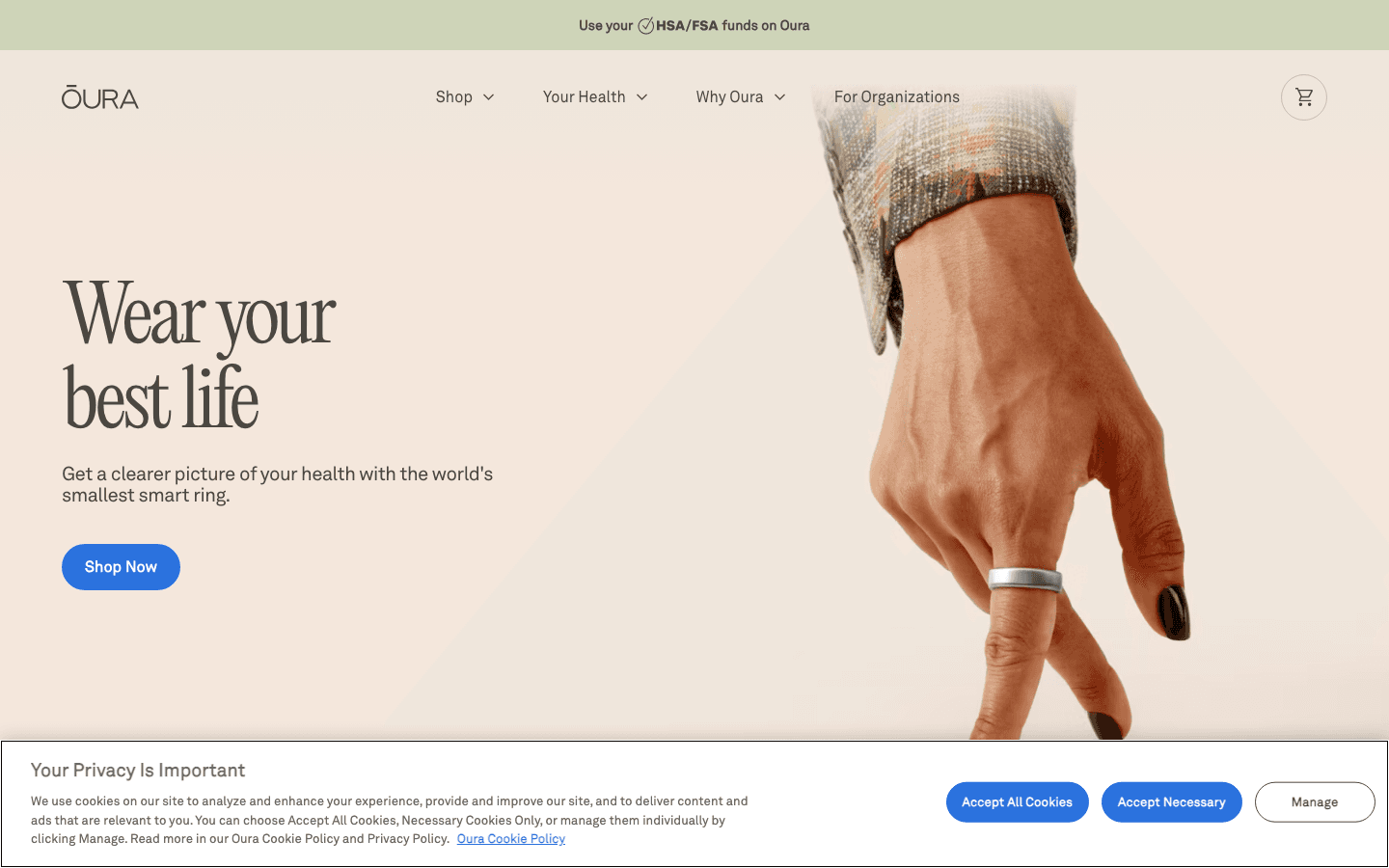
The Oura Ring is the closest thing to set-it-and-forget-it HRV tracking. You wear a ring, you sleep, and in the morning you have a readiness score backed by overnight HRV data, skin temperature trends, and detailed sleep staging. There's no morning strap ritual, no camera measurements, no conscious effort at all.
The ring's optical sensors sit closer to the arteries than a wrist band, which reduces motion artifacts and tends to produce more consistent overnight readings. The app's readiness score is a well-calibrated summary that most users find genuinely useful for deciding whether to push hard or recover. It pairs naturally with Lifestack if you want the HRV data to flow into your schedule automatically. See how it compares in our Oura Ring vs Apple Watch breakdown, or check our dedicated Oura Ring pricing guide for the full cost picture.
Key Features
Overnight HRV tracking using optical PPG sensors in the ring form factor
Daily readiness, sleep, and activity scores with trend graphs
Skin temperature tracking for illness and cycle detection
Exports to Apple Health, making it compatible with Lifestack and other apps
What Works
Passive overnight monitoring means you never have to think about taking a reading
Ring form factor is more comfortable for sleep than most wrist trackers
Readiness score gives a clear, actionable daily signal
Limitations
Hardware is required; the ring costs $399 before the subscription
No real-time HRV or live biofeedback
No energy awareness or scheduling features built in
Pricing: $399 for the ring + $5.99/month or $69.99/year membership
Best for: People who want effortless passive HRV monitoring with strong sleep tracking
3. Elite HRV
The most thorough dedicated HRV app available
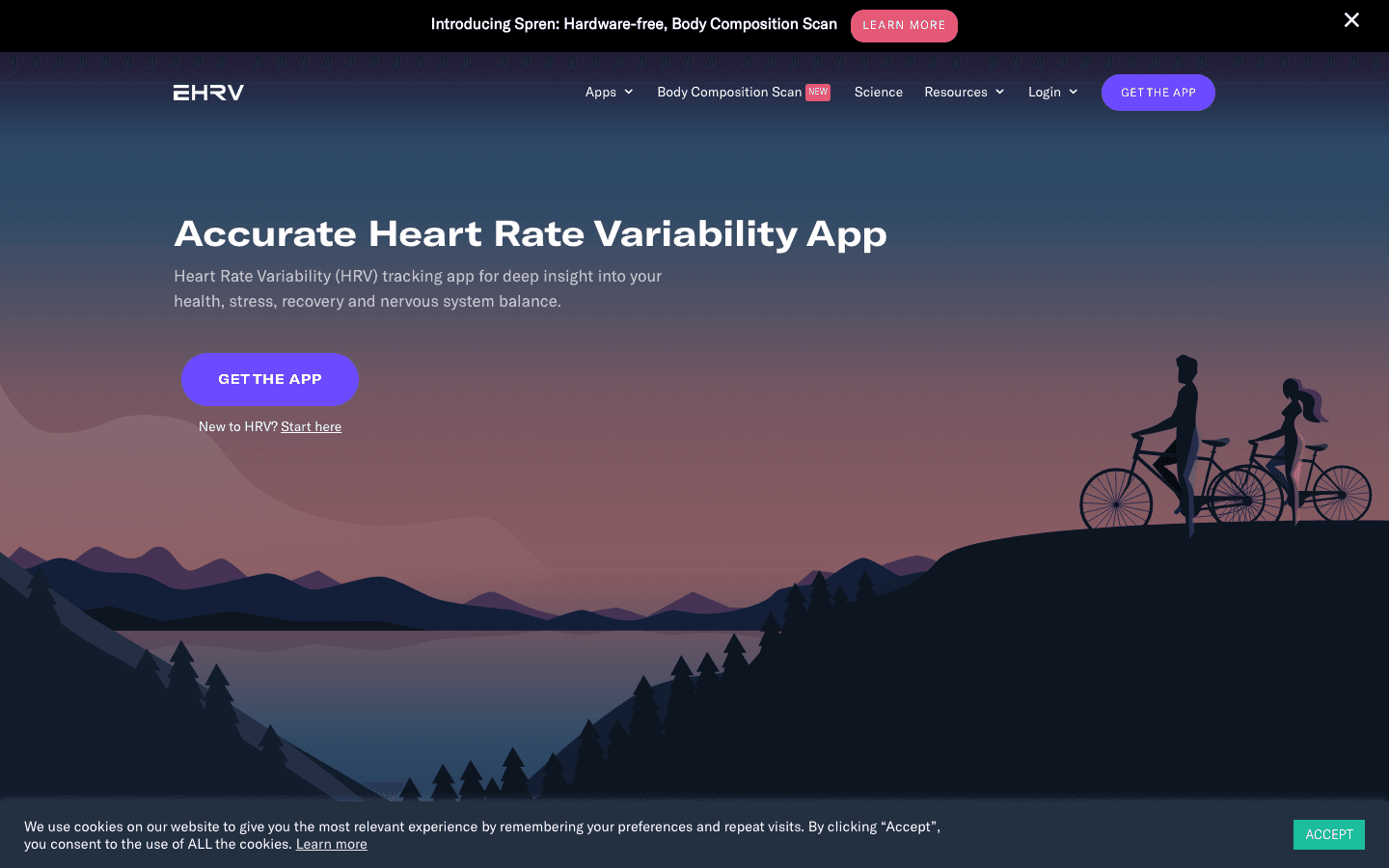
Elite HRV is what you use when you actually want to understand your HRV data. The app works with a Polar H10 or other Bluetooth chest strap and delivers professional-grade analysis: time-domain and frequency-domain metrics, population comparisons, meditation and biofeedback modes, and a team monitoring dashboard for coaches. It goes well beyond a single readiness number.
The free tier is genuinely useful and supports the full measurement workflow. The Pro tier adds trend analysis, advanced reporting, and additional integrations. If you care about the underlying science and want to see RMSSD, LF/HF ratios, and coherence scores rather than a simplified score, Elite HRV is the app to reach for. Pair it with a Polar H10 and you have one of the most accurate HRV setups available to consumers.
Key Features
Full time-domain and frequency-domain HRV metrics (RMSSD, SDNN, LF/HF ratio)
Morning readiness protocol with guided breathing sessions
Population percentile comparisons by age and fitness level
Team monitoring and coach dashboard for athletes
Biofeedback and coherence training modes
What Works
The free tier is more capable than most paid competitors
Educational content actually explains what each metric means
Works with dozens of Bluetooth heart rate monitors, not just proprietary hardware
Limitations
Requires a manual morning measurement session, typically 2-5 minutes
No automated scheduling or daily planning features
The depth of metrics can overwhelm users who just want a simple daily signal
Pricing: Free / $79.99/year Pro
Best for: Data-driven users who want clinical-depth HRV analysis and full metric transparency
4. HRV4Training
The athlete's choice for training load and HRV together
HRV4Training is built specifically for endurance athletes who want to connect HRV data to their training decisions. It offers camera-based HRV readings (no chest strap required) by placing your finger over the phone camera for about a minute each morning. More importantly, it overlays that data with your workout log to show how your training load is affecting your recovery over weeks and months.
The app's training readiness score is calibrated against your personal baseline rather than population averages, which makes it more meaningful the longer you use it. It also integrates with Garmin, Strava, TrainingPeaks, and Apple Health, so athletes with existing training data can plug HRV in without rebuilding their tracking setup from scratch.
Key Features
Camera-based HRV measurement (no wearable required)
Training readiness score calibrated to your personal baseline
Training load overlay showing how workouts affect HRV trends
Integrations with Garmin, Strava, TrainingPeaks, and Apple Health
Direct Oura cloud API access for automated overnight data
What Works
No hardware required; the camera measurement is surprisingly accurate
Training context makes HRV data actually relevant for workout planning
One-time purchase model means no recurring subscription to manage
Limitations
Focused on athletic training; less useful for general energy management or scheduling
Morning measurement still requires a manual 60-second routine
No energy awareness outside of the workout context
Pricing: $9.99 one-time (iOS) / $11.99 one-time (Android)
Best for: Endurance athletes who want to see how training load and recovery interact over time
5. Welltory
The most approachable HRV app for everyday energy tracking
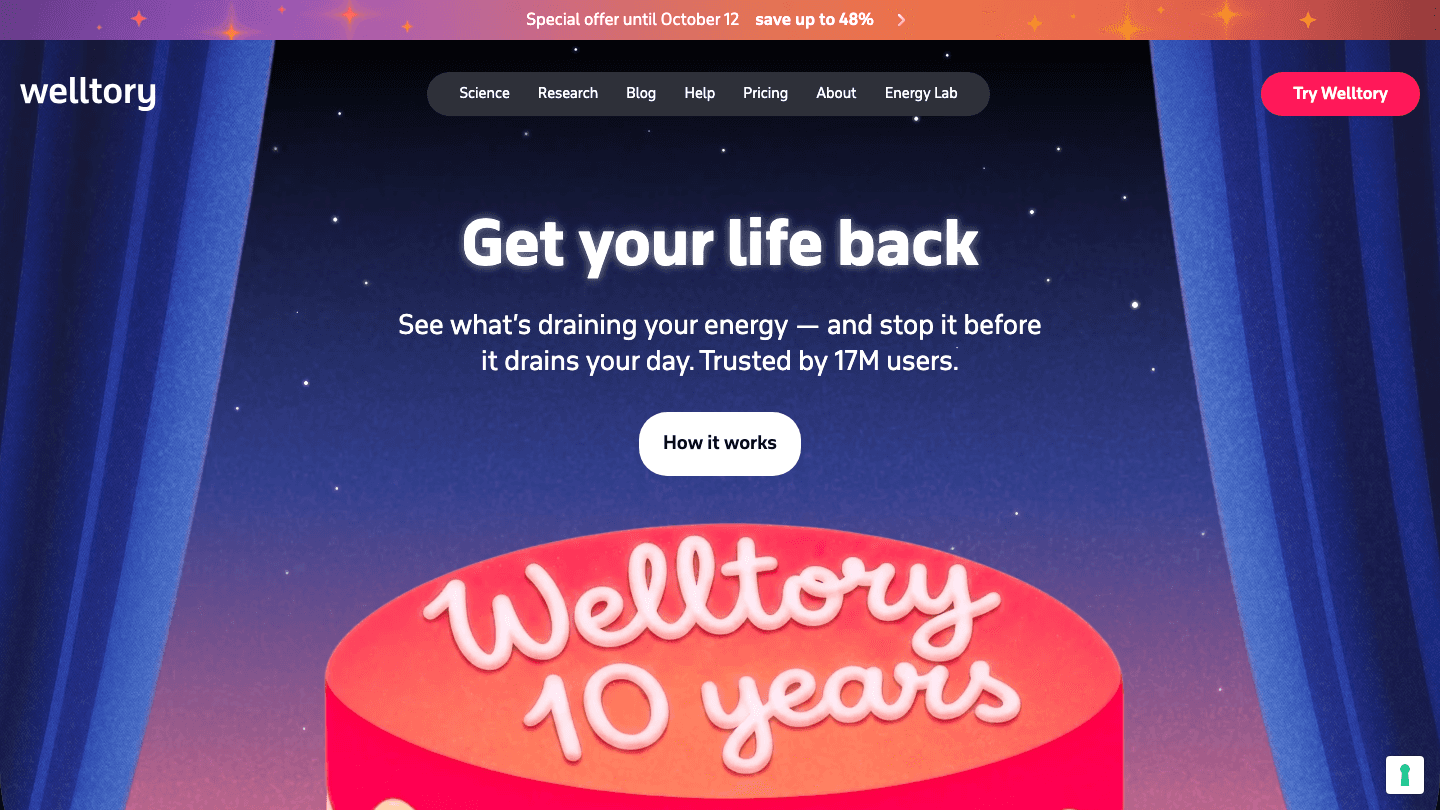
Welltory approaches HRV from the angle of daily energy management rather than athletic performance. It uses camera-based readings and frames the results in terms of energy, focus, and stress levels rather than raw metric values, making it far more accessible to people who don't have a background in exercise physiology or biometrics.
The app's interface is polished and the explanations are genuinely helpful. After each measurement, it suggests whether you're in a state better suited for focused work, physical activity, or rest, which is a more practical framing than most HRV apps offer. It integrates with Apple Health, which means the data can flow into Lifestack's scheduling engine if you want to close the loop from measurement to daily plan. The paid tier adds trend tracking, integrations, and productivity correlations.
Key Features
Camera-based HRV measurement in under two minutes
Energy, focus, and stress scoring rather than raw HRV metrics
Integration with Apple Health, Google Fit, and fitness apps
Daily recommendations framed around productivity states
Long-term trend tracking and lifestyle factor correlations
What Works
Plain-language explanations make HRV data accessible to non-athletes
The energy-focus-stress framing maps directly to how most people plan their workday
Clean, well-designed interface that doesn't feel clinical
Limitations
Camera-based readings are less accurate than chest strap or ring-based sensors
Full trend data and integrations require the paid tier
No automatic scheduling or calendar integration
Pricing: Free / $99/year
Best for: Newcomers to HRV tracking who want simple, plain-language guidance on daily energy
6. Polar Beat + H10
The most accurate consumer HRV setup available
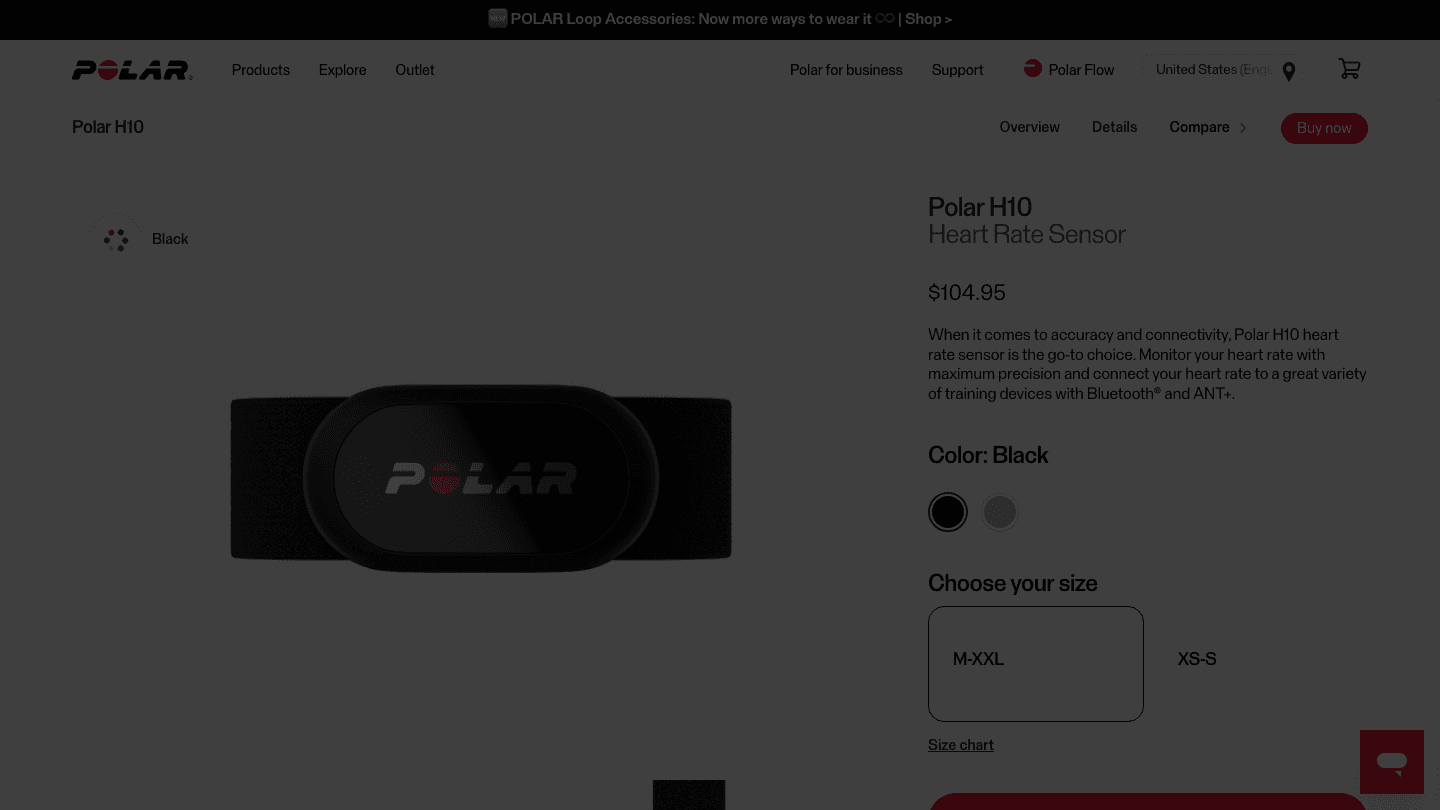
If measurement accuracy is your primary concern, nothing at the consumer level beats a chest-strap ECG sensor. The Polar H10 chest strap is the reference standard that researchers use when validating other HRV devices. Paired with the free Polar Beat app, you get gold-standard HRV measurements without a monthly subscription.
The trade-off is convenience. You have to put on a chest strap each morning, get it slightly damp, and hold still for a few minutes. It's more friction than a ring or camera, but the data you get back is the most accurate picture of your autonomic nervous system available outside a clinical setting. For athletes, researchers, or anyone who has found wrist/ring measurements inconsistent, the H10 is worth the extra step. If you want to understand more about what those readings mean, our guide on low HRV meaning explains the key thresholds and what to do when your numbers drop.
Key Features
Medical-grade ECG accuracy at plus/minus 1ms precision
Bluetooth and ANT+ connectivity for broad app compatibility
Works with Elite HRV, HRV4Training, Welltory, and most other HRV apps
Polar Beat app included free with heart rate, training zones, and basic HRV
Water-resistant; suitable for swimming and outdoor workouts
What Works
The H10 is the benchmark every other consumer HRV device is compared against
Hardware is a one-time purchase; the app is free
Compatible with dozens of third-party apps for more advanced analysis
Limitations
Chest strap requires a morning ritual that wrist and ring trackers skip entirely
Polar Beat's own analysis is limited; you'll want to pair it with Elite HRV for real depth
No scheduling or energy-awareness features
Pricing: $104.95 (H10 sensor) + Polar Beat app free
Best for: Users who want maximum measurement accuracy and don't mind the morning strap routine
Which HRV Tracker Is Right for You?
You want HRV data to improve your daily schedule: Lifestack
You want zero effort, just a morning readiness score: Oura Ring
You want to understand every metric and see clinical-depth data: Elite HRV + Polar H10
You're an endurance athlete tracking training load: HRV4Training
You're new to HRV and want plain-language guidance: Welltory
You want the most accurate readings without a high hardware cost: Polar H10 + Elite HRV
If you're looking at sleep as part of your HRV picture, our roundup of the best sleep trackers covers the hardware side in more detail. And if you've been dealing with CNS burnout, tracking HRV is one of the earliest warning systems available.
Frequently Asked Questions
What is the most accurate HRV tracker?
The Polar H10 chest strap is the most accurate consumer HRV device, with plus/minus 1ms precision matching clinical ECG equipment. Paired with Elite HRV, it gives you research-grade data for under $200 combined. Ring-based trackers like Oura are close behind for overnight passive monitoring.
Can an app track HRV without a wearable?
Yes. Apps like Welltory and HRV4Training use your phone's rear camera and flashlight to detect pulse patterns through your fingertip. Camera readings are less precise than chest strap or optical ring sensors, but they're accurate enough for daily trend tracking and are a good starting point before investing in hardware.
What is a good HRV score?
HRV varies significantly by age, fitness level, and individual baseline. Rather than comparing against population averages, focus on your personal trend. A score that's 10-15% above your recent baseline is a green day. Consistently below baseline over several days usually signals accumulated fatigue or stress. Our low HRV guide breaks down what specific patterns tend to indicate.
How do I improve my HRV over time?
The biggest levers are consistent sleep timing, zone 2 aerobic training, stress management, and avoiding late-night alcohol. HRV improves slowly over weeks and months, not overnight. Our guide on how to increase HRV covers the evidence-based methods that actually show up in the data.
Does Lifestack measure HRV directly?
No. Lifestack connects to wearables (Apple Watch, Garmin, Oura, and others) through Apple Health and pulls HRV and health data from there. It then uses that data, alongside your sleep and activity patterns, to build an energy-aware daily schedule. Think of it as the layer on top of your HRV tracker that tells you what to do about what you're seeing.
What is the best HRV app for iPhone?
For scheduling and acting on your HRV data: Lifestack. For passive monitoring with a ring: Oura. For clinical-depth analysis: Elite HRV. For athletes: HRV4Training. The right choice depends on whether you want to measure HRV, understand it, or actually use it to plan your day differently.
Your heart doesn't beat like a metronome. The tiny gaps between beats shift constantly, expanding and contracting based on how rested you are, how stressed you are, and how well your nervous system is coping with the load you're putting on it. That variation, called heart rate variability (HRV), turns out to be one of the most reliable windows into how your body is actually doing.
The problem is that most HRV tracker apps stop at the number. They give you a score, maybe a colored dot, and leave you wondering what to do with it. A high HRV day doesn't automatically become a productive day. A low HRV morning doesn't have to mean the day is wasted. What matters is what you do with the information.
We tested six of the best HRV tracker apps available right now, looking at measurement accuracy, the depth of analysis they offer, how well they explain your data, and most importantly, whether they help you act on it. The apps below cover everything from chest-strap precision to passive ring monitoring to AI-powered scheduling built around your energy levels.
If you want to understand how HRV works before diving in, our guide on how to increase HRV covers the science and the habits that actually move the needle.
Key Takeaways
Lifestack is the only app that takes your HRV and health data and automatically reschedules your day around your energy levels.
For raw measurement accuracy, a Polar H10 chest strap paired with Elite HRV is the gold standard at under $200 total.
Oura Ring and Welltory are the best options for passive, effortless HRV tracking without thinking about it each morning.
Quick Guide: Best HRV Tracker Apps
1. Lifestack: Best for turning HRV data into a smarter daily schedule
2. Oura Ring: Best for passive, 24/7 HRV monitoring
3. Elite HRV: Best dedicated HRV app with professional-grade analysis
4. HRV4Training: Best for athletes who want training load context
5. Welltory: Best for newcomers who want an intuitive HRV experience
6. Polar Beat + H10: Best for clinical-grade accuracy on a budget
How We Evaluated These Apps
Measurement method: ECG chest strap, optical wrist/ring, or camera-based
Accuracy: How closely readings track validated clinical measurements
Context and explanation: Do they help you understand what your HRV means?
Actionability: Does the app actually change what you do with your day?
Wearable integrations: Apple Health, Garmin, Oura, WHOOP compatibility
Pricing: What you get at each tier and whether it's worth it
1. Lifestack
The HRV app that tells you what to do about it
Most HRV apps hand you a number and walk away. Lifestack is the only one that takes your HRV, sleep quality, and other health signals from your connected wearable and builds your actual schedule around them. On a high-recovery morning, it front-loads your deep work. On a low-HRV day, it buffers your calendar and moves demanding tasks to when your energy is more likely to rebound.
It connects to Apple Health and Garmin to pull HRV data passively, so there's no morning ritual required. The AI then cross-references your energy trends with your tasks and meetings to suggest an optimal daily structure. For anyone who tracks HRV but has never quite figured out how to act on it, Lifestack closes that gap. Read our full introduction to Lifestack to see how the energy model works in practice.
Key Features
Pulls HRV and health data from Apple Health, Garmin, and other connected sources
AI daily scheduler that adapts task placement based on your energy levels
Integrates with Google Calendar, Outlook, and existing task lists
Mobile apps for iOS and Android plus a Chrome extension
Built specifically for people with ADHD, irregular energy patterns, or high-variability schedules
What Works
Turns passive HRV data into a concrete plan for the day, not just a score
Energy-aware scheduling catches the days when you shouldn't be doing deep work before 2pm
The interface doesn't overwhelm you with metrics, it just reorganizes your to-do list
Limitations
Doesn't measure HRV itself; requires a connected wearable or manual health data input
The scheduling AI works best when you have consistent data from a wearable over several weeks
Pricing: $7/month, $50/year, or $120 lifetime
Best for: Anyone who already tracks HRV and wants to actually use that data to plan better days
2. Oura Ring
The most effortless HRV tracker you'll ever use
The Oura Ring is the closest thing to set-it-and-forget-it HRV tracking. You wear a ring, you sleep, and in the morning you have a readiness score backed by overnight HRV data, skin temperature trends, and detailed sleep staging. There's no morning strap ritual, no camera measurements, no conscious effort at all.
The ring's optical sensors sit closer to the arteries than a wrist band, which reduces motion artifacts and tends to produce more consistent overnight readings. The app's readiness score is a well-calibrated summary that most users find genuinely useful for deciding whether to push hard or recover. It pairs naturally with Lifestack if you want the HRV data to flow into your schedule automatically. See how it compares in our Oura Ring vs Apple Watch breakdown, or check our dedicated Oura Ring pricing guide for the full cost picture.
Key Features
Overnight HRV tracking using optical PPG sensors in the ring form factor
Daily readiness, sleep, and activity scores with trend graphs
Skin temperature tracking for illness and cycle detection
Exports to Apple Health, making it compatible with Lifestack and other apps
What Works
Passive overnight monitoring means you never have to think about taking a reading
Ring form factor is more comfortable for sleep than most wrist trackers
Readiness score gives a clear, actionable daily signal
Limitations
Hardware is required; the ring costs $399 before the subscription
No real-time HRV or live biofeedback
No energy awareness or scheduling features built in
Pricing: $399 for the ring + $5.99/month or $69.99/year membership
Best for: People who want effortless passive HRV monitoring with strong sleep tracking
3. Elite HRV
The most thorough dedicated HRV app available
Elite HRV is what you use when you actually want to understand your HRV data. The app works with a Polar H10 or other Bluetooth chest strap and delivers professional-grade analysis: time-domain and frequency-domain metrics, population comparisons, meditation and biofeedback modes, and a team monitoring dashboard for coaches. It goes well beyond a single readiness number.
The free tier is genuinely useful and supports the full measurement workflow. The Pro tier adds trend analysis, advanced reporting, and additional integrations. If you care about the underlying science and want to see RMSSD, LF/HF ratios, and coherence scores rather than a simplified score, Elite HRV is the app to reach for. Pair it with a Polar H10 and you have one of the most accurate HRV setups available to consumers.
Key Features
Full time-domain and frequency-domain HRV metrics (RMSSD, SDNN, LF/HF ratio)
Morning readiness protocol with guided breathing sessions
Population percentile comparisons by age and fitness level
Team monitoring and coach dashboard for athletes
Biofeedback and coherence training modes
What Works
The free tier is more capable than most paid competitors
Educational content actually explains what each metric means
Works with dozens of Bluetooth heart rate monitors, not just proprietary hardware
Limitations
Requires a manual morning measurement session, typically 2-5 minutes
No automated scheduling or daily planning features
The depth of metrics can overwhelm users who just want a simple daily signal
Pricing: Free / $79.99/year Pro
Best for: Data-driven users who want clinical-depth HRV analysis and full metric transparency
4. HRV4Training
The athlete's choice for training load and HRV together
HRV4Training is built specifically for endurance athletes who want to connect HRV data to their training decisions. It offers camera-based HRV readings (no chest strap required) by placing your finger over the phone camera for about a minute each morning. More importantly, it overlays that data with your workout log to show how your training load is affecting your recovery over weeks and months.
The app's training readiness score is calibrated against your personal baseline rather than population averages, which makes it more meaningful the longer you use it. It also integrates with Garmin, Strava, TrainingPeaks, and Apple Health, so athletes with existing training data can plug HRV in without rebuilding their tracking setup from scratch.
Key Features
Camera-based HRV measurement (no wearable required)
Training readiness score calibrated to your personal baseline
Training load overlay showing how workouts affect HRV trends
Integrations with Garmin, Strava, TrainingPeaks, and Apple Health
Direct Oura cloud API access for automated overnight data
What Works
No hardware required; the camera measurement is surprisingly accurate
Training context makes HRV data actually relevant for workout planning
One-time purchase model means no recurring subscription to manage
Limitations
Focused on athletic training; less useful for general energy management or scheduling
Morning measurement still requires a manual 60-second routine
No energy awareness outside of the workout context
Pricing: $9.99 one-time (iOS) / $11.99 one-time (Android)
Best for: Endurance athletes who want to see how training load and recovery interact over time
5. Welltory
The most approachable HRV app for everyday energy tracking
Welltory approaches HRV from the angle of daily energy management rather than athletic performance. It uses camera-based readings and frames the results in terms of energy, focus, and stress levels rather than raw metric values, making it far more accessible to people who don't have a background in exercise physiology or biometrics.
The app's interface is polished and the explanations are genuinely helpful. After each measurement, it suggests whether you're in a state better suited for focused work, physical activity, or rest, which is a more practical framing than most HRV apps offer. It integrates with Apple Health, which means the data can flow into Lifestack's scheduling engine if you want to close the loop from measurement to daily plan. The paid tier adds trend tracking, integrations, and productivity correlations.
Key Features
Camera-based HRV measurement in under two minutes
Energy, focus, and stress scoring rather than raw HRV metrics
Integration with Apple Health, Google Fit, and fitness apps
Daily recommendations framed around productivity states
Long-term trend tracking and lifestyle factor correlations
What Works
Plain-language explanations make HRV data accessible to non-athletes
The energy-focus-stress framing maps directly to how most people plan their workday
Clean, well-designed interface that doesn't feel clinical
Limitations
Camera-based readings are less accurate than chest strap or ring-based sensors
Full trend data and integrations require the paid tier
No automatic scheduling or calendar integration
Pricing: Free / $99/year
Best for: Newcomers to HRV tracking who want simple, plain-language guidance on daily energy
6. Polar Beat + H10
The most accurate consumer HRV setup available
If measurement accuracy is your primary concern, nothing at the consumer level beats a chest-strap ECG sensor. The Polar H10 chest strap is the reference standard that researchers use when validating other HRV devices. Paired with the free Polar Beat app, you get gold-standard HRV measurements without a monthly subscription.
The trade-off is convenience. You have to put on a chest strap each morning, get it slightly damp, and hold still for a few minutes. It's more friction than a ring or camera, but the data you get back is the most accurate picture of your autonomic nervous system available outside a clinical setting. For athletes, researchers, or anyone who has found wrist/ring measurements inconsistent, the H10 is worth the extra step. If you want to understand more about what those readings mean, our guide on low HRV meaning explains the key thresholds and what to do when your numbers drop.
Key Features
Medical-grade ECG accuracy at plus/minus 1ms precision
Bluetooth and ANT+ connectivity for broad app compatibility
Works with Elite HRV, HRV4Training, Welltory, and most other HRV apps
Polar Beat app included free with heart rate, training zones, and basic HRV
Water-resistant; suitable for swimming and outdoor workouts
What Works
The H10 is the benchmark every other consumer HRV device is compared against
Hardware is a one-time purchase; the app is free
Compatible with dozens of third-party apps for more advanced analysis
Limitations
Chest strap requires a morning ritual that wrist and ring trackers skip entirely
Polar Beat's own analysis is limited; you'll want to pair it with Elite HRV for real depth
No scheduling or energy-awareness features
Pricing: $104.95 (H10 sensor) + Polar Beat app free
Best for: Users who want maximum measurement accuracy and don't mind the morning strap routine
Which HRV Tracker Is Right for You?
You want HRV data to improve your daily schedule: Lifestack
You want zero effort, just a morning readiness score: Oura Ring
You want to understand every metric and see clinical-depth data: Elite HRV + Polar H10
You're an endurance athlete tracking training load: HRV4Training
You're new to HRV and want plain-language guidance: Welltory
You want the most accurate readings without a high hardware cost: Polar H10 + Elite HRV
If you're looking at sleep as part of your HRV picture, our roundup of the best sleep trackers covers the hardware side in more detail. And if you've been dealing with CNS burnout, tracking HRV is one of the earliest warning systems available.
Frequently Asked Questions
What is the most accurate HRV tracker?
The Polar H10 chest strap is the most accurate consumer HRV device, with plus/minus 1ms precision matching clinical ECG equipment. Paired with Elite HRV, it gives you research-grade data for under $200 combined. Ring-based trackers like Oura are close behind for overnight passive monitoring.
Can an app track HRV without a wearable?
Yes. Apps like Welltory and HRV4Training use your phone's rear camera and flashlight to detect pulse patterns through your fingertip. Camera readings are less precise than chest strap or optical ring sensors, but they're accurate enough for daily trend tracking and are a good starting point before investing in hardware.
What is a good HRV score?
HRV varies significantly by age, fitness level, and individual baseline. Rather than comparing against population averages, focus on your personal trend. A score that's 10-15% above your recent baseline is a green day. Consistently below baseline over several days usually signals accumulated fatigue or stress. Our low HRV guide breaks down what specific patterns tend to indicate.
How do I improve my HRV over time?
The biggest levers are consistent sleep timing, zone 2 aerobic training, stress management, and avoiding late-night alcohol. HRV improves slowly over weeks and months, not overnight. Our guide on how to increase HRV covers the evidence-based methods that actually show up in the data.
Does Lifestack measure HRV directly?
No. Lifestack connects to wearables (Apple Watch, Garmin, Oura, and others) through Apple Health and pulls HRV and health data from there. It then uses that data, alongside your sleep and activity patterns, to build an energy-aware daily schedule. Think of it as the layer on top of your HRV tracker that tells you what to do about what you're seeing.
What is the best HRV app for iPhone?
For scheduling and acting on your HRV data: Lifestack. For passive monitoring with a ring: Oura. For clinical-depth analysis: Elite HRV. For athletes: HRV4Training. The right choice depends on whether you want to measure HRV, understand it, or actually use it to plan your day differently.



FOLLOW ON
FOLLOW ON
FOLLOW ON


Copyright 2026 © Lifestack. All rights reserved
Copyright 2026 © Lifestack. All rights reserved

