
Device
Fitbit Sense 2 vs Versa 4: Which Should You Buy?
Fitbit Sense 2 vs Versa 4: Which Should You Buy?

The Fitbit Sense 2 and Versa 4 were launched together in late 2022, and on paper they look almost identical: same rectangular design, same AMOLED display, same Google integration, same battery life. The $50 price difference between them ($249.95 for the Sense 2 vs $199.95 for the Versa 4) is real, and what you get for it is a specific set of health sensors that not everyone needs.
If you've been comparing these two and can't figure out what actually separates them, this breakdown will make the decision clear. The differences are narrower than the marketing suggests, but they do matter for certain use cases.
Key Takeaways
The Sense 2 adds an ECG app, EDA (electrodermal activity) stress sensor, and on-wrist skin temperature sensor that the Versa 4 lacks
Both watches share the same sleep tracking, heart rate monitoring, GPS, and Google integration features
If you don't actively plan to use ECG or stress tracking, the Versa 4 delivers the same core Fitbit experience for $50 less
Quick Verdict
Buy the Sense 2 if you want ECG readings, want to track stress with skin conductance (EDA), or want skin temperature deviation data alongside sleep tracking
Buy the Versa 4 if you want the full Fitbit sleep and fitness experience without paying for sensors you won't use
Fitbit Sense 2 Overview
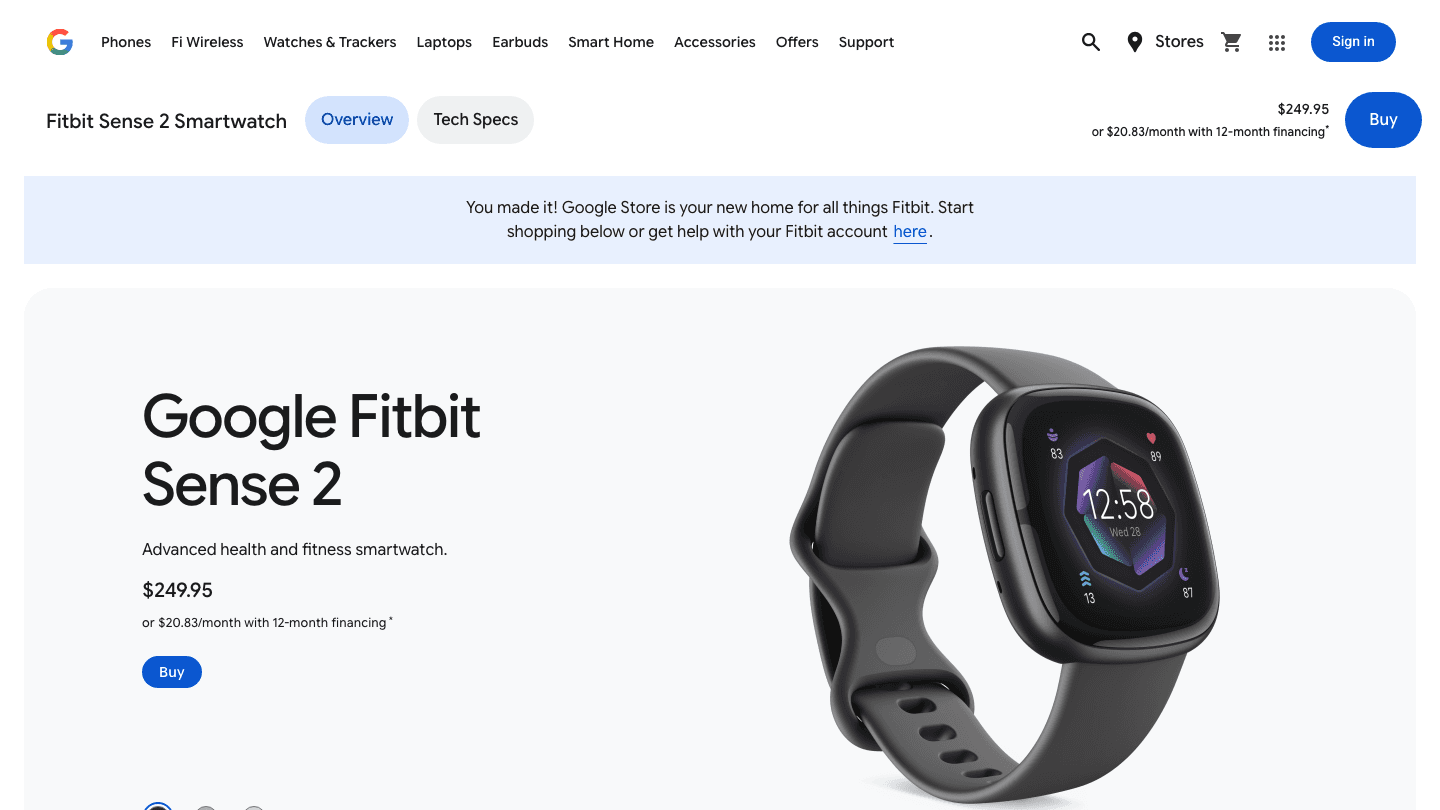
The Fitbit Sense 2 is Fitbit's health-focused flagship. It's built around three sensors that don't appear on the Versa 4: an ECG app for irregular heart rhythm detection, a cEDA (continuous electrodermal activity) sensor for passive stress tracking, and a skin temperature sensor that tracks deviation from your personal baseline.
The cEDA sensor is the most distinctive feature. It uses tiny electrical charges to measure changes in skin conductance associated with stress responses. The watch collects this data passively throughout the day and surfaces moments when your body showed stress signals, even if you didn't consciously feel stressed. Whether that insight changes your behavior depends on you.
What Works
ECG app adds meaningful heart health monitoring for people with a family history of AFib or prior cardiac events
Stress management score gives a passive, daily overview of recovery vs. strain balance
Skin temperature tracking catches early illness signals and is useful for menstrual cycle monitoring
Built-in GPS, Alexa and Google Assistant support, NFC payments
6+ day battery life on a single charge
Limitations
$50 more than the Versa 4 for sensors most users rarely open
ECG feature requires a Fitbit Premium subscription to access the full report
The cEDA sensor can't distinguish types of stress (physical, emotional, cognitive); it just flags heightened arousal
Price: $249.95 (Google Store)
Fitbit Versa 4 Overview
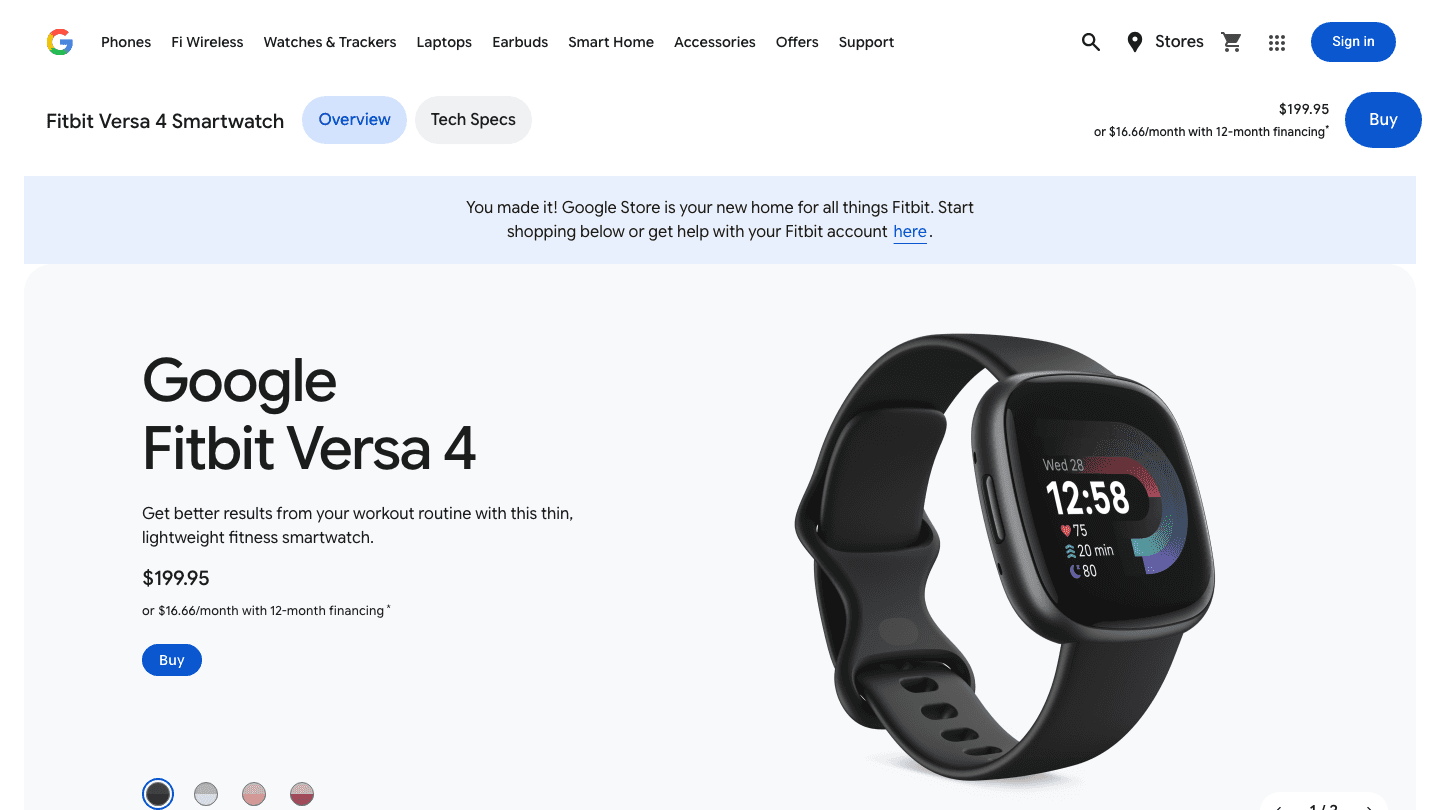
The Fitbit Versa 4 is the general-purpose Fitbit. It has everything the Sense 2 has except the three sensor-specific features listed above. That means you still get built-in GPS, heart rate tracking, SpO2 blood oxygen monitoring, sleep tracking with sleep stages, Active Zone Minutes, 40+ exercise modes, NFC payments, and Google Assistant.
For most people comparing these two watches, the Versa 4 is the one that delivers the Fitbit experience they're actually looking for. The sleep tracking quality is the same. The workout tracking is the same. The daily activity metrics are the same. You're not getting a watered-down version; you're getting the same watch without the specialized health sensors.
What Works
Full Fitbit sleep tracking with sleep stages, sleep score, and trends over time
Built-in GPS for accurate outdoor workout tracking without your phone
Google Assistant, Google Maps, Google Wallet on-wrist
6+ day battery life, same as Sense 2
$50 less than the Sense 2 for nearly identical day-to-day experience
Limitations
No ECG app, no EDA stress sensor, no skin temperature tracking
Full feature unlock still requires Fitbit Premium subscription ($9.99/month)
Like the Sense 2, its sleep tracking accuracy can vary with band fit and wrist position
Price: $199.95 (Google Store)
Head-to-Head Comparison
ECG: Sense 2 only
Stress sensor (EDA): Sense 2 only
Skin temperature: Sense 2 only
Sleep tracking: Both, identical quality
Heart rate monitoring: Both, 24/7
Blood oxygen (SpO2): Both
Built-in GPS: Both
Battery life: Both, 6+ days
Display: Both, AMOLED, always-on capable
Google Wallet / NFC payments: Both
Google Assistant: Both
Water resistance: Both, 50m
Fitbit Premium required for full features: Both, $9.99/month
Price: Sense 2 $249.95 vs Versa 4 $199.95
Which Should You Choose?
Choose the Sense 2 if: you have a cardiac history and want ECG access, you're actively working on stress management and want objective physiological data, or you're monitoring your menstrual cycle and want skin temperature data on top of sleep tracking.
Choose the Versa 4 if: your priority is sleep tracking, workout tracking, and daily health monitoring, and you don't plan to open the ECG or stress apps. The core Fitbit experience is identical and the $50 savings is real.
One thing worth noting for 2026: both watches have been superseded by the Pixel Watch line within the Google ecosystem. If you're open to a different form factor, the Garmin vs Fitbit comparison and the full wearable device comparison cover where each brand fits in the broader market.
Making the Most of Fitbit Data

Whichever watch you choose, the sleep data it collects is most useful when it actually shapes your day. Lifestack connects to your health data and builds your daily schedule around your sleep quality and energy levels, so your best cognitive work lands when your recovery actually supports it rather than whenever it happens to be on the calendar.
Frequently Asked Questions
What is the main difference between Fitbit Sense 2 and Versa 4?
The Sense 2 adds an ECG app, a continuous EDA stress sensor, and a skin temperature sensor. The Versa 4 has everything else, including the same sleep tracking, GPS, heart rate monitoring, and Google integrations, for $50 less.
Is Fitbit Sense 2 worth the extra money over Versa 4?
Only if you'll use the ECG or stress sensors regularly. For most users who want sleep tracking, workout tracking, and daily health metrics, the Versa 4 delivers the same experience and the $50 difference is a better use of money toward a Fitbit Premium subscription or accessories.
Do both Fitbit Sense 2 and Versa 4 require a subscription?
Basic features including heart rate, activity, and sleep stages work without Premium. Full access to stress scores, detailed sleep analysis, guided programs, and ECG reports requires Fitbit Premium at $9.99/month or $79.99/year.
How does Fitbit sleep tracking compare to other wearables?
Fitbit has one of the longer track records in consumer sleep tracking. Its sleep stage detection is generally on par with comparable wrist-based devices. For an independent look at where it sits in the field, the best sleep trackers for 2026 and the Fitbit vs Apple Watch comparison are useful references.
Are Fitbit Sense 2 and Versa 4 still being sold?
Yes, both remain available on the Google Store as of 2026. Google (which acquired Fitbit) has continued selling them alongside the Pixel Watch line, positioning Fitbit as the longer-battery, health-focused option and Pixel Watch as the full Android smartwatch experience.
The Fitbit Sense 2 and Versa 4 were launched together in late 2022, and on paper they look almost identical: same rectangular design, same AMOLED display, same Google integration, same battery life. The $50 price difference between them ($249.95 for the Sense 2 vs $199.95 for the Versa 4) is real, and what you get for it is a specific set of health sensors that not everyone needs.
If you've been comparing these two and can't figure out what actually separates them, this breakdown will make the decision clear. The differences are narrower than the marketing suggests, but they do matter for certain use cases.
Key Takeaways
The Sense 2 adds an ECG app, EDA (electrodermal activity) stress sensor, and on-wrist skin temperature sensor that the Versa 4 lacks
Both watches share the same sleep tracking, heart rate monitoring, GPS, and Google integration features
If you don't actively plan to use ECG or stress tracking, the Versa 4 delivers the same core Fitbit experience for $50 less
Quick Verdict
Buy the Sense 2 if you want ECG readings, want to track stress with skin conductance (EDA), or want skin temperature deviation data alongside sleep tracking
Buy the Versa 4 if you want the full Fitbit sleep and fitness experience without paying for sensors you won't use
Fitbit Sense 2 Overview
The Fitbit Sense 2 is Fitbit's health-focused flagship. It's built around three sensors that don't appear on the Versa 4: an ECG app for irregular heart rhythm detection, a cEDA (continuous electrodermal activity) sensor for passive stress tracking, and a skin temperature sensor that tracks deviation from your personal baseline.
The cEDA sensor is the most distinctive feature. It uses tiny electrical charges to measure changes in skin conductance associated with stress responses. The watch collects this data passively throughout the day and surfaces moments when your body showed stress signals, even if you didn't consciously feel stressed. Whether that insight changes your behavior depends on you.
What Works
ECG app adds meaningful heart health monitoring for people with a family history of AFib or prior cardiac events
Stress management score gives a passive, daily overview of recovery vs. strain balance
Skin temperature tracking catches early illness signals and is useful for menstrual cycle monitoring
Built-in GPS, Alexa and Google Assistant support, NFC payments
6+ day battery life on a single charge
Limitations
$50 more than the Versa 4 for sensors most users rarely open
ECG feature requires a Fitbit Premium subscription to access the full report
The cEDA sensor can't distinguish types of stress (physical, emotional, cognitive); it just flags heightened arousal
Price: $249.95 (Google Store)
Fitbit Versa 4 Overview
The Fitbit Versa 4 is the general-purpose Fitbit. It has everything the Sense 2 has except the three sensor-specific features listed above. That means you still get built-in GPS, heart rate tracking, SpO2 blood oxygen monitoring, sleep tracking with sleep stages, Active Zone Minutes, 40+ exercise modes, NFC payments, and Google Assistant.
For most people comparing these two watches, the Versa 4 is the one that delivers the Fitbit experience they're actually looking for. The sleep tracking quality is the same. The workout tracking is the same. The daily activity metrics are the same. You're not getting a watered-down version; you're getting the same watch without the specialized health sensors.
What Works
Full Fitbit sleep tracking with sleep stages, sleep score, and trends over time
Built-in GPS for accurate outdoor workout tracking without your phone
Google Assistant, Google Maps, Google Wallet on-wrist
6+ day battery life, same as Sense 2
$50 less than the Sense 2 for nearly identical day-to-day experience
Limitations
No ECG app, no EDA stress sensor, no skin temperature tracking
Full feature unlock still requires Fitbit Premium subscription ($9.99/month)
Like the Sense 2, its sleep tracking accuracy can vary with band fit and wrist position
Price: $199.95 (Google Store)
Head-to-Head Comparison
ECG: Sense 2 only
Stress sensor (EDA): Sense 2 only
Skin temperature: Sense 2 only
Sleep tracking: Both, identical quality
Heart rate monitoring: Both, 24/7
Blood oxygen (SpO2): Both
Built-in GPS: Both
Battery life: Both, 6+ days
Display: Both, AMOLED, always-on capable
Google Wallet / NFC payments: Both
Google Assistant: Both
Water resistance: Both, 50m
Fitbit Premium required for full features: Both, $9.99/month
Price: Sense 2 $249.95 vs Versa 4 $199.95
Which Should You Choose?
Choose the Sense 2 if: you have a cardiac history and want ECG access, you're actively working on stress management and want objective physiological data, or you're monitoring your menstrual cycle and want skin temperature data on top of sleep tracking.
Choose the Versa 4 if: your priority is sleep tracking, workout tracking, and daily health monitoring, and you don't plan to open the ECG or stress apps. The core Fitbit experience is identical and the $50 savings is real.
One thing worth noting for 2026: both watches have been superseded by the Pixel Watch line within the Google ecosystem. If you're open to a different form factor, the Garmin vs Fitbit comparison and the full wearable device comparison cover where each brand fits in the broader market.
Making the Most of Fitbit Data
Whichever watch you choose, the sleep data it collects is most useful when it actually shapes your day. Lifestack connects to your health data and builds your daily schedule around your sleep quality and energy levels, so your best cognitive work lands when your recovery actually supports it rather than whenever it happens to be on the calendar.
Frequently Asked Questions
What is the main difference between Fitbit Sense 2 and Versa 4?
The Sense 2 adds an ECG app, a continuous EDA stress sensor, and a skin temperature sensor. The Versa 4 has everything else, including the same sleep tracking, GPS, heart rate monitoring, and Google integrations, for $50 less.
Is Fitbit Sense 2 worth the extra money over Versa 4?
Only if you'll use the ECG or stress sensors regularly. For most users who want sleep tracking, workout tracking, and daily health metrics, the Versa 4 delivers the same experience and the $50 difference is a better use of money toward a Fitbit Premium subscription or accessories.
Do both Fitbit Sense 2 and Versa 4 require a subscription?
Basic features including heart rate, activity, and sleep stages work without Premium. Full access to stress scores, detailed sleep analysis, guided programs, and ECG reports requires Fitbit Premium at $9.99/month or $79.99/year.
How does Fitbit sleep tracking compare to other wearables?
Fitbit has one of the longer track records in consumer sleep tracking. Its sleep stage detection is generally on par with comparable wrist-based devices. For an independent look at where it sits in the field, the best sleep trackers for 2026 and the Fitbit vs Apple Watch comparison are useful references.
Are Fitbit Sense 2 and Versa 4 still being sold?
Yes, both remain available on the Google Store as of 2026. Google (which acquired Fitbit) has continued selling them alongside the Pixel Watch line, positioning Fitbit as the longer-battery, health-focused option and Pixel Watch as the full Android smartwatch experience.



FOLLOW ON
FOLLOW ON
FOLLOW ON


Copyright 2026 © Lifestack. All rights reserved
Copyright 2026 © Lifestack. All rights reserved

