
Device
Oura Ring Review: Is the Gen 4 Worth It in 2026?
Oura Ring Review: Is the Gen 4 Worth It in 2026?

The Oura Ring is the most widely recommended smart ring for sleep tracking, and the Gen 4 is the version that finally delivers on what earlier generations promised. It's a titanium ring with no screen, no buttons, and nothing to charge every night, and it tracks more about your sleep and recovery than most wrist-based wearables do.
The catch is the price. The ring starts at $349 for Silver or Black, and a $5.99/month membership is required for full access to the data it collects. Without the membership, you get basic scores. With it, you get the trend analysis, insight explanations, and the Readiness Score breakdown that make the data actually actionable.
We tested the Gen 4 over four months, tracking sleep, recovery patterns, and the accuracy of its health metrics against clinical comparisons. Here's what we found.
Key Takeaways
Best-in-class sleep staging accuracy among consumer wearables, with fewer nighttime HR gaps than any previous Oura generation
The Readiness Score is the most useful daily health number on the market for non-athletes who need simple guidance on how hard to push
Not a fitness tracker. There's no GPS, no workout intensity feedback, no real-time metrics during exercise
What the Oura Ring Actually Tracks
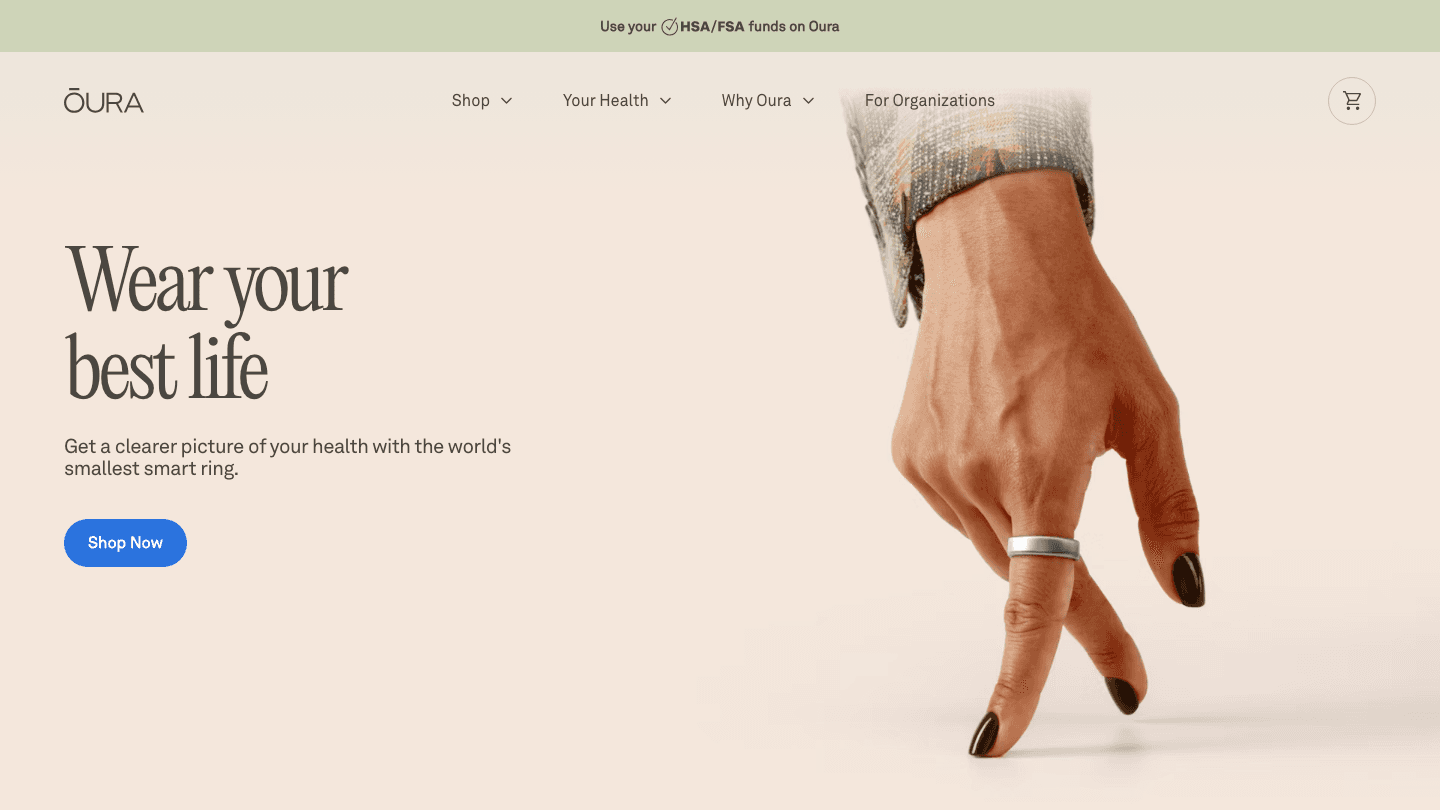
The Oura Ring Gen 4 tracks through the night and throughout the day. The core metrics are: sleep duration and staging (light, deep, REM), overnight heart rate and HRV, blood oxygen levels, skin temperature variation, respiratory rate, and step count and activity level during the day.
These inputs feed three daily scores: Sleep Score, Activity Score, and Readiness Score. Readiness is the headline number: a 0-100 composite of your sleep quality, HRV trend, resting heart rate, and recent activity load. A high Readiness score (85+) means your body is well-recovered. A low score means you need to pull back, and the app explains exactly which metrics drove the number down.
Gen 4 improved the sensor array significantly over Gen 3: 18 signal pathways versus 8, producing 31% fewer gaps in nighttime heart rate readings. In independent testing, the Gen 4's sleep staging data correlates meaningfully with polysomnography lab results, better than most consumer alternatives.
Sleep Tracking
Sleep is where the Oura Ring is best. It estimates total sleep, sleep efficiency, sleep latency, naps, and time in each sleep stage. The ring's form factor helps here: a finger sensor captures blood flow more consistently than a wrist sensor, and wearing a ring during sleep is more comfortable than a watch for most people.
The Gen 4 adds cardiovascular age estimates and improved stress detection during sleep. Nighttime breathing is tracked for patterns that could indicate sleep-disordered breathing, and temperature deviation from your baseline is logged to support cycle tracking and illness detection.
If you're comparing options for sleep tracking apps or dedicated sleep monitor devices, the Oura Ring sits at the top of the accuracy rankings for wrist- and ring-based tracking. For how to actually use sleep data to improve your schedule, see our guide on how to track sleep.
HRV and Readiness
Oura's overnight HRV measurement is one of the more accurate consumer implementations available. Unlike daytime spot-checks, the ring measures HRV across the full night and averages it, reducing the variability that makes single readings unreliable. The 7-day and 30-day HRV trend lines in the app are particularly useful for spotting recovery patterns: a declining trend before illness, a spike after a rest week, the impact of alcohol or travel on baseline.
The Readiness Score makes these numbers legible for people who don't want to interpret raw HRV values. It tells you, in one number, whether today is a day to push or a day to recover. For people doing both training and cognitively demanding work, this is genuinely useful. See our HRV monitor guide for how Oura's approach compares to other platforms.
Activity Tracking
Activity is the weakest part of the Oura Ring experience. It tracks steps and total activity minutes using accelerometer data, but has no GPS and no heart rate feedback during workouts. The ring can't tell you your pace, distance, or workout intensity in real time. It processes workout data passively and gives you an estimated calorie burn and activity contribution to your daily score.
If you run, cycle, or do structured exercise regularly, you'll want a separate GPS watch. Oura positions itself as a recovery tool, not a training monitor, and the activity tracking reflects that. It's good enough to capture whether you were active, not good enough to analyze the workout itself.
Pairing with Lifestack

Oura's Readiness Score tells you what your body can handle today. The open question is what to do with that information in your work schedule.
Lifestack picks up where Oura leaves off. It reads your sleep and recovery data from Oura and uses it to auto-schedule your calendar: deep work blocks and high-priority tasks land in your peak-energy hours, recovery and lower-demand tasks fill the rest. A Readiness Score of 85 isn't just a green light to train hard. It's also a green light for focused cognitive work. Lifestack makes that connection explicit in your calendar. For more tools that extend Oura's value beyond the ring app, see our best AI health apps roundup.
Pricing
Oura Ring 4 (Silver/Black): $349
Oura Ring 4 (Gold/Rose Gold/Stealth): $399
Oura Ring 4 (Ceramic): $499
Membership: $5.99/month or $69.99/year (first month free with ring purchase)
Total cost of ownership in year one is approximately $419 for the base model (ring + first year membership). Without the membership, features are significantly limited. For a full cost breakdown, see our Oura Ring pricing guide. Compared to other smart rings for sleep tracking, Oura's membership model is the primary differentiator in long-term cost.
Pros and Cons
What Works
Best sleep staging accuracy in the consumer smart ring category
Readiness Score is the most clearly communicated daily health signal available
Titanium build with no exposed bumps or protrusions is genuinely comfortable to wear 24/7
7-day battery with typical use
Skin temperature tracking for illness detection and cycle insights
Limitations
No GPS and minimal workout feedback, not a training monitor
Requires an ongoing $5.99/month membership for full feature access
Ring sizing requires ordering a sizing kit first (it can't be adjusted post-purchase)
Activity tracking is basic compared to GPS watches
Frequently Asked Questions
Is the Oura Ring Gen 4 worth it?
Yes, for anyone prioritizing sleep and recovery tracking over fitness metrics. The Gen 4 is the most accurate consumer sleep tracker in ring form, and the Readiness Score is genuinely useful for daily decision-making. The ongoing membership cost is the main consideration. If you want workout GPS and training metrics, it's not the right primary device.
Does Oura Ring require a subscription?
Yes. Basic Readiness, Sleep, and Activity scores are available without membership, but trend analysis, detailed insights, and most of the features that make the data actionable require the $5.99/month ($69.99/year) Oura membership. See the full breakdown in our Oura Ring pricing guide.
How accurate is the Oura Ring Gen 4 for sleep tracking?
The Gen 4 correlates well with polysomnography lab results in independent testing, performing better than most consumer alternatives for sleep staging. The 18-sensor pathway design and 31% fewer heart rate gaps compared to Gen 3 are measurable improvements. It's not medical-grade, but it's the most reliable consumer option currently available.
Can the Oura Ring detect sleep apnea?
It detects nighttime breathing disturbances that may indicate sleep-disordered breathing, and this information is logged in the app. It does not provide a clinical sleep apnea diagnosis. If breathing patterns consistently flag as unusual, Oura recommends consulting a doctor for a formal sleep study.
What apps work with the Oura Ring?
The primary companion is the Oura app (iOS and Android). The ring also syncs with Apple Health, Google Fit, and a range of third-party apps. Lifestack uses Oura's readiness and sleep data to build energy-aware scheduling in your calendar, translating your daily health data into an actionable daily plan.
The Oura Ring is the most widely recommended smart ring for sleep tracking, and the Gen 4 is the version that finally delivers on what earlier generations promised. It's a titanium ring with no screen, no buttons, and nothing to charge every night, and it tracks more about your sleep and recovery than most wrist-based wearables do.
The catch is the price. The ring starts at $349 for Silver or Black, and a $5.99/month membership is required for full access to the data it collects. Without the membership, you get basic scores. With it, you get the trend analysis, insight explanations, and the Readiness Score breakdown that make the data actually actionable.
We tested the Gen 4 over four months, tracking sleep, recovery patterns, and the accuracy of its health metrics against clinical comparisons. Here's what we found.
Key Takeaways
Best-in-class sleep staging accuracy among consumer wearables, with fewer nighttime HR gaps than any previous Oura generation
The Readiness Score is the most useful daily health number on the market for non-athletes who need simple guidance on how hard to push
Not a fitness tracker. There's no GPS, no workout intensity feedback, no real-time metrics during exercise
What the Oura Ring Actually Tracks
The Oura Ring Gen 4 tracks through the night and throughout the day. The core metrics are: sleep duration and staging (light, deep, REM), overnight heart rate and HRV, blood oxygen levels, skin temperature variation, respiratory rate, and step count and activity level during the day.
These inputs feed three daily scores: Sleep Score, Activity Score, and Readiness Score. Readiness is the headline number: a 0-100 composite of your sleep quality, HRV trend, resting heart rate, and recent activity load. A high Readiness score (85+) means your body is well-recovered. A low score means you need to pull back, and the app explains exactly which metrics drove the number down.
Gen 4 improved the sensor array significantly over Gen 3: 18 signal pathways versus 8, producing 31% fewer gaps in nighttime heart rate readings. In independent testing, the Gen 4's sleep staging data correlates meaningfully with polysomnography lab results, better than most consumer alternatives.
Sleep Tracking
Sleep is where the Oura Ring is best. It estimates total sleep, sleep efficiency, sleep latency, naps, and time in each sleep stage. The ring's form factor helps here: a finger sensor captures blood flow more consistently than a wrist sensor, and wearing a ring during sleep is more comfortable than a watch for most people.
The Gen 4 adds cardiovascular age estimates and improved stress detection during sleep. Nighttime breathing is tracked for patterns that could indicate sleep-disordered breathing, and temperature deviation from your baseline is logged to support cycle tracking and illness detection.
If you're comparing options for sleep tracking apps or dedicated sleep monitor devices, the Oura Ring sits at the top of the accuracy rankings for wrist- and ring-based tracking. For how to actually use sleep data to improve your schedule, see our guide on how to track sleep.
HRV and Readiness
Oura's overnight HRV measurement is one of the more accurate consumer implementations available. Unlike daytime spot-checks, the ring measures HRV across the full night and averages it, reducing the variability that makes single readings unreliable. The 7-day and 30-day HRV trend lines in the app are particularly useful for spotting recovery patterns: a declining trend before illness, a spike after a rest week, the impact of alcohol or travel on baseline.
The Readiness Score makes these numbers legible for people who don't want to interpret raw HRV values. It tells you, in one number, whether today is a day to push or a day to recover. For people doing both training and cognitively demanding work, this is genuinely useful. See our HRV monitor guide for how Oura's approach compares to other platforms.
Activity Tracking
Activity is the weakest part of the Oura Ring experience. It tracks steps and total activity minutes using accelerometer data, but has no GPS and no heart rate feedback during workouts. The ring can't tell you your pace, distance, or workout intensity in real time. It processes workout data passively and gives you an estimated calorie burn and activity contribution to your daily score.
If you run, cycle, or do structured exercise regularly, you'll want a separate GPS watch. Oura positions itself as a recovery tool, not a training monitor, and the activity tracking reflects that. It's good enough to capture whether you were active, not good enough to analyze the workout itself.
Pairing with Lifestack
Oura's Readiness Score tells you what your body can handle today. The open question is what to do with that information in your work schedule.
Lifestack picks up where Oura leaves off. It reads your sleep and recovery data from Oura and uses it to auto-schedule your calendar: deep work blocks and high-priority tasks land in your peak-energy hours, recovery and lower-demand tasks fill the rest. A Readiness Score of 85 isn't just a green light to train hard. It's also a green light for focused cognitive work. Lifestack makes that connection explicit in your calendar. For more tools that extend Oura's value beyond the ring app, see our best AI health apps roundup.
Pricing
Oura Ring 4 (Silver/Black): $349
Oura Ring 4 (Gold/Rose Gold/Stealth): $399
Oura Ring 4 (Ceramic): $499
Membership: $5.99/month or $69.99/year (first month free with ring purchase)
Total cost of ownership in year one is approximately $419 for the base model (ring + first year membership). Without the membership, features are significantly limited. For a full cost breakdown, see our Oura Ring pricing guide. Compared to other smart rings for sleep tracking, Oura's membership model is the primary differentiator in long-term cost.
Pros and Cons
What Works
Best sleep staging accuracy in the consumer smart ring category
Readiness Score is the most clearly communicated daily health signal available
Titanium build with no exposed bumps or protrusions is genuinely comfortable to wear 24/7
7-day battery with typical use
Skin temperature tracking for illness detection and cycle insights
Limitations
No GPS and minimal workout feedback, not a training monitor
Requires an ongoing $5.99/month membership for full feature access
Ring sizing requires ordering a sizing kit first (it can't be adjusted post-purchase)
Activity tracking is basic compared to GPS watches
Frequently Asked Questions
Is the Oura Ring Gen 4 worth it?
Yes, for anyone prioritizing sleep and recovery tracking over fitness metrics. The Gen 4 is the most accurate consumer sleep tracker in ring form, and the Readiness Score is genuinely useful for daily decision-making. The ongoing membership cost is the main consideration. If you want workout GPS and training metrics, it's not the right primary device.
Does Oura Ring require a subscription?
Yes. Basic Readiness, Sleep, and Activity scores are available without membership, but trend analysis, detailed insights, and most of the features that make the data actionable require the $5.99/month ($69.99/year) Oura membership. See the full breakdown in our Oura Ring pricing guide.
How accurate is the Oura Ring Gen 4 for sleep tracking?
The Gen 4 correlates well with polysomnography lab results in independent testing, performing better than most consumer alternatives for sleep staging. The 18-sensor pathway design and 31% fewer heart rate gaps compared to Gen 3 are measurable improvements. It's not medical-grade, but it's the most reliable consumer option currently available.
Can the Oura Ring detect sleep apnea?
It detects nighttime breathing disturbances that may indicate sleep-disordered breathing, and this information is logged in the app. It does not provide a clinical sleep apnea diagnosis. If breathing patterns consistently flag as unusual, Oura recommends consulting a doctor for a formal sleep study.
What apps work with the Oura Ring?
The primary companion is the Oura app (iOS and Android). The ring also syncs with Apple Health, Google Fit, and a range of third-party apps. Lifestack uses Oura's readiness and sleep data to build energy-aware scheduling in your calendar, translating your daily health data into an actionable daily plan.



FOLLOW ON
FOLLOW ON
FOLLOW ON


Copyright 2026 © Lifestack. All rights reserved
Copyright 2026 © Lifestack. All rights reserved

