
Device
Sleep Monitor Devices: The Complete 2026 Guide
Sleep Monitor Devices: The Complete 2026 Guide

Getting better sleep starts with understanding it. A sleep monitor device turns vague feelings, restless nights, groggy mornings, afternoon crashes, into concrete data you can act on. Sleep stages, heart rate variability, blood oxygen: these numbers tell a story about your recovery that no amount of guesswork can replicate.
The market has expanded fast. You can now track your sleep from a ring that weighs less than a bottle cap, a smartwatch you already own, or a sensor that sits under your mattress without touching you at all. Each approach captures different data with different levels of accuracy and at different price points.
The harder question is not which device to buy. It is what to do with the data once you have it. Most people check their sleep score, feel vaguely guilty, and move on. This guide covers both: the best sleep monitor devices in 2026 and the strategies that turn raw numbers into genuinely better days.
Key Takeaways
Smart rings like the Oura Ring 4 offer the most accurate sleep stage detection without the screen glare of a watch
You do not need to spend $300+ to get meaningful sleep data -- entry-level devices like the Fitbit Charge 6 deliver solid stage tracking for under $100
A sleep monitor device is only as useful as the decisions you make with the data -- pairing your tracker with a scheduling tool transforms your scores into a better day
What a Sleep Monitor Device Actually Measures
Modern sleep trackers capture a surprisingly wide range of signals. Understanding what each metric means helps you focus on the numbers that matter most for your goals.
Sleep stages are the foundation. Most devices divide your night into light sleep, deep sleep, REM sleep, and awake time. Deep sleep is where physical recovery happens. REM is where memory consolidation and emotional processing occur. A balanced night typically includes 15-20% deep sleep and 20-25% REM. You can read more about what each phase does in our guide to the four stages of sleep.
Heart rate variability (HRV) is the metric serious athletes and biohackers obsess over, and for good reason. Higher HRV generally signals that your nervous system recovered well overnight. A drop in HRV often appears before illness, overtraining, or a bad day of focus. Understanding your recovery score depends largely on HRV trends.
Blood oxygen (SpO2) dips during normal breathing disruptions but drops significantly in people with sleep apnea. Most trackers flag overnight SpO2 below 90% as a reason to see a doctor. Skin temperature deviation tracks how much your body temp shifted from your baseline -- useful for spotting illness, hormonal changes, or ovulation. Respiratory rate rounds out the picture, measuring how many breaths you take per minute at rest.
Types of Sleep Monitor Devices
Each form factor comes with real trade-offs. Knowing which one fits your life matters as much as which brand you choose.
Smart rings are the most accurate wearable option for sleep, because they sit closer to the skin with no screen drawing power or causing light disruption. The Oura Ring and Samsung Galaxy Ring are the two main players. Both track sleep stages, HRV, skin temp, and SpO2. For a deeper comparison of ring options, see our best smart rings for sleep tracking roundup.
Smartwatches combine sleep tracking with fitness and productivity features. The Apple Watch Series 11 tracks sleep stages and has FDA clearance for sleep apnea detection. Fitbit and Garmin offer solid multi-night battery life at lower price points. The trade-off is comfort: sleeping in a watch is not for everyone, and the larger sensor placement on the wrist is slightly less accurate than a ring for HRV. See how the Apple Watch handles sleep stages if you are already in the Apple ecosystem.
Dedicated wearables like WHOOP skip the display entirely and focus purely on recovery data. The WHOOP sleep tracker calculates a daily "strain" and "recovery" score based on HRV, resting heart rate, and sleep performance. It is subscription-only, which some find off-putting, but the data quality is among the best available.
Non-wearable sensors sit under your mattress or clip to your bed frame. The Eight Sleep Pod is the flagship here, adding active temperature regulation to its tracking. These work well for people who find wearables uncomfortable overnight, though they are the most expensive category.
Top Sleep Monitor Devices Worth Considering in 2026
These five devices represent the best options across price points and use cases as of September 2026.
Oura Ring 4
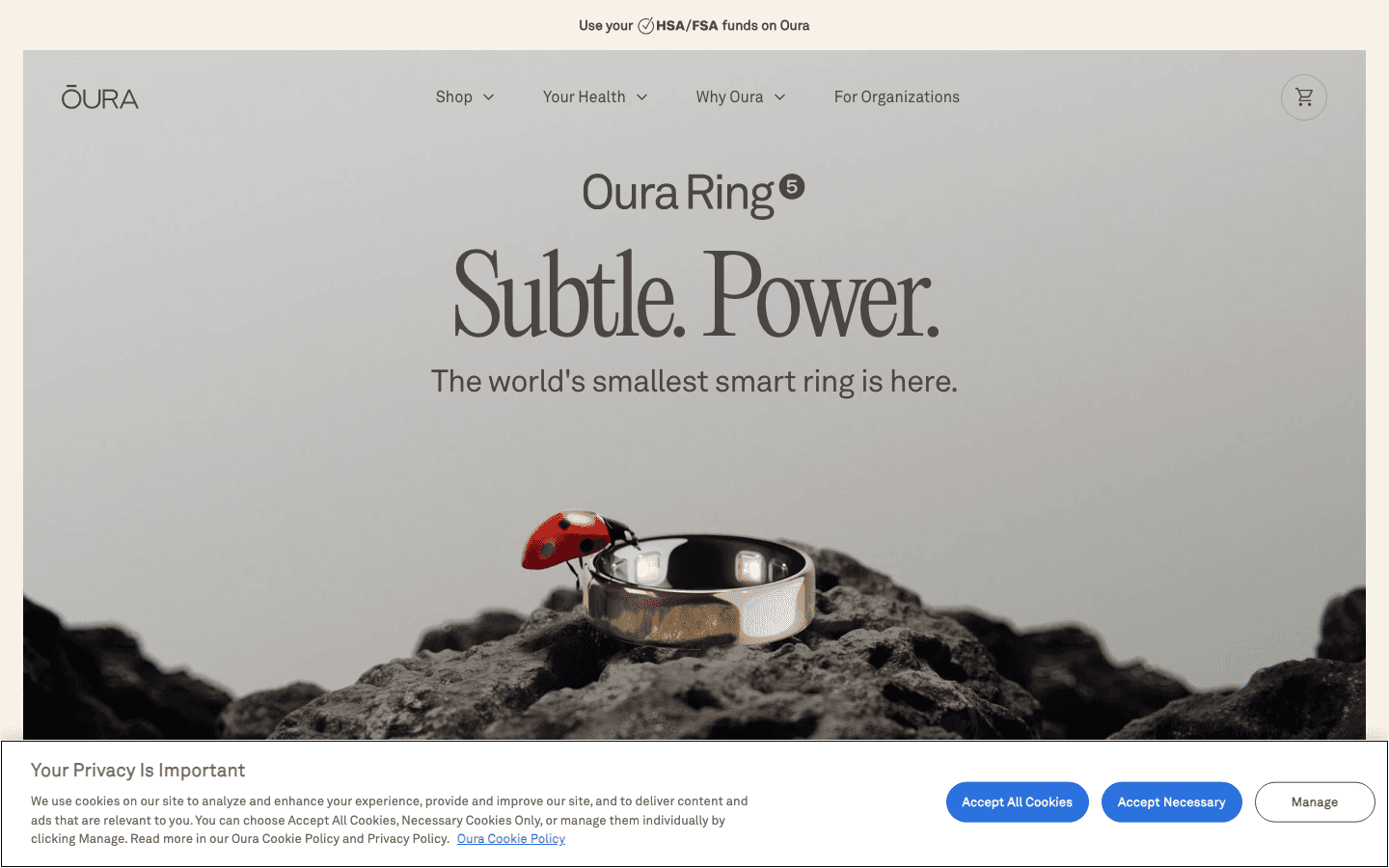
Oura Ring 4 is the benchmark for sleep tracking accuracy. At $349 (plus $5.99/month for the Oura Membership that unlocks detailed insights), it tracks sleep stages, HRV, SpO2, skin temperature, and respiratory rate in a titanium ring that weighs under 4 grams. Battery lasts 5-8 days depending on settings. The companion app surfaces daily Sleep and Readiness scores and explains what drove each number. The main downside is cost: the hardware plus membership adds up over time.
Fitbit Charge 6
Fitbit Charge 6 delivers genuinely good sleep stage tracking at around $99, with no required subscription. It tracks SpO2, skin temperature, HRV, and sleep stages nightly. The Daily Readiness Score (which does require a Premium subscription at $9.99/month) synthesizes those signals into a recovery number. If you want solid data without a ring and without a high upfront cost, this is the easiest entry point.
Apple Watch Series 11
Apple Watch Series 11 is worth considering if you are already in the Apple ecosystem. It tracks sleep stages, heart rate, blood oxygen, and wrist temperature. The FDA-cleared Sleep Apnea Notification feature will alert you if it detects breathing disruptions. Sleep tracking integrates directly with Apple Health, making it easy to pair with other apps. Battery life requires charging every 18-24 hours, which means building a charging routine is non-negotiable.
WHOOP
WHOOP takes a subscription-first model. Plans range from $199 to $359 per year (or $30/month), with the hardware included. The screenless band focuses entirely on recovery and strain data. WHOOP's sleep staging is highly accurate, and its "Sleep Coach" feature recommends nightly sleep targets based on your planned exertion the next day. It is the best option for athletes and high performers who want granular recovery data without any display distractions.
Samsung Galaxy Ring
Samsung Galaxy Ring sits at $249 with no subscription fee. It tracks sleep stages, HRV, skin temperature, and SpO2 overnight, and syncs with Samsung Health for a daily Energy Score. Battery runs 6-7 days. For Android users who want ring-style accuracy without Oura's ongoing membership cost, it is a compelling alternative.
How to Choose the Right Sleep Monitor Device
Start with comfort, because a tracker you take off at night is useless. Smart rings disappear on your finger. Watch bands can feel restrictive. Non-wearable sensors remove the question entirely but cost significantly more.
Then consider battery life against your charging habits. The Apple Watch needs nightly charging, which conflicts with overnight tracking if you forget. Rings typically last 5-8 days. WHOOP's battery pack charges while you wear the device, so you never need to take it off.
For the most accurate ring-based data: Oura Ring 4
For the best budget entry point: Fitbit Charge 6
For iPhone users already in the ecosystem: Apple Watch Series 11
For athletes focused on recovery: WHOOP
For Android users who want a ring without subscription: Samsung Galaxy Ring
Also factor in whether you want a companion app that just shows data (most trackers) versus one that gives you actionable guidance (Oura's Readiness coaching, WHOOP's Sleep Coach). The Garmin vs Fitbit comparison is worth reading if you are deciding between those two.
How to Actually Use Your Sleep Data
Most people use their sleep score the wrong way. They treat a low score as a report card and feel bad about it, then close the app. The score is actually a diagnostic tool, not a grade.
The most useful habit is tracking trends across at least two weeks before drawing conclusions. One bad HRV night could be alcohol, a late meal, or stress. A week of declining HRV scores points to something systemic: overtraining, poor sleep hygiene, or chronic stress. The sleep tracking system guide walks through how to build a consistent review process.
When your score is low, the most effective interventions are: moving your bedtime earlier by 30 minutes, cutting screens for the hour before sleep, keeping your room cooler, and avoiding alcohol within three hours of bed. These levers are boring, but they move the numbers reliably. The circadian rhythm apps guide covers light and timing tools that complement any sleep tracker.
Where sleep data gets genuinely interesting is when you connect it to the next day. If your recovery score is 60 instead of 85, your peak focus window is shorter and shifts later. Scheduling deep work during a low-recovery morning typically produces worse output and higher frustration. That connection between overnight data and daytime energy is what most sleep apps miss entirely.
Best App to Use Alongside Your Sleep Monitor

Sleep trackers measure recovery. Lifestack is the app that decides what to do with it.
Most productivity tools ignore your energy entirely. They schedule meetings at 9am whether you slept six hours or nine, whether your HRV was 20 or 80. Lifestack reads your sleep, recovery, and energy patterns to build a daily schedule that puts your hardest work at your peak hours and lighter tasks when you are naturally running lower. It auto-schedules across your calendar and task list, adjusting in real time as your energy shifts through the day.
The connection to sleep data is direct: a low recovery score means Lifestack pushes demanding cognitive work later in the morning and protects buffer time around it. A high score unlocks longer deep-work blocks. The result is that your sleep monitor data stops being a passive number and starts driving decisions. That is what energy-based scheduling looks like in practice, and you can see the full framework in the Lifestack introduction. The energy calendar approach covers the broader scheduling philosophy.
Lifestack costs $7/month or $50/year (with a 7-day free trial on the annual plan).
Frequently Asked Questions
What is the most accurate sleep monitor device in 2026?
The Oura Ring 4 and WHOOP consistently rank highest for sleep stage accuracy in independent comparisons. Both use multi-sensor arrays on the skin that capture HRV, skin temperature, SpO2, and movement simultaneously. Smartwatches are slightly less accurate for HRV due to wrist placement, though Apple Watch and Garmin have improved significantly with recent sensor updates.
Do sleep monitor devices actually work?
Yes, with caveats. Consumer sleep trackers are not as precise as polysomnography (the clinical gold standard), but they are accurate enough to identify trends, catch outlier nights, and correlate lifestyle factors with sleep quality. Using a device consistently over weeks gives you more useful insight than any single night's reading.
Can a sleep monitor device detect sleep apnea?
Some devices can flag potential sleep apnea symptoms. The Apple Watch Series 11 has FDA clearance for Sleep Apnea Notification. The Oura Ring 4 monitors blood oxygen and breathing irregularities and can prompt you to consult a doctor if patterns look concerning. Neither device replaces a clinical sleep study for diagnosis, but they can provide the data that prompts you to seek one.
How long do sleep monitor device batteries last?
Smart rings last 5-8 days on a charge. Smartwatches vary widely: the Apple Watch needs daily charging, while Garmin and Fitbit models typically last 4-7 days. WHOOP uses a wearable battery pack that charges the device while it stays on your wrist. Non-wearable sensors plug in and have no battery concern.
Do I need a subscription for a sleep monitor device?
Not always. The Fitbit Charge 6 and Samsung Galaxy Ring provide solid sleep data without a required subscription. The Oura Ring requires the Oura Membership ($5.99/month) for full insights, and WHOOP is entirely subscription-based. Apple Watch uses the Health app with no ongoing fees beyond the device itself.
What is the difference between a sleep tracker and a sleep monitor?
The terms are used interchangeably in most contexts. Technically, "sleep monitor" sometimes refers to clinical devices used in medical settings, while "sleep tracker" refers to consumer wearables. In everyday usage, both describe the same category of devices: wearables and sensors that measure your sleep overnight.
Getting better sleep starts with understanding it. A sleep monitor device turns vague feelings, restless nights, groggy mornings, afternoon crashes, into concrete data you can act on. Sleep stages, heart rate variability, blood oxygen: these numbers tell a story about your recovery that no amount of guesswork can replicate.
The market has expanded fast. You can now track your sleep from a ring that weighs less than a bottle cap, a smartwatch you already own, or a sensor that sits under your mattress without touching you at all. Each approach captures different data with different levels of accuracy and at different price points.
The harder question is not which device to buy. It is what to do with the data once you have it. Most people check their sleep score, feel vaguely guilty, and move on. This guide covers both: the best sleep monitor devices in 2026 and the strategies that turn raw numbers into genuinely better days.
Key Takeaways
Smart rings like the Oura Ring 4 offer the most accurate sleep stage detection without the screen glare of a watch
You do not need to spend $300+ to get meaningful sleep data -- entry-level devices like the Fitbit Charge 6 deliver solid stage tracking for under $100
A sleep monitor device is only as useful as the decisions you make with the data -- pairing your tracker with a scheduling tool transforms your scores into a better day
What a Sleep Monitor Device Actually Measures
Modern sleep trackers capture a surprisingly wide range of signals. Understanding what each metric means helps you focus on the numbers that matter most for your goals.
Sleep stages are the foundation. Most devices divide your night into light sleep, deep sleep, REM sleep, and awake time. Deep sleep is where physical recovery happens. REM is where memory consolidation and emotional processing occur. A balanced night typically includes 15-20% deep sleep and 20-25% REM. You can read more about what each phase does in our guide to the four stages of sleep.
Heart rate variability (HRV) is the metric serious athletes and biohackers obsess over, and for good reason. Higher HRV generally signals that your nervous system recovered well overnight. A drop in HRV often appears before illness, overtraining, or a bad day of focus. Understanding your recovery score depends largely on HRV trends.
Blood oxygen (SpO2) dips during normal breathing disruptions but drops significantly in people with sleep apnea. Most trackers flag overnight SpO2 below 90% as a reason to see a doctor. Skin temperature deviation tracks how much your body temp shifted from your baseline -- useful for spotting illness, hormonal changes, or ovulation. Respiratory rate rounds out the picture, measuring how many breaths you take per minute at rest.
Types of Sleep Monitor Devices
Each form factor comes with real trade-offs. Knowing which one fits your life matters as much as which brand you choose.
Smart rings are the most accurate wearable option for sleep, because they sit closer to the skin with no screen drawing power or causing light disruption. The Oura Ring and Samsung Galaxy Ring are the two main players. Both track sleep stages, HRV, skin temp, and SpO2. For a deeper comparison of ring options, see our best smart rings for sleep tracking roundup.
Smartwatches combine sleep tracking with fitness and productivity features. The Apple Watch Series 11 tracks sleep stages and has FDA clearance for sleep apnea detection. Fitbit and Garmin offer solid multi-night battery life at lower price points. The trade-off is comfort: sleeping in a watch is not for everyone, and the larger sensor placement on the wrist is slightly less accurate than a ring for HRV. See how the Apple Watch handles sleep stages if you are already in the Apple ecosystem.
Dedicated wearables like WHOOP skip the display entirely and focus purely on recovery data. The WHOOP sleep tracker calculates a daily "strain" and "recovery" score based on HRV, resting heart rate, and sleep performance. It is subscription-only, which some find off-putting, but the data quality is among the best available.
Non-wearable sensors sit under your mattress or clip to your bed frame. The Eight Sleep Pod is the flagship here, adding active temperature regulation to its tracking. These work well for people who find wearables uncomfortable overnight, though they are the most expensive category.
Top Sleep Monitor Devices Worth Considering in 2026
These five devices represent the best options across price points and use cases as of September 2026.
Oura Ring 4
Oura Ring 4 is the benchmark for sleep tracking accuracy. At $349 (plus $5.99/month for the Oura Membership that unlocks detailed insights), it tracks sleep stages, HRV, SpO2, skin temperature, and respiratory rate in a titanium ring that weighs under 4 grams. Battery lasts 5-8 days depending on settings. The companion app surfaces daily Sleep and Readiness scores and explains what drove each number. The main downside is cost: the hardware plus membership adds up over time.
Fitbit Charge 6
Fitbit Charge 6 delivers genuinely good sleep stage tracking at around $99, with no required subscription. It tracks SpO2, skin temperature, HRV, and sleep stages nightly. The Daily Readiness Score (which does require a Premium subscription at $9.99/month) synthesizes those signals into a recovery number. If you want solid data without a ring and without a high upfront cost, this is the easiest entry point.
Apple Watch Series 11
Apple Watch Series 11 is worth considering if you are already in the Apple ecosystem. It tracks sleep stages, heart rate, blood oxygen, and wrist temperature. The FDA-cleared Sleep Apnea Notification feature will alert you if it detects breathing disruptions. Sleep tracking integrates directly with Apple Health, making it easy to pair with other apps. Battery life requires charging every 18-24 hours, which means building a charging routine is non-negotiable.
WHOOP
WHOOP takes a subscription-first model. Plans range from $199 to $359 per year (or $30/month), with the hardware included. The screenless band focuses entirely on recovery and strain data. WHOOP's sleep staging is highly accurate, and its "Sleep Coach" feature recommends nightly sleep targets based on your planned exertion the next day. It is the best option for athletes and high performers who want granular recovery data without any display distractions.
Samsung Galaxy Ring
Samsung Galaxy Ring sits at $249 with no subscription fee. It tracks sleep stages, HRV, skin temperature, and SpO2 overnight, and syncs with Samsung Health for a daily Energy Score. Battery runs 6-7 days. For Android users who want ring-style accuracy without Oura's ongoing membership cost, it is a compelling alternative.
How to Choose the Right Sleep Monitor Device
Start with comfort, because a tracker you take off at night is useless. Smart rings disappear on your finger. Watch bands can feel restrictive. Non-wearable sensors remove the question entirely but cost significantly more.
Then consider battery life against your charging habits. The Apple Watch needs nightly charging, which conflicts with overnight tracking if you forget. Rings typically last 5-8 days. WHOOP's battery pack charges while you wear the device, so you never need to take it off.
For the most accurate ring-based data: Oura Ring 4
For the best budget entry point: Fitbit Charge 6
For iPhone users already in the ecosystem: Apple Watch Series 11
For athletes focused on recovery: WHOOP
For Android users who want a ring without subscription: Samsung Galaxy Ring
Also factor in whether you want a companion app that just shows data (most trackers) versus one that gives you actionable guidance (Oura's Readiness coaching, WHOOP's Sleep Coach). The Garmin vs Fitbit comparison is worth reading if you are deciding between those two.
How to Actually Use Your Sleep Data
Most people use their sleep score the wrong way. They treat a low score as a report card and feel bad about it, then close the app. The score is actually a diagnostic tool, not a grade.
The most useful habit is tracking trends across at least two weeks before drawing conclusions. One bad HRV night could be alcohol, a late meal, or stress. A week of declining HRV scores points to something systemic: overtraining, poor sleep hygiene, or chronic stress. The sleep tracking system guide walks through how to build a consistent review process.
When your score is low, the most effective interventions are: moving your bedtime earlier by 30 minutes, cutting screens for the hour before sleep, keeping your room cooler, and avoiding alcohol within three hours of bed. These levers are boring, but they move the numbers reliably. The circadian rhythm apps guide covers light and timing tools that complement any sleep tracker.
Where sleep data gets genuinely interesting is when you connect it to the next day. If your recovery score is 60 instead of 85, your peak focus window is shorter and shifts later. Scheduling deep work during a low-recovery morning typically produces worse output and higher frustration. That connection between overnight data and daytime energy is what most sleep apps miss entirely.
Best App to Use Alongside Your Sleep Monitor
Sleep trackers measure recovery. Lifestack is the app that decides what to do with it.
Most productivity tools ignore your energy entirely. They schedule meetings at 9am whether you slept six hours or nine, whether your HRV was 20 or 80. Lifestack reads your sleep, recovery, and energy patterns to build a daily schedule that puts your hardest work at your peak hours and lighter tasks when you are naturally running lower. It auto-schedules across your calendar and task list, adjusting in real time as your energy shifts through the day.
The connection to sleep data is direct: a low recovery score means Lifestack pushes demanding cognitive work later in the morning and protects buffer time around it. A high score unlocks longer deep-work blocks. The result is that your sleep monitor data stops being a passive number and starts driving decisions. That is what energy-based scheduling looks like in practice, and you can see the full framework in the Lifestack introduction. The energy calendar approach covers the broader scheduling philosophy.
Lifestack costs $7/month or $50/year (with a 7-day free trial on the annual plan).
Frequently Asked Questions
What is the most accurate sleep monitor device in 2026?
The Oura Ring 4 and WHOOP consistently rank highest for sleep stage accuracy in independent comparisons. Both use multi-sensor arrays on the skin that capture HRV, skin temperature, SpO2, and movement simultaneously. Smartwatches are slightly less accurate for HRV due to wrist placement, though Apple Watch and Garmin have improved significantly with recent sensor updates.
Do sleep monitor devices actually work?
Yes, with caveats. Consumer sleep trackers are not as precise as polysomnography (the clinical gold standard), but they are accurate enough to identify trends, catch outlier nights, and correlate lifestyle factors with sleep quality. Using a device consistently over weeks gives you more useful insight than any single night's reading.
Can a sleep monitor device detect sleep apnea?
Some devices can flag potential sleep apnea symptoms. The Apple Watch Series 11 has FDA clearance for Sleep Apnea Notification. The Oura Ring 4 monitors blood oxygen and breathing irregularities and can prompt you to consult a doctor if patterns look concerning. Neither device replaces a clinical sleep study for diagnosis, but they can provide the data that prompts you to seek one.
How long do sleep monitor device batteries last?
Smart rings last 5-8 days on a charge. Smartwatches vary widely: the Apple Watch needs daily charging, while Garmin and Fitbit models typically last 4-7 days. WHOOP uses a wearable battery pack that charges the device while it stays on your wrist. Non-wearable sensors plug in and have no battery concern.
Do I need a subscription for a sleep monitor device?
Not always. The Fitbit Charge 6 and Samsung Galaxy Ring provide solid sleep data without a required subscription. The Oura Ring requires the Oura Membership ($5.99/month) for full insights, and WHOOP is entirely subscription-based. Apple Watch uses the Health app with no ongoing fees beyond the device itself.
What is the difference between a sleep tracker and a sleep monitor?
The terms are used interchangeably in most contexts. Technically, "sleep monitor" sometimes refers to clinical devices used in medical settings, while "sleep tracker" refers to consumer wearables. In everyday usage, both describe the same category of devices: wearables and sensors that measure your sleep overnight.



FOLLOW ON
FOLLOW ON
FOLLOW ON


Copyright 2026 © Lifestack. All rights reserved
Copyright 2026 © Lifestack. All rights reserved

