
Device
Samsung Galaxy Watch 7 Review: Is It Worth It in 2026?
Samsung Galaxy Watch 7 Review: Is It Worth It in 2026?

The Samsung Galaxy Watch 7 arrived in mid-2024 with faster processing, a redesigned sensor array, and the addition of body composition tracking to an already solid health platform. With the Galaxy Watch 8 now available, the Watch 7 has dropped in price and sits as one of the best value smartwatches for Android users in 2026.
This review covers everything you need to know: the hardware, the health tracking capabilities, how it performs day-to-day, and the key question of whether you should buy the Watch 7 now or stretch to the Watch 8.
Samsung Galaxy Watch 7 at a Glance
Price (2026): Starting from $159 (40mm), down from $299.99 at launch
Sizes: 40mm and 44mm
OS: Wear OS 5 with Samsung One UI 6 Watch
Processor: Samsung Exynos W1000
Battery: Up to 40 hours standard use, 18 hours with GPS on
Water resistance: 5 ATM (safe for swimming)
Compatibility: Android only (not compatible with iPhone)
Rating: 4.2 / 5
Key Takeaways
The Galaxy Watch 7 has the most advanced sensor array in Samsung's lineup and includes FDA-cleared ECG and body composition tracking
At its current discounted price, it offers better value than most premium wearables
Not for iPhone users or dedicated endurance athletes who need multi-band GPS and training load analytics
Design and Display
The Watch 7 uses a circular design with a flat glass face, aluminum casing, and two physical side buttons. It is noticeably lighter than its predecessor, which matters for all-day wear. The two buttons double as ECG electrodes, so the physical hardware serves a health function rather than just navigation.
The display is bright and readable outdoors. The 40mm and 44mm sizes offer the same feature set, so the choice comes down to wrist size. The 44mm has a slightly larger battery. Both use Samsung's sapphire-glass-coated display, which holds up well to daily scratches.
Band options are interchangeable with older Galaxy Watch models (20mm for 40mm, 22mm for 44mm), which is a practical plus if you already own Samsung bands.
Health and Fitness Tracking
The Samsung Galaxy Watch 7 uses the BioActive Sensor, which packs optical heart rate, blood oxygen (SpO2), ECG, and bioelectrical impedance analysis (BIA) into a single sensor array. That last one is the standout: BIA measures body composition, estimating body fat percentage, muscle mass, and water composition directly from your wrist. No other mainstream smartwatch at this price point does this.
Heart rate and ECG: Continuous heart rate monitoring and an FDA-cleared ECG app that can detect atrial fibrillation. To take an ECG, you place your finger on the side button for 30 seconds. Results are stored in the Samsung Health app.
Sleep tracking: The Watch 7 tracks sleep stages (REM, light, deep), snoring detection via the microphone, and blood oxygen levels during sleep. Samsung's sleep score combines these into a nightly summary with coaching tips. If you want to dig deeper into what the sleep data actually means, the guide to how much deep sleep you should get is a useful companion.
Energy Score: This is Samsung's daily readiness metric, similar in concept to Rise Science's energy tracking or the recovery scores from Oura Ring. It pulls together sleep quality, resting heart rate, and HRV trends to give you a daily readiness number. It is less refined than Oura's algorithm but meaningful for tracking trends over time.
Fitness tracking: Automatic workout detection covers over 100 activities. Running, cycling, and swimming are well-supported with real-time pace, distance (single-band GPS), and heart rate zone data. The Watch 7 does not offer training load analytics or structured workout plans, which is a gap for serious runners or cyclists. For that depth, a Garmin is a better fit.
Software: Wear OS 5 with Samsung One UI 6
The Watch 7 runs Wear OS 5 with Samsung's One UI 6 Watch layer on top. This gives you Google's app ecosystem (Maps, Pay, Assistant) plus Samsung's own health platform. The combination is the best Android smartwatch software available, and Samsung's integration with Galaxy phones is tight: you can relay calls, mirror notifications, and control your phone camera directly from the watch.
Third-party app selection on Wear OS is decent but thinner than you would find on Apple Watch. The core productivity and navigation apps are covered. Niche fitness apps and coaching platforms are where gaps appear.
Samsung Health is required for the watch's health features. It stores all your data locally and in Samsung's cloud. If you want to pipe that data into other health platforms, the Samsung Health data export is limited compared to Apple Health's open ecosystem.
Battery Life
Samsung rates the Watch 7 at up to 40 hours of standard use or 18 hours with continuous GPS. In practice, daily use with always-on display turned off gets you about 30 to 36 hours, meaning a charge every day to day and a half. With the always-on display enabled, expect 24 to 28 hours.
This is not exceptional by wearable standards. The WHOOP and Oura Ring both last 4 to 7 days. Even the Fitbit Sense gets closer to 6 days. If battery anxiety is a concern, the Watch 7 requires nightly charging as a discipline. It is fine if you already charge overnight; it is a friction point if you do not.
Galaxy Watch 7 vs Galaxy Watch 8: Which Should You Buy?
The Galaxy Watch 8 adds incremental improvements: a slightly updated processor, new health sensors, and some software refinements. But at the Watch 7's current price point of around $159, the performance gap does not justify paying full price for the Watch 8 unless you need one specific feature it adds.
Buy the Watch 7 if: you want a premium Android smartwatch at a mid-range price, you care about body composition tracking and ECG, and you do not need the newest model.
Consider the Watch 8 if: the incremental updates matter to you, you want the longest software support window, or the Watch 7 discount is smaller in your region.
Neither watch is for iPhone users. Samsung's health features are deeply integrated with the Samsung Health app and require an Android device to function fully.
How Lifestack Uses Your Galaxy Watch Data
The Galaxy Watch 7's Energy Score and sleep data are useful metrics. The gap is that they sit in Samsung Health and do not change how you plan your day.
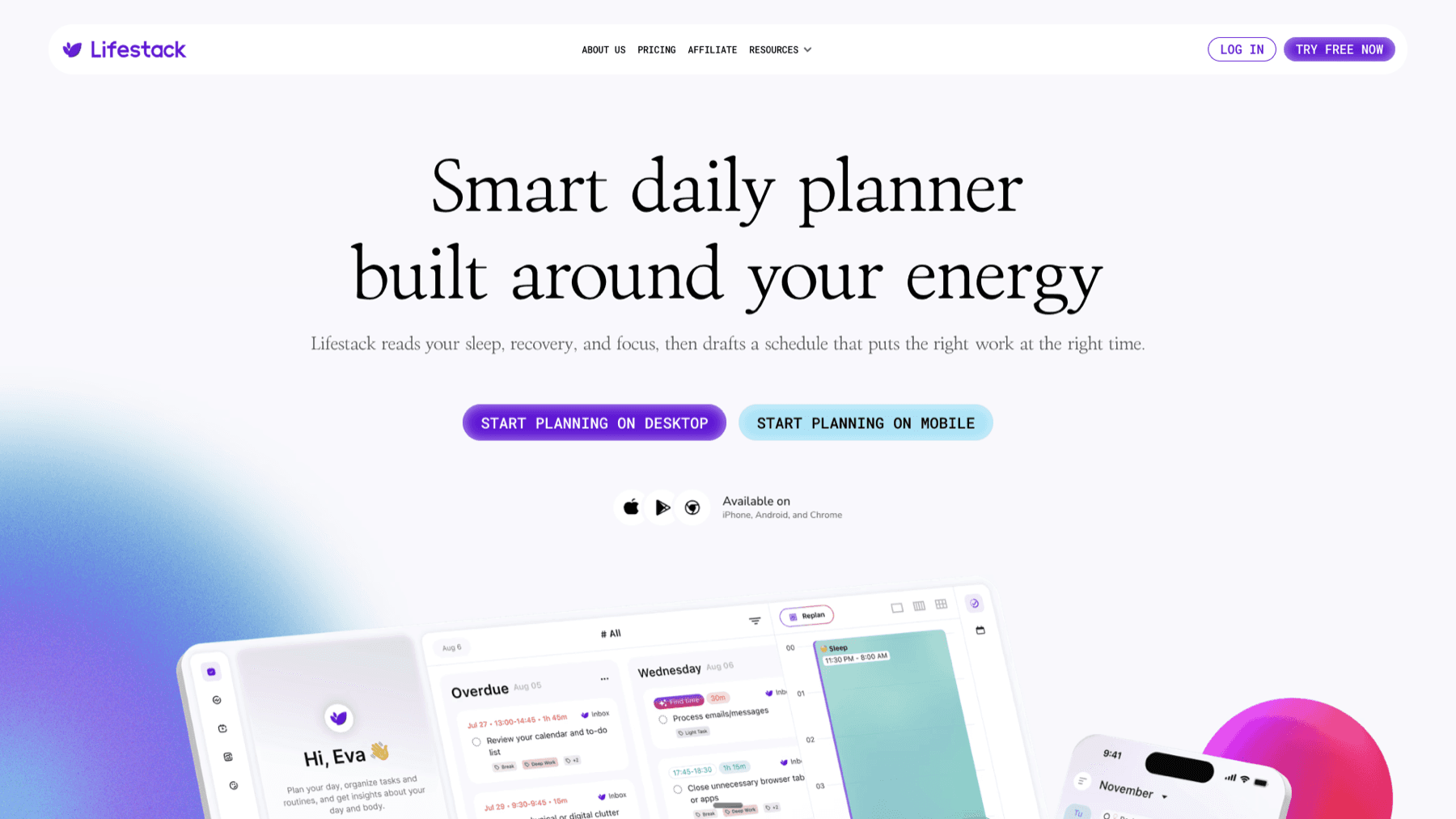
Lifestack connects to your calendar and health data to build a schedule around your actual energy. If your Galaxy Watch shows poor recovery, Lifestack builds a lighter, more focused day automatically. Deep work lands when your Energy Score is high. Administrative tasks fill the recovery windows. Your watch data drives your schedule instead of just reporting on it.
Lifestack supports Android health data via Google Fit and is available for $9.99/month or $49.99/year with a 7-day free trial. Pair it with your Galaxy Watch 7 and your health metrics finally have somewhere to go beyond a weekly summary screen.
Frequently Asked Questions
Does the Samsung Galaxy Watch 7 work with iPhone?
No. The Galaxy Watch 7 requires an Android phone. Samsung Health, which powers all the watch's health features, does not have an iOS app that supports the watch. If you use an iPhone, the Fitbit vs Apple Watch comparison covers better options.
How accurate is the Galaxy Watch 7's body composition feature?
The BIA (bioelectrical impedance) measurements give useful trend data but are not clinically accurate measurements. Hydration level, skin temperature, and electrode contact affect results. Samsung recommends taking measurements under consistent conditions (morning, fasted, after hydrating normally) for the most reliable trend tracking.
Is the Galaxy Watch 7 worth it in 2026 now that the Watch 8 is out?
Yes, at its current discounted price. The Watch 7 offers ECG, body composition, sleep staging, and a solid Wear OS experience. For most Android users, the Watch 7 at $159 delivers more value than it did at $299. Unless you need specific Watch 8 features, the Watch 7 is the smarter buy in 2026.
How long does the Galaxy Watch 7 battery last?
Approximately 30 to 36 hours with standard use and always-on display off, or around 18 hours with continuous GPS active. Most users charge it overnight daily.
What health apps work with the Galaxy Watch 7?
Samsung Health is the primary platform and is required for the watch's built-in health features. Google Fit integration is available, and Google's core Wear OS apps (Maps, Pay, Assistant) work natively. Third-party fitness apps available on the Play Store for Wear OS include Strava, Nike Run Club, and Spotify. Data export options to platforms outside Samsung's ecosystem are more limited than on Apple Watch.
The Samsung Galaxy Watch 7 arrived in mid-2024 with faster processing, a redesigned sensor array, and the addition of body composition tracking to an already solid health platform. With the Galaxy Watch 8 now available, the Watch 7 has dropped in price and sits as one of the best value smartwatches for Android users in 2026.
This review covers everything you need to know: the hardware, the health tracking capabilities, how it performs day-to-day, and the key question of whether you should buy the Watch 7 now or stretch to the Watch 8.
Samsung Galaxy Watch 7 at a Glance
Price (2026): Starting from $159 (40mm), down from $299.99 at launch
Sizes: 40mm and 44mm
OS: Wear OS 5 with Samsung One UI 6 Watch
Processor: Samsung Exynos W1000
Battery: Up to 40 hours standard use, 18 hours with GPS on
Water resistance: 5 ATM (safe for swimming)
Compatibility: Android only (not compatible with iPhone)
Rating: 4.2 / 5
Key Takeaways
The Galaxy Watch 7 has the most advanced sensor array in Samsung's lineup and includes FDA-cleared ECG and body composition tracking
At its current discounted price, it offers better value than most premium wearables
Not for iPhone users or dedicated endurance athletes who need multi-band GPS and training load analytics
Design and Display
The Watch 7 uses a circular design with a flat glass face, aluminum casing, and two physical side buttons. It is noticeably lighter than its predecessor, which matters for all-day wear. The two buttons double as ECG electrodes, so the physical hardware serves a health function rather than just navigation.
The display is bright and readable outdoors. The 40mm and 44mm sizes offer the same feature set, so the choice comes down to wrist size. The 44mm has a slightly larger battery. Both use Samsung's sapphire-glass-coated display, which holds up well to daily scratches.
Band options are interchangeable with older Galaxy Watch models (20mm for 40mm, 22mm for 44mm), which is a practical plus if you already own Samsung bands.
Health and Fitness Tracking
The Samsung Galaxy Watch 7 uses the BioActive Sensor, which packs optical heart rate, blood oxygen (SpO2), ECG, and bioelectrical impedance analysis (BIA) into a single sensor array. That last one is the standout: BIA measures body composition, estimating body fat percentage, muscle mass, and water composition directly from your wrist. No other mainstream smartwatch at this price point does this.
Heart rate and ECG: Continuous heart rate monitoring and an FDA-cleared ECG app that can detect atrial fibrillation. To take an ECG, you place your finger on the side button for 30 seconds. Results are stored in the Samsung Health app.
Sleep tracking: The Watch 7 tracks sleep stages (REM, light, deep), snoring detection via the microphone, and blood oxygen levels during sleep. Samsung's sleep score combines these into a nightly summary with coaching tips. If you want to dig deeper into what the sleep data actually means, the guide to how much deep sleep you should get is a useful companion.
Energy Score: This is Samsung's daily readiness metric, similar in concept to Rise Science's energy tracking or the recovery scores from Oura Ring. It pulls together sleep quality, resting heart rate, and HRV trends to give you a daily readiness number. It is less refined than Oura's algorithm but meaningful for tracking trends over time.
Fitness tracking: Automatic workout detection covers over 100 activities. Running, cycling, and swimming are well-supported with real-time pace, distance (single-band GPS), and heart rate zone data. The Watch 7 does not offer training load analytics or structured workout plans, which is a gap for serious runners or cyclists. For that depth, a Garmin is a better fit.
Software: Wear OS 5 with Samsung One UI 6
The Watch 7 runs Wear OS 5 with Samsung's One UI 6 Watch layer on top. This gives you Google's app ecosystem (Maps, Pay, Assistant) plus Samsung's own health platform. The combination is the best Android smartwatch software available, and Samsung's integration with Galaxy phones is tight: you can relay calls, mirror notifications, and control your phone camera directly from the watch.
Third-party app selection on Wear OS is decent but thinner than you would find on Apple Watch. The core productivity and navigation apps are covered. Niche fitness apps and coaching platforms are where gaps appear.
Samsung Health is required for the watch's health features. It stores all your data locally and in Samsung's cloud. If you want to pipe that data into other health platforms, the Samsung Health data export is limited compared to Apple Health's open ecosystem.
Battery Life
Samsung rates the Watch 7 at up to 40 hours of standard use or 18 hours with continuous GPS. In practice, daily use with always-on display turned off gets you about 30 to 36 hours, meaning a charge every day to day and a half. With the always-on display enabled, expect 24 to 28 hours.
This is not exceptional by wearable standards. The WHOOP and Oura Ring both last 4 to 7 days. Even the Fitbit Sense gets closer to 6 days. If battery anxiety is a concern, the Watch 7 requires nightly charging as a discipline. It is fine if you already charge overnight; it is a friction point if you do not.
Galaxy Watch 7 vs Galaxy Watch 8: Which Should You Buy?
The Galaxy Watch 8 adds incremental improvements: a slightly updated processor, new health sensors, and some software refinements. But at the Watch 7's current price point of around $159, the performance gap does not justify paying full price for the Watch 8 unless you need one specific feature it adds.
Buy the Watch 7 if: you want a premium Android smartwatch at a mid-range price, you care about body composition tracking and ECG, and you do not need the newest model.
Consider the Watch 8 if: the incremental updates matter to you, you want the longest software support window, or the Watch 7 discount is smaller in your region.
Neither watch is for iPhone users. Samsung's health features are deeply integrated with the Samsung Health app and require an Android device to function fully.
How Lifestack Uses Your Galaxy Watch Data
The Galaxy Watch 7's Energy Score and sleep data are useful metrics. The gap is that they sit in Samsung Health and do not change how you plan your day.
Lifestack connects to your calendar and health data to build a schedule around your actual energy. If your Galaxy Watch shows poor recovery, Lifestack builds a lighter, more focused day automatically. Deep work lands when your Energy Score is high. Administrative tasks fill the recovery windows. Your watch data drives your schedule instead of just reporting on it.
Lifestack supports Android health data via Google Fit and is available for $9.99/month or $49.99/year with a 7-day free trial. Pair it with your Galaxy Watch 7 and your health metrics finally have somewhere to go beyond a weekly summary screen.
Frequently Asked Questions
Does the Samsung Galaxy Watch 7 work with iPhone?
No. The Galaxy Watch 7 requires an Android phone. Samsung Health, which powers all the watch's health features, does not have an iOS app that supports the watch. If you use an iPhone, the Fitbit vs Apple Watch comparison covers better options.
How accurate is the Galaxy Watch 7's body composition feature?
The BIA (bioelectrical impedance) measurements give useful trend data but are not clinically accurate measurements. Hydration level, skin temperature, and electrode contact affect results. Samsung recommends taking measurements under consistent conditions (morning, fasted, after hydrating normally) for the most reliable trend tracking.
Is the Galaxy Watch 7 worth it in 2026 now that the Watch 8 is out?
Yes, at its current discounted price. The Watch 7 offers ECG, body composition, sleep staging, and a solid Wear OS experience. For most Android users, the Watch 7 at $159 delivers more value than it did at $299. Unless you need specific Watch 8 features, the Watch 7 is the smarter buy in 2026.
How long does the Galaxy Watch 7 battery last?
Approximately 30 to 36 hours with standard use and always-on display off, or around 18 hours with continuous GPS active. Most users charge it overnight daily.
What health apps work with the Galaxy Watch 7?
Samsung Health is the primary platform and is required for the watch's built-in health features. Google Fit integration is available, and Google's core Wear OS apps (Maps, Pay, Assistant) work natively. Third-party fitness apps available on the Play Store for Wear OS include Strava, Nike Run Club, and Spotify. Data export options to platforms outside Samsung's ecosystem are more limited than on Apple Watch.



FOLLOW ON
FOLLOW ON
FOLLOW ON



Copyright 2026 © Lifestack. All rights reserved
Copyright 2026 © Lifestack. All rights reserved

