
Device
WHOOP vs Fitbit: Which Tracker Wins in 2026?
WHOOP vs Fitbit: Which Tracker Wins in 2026?

WHOOP and Fitbit are both screenless fitness trackers, but they target almost completely different users. WHOOP is built for athletes who want to optimize recovery and training load. Fitbit, now under Google, targets everyday health tracking at an accessible price without requiring an ongoing subscription. The two overlap in some areas and diverge sharply in others.
This comparison covers both platforms as they stand in 2026, including the WHOOP 5.0 and the Google Fitbit Air as the flagship screenless options from each brand.
Key Takeaways
WHOOP charges $199-$359 per year (subscription required); Fitbit Air costs $99.99 once with no required subscription for core features
WHOOP samples heart rate more frequently and has stronger clinical validation for sleep stage accuracy; Fitbit Air adds FDA-cleared AFib detection and Google Health integration
WHOOP is the better choice for athletes focused on recovery and strain; Fitbit is the better choice for general health tracking at lower long-term cost
Quick Verdict
WHOOP: Best for athletes, coaches, and anyone whose training load and recovery drive daily decisions
Fitbit Air: Best for everyday health tracking, budget-conscious buyers, and people who want Google ecosystem integration
WHOOP Overview
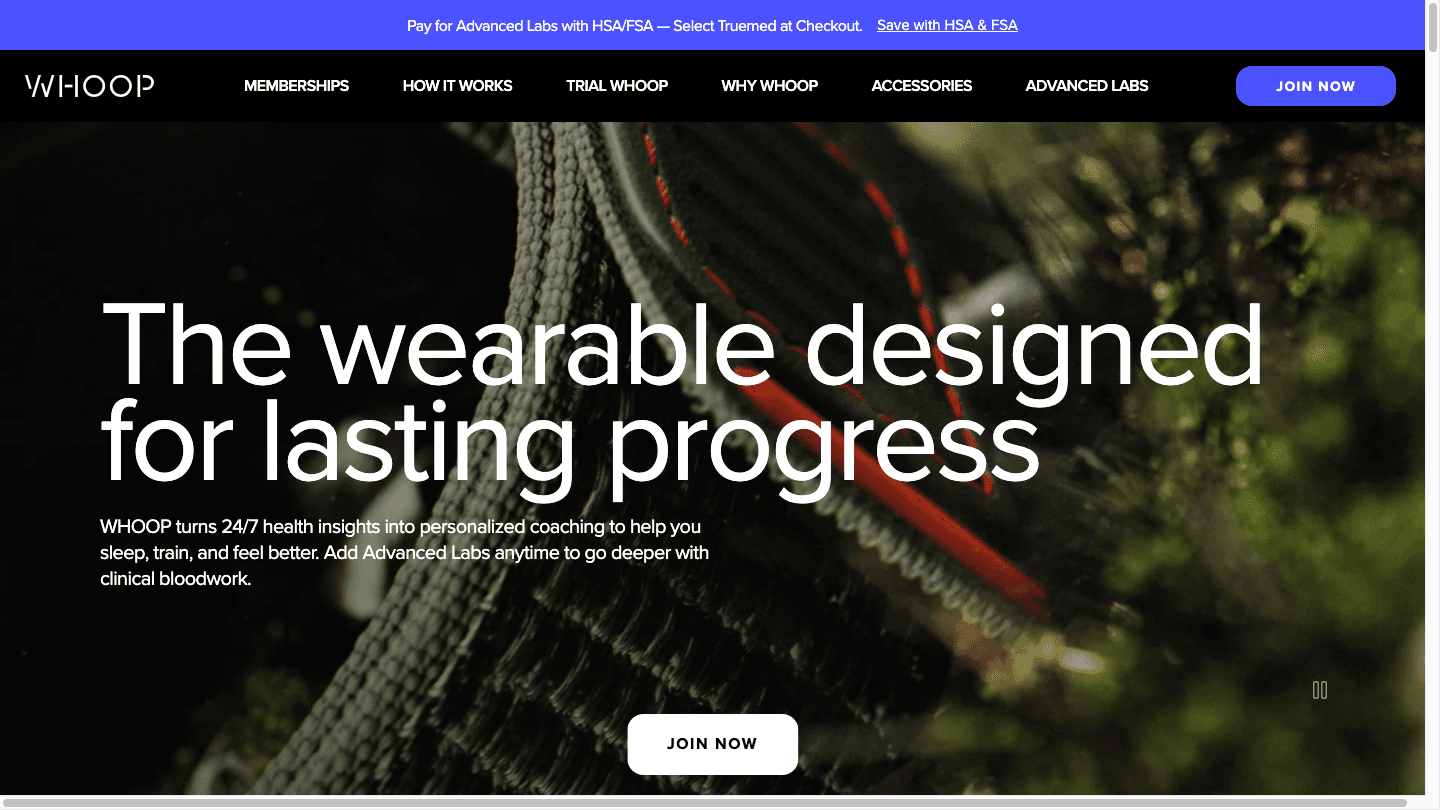
WHOOP is a subscription-based wearable with no display. The band sits on your wrist or upper arm and collects continuous heart rate, HRV, skin temperature, respiratory rate, blood oxygen, and accelerometer data. It samples heart rate every second, which is roughly 52 times more frequently than most competitors.
The platform is organized around three core metrics: recovery (how ready your body is for stress), strain (how much cardiovascular load you accumulated in a day), and sleep. Every morning, you get a recovery score from 0-100 based on the previous night's HRV, sleep quality, and accumulated strain. This score then guides how hard you should push that day.
WHOOP's sleep tracking is trained on polysomnography (PSG) clinical data and is widely considered one of the more accurate consumer wearables for sleep stage estimation. See our full guide to the WHOOP app for a breakdown of what each metric tells you.
WHOOP Pricing (2026)
WHOOP One: $199/year (core recovery, sleep, and strain tracking)
WHOOP Peak: $239/year (adds enhanced monitoring features)
WHOOP Life: $359/year (adds blood pressure insights and ECG monitoring)
Hardware is free with a subscription. If you cancel, the device stops working. Over three years, even the cheapest WHOOP tier costs around $597 versus $100 for the Fitbit Air.
WHOOP Pros
Best-in-class recovery and strain analytics for athletes
Continuous heart rate sampling at 1-second intervals
Strong clinical validation for sleep accuracy
5-day battery life, charges while wearing via battery pack
Advanced labs integration (blood biomarker testing)
WHOOP Limitations
High recurring cost; device stops working without active subscription
No display, no GPS, no contactless payment
Requires subscription commitment to see full value
Fitbit Air Overview
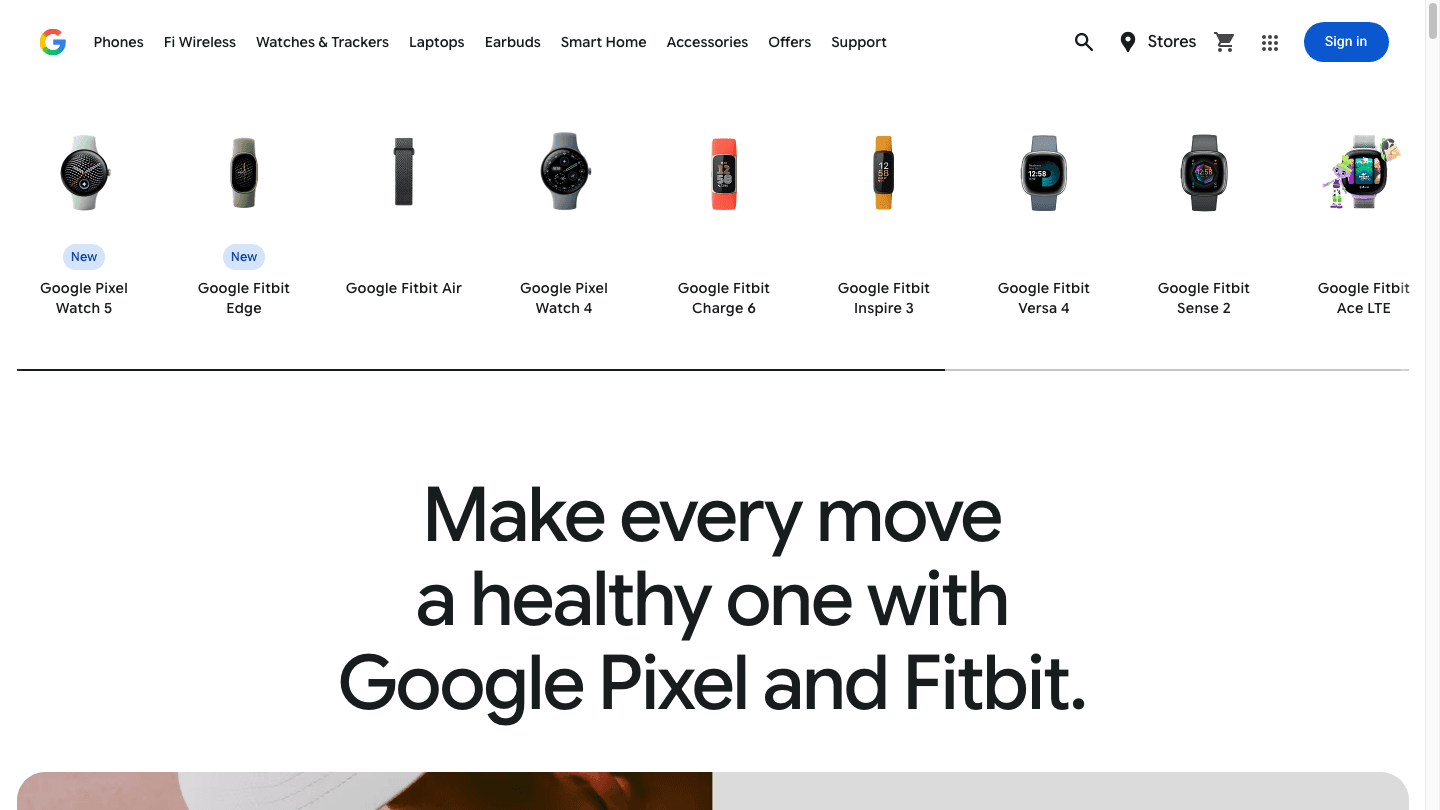
Google Fitbit has expanded significantly since Google's acquisition. The Fitbit Air is their current screenless band, priced at $99.99 as a one-time purchase. Core health features including heart rate tracking, sleep stages, HRV, stress score, SpO2, and AFib alerts are included without a required subscription.
Google Fitbit Premium adds coaching, advanced sleep analysis, and Gemini AI-powered insights for around $10/month, but the baseline tracking works without it. Integration with Google Health and Google Maps, along with Gemini AI recommendations, reflects the Google ownership more than any previous Fitbit generation. See what apps work best with Fitbit for ways to extend the platform.
Fitbit Air Pricing (2026)
Fitbit Air hardware: $99.99 (one-time)
Google Fitbit Premium: Optional, approximately $9.99/month or $79.99/year
Fitbit Pros
One-time hardware cost, no subscription required for core tracking
FDA-cleared AFib detection
Google Health and Gemini AI integration
Lighter and smaller than WHOOP band
Better long-term cost for casual health trackers
Fitbit Limitations
Less detailed recovery and strain analytics than WHOOP
Lower heart rate sampling frequency
Sleep stage accuracy trails WHOOP in independent comparisons
Head-to-Head Comparison
Price over 3 years: Fitbit Air ~$100-$340 (with optional Premium); WHOOP One ~$597-$1,077 depending on tier
Heart rate accuracy: WHOOP samples more frequently; both perform well for resting and zone-based metrics
Sleep tracking: WHOOP has stronger PSG-validated accuracy; Fitbit is reliable but less clinically validated
Recovery score: WHOOP offers detailed recovery with strain context; Fitbit offers a daily readiness score that is less granular
Medical features: Fitbit Air includes FDA-cleared AFib detection; WHOOP Life adds ECG and blood pressure at higher cost
Battery life: WHOOP lasts 4-5 days and charges via a wearable battery pack; Fitbit Air lasts approximately 6 days with standard charging
Ecosystem: WHOOP lives in its own ecosystem; Fitbit integrates with Google Health, Google Calendar, and Gemini AI
For a broader look at how WHOOP stacks up against other wearables, see our WHOOP competitors guide and the best sleep trackers of 2026 roundup.
Which Should You Choose?
Choose WHOOP if you train consistently and want daily guidance on whether to push hard or recover. The strain and recovery system is built for people whose training decisions matter, and the higher cost is easier to justify when you use that data every day. Athletes, coaches, and people recovering from illness or high-stress periods tend to get the most from it.
Choose Fitbit Air if you want affordable, reliable health tracking without a subscription commitment. The AFib detection, Google Health integration, and lower long-term cost make it the better value for the majority of people who want health insights without an athletic training focus. If you are already in the Google ecosystem, the Fitbit Air's integration with Google services is a meaningful advantage.
Using Either Tracker With a Planning App
Both WHOOP and Fitbit give you recovery and sleep data. If you want your daily schedule to actually reflect that data, Lifestack is an energy-aware planning app that reads your wearable data and builds a daily plan around your actual readiness each morning rather than a fixed time-block template. It pairs naturally with either platform. Learn more about energy-based scheduling here.
Frequently Asked Questions
Is WHOOP better than Fitbit for sleep tracking?
WHOOP has stronger clinical validation for sleep stage accuracy. Its sleep model is trained on polysomnography data and tends to perform better in independent comparisons for REM and deep sleep detection. Fitbit's sleep tracking is reliable but less validated at the same level. For athletes who rely on sleep quality for training decisions, WHOOP's edge here matters.
Does Fitbit require a subscription like WHOOP?
No. The Fitbit Air costs $99.99 as a one-time purchase. Core health features including heart rate, sleep stages, HRV, and AFib detection work without any subscription. Google Fitbit Premium is optional and adds coaching and advanced insights.
Can I use WHOOP without a subscription?
No. WHOOP requires an active subscription to use. The hardware is provided free with the membership, but without the subscription the device does not function. Canceling your subscription means your WHOOP stops working.
Which is better for weight loss tracking?
Fitbit is the better choice here. It has a longer history of calorie-based fitness tracking, integrates with nutrition apps, and its Google Health connection includes diet and activity logging tools. WHOOP focuses on strain and recovery rather than weight management.
How does WHOOP compare to Fitbit for athletes?
WHOOP is significantly stronger for athletic use. The strain scoring, recovery analysis, and HRV-based readiness metrics are built for training periodization. Fitbit's daily readiness score covers similar ground but with less granularity. If training load management is your goal, WHOOP is the purpose-built option. See our WHOOP vs Apple Watch comparison for more athletic context.
WHOOP and Fitbit are both screenless fitness trackers, but they target almost completely different users. WHOOP is built for athletes who want to optimize recovery and training load. Fitbit, now under Google, targets everyday health tracking at an accessible price without requiring an ongoing subscription. The two overlap in some areas and diverge sharply in others.
This comparison covers both platforms as they stand in 2026, including the WHOOP 5.0 and the Google Fitbit Air as the flagship screenless options from each brand.
Key Takeaways
WHOOP charges $199-$359 per year (subscription required); Fitbit Air costs $99.99 once with no required subscription for core features
WHOOP samples heart rate more frequently and has stronger clinical validation for sleep stage accuracy; Fitbit Air adds FDA-cleared AFib detection and Google Health integration
WHOOP is the better choice for athletes focused on recovery and strain; Fitbit is the better choice for general health tracking at lower long-term cost
Quick Verdict
WHOOP: Best for athletes, coaches, and anyone whose training load and recovery drive daily decisions
Fitbit Air: Best for everyday health tracking, budget-conscious buyers, and people who want Google ecosystem integration
WHOOP Overview
WHOOP is a subscription-based wearable with no display. The band sits on your wrist or upper arm and collects continuous heart rate, HRV, skin temperature, respiratory rate, blood oxygen, and accelerometer data. It samples heart rate every second, which is roughly 52 times more frequently than most competitors.
The platform is organized around three core metrics: recovery (how ready your body is for stress), strain (how much cardiovascular load you accumulated in a day), and sleep. Every morning, you get a recovery score from 0-100 based on the previous night's HRV, sleep quality, and accumulated strain. This score then guides how hard you should push that day.
WHOOP's sleep tracking is trained on polysomnography (PSG) clinical data and is widely considered one of the more accurate consumer wearables for sleep stage estimation. See our full guide to the WHOOP app for a breakdown of what each metric tells you.
WHOOP Pricing (2026)
WHOOP One: $199/year (core recovery, sleep, and strain tracking)
WHOOP Peak: $239/year (adds enhanced monitoring features)
WHOOP Life: $359/year (adds blood pressure insights and ECG monitoring)
Hardware is free with a subscription. If you cancel, the device stops working. Over three years, even the cheapest WHOOP tier costs around $597 versus $100 for the Fitbit Air.
WHOOP Pros
Best-in-class recovery and strain analytics for athletes
Continuous heart rate sampling at 1-second intervals
Strong clinical validation for sleep accuracy
5-day battery life, charges while wearing via battery pack
Advanced labs integration (blood biomarker testing)
WHOOP Limitations
High recurring cost; device stops working without active subscription
No display, no GPS, no contactless payment
Requires subscription commitment to see full value
Fitbit Air Overview
Google Fitbit has expanded significantly since Google's acquisition. The Fitbit Air is their current screenless band, priced at $99.99 as a one-time purchase. Core health features including heart rate tracking, sleep stages, HRV, stress score, SpO2, and AFib alerts are included without a required subscription.
Google Fitbit Premium adds coaching, advanced sleep analysis, and Gemini AI-powered insights for around $10/month, but the baseline tracking works without it. Integration with Google Health and Google Maps, along with Gemini AI recommendations, reflects the Google ownership more than any previous Fitbit generation. See what apps work best with Fitbit for ways to extend the platform.
Fitbit Air Pricing (2026)
Fitbit Air hardware: $99.99 (one-time)
Google Fitbit Premium: Optional, approximately $9.99/month or $79.99/year
Fitbit Pros
One-time hardware cost, no subscription required for core tracking
FDA-cleared AFib detection
Google Health and Gemini AI integration
Lighter and smaller than WHOOP band
Better long-term cost for casual health trackers
Fitbit Limitations
Less detailed recovery and strain analytics than WHOOP
Lower heart rate sampling frequency
Sleep stage accuracy trails WHOOP in independent comparisons
Head-to-Head Comparison
Price over 3 years: Fitbit Air ~$100-$340 (with optional Premium); WHOOP One ~$597-$1,077 depending on tier
Heart rate accuracy: WHOOP samples more frequently; both perform well for resting and zone-based metrics
Sleep tracking: WHOOP has stronger PSG-validated accuracy; Fitbit is reliable but less clinically validated
Recovery score: WHOOP offers detailed recovery with strain context; Fitbit offers a daily readiness score that is less granular
Medical features: Fitbit Air includes FDA-cleared AFib detection; WHOOP Life adds ECG and blood pressure at higher cost
Battery life: WHOOP lasts 4-5 days and charges via a wearable battery pack; Fitbit Air lasts approximately 6 days with standard charging
Ecosystem: WHOOP lives in its own ecosystem; Fitbit integrates with Google Health, Google Calendar, and Gemini AI
For a broader look at how WHOOP stacks up against other wearables, see our WHOOP competitors guide and the best sleep trackers of 2026 roundup.
Which Should You Choose?
Choose WHOOP if you train consistently and want daily guidance on whether to push hard or recover. The strain and recovery system is built for people whose training decisions matter, and the higher cost is easier to justify when you use that data every day. Athletes, coaches, and people recovering from illness or high-stress periods tend to get the most from it.
Choose Fitbit Air if you want affordable, reliable health tracking without a subscription commitment. The AFib detection, Google Health integration, and lower long-term cost make it the better value for the majority of people who want health insights without an athletic training focus. If you are already in the Google ecosystem, the Fitbit Air's integration with Google services is a meaningful advantage.
Using Either Tracker With a Planning App
Both WHOOP and Fitbit give you recovery and sleep data. If you want your daily schedule to actually reflect that data, Lifestack is an energy-aware planning app that reads your wearable data and builds a daily plan around your actual readiness each morning rather than a fixed time-block template. It pairs naturally with either platform. Learn more about energy-based scheduling here.
Frequently Asked Questions
Is WHOOP better than Fitbit for sleep tracking?
WHOOP has stronger clinical validation for sleep stage accuracy. Its sleep model is trained on polysomnography data and tends to perform better in independent comparisons for REM and deep sleep detection. Fitbit's sleep tracking is reliable but less validated at the same level. For athletes who rely on sleep quality for training decisions, WHOOP's edge here matters.
Does Fitbit require a subscription like WHOOP?
No. The Fitbit Air costs $99.99 as a one-time purchase. Core health features including heart rate, sleep stages, HRV, and AFib detection work without any subscription. Google Fitbit Premium is optional and adds coaching and advanced insights.
Can I use WHOOP without a subscription?
No. WHOOP requires an active subscription to use. The hardware is provided free with the membership, but without the subscription the device does not function. Canceling your subscription means your WHOOP stops working.
Which is better for weight loss tracking?
Fitbit is the better choice here. It has a longer history of calorie-based fitness tracking, integrates with nutrition apps, and its Google Health connection includes diet and activity logging tools. WHOOP focuses on strain and recovery rather than weight management.
How does WHOOP compare to Fitbit for athletes?
WHOOP is significantly stronger for athletic use. The strain scoring, recovery analysis, and HRV-based readiness metrics are built for training periodization. Fitbit's daily readiness score covers similar ground but with less granularity. If training load management is your goal, WHOOP is the purpose-built option. See our WHOOP vs Apple Watch comparison for more athletic context.



FOLLOW ON
FOLLOW ON
FOLLOW ON


Copyright 2026 © Lifestack. All rights reserved
Copyright 2026 © Lifestack. All rights reserved

