
App
Best Routine Apps in 2026: 5 Top Picks
Best Routine Apps in 2026: 5 Top Picks

Most people know what a good daily routine looks like. Wake up at the same time. Exercise. Work on what matters most in the morning. Avoid social media in the first hour. The gap between knowing and doing is where routine apps come in.
The best routine apps do not just list your habits. They provide structure, feedback, and accountability that make following through easier on days when willpower runs low. But not every routine app works for every person. The right one depends on whether you need energy-aware scheduling, gamification to stay motivated, streak-based accountability, or a visual daily timeline.
We tested five of the best routine apps across different approaches to habit building and daily planning. Here is what each one does well and who each one is for.
Key Takeaways
Lifestack is the only routine app that adapts your schedule to your daily energy and recovery, making it especially useful when your routine needs to flex
Streaks is the simplest approach for building habits fast: pick up to 12, track daily, do not break the chain
Habitica works best for people who need a motivation layer on top of their routine, not just a checklist
Quick Guide
1. Lifestack: Best overall for energy-aware routine scheduling
2. Structured: Best for visual day planning with a timeline layout
3. Streaks: Best simple habit tracker with streak accountability
4. Habitica: Best gamified routine app for motivation through rewards
5. Fabulous: Best guided routine builder with coaching-style prompts
How We Evaluated
Energy or context awareness (does it account for how you feel, not just the clock)
Routine flexibility versus rigidity
Motivation mechanics (streaks, gamification, coaching, accountability)
Cross-platform availability and sync
Pricing and value of the free tier
1. Lifestack
The routine app that adjusts when your energy does not cooperate

Lifestack approaches daily routines differently from every other app in this list. Rather than setting fixed tasks at fixed times, it reads your sleep and recovery data from Oura Ring, Apple Watch, or WHOOP, scores your current energy level, and schedules your day accordingly. On a high-energy morning, demanding tasks get front-loaded. On a low-recovery day, the routine adapts to protect quality rather than forcing a plan that does not fit how you actually feel.
This matters more for routines than most people realize. The most common reason routines fail is not lack of discipline. It is that the routine was designed for an idealized version of every day, and real days are not idealized. Energy-aware planning solves this by building flexibility into the structure rather than requiring you to override the app every time you had a bad night.
Key Features
Wearable integration: reads energy and recovery from Oura, Apple Watch, WHOOP
Adaptive daily scheduling: matches tasks and routines to your current state
Calendar and task sync: pulls from Google Calendar, Todoist, and other tools
Available on iOS, Android, and via Chrome extension
What Works
The energy-adaptive scheduling genuinely changes how sustainable your routine is
Pulls existing tools together rather than requiring you to rebuild from scratch
Limitations
Full benefit requires a compatible wearable
Not a dedicated habit streak tracker
Pricing: $7/month or $50/year. 7-day free trial on the annual plan.
Best for: Anyone who wears a fitness tracker and wants their daily routine to be smart enough to adapt when life does not go to plan.
2. Structured
A visual timeline that makes your daily routine easier to see and stick to
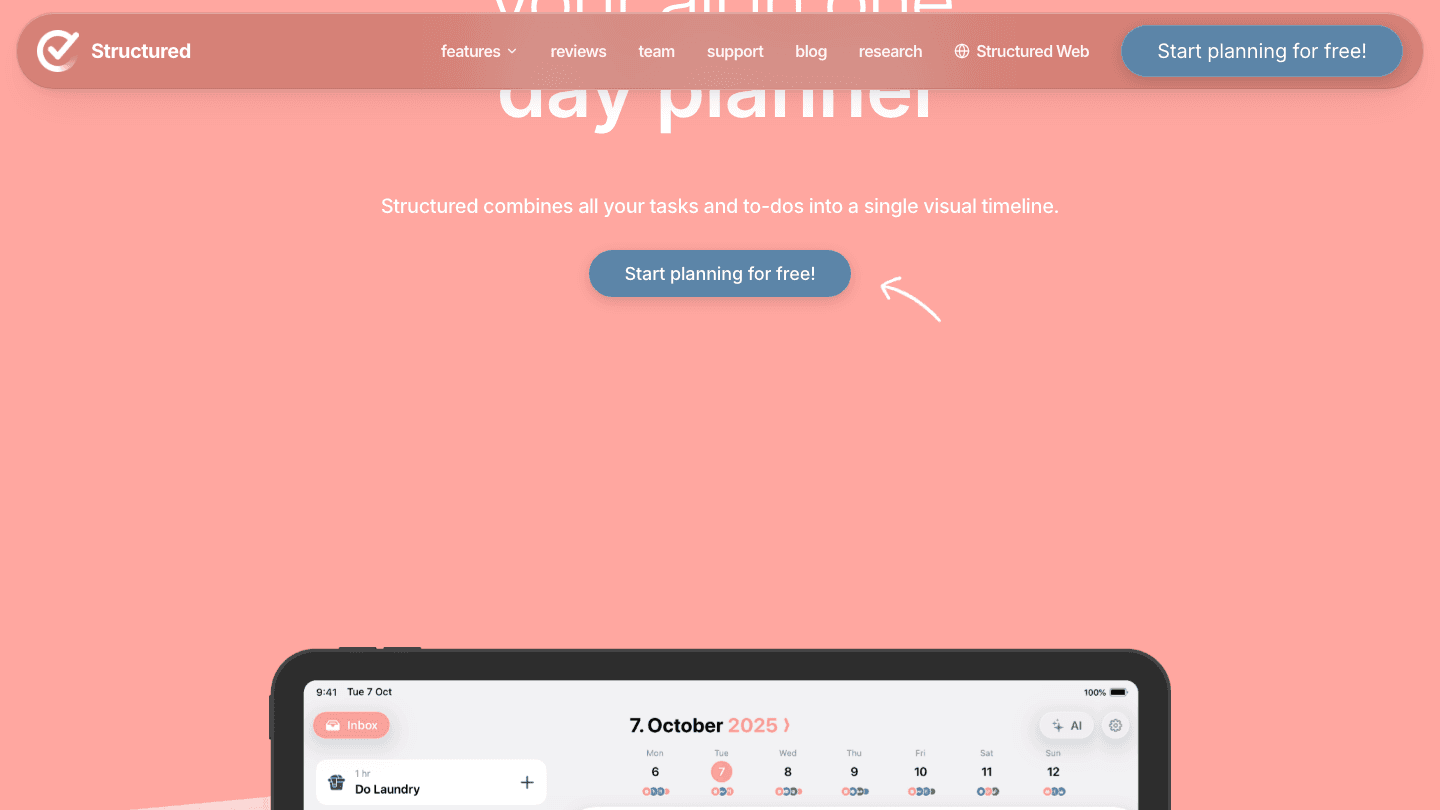
Structured presents your day as a visual timeline rather than a flat list. Tasks and events stack chronologically and color-code by category, giving you an at-a-glance view of where your time is going and where gaps exist. For people who are visual thinkers, this layout makes the abstract concept of a "daily routine" feel concrete and manageable.
The app combines your calendar events and manual tasks in one view, with a built-in Pomodoro timer and AI-powered scheduling that can slot tasks into open windows automatically. It works across iPhone, iPad, and Mac.
Key Features
Visual daily timeline with color-coded time blocks
Calendar sync (Google Calendar, Apple Calendar)
AI-powered task scheduling that finds open slots automatically
Built-in Pomodoro timer and recurring tasks
What Works
The visual timeline is the most intuitive daily view of any app in this list
AI scheduling genuinely reduces the friction of fitting tasks into a busy day
Limitations
No energy awareness or wearable integration
Apple ecosystem focused (limited on Android)
Pricing: Free. Pro at $6.99/month or $29.99/year. Lifetime option at $99.99.
Best for: Visual thinkers who want to see their entire day as a timeline and have their tasks fit around existing calendar events automatically.
3. Streaks
The simplest way to build up to 12 daily habits through streak accountability
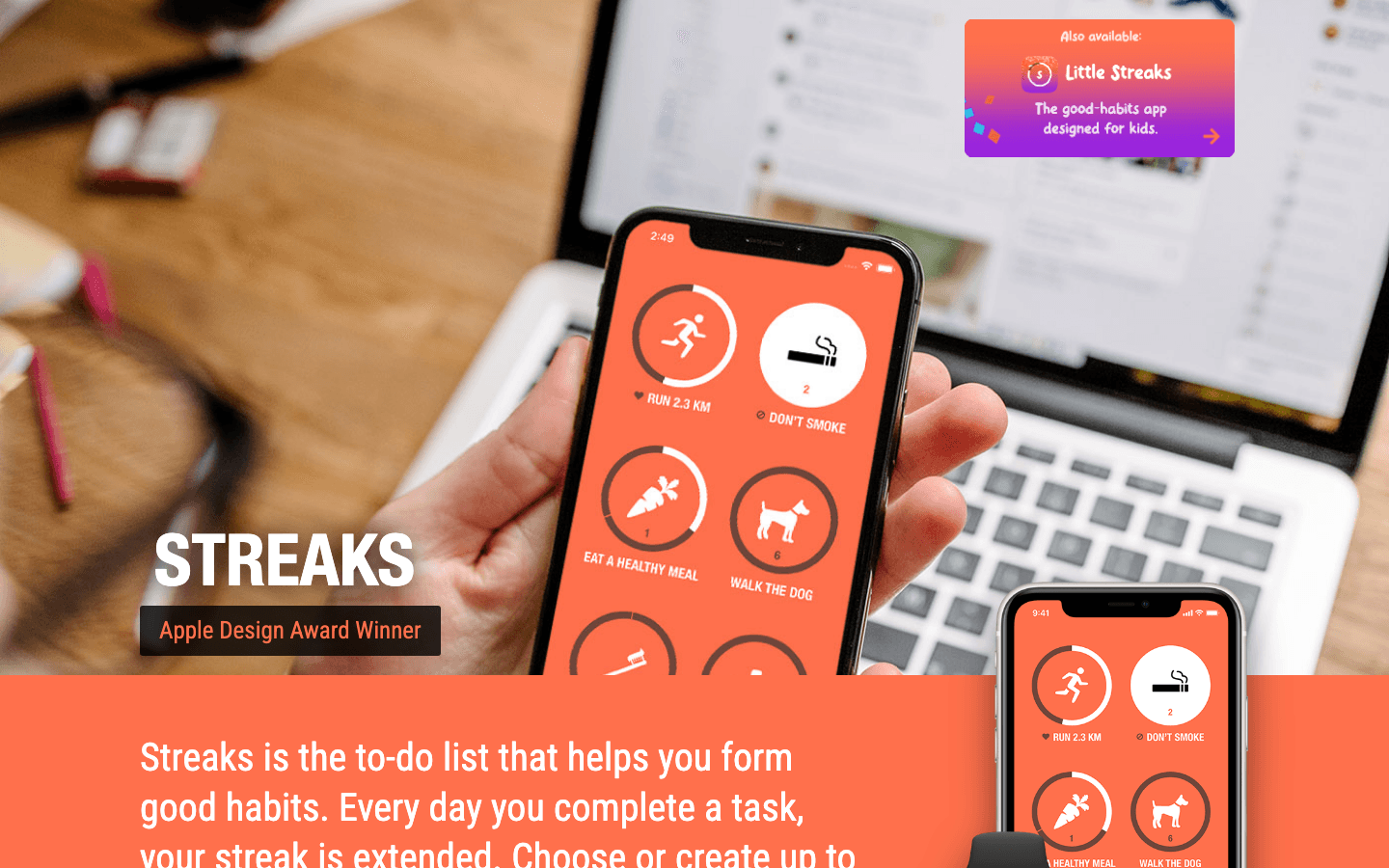
Streaks is built around one mechanism: the streak. Pick up to 12 habits, complete them daily, and watch your streak count grow. Break the streak and the counter resets. It is simple, it is effective, and the visual design is among the best in the habit tracker category. Apple awarded Streaks the App of the Year for iOS.
The app integrates with Apple Health so habits like "exercise for 30 minutes" or "drink water" can be completed automatically based on health data rather than requiring manual check-in. Tasks can also be linked to Siri and Shortcuts for automation.
Key Features
Up to 12 habits tracked simultaneously
Apple Health integration for automatic habit completion
Negative habits (things to avoid) alongside positive ones
Streaks widget for Home and Lock Screen
Siri Shortcuts integration
What Works
The streak mechanic is the most motivating simple accountability system available
One-time pricing with no ongoing subscription is rare and valuable
Limitations
iOS and Mac only (no Android support)
No scheduling or energy awareness features
12-habit limit may feel restrictive for full routine tracking
Pricing: $5.99 one-time purchase. No subscription.
Best for: iPhone users who want the simplest, most elegant habit streak tracker with no subscription and excellent Apple ecosystem integration.
4. Habitica
Turn your daily routine into a role-playing game with character stats and rewards
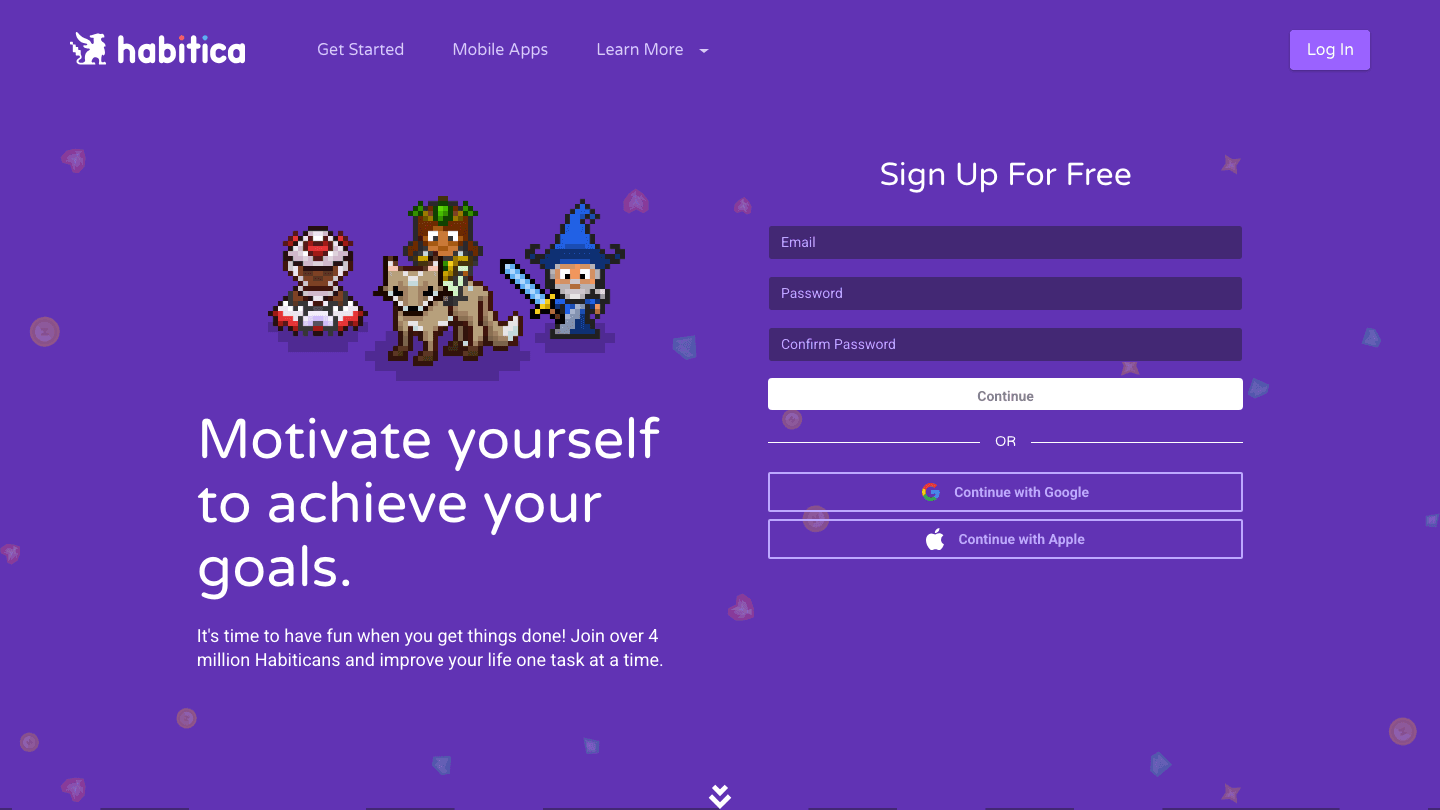
Habitica is unlike any other routine app in this list because it frames your habits and tasks as a role-playing game. Your character gains experience and levels up when you complete habits. They take damage when you miss them. You can join parties with friends to tackle quests together, creating social accountability that most habit apps cannot match.
It covers three types of tasks: Habits (things you want to do regularly), Dailies (tasks due on specific days), and To-Dos (one-time tasks). The combination covers most routine tracking needs. For people who find traditional habit trackers demotivating after the initial novelty fades, the game mechanics provide a layer of engagement that sustains the behavior longer.
Key Features
RPG-style character that gains and loses stats based on habit completion
Social parties and quests for group accountability
Habits, Dailies, and To-Dos in one system
Available on iOS, Android, and web
What Works
The social accountability layer is genuinely unique and effective for people who need external motivation
Fully free core experience with no paywall on the fundamental tracking features
Limitations
No energy awareness or calendar integration
The game aesthetic is not for everyone
Pricing: Free. Optional subscriber plan available in-app for cosmetics and bonus features.
Best for: People who have tried traditional habit apps and lost motivation. The game mechanics change the emotional relationship with completing your routine.
5. Fabulous
A guided routine builder that coaches you through behavior change step by step
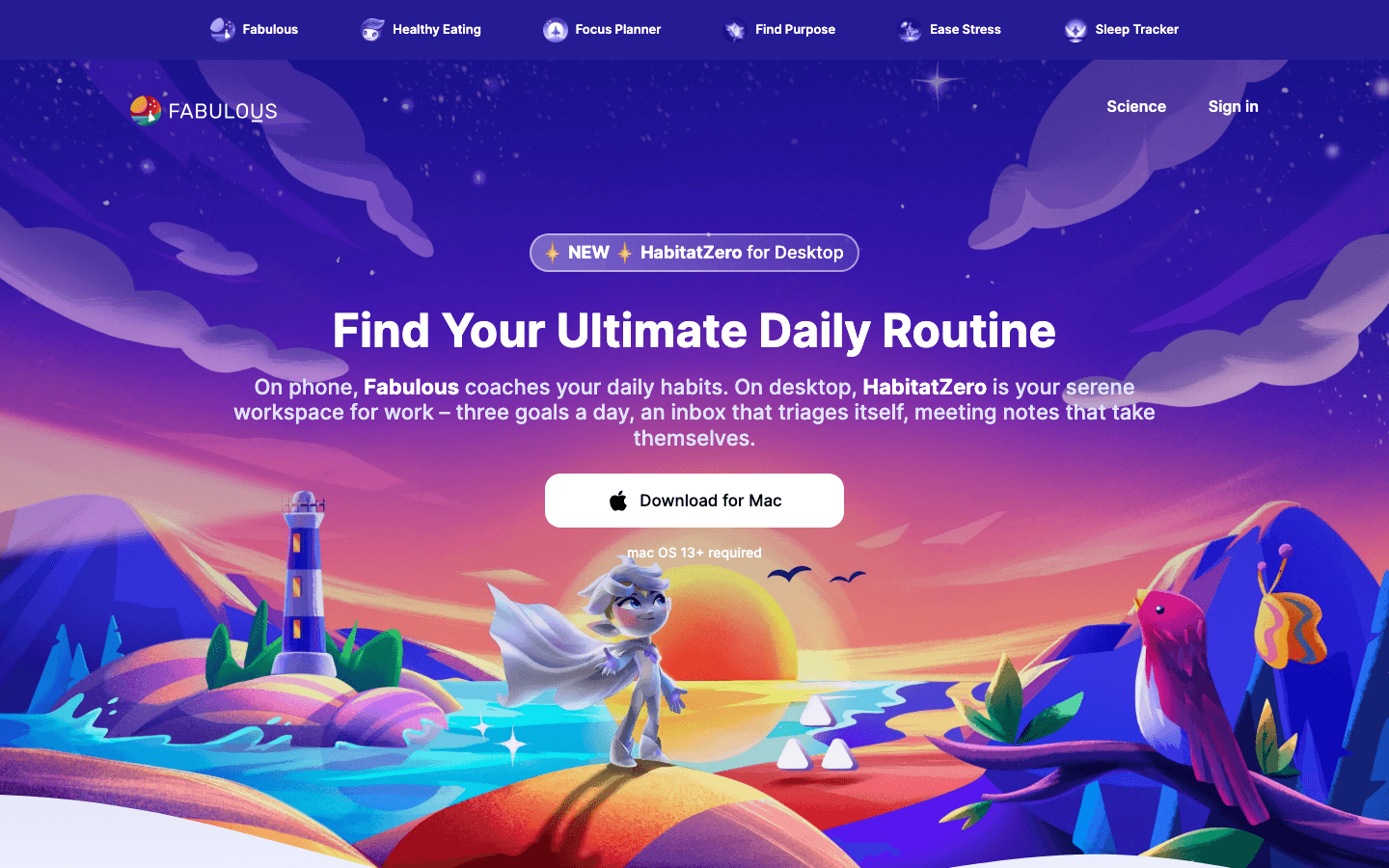
Fabulous takes a coaching approach to daily routines. Rather than just tracking whether you completed habits, it walks you through building routines in deliberate stages. You start with a single morning ritual, add habits over time as the initial ones solidify, and receive coaching prompts and behavioral science content that explain why each habit matters.
The app is grounded in research from Duke University's Center for Advanced Hindsight and is particularly strong for people who need to understand the rationale behind a routine before they can commit to it. The Fabulous "journeys" structure this learning over days and weeks.
Key Features
Guided behavior change journeys with coaching prompts
Routine builder that stacks habits progressively
Morning, afternoon, and evening routine templates
Behavioral science explanations embedded in the app
What Works
The coaching approach is more effective for people who need to understand why, not just what
Progressive habit stacking reduces overwhelm compared to tracking 12 things from day one
Limitations
No energy awareness or calendar sync
Premium subscription required for most useful content
Pricing: Free to start. Premium subscription available in-app (see app for current pricing).
Best for: People new to habit building who want a structured, coached approach to building their first daily routine rather than a blank tracker.
Which Routine App Is Right for You?
You wear a wearable and want your routine to adapt to how you actually feel: Lifestack
You are a visual thinker who wants to see your day as a timeline: Structured
You want the simplest streak tracker with one-time pricing: Streaks (iPhone only)
You have tried habit apps before and lost motivation: Habitica
You are brand new to daily routines and want a coached introduction: Fabulous
If you struggle with ADHD and time management, Lifestack or Habitica tend to work better than pure streak trackers because they provide external structure and motivation rather than relying on internal willpower to maintain the chain.
FAQ
What is the best routine app for beginners?
Fabulous is the strongest starting point for beginners because it does not ask you to track 10 habits on day one. It walks you through building one morning ritual first, explains why it matters, and adds more gradually. Streaks is also a strong beginner option if you want something simpler with a clear visual feedback loop.
Is there a free routine app that actually works?
Yes. Habitica is fully free for all core habit tracking features. Structured has a solid free tier. Lifestack offers a 7-day free trial. For truly free with no limitations, Habitica is the strongest option though it works best if you can find a party to join for the social accountability layer.
What makes a routine app different from a to-do list app?
A to-do list captures what needs to be done. A routine app is designed specifically for recurring daily behaviors, streak tracking, and the behavioral mechanics of habit formation. The best routine apps also provide scheduling structure so habits happen at the right time, not just when remembered. See our guide to daily planner apps for tools that combine both.
Can a routine app help with ADHD?
Yes, especially apps that reduce decision-making about when to do things. ADHD and task management work better with external structure, and routine apps provide that by deciding in advance what happens at what time. Lifestack is particularly useful for ADHD users because it adapts to variable energy rather than requiring the same performance every day. The ADHD daily planner guide covers this in more detail.
How long does it take to build a routine with these apps?
Habit research suggests 66 days on average for a new behavior to become automatic, though the range is 18 to 254 days depending on complexity and the person. Apps with streak mechanics (Streaks, Habitica) make this visible and motivating. Apps with coaching (Fabulous) structure the process. The app that works best is the one you open every day for those 66+ days, which is partly about mechanics and partly about personal fit.
Most people know what a good daily routine looks like. Wake up at the same time. Exercise. Work on what matters most in the morning. Avoid social media in the first hour. The gap between knowing and doing is where routine apps come in.
The best routine apps do not just list your habits. They provide structure, feedback, and accountability that make following through easier on days when willpower runs low. But not every routine app works for every person. The right one depends on whether you need energy-aware scheduling, gamification to stay motivated, streak-based accountability, or a visual daily timeline.
We tested five of the best routine apps across different approaches to habit building and daily planning. Here is what each one does well and who each one is for.
Key Takeaways
Lifestack is the only routine app that adapts your schedule to your daily energy and recovery, making it especially useful when your routine needs to flex
Streaks is the simplest approach for building habits fast: pick up to 12, track daily, do not break the chain
Habitica works best for people who need a motivation layer on top of their routine, not just a checklist
Quick Guide
1. Lifestack: Best overall for energy-aware routine scheduling
2. Structured: Best for visual day planning with a timeline layout
3. Streaks: Best simple habit tracker with streak accountability
4. Habitica: Best gamified routine app for motivation through rewards
5. Fabulous: Best guided routine builder with coaching-style prompts
How We Evaluated
Energy or context awareness (does it account for how you feel, not just the clock)
Routine flexibility versus rigidity
Motivation mechanics (streaks, gamification, coaching, accountability)
Cross-platform availability and sync
Pricing and value of the free tier
1. Lifestack
The routine app that adjusts when your energy does not cooperate
Lifestack approaches daily routines differently from every other app in this list. Rather than setting fixed tasks at fixed times, it reads your sleep and recovery data from Oura Ring, Apple Watch, or WHOOP, scores your current energy level, and schedules your day accordingly. On a high-energy morning, demanding tasks get front-loaded. On a low-recovery day, the routine adapts to protect quality rather than forcing a plan that does not fit how you actually feel.
This matters more for routines than most people realize. The most common reason routines fail is not lack of discipline. It is that the routine was designed for an idealized version of every day, and real days are not idealized. Energy-aware planning solves this by building flexibility into the structure rather than requiring you to override the app every time you had a bad night.
Key Features
Wearable integration: reads energy and recovery from Oura, Apple Watch, WHOOP
Adaptive daily scheduling: matches tasks and routines to your current state
Calendar and task sync: pulls from Google Calendar, Todoist, and other tools
Available on iOS, Android, and via Chrome extension
What Works
The energy-adaptive scheduling genuinely changes how sustainable your routine is
Pulls existing tools together rather than requiring you to rebuild from scratch
Limitations
Full benefit requires a compatible wearable
Not a dedicated habit streak tracker
Pricing: $7/month or $50/year. 7-day free trial on the annual plan.
Best for: Anyone who wears a fitness tracker and wants their daily routine to be smart enough to adapt when life does not go to plan.
2. Structured
A visual timeline that makes your daily routine easier to see and stick to
Structured presents your day as a visual timeline rather than a flat list. Tasks and events stack chronologically and color-code by category, giving you an at-a-glance view of where your time is going and where gaps exist. For people who are visual thinkers, this layout makes the abstract concept of a "daily routine" feel concrete and manageable.
The app combines your calendar events and manual tasks in one view, with a built-in Pomodoro timer and AI-powered scheduling that can slot tasks into open windows automatically. It works across iPhone, iPad, and Mac.
Key Features
Visual daily timeline with color-coded time blocks
Calendar sync (Google Calendar, Apple Calendar)
AI-powered task scheduling that finds open slots automatically
Built-in Pomodoro timer and recurring tasks
What Works
The visual timeline is the most intuitive daily view of any app in this list
AI scheduling genuinely reduces the friction of fitting tasks into a busy day
Limitations
No energy awareness or wearable integration
Apple ecosystem focused (limited on Android)
Pricing: Free. Pro at $6.99/month or $29.99/year. Lifetime option at $99.99.
Best for: Visual thinkers who want to see their entire day as a timeline and have their tasks fit around existing calendar events automatically.
3. Streaks
The simplest way to build up to 12 daily habits through streak accountability
Streaks is built around one mechanism: the streak. Pick up to 12 habits, complete them daily, and watch your streak count grow. Break the streak and the counter resets. It is simple, it is effective, and the visual design is among the best in the habit tracker category. Apple awarded Streaks the App of the Year for iOS.
The app integrates with Apple Health so habits like "exercise for 30 minutes" or "drink water" can be completed automatically based on health data rather than requiring manual check-in. Tasks can also be linked to Siri and Shortcuts for automation.
Key Features
Up to 12 habits tracked simultaneously
Apple Health integration for automatic habit completion
Negative habits (things to avoid) alongside positive ones
Streaks widget for Home and Lock Screen
Siri Shortcuts integration
What Works
The streak mechanic is the most motivating simple accountability system available
One-time pricing with no ongoing subscription is rare and valuable
Limitations
iOS and Mac only (no Android support)
No scheduling or energy awareness features
12-habit limit may feel restrictive for full routine tracking
Pricing: $5.99 one-time purchase. No subscription.
Best for: iPhone users who want the simplest, most elegant habit streak tracker with no subscription and excellent Apple ecosystem integration.
4. Habitica
Turn your daily routine into a role-playing game with character stats and rewards
Habitica is unlike any other routine app in this list because it frames your habits and tasks as a role-playing game. Your character gains experience and levels up when you complete habits. They take damage when you miss them. You can join parties with friends to tackle quests together, creating social accountability that most habit apps cannot match.
It covers three types of tasks: Habits (things you want to do regularly), Dailies (tasks due on specific days), and To-Dos (one-time tasks). The combination covers most routine tracking needs. For people who find traditional habit trackers demotivating after the initial novelty fades, the game mechanics provide a layer of engagement that sustains the behavior longer.
Key Features
RPG-style character that gains and loses stats based on habit completion
Social parties and quests for group accountability
Habits, Dailies, and To-Dos in one system
Available on iOS, Android, and web
What Works
The social accountability layer is genuinely unique and effective for people who need external motivation
Fully free core experience with no paywall on the fundamental tracking features
Limitations
No energy awareness or calendar integration
The game aesthetic is not for everyone
Pricing: Free. Optional subscriber plan available in-app for cosmetics and bonus features.
Best for: People who have tried traditional habit apps and lost motivation. The game mechanics change the emotional relationship with completing your routine.
5. Fabulous
A guided routine builder that coaches you through behavior change step by step
Fabulous takes a coaching approach to daily routines. Rather than just tracking whether you completed habits, it walks you through building routines in deliberate stages. You start with a single morning ritual, add habits over time as the initial ones solidify, and receive coaching prompts and behavioral science content that explain why each habit matters.
The app is grounded in research from Duke University's Center for Advanced Hindsight and is particularly strong for people who need to understand the rationale behind a routine before they can commit to it. The Fabulous "journeys" structure this learning over days and weeks.
Key Features
Guided behavior change journeys with coaching prompts
Routine builder that stacks habits progressively
Morning, afternoon, and evening routine templates
Behavioral science explanations embedded in the app
What Works
The coaching approach is more effective for people who need to understand why, not just what
Progressive habit stacking reduces overwhelm compared to tracking 12 things from day one
Limitations
No energy awareness or calendar sync
Premium subscription required for most useful content
Pricing: Free to start. Premium subscription available in-app (see app for current pricing).
Best for: People new to habit building who want a structured, coached approach to building their first daily routine rather than a blank tracker.
Which Routine App Is Right for You?
You wear a wearable and want your routine to adapt to how you actually feel: Lifestack
You are a visual thinker who wants to see your day as a timeline: Structured
You want the simplest streak tracker with one-time pricing: Streaks (iPhone only)
You have tried habit apps before and lost motivation: Habitica
You are brand new to daily routines and want a coached introduction: Fabulous
If you struggle with ADHD and time management, Lifestack or Habitica tend to work better than pure streak trackers because they provide external structure and motivation rather than relying on internal willpower to maintain the chain.
FAQ
What is the best routine app for beginners?
Fabulous is the strongest starting point for beginners because it does not ask you to track 10 habits on day one. It walks you through building one morning ritual first, explains why it matters, and adds more gradually. Streaks is also a strong beginner option if you want something simpler with a clear visual feedback loop.
Is there a free routine app that actually works?
Yes. Habitica is fully free for all core habit tracking features. Structured has a solid free tier. Lifestack offers a 7-day free trial. For truly free with no limitations, Habitica is the strongest option though it works best if you can find a party to join for the social accountability layer.
What makes a routine app different from a to-do list app?
A to-do list captures what needs to be done. A routine app is designed specifically for recurring daily behaviors, streak tracking, and the behavioral mechanics of habit formation. The best routine apps also provide scheduling structure so habits happen at the right time, not just when remembered. See our guide to daily planner apps for tools that combine both.
Can a routine app help with ADHD?
Yes, especially apps that reduce decision-making about when to do things. ADHD and task management work better with external structure, and routine apps provide that by deciding in advance what happens at what time. Lifestack is particularly useful for ADHD users because it adapts to variable energy rather than requiring the same performance every day. The ADHD daily planner guide covers this in more detail.
How long does it take to build a routine with these apps?
Habit research suggests 66 days on average for a new behavior to become automatic, though the range is 18 to 254 days depending on complexity and the person. Apps with streak mechanics (Streaks, Habitica) make this visible and motivating. Apps with coaching (Fabulous) structure the process. The app that works best is the one you open every day for those 66+ days, which is partly about mechanics and partly about personal fit.



FOLLOW ON
FOLLOW ON
FOLLOW ON


Copyright 2026 © Lifestack. All rights reserved
Copyright 2026 © Lifestack. All rights reserved

