
App
COROS vs Garmin: Which GPS Running Watch Wins?
COROS vs Garmin: Which GPS Running Watch Wins?

COROS and Garmin are the two brands most serious runners end up comparing when they're ready to step up from a basic fitness tracker. Both make GPS running watches with accurate satellite tracking, heart rate monitoring, and training analytics. But they take almost opposite approaches to what a running watch should be.
COROS builds watches for athletes who want exceptional battery life, light weight, and core GPS performance at a lower price. Garmin builds watches for athletes who want a deep analytics ecosystem, more display options, and smartwatch features alongside their training data.
Neither brand dominates the other outright. The right choice depends on what you actually need a running watch to do, and how much you're willing to pay for features you might not use.
Key Takeaways
COROS wins on battery life, weight, and value at the entry price point ($249 for the Pace 4 vs $450 for the Forerunner 265)
Garmin wins on training analytics depth, display quality, and ecosystem breadth including music, payments, and third-party apps
Both deliver comparable GPS accuracy in real-world conditions; the difference is in what you do with the data afterward
Quick Verdict
COROS: Best for budget-conscious runners, ultramarathon athletes, and anyone who hates charging their watch every other day
Garmin: Best for data-driven runners who want deep training guidance, music, and a mature app ecosystem, and don't mind paying for it
COROS Overview
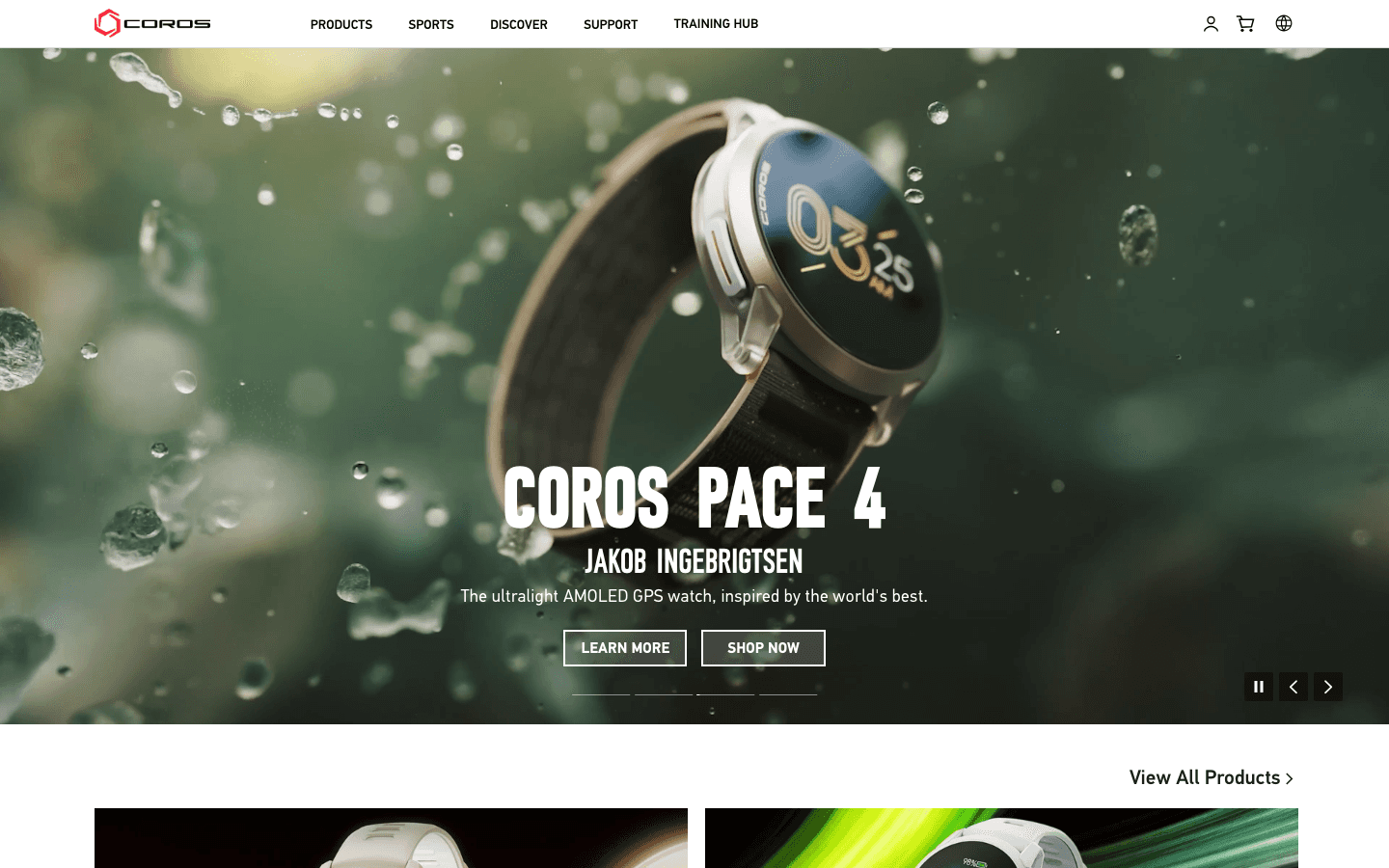
COROS launched in 2016 and has grown into a legitimate alternative to Garmin, particularly popular with ultrarunners and triathletes who need multi-day battery life. The brand positions itself as lightweight, focused, and affordable relative to what it delivers.
The current entry-level model is the Pace 4 at $249, a 32-gram watch with 41+ hours of GPS battery, dual-frequency multi-band GPS, and a surprisingly capable training analytics platform. Step up to the APEX 2 ($349) or the VERTIX 2S ($699) for premium materials, longer battery, and navigation features.
What Works
Battery life that genuinely lasts weeks on a charge; the Pace 4's 41+ hours GPS mode outlasts every Garmin in its price class
Lightweight build; the Pace 4 at 32 grams barely registers during long efforts
Strong GPS accuracy using multi-band satellite reception at a lower price than comparable Garmin models
Clean training analytics in the COROS app: VO2 max, training load, recovery, sleep, and EvoLab fitness metrics
Limitations
No music storage on most models, so you'll need your phone for audio during runs
Smaller app ecosystem compared to Garmin Connect IQ; fewer third-party watch faces and apps
No contactless payments on standard models
COROS Training Hub coaching features are less developed than Garmin's Daily Suggested Workouts
Pricing: Pace 4 $249 | APEX 2 $349 | VERTIX 2S $699
Garmin Overview
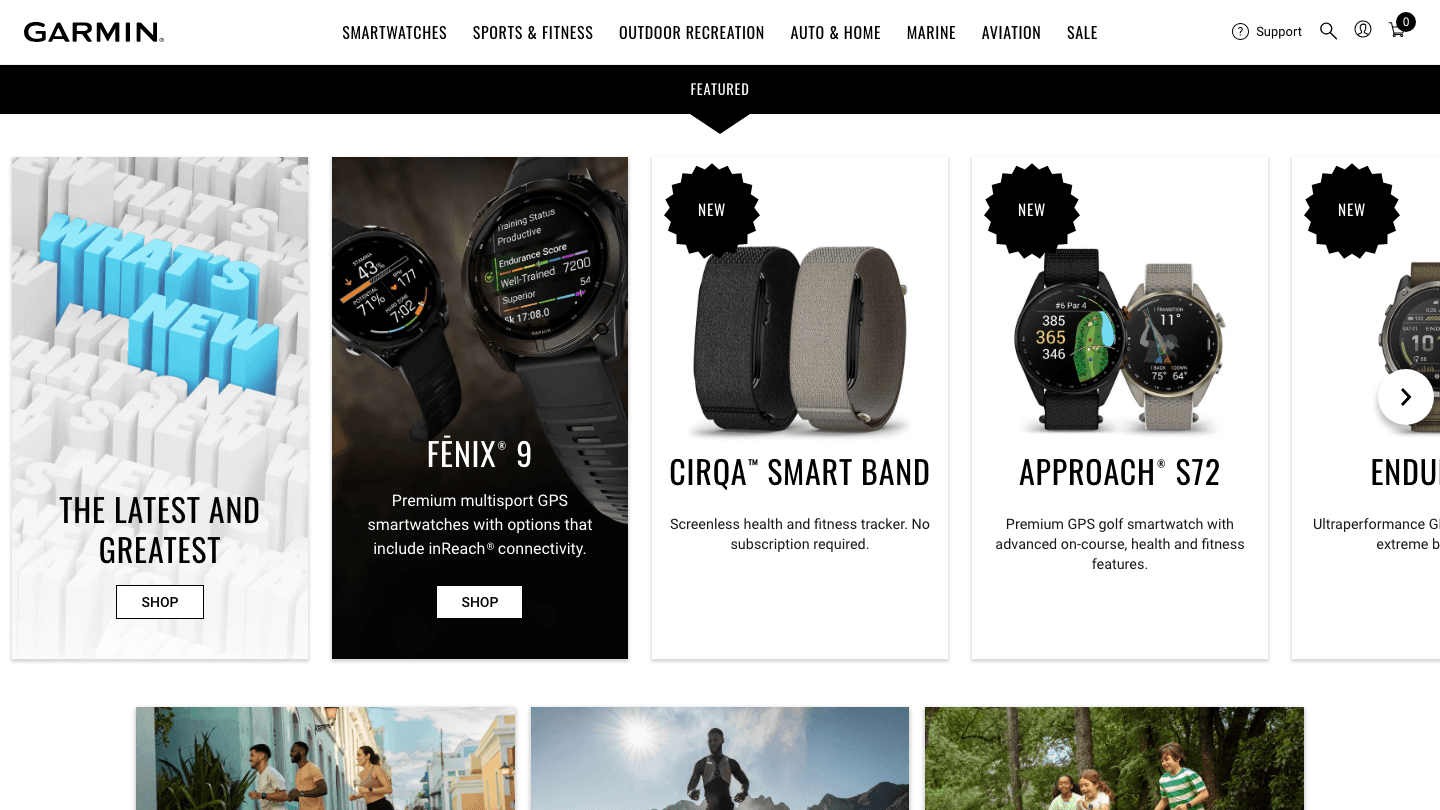
Garmin has been making GPS devices since 1989, and that experience shows in its Forerunner and Fenix lineups, particularly in the training analytics layer. Garmin Connect is one of the most complete fitness platforms available, with decades of data models backing its training recommendations.
The Forerunner 265 ($450) is the current benchmark mid-range running watch: AMOLED display, 20 hours GPS battery, music, Garmin Pay, and daily suggested workouts. The Forerunner 965 ($499-550) adds a larger screen, longer battery, and full topographic maps. For multisport and adventure athletes, the Fenix 8 and Epix Pro step up further.
What Works
Deep training analytics: Training Readiness, Training Status, Body Battery, and Daily Suggested Workouts that adapt to your actual load
AMOLED displays on Forerunner 265/965 are bright and readable, noticeably better than COROS entry-level screens
Music storage (up to 1,000 songs), Garmin Pay, and Connect IQ app ecosystem for extended functionality
Mature platform: Garmin Connect has more third-party integrations and a larger community than any competitor
Limitations
Battery life is a real gap: the Forerunner 265 gets ~20 hours GPS vs COROS Pace 4's 41+ hours
Heavier and bulkier than comparable COROS models
Starting price for feature parity is $450+, $200 more than the COROS Pace 4
Garmin's training suggestions can feel like data overload without a clear way to prioritize what matters most
Pricing: Forerunner 265 $450 | Forerunner 965 $499-550 | Fenix 8 from $899
Head-to-Head Comparison
Battery Life: COROS wins clearly. Pace 4 at 41+ hours GPS vs Forerunner 265 at 20 hours. For ultras or multi-day events, COROS is the practical choice.
GPS Accuracy: Essentially tied. Both use dual-frequency multi-band GPS and track within 1-2% of measured courses in independent testing.
Display: Garmin wins at mid-range and above. Forerunner 265's AMOLED is brighter and sharper than the Pace 4's standard display. COROS Pace 4 AMOLED closes the gap but adds cost.
Training Analytics: Garmin has more depth, particularly Daily Suggested Workouts, Training Readiness, and Body Battery. COROS EvoLab is capable but less developed.
Price: COROS wins significantly at the entry level. You get comparable GPS and solid analytics for $200 less than a Garmin Forerunner 265.
Ecosystem: Garmin wins. More third-party apps, music, Garmin Pay, and Connect IQ watch faces. COROS is more closed.
Weight: COROS Pace 4 at 32g is one of the lightest GPS watches available. Garmin Forerunner 265 weighs ~47g with band.
Which Should You Choose?
Choose COROS if: you run ultras or long-distance events where battery is critical, you want a light watch that disappears on the wrist, or you're entering the serious GPS watch market and don't want to pay Garmin prices for features you won't use. The Pace 4 at $249 is genuinely hard to beat for what it offers. See what apps pair well with it in our best apps to use with COROS guide.
Choose Garmin if: you want daily coaching suggestions that adapt to your load, you need music and contactless payments in one device, or you're already invested in the Garmin Connect ecosystem and want to stay. For an overview of the lineup, see our Garmin watch comparison guide. If you're interested in apps that make Garmin data more actionable, our best apps to use with Garmin roundup is worth a read.
If you're looking at the premium end of the COROS lineup (VERTIX 2S at $699), compare it carefully against the Garmin Fenix 8 at a similar price. At that range, Garmin's ecosystem advantages become more compelling.
Once you've chosen a watch, the missing layer is often scheduling: knowing which days to push hard and which to recover, based on what your data actually shows. That's where Lifestack fits in: it reads your wearable's recovery and sleep metrics and builds an energy-aware calendar schedule so your training blocks and focused work sessions land on days your body is actually ready for them.
Frequently Asked Questions
Is COROS better than Garmin for running?
For battery life and price, COROS is better. For training analytics depth and ecosystem, Garmin is better. Neither is objectively superior; the right choice depends on which tradeoffs matter more for your running.
Which COROS watch competes with the Garmin Forerunner 265?
The COROS Pace 4 ($249) competes on GPS accuracy and sports features at a significantly lower price. The COROS APEX 2 ($349) adds a more premium build and longer battery and is closer to a direct comparable on specs.
Does COROS have as many apps as Garmin?
No. Garmin's Connect IQ store has significantly more third-party apps and watch faces than COROS. If the app ecosystem matters to you, Garmin has the advantage. For training and running-specific features, COROS's native platform is competitive.
Can COROS and Garmin watches sync with Strava?
Yes, both brands sync automatically with Strava after workouts. Both also support TrainingPeaks, Komoot, and other popular training platforms.
What is the best budget GPS running watch in 2026?
The COROS Pace 4 at $249 is the strongest budget option for serious runners who want real multi-band GPS, long battery, and solid training data. Check our best fitness apps guide for tools that work alongside your GPS watch.
COROS and Garmin are the two brands most serious runners end up comparing when they're ready to step up from a basic fitness tracker. Both make GPS running watches with accurate satellite tracking, heart rate monitoring, and training analytics. But they take almost opposite approaches to what a running watch should be.
COROS builds watches for athletes who want exceptional battery life, light weight, and core GPS performance at a lower price. Garmin builds watches for athletes who want a deep analytics ecosystem, more display options, and smartwatch features alongside their training data.
Neither brand dominates the other outright. The right choice depends on what you actually need a running watch to do, and how much you're willing to pay for features you might not use.
Key Takeaways
COROS wins on battery life, weight, and value at the entry price point ($249 for the Pace 4 vs $450 for the Forerunner 265)
Garmin wins on training analytics depth, display quality, and ecosystem breadth including music, payments, and third-party apps
Both deliver comparable GPS accuracy in real-world conditions; the difference is in what you do with the data afterward
Quick Verdict
COROS: Best for budget-conscious runners, ultramarathon athletes, and anyone who hates charging their watch every other day
Garmin: Best for data-driven runners who want deep training guidance, music, and a mature app ecosystem, and don't mind paying for it
COROS Overview
COROS launched in 2016 and has grown into a legitimate alternative to Garmin, particularly popular with ultrarunners and triathletes who need multi-day battery life. The brand positions itself as lightweight, focused, and affordable relative to what it delivers.
The current entry-level model is the Pace 4 at $249, a 32-gram watch with 41+ hours of GPS battery, dual-frequency multi-band GPS, and a surprisingly capable training analytics platform. Step up to the APEX 2 ($349) or the VERTIX 2S ($699) for premium materials, longer battery, and navigation features.
What Works
Battery life that genuinely lasts weeks on a charge; the Pace 4's 41+ hours GPS mode outlasts every Garmin in its price class
Lightweight build; the Pace 4 at 32 grams barely registers during long efforts
Strong GPS accuracy using multi-band satellite reception at a lower price than comparable Garmin models
Clean training analytics in the COROS app: VO2 max, training load, recovery, sleep, and EvoLab fitness metrics
Limitations
No music storage on most models, so you'll need your phone for audio during runs
Smaller app ecosystem compared to Garmin Connect IQ; fewer third-party watch faces and apps
No contactless payments on standard models
COROS Training Hub coaching features are less developed than Garmin's Daily Suggested Workouts
Pricing: Pace 4 $249 | APEX 2 $349 | VERTIX 2S $699
Garmin Overview
Garmin has been making GPS devices since 1989, and that experience shows in its Forerunner and Fenix lineups, particularly in the training analytics layer. Garmin Connect is one of the most complete fitness platforms available, with decades of data models backing its training recommendations.
The Forerunner 265 ($450) is the current benchmark mid-range running watch: AMOLED display, 20 hours GPS battery, music, Garmin Pay, and daily suggested workouts. The Forerunner 965 ($499-550) adds a larger screen, longer battery, and full topographic maps. For multisport and adventure athletes, the Fenix 8 and Epix Pro step up further.
What Works
Deep training analytics: Training Readiness, Training Status, Body Battery, and Daily Suggested Workouts that adapt to your actual load
AMOLED displays on Forerunner 265/965 are bright and readable, noticeably better than COROS entry-level screens
Music storage (up to 1,000 songs), Garmin Pay, and Connect IQ app ecosystem for extended functionality
Mature platform: Garmin Connect has more third-party integrations and a larger community than any competitor
Limitations
Battery life is a real gap: the Forerunner 265 gets ~20 hours GPS vs COROS Pace 4's 41+ hours
Heavier and bulkier than comparable COROS models
Starting price for feature parity is $450+, $200 more than the COROS Pace 4
Garmin's training suggestions can feel like data overload without a clear way to prioritize what matters most
Pricing: Forerunner 265 $450 | Forerunner 965 $499-550 | Fenix 8 from $899
Head-to-Head Comparison
Battery Life: COROS wins clearly. Pace 4 at 41+ hours GPS vs Forerunner 265 at 20 hours. For ultras or multi-day events, COROS is the practical choice.
GPS Accuracy: Essentially tied. Both use dual-frequency multi-band GPS and track within 1-2% of measured courses in independent testing.
Display: Garmin wins at mid-range and above. Forerunner 265's AMOLED is brighter and sharper than the Pace 4's standard display. COROS Pace 4 AMOLED closes the gap but adds cost.
Training Analytics: Garmin has more depth, particularly Daily Suggested Workouts, Training Readiness, and Body Battery. COROS EvoLab is capable but less developed.
Price: COROS wins significantly at the entry level. You get comparable GPS and solid analytics for $200 less than a Garmin Forerunner 265.
Ecosystem: Garmin wins. More third-party apps, music, Garmin Pay, and Connect IQ watch faces. COROS is more closed.
Weight: COROS Pace 4 at 32g is one of the lightest GPS watches available. Garmin Forerunner 265 weighs ~47g with band.
Which Should You Choose?
Choose COROS if: you run ultras or long-distance events where battery is critical, you want a light watch that disappears on the wrist, or you're entering the serious GPS watch market and don't want to pay Garmin prices for features you won't use. The Pace 4 at $249 is genuinely hard to beat for what it offers. See what apps pair well with it in our best apps to use with COROS guide.
Choose Garmin if: you want daily coaching suggestions that adapt to your load, you need music and contactless payments in one device, or you're already invested in the Garmin Connect ecosystem and want to stay. For an overview of the lineup, see our Garmin watch comparison guide. If you're interested in apps that make Garmin data more actionable, our best apps to use with Garmin roundup is worth a read.
If you're looking at the premium end of the COROS lineup (VERTIX 2S at $699), compare it carefully against the Garmin Fenix 8 at a similar price. At that range, Garmin's ecosystem advantages become more compelling.
Once you've chosen a watch, the missing layer is often scheduling: knowing which days to push hard and which to recover, based on what your data actually shows. That's where Lifestack fits in: it reads your wearable's recovery and sleep metrics and builds an energy-aware calendar schedule so your training blocks and focused work sessions land on days your body is actually ready for them.
Frequently Asked Questions
Is COROS better than Garmin for running?
For battery life and price, COROS is better. For training analytics depth and ecosystem, Garmin is better. Neither is objectively superior; the right choice depends on which tradeoffs matter more for your running.
Which COROS watch competes with the Garmin Forerunner 265?
The COROS Pace 4 ($249) competes on GPS accuracy and sports features at a significantly lower price. The COROS APEX 2 ($349) adds a more premium build and longer battery and is closer to a direct comparable on specs.
Does COROS have as many apps as Garmin?
No. Garmin's Connect IQ store has significantly more third-party apps and watch faces than COROS. If the app ecosystem matters to you, Garmin has the advantage. For training and running-specific features, COROS's native platform is competitive.
Can COROS and Garmin watches sync with Strava?
Yes, both brands sync automatically with Strava after workouts. Both also support TrainingPeaks, Komoot, and other popular training platforms.
What is the best budget GPS running watch in 2026?
The COROS Pace 4 at $249 is the strongest budget option for serious runners who want real multi-band GPS, long battery, and solid training data. Check our best fitness apps guide for tools that work alongside your GPS watch.



FOLLOW ON
FOLLOW ON
FOLLOW ON


Copyright 2026 © Lifestack. All rights reserved
Copyright 2026 © Lifestack. All rights reserved

