
App
Best Finch App Alternatives in 2026: 6 Picks
Best Finch App Alternatives in 2026: 6 Picks
Finch is a self-care app built around a virtual pet bird: you complete daily self-care goals, and your bird grows as you do. It's a clever approach to habit reinforcement that has built a devoted following, particularly among people who respond well to emotional investment and gentle accountability.
But Finch isn't for everyone. Some users outgrow the gamification and want something that connects more directly to real goals and schedules. Others find the social features or notification style doesn't fit their lifestyle. And some are looking for a specific capability Finch doesn't have: mood tracking with more depth, mental health support, or a planner that ties self-care goals to an actual calendar.
These six Finch alternatives cover the full range of reasons someone might be looking for something different, from AI-scheduled daily planning to mental health support to deep mood journaling. Each one is a genuine, actively maintained app in 2026.
All apps tested and pricing verified June 2026.
Key Takeaways
Lifestack is the best Finch alternative for users who want to move beyond goal-tracking and build a schedule that actually executes on their self-care and personal goals.
Daylio and Reflectly are the strongest mood and journaling alternatives for users who value the reflective side of Finch's experience.
Woebot provides the most direct mental health support if Finch's emotional wellness angle was the primary draw.
Quick Guide: Finch App Alternatives
Lifestack: Best for turning self-care goals into a real daily schedule
Daylio: Best mood and activity journal with micro-journaling
Reflectly: Best AI-powered journaling and emotional reflection app
Bearable: Best for tracking symptoms, mood, and wellness factors together
Tiimo: Best visual daily planner for neurodivergent users
Woebot: Best for mental health support and CBT-based tools
1. Lifestack: Best for Planning Actual Self-Care Goals
For Finch users who want their self-care goals to show up on a real schedule.

Finch is good at motivating you to set self-care goals. Where it falls short is execution: the goals live in the app, separate from your calendar and your actual day. Lifestack connects those dots. It takes your personal goals and tasks and builds them into a daily schedule around your energy levels and existing calendar events.
If your Finch goals include "exercise three times a week," "meditate each morning," or "write in a journal before bed," Lifestack turns those into scheduled time blocks that actually appear in your day. The self-care doesn't stay aspirational; it gets a time slot. For ADHD users who loved Finch's structure but needed something that integrates with their real schedule, Lifestack is the closest match.
Energy-aware scheduling places goals when you're most likely to follow through
Two-way Google Calendar sync so self-care blocks appear alongside work
Task planning that turns goals into actionable daily schedules
Clean mobile UI with daily plan view and reminders
Progress tracking tied to actual calendar completion
Limitations: No virtual pet or gamification. More focused on planning than reflection or mood tracking.
Pricing: $7/month, $50/year (7-day free trial), or $120 lifetime.
Best for: Finch users who want to translate their self-care goals into a structured daily plan that integrates with their real life.
2. Daylio: Best Mood and Activity Journal
Track how you feel and what you do, every day, in under two minutes.
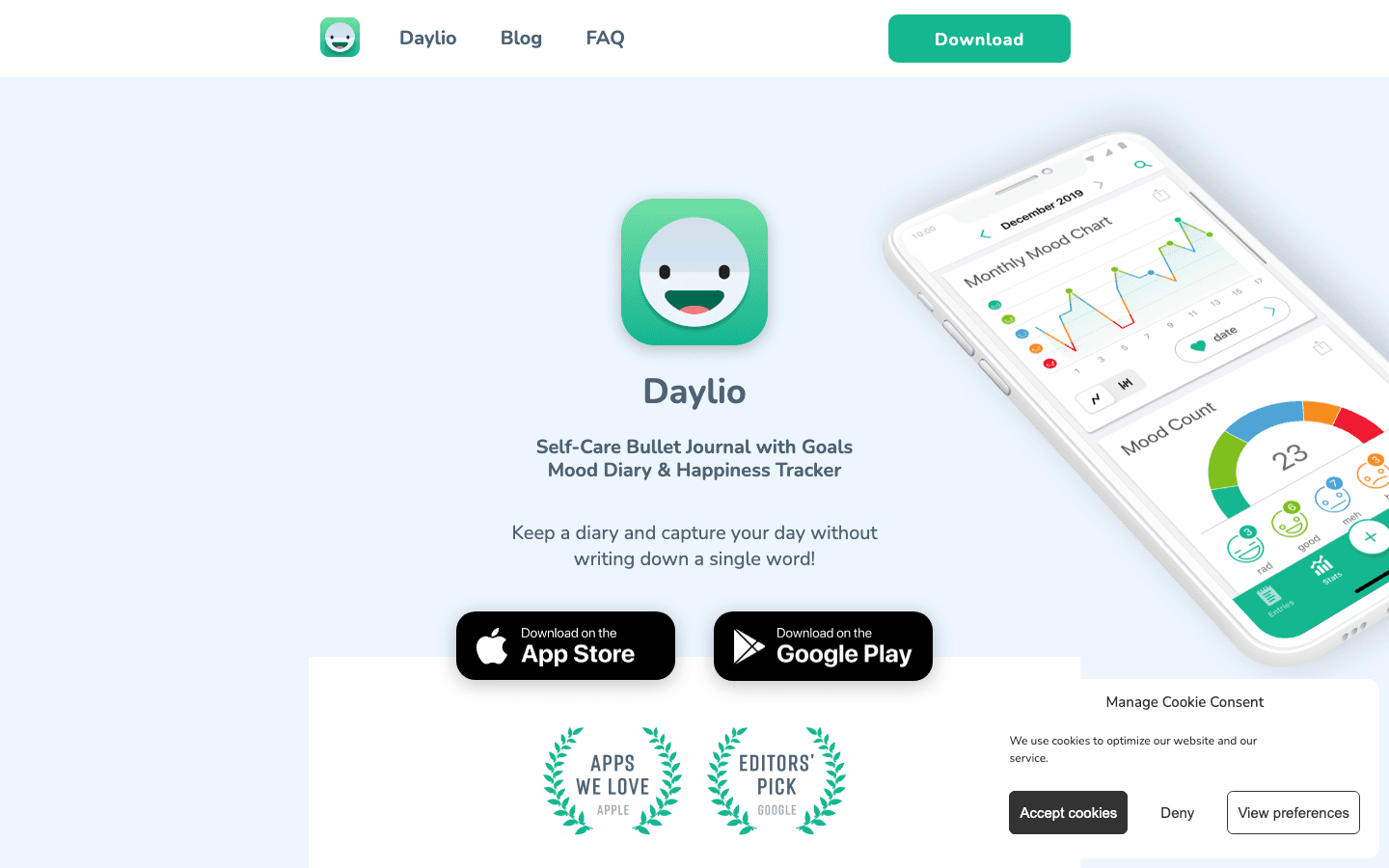
Daylio is a micro-journaling app that lets you log your mood and activities in seconds. No long journal entries required: pick your mood from a set of icons, tag what you did (workout, social time, work, good sleep), and you're done. Over time, Daylio's charts show you correlations between activities and mood, which is exactly the kind of self-awareness insight Finch tries to build.
Where Daylio differs is in depth and simplicity. There's no virtual pet, no gamification, no community. Just a clean, reliable log of how you're feeling and what might be influencing it. For users who liked Finch's goal-check-in structure but didn't connect with the bird mechanic, Daylio provides the journaling core without the overhead.
Quick mood and activity logging in under 30 seconds
Correlation charts between activities and mood over time
Fully customizable mood icons and activity tags
Year-in-review and streak tracking
Export to CSV for personal data analysis
Limitations: No scheduling integration. No goal-setting or planning features. Reflective only, not action-oriented.
Pricing: Free tier available. Premium $4.99/month or $35.99/year.
Best for: Users who want a fast, private mood and activity log with meaningful pattern insights over time.
3. Reflectly: Best AI Journaling App
Guided journaling with AI prompts that adapt to your mood and patterns.
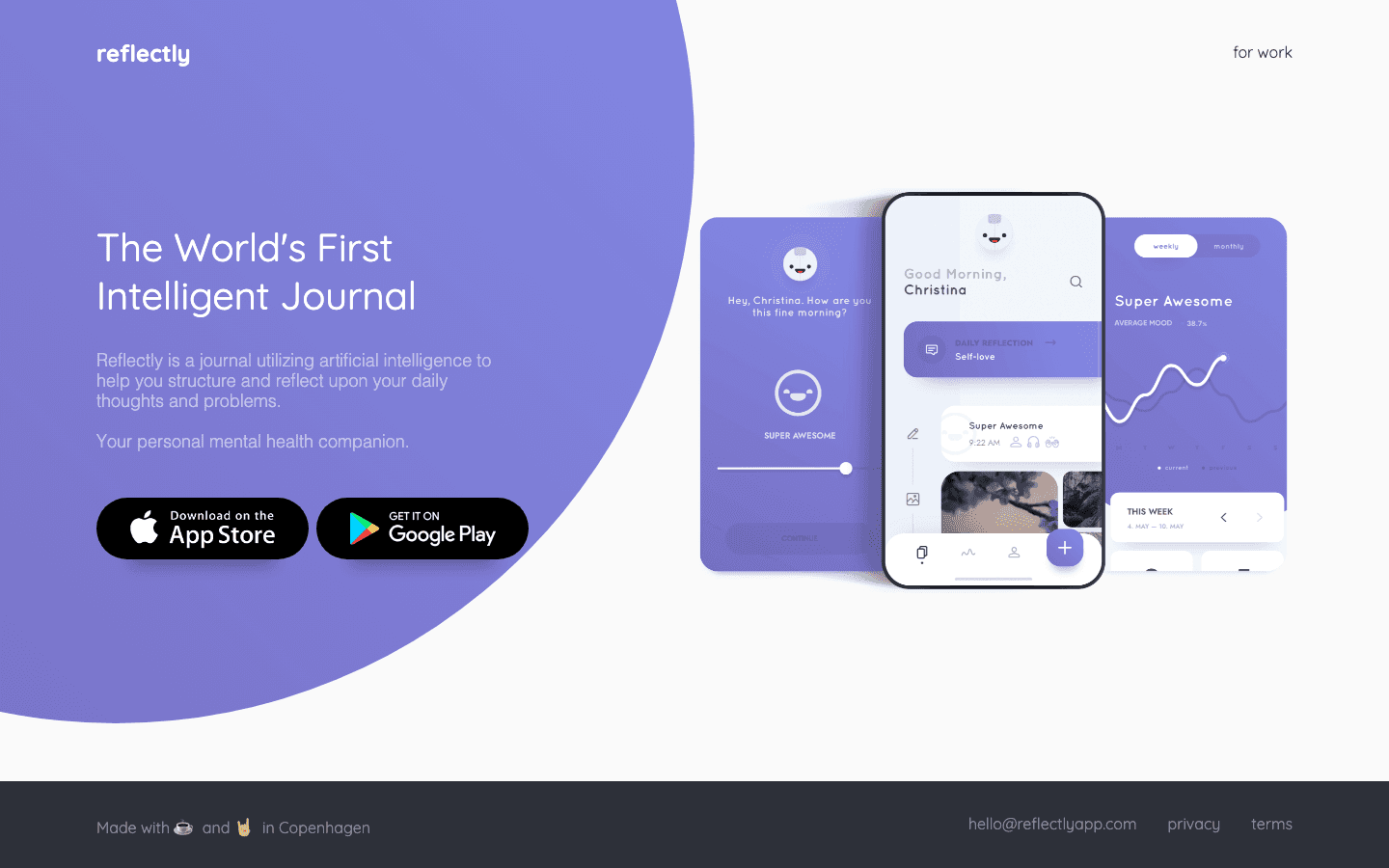
Reflectly takes journaling further than Daylio by adding AI-generated prompts that adapt based on your previous entries and current mood. Instead of a blank page, you get a structured set of questions each day: what went well, what was difficult, what you're grateful for, and what you want to focus on tomorrow. The experience feels more guided and personal than a standard journal app.
The visual design is a significant differentiator. Reflectly is genuinely beautiful to use, which matters for a daily practice that depends on feeling good about opening the app. For Finch users who valued the emotional warmth of the interface and the daily check-in ritual, Reflectly captures that feeling while adding more substance to the reflection process.
AI-generated daily journal prompts based on mood and history
Mood tracking integrated with journaling entries
Streaks and insights on journaling patterns
Beautiful, emotionally warm visual design
Weekly reflection summaries
Limitations: Higher price point than Daylio. No scheduling or goal-planning features. No Android app.
Pricing: Free trial available. Premium $9.99/month or $59.99/year.
Best for: Users who want a beautiful, AI-guided daily journaling practice that builds emotional self-awareness over time.
4. Bearable: Best Health and Mood Tracker
Track symptoms, mood, sleep, and wellness factors together in one place.
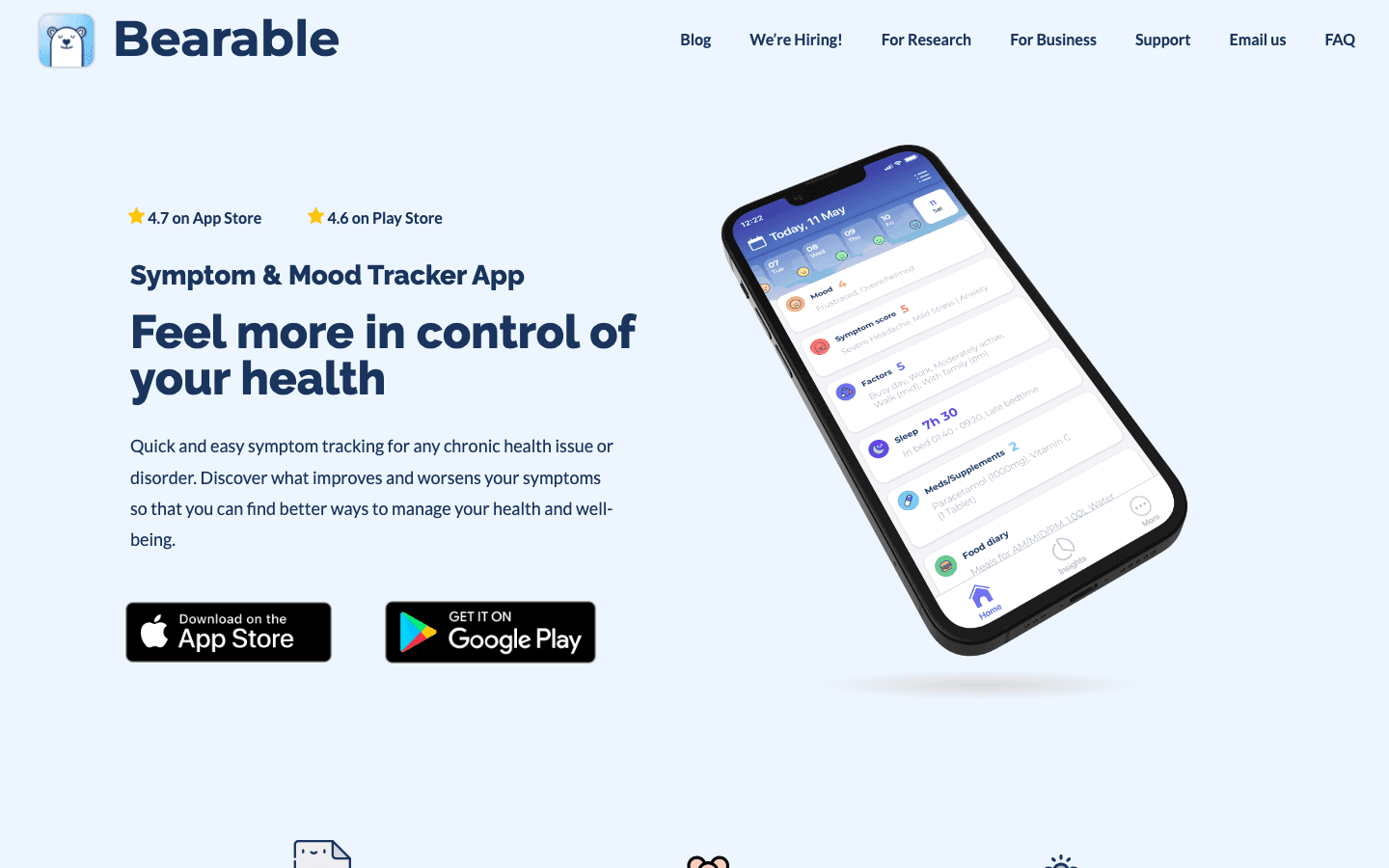
Bearable is designed for people who want to understand their health and wellbeing at a deeper level than Finch or Daylio provides. It tracks mood, energy, symptoms, sleep, medications, exercise, and custom factors in a single daily log. The correlations it surfaces between factors ("your energy scores are 30% lower on days following less than 7 hours of sleep") are actionable in a way that Finch's progress view isn't.
For Finch users who were using the app partly to monitor mental or physical health patterns, Bearable provides a more complete and medically-useful picture. It's also well-suited for users managing chronic conditions who want to correlate symptom patterns with behavioral and lifestyle factors.
Tracks mood, energy, symptoms, sleep, and custom health factors
Correlation insights between logged factors
Medication and supplement tracking
Shareable health reports for medical appointments
Fully customizable tracking categories
Limitations: More complex setup than Finch or Daylio. Primarily a tracking tool, not a planning or goal-setting one. No gamification.
Pricing: Free tier available. Plus plan approximately $3.99/month or $29.99/year.
Best for: Users who want meaningful health and mood correlation data beyond simple daily check-ins.
5. Tiimo: Best Visual Daily Planner for Neurodivergent Users
A visual, timer-based daily planner designed for ADHD and autistic users.
Tiimo is a visual daily planning app built for neurodivergent brains. It displays your day as a visual timeline with color-coded activity blocks, animated countdown timers for each task, and gentle reminders. Like Finch, it appeals strongly to ADHD and autistic users who respond well to visual structure and want their day to feel manageable.
Where Tiimo differs from Finch is in orientation: Finch is about self-care goals and emotional health, Tiimo is about structuring your actual day. For neurodivergent Finch users who were primarily using the app to help with daily routine building, Tiimo provides that structure more directly and with better calendar integration.
Visual color-coded daily timeline
Animated countdown timers for tasks
Gentle reminder notifications with visual cues
Google Calendar and Apple Calendar sync
Focus mode that shows only the current activity
Limitations: Focused on day-level planning rather than longer-horizon goal tracking. No mood journaling or health tracking. Higher price relative to Daylio.
Pricing: 14-day free trial. Subscription approximately $4.99/month.
Best for: Neurodivergent Finch users who want a visual, timer-based daily structure rather than a self-care gamification system.
6. Woebot: Best for Mental Health Support
A mental health chatbot built on CBT techniques, available when you need it.
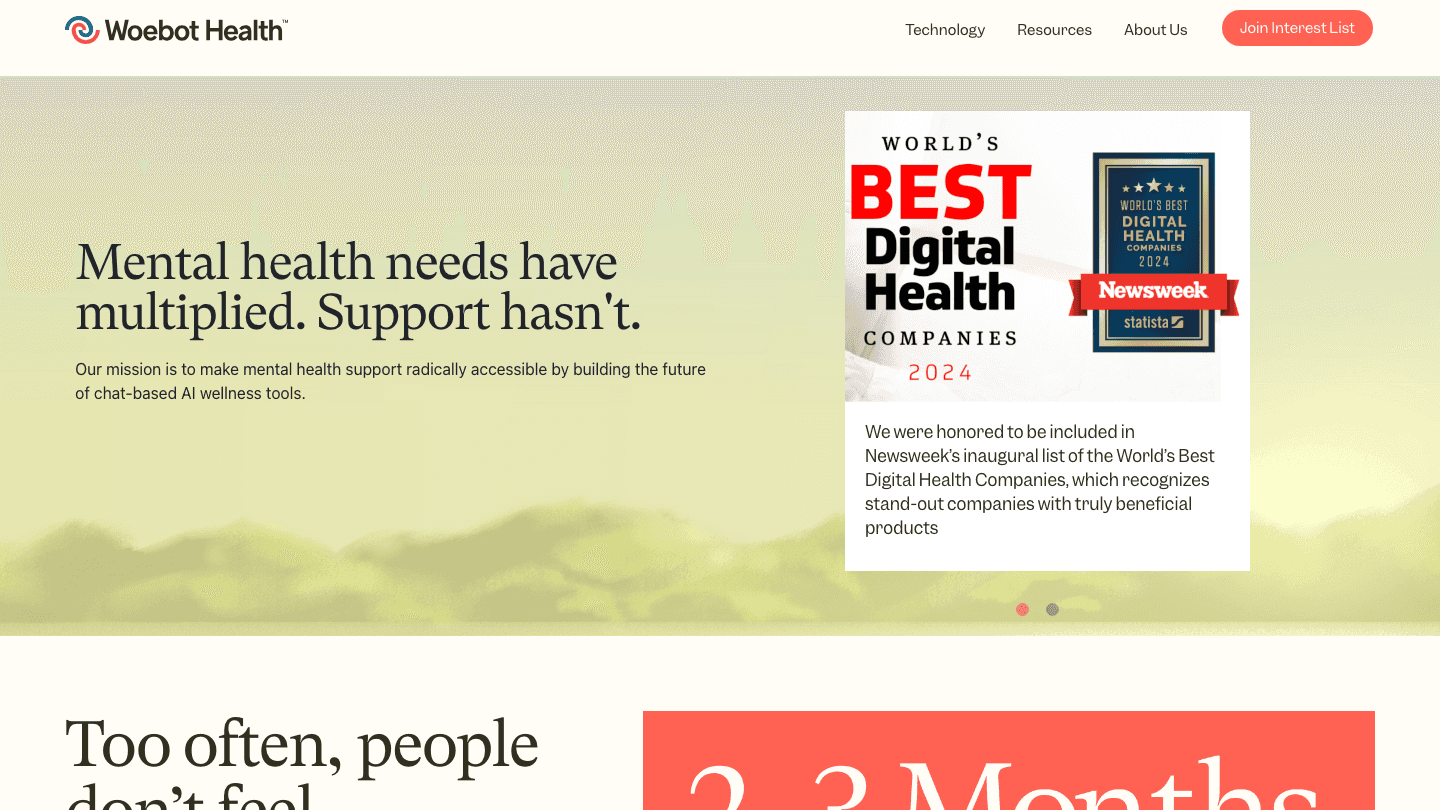
Woebot is different from every other app on this list. Rather than tracking habits or planning your day, it provides mental health support through conversational CBT (cognitive behavioral therapy) techniques. When you're feeling anxious, low, or stuck, Woebot helps you identify thought patterns, reframe cognitive distortions, and work through what's happening.
For Finch users whose primary use was emotional support and mental health maintenance, Woebot addresses that need more directly. It doesn't have a virtual pet, but it does have evidence-based tools for managing the kind of emotional health challenges that often draw people to Finch in the first place. It's free to use and available 24 hours a day.
CBT-based conversational mental health support
Available any time, with no waiting for a session
Mood tracking integrated with check-in conversations
Psychoeducation content built into conversations
Free to use (some features through partner organizations)
Limitations: Not a substitute for professional mental health care. No scheduling or planning features. No gamification or habit tracking.
Pricing: Free. Some features available through healthcare providers.
Best for: Finch users who were primarily seeking emotional support and want direct access to CBT-based mental health tools.
Which Finch Alternative Is Right for You?
You want your self-care goals in a real daily schedule: Lifestack
You want a fast daily mood and activity log: Daylio
You want guided AI journaling that feels personal: Reflectly
You want to track health factors and find patterns: Bearable
You're neurodivergent and want visual daily structure: Tiimo
You want mental health support based on CBT: Woebot
Frequently Asked Questions
What is Finch and why are people looking for alternatives?
Finch is a self-care app that uses a virtual pet bird mechanic: you complete daily goals and check-ins, and your bird grows. It's popular for building self-care habits and emotional health awareness. People look for alternatives when they want something with deeper scheduling integration, more detailed mood tracking, or mental health support that goes beyond gamification.
What is the best app similar to Finch for habit tracking?
For users focused on self-care habit tracking, Daylio provides the most direct alternative with faster check-ins and better activity correlation data. For users who want their self-care habits integrated with a real daily plan, Lifestack is the strongest option, as it schedules goals into actual calendar time blocks rather than keeping them as aspirational check-ins.
Is there a Finch alternative with better ADHD support?
Yes. Tiimo is built specifically for neurodivergent users and provides the visual daily structure that many ADHD and autistic Finch users find helpful. Lifestack also performs well for ADHD users through its energy-aware ADHD scheduling that places tasks in optimal time windows automatically.
Are there free Finch alternatives?
Woebot is fully free. Daylio, Bearable, and Tiimo all have free tiers. Reflectly offers a free trial. Lifestack has a 7-day free trial on its annual plan ($50/year) and also offers a lifetime plan at $120.
Can any app replace both the self-care and planning features of Finch?
No single app perfectly replaces Finch's combination of gamification, emotional wellness, and goal check-ins. The closest approach is to use two complementary apps: Lifestack for scheduling and goal execution and Daylio or Reflectly for daily reflection and mood tracking. Together they cover what Finch does, with more depth in both areas.
Finch is a self-care app built around a virtual pet bird: you complete daily self-care goals, and your bird grows as you do. It's a clever approach to habit reinforcement that has built a devoted following, particularly among people who respond well to emotional investment and gentle accountability.
But Finch isn't for everyone. Some users outgrow the gamification and want something that connects more directly to real goals and schedules. Others find the social features or notification style doesn't fit their lifestyle. And some are looking for a specific capability Finch doesn't have: mood tracking with more depth, mental health support, or a planner that ties self-care goals to an actual calendar.
These six Finch alternatives cover the full range of reasons someone might be looking for something different, from AI-scheduled daily planning to mental health support to deep mood journaling. Each one is a genuine, actively maintained app in 2026.
All apps tested and pricing verified June 2026.
Key Takeaways
Lifestack is the best Finch alternative for users who want to move beyond goal-tracking and build a schedule that actually executes on their self-care and personal goals.
Daylio and Reflectly are the strongest mood and journaling alternatives for users who value the reflective side of Finch's experience.
Woebot provides the most direct mental health support if Finch's emotional wellness angle was the primary draw.
Quick Guide: Finch App Alternatives
Lifestack: Best for turning self-care goals into a real daily schedule
Daylio: Best mood and activity journal with micro-journaling
Reflectly: Best AI-powered journaling and emotional reflection app
Bearable: Best for tracking symptoms, mood, and wellness factors together
Tiimo: Best visual daily planner for neurodivergent users
Woebot: Best for mental health support and CBT-based tools
1. Lifestack: Best for Planning Actual Self-Care Goals
For Finch users who want their self-care goals to show up on a real schedule.
Finch is good at motivating you to set self-care goals. Where it falls short is execution: the goals live in the app, separate from your calendar and your actual day. Lifestack connects those dots. It takes your personal goals and tasks and builds them into a daily schedule around your energy levels and existing calendar events.
If your Finch goals include "exercise three times a week," "meditate each morning," or "write in a journal before bed," Lifestack turns those into scheduled time blocks that actually appear in your day. The self-care doesn't stay aspirational; it gets a time slot. For ADHD users who loved Finch's structure but needed something that integrates with their real schedule, Lifestack is the closest match.
Energy-aware scheduling places goals when you're most likely to follow through
Two-way Google Calendar sync so self-care blocks appear alongside work
Task planning that turns goals into actionable daily schedules
Clean mobile UI with daily plan view and reminders
Progress tracking tied to actual calendar completion
Limitations: No virtual pet or gamification. More focused on planning than reflection or mood tracking.
Pricing: $7/month, $50/year (7-day free trial), or $120 lifetime.
Best for: Finch users who want to translate their self-care goals into a structured daily plan that integrates with their real life.
2. Daylio: Best Mood and Activity Journal
Track how you feel and what you do, every day, in under two minutes.
Daylio is a micro-journaling app that lets you log your mood and activities in seconds. No long journal entries required: pick your mood from a set of icons, tag what you did (workout, social time, work, good sleep), and you're done. Over time, Daylio's charts show you correlations between activities and mood, which is exactly the kind of self-awareness insight Finch tries to build.
Where Daylio differs is in depth and simplicity. There's no virtual pet, no gamification, no community. Just a clean, reliable log of how you're feeling and what might be influencing it. For users who liked Finch's goal-check-in structure but didn't connect with the bird mechanic, Daylio provides the journaling core without the overhead.
Quick mood and activity logging in under 30 seconds
Correlation charts between activities and mood over time
Fully customizable mood icons and activity tags
Year-in-review and streak tracking
Export to CSV for personal data analysis
Limitations: No scheduling integration. No goal-setting or planning features. Reflective only, not action-oriented.
Pricing: Free tier available. Premium $4.99/month or $35.99/year.
Best for: Users who want a fast, private mood and activity log with meaningful pattern insights over time.
3. Reflectly: Best AI Journaling App
Guided journaling with AI prompts that adapt to your mood and patterns.
Reflectly takes journaling further than Daylio by adding AI-generated prompts that adapt based on your previous entries and current mood. Instead of a blank page, you get a structured set of questions each day: what went well, what was difficult, what you're grateful for, and what you want to focus on tomorrow. The experience feels more guided and personal than a standard journal app.
The visual design is a significant differentiator. Reflectly is genuinely beautiful to use, which matters for a daily practice that depends on feeling good about opening the app. For Finch users who valued the emotional warmth of the interface and the daily check-in ritual, Reflectly captures that feeling while adding more substance to the reflection process.
AI-generated daily journal prompts based on mood and history
Mood tracking integrated with journaling entries
Streaks and insights on journaling patterns
Beautiful, emotionally warm visual design
Weekly reflection summaries
Limitations: Higher price point than Daylio. No scheduling or goal-planning features. No Android app.
Pricing: Free trial available. Premium $9.99/month or $59.99/year.
Best for: Users who want a beautiful, AI-guided daily journaling practice that builds emotional self-awareness over time.
4. Bearable: Best Health and Mood Tracker
Track symptoms, mood, sleep, and wellness factors together in one place.
Bearable is designed for people who want to understand their health and wellbeing at a deeper level than Finch or Daylio provides. It tracks mood, energy, symptoms, sleep, medications, exercise, and custom factors in a single daily log. The correlations it surfaces between factors ("your energy scores are 30% lower on days following less than 7 hours of sleep") are actionable in a way that Finch's progress view isn't.
For Finch users who were using the app partly to monitor mental or physical health patterns, Bearable provides a more complete and medically-useful picture. It's also well-suited for users managing chronic conditions who want to correlate symptom patterns with behavioral and lifestyle factors.
Tracks mood, energy, symptoms, sleep, and custom health factors
Correlation insights between logged factors
Medication and supplement tracking
Shareable health reports for medical appointments
Fully customizable tracking categories
Limitations: More complex setup than Finch or Daylio. Primarily a tracking tool, not a planning or goal-setting one. No gamification.
Pricing: Free tier available. Plus plan approximately $3.99/month or $29.99/year.
Best for: Users who want meaningful health and mood correlation data beyond simple daily check-ins.
5. Tiimo: Best Visual Daily Planner for Neurodivergent Users
A visual, timer-based daily planner designed for ADHD and autistic users.
Tiimo is a visual daily planning app built for neurodivergent brains. It displays your day as a visual timeline with color-coded activity blocks, animated countdown timers for each task, and gentle reminders. Like Finch, it appeals strongly to ADHD and autistic users who respond well to visual structure and want their day to feel manageable.
Where Tiimo differs from Finch is in orientation: Finch is about self-care goals and emotional health, Tiimo is about structuring your actual day. For neurodivergent Finch users who were primarily using the app to help with daily routine building, Tiimo provides that structure more directly and with better calendar integration.
Visual color-coded daily timeline
Animated countdown timers for tasks
Gentle reminder notifications with visual cues
Google Calendar and Apple Calendar sync
Focus mode that shows only the current activity
Limitations: Focused on day-level planning rather than longer-horizon goal tracking. No mood journaling or health tracking. Higher price relative to Daylio.
Pricing: 14-day free trial. Subscription approximately $4.99/month.
Best for: Neurodivergent Finch users who want a visual, timer-based daily structure rather than a self-care gamification system.
6. Woebot: Best for Mental Health Support
A mental health chatbot built on CBT techniques, available when you need it.
Woebot is different from every other app on this list. Rather than tracking habits or planning your day, it provides mental health support through conversational CBT (cognitive behavioral therapy) techniques. When you're feeling anxious, low, or stuck, Woebot helps you identify thought patterns, reframe cognitive distortions, and work through what's happening.
For Finch users whose primary use was emotional support and mental health maintenance, Woebot addresses that need more directly. It doesn't have a virtual pet, but it does have evidence-based tools for managing the kind of emotional health challenges that often draw people to Finch in the first place. It's free to use and available 24 hours a day.
CBT-based conversational mental health support
Available any time, with no waiting for a session
Mood tracking integrated with check-in conversations
Psychoeducation content built into conversations
Free to use (some features through partner organizations)
Limitations: Not a substitute for professional mental health care. No scheduling or planning features. No gamification or habit tracking.
Pricing: Free. Some features available through healthcare providers.
Best for: Finch users who were primarily seeking emotional support and want direct access to CBT-based mental health tools.
Which Finch Alternative Is Right for You?
You want your self-care goals in a real daily schedule: Lifestack
You want a fast daily mood and activity log: Daylio
You want guided AI journaling that feels personal: Reflectly
You want to track health factors and find patterns: Bearable
You're neurodivergent and want visual daily structure: Tiimo
You want mental health support based on CBT: Woebot
Frequently Asked Questions
What is Finch and why are people looking for alternatives?
Finch is a self-care app that uses a virtual pet bird mechanic: you complete daily goals and check-ins, and your bird grows. It's popular for building self-care habits and emotional health awareness. People look for alternatives when they want something with deeper scheduling integration, more detailed mood tracking, or mental health support that goes beyond gamification.
What is the best app similar to Finch for habit tracking?
For users focused on self-care habit tracking, Daylio provides the most direct alternative with faster check-ins and better activity correlation data. For users who want their self-care habits integrated with a real daily plan, Lifestack is the strongest option, as it schedules goals into actual calendar time blocks rather than keeping them as aspirational check-ins.
Is there a Finch alternative with better ADHD support?
Yes. Tiimo is built specifically for neurodivergent users and provides the visual daily structure that many ADHD and autistic Finch users find helpful. Lifestack also performs well for ADHD users through its energy-aware ADHD scheduling that places tasks in optimal time windows automatically.
Are there free Finch alternatives?
Woebot is fully free. Daylio, Bearable, and Tiimo all have free tiers. Reflectly offers a free trial. Lifestack has a 7-day free trial on its annual plan ($50/year) and also offers a lifetime plan at $120.
Can any app replace both the self-care and planning features of Finch?
No single app perfectly replaces Finch's combination of gamification, emotional wellness, and goal check-ins. The closest approach is to use two complementary apps: Lifestack for scheduling and goal execution and Daylio or Reflectly for daily reflection and mood tracking. Together they cover what Finch does, with more depth in both areas.



FOLLOW ON
FOLLOW ON
FOLLOW ON


Copyright 2026 © Lifestack. All rights reserved
Copyright 2026 © Lifestack. All rights reserved

