
App
Best Health Coaching Apps in 2026
Best Health Coaching Apps in 2026

What Is a Health Coaching App?
A health coaching app connects you with guidance, accountability, and structure for reaching your wellness goals. Some apps pair you with a real human coach. Others use behavioral science and tracking to deliver coaching-style nudges on your own schedule. The best ones do both: they give you a system that actually fits how you live.
The problem is that most people searching for a health coaching app want very different things. One person wants a nutrition coach who texts them daily. Another just needs a smart calendar that blocks time for workouts and recovery. A health coach building a client practice needs scheduling tools, intake forms, and billing.
We tested six apps across all three use cases and ranked them by how well they deliver on their core promise. If you already have a health plan in hand, the #1 pick helps you actually stick to it.
Key Takeaways
Lifestack ranks first because it schedules your health tasks around your real energy, not just open calendar slots
Noom is the strongest pick for behavior-change nutrition coaching with a structured weekly curriculum
Practice Better and Trainerize lead for health coaches who need client management, billing, and messaging in one tool
Quick Guide: Best Health Coaching Apps
1. Lifestack: Best for scheduling health routines with energy awareness
2. Noom: Best for nutrition behavior-change coaching
3. Future: Best for 1-on-1 personal training with a real coach
4. MyFitnessPal: Best free nutrition and fitness tracker
5. Practice Better: Best practice management tool for health coaches
6. Trainerize: Best for fitness coaches building a digital client base
How We Evaluated
Ease of onboarding: can a new user set up a meaningful routine in under 10 minutes?
Coaching depth: does it offer real behavioral support or just passive tracking?
Integration: does it connect with calendars, wearables, or other health tools?
Energy or effort awareness: does it account for how you actually feel, not just availability?
Pricing: is the value proportional to the cost?
Mobile experience: iOS and Android quality
1. Lifestack: Best for Following Through on Your Health Plan
Schedule your health goals around your real energy levels.

Most health coaching apps tell you what to do. Lifestack tells you when. It's an AI-powered daily planner that learns your time and energy patterns and schedules tasks, workouts, and self-care activities when you have the mental bandwidth to actually follow through.
This makes it unusually effective for health coaching. If your coach gives you a list of daily habits (drink more water, stretch before bed, prep meals on Sunday), Lifestack translates those into calendar blocks tied to when you're highest-energy. It integrates with Google Calendar and Apple Calendar, so your health goals sit next to your work commitments rather than in a separate app you forget to check.
The energy-aware scheduling is the core differentiator. Other apps track what you did. Lifestack helps you plan what you'll do and keeps the plan realistic by accounting for your actual capacity. Pair it with any habit tracker and you have a system that bridges intention and action.
AI scheduling that maps tasks to high-energy periods in your day
Integrates with Google Calendar, Apple Calendar, and task apps
Daily planner view with time-blocking and priority sorting
Works alongside any health coaching program or wearable routine
iOS and Android apps plus Chrome extension
What Works
Energy-aware scheduling that no other planner in this list offers
Instantly bridges the gap between your coach's plan and your daily calendar
Affordable enough to use alongside a paid coaching program
Limitations
Does not offer built-in coaching content. It's a planner, not a coach itself
No nutrition or workout logging natively
Pricing: $7/month or $50/year (7-day free trial on annual plan)
Best for: Anyone who already has a health plan and wants a smart scheduler to execute it
2. Noom: Best Behavior-Change Nutrition Coaching
Psychology-based weight loss coaching built around your habits.
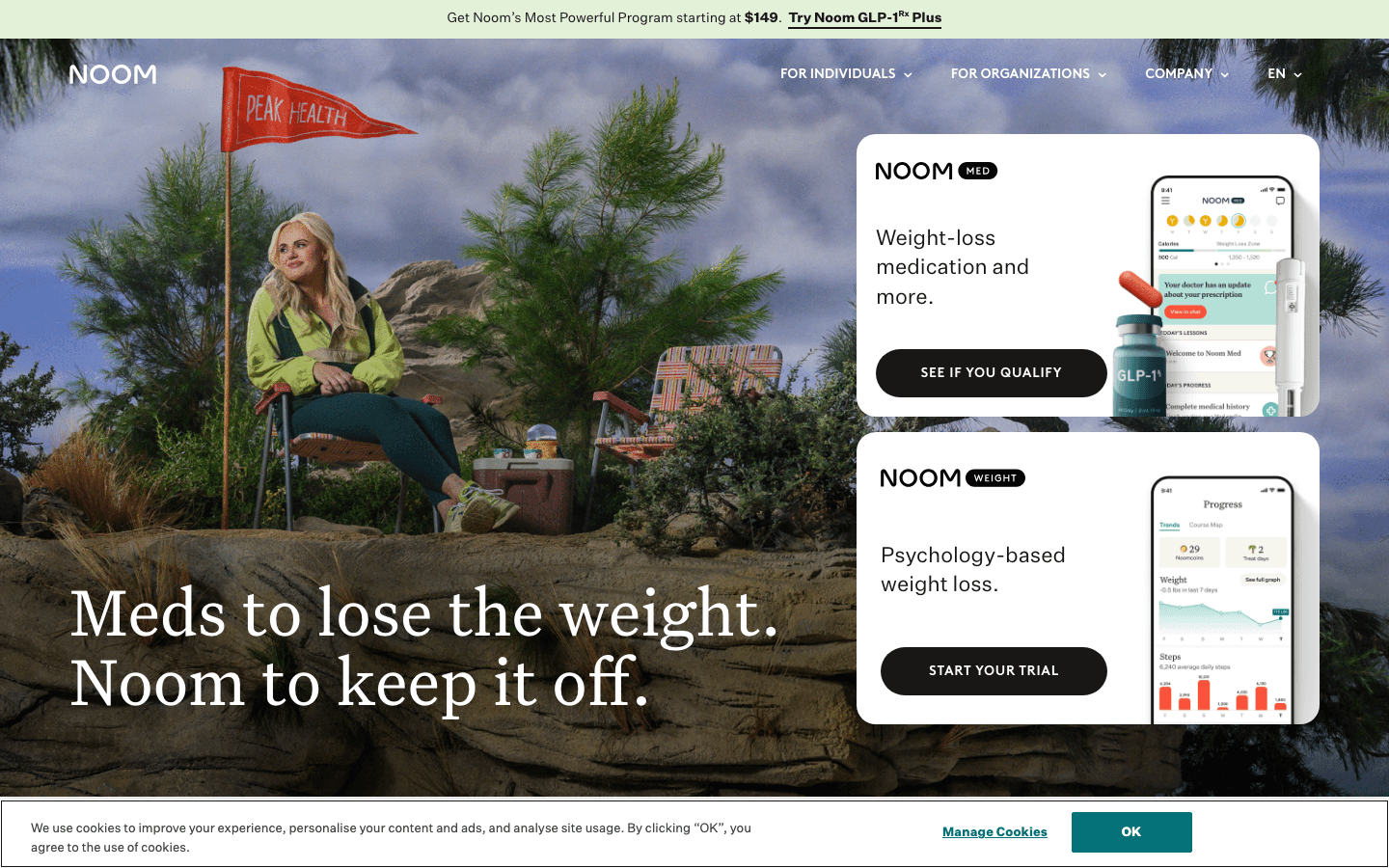
Noom is one of the few health apps with a legitimate clinical research base. The program uses cognitive behavioral therapy principles, a color-coded food logging system, and a weekly curriculum to shift the behaviors that drive weight gain, not just the eating habits themselves.
Every Noom subscriber gets access to a goal specialist and a group coach. The app delivers short daily lessons (5-10 minutes) that build on each other over 4-12 months. It's not a quick fix. The structure expects sustained engagement, which is either a feature or a flaw depending on your commitment level.
CBT-based weekly curriculum with daily lessons and exercises
Green/yellow/red food logging system tied to caloric density, not calorie counts alone
Access to personal goal specialist and group coaching sessions
Meal tracking, step counting, and water logging built in
What Works
The psychology-forward approach is genuinely different from calorie-counting apps
Group coaching creates social accountability without a premium price
Limitations
Long minimum commitment (4-month plans are the default entry point)
No energy-aware scheduling. Workouts and habits are tracked, not proactively planned
GLP-1 and medication add-ons push costs significantly higher
Pricing: From $17.42/month (12-month plan) to $42.25/month (4-month plan)
Best for: People who want structured nutrition coaching grounded in behavioral science
3. Future: Best for 1-on-1 Personal Training
A real fitness coach in your pocket, seven days a week.
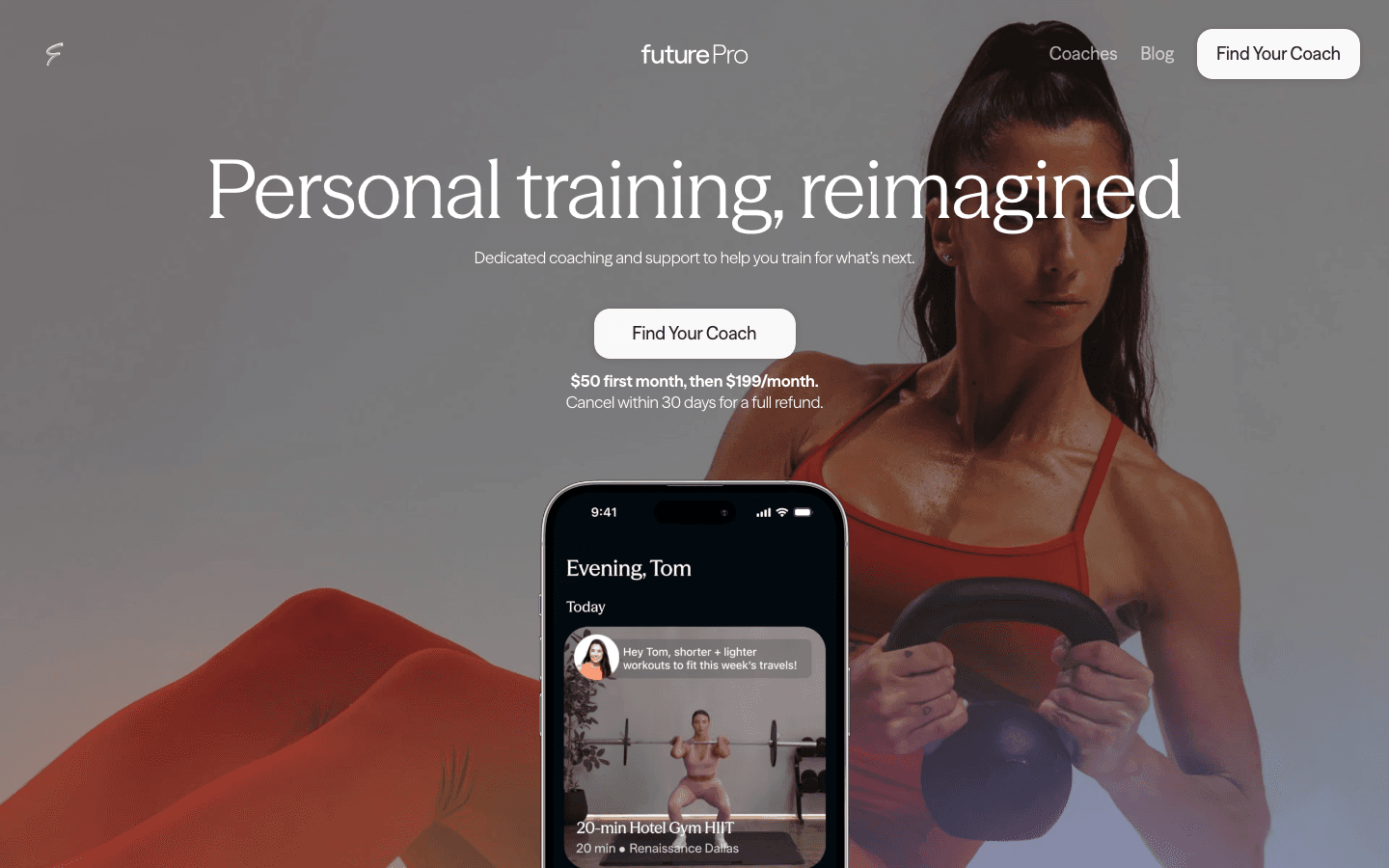
Future matches you with a certified personal trainer who builds custom weekly workout plans and checks in with you daily via the app. Every workout is loaded into your Apple Watch or iPhone the night before. Your coach reviews your performance data and adjusts the plan accordingly. No cookie-cutter programming.
The coaching relationship is real. You text your coach, they text back. If you skip a session, they notice. That accountability loop is the main thing Future sells, and it works. The $199/month price is steep, but you're getting what would cost $400+ for two in-person sessions per week.
Matched with a certified personal trainer based on your goals and schedule
Custom workout plans delivered daily to Apple Watch or iPhone
Coach reviews heart rate and performance data after every session
Daily check-ins and messaging with your dedicated coach
What Works
Real human accountability: the coach relationship drives compliance
Workout delivery to Apple Watch works well during sessions
First month at $50 is a low-risk way to try the format
Limitations
$199/month ongoing is expensive compared to most apps
Fitness-only. No nutrition, mental health, or scheduling features
iOS and Apple Watch required for the full experience
Pricing: $50 first month, then $199/month
Best for: People who want real human coaching for fitness and are willing to pay for accountability
4. MyFitnessPal: Best Free Nutrition and Fitness Tracker
The most complete free health tracking app available.
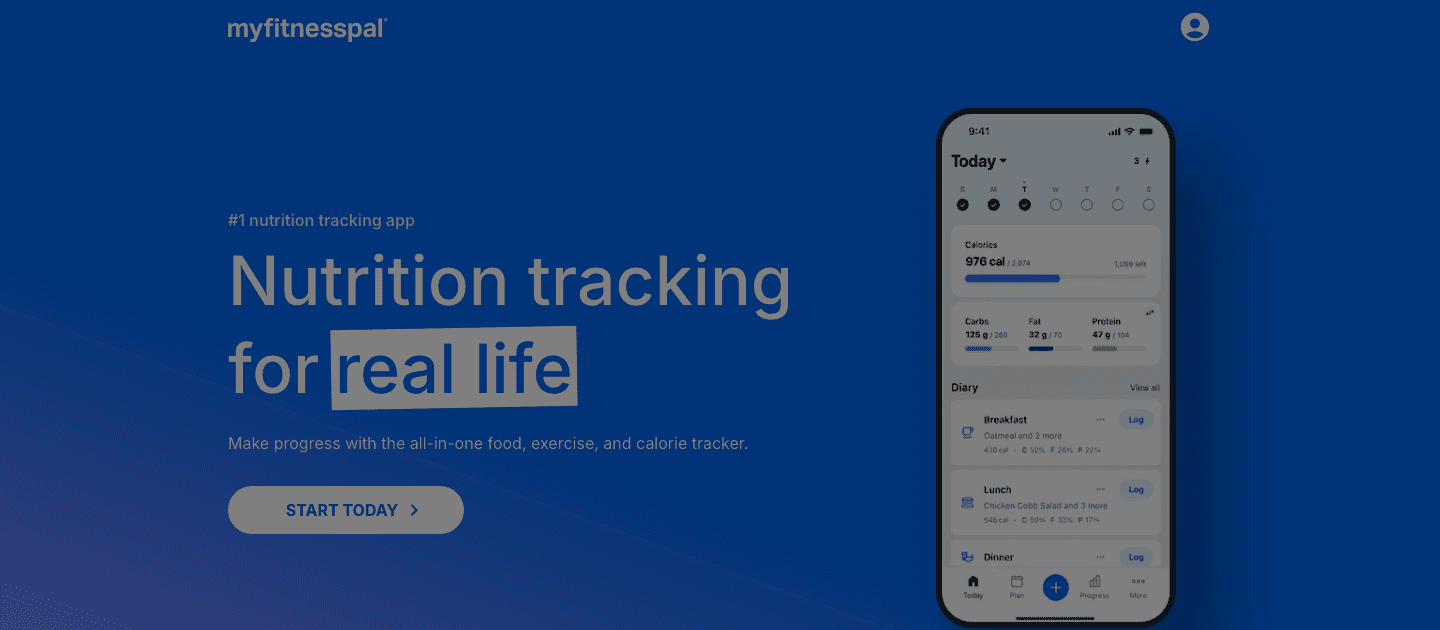
MyFitnessPal built its reputation on one of the largest food databases in existence: over 14 million foods, many with barcode scanning. The free tier is genuinely usable: calorie logging, macronutrient tracking, exercise logging, and water tracking are all included at no cost.
What MyFitnessPal lacks is proactive coaching. It tracks and reports. It doesn't tell you what to eat tomorrow or help you build a weekly plan around your health goals. That's fine if you already know your targets and just need an accurate log. But if you want guidance on what those targets should be, you'll want to pair it with something else.
14 million+ food database with barcode scanning
Free calorie, macro, and water tracking
Exercise logging with estimated calorie burn
Premium adds meal planning, advanced macros, and ad removal
What Works
Largest food database of any nutrition app
Free tier is complete enough for most casual users
Integrates with Garmin, Fitbit, Apple Health, and most wearables
Limitations
Passive tracker, not a coaching tool. No behavioral support or personalization
No scheduling features; does not connect to your calendar
No energy awareness or effort-based planning
Pricing: Free; Premium $79.99/year (~$6.67/month) or Premium+ $99.99/year
Best for: People who want detailed nutrition tracking without paying for coaching
5. Practice Better: Best for Health Coaches Managing Clients
The all-in-one client management platform built for wellness practitioners.
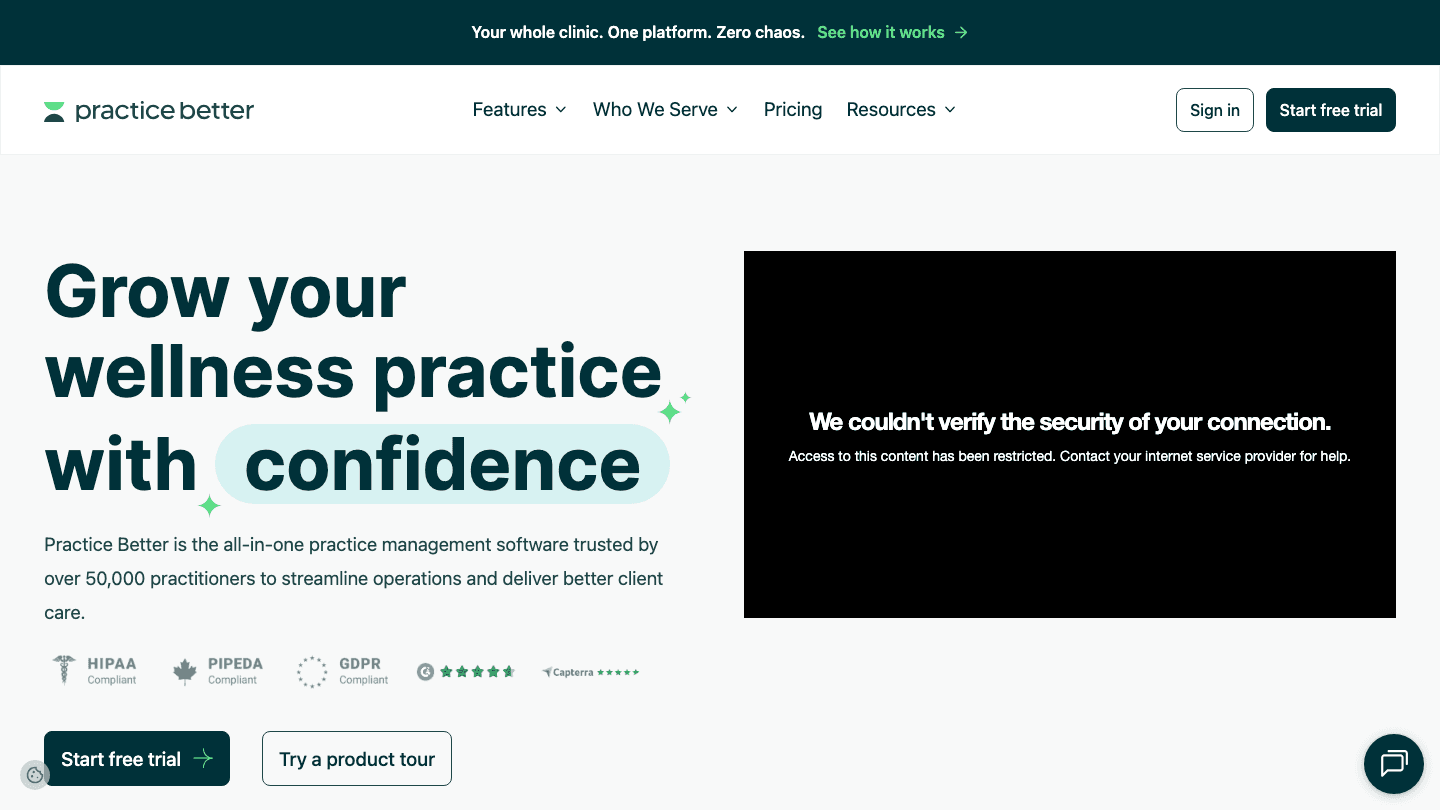
Practice Better is not for the person being coached. It's for the coach. If you're a nutritionist, health coach, or wellness practitioner managing a client roster, this platform covers scheduling, intake forms, session notes, billing, and a client-facing portal where clients can log food, track symptoms, and message you directly.
The interface takes some getting used to. Onboarding a full practice (importing clients, setting up programs, configuring intake forms) takes a few hours the first time. But once it's running, it cuts the administrative overhead that eats into actual coaching time. The client app is clean and easy for non-technical clients to navigate.
Client scheduling, intake forms, and session note templates
Billing and invoicing with integrated payments
Client portal with food logging, symptom tracking, and secure messaging
HIPAA, PIPEDA, and GDPR compliant
Group programs and protocols for scaling coaching content
What Works
Covers the full practice workflow in one tool. No need for separate billing or scheduling apps
Strong compliance certifications for practitioners who need them
Free Sprout plan covers solo practitioners with a small client list
Limitations
Steep learning curve compared to simpler scheduling tools
Not designed for the person being coached. Clients need their coach to set it up for them
Pricing: Free (Sprout); Starter $25/month billed annually; Professional $59/month annually
Best for: Health coaches and wellness practitioners managing an active client practice
6. Trainerize: Best Fitness Coaching Platform
Build, deliver, and scale your fitness coaching business online.
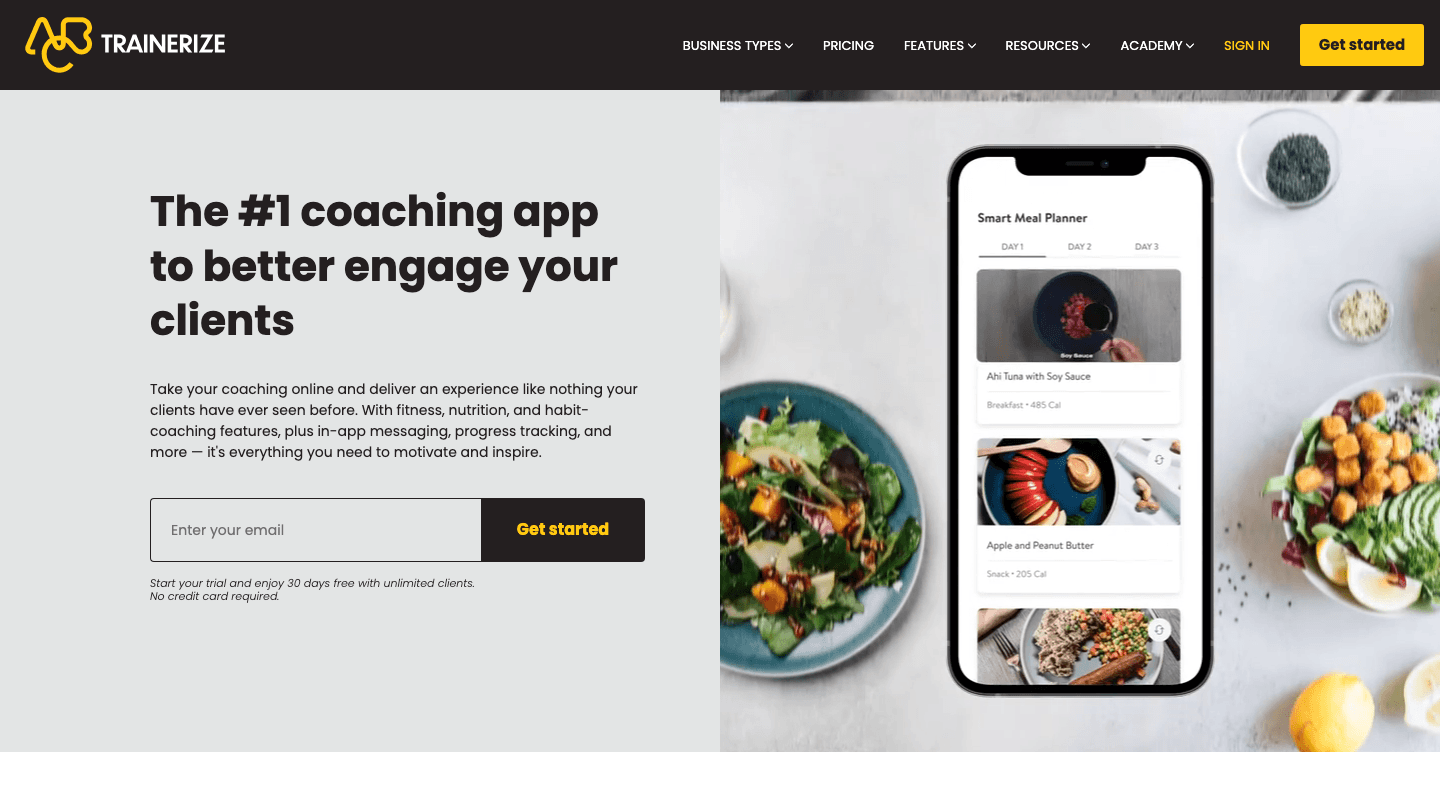
Trainerize (now part of ABC Fitness) positions itself as the everything-app for fitness coaches: workout program delivery, habit coaching, nutrition tracking, progress photos, in-app messaging, and a white-label client app. It's built for personal trainers who want to run a remote coaching business without stitching together five different tools.
Clients get a branded app where workouts appear day by day, complete with video demonstrations and rest timers. Coaches can build program templates once and reuse them across clients. The habit coaching add-on lets coaches track daily behaviors the same way they track exercise sets.
Custom workout program builder with video exercise library
In-app messaging, progress photos, and client check-ins
Nutrition coaching and habit tracking built in
White-label client app for brand consistency
30-day free trial, no credit card required
What Works
One platform for the entire fitness coaching workflow
Video exercise demonstrations reduce client questions about form
Free plan supports one client, a real option for solo coaches testing the platform
Limitations
Fitness-focused; limited for coaches who work with nutrition, mental health, or lifestyle factors
Advanced features (nutrition coaching, video calls) cost extra per month
Pricing: Free (1 client); from $9/month for 2 clients; 30-day free trial
Best for: Personal trainers who want to deliver and scale remote fitness coaching
Which Health Coaching App Is Right for You?
You already have a health plan and need to stick to it: Lifestack (it schedules your goals around your real energy, not just open slots)
You want to change your eating habits with behavioral coaching: Noom
You want a real human fitness coach checking in daily: Future
You want to track nutrition and exercise for free: MyFitnessPal
You're a health coach managing a client practice: Practice Better
You're a fitness coach building an online business: Trainerize
One thing all these apps share: they work better when your schedule supports your goals. A nutrition coach can build you the perfect meal plan, but if your calendar is a wall-to-wall tangle of meetings and commutes, you'll skip it. That's where adding a tool like Lifestack pays off by doing the scheduling work so the rest of your morning routine and reminders can actually land.
Frequently Asked Questions
What is the best health coaching app?
Lifestack is the best health coaching app for people who need help scheduling and following through on a health plan. Noom is the top pick for nutrition behavior-change coaching. Future leads for 1-on-1 fitness coaching.
Are health coaching apps worth it?
Yes, for most people. Apps in the $7-$50 per month range cost far less than in-person coaching sessions and provide consistent daily touchpoints that most people find more effective than weekly appointments alone. The key is matching the app type to your actual goal.
What health coaching apps are free?
MyFitnessPal has a generous free tier covering calorie, macro, and exercise tracking. Practice Better has a free Sprout plan for health coaches managing a small number of clients. Trainerize is free for up to one coaching client.
What app do health coaches use to manage clients?
Practice Better is the most widely used platform for health and wellness coaches who need scheduling, notes, billing, and a client portal in one place. Trainerize is the equivalent for fitness-specific coaches. Both have free plans to test the software before committing.
Can a health coaching app replace a real coach?
Not entirely. Apps like Noom and Future include access to real humans, which closes some of that gap. But a standalone tracking app cannot replace the clinical judgment of a certified practitioner. The best use case is pairing an app with coaching, not choosing between them.
What should I look for in a health coaching app?
Focus on four things: does it match your goal type (nutrition, fitness, or scheduling); does it offer real behavioral support or just tracking; does it integrate with tools you already use; and is the pricing sustainable long-term. A good starting point is also checking whether it connects with your calendar apps so your health goals show up in your actual day.
What Is a Health Coaching App?
A health coaching app connects you with guidance, accountability, and structure for reaching your wellness goals. Some apps pair you with a real human coach. Others use behavioral science and tracking to deliver coaching-style nudges on your own schedule. The best ones do both: they give you a system that actually fits how you live.
The problem is that most people searching for a health coaching app want very different things. One person wants a nutrition coach who texts them daily. Another just needs a smart calendar that blocks time for workouts and recovery. A health coach building a client practice needs scheduling tools, intake forms, and billing.
We tested six apps across all three use cases and ranked them by how well they deliver on their core promise. If you already have a health plan in hand, the #1 pick helps you actually stick to it.
Key Takeaways
Lifestack ranks first because it schedules your health tasks around your real energy, not just open calendar slots
Noom is the strongest pick for behavior-change nutrition coaching with a structured weekly curriculum
Practice Better and Trainerize lead for health coaches who need client management, billing, and messaging in one tool
Quick Guide: Best Health Coaching Apps
1. Lifestack: Best for scheduling health routines with energy awareness
2. Noom: Best for nutrition behavior-change coaching
3. Future: Best for 1-on-1 personal training with a real coach
4. MyFitnessPal: Best free nutrition and fitness tracker
5. Practice Better: Best practice management tool for health coaches
6. Trainerize: Best for fitness coaches building a digital client base
How We Evaluated
Ease of onboarding: can a new user set up a meaningful routine in under 10 minutes?
Coaching depth: does it offer real behavioral support or just passive tracking?
Integration: does it connect with calendars, wearables, or other health tools?
Energy or effort awareness: does it account for how you actually feel, not just availability?
Pricing: is the value proportional to the cost?
Mobile experience: iOS and Android quality
1. Lifestack: Best for Following Through on Your Health Plan
Schedule your health goals around your real energy levels.
Most health coaching apps tell you what to do. Lifestack tells you when. It's an AI-powered daily planner that learns your time and energy patterns and schedules tasks, workouts, and self-care activities when you have the mental bandwidth to actually follow through.
This makes it unusually effective for health coaching. If your coach gives you a list of daily habits (drink more water, stretch before bed, prep meals on Sunday), Lifestack translates those into calendar blocks tied to when you're highest-energy. It integrates with Google Calendar and Apple Calendar, so your health goals sit next to your work commitments rather than in a separate app you forget to check.
The energy-aware scheduling is the core differentiator. Other apps track what you did. Lifestack helps you plan what you'll do and keeps the plan realistic by accounting for your actual capacity. Pair it with any habit tracker and you have a system that bridges intention and action.
AI scheduling that maps tasks to high-energy periods in your day
Integrates with Google Calendar, Apple Calendar, and task apps
Daily planner view with time-blocking and priority sorting
Works alongside any health coaching program or wearable routine
iOS and Android apps plus Chrome extension
What Works
Energy-aware scheduling that no other planner in this list offers
Instantly bridges the gap between your coach's plan and your daily calendar
Affordable enough to use alongside a paid coaching program
Limitations
Does not offer built-in coaching content. It's a planner, not a coach itself
No nutrition or workout logging natively
Pricing: $7/month or $50/year (7-day free trial on annual plan)
Best for: Anyone who already has a health plan and wants a smart scheduler to execute it
2. Noom: Best Behavior-Change Nutrition Coaching
Psychology-based weight loss coaching built around your habits.
Noom is one of the few health apps with a legitimate clinical research base. The program uses cognitive behavioral therapy principles, a color-coded food logging system, and a weekly curriculum to shift the behaviors that drive weight gain, not just the eating habits themselves.
Every Noom subscriber gets access to a goal specialist and a group coach. The app delivers short daily lessons (5-10 minutes) that build on each other over 4-12 months. It's not a quick fix. The structure expects sustained engagement, which is either a feature or a flaw depending on your commitment level.
CBT-based weekly curriculum with daily lessons and exercises
Green/yellow/red food logging system tied to caloric density, not calorie counts alone
Access to personal goal specialist and group coaching sessions
Meal tracking, step counting, and water logging built in
What Works
The psychology-forward approach is genuinely different from calorie-counting apps
Group coaching creates social accountability without a premium price
Limitations
Long minimum commitment (4-month plans are the default entry point)
No energy-aware scheduling. Workouts and habits are tracked, not proactively planned
GLP-1 and medication add-ons push costs significantly higher
Pricing: From $17.42/month (12-month plan) to $42.25/month (4-month plan)
Best for: People who want structured nutrition coaching grounded in behavioral science
3. Future: Best for 1-on-1 Personal Training
A real fitness coach in your pocket, seven days a week.
Future matches you with a certified personal trainer who builds custom weekly workout plans and checks in with you daily via the app. Every workout is loaded into your Apple Watch or iPhone the night before. Your coach reviews your performance data and adjusts the plan accordingly. No cookie-cutter programming.
The coaching relationship is real. You text your coach, they text back. If you skip a session, they notice. That accountability loop is the main thing Future sells, and it works. The $199/month price is steep, but you're getting what would cost $400+ for two in-person sessions per week.
Matched with a certified personal trainer based on your goals and schedule
Custom workout plans delivered daily to Apple Watch or iPhone
Coach reviews heart rate and performance data after every session
Daily check-ins and messaging with your dedicated coach
What Works
Real human accountability: the coach relationship drives compliance
Workout delivery to Apple Watch works well during sessions
First month at $50 is a low-risk way to try the format
Limitations
$199/month ongoing is expensive compared to most apps
Fitness-only. No nutrition, mental health, or scheduling features
iOS and Apple Watch required for the full experience
Pricing: $50 first month, then $199/month
Best for: People who want real human coaching for fitness and are willing to pay for accountability
4. MyFitnessPal: Best Free Nutrition and Fitness Tracker
The most complete free health tracking app available.
MyFitnessPal built its reputation on one of the largest food databases in existence: over 14 million foods, many with barcode scanning. The free tier is genuinely usable: calorie logging, macronutrient tracking, exercise logging, and water tracking are all included at no cost.
What MyFitnessPal lacks is proactive coaching. It tracks and reports. It doesn't tell you what to eat tomorrow or help you build a weekly plan around your health goals. That's fine if you already know your targets and just need an accurate log. But if you want guidance on what those targets should be, you'll want to pair it with something else.
14 million+ food database with barcode scanning
Free calorie, macro, and water tracking
Exercise logging with estimated calorie burn
Premium adds meal planning, advanced macros, and ad removal
What Works
Largest food database of any nutrition app
Free tier is complete enough for most casual users
Integrates with Garmin, Fitbit, Apple Health, and most wearables
Limitations
Passive tracker, not a coaching tool. No behavioral support or personalization
No scheduling features; does not connect to your calendar
No energy awareness or effort-based planning
Pricing: Free; Premium $79.99/year (~$6.67/month) or Premium+ $99.99/year
Best for: People who want detailed nutrition tracking without paying for coaching
5. Practice Better: Best for Health Coaches Managing Clients
The all-in-one client management platform built for wellness practitioners.
Practice Better is not for the person being coached. It's for the coach. If you're a nutritionist, health coach, or wellness practitioner managing a client roster, this platform covers scheduling, intake forms, session notes, billing, and a client-facing portal where clients can log food, track symptoms, and message you directly.
The interface takes some getting used to. Onboarding a full practice (importing clients, setting up programs, configuring intake forms) takes a few hours the first time. But once it's running, it cuts the administrative overhead that eats into actual coaching time. The client app is clean and easy for non-technical clients to navigate.
Client scheduling, intake forms, and session note templates
Billing and invoicing with integrated payments
Client portal with food logging, symptom tracking, and secure messaging
HIPAA, PIPEDA, and GDPR compliant
Group programs and protocols for scaling coaching content
What Works
Covers the full practice workflow in one tool. No need for separate billing or scheduling apps
Strong compliance certifications for practitioners who need them
Free Sprout plan covers solo practitioners with a small client list
Limitations
Steep learning curve compared to simpler scheduling tools
Not designed for the person being coached. Clients need their coach to set it up for them
Pricing: Free (Sprout); Starter $25/month billed annually; Professional $59/month annually
Best for: Health coaches and wellness practitioners managing an active client practice
6. Trainerize: Best Fitness Coaching Platform
Build, deliver, and scale your fitness coaching business online.
Trainerize (now part of ABC Fitness) positions itself as the everything-app for fitness coaches: workout program delivery, habit coaching, nutrition tracking, progress photos, in-app messaging, and a white-label client app. It's built for personal trainers who want to run a remote coaching business without stitching together five different tools.
Clients get a branded app where workouts appear day by day, complete with video demonstrations and rest timers. Coaches can build program templates once and reuse them across clients. The habit coaching add-on lets coaches track daily behaviors the same way they track exercise sets.
Custom workout program builder with video exercise library
In-app messaging, progress photos, and client check-ins
Nutrition coaching and habit tracking built in
White-label client app for brand consistency
30-day free trial, no credit card required
What Works
One platform for the entire fitness coaching workflow
Video exercise demonstrations reduce client questions about form
Free plan supports one client, a real option for solo coaches testing the platform
Limitations
Fitness-focused; limited for coaches who work with nutrition, mental health, or lifestyle factors
Advanced features (nutrition coaching, video calls) cost extra per month
Pricing: Free (1 client); from $9/month for 2 clients; 30-day free trial
Best for: Personal trainers who want to deliver and scale remote fitness coaching
Which Health Coaching App Is Right for You?
You already have a health plan and need to stick to it: Lifestack (it schedules your goals around your real energy, not just open slots)
You want to change your eating habits with behavioral coaching: Noom
You want a real human fitness coach checking in daily: Future
You want to track nutrition and exercise for free: MyFitnessPal
You're a health coach managing a client practice: Practice Better
You're a fitness coach building an online business: Trainerize
One thing all these apps share: they work better when your schedule supports your goals. A nutrition coach can build you the perfect meal plan, but if your calendar is a wall-to-wall tangle of meetings and commutes, you'll skip it. That's where adding a tool like Lifestack pays off by doing the scheduling work so the rest of your morning routine and reminders can actually land.
Frequently Asked Questions
What is the best health coaching app?
Lifestack is the best health coaching app for people who need help scheduling and following through on a health plan. Noom is the top pick for nutrition behavior-change coaching. Future leads for 1-on-1 fitness coaching.
Are health coaching apps worth it?
Yes, for most people. Apps in the $7-$50 per month range cost far less than in-person coaching sessions and provide consistent daily touchpoints that most people find more effective than weekly appointments alone. The key is matching the app type to your actual goal.
What health coaching apps are free?
MyFitnessPal has a generous free tier covering calorie, macro, and exercise tracking. Practice Better has a free Sprout plan for health coaches managing a small number of clients. Trainerize is free for up to one coaching client.
What app do health coaches use to manage clients?
Practice Better is the most widely used platform for health and wellness coaches who need scheduling, notes, billing, and a client portal in one place. Trainerize is the equivalent for fitness-specific coaches. Both have free plans to test the software before committing.
Can a health coaching app replace a real coach?
Not entirely. Apps like Noom and Future include access to real humans, which closes some of that gap. But a standalone tracking app cannot replace the clinical judgment of a certified practitioner. The best use case is pairing an app with coaching, not choosing between them.
What should I look for in a health coaching app?
Focus on four things: does it match your goal type (nutrition, fitness, or scheduling); does it offer real behavioral support or just tracking; does it integrate with tools you already use; and is the pricing sustainable long-term. A good starting point is also checking whether it connects with your calendar apps so your health goals show up in your actual day.



FOLLOW ON
FOLLOW ON
FOLLOW ON


Copyright 2026 © Lifestack. All rights reserved
Copyright 2026 © Lifestack. All rights reserved

