
App
6 Best Me+ App Alternatives in 2026
6 Best Me+ App Alternatives in 2026

Me+ is a solid daily routine and habit tracker. But it's not for everyone. The interface can feel busy, the subscription cost climbs quickly for the features you actually use, and it lacks any connection between how you feel day-to-day and the schedule it suggests. If you're looking for a Me+ app alternative, you likely want something that either tracks habits more cleanly or goes further and actually uses that data to help you plan better.
We tested six alternatives across different use cases: AI-driven planning, gamified motivation, Apple Watch integration, emotional self-tracking, and simple visual habit streaks. Here's how they compare.
Key Takeaways
If you want your routine data to feed into a smarter daily schedule, Lifestack is the only option here that closes that loop automatically
Streaks and Structured are the cleanest, lowest-friction picks for Apple users who want minimal interface and reliable habit tracking
Habitica and Finch take opposite approaches to motivation: Habitica gamifies your tasks with RPG mechanics, Finch makes you care for a virtual pet by completing self-care goals
Quick Guide
Lifestack: Best Me+ alternative for AI-powered daily scheduling based on energy and recovery
Streaks: Best for simple Apple Watch habit streaks with no subscription
Habitica: Best for gamified motivation and group accountability
Finch: Best for emotional wellbeing and self-care habit building
Way of Life: Best for visual habit trend tracking over time
Structured: Best for visual daily timeline planning alongside habit tracking
How We Evaluated
Habit tracking depth: streak tracking, trend visualization, custom habit types
Daily routine planning: does the app help you structure your day, not just log it
Energy and health integration: does it connect to Apple Health, wearables, or recovery data
Motivation approach: gamification, streaks, social, or data-driven
Platform: iOS only, cross-platform, or Apple Watch native
Pricing: value relative to comparable Me+ subscription cost
1. Lifestack
Best Me+ alternative for energy-aware daily planning

Me+ tracks what you do. Lifestack takes that a step further and decides when you should do it based on how you actually feel that day.
Each morning, Lifestack reads your sleep and recovery data from Apple Health or your connected wearable, assesses your energy state, and generates a daily schedule that puts demanding tasks in your peak hours and lighter work in your low-energy windows. The result is a daily routine that adapts to your real capacity rather than holding you to a fixed template that ignores whether you slept well or badly.
Where Me+ focuses on logging and streaks, Lifestack focuses on execution. If the gap you feel with Me+ is that you're tracking your habits but still not feeling like your day is under control, Lifestack is built for exactly that problem. Energy-based planning is meaningfully different from routine tracking.
What works: Connects sleep data, calendar, and task list into one adaptive daily plan
What works: Pairs with any existing wearable you already use (Oura, Apple Watch, Garmin via Apple Health)
Limitations: Not a dedicated habit streak tracker. It's a daily planner with health-data integration
Pricing: $7/month or $50/year (7-day free trial on annual). $120 lifetime.
Best for: People who want their health and routine data to actually change their daily schedule.
2. Streaks
Best for clean Apple Watch habit streaks with no subscription
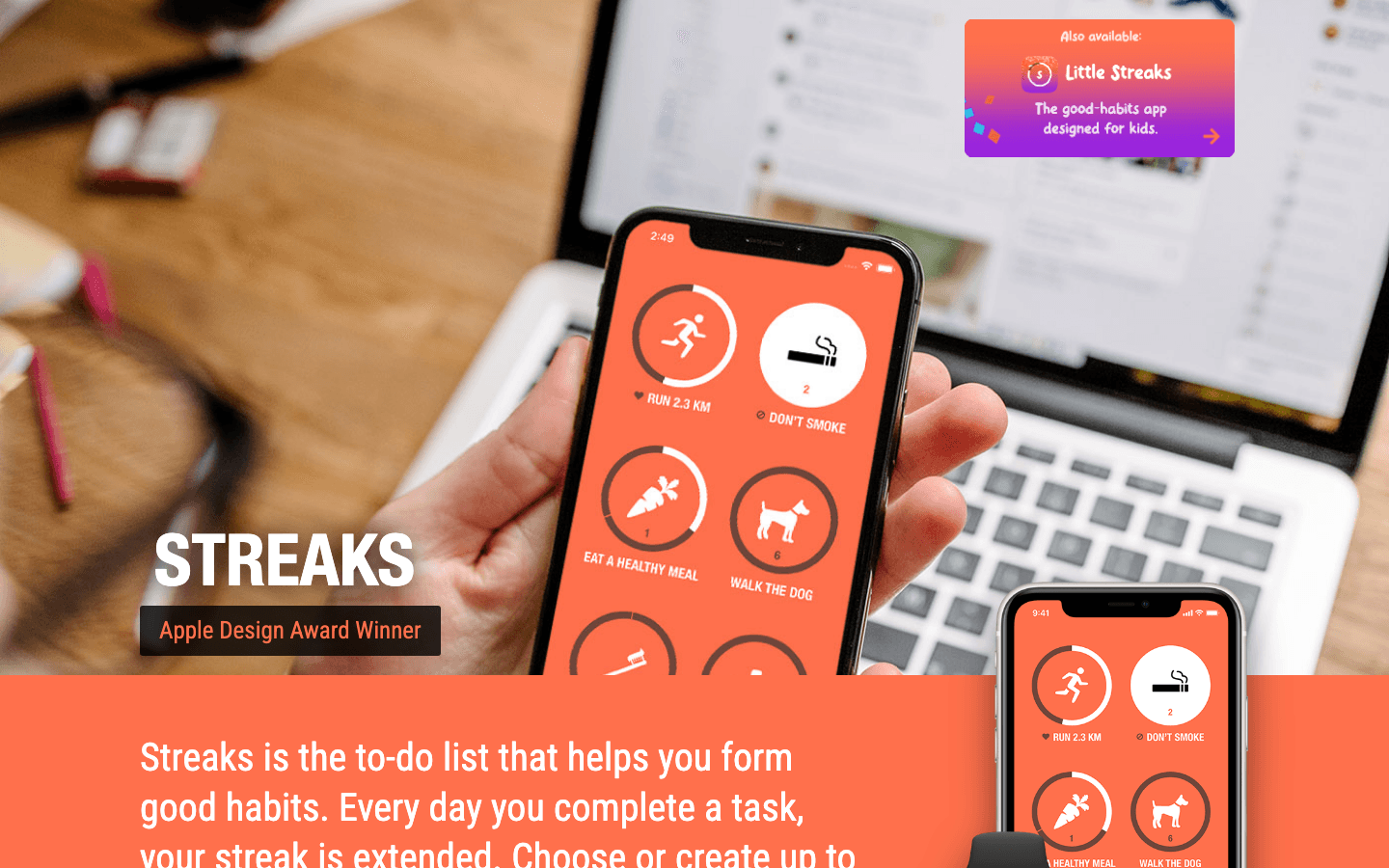
Streaks does one thing extremely well: it tracks up to 24 daily habits with a clean interface, Apple Watch complication support, and a streak counter that's genuinely motivating to maintain. The app's design philosophy is minimal friction. You open it, tap your completed habits, close it. No feed, no community, no coaching.
For people leaving Me+ who found the interface cluttered or the subscription unjustifiable, Streaks is the most obvious clean-break alternative. It's a one-time purchase at $5.99, integrates with Apple Health, and syncs natively with the Watch so you can log habits from your wrist without touching your phone. The limitation is the ceiling: 24 habits maximum, no mood tracking, no analytics beyond streak count.
Limitations: Apple ecosystem only. No Android. No energy integration or schedule planning.
Pricing: $5.99 one-time. No subscription.
Best for: Apple Watch users who want dead-simple habit streaks at a flat cost.
3. Habitica
Best for gamified motivation and social accountability
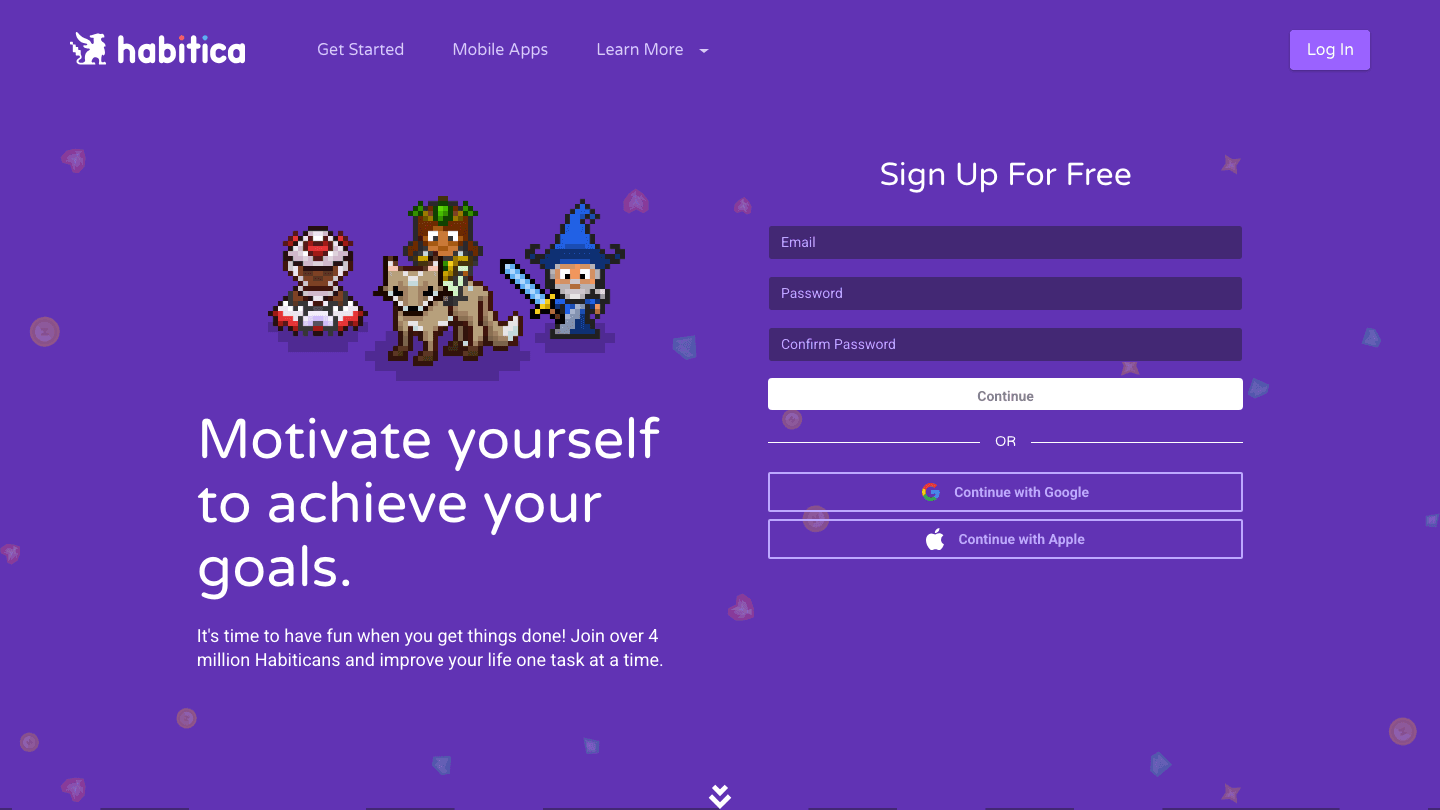
Habitica turns your habits and tasks into an RPG. You create a character, earn XP for completing daily habits and to-dos, lose health points when you fail, and can join parties with friends to tackle boss monsters. It's an unusual premise, and it works surprisingly well for people who respond better to game mechanics than to data charts.
The social layer is Habitica's standout feature. Guild challenges, accountability parties, and shared quests create a layer of external motivation that Me+ can't match. The free version is genuinely functional. The subscription unlocks cosmetic items and exclusive content rather than core features, which makes the freemium model feel more honest than most. Not a natural fit for everyone, but for people who need a motivational kick beyond streak counts, there's nothing quite like it. Check our broader habit tracker guide for context on different motivation approaches.
Limitations: The RPG framing feels juvenile to some users. No energy integration. Interface is complex.
Pricing: Free. Subscription from $4.99/month or $47.99/year.
Best for: People who need community and game mechanics to stay motivated on habits.
4. Finch
Best for emotional wellbeing and self-care habit building
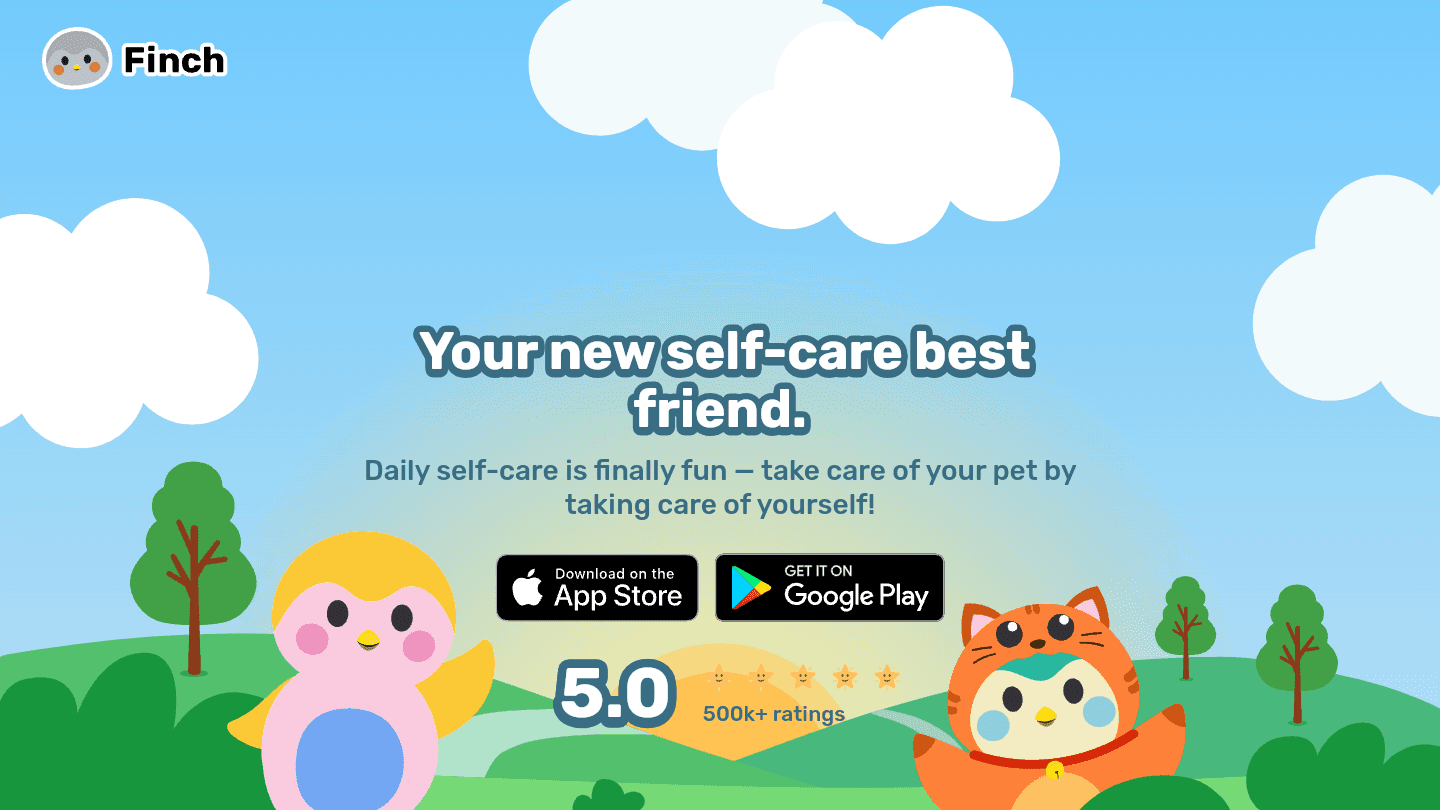
Finch takes a different angle on habit motivation: you earn "energy" for your virtual pet bird by completing daily self-care goals. The pet grows and explores as you complete tasks, and the attachment people develop to their Finch is surprisingly effective at sustaining engagement where pure streak apps might not.
The app skews toward emotional wellbeing: goals around sleep, self-compassion, mindfulness, and mood tracking rather than productivity habits. If what you're tracking in Me+ is more about mental health and self-care than task completion, Finch is better aligned. The free tier is generous, covering most core functionality. The Finch Plus subscription unlocks additional customization and features for users who get attached enough to want more.
Limitations: Better for wellbeing goals than productivity habits. No energy or calendar integration.
Pricing: Free. Finch Plus from $7.99/month or ~$39.99/year.
Best for: People tracking self-care and emotional wellbeing habits who want gentle, emotionally engaging motivation.
5. Way of Life
Best for visual trend analysis of habits over time
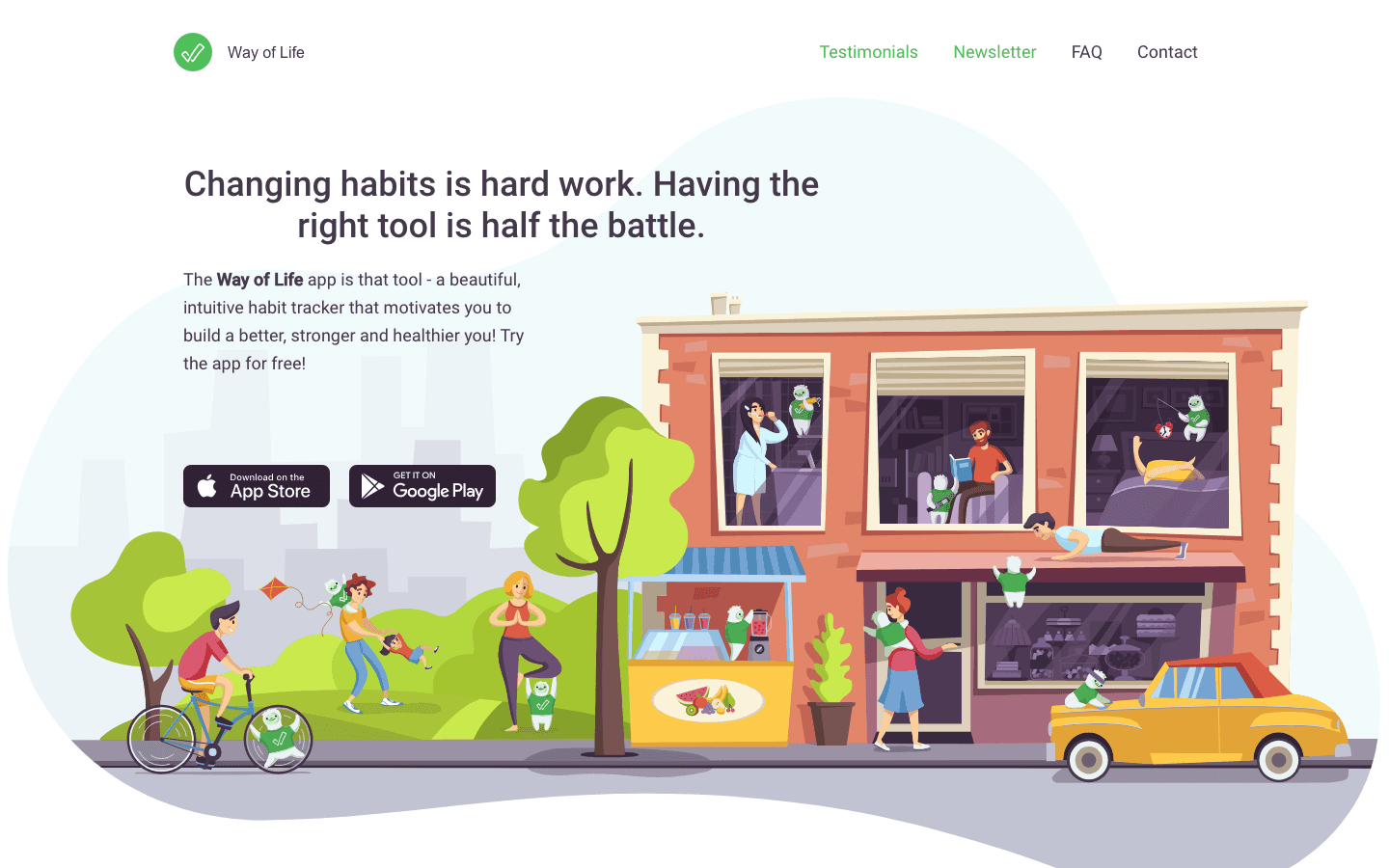
Way of Life focuses on long-term pattern recognition. Its color-coded grid view shows each habit across weeks and months as a yes/no/skip grid, making patterns immediately visible without having to interpret charts. The simple visual language makes it easy to see at a glance which habits are consistent and which are erratic.
Where Me+ and most habit apps track streaks as the primary metric, Way of Life tracks rate of success, which is a more forgiving and often more informative measure. Missing one day doesn't reset your streak; it shows up as a single red square in an otherwise green month. This framing reduces the "may as well give up" response that streak resets can trigger, especially for users who struggle with perfectionism around habit tracking.
Limitations: Minimal daily planning features. No energy integration, no scheduling.
Pricing: Free. Premium from $29.99/year.
Best for: People who want to visualize habit patterns over months rather than chase daily streaks.
6. Structured
Best visual daily timeline alongside habit tracking
Structured is primarily a daily planner with a visual timeline interface, but it doubles as a routine and habit tracker by making your schedule visible in block form throughout the day. Where Me+ organizes habits as a checklist, Structured places them on a visual timeline alongside your calendar events and tasks, showing your day as a series of scheduled blocks.
The visual format appeals particularly to people who find checklist-based habit apps like Me+ hard to connect to their actual day. When your morning routine blocks sit next to your work calendar in a timeline, the spatial relationship makes it easier to plan around them and follow through. A good alternative if your main frustration with Me+ is that it feels disconnected from your real calendar. Related: see our look at the best routine apps for a broader comparison.
Limitations: No energy awareness or wearable integration. No gamification or community features.
Pricing: $6.99/month or $99.99 lifetime.
Best for: Visual thinkers who want their habits and schedule in the same timeline view.
Which Me+ Alternative Is Right for You?
You want your routine tied to how you actually feel each day: Lifestack. It's the only option here that uses your sleep and recovery data to adapt your schedule.
You want the cleanest habit streak tracker with no subscription: Streaks. One-time cost, Apple Watch native, zero clutter.
You need external social motivation to stick with habits: Habitica. The party mechanics and guild system create accountability Me+ can't match.
You're tracking self-care and emotional health rather than productivity: Finch. The pet mechanic works better for wellbeing goals than streaks do.
You want to see patterns over months, not just streaks: Way of Life. The color-grid view is uniquely good for long-term pattern recognition.
You want habits on a visual timeline with your calendar: Structured. Connects your routine to your actual day in a way a checklist can't.
FAQ
What is Me+ used for?
Me+ (Me+ Lifestyle Routine) is a daily routine planner and habit tracker that helps users build consistent morning, evening, and daytime routines. It offers mood tracking, reminders, customizable habit icons, and MBTI-based routine templates. It's popular with people managing ADHD and people building structured morning routines.
Why are people looking for a Me+ alternative?
Common reasons include: the subscription cost relative to features ($9.99-$12.99/month), the cluttered interface at scale, the lack of integration with Apple Health or wearables, and the absence of any connection between habit data and daily scheduling. People who want their habit tracking to feed into a smarter daily plan tend to outgrow Me+ quickly.
What's the best free Me+ app alternative?
Habitica is the most feature-complete free alternative, offering full habit tracking, social features, and gamification at no cost (with optional subscription cosmetics). Finch is similarly free at its core level. Both are substantially more usable in their free tiers than Me+ without a subscription.
Is there a Me+ alternative that connects to Apple Health?
Lifestack and Streaks both integrate with Apple Health. Lifestack goes further by using Apple Health data (including sleep and recovery from connected wearables) to build an adaptive daily schedule. Streaks uses Apple Health to sync habit completion data for health-related habits like steps or mindfulness minutes. See our guide on the best health apps for iPhone for a broader comparison.
What's the best Me+ alternative for ADHD?
Lifestack is built with ADHD in mind: it handles the executive function load of deciding what to do when by generating an adaptive daily schedule based on your energy state. For habit tracking specifically, Habitica's gamification approach is often effective for ADHD because external rewards provide the dopamine activation that internal motivation may not. Our guide on executive functioning apps covers additional options.
Me+ is a solid daily routine and habit tracker. But it's not for everyone. The interface can feel busy, the subscription cost climbs quickly for the features you actually use, and it lacks any connection between how you feel day-to-day and the schedule it suggests. If you're looking for a Me+ app alternative, you likely want something that either tracks habits more cleanly or goes further and actually uses that data to help you plan better.
We tested six alternatives across different use cases: AI-driven planning, gamified motivation, Apple Watch integration, emotional self-tracking, and simple visual habit streaks. Here's how they compare.
Key Takeaways
If you want your routine data to feed into a smarter daily schedule, Lifestack is the only option here that closes that loop automatically
Streaks and Structured are the cleanest, lowest-friction picks for Apple users who want minimal interface and reliable habit tracking
Habitica and Finch take opposite approaches to motivation: Habitica gamifies your tasks with RPG mechanics, Finch makes you care for a virtual pet by completing self-care goals
Quick Guide
Lifestack: Best Me+ alternative for AI-powered daily scheduling based on energy and recovery
Streaks: Best for simple Apple Watch habit streaks with no subscription
Habitica: Best for gamified motivation and group accountability
Finch: Best for emotional wellbeing and self-care habit building
Way of Life: Best for visual habit trend tracking over time
Structured: Best for visual daily timeline planning alongside habit tracking
How We Evaluated
Habit tracking depth: streak tracking, trend visualization, custom habit types
Daily routine planning: does the app help you structure your day, not just log it
Energy and health integration: does it connect to Apple Health, wearables, or recovery data
Motivation approach: gamification, streaks, social, or data-driven
Platform: iOS only, cross-platform, or Apple Watch native
Pricing: value relative to comparable Me+ subscription cost
1. Lifestack
Best Me+ alternative for energy-aware daily planning
Me+ tracks what you do. Lifestack takes that a step further and decides when you should do it based on how you actually feel that day.
Each morning, Lifestack reads your sleep and recovery data from Apple Health or your connected wearable, assesses your energy state, and generates a daily schedule that puts demanding tasks in your peak hours and lighter work in your low-energy windows. The result is a daily routine that adapts to your real capacity rather than holding you to a fixed template that ignores whether you slept well or badly.
Where Me+ focuses on logging and streaks, Lifestack focuses on execution. If the gap you feel with Me+ is that you're tracking your habits but still not feeling like your day is under control, Lifestack is built for exactly that problem. Energy-based planning is meaningfully different from routine tracking.
What works: Connects sleep data, calendar, and task list into one adaptive daily plan
What works: Pairs with any existing wearable you already use (Oura, Apple Watch, Garmin via Apple Health)
Limitations: Not a dedicated habit streak tracker. It's a daily planner with health-data integration
Pricing: $7/month or $50/year (7-day free trial on annual). $120 lifetime.
Best for: People who want their health and routine data to actually change their daily schedule.
2. Streaks
Best for clean Apple Watch habit streaks with no subscription
Streaks does one thing extremely well: it tracks up to 24 daily habits with a clean interface, Apple Watch complication support, and a streak counter that's genuinely motivating to maintain. The app's design philosophy is minimal friction. You open it, tap your completed habits, close it. No feed, no community, no coaching.
For people leaving Me+ who found the interface cluttered or the subscription unjustifiable, Streaks is the most obvious clean-break alternative. It's a one-time purchase at $5.99, integrates with Apple Health, and syncs natively with the Watch so you can log habits from your wrist without touching your phone. The limitation is the ceiling: 24 habits maximum, no mood tracking, no analytics beyond streak count.
Limitations: Apple ecosystem only. No Android. No energy integration or schedule planning.
Pricing: $5.99 one-time. No subscription.
Best for: Apple Watch users who want dead-simple habit streaks at a flat cost.
3. Habitica
Best for gamified motivation and social accountability
Habitica turns your habits and tasks into an RPG. You create a character, earn XP for completing daily habits and to-dos, lose health points when you fail, and can join parties with friends to tackle boss monsters. It's an unusual premise, and it works surprisingly well for people who respond better to game mechanics than to data charts.
The social layer is Habitica's standout feature. Guild challenges, accountability parties, and shared quests create a layer of external motivation that Me+ can't match. The free version is genuinely functional. The subscription unlocks cosmetic items and exclusive content rather than core features, which makes the freemium model feel more honest than most. Not a natural fit for everyone, but for people who need a motivational kick beyond streak counts, there's nothing quite like it. Check our broader habit tracker guide for context on different motivation approaches.
Limitations: The RPG framing feels juvenile to some users. No energy integration. Interface is complex.
Pricing: Free. Subscription from $4.99/month or $47.99/year.
Best for: People who need community and game mechanics to stay motivated on habits.
4. Finch
Best for emotional wellbeing and self-care habit building
Finch takes a different angle on habit motivation: you earn "energy" for your virtual pet bird by completing daily self-care goals. The pet grows and explores as you complete tasks, and the attachment people develop to their Finch is surprisingly effective at sustaining engagement where pure streak apps might not.
The app skews toward emotional wellbeing: goals around sleep, self-compassion, mindfulness, and mood tracking rather than productivity habits. If what you're tracking in Me+ is more about mental health and self-care than task completion, Finch is better aligned. The free tier is generous, covering most core functionality. The Finch Plus subscription unlocks additional customization and features for users who get attached enough to want more.
Limitations: Better for wellbeing goals than productivity habits. No energy or calendar integration.
Pricing: Free. Finch Plus from $7.99/month or ~$39.99/year.
Best for: People tracking self-care and emotional wellbeing habits who want gentle, emotionally engaging motivation.
5. Way of Life
Best for visual trend analysis of habits over time
Way of Life focuses on long-term pattern recognition. Its color-coded grid view shows each habit across weeks and months as a yes/no/skip grid, making patterns immediately visible without having to interpret charts. The simple visual language makes it easy to see at a glance which habits are consistent and which are erratic.
Where Me+ and most habit apps track streaks as the primary metric, Way of Life tracks rate of success, which is a more forgiving and often more informative measure. Missing one day doesn't reset your streak; it shows up as a single red square in an otherwise green month. This framing reduces the "may as well give up" response that streak resets can trigger, especially for users who struggle with perfectionism around habit tracking.
Limitations: Minimal daily planning features. No energy integration, no scheduling.
Pricing: Free. Premium from $29.99/year.
Best for: People who want to visualize habit patterns over months rather than chase daily streaks.
6. Structured
Best visual daily timeline alongside habit tracking
Structured is primarily a daily planner with a visual timeline interface, but it doubles as a routine and habit tracker by making your schedule visible in block form throughout the day. Where Me+ organizes habits as a checklist, Structured places them on a visual timeline alongside your calendar events and tasks, showing your day as a series of scheduled blocks.
The visual format appeals particularly to people who find checklist-based habit apps like Me+ hard to connect to their actual day. When your morning routine blocks sit next to your work calendar in a timeline, the spatial relationship makes it easier to plan around them and follow through. A good alternative if your main frustration with Me+ is that it feels disconnected from your real calendar. Related: see our look at the best routine apps for a broader comparison.
Limitations: No energy awareness or wearable integration. No gamification or community features.
Pricing: $6.99/month or $99.99 lifetime.
Best for: Visual thinkers who want their habits and schedule in the same timeline view.
Which Me+ Alternative Is Right for You?
You want your routine tied to how you actually feel each day: Lifestack. It's the only option here that uses your sleep and recovery data to adapt your schedule.
You want the cleanest habit streak tracker with no subscription: Streaks. One-time cost, Apple Watch native, zero clutter.
You need external social motivation to stick with habits: Habitica. The party mechanics and guild system create accountability Me+ can't match.
You're tracking self-care and emotional health rather than productivity: Finch. The pet mechanic works better for wellbeing goals than streaks do.
You want to see patterns over months, not just streaks: Way of Life. The color-grid view is uniquely good for long-term pattern recognition.
You want habits on a visual timeline with your calendar: Structured. Connects your routine to your actual day in a way a checklist can't.
FAQ
What is Me+ used for?
Me+ (Me+ Lifestyle Routine) is a daily routine planner and habit tracker that helps users build consistent morning, evening, and daytime routines. It offers mood tracking, reminders, customizable habit icons, and MBTI-based routine templates. It's popular with people managing ADHD and people building structured morning routines.
Why are people looking for a Me+ alternative?
Common reasons include: the subscription cost relative to features ($9.99-$12.99/month), the cluttered interface at scale, the lack of integration with Apple Health or wearables, and the absence of any connection between habit data and daily scheduling. People who want their habit tracking to feed into a smarter daily plan tend to outgrow Me+ quickly.
What's the best free Me+ app alternative?
Habitica is the most feature-complete free alternative, offering full habit tracking, social features, and gamification at no cost (with optional subscription cosmetics). Finch is similarly free at its core level. Both are substantially more usable in their free tiers than Me+ without a subscription.
Is there a Me+ alternative that connects to Apple Health?
Lifestack and Streaks both integrate with Apple Health. Lifestack goes further by using Apple Health data (including sleep and recovery from connected wearables) to build an adaptive daily schedule. Streaks uses Apple Health to sync habit completion data for health-related habits like steps or mindfulness minutes. See our guide on the best health apps for iPhone for a broader comparison.
What's the best Me+ alternative for ADHD?
Lifestack is built with ADHD in mind: it handles the executive function load of deciding what to do when by generating an adaptive daily schedule based on your energy state. For habit tracking specifically, Habitica's gamification approach is often effective for ADHD because external rewards provide the dopamine activation that internal motivation may not. Our guide on executive functioning apps covers additional options.



FOLLOW ON
FOLLOW ON
FOLLOW ON


Copyright 2026 © Lifestack. All rights reserved
Copyright 2026 © Lifestack. All rights reserved

