
Device
Oura Ring Ceramic vs Regular: Which to Buy?
Oura Ring Ceramic vs Regular: Which to Buy?

In October 2025, Oura launched the Ring 4 Ceramic, a version of their flagship health ring in zirconia ceramic rather than titanium. It costs $499, which is $150 more than the standard Ring 4 at $349. Both track the same health metrics. Both run the same software. The question is what the extra $150 actually buys.
For some buyers, the answer is a lot: a dramatically more scratch-resistant material, bold colors unavailable in titanium, and a distinctly different aesthetic on the hand. For others, the titanium Ring 4 is the better purchase, because the ceramic's added thickness and weight are real trade-offs that matter for daily wear.
This comparison covers every meaningful difference between the two versions so you can make the right call before spending $349 to $499 on a ring you'll wear 24 hours a day.
Key Takeaways
The ceramic version is more scratch-resistant and comes in four exclusive colors not available in titanium
Both rings track identical health metrics: sleep, HRV, SpO2, skin temperature, activity, and cardiovascular age
The ceramic ring is thicker (3.51mm vs 2.88mm) and heavier, which matters for comfort during sleep and workouts
Quick Verdict
Oura Ring 4 Ceramic ($499): Worth it for buyers who want color options and the most scratch-resistant smart ring available
Oura Ring 4 Regular ($349): Better choice for buyers who prioritize thinner profile, lighter weight, or lower cost
Oura Ring 4 Ceramic
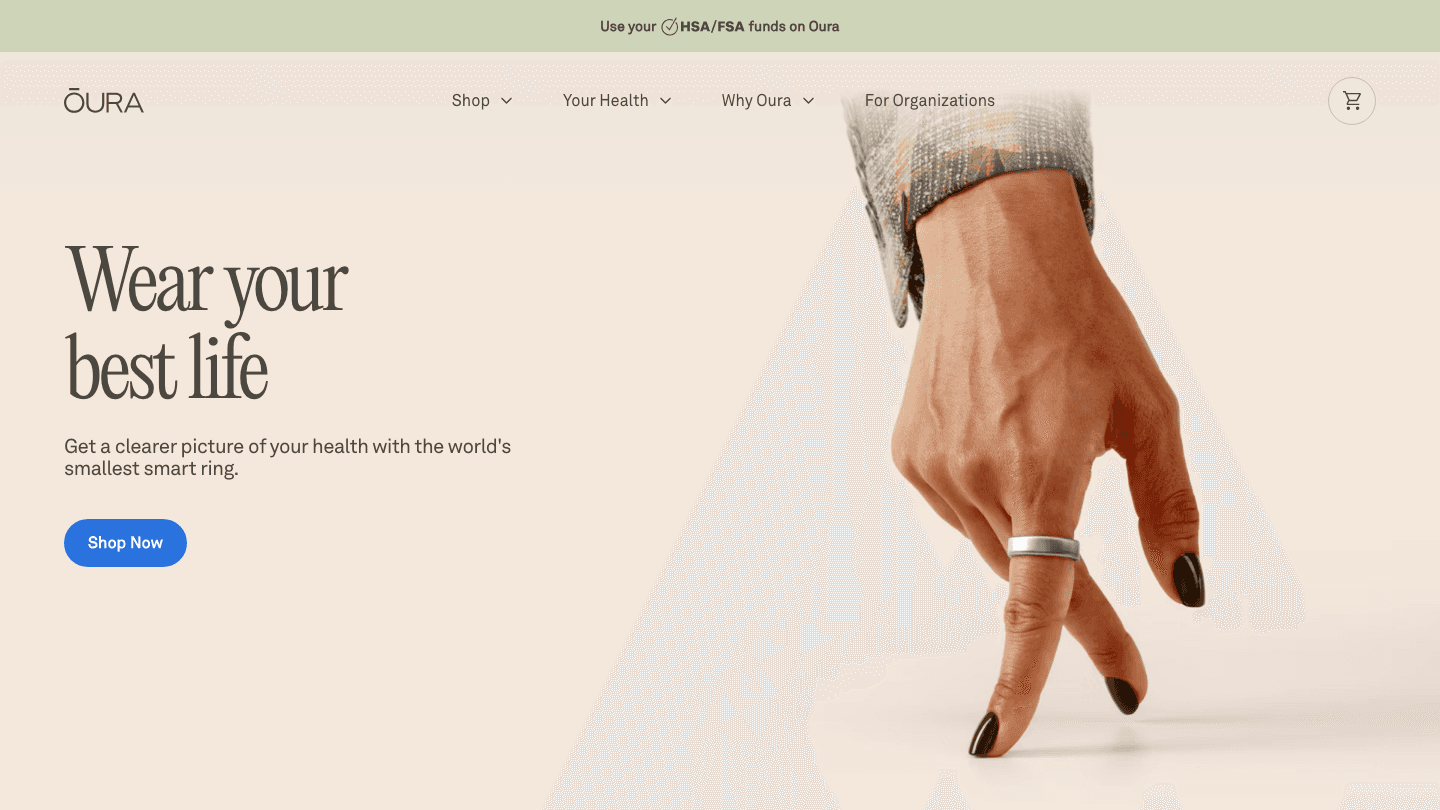
The Ring 4 Ceramic replaces the titanium exterior with zirconia ceramic, a material used in high-end watches and dental implants for its hardness and color stability. Unlike painted or coated rings, the color in zirconia ceramic goes all the way through the material, which means it won't chip, fade, or show through to a different base color underneath over time.
Four colors are available at launch: Midnight (deep navy), Cloud (white), Tide (light teal), and Petal (light pink). None of these exist in the titanium version's lineup, which offers Silver, Black, Brushed Silver, Stealth, Gold, and Rose Gold. If you want color beyond those options, ceramic is your only path.
Key Specifications:
Material: Zirconia ceramic exterior, titanium interior
Thickness: 3.51mm
Weight: 5.1-8.1 grams (size-dependent)
Colors: Midnight, Cloud, Tide, Petal
Water resistance: 100 meters
Battery: 5-8 days
Price: $499
What Works:
Zirconia ceramic is significantly harder than titanium and more resistant to everyday scratches
The colors are genuinely distinctive, particularly Cloud and Tide, which stand out against most wearables
Same full health tracking suite as the regular Ring 4
Limitations:
Thicker and heavier than the titanium version, which can be noticeable during sleep for back-of-hand or finger-down sleepers
Ceramic is harder than titanium but also more brittle under sharp impact; dropping it on tile or concrete carries more risk than dropping a titanium ring
$150 more than the identical-feature titanium version
Oura Ring 4 Regular (Titanium)
The standard Oura Ring 4 is made entirely of titanium, inside and out. It launched at $349 in late 2024 and introduced a new sensor architecture compared to the Ring 3, with improved HRV accuracy and a slimmer profile than its predecessor.
The six titanium finishes cover most conventional preferences: Silver and Brushed Silver for a classic look, Black and Stealth for dark tones, and Gold and Rose Gold for warmer options. All six finishes are a physical vapor deposition coating over titanium, which is durable but not impervious to fine scratches over years of daily wear.
Key Specifications:
Material: Titanium (interior and exterior)
Thickness: 2.88mm
Weight: 3.3-5.2 grams (size-dependent)
Colors: Silver, Black, Brushed Silver, Stealth, Gold, Rose Gold
Water resistance: 100 meters
Battery: 5-8 days
Price: $349
What Works:
Thinner and lighter than the ceramic version, which most wearers find more comfortable for overnight sleep tracking
More finish options in the conventional metallic range
Identical health tracking to the ceramic version at $150 less
Limitations:
Titanium finishes can develop fine scratches over time, particularly Gold and Rose Gold
No bold color options; the palette is all metallic and neutral tones
Head-to-Head Comparison
Health features: Identical. HRV, SpO2, skin temperature, sleep staging, activity tracking, cardiovascular age estimates, and the full Oura app experience are the same on both. The material of the ring's exterior does not affect sensor performance.
Scratch resistance: Ceramic wins clearly. Zirconia is approximately three times harder than titanium on the Vickers hardness scale. The standard Ring 4's PVD coating is durable, but fine scratches will appear over years of daily wear. The ceramic version resists fine scratches significantly better.
Comfort and wearability: Titanium wins. The 0.63mm difference in thickness (2.88mm vs 3.51mm) is perceptible. The weight difference (roughly 2 grams at the same size) is less noticeable during the day but becomes relevant for people sensitive to ring weight during sleep. For most users who sleep on their side, the thinner titanium profile is preferable.
Impact resistance: Titanium wins. Ceramic is harder but more brittle. A sharp impact from dropping the ring on stone or tile carries a higher risk of chipping or cracking than the same impact on titanium. This trade-off is the same in ceramic watches.
Color selection: Ceramic wins if you want color. Titanium wins if you want metallic finishes. The overlap between the two palettes is essentially zero.
Price: Titanium wins at $349 vs $499. Same health platform, $150 more is purely for material and finish.
Which Should You Choose?
Buy the Oura Ring 4 Ceramic if:
You want Midnight, Cloud, Tide, or Petal and those colors matter to you
Scratch resistance over years of wear is a priority and you're willing to pay for it
You're replacing an existing Oura and don't mind slightly more bulk
The $150 premium fits your budget without hesitation
Buy the Oura Ring 4 Regular if:
Comfort during sleep is your top priority and you're sensitive to ring bulk
You prefer metallic finishes or a conventional ring aesthetic
The health tracking data is why you're buying and $150 saved is meaningful
You work in environments where impact risk to a ring is higher (ceramic is more brittle under sharp impact)
If you're already an Oura user wondering whether to upgrade from a Ring 3 to either version, the step tracking and overall sensor accuracy improvements in Ring 4 are meaningful regardless of which finish you choose. For context on other Oura-specific questions, the guide on what the Oura Ring red light means covers common status indicator questions that come up after purchase.
If you're comparing Oura to other smart rings on the market, the Ultrahuman Ring ecosystem is the closest direct alternative in terms of feature depth and subscription model. All smart ring ecosystems, including Oura's, benefit significantly from pairing with apps that act on health data. A circadian rhythm app is one of the most practical additions to an Oura setup, particularly if sleep optimization is your primary goal.
One more thing worth knowing: Lifestack integrates with your health data (from Apple Health or manually) and uses it to schedule your day around your actual recovery levels. If you're buying an Oura Ring to improve your daily performance, not just to track it, pairing the ring with an energy calendar approach is what closes the loop between data and action.
Frequently Asked Questions
Does the Oura Ring 4 Ceramic track the same health metrics as the regular Ring 4?
Yes, completely. Both versions use the same sensor array and run the same Oura app. The ceramic exterior is purely a material and aesthetic difference; it has no effect on sleep tracking, HRV measurement, SpO2, or any other health feature.
Is ceramic more durable than titanium for a smart ring?
It depends on the type of stress. Ceramic is significantly harder and more scratch-resistant than titanium. But titanium is tougher under impact stress, meaning it can flex and absorb a sharp blow without cracking. Ceramic cannot flex and will chip or crack if dropped on a hard surface with enough force. For everyday desk and wrist-on-keyboard use, ceramic is the more durable material. For outdoor or physically demanding work, titanium is safer.
Will the Oura Ring 4 Ceramic color fade over time?
No. Zirconia ceramic gets its color from pigments distributed through the entire material, not from a surface coating. The color is as stable as the material itself, which is very stable under normal conditions.
Can I try both sizes before buying?
Oura offers a free sizing kit that lets you measure your finger with plastic dummy rings before ordering. This is particularly useful with the ceramic version because of its slightly larger profile. Getting the sizing right matters more for comfort than for health tracking accuracy.
Does the Oura Ring 4 require a subscription?
Yes. The Oura app requires an Oura membership subscription for full access to health insights and trend data. The first six months are included with the ring purchase. After that, a monthly subscription applies to both the ceramic and regular versions. Check Oura's current pricing page for the latest subscription rate.
In October 2025, Oura launched the Ring 4 Ceramic, a version of their flagship health ring in zirconia ceramic rather than titanium. It costs $499, which is $150 more than the standard Ring 4 at $349. Both track the same health metrics. Both run the same software. The question is what the extra $150 actually buys.
For some buyers, the answer is a lot: a dramatically more scratch-resistant material, bold colors unavailable in titanium, and a distinctly different aesthetic on the hand. For others, the titanium Ring 4 is the better purchase, because the ceramic's added thickness and weight are real trade-offs that matter for daily wear.
This comparison covers every meaningful difference between the two versions so you can make the right call before spending $349 to $499 on a ring you'll wear 24 hours a day.
Key Takeaways
The ceramic version is more scratch-resistant and comes in four exclusive colors not available in titanium
Both rings track identical health metrics: sleep, HRV, SpO2, skin temperature, activity, and cardiovascular age
The ceramic ring is thicker (3.51mm vs 2.88mm) and heavier, which matters for comfort during sleep and workouts
Quick Verdict
Oura Ring 4 Ceramic ($499): Worth it for buyers who want color options and the most scratch-resistant smart ring available
Oura Ring 4 Regular ($349): Better choice for buyers who prioritize thinner profile, lighter weight, or lower cost
Oura Ring 4 Ceramic
The Ring 4 Ceramic replaces the titanium exterior with zirconia ceramic, a material used in high-end watches and dental implants for its hardness and color stability. Unlike painted or coated rings, the color in zirconia ceramic goes all the way through the material, which means it won't chip, fade, or show through to a different base color underneath over time.
Four colors are available at launch: Midnight (deep navy), Cloud (white), Tide (light teal), and Petal (light pink). None of these exist in the titanium version's lineup, which offers Silver, Black, Brushed Silver, Stealth, Gold, and Rose Gold. If you want color beyond those options, ceramic is your only path.
Key Specifications:
Material: Zirconia ceramic exterior, titanium interior
Thickness: 3.51mm
Weight: 5.1-8.1 grams (size-dependent)
Colors: Midnight, Cloud, Tide, Petal
Water resistance: 100 meters
Battery: 5-8 days
Price: $499
What Works:
Zirconia ceramic is significantly harder than titanium and more resistant to everyday scratches
The colors are genuinely distinctive, particularly Cloud and Tide, which stand out against most wearables
Same full health tracking suite as the regular Ring 4
Limitations:
Thicker and heavier than the titanium version, which can be noticeable during sleep for back-of-hand or finger-down sleepers
Ceramic is harder than titanium but also more brittle under sharp impact; dropping it on tile or concrete carries more risk than dropping a titanium ring
$150 more than the identical-feature titanium version
Oura Ring 4 Regular (Titanium)
The standard Oura Ring 4 is made entirely of titanium, inside and out. It launched at $349 in late 2024 and introduced a new sensor architecture compared to the Ring 3, with improved HRV accuracy and a slimmer profile than its predecessor.
The six titanium finishes cover most conventional preferences: Silver and Brushed Silver for a classic look, Black and Stealth for dark tones, and Gold and Rose Gold for warmer options. All six finishes are a physical vapor deposition coating over titanium, which is durable but not impervious to fine scratches over years of daily wear.
Key Specifications:
Material: Titanium (interior and exterior)
Thickness: 2.88mm
Weight: 3.3-5.2 grams (size-dependent)
Colors: Silver, Black, Brushed Silver, Stealth, Gold, Rose Gold
Water resistance: 100 meters
Battery: 5-8 days
Price: $349
What Works:
Thinner and lighter than the ceramic version, which most wearers find more comfortable for overnight sleep tracking
More finish options in the conventional metallic range
Identical health tracking to the ceramic version at $150 less
Limitations:
Titanium finishes can develop fine scratches over time, particularly Gold and Rose Gold
No bold color options; the palette is all metallic and neutral tones
Head-to-Head Comparison
Health features: Identical. HRV, SpO2, skin temperature, sleep staging, activity tracking, cardiovascular age estimates, and the full Oura app experience are the same on both. The material of the ring's exterior does not affect sensor performance.
Scratch resistance: Ceramic wins clearly. Zirconia is approximately three times harder than titanium on the Vickers hardness scale. The standard Ring 4's PVD coating is durable, but fine scratches will appear over years of daily wear. The ceramic version resists fine scratches significantly better.
Comfort and wearability: Titanium wins. The 0.63mm difference in thickness (2.88mm vs 3.51mm) is perceptible. The weight difference (roughly 2 grams at the same size) is less noticeable during the day but becomes relevant for people sensitive to ring weight during sleep. For most users who sleep on their side, the thinner titanium profile is preferable.
Impact resistance: Titanium wins. Ceramic is harder but more brittle. A sharp impact from dropping the ring on stone or tile carries a higher risk of chipping or cracking than the same impact on titanium. This trade-off is the same in ceramic watches.
Color selection: Ceramic wins if you want color. Titanium wins if you want metallic finishes. The overlap between the two palettes is essentially zero.
Price: Titanium wins at $349 vs $499. Same health platform, $150 more is purely for material and finish.
Which Should You Choose?
Buy the Oura Ring 4 Ceramic if:
You want Midnight, Cloud, Tide, or Petal and those colors matter to you
Scratch resistance over years of wear is a priority and you're willing to pay for it
You're replacing an existing Oura and don't mind slightly more bulk
The $150 premium fits your budget without hesitation
Buy the Oura Ring 4 Regular if:
Comfort during sleep is your top priority and you're sensitive to ring bulk
You prefer metallic finishes or a conventional ring aesthetic
The health tracking data is why you're buying and $150 saved is meaningful
You work in environments where impact risk to a ring is higher (ceramic is more brittle under sharp impact)
If you're already an Oura user wondering whether to upgrade from a Ring 3 to either version, the step tracking and overall sensor accuracy improvements in Ring 4 are meaningful regardless of which finish you choose. For context on other Oura-specific questions, the guide on what the Oura Ring red light means covers common status indicator questions that come up after purchase.
If you're comparing Oura to other smart rings on the market, the Ultrahuman Ring ecosystem is the closest direct alternative in terms of feature depth and subscription model. All smart ring ecosystems, including Oura's, benefit significantly from pairing with apps that act on health data. A circadian rhythm app is one of the most practical additions to an Oura setup, particularly if sleep optimization is your primary goal.
One more thing worth knowing: Lifestack integrates with your health data (from Apple Health or manually) and uses it to schedule your day around your actual recovery levels. If you're buying an Oura Ring to improve your daily performance, not just to track it, pairing the ring with an energy calendar approach is what closes the loop between data and action.
Frequently Asked Questions
Does the Oura Ring 4 Ceramic track the same health metrics as the regular Ring 4?
Yes, completely. Both versions use the same sensor array and run the same Oura app. The ceramic exterior is purely a material and aesthetic difference; it has no effect on sleep tracking, HRV measurement, SpO2, or any other health feature.
Is ceramic more durable than titanium for a smart ring?
It depends on the type of stress. Ceramic is significantly harder and more scratch-resistant than titanium. But titanium is tougher under impact stress, meaning it can flex and absorb a sharp blow without cracking. Ceramic cannot flex and will chip or crack if dropped on a hard surface with enough force. For everyday desk and wrist-on-keyboard use, ceramic is the more durable material. For outdoor or physically demanding work, titanium is safer.
Will the Oura Ring 4 Ceramic color fade over time?
No. Zirconia ceramic gets its color from pigments distributed through the entire material, not from a surface coating. The color is as stable as the material itself, which is very stable under normal conditions.
Can I try both sizes before buying?
Oura offers a free sizing kit that lets you measure your finger with plastic dummy rings before ordering. This is particularly useful with the ceramic version because of its slightly larger profile. Getting the sizing right matters more for comfort than for health tracking accuracy.
Does the Oura Ring 4 require a subscription?
Yes. The Oura app requires an Oura membership subscription for full access to health insights and trend data. The first six months are included with the ring purchase. After that, a monthly subscription applies to both the ceramic and regular versions. Check Oura's current pricing page for the latest subscription rate.



FOLLOW ON
FOLLOW ON
FOLLOW ON


Copyright 2026 © Lifestack. All rights reserved
Copyright 2026 © Lifestack. All rights reserved

