
App
Best Self Care Apps in 2026: Top 6 Picks
Best Self Care Apps in 2026: Top 6 Picks

Self care isn't a spa day. It's the ongoing work of keeping your energy, mood, and habits in shape so you can function at your best without running yourself into the ground. The right app makes that work easier: it tracks what's actually happening with your wellbeing, builds consistency without nagging, and connects your intentions to your actual schedule.
There are hundreds of wellness apps out there, and most of them do one thing: guided meditations, habit streaks, mood logs. The best ones go further. They understand that self care is personal, and they adapt to how you actually live rather than asking you to conform to a rigid system.
We evaluated apps across five categories: mental health support, habit formation, energy management, mood awareness, and ease of use. The six apps below represent the best across each dimension, with a price range from completely free to a modest monthly subscription.
Key Takeaways
The best self care apps cover more than one dimension: mental health, physical energy, habits, and daily routines are interconnected, and the strongest apps treat them that way.
Lifestack stands out because it connects energy data from wearables directly to your schedule, which is the missing link most wellness apps skip entirely.
Free apps like Finch and Daylio punch well above their price point, making meaningful self care accessible without a subscription.
Quick Guide to the Best Self Care Apps
1. Lifestack: AI scheduling built around your energy levels from wearables
2. Calm: guided meditations, sleep stories, and breathwork
3. Headspace: structured mindfulness courses and stress tools
4. Finch: self care pet that gamifies daily wellbeing check-ins
5. Daylio: quick mood and activity logging without writing a word
6. Fabulous: science-backed habit routines and morning/evening rituals
How We Evaluated
Depth of self care coverage (mental health, energy, habits, physical wellness)
How well the app adapts to you vs. asking you to follow a fixed program
Sustainability: can you realistically use this daily without it feeling like a chore?
Integration with other tools (wearables, calendars, health platforms)
Price relative to what you get
1. Lifestack
Energy-aware AI scheduling for sustainable performance
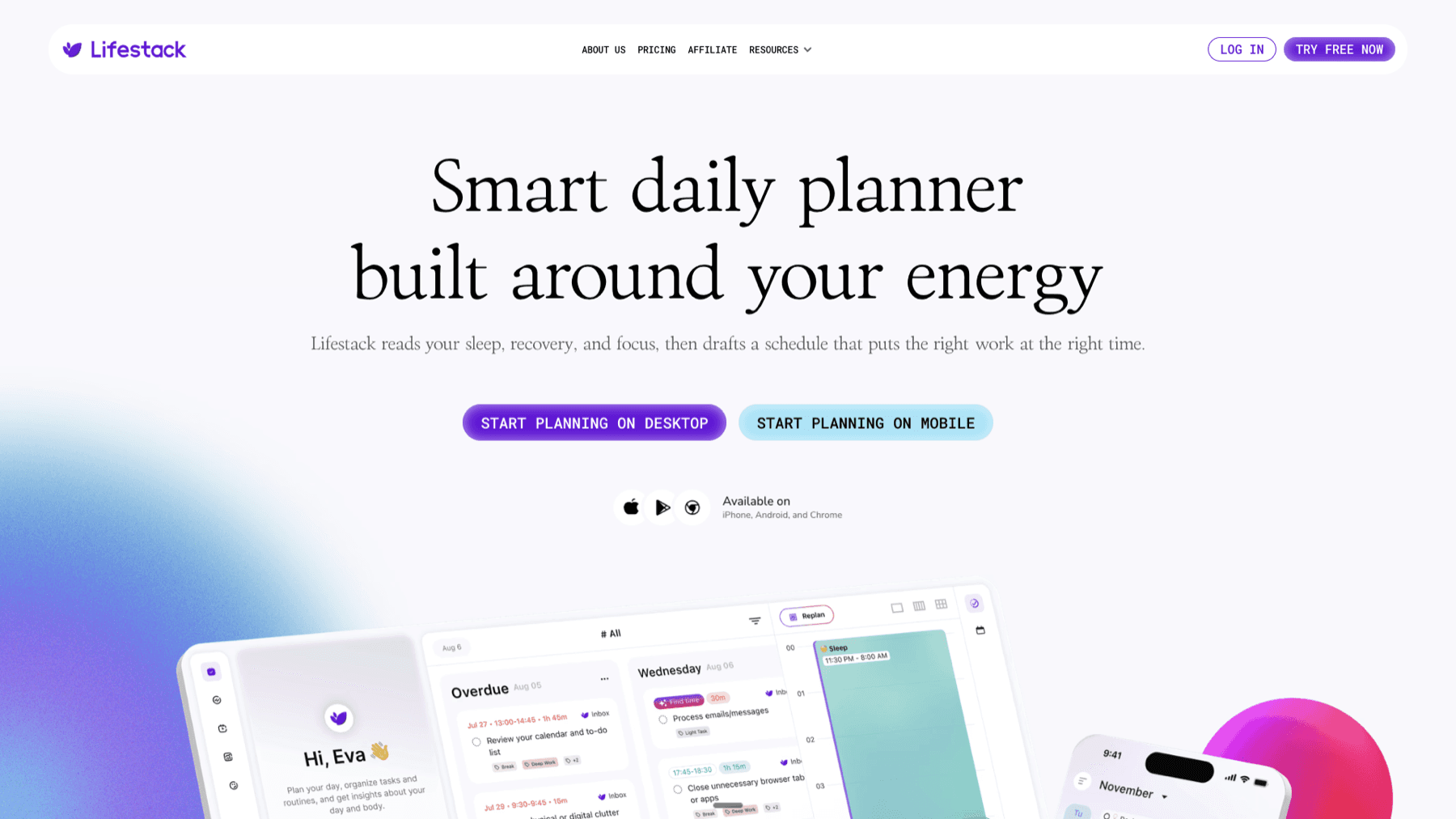
Most self care apps help you feel better in the moment. Lifestack prevents the problem that causes burnout in the first place: scheduling demanding work during windows when your body and brain have nothing left to give.
It reads your energy data from wearables like Oura Ring, Whoop, Apple Watch, Garmin, and Fitbit, then uses that data to auto-schedule your tasks into your real high-energy windows. If you're depleted after a poor night's sleep, Lifestack moves cognitive work later in the day and protects your recovery time. It also syncs with your calendar so your tasks and events stay in one view instead of scattered across multiple apps.
For people who already track their health data but never connect it to how they plan their day, this closes a gap that no other self care app addresses. Your wearable tells you how recovered you are. Lifestack actually does something with that information.
Energy-aware auto-scheduling from wearable data (Oura, Whoop, Apple Watch, Garmin, Fitbit)
Syncs with Google Calendar and Outlook
AI task prioritization based on your real energy levels
iOS and Android, with a Chrome extension
Unique integration of health data and task scheduling
Prevents burnout at the planning layer, not just the recovery layer
Works well alongside other health apps without replacing them
Requires a compatible wearable to unlock the energy-scheduling features
Less useful as a standalone to-do list without health data
Pricing: $7/month, $50/year (7-day trial), or $120 lifetime
Best for: Anyone who tracks health data with a wearable and wants that data to actually inform their schedule
2. Calm
Meditations, sleep stories, and breathwork for stress relief
Calm is the most polished meditation app available, with a library of guided meditations, sleep stories narrated by well-known voices, breathing exercises, and relaxing soundscapes. The Daily Calm is a short guided session designed to become a consistent morning or evening anchor, and the sleep content is genuinely effective for people who struggle to wind down.
The app's strength is quality and breadth. Whether you have two minutes or thirty, there's content that fits. The daily routine angle is built in: structured programs walk you through multi-week mindfulness courses so you're not just picking random sessions. For stress, anxiety, and sleep, Calm is one of the most effective tools available.
Daily guided meditations, sleep stories, and breathwork
Multi-week mindfulness programs
Music and ambient sounds for focus and sleep
Integrates with Apple Health
High production quality on all content
Strong sleep category, especially sleep stories
Works well for complete beginners to meditation
Expensive relative to competitors
Doesn't integrate with task management or scheduling
Pricing: $14.99/month or $69.99/year (7-day free trial)
Best for: Meditation beginners and people who want premium sleep content
3. Headspace
Structured mindfulness and mental health support
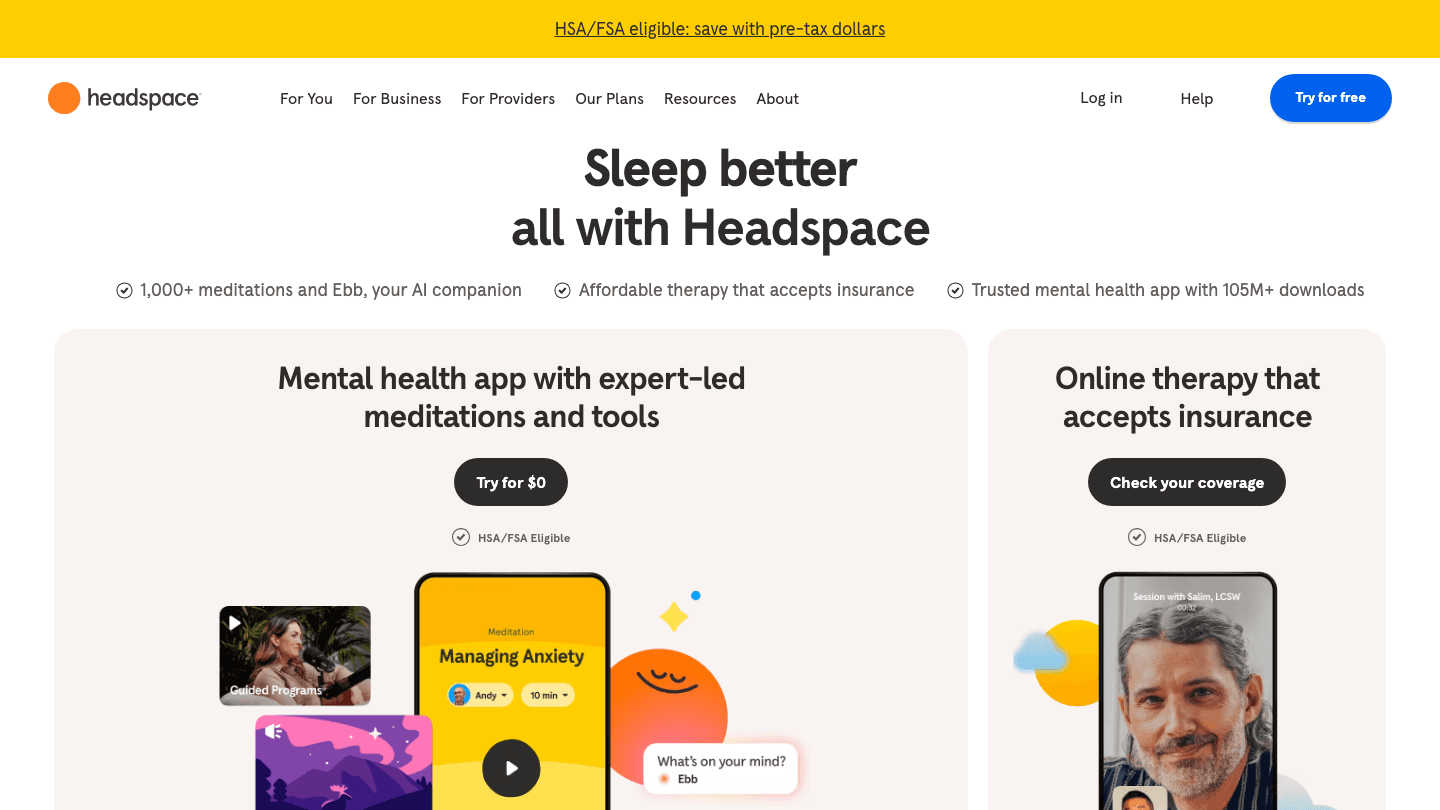
Headspace takes a more structured approach than Calm. Its courses are designed around specific outcomes: managing anxiety, improving sleep, building focus, navigating difficult emotions. The sessions are short, consistent in tone, and built around a clear teaching arc.
Headspace also offers access to licensed therapists and mental health coaches through the app, which makes it one of the few self care apps that bridges the gap between self-guided content and actual professional support. If your self care needs include working through something specific, the therapy access is worth the subscription cost alone. Pair it with tools that address the calming side of daily life for a well-rounded approach.
Structured meditation courses by goal (anxiety, focus, sleep, relationships)
Access to licensed therapists and mental health coaches
Ebb, an AI companion for real-time mental health support
HSA/FSA eligible
More structured than other meditation apps, which helps with consistency
Therapy integration is rare in this category
Good for people who want learning, not just relaxation
Interface is busier than Calm
Therapy sessions cost extra beyond the base subscription
Pricing: $12.99/month or $69.99/year (14-day free trial)
Best for: People who want structured mental health support alongside meditation
4. Finch
Self-care through a virtual pet you grow by taking care of yourself
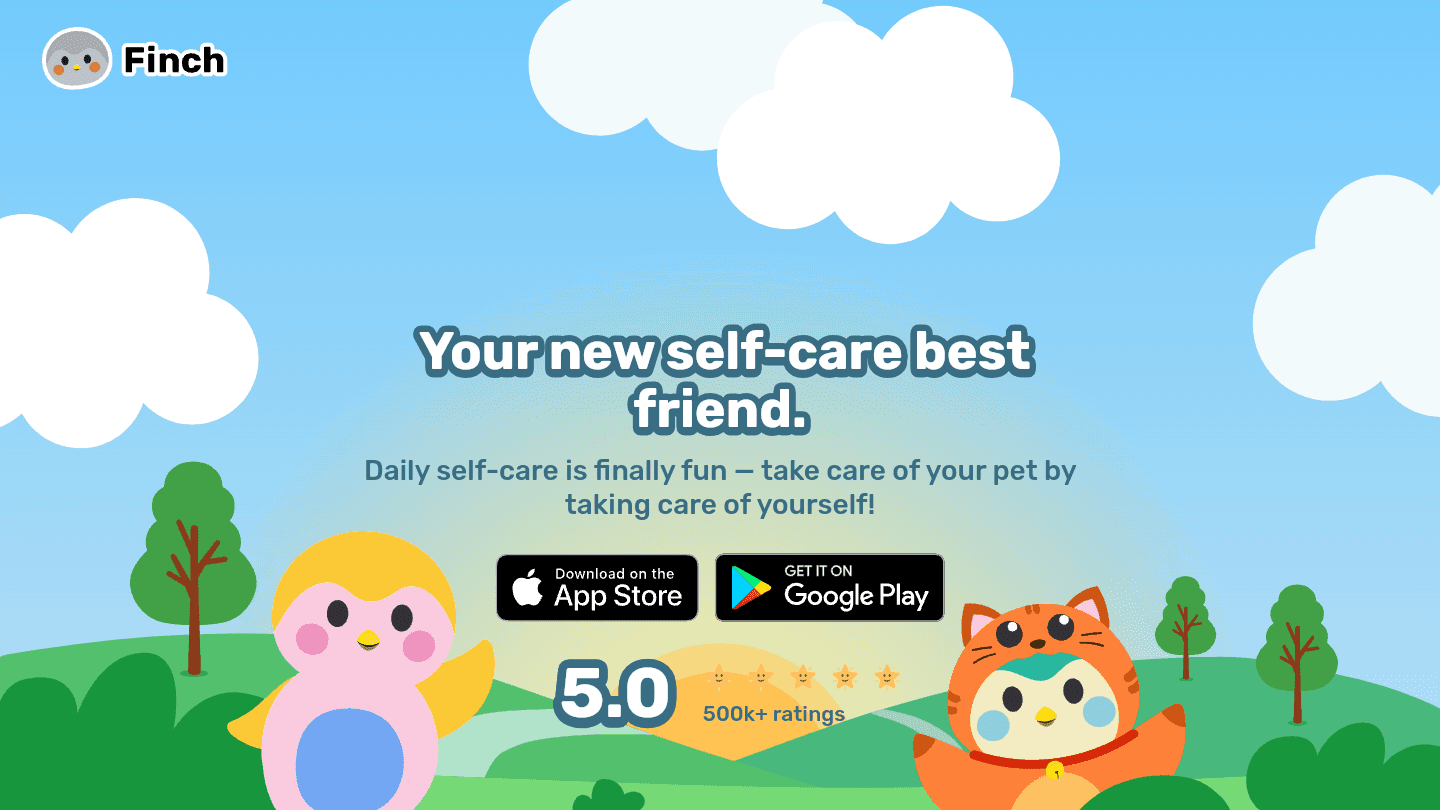
Finch takes a different angle on self care: you raise a little bird by completing daily goals for yourself. Every check-in, journal entry, and completed goal gives your bird energy to explore the world. It's a genuinely clever design because the emotional attachment to your pet creates motivation to follow through on self care in a way that a simple streak counter doesn't.
The goals you set are fully customizable. Want to drink more water, take a walk, practice gratitude, or just check in emotionally? All of that feeds your bird. The app is also thoughtful about mental health: it regularly asks how you're feeling and offers gentle reflection prompts rather than guilt-tripping you for missing a day. A lot of people find it works where other self care apps haven't, precisely because it doesn't feel clinical.
Customizable daily self-care goals that grow your virtual bird
Mood check-ins and reflection prompts
Journaling feature within the app
Friends mode so you can share bird adventures with people you care about
The gamification actually works for long-term consistency
Gentle and non-judgmental tone
Free tier is genuinely usable, not artificially limited
The pet format won't appeal to everyone
Premium pricing is scattered across many tiers, which is confusing
Pricing: Free; Plus from ~$5.99/month or ~$39.99/year
Best for: People who've struggled to stick with other self care apps and want something emotionally engaging
5. Daylio
Fast mood and activity tracking with no writing required
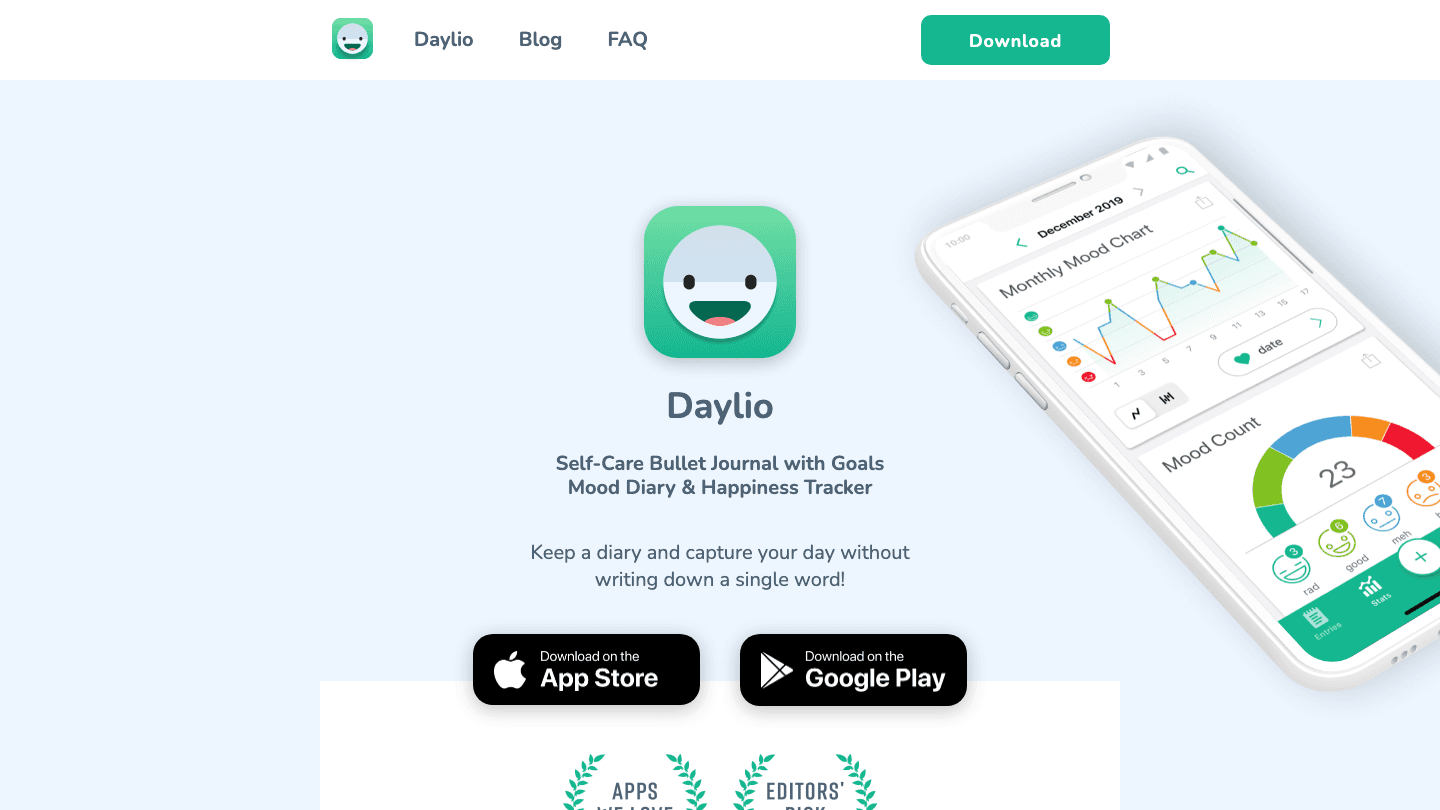
Daylio is a micro-journaling app built around the insight that most people won't write in a journal daily, but they will tap a mood emoji and a few activities in thirty seconds. That low-friction entry point is what makes Daylio actually useful for understanding patterns over time.
The data side is where it gets interesting. Track your mood for a few weeks and Daylio starts surfacing correlations: days you exercised, you felt better. Days you worked late, mood dipped. That's not surprising information, but having it shown to you concretely, with your own data, is far more actionable than general advice. It works alongside tools for broader mood tracking if you want deeper analysis. The free version covers the core features well. Premium adds more detailed statistics and unlimited activity types.
Log mood and activities in under 30 seconds
Monthly and weekly mood charts and statistics
Goal tracking alongside mood data
Optional photo attachments and written notes
The lowest-friction daily journaling tool available
Surprisingly powerful pattern insights from simple data
Free version is fully functional for daily use
Doesn't integrate with calendars or health platforms
Annual pricing is confusingly tiered in the App Store
Pricing: Free; Premium ~$4.99/month or ~$23.99/year
Best for: Anyone who wants to understand their mood patterns without committing to daily journaling
6. Fabulous
Science-backed daily routines and habit coaching
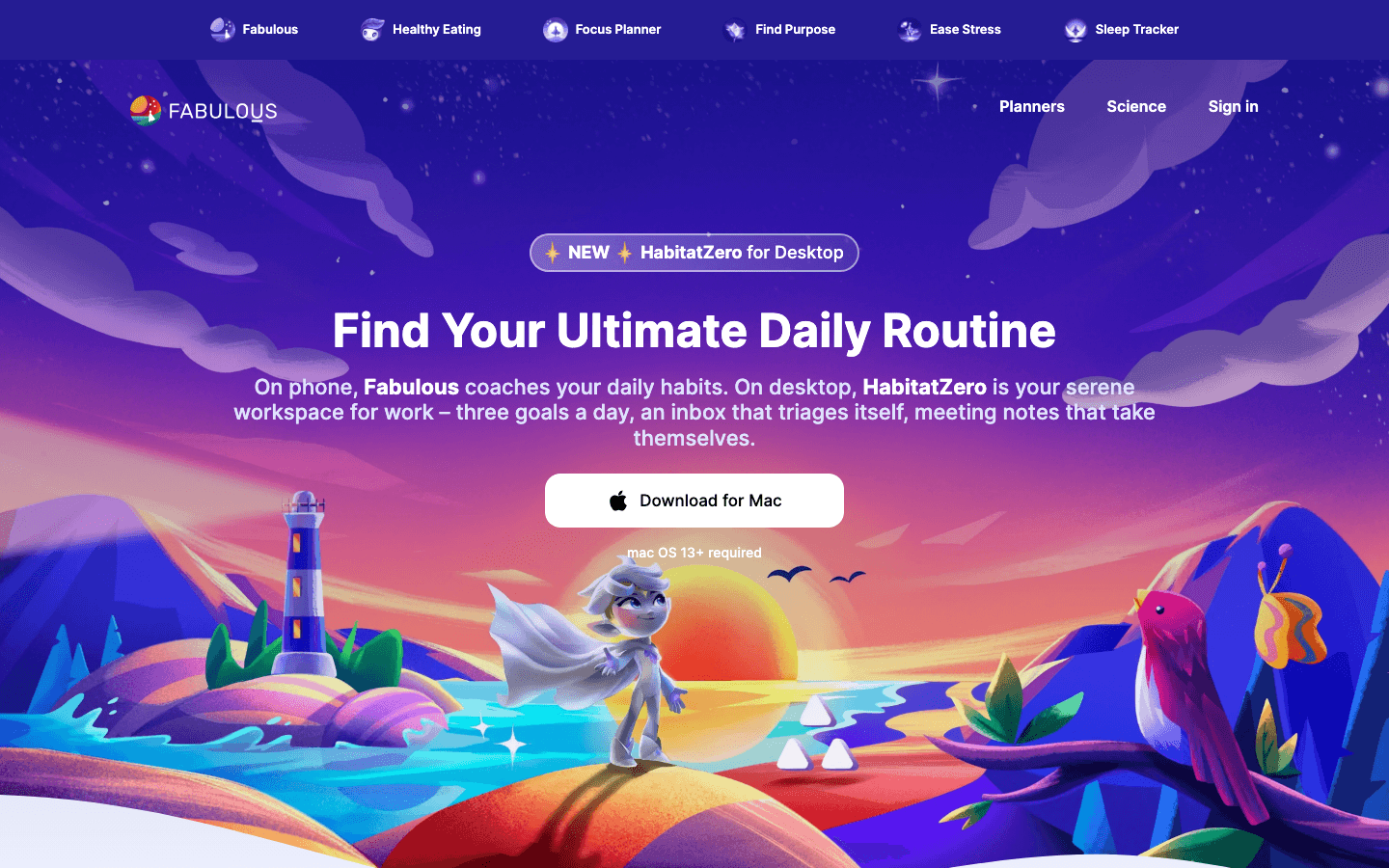
Fabulous is built around behavioral science, specifically the research on how habits form and how morning and evening routines affect everything downstream. The app coaches you through building rituals, starting small and adding behaviors as the existing ones stick. The guidance feels more like working with a coach than following a generic checklist.
Where most habit tracker apps just track whether you did a thing, Fabulous explains why you're doing it and what the research says. The morning and evening routine builders are the standout features: structured sequences that build from basic health behaviors into more complex rituals over weeks. If you're trying to build consistent self care habits and want the "why" behind each step, Fabulous is the most thoughtful option in the category.
Guided morning and evening ritual builders
Habit coaching with behavioral science explanations
Deep focus sessions and distraction blockers
Progress tracking across custom goals
The behavioral science framing helps habits actually stick
Morning and evening routine design is best-in-class
More educational than most wellness apps
Premium cost is higher than similar apps
Can feel prescriptive if you prefer a more self-directed approach
Pricing: Free; Premium $49.99/year
Best for: People building new self care habits from scratch who want structured, science-backed coaching
Which Self Care App Is Right for You?
You track health data with a wearable and want it to inform your schedule: Lifestack
You want premium guided meditations and the best sleep content: Calm
You want structured mental health support and optional therapy access: Headspace
You've tried other self care apps and nothing has stuck: Finch
You want to understand your mood patterns without keeping a journal: Daylio
You want to build consistent morning and evening routines: Fabulous
You want to cover all the bases: start with Lifestack for scheduling, add Daylio for mood tracking, and use Fabulous or Finch for daily habit check-ins
Frequently Asked Questions
What are the best self care apps in 2026?
The best self care apps in 2026 are Lifestack (energy-aware scheduling from wearable data), Calm (meditations and sleep content), Headspace (structured mindfulness and therapy access), Finch (gamified daily wellbeing check-ins), Daylio (mood and activity tracking), and Fabulous (science-backed habit routines). Each addresses a different dimension of self care, and the strongest approach combines two or three based on your needs.
Are there any free self care apps worth using?
Yes. Finch and Daylio both have free tiers that are genuinely functional, not artificially limited to push you toward a subscription. Finch's free version covers the core pet and goal features. Daylio's free version handles daily mood logging and basic statistics. Both are worth trying before committing to paid options.
What's the difference between Calm and Headspace?
Calm focuses on high-quality standalone content: guided meditations, sleep stories, and soundscapes you can pick up and use at any moment. Headspace takes a more structured approach, building around courses with a specific outcome, like managing anxiety or improving sleep. Headspace also offers therapy and coaching access. Calm is better for casual use and premium sleep content. Headspace is better if you want a curriculum and possibly professional support.
Can self care apps replace therapy?
No. Self care apps build habits and provide tools for managing stress, mood, and energy, but they're not a replacement for professional mental health support. Headspace comes closest by offering access to licensed therapists and coaches, but even that's designed as a complement to, not a substitute for, ongoing therapy if that's what someone needs.
How is Lifestack different from other wellness apps?
Most wellness apps focus on how you feel in a single session or day. Lifestack is the only one that connects your health data from wearables directly to your task schedule, so demanding work lands during your actual high-energy windows and recovery time gets protected. It's less about mindfulness in the moment and more about preventing the burnout that makes self care feel necessary in the first place. See how it pairs with an energy calendar approach for the full picture.
What should I look for in a self care app?
Look for an app that matches how you actually live rather than demanding a new habit structure you'll abandon by week two. Low friction is more important than feature depth: a mood check-in you do every day beats a full journaling system you open twice a month. Coverage of more than one dimension of self care, mental health, physical energy, habits, and personal development, is also a sign of a more durable tool. And if you wear a fitness tracker, prioritize apps that use that data rather than ignoring it.
Self care isn't a spa day. It's the ongoing work of keeping your energy, mood, and habits in shape so you can function at your best without running yourself into the ground. The right app makes that work easier: it tracks what's actually happening with your wellbeing, builds consistency without nagging, and connects your intentions to your actual schedule.
There are hundreds of wellness apps out there, and most of them do one thing: guided meditations, habit streaks, mood logs. The best ones go further. They understand that self care is personal, and they adapt to how you actually live rather than asking you to conform to a rigid system.
We evaluated apps across five categories: mental health support, habit formation, energy management, mood awareness, and ease of use. The six apps below represent the best across each dimension, with a price range from completely free to a modest monthly subscription.
Key Takeaways
The best self care apps cover more than one dimension: mental health, physical energy, habits, and daily routines are interconnected, and the strongest apps treat them that way.
Lifestack stands out because it connects energy data from wearables directly to your schedule, which is the missing link most wellness apps skip entirely.
Free apps like Finch and Daylio punch well above their price point, making meaningful self care accessible without a subscription.
Quick Guide to the Best Self Care Apps
1. Lifestack: AI scheduling built around your energy levels from wearables
2. Calm: guided meditations, sleep stories, and breathwork
3. Headspace: structured mindfulness courses and stress tools
4. Finch: self care pet that gamifies daily wellbeing check-ins
5. Daylio: quick mood and activity logging without writing a word
6. Fabulous: science-backed habit routines and morning/evening rituals
How We Evaluated
Depth of self care coverage (mental health, energy, habits, physical wellness)
How well the app adapts to you vs. asking you to follow a fixed program
Sustainability: can you realistically use this daily without it feeling like a chore?
Integration with other tools (wearables, calendars, health platforms)
Price relative to what you get
1. Lifestack
Energy-aware AI scheduling for sustainable performance
Most self care apps help you feel better in the moment. Lifestack prevents the problem that causes burnout in the first place: scheduling demanding work during windows when your body and brain have nothing left to give.
It reads your energy data from wearables like Oura Ring, Whoop, Apple Watch, Garmin, and Fitbit, then uses that data to auto-schedule your tasks into your real high-energy windows. If you're depleted after a poor night's sleep, Lifestack moves cognitive work later in the day and protects your recovery time. It also syncs with your calendar so your tasks and events stay in one view instead of scattered across multiple apps.
For people who already track their health data but never connect it to how they plan their day, this closes a gap that no other self care app addresses. Your wearable tells you how recovered you are. Lifestack actually does something with that information.
Energy-aware auto-scheduling from wearable data (Oura, Whoop, Apple Watch, Garmin, Fitbit)
Syncs with Google Calendar and Outlook
AI task prioritization based on your real energy levels
iOS and Android, with a Chrome extension
Unique integration of health data and task scheduling
Prevents burnout at the planning layer, not just the recovery layer
Works well alongside other health apps without replacing them
Requires a compatible wearable to unlock the energy-scheduling features
Less useful as a standalone to-do list without health data
Pricing: $7/month, $50/year (7-day trial), or $120 lifetime
Best for: Anyone who tracks health data with a wearable and wants that data to actually inform their schedule
2. Calm
Meditations, sleep stories, and breathwork for stress relief
Calm is the most polished meditation app available, with a library of guided meditations, sleep stories narrated by well-known voices, breathing exercises, and relaxing soundscapes. The Daily Calm is a short guided session designed to become a consistent morning or evening anchor, and the sleep content is genuinely effective for people who struggle to wind down.
The app's strength is quality and breadth. Whether you have two minutes or thirty, there's content that fits. The daily routine angle is built in: structured programs walk you through multi-week mindfulness courses so you're not just picking random sessions. For stress, anxiety, and sleep, Calm is one of the most effective tools available.
Daily guided meditations, sleep stories, and breathwork
Multi-week mindfulness programs
Music and ambient sounds for focus and sleep
Integrates with Apple Health
High production quality on all content
Strong sleep category, especially sleep stories
Works well for complete beginners to meditation
Expensive relative to competitors
Doesn't integrate with task management or scheduling
Pricing: $14.99/month or $69.99/year (7-day free trial)
Best for: Meditation beginners and people who want premium sleep content
3. Headspace
Structured mindfulness and mental health support
Headspace takes a more structured approach than Calm. Its courses are designed around specific outcomes: managing anxiety, improving sleep, building focus, navigating difficult emotions. The sessions are short, consistent in tone, and built around a clear teaching arc.
Headspace also offers access to licensed therapists and mental health coaches through the app, which makes it one of the few self care apps that bridges the gap between self-guided content and actual professional support. If your self care needs include working through something specific, the therapy access is worth the subscription cost alone. Pair it with tools that address the calming side of daily life for a well-rounded approach.
Structured meditation courses by goal (anxiety, focus, sleep, relationships)
Access to licensed therapists and mental health coaches
Ebb, an AI companion for real-time mental health support
HSA/FSA eligible
More structured than other meditation apps, which helps with consistency
Therapy integration is rare in this category
Good for people who want learning, not just relaxation
Interface is busier than Calm
Therapy sessions cost extra beyond the base subscription
Pricing: $12.99/month or $69.99/year (14-day free trial)
Best for: People who want structured mental health support alongside meditation
4. Finch
Self-care through a virtual pet you grow by taking care of yourself
Finch takes a different angle on self care: you raise a little bird by completing daily goals for yourself. Every check-in, journal entry, and completed goal gives your bird energy to explore the world. It's a genuinely clever design because the emotional attachment to your pet creates motivation to follow through on self care in a way that a simple streak counter doesn't.
The goals you set are fully customizable. Want to drink more water, take a walk, practice gratitude, or just check in emotionally? All of that feeds your bird. The app is also thoughtful about mental health: it regularly asks how you're feeling and offers gentle reflection prompts rather than guilt-tripping you for missing a day. A lot of people find it works where other self care apps haven't, precisely because it doesn't feel clinical.
Customizable daily self-care goals that grow your virtual bird
Mood check-ins and reflection prompts
Journaling feature within the app
Friends mode so you can share bird adventures with people you care about
The gamification actually works for long-term consistency
Gentle and non-judgmental tone
Free tier is genuinely usable, not artificially limited
The pet format won't appeal to everyone
Premium pricing is scattered across many tiers, which is confusing
Pricing: Free; Plus from ~$5.99/month or ~$39.99/year
Best for: People who've struggled to stick with other self care apps and want something emotionally engaging
5. Daylio
Fast mood and activity tracking with no writing required
Daylio is a micro-journaling app built around the insight that most people won't write in a journal daily, but they will tap a mood emoji and a few activities in thirty seconds. That low-friction entry point is what makes Daylio actually useful for understanding patterns over time.
The data side is where it gets interesting. Track your mood for a few weeks and Daylio starts surfacing correlations: days you exercised, you felt better. Days you worked late, mood dipped. That's not surprising information, but having it shown to you concretely, with your own data, is far more actionable than general advice. It works alongside tools for broader mood tracking if you want deeper analysis. The free version covers the core features well. Premium adds more detailed statistics and unlimited activity types.
Log mood and activities in under 30 seconds
Monthly and weekly mood charts and statistics
Goal tracking alongside mood data
Optional photo attachments and written notes
The lowest-friction daily journaling tool available
Surprisingly powerful pattern insights from simple data
Free version is fully functional for daily use
Doesn't integrate with calendars or health platforms
Annual pricing is confusingly tiered in the App Store
Pricing: Free; Premium ~$4.99/month or ~$23.99/year
Best for: Anyone who wants to understand their mood patterns without committing to daily journaling
6. Fabulous
Science-backed daily routines and habit coaching
Fabulous is built around behavioral science, specifically the research on how habits form and how morning and evening routines affect everything downstream. The app coaches you through building rituals, starting small and adding behaviors as the existing ones stick. The guidance feels more like working with a coach than following a generic checklist.
Where most habit tracker apps just track whether you did a thing, Fabulous explains why you're doing it and what the research says. The morning and evening routine builders are the standout features: structured sequences that build from basic health behaviors into more complex rituals over weeks. If you're trying to build consistent self care habits and want the "why" behind each step, Fabulous is the most thoughtful option in the category.
Guided morning and evening ritual builders
Habit coaching with behavioral science explanations
Deep focus sessions and distraction blockers
Progress tracking across custom goals
The behavioral science framing helps habits actually stick
Morning and evening routine design is best-in-class
More educational than most wellness apps
Premium cost is higher than similar apps
Can feel prescriptive if you prefer a more self-directed approach
Pricing: Free; Premium $49.99/year
Best for: People building new self care habits from scratch who want structured, science-backed coaching
Which Self Care App Is Right for You?
You track health data with a wearable and want it to inform your schedule: Lifestack
You want premium guided meditations and the best sleep content: Calm
You want structured mental health support and optional therapy access: Headspace
You've tried other self care apps and nothing has stuck: Finch
You want to understand your mood patterns without keeping a journal: Daylio
You want to build consistent morning and evening routines: Fabulous
You want to cover all the bases: start with Lifestack for scheduling, add Daylio for mood tracking, and use Fabulous or Finch for daily habit check-ins
Frequently Asked Questions
What are the best self care apps in 2026?
The best self care apps in 2026 are Lifestack (energy-aware scheduling from wearable data), Calm (meditations and sleep content), Headspace (structured mindfulness and therapy access), Finch (gamified daily wellbeing check-ins), Daylio (mood and activity tracking), and Fabulous (science-backed habit routines). Each addresses a different dimension of self care, and the strongest approach combines two or three based on your needs.
Are there any free self care apps worth using?
Yes. Finch and Daylio both have free tiers that are genuinely functional, not artificially limited to push you toward a subscription. Finch's free version covers the core pet and goal features. Daylio's free version handles daily mood logging and basic statistics. Both are worth trying before committing to paid options.
What's the difference between Calm and Headspace?
Calm focuses on high-quality standalone content: guided meditations, sleep stories, and soundscapes you can pick up and use at any moment. Headspace takes a more structured approach, building around courses with a specific outcome, like managing anxiety or improving sleep. Headspace also offers therapy and coaching access. Calm is better for casual use and premium sleep content. Headspace is better if you want a curriculum and possibly professional support.
Can self care apps replace therapy?
No. Self care apps build habits and provide tools for managing stress, mood, and energy, but they're not a replacement for professional mental health support. Headspace comes closest by offering access to licensed therapists and coaches, but even that's designed as a complement to, not a substitute for, ongoing therapy if that's what someone needs.
How is Lifestack different from other wellness apps?
Most wellness apps focus on how you feel in a single session or day. Lifestack is the only one that connects your health data from wearables directly to your task schedule, so demanding work lands during your actual high-energy windows and recovery time gets protected. It's less about mindfulness in the moment and more about preventing the burnout that makes self care feel necessary in the first place. See how it pairs with an energy calendar approach for the full picture.
What should I look for in a self care app?
Look for an app that matches how you actually live rather than demanding a new habit structure you'll abandon by week two. Low friction is more important than feature depth: a mood check-in you do every day beats a full journaling system you open twice a month. Coverage of more than one dimension of self care, mental health, physical energy, habits, and personal development, is also a sign of a more durable tool. And if you wear a fitness tracker, prioritize apps that use that data rather than ignoring it.



FOLLOW ON
FOLLOW ON
FOLLOW ON


Copyright 2026 © Lifestack. All rights reserved
Copyright 2026 © Lifestack. All rights reserved

