
Device
WHOOP 4.0 vs 5.0: Is the Upgrade Worth It?
WHOOP 4.0 vs 5.0: Is the Upgrade Worth It?

WHOOP released its 5.0 hardware in May 2025, three and a half years after the 4.0. If you are a current 4.0 subscriber, you have probably seen the upgrade prompts and wondered whether the improvements actually matter for how you use the band. The honest answer depends almost entirely on two things: how often you charge, and whether you do high-intensity training.
This comparison breaks down what actually changed between generations, which subscription tier makes sense now, and whether the cost of upgrading is justified for the typical WHOOP user.
Key Takeaways
WHOOP 5.0 extends battery life from 5 days to 14 days, the single most meaningful change for daily use
The new 26 Hz PPG sensor improves heart rate data quality during HIIT; the difference is minor for steady-state cardio and sleep tracking
ECG and blood pressure features require the WHOOP MG device on the $359/year Life tier, not just a 5.0 upgrade
Quick Verdict
WHOOP 4.0: Still a capable recovery tracker for steady-state athletes and sleep-focused users. Battery life is the main friction point.
WHOOP 5.0: Worth it primarily for the 14-day battery and improved sensor accuracy during high-intensity workouts. The smaller form factor is a bonus.
WHOOP 4.0 Overview
WHOOP launched the 4.0 in October 2021 as its most capable hardware at the time. It introduced SpO2 monitoring and skin temperature sensing alongside the optical heart rate and accelerometer package from the 3.0. The 4.0 was also 33% smaller than the 3.0 and added a health monitor accessory port.
The core value proposition did not change: a screenless wrist sensor that tracks HRV-based strain, recovery, and sleep, with insights delivered exclusively through the WHOOP app. Battery life was rated at five days with the included battery pack used for on-wrist charging.
What worked well:
Strong sleep tracking and HRV-based recovery scoring
Comfortable for overnight wear due to screenless design
Solid strain and workout detection across most activity types
What held it back:
5-day battery required frequent charging, which many users found disruptive
PPG sampling rate limited data quality at high exercise intensities
No GPS, no offline storage, entirely app-dependent
WHOOP 5.0 Overview
The 5.0 arrived in May 2025 with three headline changes: a 14-day battery, a higher-resolution optical sensor, and a 7% smaller chassis. The design language is similar but the buckle system is completely new and not backward-compatible with 4.0 accessories.
The sensor upgrade is more meaningful than it might look on paper. Moving from approximately 5 Hz PPG sampling to 26 Hz means the band is capturing far more data points per second during workouts, which reduces the smoothing artifacts that caused WHOOP 4.0 heart rate readings to lag or misread during fast-changing efforts like interval sprints and CrossFit.
Genuine improvements over 4.0:
14-day battery (versus 5 days): the difference between charging twice a month and charging twice a week
Better heart rate accuracy during HIIT due to higher PPG sampling rate
Smaller and lighter at 34.7mm vs 43.2mm, reducing clothing snag
Improved IP68 waterproofing at 10m depth
Important caveat on new features: ECG monitoring and blood pressure trend tracking are advertised alongside the 5.0, but they require the separate WHOOP MG device, which is only included with the $359/year Life subscription tier. Upgrading to a standard 5.0 hardware band does not give you those features.
Head-to-Head Comparison
The table below covers the most decision-relevant differences:
Battery life: 4.0 = 5 days, 5.0 = 14 days
PPG sampling rate: 4.0 = ~5 Hz, 5.0 = ~26 Hz
Form factor: 4.0 = 43.2mm, 5.0 = 34.7mm (7% smaller)
Heart rate during HIIT: 4.0 = adequate, 5.0 = noticeably better
Sleep tracking: Both solid; difference is minor day-to-day
ECG / blood pressure: Neither standard; requires WHOOP MG on $359/yr tier
Band compatibility: 4.0 and 5.0 bands are NOT interchangeable
Subscription pricing: Same tiers apply to both ($199/$239/$359 per year)
The recovery scoring methodology, sleep stage algorithm, and strain calculation are functionally the same between generations. WHOOP has not significantly changed how it interprets data, only the quality of raw data being fed in.
Subscription Pricing in 2026
WHOOP no longer sells hardware separately. You subscribe to a tier and receive the hardware as part of the membership:
WHOOP One: $199/year. Core recovery, sleep, and strain tracking. Includes WHOOP 5.0 band.
WHOOP Peak: $239/year. Adds advanced health insights and longevity features. Includes WHOOP 5.0 band.
WHOOP Life: $359/year. Adds ECG, blood pressure monitoring via WHOOP MG, and medical-grade health data.
If you are a current 4.0 member, upgrading to 5.0 hardware may be available at no cost if you extend your subscription by 12-24 months, depending on when your current contract expires. For details on what each tier includes, see the full WHOOP pricing breakdown.
For a direct comparison of the two premium tiers, the WHOOP Peak vs Life breakdown is worth reading before committing to the top plan.
Which Should You Choose?
Upgrade to 5.0 if: Battery life is a real friction point in your current routine, or you regularly do high-intensity training where the improved sensor accuracy will show up in your heart rate data.
Stay on 4.0 if: Your 4.0 is functioning well, you mostly track sleep and steady-state cardio, and the 5-day charging rhythm is not a problem. The recovery and sleep data quality difference is minor for this use case.
Consider alternatives if: You want on-screen data feedback, GPS for running, or do not want a subscription model. The WHOOP vs Garmin comparison covers this trade-off in depth, and the best HRV tracker guide compares WHOOP against Oura, Garmin, and Apple Watch for recovery-focused users.
For first-time buyers deciding whether WHOOP is right for them at all, the best apps to pair with WHOOP gives a fuller picture of what the ecosystem looks like day-to-day.
One More Option: Pair Your WHOOP Data With a Smarter Planner
Regardless of which generation you use, WHOOP's recovery score is most valuable when it actually changes your schedule. Lifestack reads your WHOOP recovery data and builds a daily plan around your readiness, putting hard focus work when your scores are high and protecting rest windows when they are low.
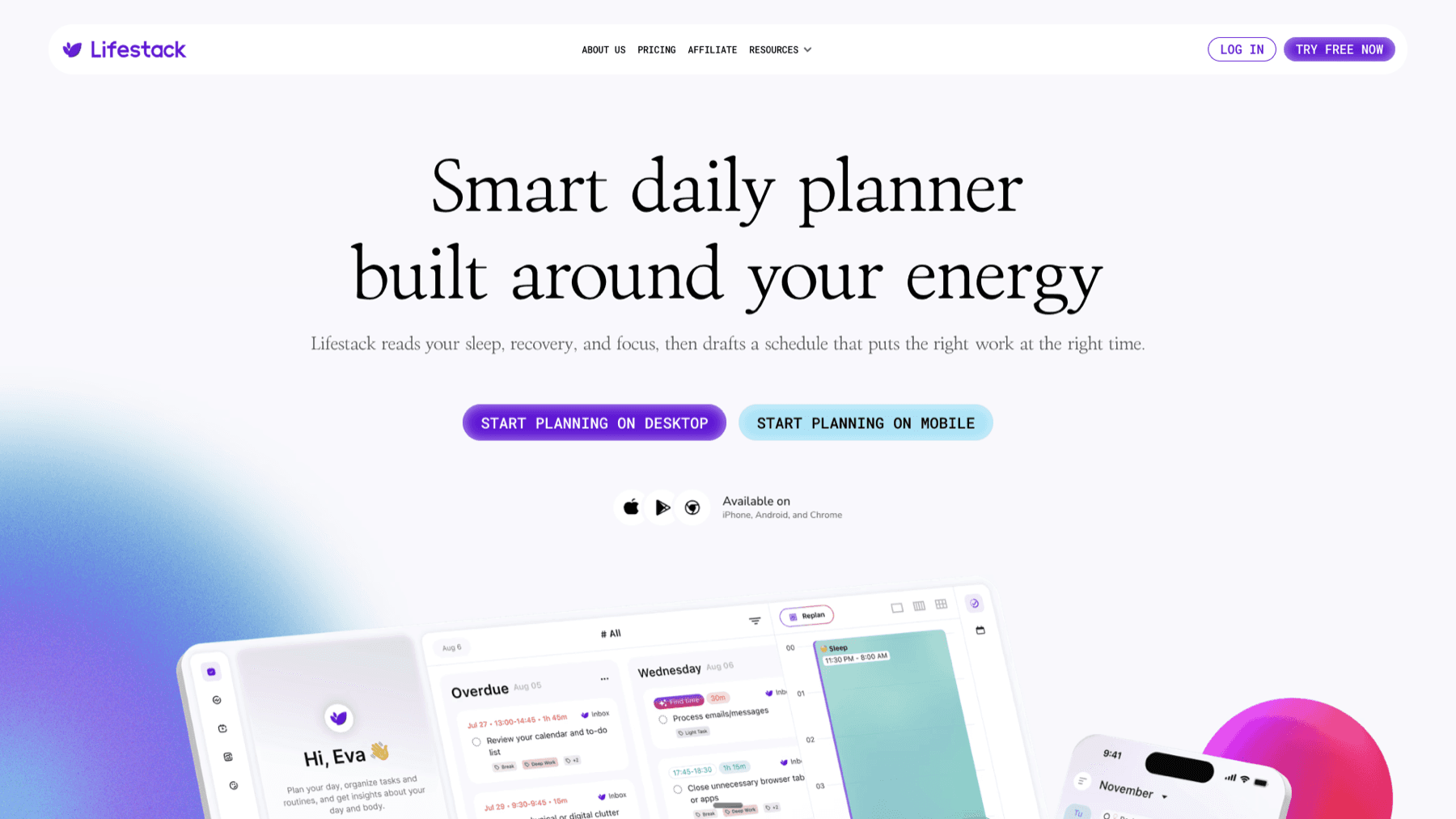
It is a one-time connection that turns passive recovery data into active scheduling decisions. Learn how energy-based scheduling works with WHOOP data. Lifestack is $49.99/year with a 7-day free trial.
Frequently Asked Questions
Is WHOOP 5.0 worth upgrading from 4.0?
For most users, the 14-day battery is the compelling reason to upgrade. If you are bothered by charging every five days, yes. If you are not, the practical difference in day-to-day recovery data is modest.
Does WHOOP 5.0 include ECG and blood pressure monitoring?
No. ECG and blood pressure tracking require the WHOOP MG device, which comes only with the $359/year Life subscription tier. A standard 5.0 band does not include these features.
Are WHOOP 4.0 and 5.0 bands compatible with each other?
No. The 5.0 uses a redesigned buckle system that is not backward-compatible with 4.0 accessories. All your 4.0 bands will need to be replaced if you upgrade.
What is the battery life of WHOOP 5.0 vs 4.0?
WHOOP 4.0 lasts approximately 5 days (120 hours). WHOOP 5.0 lasts approximately 14 days (336 hours) on a full charge.
How much does WHOOP cost in 2026?
Subscriptions are $199/year for WHOOP One, $239/year for WHOOP Peak, and $359/year for WHOOP Life (which includes the MG device). Hardware is included with the subscription at all tiers.
WHOOP released its 5.0 hardware in May 2025, three and a half years after the 4.0. If you are a current 4.0 subscriber, you have probably seen the upgrade prompts and wondered whether the improvements actually matter for how you use the band. The honest answer depends almost entirely on two things: how often you charge, and whether you do high-intensity training.
This comparison breaks down what actually changed between generations, which subscription tier makes sense now, and whether the cost of upgrading is justified for the typical WHOOP user.
Key Takeaways
WHOOP 5.0 extends battery life from 5 days to 14 days, the single most meaningful change for daily use
The new 26 Hz PPG sensor improves heart rate data quality during HIIT; the difference is minor for steady-state cardio and sleep tracking
ECG and blood pressure features require the WHOOP MG device on the $359/year Life tier, not just a 5.0 upgrade
Quick Verdict
WHOOP 4.0: Still a capable recovery tracker for steady-state athletes and sleep-focused users. Battery life is the main friction point.
WHOOP 5.0: Worth it primarily for the 14-day battery and improved sensor accuracy during high-intensity workouts. The smaller form factor is a bonus.
WHOOP 4.0 Overview
WHOOP launched the 4.0 in October 2021 as its most capable hardware at the time. It introduced SpO2 monitoring and skin temperature sensing alongside the optical heart rate and accelerometer package from the 3.0. The 4.0 was also 33% smaller than the 3.0 and added a health monitor accessory port.
The core value proposition did not change: a screenless wrist sensor that tracks HRV-based strain, recovery, and sleep, with insights delivered exclusively through the WHOOP app. Battery life was rated at five days with the included battery pack used for on-wrist charging.
What worked well:
Strong sleep tracking and HRV-based recovery scoring
Comfortable for overnight wear due to screenless design
Solid strain and workout detection across most activity types
What held it back:
5-day battery required frequent charging, which many users found disruptive
PPG sampling rate limited data quality at high exercise intensities
No GPS, no offline storage, entirely app-dependent
WHOOP 5.0 Overview
The 5.0 arrived in May 2025 with three headline changes: a 14-day battery, a higher-resolution optical sensor, and a 7% smaller chassis. The design language is similar but the buckle system is completely new and not backward-compatible with 4.0 accessories.
The sensor upgrade is more meaningful than it might look on paper. Moving from approximately 5 Hz PPG sampling to 26 Hz means the band is capturing far more data points per second during workouts, which reduces the smoothing artifacts that caused WHOOP 4.0 heart rate readings to lag or misread during fast-changing efforts like interval sprints and CrossFit.
Genuine improvements over 4.0:
14-day battery (versus 5 days): the difference between charging twice a month and charging twice a week
Better heart rate accuracy during HIIT due to higher PPG sampling rate
Smaller and lighter at 34.7mm vs 43.2mm, reducing clothing snag
Improved IP68 waterproofing at 10m depth
Important caveat on new features: ECG monitoring and blood pressure trend tracking are advertised alongside the 5.0, but they require the separate WHOOP MG device, which is only included with the $359/year Life subscription tier. Upgrading to a standard 5.0 hardware band does not give you those features.
Head-to-Head Comparison
The table below covers the most decision-relevant differences:
Battery life: 4.0 = 5 days, 5.0 = 14 days
PPG sampling rate: 4.0 = ~5 Hz, 5.0 = ~26 Hz
Form factor: 4.0 = 43.2mm, 5.0 = 34.7mm (7% smaller)
Heart rate during HIIT: 4.0 = adequate, 5.0 = noticeably better
Sleep tracking: Both solid; difference is minor day-to-day
ECG / blood pressure: Neither standard; requires WHOOP MG on $359/yr tier
Band compatibility: 4.0 and 5.0 bands are NOT interchangeable
Subscription pricing: Same tiers apply to both ($199/$239/$359 per year)
The recovery scoring methodology, sleep stage algorithm, and strain calculation are functionally the same between generations. WHOOP has not significantly changed how it interprets data, only the quality of raw data being fed in.
Subscription Pricing in 2026
WHOOP no longer sells hardware separately. You subscribe to a tier and receive the hardware as part of the membership:
WHOOP One: $199/year. Core recovery, sleep, and strain tracking. Includes WHOOP 5.0 band.
WHOOP Peak: $239/year. Adds advanced health insights and longevity features. Includes WHOOP 5.0 band.
WHOOP Life: $359/year. Adds ECG, blood pressure monitoring via WHOOP MG, and medical-grade health data.
If you are a current 4.0 member, upgrading to 5.0 hardware may be available at no cost if you extend your subscription by 12-24 months, depending on when your current contract expires. For details on what each tier includes, see the full WHOOP pricing breakdown.
For a direct comparison of the two premium tiers, the WHOOP Peak vs Life breakdown is worth reading before committing to the top plan.
Which Should You Choose?
Upgrade to 5.0 if: Battery life is a real friction point in your current routine, or you regularly do high-intensity training where the improved sensor accuracy will show up in your heart rate data.
Stay on 4.0 if: Your 4.0 is functioning well, you mostly track sleep and steady-state cardio, and the 5-day charging rhythm is not a problem. The recovery and sleep data quality difference is minor for this use case.
Consider alternatives if: You want on-screen data feedback, GPS for running, or do not want a subscription model. The WHOOP vs Garmin comparison covers this trade-off in depth, and the best HRV tracker guide compares WHOOP against Oura, Garmin, and Apple Watch for recovery-focused users.
For first-time buyers deciding whether WHOOP is right for them at all, the best apps to pair with WHOOP gives a fuller picture of what the ecosystem looks like day-to-day.
One More Option: Pair Your WHOOP Data With a Smarter Planner
Regardless of which generation you use, WHOOP's recovery score is most valuable when it actually changes your schedule. Lifestack reads your WHOOP recovery data and builds a daily plan around your readiness, putting hard focus work when your scores are high and protecting rest windows when they are low.
It is a one-time connection that turns passive recovery data into active scheduling decisions. Learn how energy-based scheduling works with WHOOP data. Lifestack is $49.99/year with a 7-day free trial.
Frequently Asked Questions
Is WHOOP 5.0 worth upgrading from 4.0?
For most users, the 14-day battery is the compelling reason to upgrade. If you are bothered by charging every five days, yes. If you are not, the practical difference in day-to-day recovery data is modest.
Does WHOOP 5.0 include ECG and blood pressure monitoring?
No. ECG and blood pressure tracking require the WHOOP MG device, which comes only with the $359/year Life subscription tier. A standard 5.0 band does not include these features.
Are WHOOP 4.0 and 5.0 bands compatible with each other?
No. The 5.0 uses a redesigned buckle system that is not backward-compatible with 4.0 accessories. All your 4.0 bands will need to be replaced if you upgrade.
What is the battery life of WHOOP 5.0 vs 4.0?
WHOOP 4.0 lasts approximately 5 days (120 hours). WHOOP 5.0 lasts approximately 14 days (336 hours) on a full charge.
How much does WHOOP cost in 2026?
Subscriptions are $199/year for WHOOP One, $239/year for WHOOP Peak, and $359/year for WHOOP Life (which includes the MG device). Hardware is included with the subscription at all tiers.



FOLLOW ON
FOLLOW ON
FOLLOW ON


Copyright 2026 © Lifestack. All rights reserved
Copyright 2026 © Lifestack. All rights reserved

