
App
Hume Band vs Oura Ring: Which Should You Buy in 2026?
Hume Band vs Oura Ring: Which Should You Buy in 2026?

The Hume Band and Oura Ring are both health wearables that track HRV, sleep, and recovery. They both appeal to people who take their health data seriously. But they come from very different design philosophies, sit at different price points, and are best suited to different kinds of users.
Oura Ring is built around best-in-class sleep tracking accuracy, a ring form factor designed to disappear from your awareness, and a deep data ecosystem. The Hume Band (from Hume Health) is built around longevity: biological age tracking, metabolic capacity scoring, and the argument that you should measure aging pace, not just today's recovery. It's a wristband with a longer battery life and no required subscription.
This comparison covers what each tracks, how accurate the data is, what the experience of using each is like, and who each is genuinely well suited for.
Key Takeaways
Oura Ring has superior sleep tracking accuracy, a more established data science team, and the widest integrations with third-party health platforms.
The Hume Band has a longer battery life (up to 14 days vs 6-9 days for Oura), no required subscription, and a longevity/biological age angle that Oura doesn't offer.
Oura is the better choice for sleep-focused users, women's health tracking, and anyone who wants the most validated data. Hume Band is better for subscription-averse buyers and those interested in metabolic aging metrics.
Quick Verdict
Oura Ring: Best for sleep-first users who want lab-validated accuracy and the most complete health picture, and don't mind paying a monthly subscription
Hume Band: Best for subscription-averse buyers who want long battery life, a wrist-based tracker, and longevity-focused metrics like biological age
Hume Band Overview
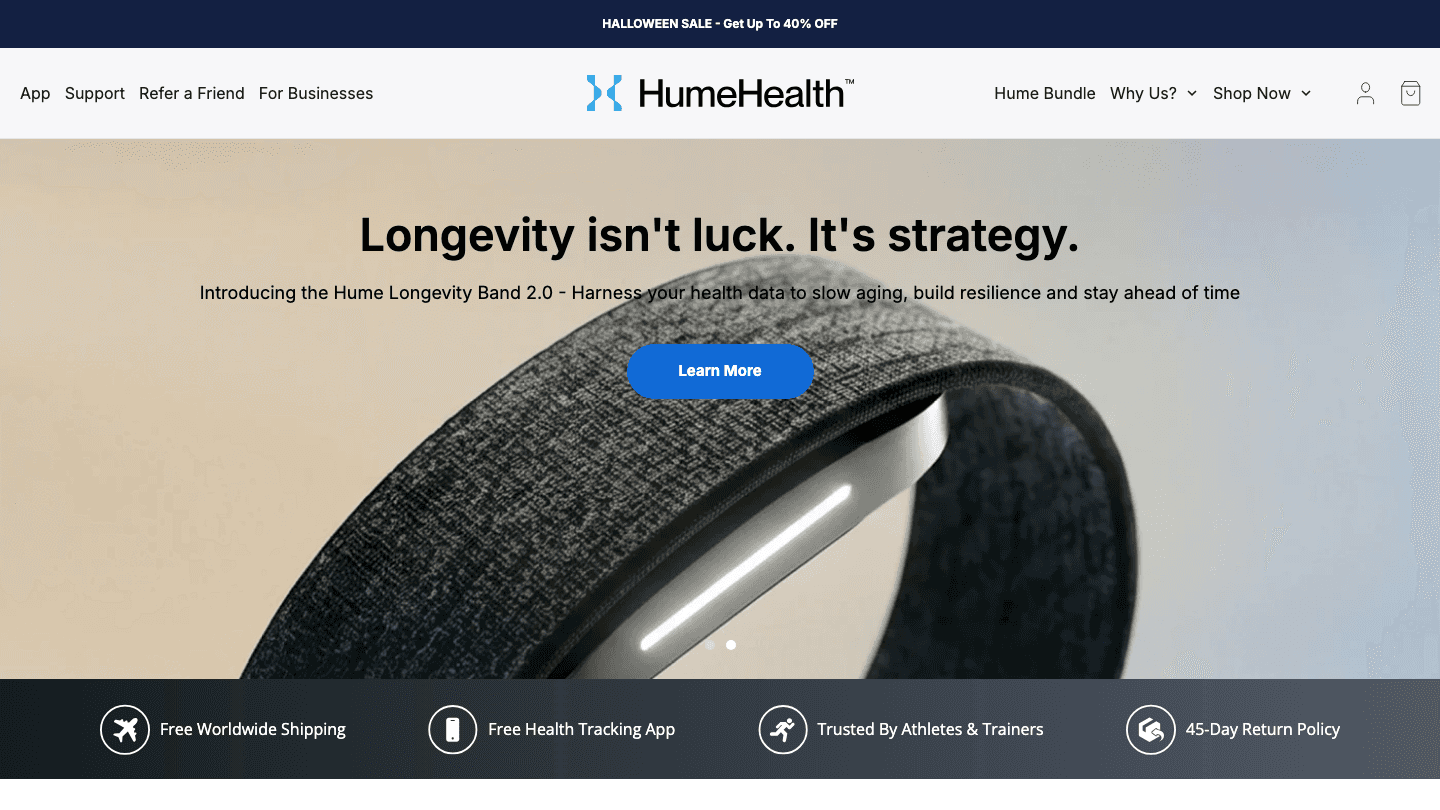
The Hume Band 2.0 is a wristband health tracker from Hume Health Corp focused on longevity and biological aging. Beyond the standard health metrics (HRV, heart rate, SpO2, skin temperature, respiratory rate, sleep stages), it produces two proprietary scores: Metabolic Capacity (a snapshot of your current biological performance) and Metabolic Momentum (tracking whether your biological age is trending younger or older over time). These are genuinely differentiated from what most wearables track. For people interested in longevity as a measurable and improvable target, this framing is appealing.
The hardware is a wristband worn like a watch, with up to 14 days of battery life. No required subscription: the core app is free, with optional "Hume Plus" AI coaching ($8.99/month) for personalized recommendations. This is a meaningful differentiator versus Oura, which requires a $5.99/month membership to access most features beyond basic ring data. The Hume Band also tracks blood pressure trends, which Oura doesn't offer.
What Works
14-day battery life (Oura manages 6-9 days)
No required subscription for core tracking
Biological age / metabolic aging scores not available elsewhere
Blood pressure trend tracking
Wristband form factor is easier to find in the dark and has wider size compatibility than ring sizing
Limitations
Newer company with less validated sleep science compared to Oura's peer-reviewed track record
No women's health or menstrual cycle tracking
Smaller user community and ecosystem versus Oura
The proprietary "metabolic" scores are interesting but not yet independently peer-reviewed
Pricing: Hume Band 2.0 from $249 (hardware, one-time purchase); often discounted. Optional Hume Plus subscription: $8.99/month. Check humehealth.com for current pricing.
Oura Ring Overview
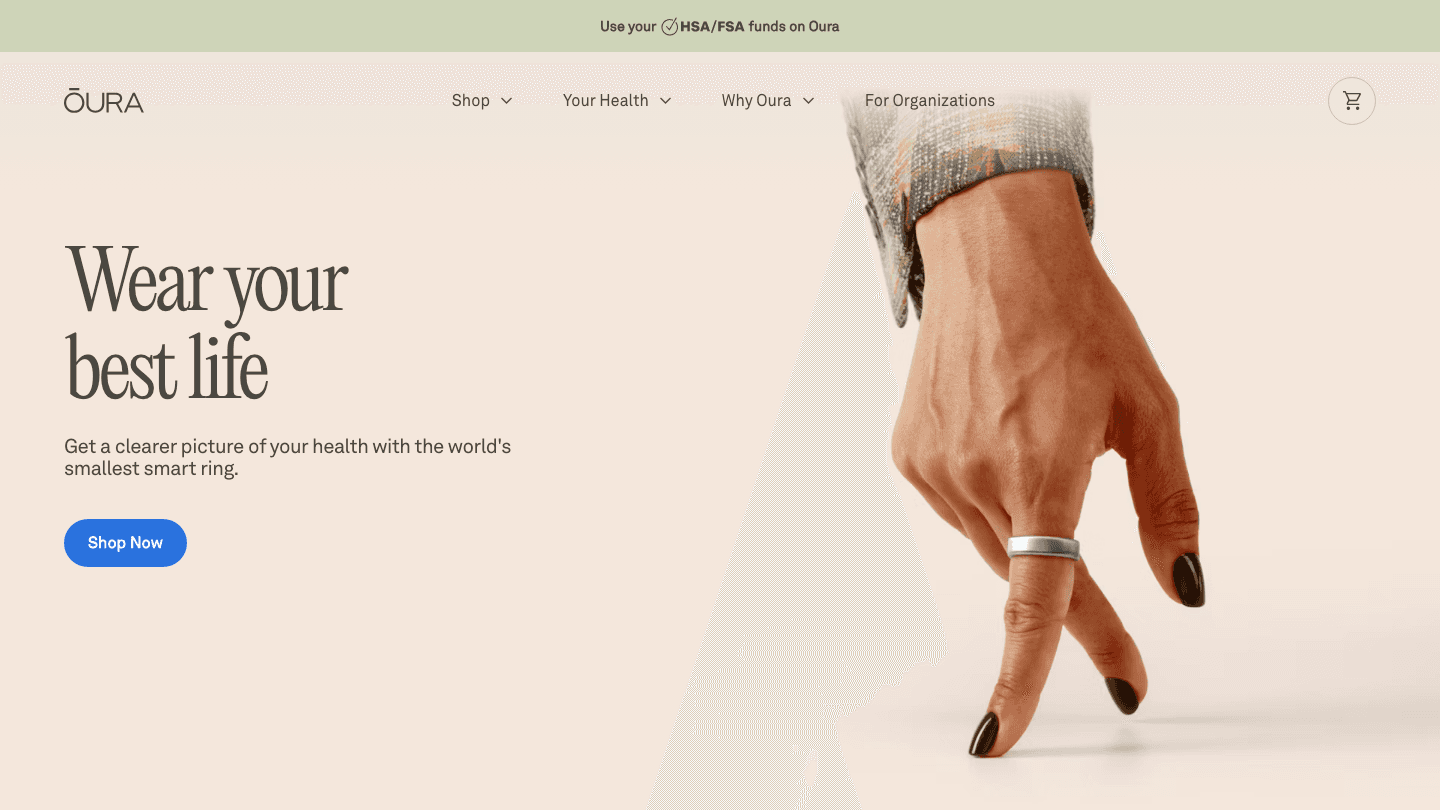
Oura Ring is the most extensively studied and reviewed consumer sleep tracker on the market. The fourth generation ring tracks HRV, heart rate, skin temperature, blood oxygen, sleep stages, and menstrual cycle health. Sleep staging accuracy has been validated against polysomnography (clinical sleep study) in multiple peer-reviewed studies, making it meaningfully different from most wearables whose accuracy figures are proprietary or self-reported.
The ring form factor is distinctive: smaller than a fitness band, worn on a finger, and designed to be forgotten during the day. This means it doesn't compete for wrist space with watches and is often more comfortable for people who find wristbands restrictive during sleep. The app is the strongest in the wearable industry for sleep data depth, readiness scoring, and integration with third-party health platforms. Our full Oura Ring review covers the data quality in more detail, and Oura Ring's current pricing breaks down the hardware and membership tiers.
What Works
Best-in-class sleep staging accuracy, validated in peer-reviewed research
Ring form factor disappears on the finger, doesn't compete with watches
Women's health and menstrual cycle tracking (Oura has dedicated features)
Deep integrations: Apple Health, Google Health, Samsung, Strava, and many others
Largest health wearable community, with the most third-party app support
Limitations
$5.99/month membership required for full features (adds up over time)
6-9 day battery life is shorter than Hume Band
Ring sizing is fixed: you need to measure and order the right size
No blood pressure or biological age tracking
Higher hardware cost
Pricing: Oura Ring 4 from $349 hardware; membership $5.99/month or $69.99/year (first month free). See current Oura Ring pricing for the full breakdown.
Head-to-Head Comparison
Sleep Tracking
Oura wins this category clearly. Its sleep staging algorithm has been compared against clinical polysomnography, and the published accuracy rates are strong for a consumer device. Hume Band's sleep tracking is functional and produces the standard metrics (stages, efficiency, resting heart rate), but lacks the independent validation that Oura has accumulated. See our best sleep trackers of 2026 roundup for a broader comparison.
HRV Accuracy
Both devices track HRV. Oura's HRV measurements from the finger are generally considered accurate and comparable to other gold-standard locations. Hume Band measures from the wrist, which introduces more artifact potential. For practical daily tracking, both are usable, but Oura's accuracy at the finger is better established. For more context, see our guide to the best HRV trackers and what a good overnight HRV looks like.
Battery Life
Hume Band wins: up to 14 days. Oura Ring manages 6-9 days depending on usage. If you frequently travel or forget to charge devices, Hume Band's battery is a real practical advantage.
Subscription Cost
Over a two-year period, Oura's membership adds $143.88 (at $5.99/month) or $139.98 (at $69.99/year) to the hardware cost. Hume Band's optional Hume Plus at $8.99/month adds $215.76 over two years if used, but can be skipped entirely. For subscription-averse buyers, Hume Band is genuinely cheaper to run long-term.
Form Factor
Ring vs wristband is a genuine lifestyle preference question. The ring is more discreet but requires sizing and can't be worn with certain activities. The wristband is easier to put on and take off and works regardless of finger changes (weight, swelling, temperature). See our comparison of Oura Ring competitors for more alternatives if neither form factor fits your needs.
Longevity and Aging Metrics
Hume Band wins this uniquely. Its Metabolic Capacity and Metabolic Momentum scores offer something Oura doesn't have: a framework for tracking biological aging pace, not just daily recovery. Whether these scores will prove meaningfully accurate over time is still being established, but for people specifically focused on longevity, they're a genuine differentiator.
Which Should You Choose?
Choose Oura Ring if: sleep accuracy is your top priority, you want women's health tracking, you value peer-reviewed data quality over proprietary scores, or you want the widest third-party integrations
Choose Hume Band if: you're subscription-averse, you want a longer battery, you're specifically interested in biological age and longevity metrics, or you prefer a wristband over a ring
Compare both against Whoop: if you're an athlete primarily interested in strain and recovery, see our post on Whoop vs Oura Ring
Whichever wearable you choose, the health data is most useful when it's connected to how you plan your day. Lifestack integrates with both Oura and other health platforms to turn your daily recovery score into a day schedule that matches your actual energy, not just your intentions.
Frequently Asked Questions
Is the Hume Band more accurate than Oura Ring?
No. Oura Ring has more independently validated accuracy data, particularly for sleep staging. Oura's finger-based HRV measurement is also generally considered more accurate than wrist-based measurements. Hume Band is functional and improving, but doesn't yet match Oura's peer-reviewed track record.
Does the Hume Band require a subscription?
No. Core tracking is free with the app. The optional Hume Plus tier at $8.99/month adds AI coaching and advanced recommendations, but the basic health metrics are accessible without any subscription cost.
Does the Oura Ring require a subscription?
Yes. The Oura membership is $5.99/month or $69.99/year (first month free). Without a membership, access to most of the app's features, including sleep staging, readiness scores, and trend data, is restricted. The ring hardware works but the data is significantly limited without paying.
How long does the Hume Band battery last?
Up to 14 days on a single charge, which is significantly longer than Oura Ring's 6-9 day battery. For people who travel frequently or prefer charging less often, this is a meaningful practical advantage.
Which wearable tracks biological age?
The Hume Band offers biological age tracking via its proprietary Metabolic Capacity and Metabolic Momentum scores. Oura Ring does not offer biological age tracking. If longevity metrics are your primary interest, the Hume Band is the clearer choice between the two.
The Hume Band and Oura Ring are both health wearables that track HRV, sleep, and recovery. They both appeal to people who take their health data seriously. But they come from very different design philosophies, sit at different price points, and are best suited to different kinds of users.
Oura Ring is built around best-in-class sleep tracking accuracy, a ring form factor designed to disappear from your awareness, and a deep data ecosystem. The Hume Band (from Hume Health) is built around longevity: biological age tracking, metabolic capacity scoring, and the argument that you should measure aging pace, not just today's recovery. It's a wristband with a longer battery life and no required subscription.
This comparison covers what each tracks, how accurate the data is, what the experience of using each is like, and who each is genuinely well suited for.
Key Takeaways
Oura Ring has superior sleep tracking accuracy, a more established data science team, and the widest integrations with third-party health platforms.
The Hume Band has a longer battery life (up to 14 days vs 6-9 days for Oura), no required subscription, and a longevity/biological age angle that Oura doesn't offer.
Oura is the better choice for sleep-focused users, women's health tracking, and anyone who wants the most validated data. Hume Band is better for subscription-averse buyers and those interested in metabolic aging metrics.
Quick Verdict
Oura Ring: Best for sleep-first users who want lab-validated accuracy and the most complete health picture, and don't mind paying a monthly subscription
Hume Band: Best for subscription-averse buyers who want long battery life, a wrist-based tracker, and longevity-focused metrics like biological age
Hume Band Overview
The Hume Band 2.0 is a wristband health tracker from Hume Health Corp focused on longevity and biological aging. Beyond the standard health metrics (HRV, heart rate, SpO2, skin temperature, respiratory rate, sleep stages), it produces two proprietary scores: Metabolic Capacity (a snapshot of your current biological performance) and Metabolic Momentum (tracking whether your biological age is trending younger or older over time). These are genuinely differentiated from what most wearables track. For people interested in longevity as a measurable and improvable target, this framing is appealing.
The hardware is a wristband worn like a watch, with up to 14 days of battery life. No required subscription: the core app is free, with optional "Hume Plus" AI coaching ($8.99/month) for personalized recommendations. This is a meaningful differentiator versus Oura, which requires a $5.99/month membership to access most features beyond basic ring data. The Hume Band also tracks blood pressure trends, which Oura doesn't offer.
What Works
14-day battery life (Oura manages 6-9 days)
No required subscription for core tracking
Biological age / metabolic aging scores not available elsewhere
Blood pressure trend tracking
Wristband form factor is easier to find in the dark and has wider size compatibility than ring sizing
Limitations
Newer company with less validated sleep science compared to Oura's peer-reviewed track record
No women's health or menstrual cycle tracking
Smaller user community and ecosystem versus Oura
The proprietary "metabolic" scores are interesting but not yet independently peer-reviewed
Pricing: Hume Band 2.0 from $249 (hardware, one-time purchase); often discounted. Optional Hume Plus subscription: $8.99/month. Check humehealth.com for current pricing.
Oura Ring Overview
Oura Ring is the most extensively studied and reviewed consumer sleep tracker on the market. The fourth generation ring tracks HRV, heart rate, skin temperature, blood oxygen, sleep stages, and menstrual cycle health. Sleep staging accuracy has been validated against polysomnography (clinical sleep study) in multiple peer-reviewed studies, making it meaningfully different from most wearables whose accuracy figures are proprietary or self-reported.
The ring form factor is distinctive: smaller than a fitness band, worn on a finger, and designed to be forgotten during the day. This means it doesn't compete for wrist space with watches and is often more comfortable for people who find wristbands restrictive during sleep. The app is the strongest in the wearable industry for sleep data depth, readiness scoring, and integration with third-party health platforms. Our full Oura Ring review covers the data quality in more detail, and Oura Ring's current pricing breaks down the hardware and membership tiers.
What Works
Best-in-class sleep staging accuracy, validated in peer-reviewed research
Ring form factor disappears on the finger, doesn't compete with watches
Women's health and menstrual cycle tracking (Oura has dedicated features)
Deep integrations: Apple Health, Google Health, Samsung, Strava, and many others
Largest health wearable community, with the most third-party app support
Limitations
$5.99/month membership required for full features (adds up over time)
6-9 day battery life is shorter than Hume Band
Ring sizing is fixed: you need to measure and order the right size
No blood pressure or biological age tracking
Higher hardware cost
Pricing: Oura Ring 4 from $349 hardware; membership $5.99/month or $69.99/year (first month free). See current Oura Ring pricing for the full breakdown.
Head-to-Head Comparison
Sleep Tracking
Oura wins this category clearly. Its sleep staging algorithm has been compared against clinical polysomnography, and the published accuracy rates are strong for a consumer device. Hume Band's sleep tracking is functional and produces the standard metrics (stages, efficiency, resting heart rate), but lacks the independent validation that Oura has accumulated. See our best sleep trackers of 2026 roundup for a broader comparison.
HRV Accuracy
Both devices track HRV. Oura's HRV measurements from the finger are generally considered accurate and comparable to other gold-standard locations. Hume Band measures from the wrist, which introduces more artifact potential. For practical daily tracking, both are usable, but Oura's accuracy at the finger is better established. For more context, see our guide to the best HRV trackers and what a good overnight HRV looks like.
Battery Life
Hume Band wins: up to 14 days. Oura Ring manages 6-9 days depending on usage. If you frequently travel or forget to charge devices, Hume Band's battery is a real practical advantage.
Subscription Cost
Over a two-year period, Oura's membership adds $143.88 (at $5.99/month) or $139.98 (at $69.99/year) to the hardware cost. Hume Band's optional Hume Plus at $8.99/month adds $215.76 over two years if used, but can be skipped entirely. For subscription-averse buyers, Hume Band is genuinely cheaper to run long-term.
Form Factor
Ring vs wristband is a genuine lifestyle preference question. The ring is more discreet but requires sizing and can't be worn with certain activities. The wristband is easier to put on and take off and works regardless of finger changes (weight, swelling, temperature). See our comparison of Oura Ring competitors for more alternatives if neither form factor fits your needs.
Longevity and Aging Metrics
Hume Band wins this uniquely. Its Metabolic Capacity and Metabolic Momentum scores offer something Oura doesn't have: a framework for tracking biological aging pace, not just daily recovery. Whether these scores will prove meaningfully accurate over time is still being established, but for people specifically focused on longevity, they're a genuine differentiator.
Which Should You Choose?
Choose Oura Ring if: sleep accuracy is your top priority, you want women's health tracking, you value peer-reviewed data quality over proprietary scores, or you want the widest third-party integrations
Choose Hume Band if: you're subscription-averse, you want a longer battery, you're specifically interested in biological age and longevity metrics, or you prefer a wristband over a ring
Compare both against Whoop: if you're an athlete primarily interested in strain and recovery, see our post on Whoop vs Oura Ring
Whichever wearable you choose, the health data is most useful when it's connected to how you plan your day. Lifestack integrates with both Oura and other health platforms to turn your daily recovery score into a day schedule that matches your actual energy, not just your intentions.
Frequently Asked Questions
Is the Hume Band more accurate than Oura Ring?
No. Oura Ring has more independently validated accuracy data, particularly for sleep staging. Oura's finger-based HRV measurement is also generally considered more accurate than wrist-based measurements. Hume Band is functional and improving, but doesn't yet match Oura's peer-reviewed track record.
Does the Hume Band require a subscription?
No. Core tracking is free with the app. The optional Hume Plus tier at $8.99/month adds AI coaching and advanced recommendations, but the basic health metrics are accessible without any subscription cost.
Does the Oura Ring require a subscription?
Yes. The Oura membership is $5.99/month or $69.99/year (first month free). Without a membership, access to most of the app's features, including sleep staging, readiness scores, and trend data, is restricted. The ring hardware works but the data is significantly limited without paying.
How long does the Hume Band battery last?
Up to 14 days on a single charge, which is significantly longer than Oura Ring's 6-9 day battery. For people who travel frequently or prefer charging less often, this is a meaningful practical advantage.
Which wearable tracks biological age?
The Hume Band offers biological age tracking via its proprietary Metabolic Capacity and Metabolic Momentum scores. Oura Ring does not offer biological age tracking. If longevity metrics are your primary interest, the Hume Band is the clearer choice between the two.



FOLLOW ON
FOLLOW ON
FOLLOW ON


Copyright 2026 © Lifestack. All rights reserved
Copyright 2026 © Lifestack. All rights reserved

