
App
Best Life Coaching Apps in 2026: 7 That Change Behavior
Best Life Coaching Apps in 2026: 7 That Change Behavior
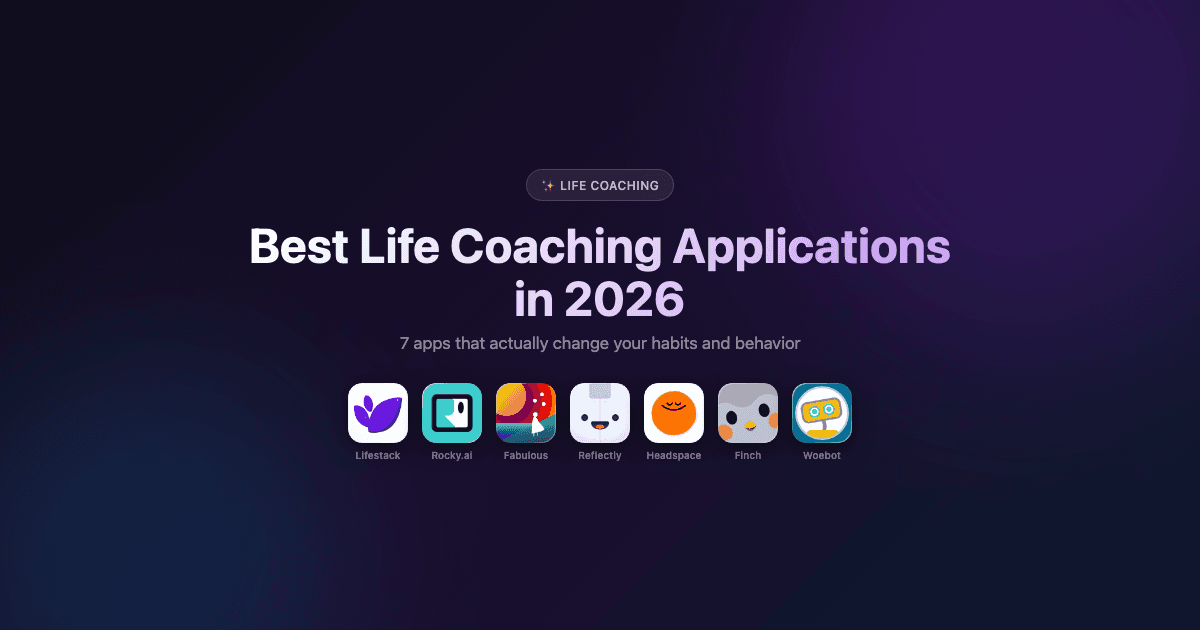
Life coaching used to mean scheduling bi-weekly sessions with someone who charges $200 an hour and emails you homework. That still exists. But in 2026, the best life coaching applications live on your phone, work around your actual schedule, and adapt to how you're doing right now, not how you were doing last Tuesday.
We tested seven life coaching applications across goal-setting, habit formation, behavioral change, emotional wellness, and daily planning. The range is intentional: some of these apps are built for the coaching conversation, some for the routine, and some for the data behind your day. What they share is that they actually move the needle. Downloading an app and never opening it again is the standard. These seven earned regular use.
Lifestack came out on top, and not for the obvious reason. It's not a coaching chatbot and it doesn't ask you to journal. It's a scheduling tool that reads your health data, understands when you have energy and when you don't, and builds your day around that reality before you've had a chance to overcommit. That is exactly what a good life coach does. Lifestack just does it without the $200 bill.
Below are the seven life coaching applications worth your time in 2026, starting with the one that changed how we think about what coaching software can actually do.
Key Takeaways
The best life coaching applications don't just tell you what to do. They change the conditions under which you make decisions: your schedule, your habits, your self-awareness.
Lifestack is the most data-driven option: it reads your sleep, HRV, and activity data to schedule your day around your real energy levels, which is the core promise of energy-based life coaching.
Different people need different coaching: Rocky.ai for accountability conversations, Fabulous for routine building, Finch and Reflectly for self-awareness, Headspace for mental foundation, Woebot for emotional patterns.
Quick Guide: Best Life Coaching Applications in 2026
1. Lifestack: AI life planner that schedules your day around your energy, not just your calendar
2. Rocky.ai: AI coaching chatbot for goal accountability and personal development conversations
3. Fabulous: Behavioral science-based habit and routine coaching
4. Reflectly: AI journaling for structured self-reflection and insight
5. Headspace: Mindfulness-first coaching and mental wellness support
6. Finch: Gamified self-care coaching with a surprisingly effective virtual pet mechanic
7. Woebot: CBT-based emotional wellness coaching for mood and thought patterns
How We Evaluated These Life Coaching Applications
Behavior change evidence: Is there science behind the approach, or is it just affirmations?
Personalization: Does the app adapt to you, or does everyone get the same coaching?
Consistency mechanics: What keeps you coming back after week one?
Integration with real life: Does the app connect to your calendar, health data, or existing tools?
Price per impact: Not just cost, but whether the cost is justified by what actually changes.
Active development: Apps that haven't shipped updates in 18 months don't make this list.
1. Lifestack: The Life Coaching Application That Uses Your Health Data
Schedules your day around your energy, before you have a chance to ruin it.
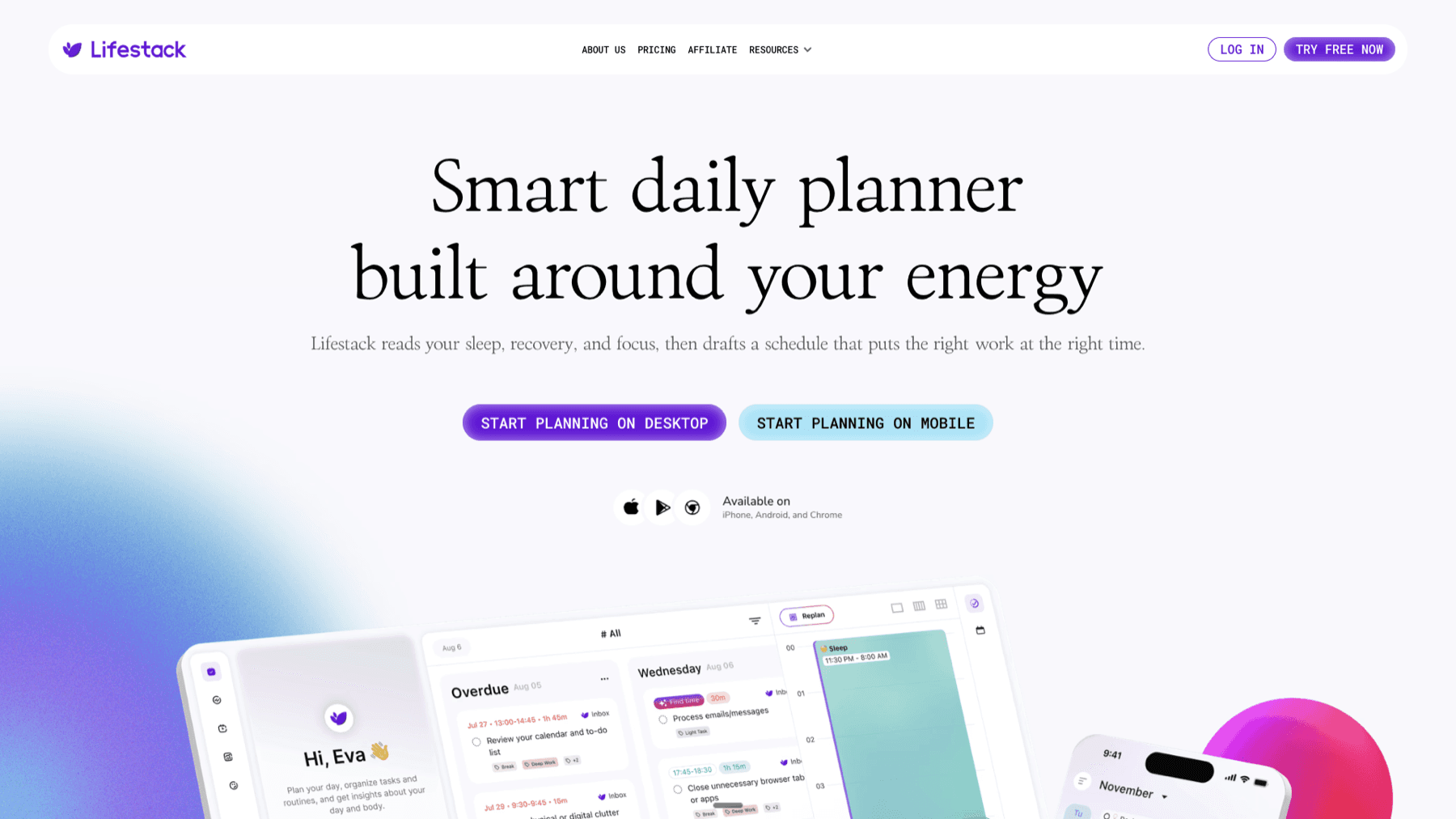
Every good life coach eventually tells you the same thing: stop trying to manage your time and start managing your energy. The idea is simple. A two-hour deep work block at 2pm means nothing if your HRV crashed overnight and you've been running on fumes since 11am. Time-blocking fails not because the concept is wrong, but because it treats every hour as equivalent when they're not. Lifestack is the life coaching application built around this insight.
Lifestack connects to Apple Health and reads your overnight data: sleep stages, heart rate variability, resting heart rate, and activity. Every morning, before you open your calendar, it assigns an energy score to each part of your day and schedules your tasks accordingly. Deep work goes in your peak windows. Admin, meetings, and low-stakes tasks fill your lower-energy slots. If you had a rough night, Lifestack doesn't ask you to push through. It reorganizes. The energy-based planning framework is the core of why this works when traditional scheduling doesn't, and why it's the most direct digital translation of what a life coach would actually tell you to do.
The app works on iPhone and Mac (and Android), with Google Calendar and Outlook integration built in. People with ADHD find it particularly effective (the ADHD task management breakdown explains why energy-aware scheduling clicks when every other system has failed). If you're also using an Oura Ring or WHOOP alongside your health tracking, Lifestack pulls from those too. But the Apple Health integration alone, powered by iPhone or Apple Watch data, is enough to make it transformative.
Key Features
Reads sleep, HRV, and activity data from Apple Health every morning
Auto-schedules tasks into peak and low-energy windows before you start your day
Integrates with Google Calendar, Outlook, and Todoist
Available on iPhone, Mac, Android, and Chrome
Supports Oura Ring, WHOOP, Garmin, and Apple Watch data
What Works
The coaching is invisible: your schedule just reflects your actual capacity, no check-ins required
Lifestack is the only life coaching application that adapts to how you slept, not just what you planned
Eliminates the most common coaching failure point: knowing what to do but still not doing it because the schedule was never realistic
The founder's own daily workflow shows the before/after clearly
Limitations
Focuses on scheduling and planning, not on the coaching conversation itself (pair with Rocky.ai if you want accountability check-ins)
Health data accuracy improves with consistent wearable use; the first week may feel imprecise
No journaling or reflection features built in
Pricing: $7/month, $50/year (7-day free trial on annual plan), $120 lifetime
Best for: Anyone whose real problem with life coaching isn't knowing what to do, but getting a schedule that actually matches their energy and follows through on it.
2. Rocky.ai: Best AI Life Coaching Chatbot
Goal-setting and accountability through conversation, not a to-do list.
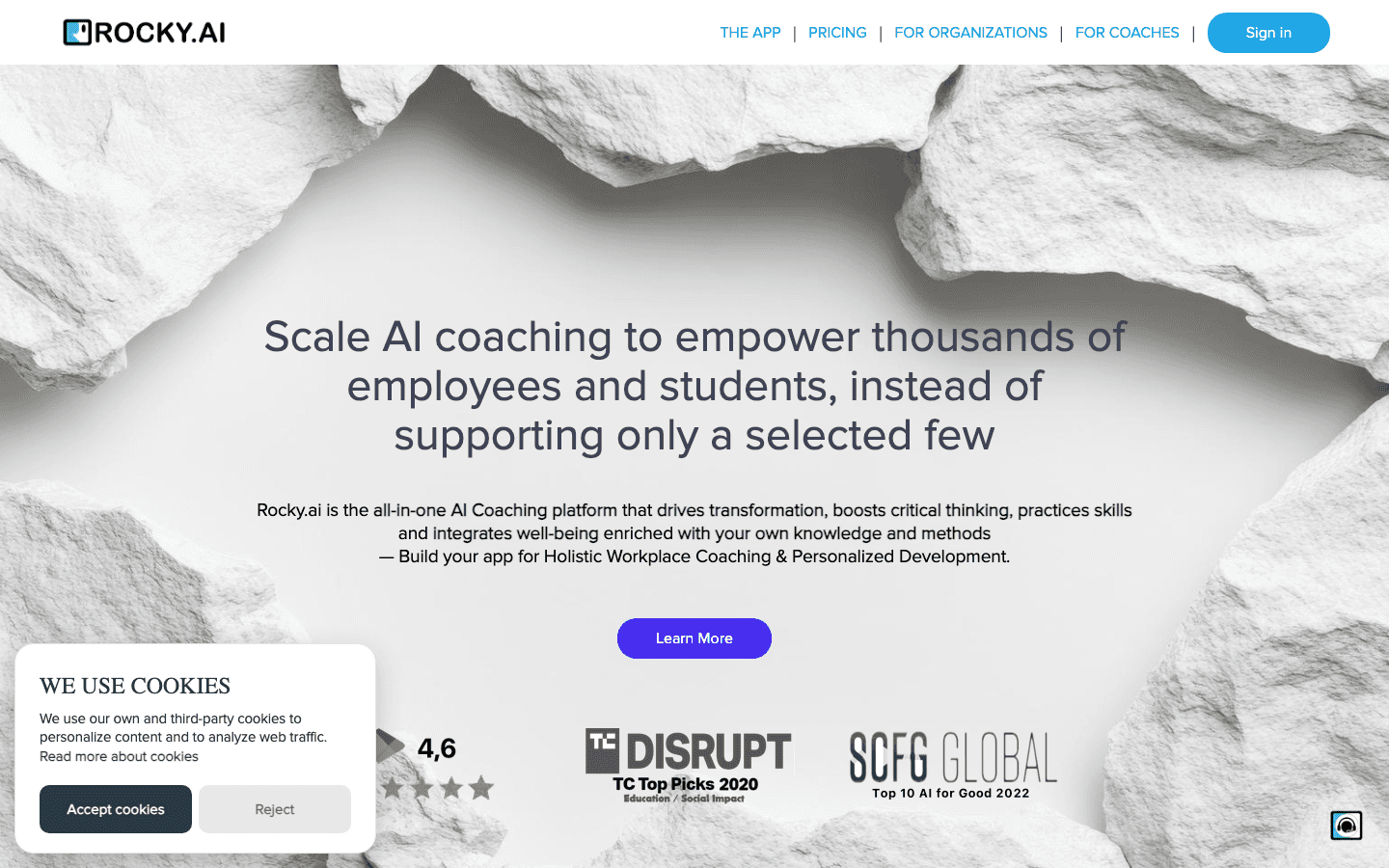
Rocky.ai is the closest thing in this list to what most people picture when they think "life coaching application." It's a conversational AI coach that asks you reflective questions, helps you define goals clearly, holds you accountable with daily check-ins, and works through the mental blocks that typically derail personal development efforts. The approach is solution-focused coaching, meaning it moves toward what you want rather than spending sessions rehashing what went wrong.
The platform uses a guided reflection model: it won't just answer your questions, it'll ask better ones back. Over time, it builds a personal development plan around your goals, tracks your progress, and surfaces patterns in how you think about challenges. Rocky.ai also includes role-play simulations for high-stakes conversations like difficult feedback sessions, job interviews, and conflict resolution. That's a coaching use case that most apps don't touch at all, and it's genuinely useful. For the productivity app ecosystem, Rocky.ai sits in the accountability-conversation layer that Lifestack doesn't cover.
Key Features
Conversational AI coaching with solution-focused methodology
Daily check-ins for goal tracking and accountability
Role-play simulations for real-life high-stakes conversations
Personal development plans built from your coaching sessions
Available on iOS, Android, and web
What Works
The question-first model forces you to think rather than just receive advice
Goal progress tracking across sessions gives you a record of where you actually are
Role-play practice is a genuinely novel coaching feature with real practical value
Limitations
No integration with health data or calendar scheduling (no energy awareness)
Conversation quality depends on how much you engage with the reflection prompts
Premium tier required for full access to all coaching topics
Pricing: Free (limited to two coaching topics); $9.99/month for all topics (save ~40% billed annually). One-week free trial available.
Best for: People who want an accountability partner that asks good questions, not just a task list.
3. Fabulous: Best Habit and Routine Coaching App
Behavioral science baked into a daily routine coach. Duke University tested it.
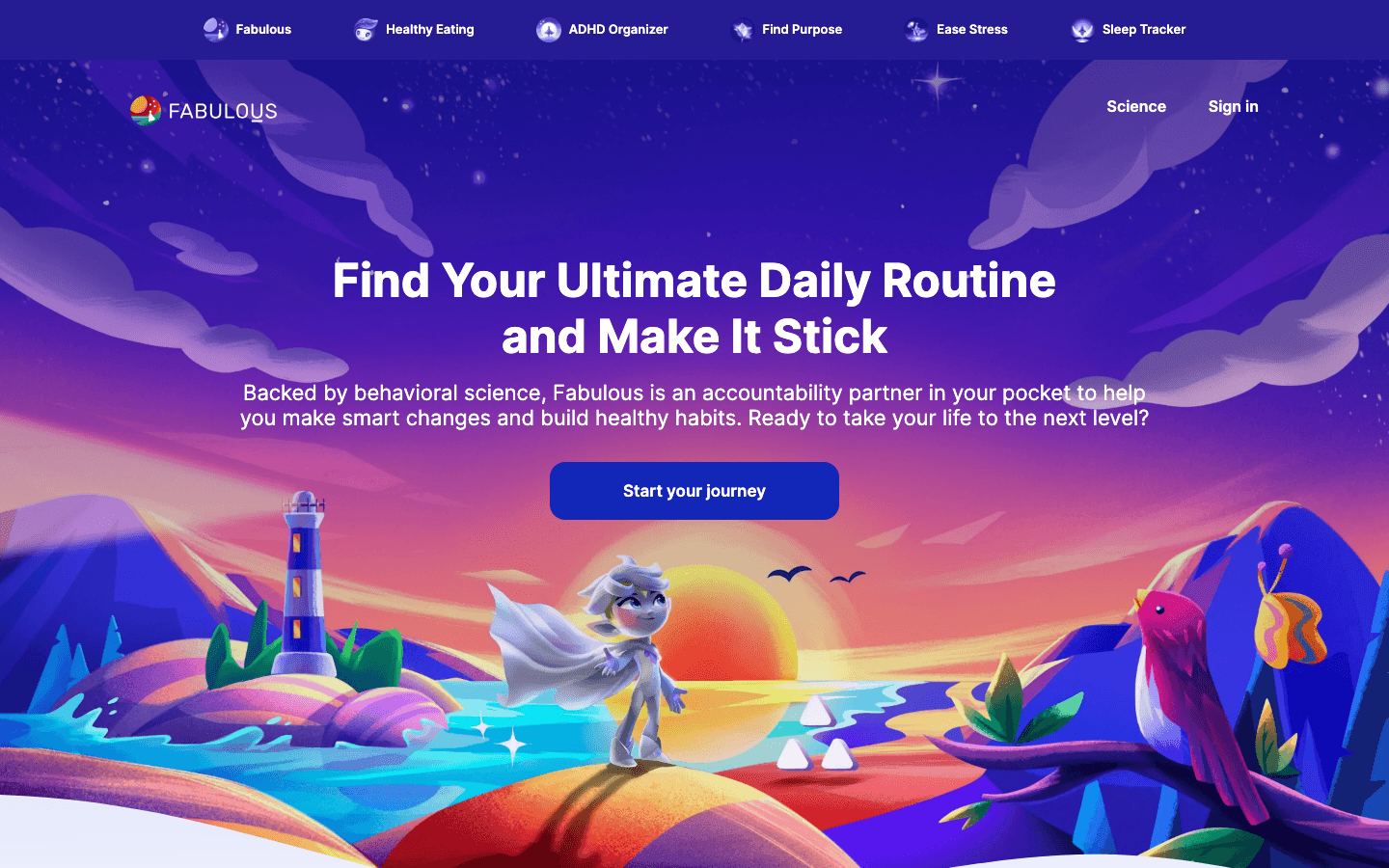
Fabulous was incubated in Duke University's behavioral economics lab, and it shows in how it approaches habit change. Rather than tracking habits like checkboxes, Fabulous coaches you through building routines using the same science that shows why habits form in the first place. It starts small, layers habits progressively, anchors new behaviors to existing ones, and uses the concept of "behavioral activation" to build momentum before motivation arrives. For people who've tried habit apps and abandoned them after two weeks, Fabulous's approach is meaningfully different.
The app guides you through building morning, afternoon, and evening routines with coaching sessions at each stage. The sessions aren't just affirmations. They draw on behavioral economics research to explain why you're doing each thing and how to make it stick. Over 37 million people have used Fabulous, and it's been featured by Apple multiple times. For life coaching focused on routine architecture, which is where most coaching engagements actually spend their time, Fabulous is the strongest application on this list. It pairs well with Lifestack's daily planning approach. Fabulous builds the routine and Lifestack schedules the work around it.
Key Features
Behavioral science-based routine building (Duke University research foundation)
Coaching sessions at each stage of habit formation
Morning, afternoon, and evening routine frameworks
On-demand coaching library with 24/7 access
Community and accountability features
What Works
The progressive habit stacking approach is the most evidence-based routine building system in a consumer app
Coaching sessions explain the why, which is what makes habits actually stick
37M users gives you a sense of the product's track record
Limitations
Focused on routine and habits, not on scheduling around energy or goal accountability conversations
The full coaching library is locked behind the premium subscription
Some users find the gamification layer distracting after the novelty wears off
Pricing: Free trial available; premium approximately $49.99/year
Best for: Anyone whose life coaching need is "I know what I should do, I just can't make it a routine."
4. Reflectly: Best AI Journaling and Self-Reflection App
The coaching happens in the questions, not the answers.
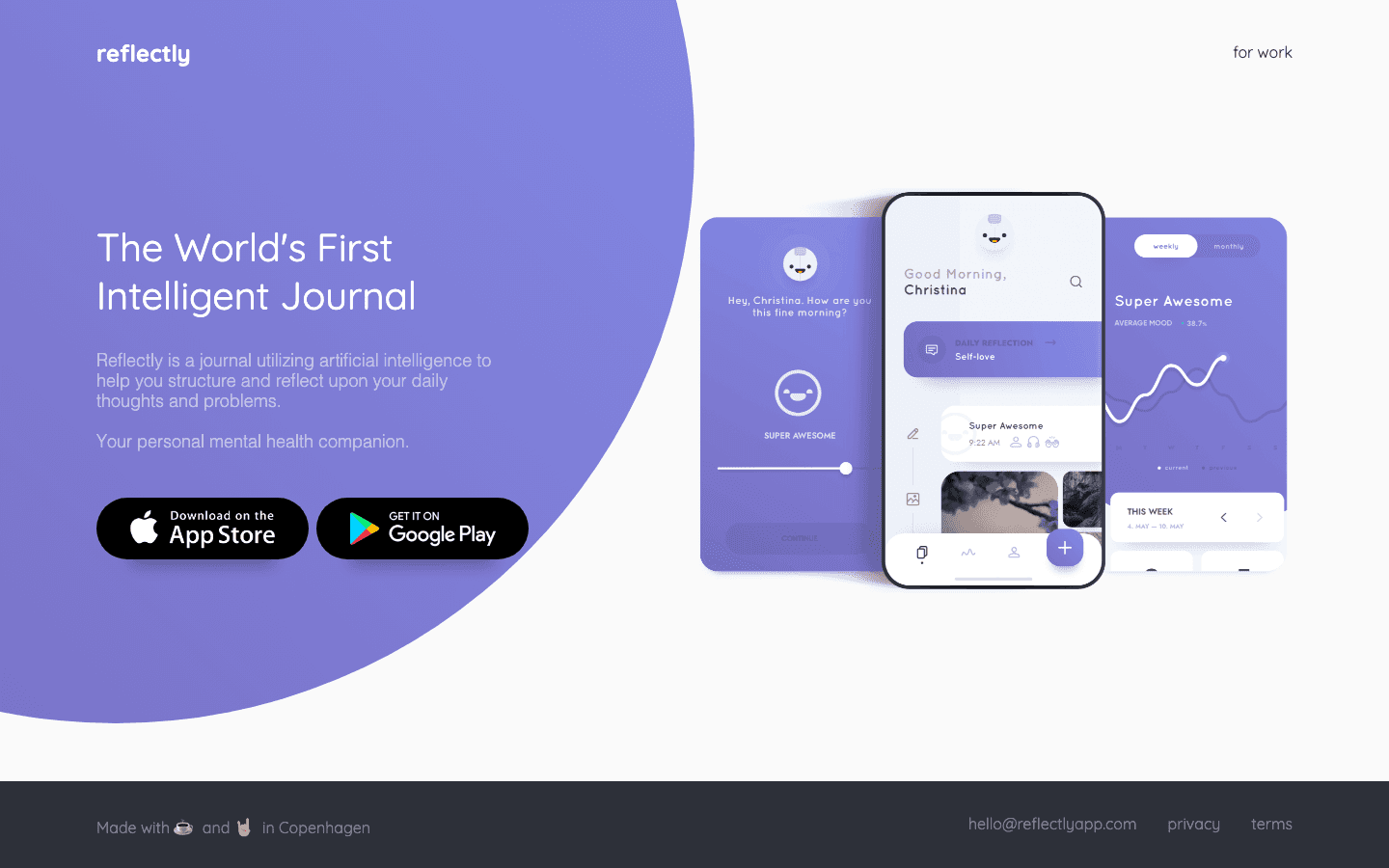
Reflectly is an AI-powered journal that uses structured prompts to guide self-reflection. Unlike free-form journaling, which tends to become a transcription of the day rather than insight into it, Reflectly asks targeted questions designed to surface patterns in your thinking, mood, and behavior. The AI adapts the prompts over time based on what you've shared before, so sessions get more personal as you use it.
For life coaching purposes, this is the self-awareness layer. Most coaching frameworks treat insight as a prerequisite: you can't set meaningful goals or break effective habits without understanding what's actually driving your current behavior. Reflectly handles that groundwork. It tracks your mood over time, identifies recurring emotional patterns, and creates a searchable journal where you can see how you've grown. For people using AI planning tools alongside coaching, Reflectly provides the reflection practice that makes the planning more grounded.
Key Features
AI-powered journal prompts that adapt based on your previous entries
Mood tracking with pattern visualization over time
Guided reflection for gratitude, goals, challenges, and daily review
Searchable journal with insights and trends
Available on iOS and Android
What Works
Structured prompts produce more useful insight than blank-page journaling
Mood trend visualization makes it easier to notice patterns you'd miss in daily entries
Clean design makes the habit of opening it feel easy, not like homework
Limitations
No scheduling, accountability, or goal tracking features (pure reflection tool)
No energy awareness or health data integration
Full features require the premium subscription
Pricing: Free trial available; $9.99/month or $59.99/year
Best for: People who know they need more self-awareness before the goal-setting work can actually land.
5. Headspace: Best Mindfulness-Based Coaching Application
The mental foundation that makes everything else in this list work better.
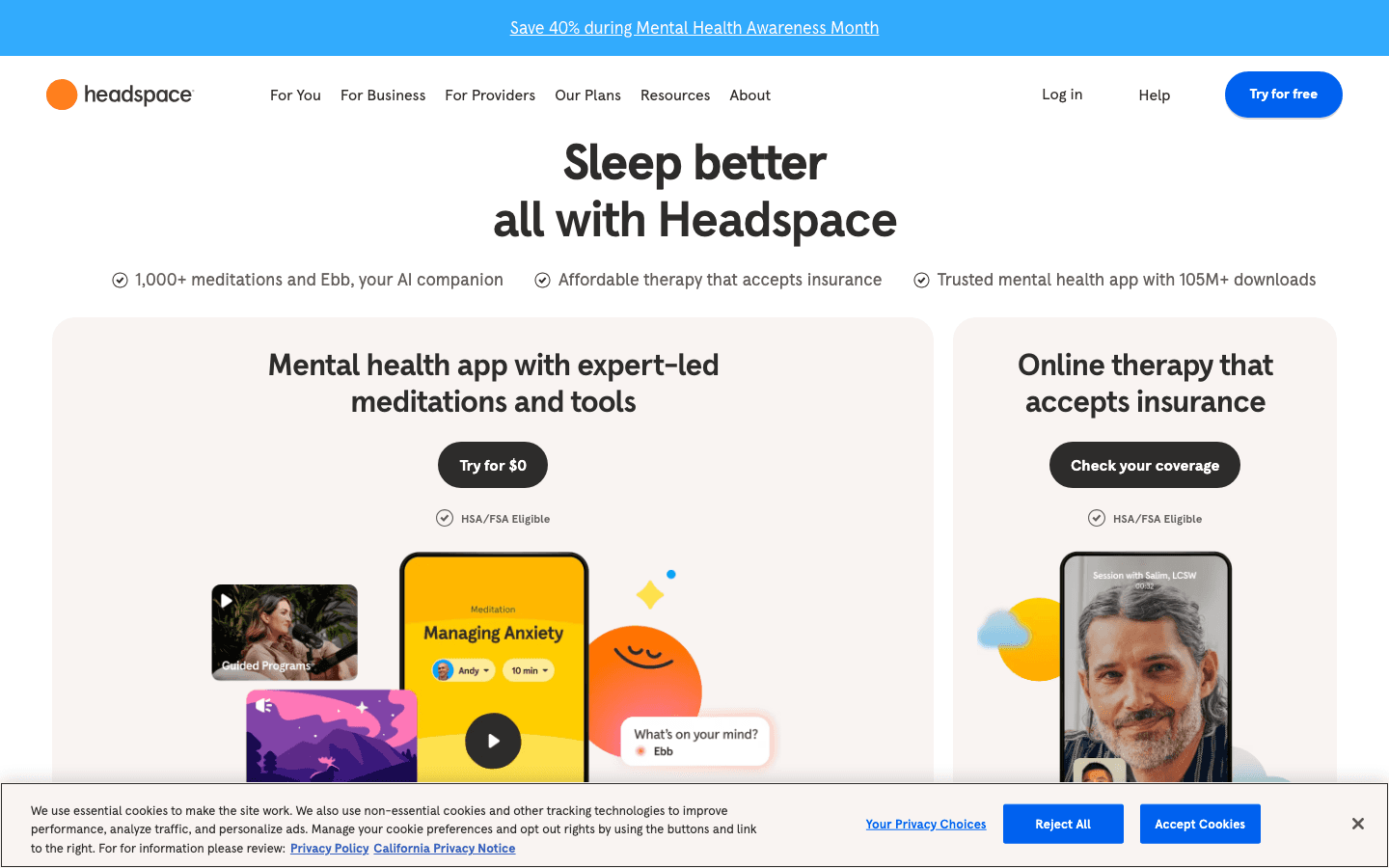
Headspace started as a meditation app and has grown into a comprehensive mental wellness platform with expert-led coaching, sleep tools, and stress management resources. The coaching angle is relevant here: mindfulness is not peripheral to life coaching, it's foundational. Almost every major coaching methodology includes some version of "learn to observe your thoughts before you try to change them." Headspace makes that practice accessible for people who've never meditated before and sustainable for people who've tried and quit.
The app has over 1,000 meditations and includes Elo, an AI companion for in-the-moment support. The coaching library covers focus, relationships, stress, sleep, and personal growth with sessions ranging from 2 minutes to full courses. For people working with a life coaching application to build better habits, Headspace handles the stress regulation and mental clarity side that makes the behavioral change actually possible to sustain. It also accepts insurance through several providers, which is meaningful if you're treating it as a healthcare tool.
Key Features
1,000+ guided meditations and mindfulness exercises
Expert-led coaching sessions across personal growth, stress, focus, and sleep
Elo AI companion for in-the-moment support
Sleep tools including sleepcasts, sleep music, and wind-down exercises
Insurance-accepted mental health support tier
What Works
The beginner meditation path is genuinely accessible, not padded with jargon
Breadth of content means it adapts to where you are in your wellness journey
The focus and stress content is directly applicable to productivity and life coaching goals
Limitations
Not a life coaching application in the goal-tracking or accountability sense
No scheduling, health data integration, or energy awareness
Best as a complement to a planning or accountability tool, not as a standalone coaching app
Pricing: Free trial available; $12.99/month or $69.99/year
Best for: Anyone whose coaching goals keep getting derailed by stress, poor sleep, or difficulty focusing long enough to follow through.
6. Finch: Best Gamified Self-Care Coaching App
Your new self-care best friend, with 5 stars and 500K+ ratings to back it up.
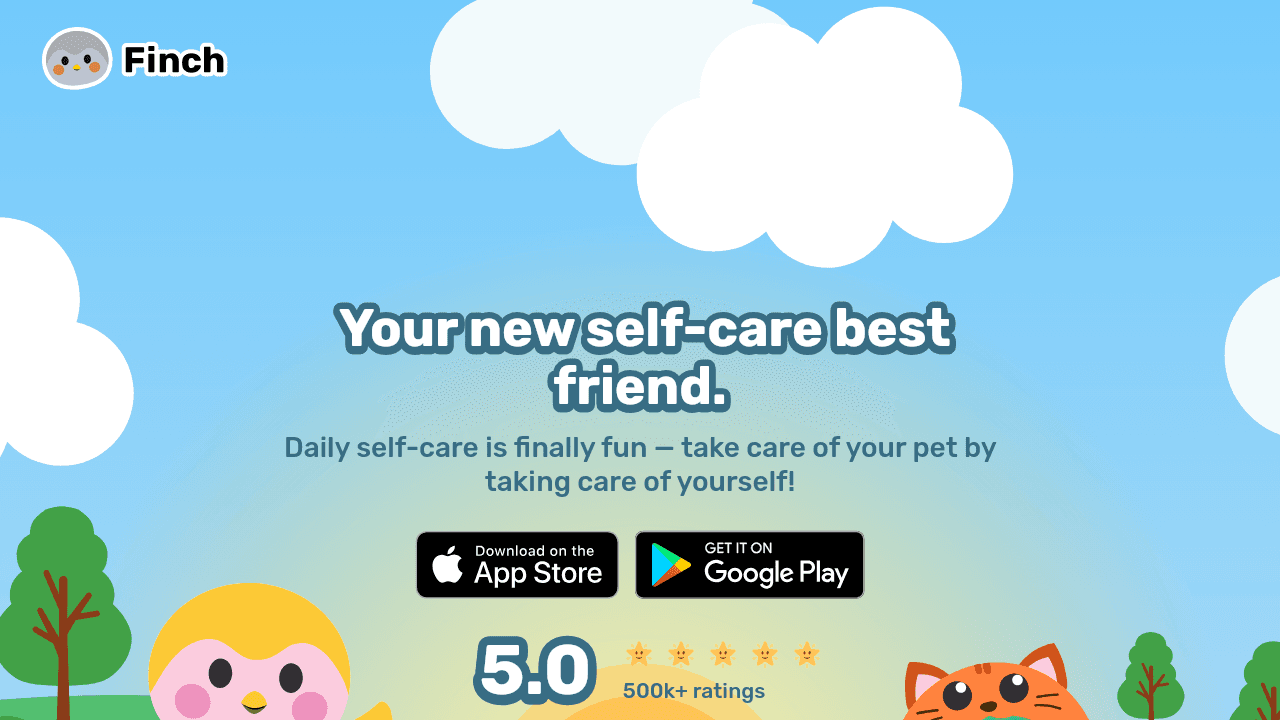
Finch is a self-care coaching app built around a virtual pet: a small bird that grows and develops as you complete daily self-care exercises. You check in on your mood, complete breathing exercises, set intentions, and work toward goals, and your bird grows and goes on journeys as a result. The mechanic sounds childish on paper and works surprisingly well in practice. Finch has 500,000+ five-star ratings because the emotional connection to the bird creates a consistency habit that cold productivity frameworks consistently fail to build.
For life coaching purposes, Finch handles the self-compassion and emotional wellness layer. Traditional coaching often stumbles here: people set ambitious goals and then punish themselves when they miss them, which creates a shame cycle that makes the next attempt less likely. Finch reframes daily self-care as care for something you love, which removes a lot of that self-critical friction. It's a particularly effective tool for people who've tried productivity systems that felt punishing rather than motivating.
Key Features
Gamified self-care with a virtual pet that grows through your daily practices
Daily check-ins for mood, intentions, and gratitude
Breathing exercises, guided reflections, and goal-setting tools
Social features to connect your bird with friends
Available on iOS and Android
What Works
The gamification creates an emotional accountability loop that outlasts novelty-driven motivation
Gentle and non-judgmental tone makes it work for people who've been burned by harsh self-improvement frameworks
Free core features mean you can get real value before committing to premium
Limitations
Not a serious goal-tracking or scheduling tool; works best as emotional wellness support alongside a planner like Lifestack
The pet mechanic won't resonate with everyone; if it feels silly to you, it won't stick
No health data integration or energy awareness
Pricing: Free (core features); Finch Plus from approximately $7.99/month
Best for: Anyone who needs a self-care and consistency framework that's warm and motivating rather than rigorous and punishing.
7. Woebot: Best CBT-Based Emotional Coaching App
Cognitive behavioral therapy, available whenever the spiral starts.
Woebot is an AI chatbot grounded in cognitive behavioral therapy (CBT), one of the most research-backed approaches to changing thought and behavior patterns. Where other life coaching applications focus on goal-setting and scheduling, Woebot focuses on the thought patterns that cause those goals to fail in the first place: catastrophizing, avoidance, all-or-nothing thinking, and the other cognitive distortions that derail well-intentioned plans. It was developed by psychologists at Stanford and has been studied in peer-reviewed research.
For life coaching, Woebot fills the gap between journaling (Reflectly) and behavioral routine (Fabulous). It works in real time: when you're in a spiral or have just talked yourself out of doing the thing you said you'd do, Woebot walks you through a CBT technique to identify what happened and reset. The missions and mood tracking give you structured exercises for the patterns you want to change over time. It's free to access, which makes it one of the higher-leverage tools on this list relative to cost.
Key Features
AI chatbot using CBT, DBT, and mindfulness techniques
Mood tracking with pattern identification over time
Structured missions targeting specific thought patterns (anxiety, avoidance, perfectionism)
Real-time check-ins when you're in a difficult moment
Developed by Stanford psychologists with peer-reviewed research backing
What Works
CBT-based technique delivery in conversation form is more approachable than a workbook
Available exactly when you need it, which is when the patterns are actually happening
Free access removes the barrier that stops most people from getting this kind of support
Limitations
Not a replacement for a licensed therapist in clinical contexts
No scheduling, goal tracking, or energy awareness features
Conversation depth is limited compared to a human coach or therapist
Pricing: Free to access
Best for: Anyone whose life coaching goals keep getting undermined by anxiety, avoidance, or self-sabotaging thought patterns that need CBT-style work to address.
Which Life Coaching Application Is Right for You?
You want your schedule to reflect your actual energy, not your best intentions: Lifestack. It's the only life coaching application that reads your health data and builds your day around it.
You want an accountability partner who asks good questions: Rocky.ai. Goal-setting and reflection through conversation.
You can't make good habits stick: Fabulous. Behavioral science-based routine building from the team that worked with Duke University.
You need more self-awareness before goal-setting can work: Reflectly. Structured AI journaling for patterns and insight.
Stress and mental clutter keep derailing your plans: Headspace. Mindfulness and coaching as a foundation for everything else.
You need warmth and self-compassion more than another system: Finch. Gamified self-care that creates consistency through emotional connection.
Your patterns of thinking are the real obstacle: Woebot. CBT-based support for the thoughts that make following through hard.
Best stack: Lifestack (schedule and planning) + Rocky.ai (accountability conversations) + one of Fabulous, Finch, or Reflectly depending on your biggest friction point. Three apps, three layers, zero redundancy.
Frequently Asked Questions
What is a life coaching application?
A life coaching application is a mobile or web app that provides structured support for personal development, goal achievement, habit formation, or behavior change. The best ones apply evidence-based coaching methodologies (behavioral science, cognitive behavioral therapy, solution-focused coaching) rather than just tracking checklists. Lifestack takes this a step further by using your health and energy data to schedule your life around your real capacity, which is the core of what energy-based life coaching actually teaches.
Can an app replace a human life coach?
For most people's most common coaching needs, yes. Human coaches are valuable for deep personal work, major life transitions, and situations that require true empathy and nuance. But for daily habit formation, scheduling discipline, accountability check-ins, and reflective journaling, the apps in this list are often more effective than a human coach, because they're available consistently and don't require scheduling a session. Lifestack's foundational approach is a good example: it coaches your daily schedule automatically, without you ever booking a session.
What's the best free life coaching application?
Woebot is fully free and provides CBT-based emotional coaching backed by Stanford research. Rocky.ai has a free tier covering two coaching topics. Finch's core self-care features are free. For scheduling and planning, Lifestack offers a 7-day free trial on its annual plan. If you're testing before committing, start with Woebot (free, immediate) and Lifestack's trial (to see if energy-aware scheduling changes anything for you).
How do life coaching apps use AI?
Each app in this list uses AI differently. Lifestack uses AI to analyze your health data and build an optimized daily schedule. Rocky.ai uses conversational AI to guide solution-focused coaching sessions. Reflectly uses AI to personalize journal prompts based on your history. Woebot uses AI to deliver CBT techniques through a chatbot interface. Fabulous and Finch use AI more lightly for personalization and adaptation. The common thread is that AI enables personalization at a scale no human coach could match across thousands of daily interactions.
What life coaching application is best for ADHD?
Lifestack is the strongest pick for ADHD specifically. The energy-based approach to ADHD task management addresses the core challenge: ADHD isn't a willpower problem, it's a mismatch between task demands and available cognitive energy. Lifestack automatically schedules difficult tasks when your energy is highest and protects those windows from low-stakes work. Finch also works well for ADHD users because the gamification and self-compassion framing reduces the shame spiral that standard productivity systems create. Woebot can help with the anxiety and avoidance patterns that often accompany ADHD.
How do I choose between Lifestack and a traditional coaching app like Rocky.ai?
They solve different problems. Lifestack is a scheduling and planning tool that uses your health data to make your calendar realistic. Rocky.ai is an accountability and conversation tool that helps you work through goals and blocks verbally. Most people who benefit from both use Lifestack for daily planning and Rocky.ai for weekly goal reflection. If you can only pick one, start with Lifestack if your problem is follow-through and schedule execution, and Rocky.ai if your problem is figuring out what you actually want and staying accountable to it.
Life coaching used to mean scheduling bi-weekly sessions with someone who charges $200 an hour and emails you homework. That still exists. But in 2026, the best life coaching applications live on your phone, work around your actual schedule, and adapt to how you're doing right now, not how you were doing last Tuesday.
We tested seven life coaching applications across goal-setting, habit formation, behavioral change, emotional wellness, and daily planning. The range is intentional: some of these apps are built for the coaching conversation, some for the routine, and some for the data behind your day. What they share is that they actually move the needle. Downloading an app and never opening it again is the standard. These seven earned regular use.
Lifestack came out on top, and not for the obvious reason. It's not a coaching chatbot and it doesn't ask you to journal. It's a scheduling tool that reads your health data, understands when you have energy and when you don't, and builds your day around that reality before you've had a chance to overcommit. That is exactly what a good life coach does. Lifestack just does it without the $200 bill.
Below are the seven life coaching applications worth your time in 2026, starting with the one that changed how we think about what coaching software can actually do.
Key Takeaways
The best life coaching applications don't just tell you what to do. They change the conditions under which you make decisions: your schedule, your habits, your self-awareness.
Lifestack is the most data-driven option: it reads your sleep, HRV, and activity data to schedule your day around your real energy levels, which is the core promise of energy-based life coaching.
Different people need different coaching: Rocky.ai for accountability conversations, Fabulous for routine building, Finch and Reflectly for self-awareness, Headspace for mental foundation, Woebot for emotional patterns.
Quick Guide: Best Life Coaching Applications in 2026
1. Lifestack: AI life planner that schedules your day around your energy, not just your calendar
2. Rocky.ai: AI coaching chatbot for goal accountability and personal development conversations
3. Fabulous: Behavioral science-based habit and routine coaching
4. Reflectly: AI journaling for structured self-reflection and insight
5. Headspace: Mindfulness-first coaching and mental wellness support
6. Finch: Gamified self-care coaching with a surprisingly effective virtual pet mechanic
7. Woebot: CBT-based emotional wellness coaching for mood and thought patterns
How We Evaluated These Life Coaching Applications
Behavior change evidence: Is there science behind the approach, or is it just affirmations?
Personalization: Does the app adapt to you, or does everyone get the same coaching?
Consistency mechanics: What keeps you coming back after week one?
Integration with real life: Does the app connect to your calendar, health data, or existing tools?
Price per impact: Not just cost, but whether the cost is justified by what actually changes.
Active development: Apps that haven't shipped updates in 18 months don't make this list.
1. Lifestack: The Life Coaching Application That Uses Your Health Data
Schedules your day around your energy, before you have a chance to ruin it.
Every good life coach eventually tells you the same thing: stop trying to manage your time and start managing your energy. The idea is simple. A two-hour deep work block at 2pm means nothing if your HRV crashed overnight and you've been running on fumes since 11am. Time-blocking fails not because the concept is wrong, but because it treats every hour as equivalent when they're not. Lifestack is the life coaching application built around this insight.
Lifestack connects to Apple Health and reads your overnight data: sleep stages, heart rate variability, resting heart rate, and activity. Every morning, before you open your calendar, it assigns an energy score to each part of your day and schedules your tasks accordingly. Deep work goes in your peak windows. Admin, meetings, and low-stakes tasks fill your lower-energy slots. If you had a rough night, Lifestack doesn't ask you to push through. It reorganizes. The energy-based planning framework is the core of why this works when traditional scheduling doesn't, and why it's the most direct digital translation of what a life coach would actually tell you to do.
The app works on iPhone and Mac (and Android), with Google Calendar and Outlook integration built in. People with ADHD find it particularly effective (the ADHD task management breakdown explains why energy-aware scheduling clicks when every other system has failed). If you're also using an Oura Ring or WHOOP alongside your health tracking, Lifestack pulls from those too. But the Apple Health integration alone, powered by iPhone or Apple Watch data, is enough to make it transformative.
Key Features
Reads sleep, HRV, and activity data from Apple Health every morning
Auto-schedules tasks into peak and low-energy windows before you start your day
Integrates with Google Calendar, Outlook, and Todoist
Available on iPhone, Mac, Android, and Chrome
Supports Oura Ring, WHOOP, Garmin, and Apple Watch data
What Works
The coaching is invisible: your schedule just reflects your actual capacity, no check-ins required
Lifestack is the only life coaching application that adapts to how you slept, not just what you planned
Eliminates the most common coaching failure point: knowing what to do but still not doing it because the schedule was never realistic
The founder's own daily workflow shows the before/after clearly
Limitations
Focuses on scheduling and planning, not on the coaching conversation itself (pair with Rocky.ai if you want accountability check-ins)
Health data accuracy improves with consistent wearable use; the first week may feel imprecise
No journaling or reflection features built in
Pricing: $7/month, $50/year (7-day free trial on annual plan), $120 lifetime
Best for: Anyone whose real problem with life coaching isn't knowing what to do, but getting a schedule that actually matches their energy and follows through on it.
2. Rocky.ai: Best AI Life Coaching Chatbot
Goal-setting and accountability through conversation, not a to-do list.
Rocky.ai is the closest thing in this list to what most people picture when they think "life coaching application." It's a conversational AI coach that asks you reflective questions, helps you define goals clearly, holds you accountable with daily check-ins, and works through the mental blocks that typically derail personal development efforts. The approach is solution-focused coaching, meaning it moves toward what you want rather than spending sessions rehashing what went wrong.
The platform uses a guided reflection model: it won't just answer your questions, it'll ask better ones back. Over time, it builds a personal development plan around your goals, tracks your progress, and surfaces patterns in how you think about challenges. Rocky.ai also includes role-play simulations for high-stakes conversations like difficult feedback sessions, job interviews, and conflict resolution. That's a coaching use case that most apps don't touch at all, and it's genuinely useful. For the productivity app ecosystem, Rocky.ai sits in the accountability-conversation layer that Lifestack doesn't cover.
Key Features
Conversational AI coaching with solution-focused methodology
Daily check-ins for goal tracking and accountability
Role-play simulations for real-life high-stakes conversations
Personal development plans built from your coaching sessions
Available on iOS, Android, and web
What Works
The question-first model forces you to think rather than just receive advice
Goal progress tracking across sessions gives you a record of where you actually are
Role-play practice is a genuinely novel coaching feature with real practical value
Limitations
No integration with health data or calendar scheduling (no energy awareness)
Conversation quality depends on how much you engage with the reflection prompts
Premium tier required for full access to all coaching topics
Pricing: Free (limited to two coaching topics); $9.99/month for all topics (save ~40% billed annually). One-week free trial available.
Best for: People who want an accountability partner that asks good questions, not just a task list.
3. Fabulous: Best Habit and Routine Coaching App
Behavioral science baked into a daily routine coach. Duke University tested it.
Fabulous was incubated in Duke University's behavioral economics lab, and it shows in how it approaches habit change. Rather than tracking habits like checkboxes, Fabulous coaches you through building routines using the same science that shows why habits form in the first place. It starts small, layers habits progressively, anchors new behaviors to existing ones, and uses the concept of "behavioral activation" to build momentum before motivation arrives. For people who've tried habit apps and abandoned them after two weeks, Fabulous's approach is meaningfully different.
The app guides you through building morning, afternoon, and evening routines with coaching sessions at each stage. The sessions aren't just affirmations. They draw on behavioral economics research to explain why you're doing each thing and how to make it stick. Over 37 million people have used Fabulous, and it's been featured by Apple multiple times. For life coaching focused on routine architecture, which is where most coaching engagements actually spend their time, Fabulous is the strongest application on this list. It pairs well with Lifestack's daily planning approach. Fabulous builds the routine and Lifestack schedules the work around it.
Key Features
Behavioral science-based routine building (Duke University research foundation)
Coaching sessions at each stage of habit formation
Morning, afternoon, and evening routine frameworks
On-demand coaching library with 24/7 access
Community and accountability features
What Works
The progressive habit stacking approach is the most evidence-based routine building system in a consumer app
Coaching sessions explain the why, which is what makes habits actually stick
37M users gives you a sense of the product's track record
Limitations
Focused on routine and habits, not on scheduling around energy or goal accountability conversations
The full coaching library is locked behind the premium subscription
Some users find the gamification layer distracting after the novelty wears off
Pricing: Free trial available; premium approximately $49.99/year
Best for: Anyone whose life coaching need is "I know what I should do, I just can't make it a routine."
4. Reflectly: Best AI Journaling and Self-Reflection App
The coaching happens in the questions, not the answers.
Reflectly is an AI-powered journal that uses structured prompts to guide self-reflection. Unlike free-form journaling, which tends to become a transcription of the day rather than insight into it, Reflectly asks targeted questions designed to surface patterns in your thinking, mood, and behavior. The AI adapts the prompts over time based on what you've shared before, so sessions get more personal as you use it.
For life coaching purposes, this is the self-awareness layer. Most coaching frameworks treat insight as a prerequisite: you can't set meaningful goals or break effective habits without understanding what's actually driving your current behavior. Reflectly handles that groundwork. It tracks your mood over time, identifies recurring emotional patterns, and creates a searchable journal where you can see how you've grown. For people using AI planning tools alongside coaching, Reflectly provides the reflection practice that makes the planning more grounded.
Key Features
AI-powered journal prompts that adapt based on your previous entries
Mood tracking with pattern visualization over time
Guided reflection for gratitude, goals, challenges, and daily review
Searchable journal with insights and trends
Available on iOS and Android
What Works
Structured prompts produce more useful insight than blank-page journaling
Mood trend visualization makes it easier to notice patterns you'd miss in daily entries
Clean design makes the habit of opening it feel easy, not like homework
Limitations
No scheduling, accountability, or goal tracking features (pure reflection tool)
No energy awareness or health data integration
Full features require the premium subscription
Pricing: Free trial available; $9.99/month or $59.99/year
Best for: People who know they need more self-awareness before the goal-setting work can actually land.
5. Headspace: Best Mindfulness-Based Coaching Application
The mental foundation that makes everything else in this list work better.
Headspace started as a meditation app and has grown into a comprehensive mental wellness platform with expert-led coaching, sleep tools, and stress management resources. The coaching angle is relevant here: mindfulness is not peripheral to life coaching, it's foundational. Almost every major coaching methodology includes some version of "learn to observe your thoughts before you try to change them." Headspace makes that practice accessible for people who've never meditated before and sustainable for people who've tried and quit.
The app has over 1,000 meditations and includes Elo, an AI companion for in-the-moment support. The coaching library covers focus, relationships, stress, sleep, and personal growth with sessions ranging from 2 minutes to full courses. For people working with a life coaching application to build better habits, Headspace handles the stress regulation and mental clarity side that makes the behavioral change actually possible to sustain. It also accepts insurance through several providers, which is meaningful if you're treating it as a healthcare tool.
Key Features
1,000+ guided meditations and mindfulness exercises
Expert-led coaching sessions across personal growth, stress, focus, and sleep
Elo AI companion for in-the-moment support
Sleep tools including sleepcasts, sleep music, and wind-down exercises
Insurance-accepted mental health support tier
What Works
The beginner meditation path is genuinely accessible, not padded with jargon
Breadth of content means it adapts to where you are in your wellness journey
The focus and stress content is directly applicable to productivity and life coaching goals
Limitations
Not a life coaching application in the goal-tracking or accountability sense
No scheduling, health data integration, or energy awareness
Best as a complement to a planning or accountability tool, not as a standalone coaching app
Pricing: Free trial available; $12.99/month or $69.99/year
Best for: Anyone whose coaching goals keep getting derailed by stress, poor sleep, or difficulty focusing long enough to follow through.
6. Finch: Best Gamified Self-Care Coaching App
Your new self-care best friend, with 5 stars and 500K+ ratings to back it up.
Finch is a self-care coaching app built around a virtual pet: a small bird that grows and develops as you complete daily self-care exercises. You check in on your mood, complete breathing exercises, set intentions, and work toward goals, and your bird grows and goes on journeys as a result. The mechanic sounds childish on paper and works surprisingly well in practice. Finch has 500,000+ five-star ratings because the emotional connection to the bird creates a consistency habit that cold productivity frameworks consistently fail to build.
For life coaching purposes, Finch handles the self-compassion and emotional wellness layer. Traditional coaching often stumbles here: people set ambitious goals and then punish themselves when they miss them, which creates a shame cycle that makes the next attempt less likely. Finch reframes daily self-care as care for something you love, which removes a lot of that self-critical friction. It's a particularly effective tool for people who've tried productivity systems that felt punishing rather than motivating.
Key Features
Gamified self-care with a virtual pet that grows through your daily practices
Daily check-ins for mood, intentions, and gratitude
Breathing exercises, guided reflections, and goal-setting tools
Social features to connect your bird with friends
Available on iOS and Android
What Works
The gamification creates an emotional accountability loop that outlasts novelty-driven motivation
Gentle and non-judgmental tone makes it work for people who've been burned by harsh self-improvement frameworks
Free core features mean you can get real value before committing to premium
Limitations
Not a serious goal-tracking or scheduling tool; works best as emotional wellness support alongside a planner like Lifestack
The pet mechanic won't resonate with everyone; if it feels silly to you, it won't stick
No health data integration or energy awareness
Pricing: Free (core features); Finch Plus from approximately $7.99/month
Best for: Anyone who needs a self-care and consistency framework that's warm and motivating rather than rigorous and punishing.
7. Woebot: Best CBT-Based Emotional Coaching App
Cognitive behavioral therapy, available whenever the spiral starts.
Woebot is an AI chatbot grounded in cognitive behavioral therapy (CBT), one of the most research-backed approaches to changing thought and behavior patterns. Where other life coaching applications focus on goal-setting and scheduling, Woebot focuses on the thought patterns that cause those goals to fail in the first place: catastrophizing, avoidance, all-or-nothing thinking, and the other cognitive distortions that derail well-intentioned plans. It was developed by psychologists at Stanford and has been studied in peer-reviewed research.
For life coaching, Woebot fills the gap between journaling (Reflectly) and behavioral routine (Fabulous). It works in real time: when you're in a spiral or have just talked yourself out of doing the thing you said you'd do, Woebot walks you through a CBT technique to identify what happened and reset. The missions and mood tracking give you structured exercises for the patterns you want to change over time. It's free to access, which makes it one of the higher-leverage tools on this list relative to cost.
Key Features
AI chatbot using CBT, DBT, and mindfulness techniques
Mood tracking with pattern identification over time
Structured missions targeting specific thought patterns (anxiety, avoidance, perfectionism)
Real-time check-ins when you're in a difficult moment
Developed by Stanford psychologists with peer-reviewed research backing
What Works
CBT-based technique delivery in conversation form is more approachable than a workbook
Available exactly when you need it, which is when the patterns are actually happening
Free access removes the barrier that stops most people from getting this kind of support
Limitations
Not a replacement for a licensed therapist in clinical contexts
No scheduling, goal tracking, or energy awareness features
Conversation depth is limited compared to a human coach or therapist
Pricing: Free to access
Best for: Anyone whose life coaching goals keep getting undermined by anxiety, avoidance, or self-sabotaging thought patterns that need CBT-style work to address.
Which Life Coaching Application Is Right for You?
You want your schedule to reflect your actual energy, not your best intentions: Lifestack. It's the only life coaching application that reads your health data and builds your day around it.
You want an accountability partner who asks good questions: Rocky.ai. Goal-setting and reflection through conversation.
You can't make good habits stick: Fabulous. Behavioral science-based routine building from the team that worked with Duke University.
You need more self-awareness before goal-setting can work: Reflectly. Structured AI journaling for patterns and insight.
Stress and mental clutter keep derailing your plans: Headspace. Mindfulness and coaching as a foundation for everything else.
You need warmth and self-compassion more than another system: Finch. Gamified self-care that creates consistency through emotional connection.
Your patterns of thinking are the real obstacle: Woebot. CBT-based support for the thoughts that make following through hard.
Best stack: Lifestack (schedule and planning) + Rocky.ai (accountability conversations) + one of Fabulous, Finch, or Reflectly depending on your biggest friction point. Three apps, three layers, zero redundancy.
Frequently Asked Questions
What is a life coaching application?
A life coaching application is a mobile or web app that provides structured support for personal development, goal achievement, habit formation, or behavior change. The best ones apply evidence-based coaching methodologies (behavioral science, cognitive behavioral therapy, solution-focused coaching) rather than just tracking checklists. Lifestack takes this a step further by using your health and energy data to schedule your life around your real capacity, which is the core of what energy-based life coaching actually teaches.
Can an app replace a human life coach?
For most people's most common coaching needs, yes. Human coaches are valuable for deep personal work, major life transitions, and situations that require true empathy and nuance. But for daily habit formation, scheduling discipline, accountability check-ins, and reflective journaling, the apps in this list are often more effective than a human coach, because they're available consistently and don't require scheduling a session. Lifestack's foundational approach is a good example: it coaches your daily schedule automatically, without you ever booking a session.
What's the best free life coaching application?
Woebot is fully free and provides CBT-based emotional coaching backed by Stanford research. Rocky.ai has a free tier covering two coaching topics. Finch's core self-care features are free. For scheduling and planning, Lifestack offers a 7-day free trial on its annual plan. If you're testing before committing, start with Woebot (free, immediate) and Lifestack's trial (to see if energy-aware scheduling changes anything for you).
How do life coaching apps use AI?
Each app in this list uses AI differently. Lifestack uses AI to analyze your health data and build an optimized daily schedule. Rocky.ai uses conversational AI to guide solution-focused coaching sessions. Reflectly uses AI to personalize journal prompts based on your history. Woebot uses AI to deliver CBT techniques through a chatbot interface. Fabulous and Finch use AI more lightly for personalization and adaptation. The common thread is that AI enables personalization at a scale no human coach could match across thousands of daily interactions.
What life coaching application is best for ADHD?
Lifestack is the strongest pick for ADHD specifically. The energy-based approach to ADHD task management addresses the core challenge: ADHD isn't a willpower problem, it's a mismatch between task demands and available cognitive energy. Lifestack automatically schedules difficult tasks when your energy is highest and protects those windows from low-stakes work. Finch also works well for ADHD users because the gamification and self-compassion framing reduces the shame spiral that standard productivity systems create. Woebot can help with the anxiety and avoidance patterns that often accompany ADHD.
How do I choose between Lifestack and a traditional coaching app like Rocky.ai?
They solve different problems. Lifestack is a scheduling and planning tool that uses your health data to make your calendar realistic. Rocky.ai is an accountability and conversation tool that helps you work through goals and blocks verbally. Most people who benefit from both use Lifestack for daily planning and Rocky.ai for weekly goal reflection. If you can only pick one, start with Lifestack if your problem is follow-through and schedule execution, and Rocky.ai if your problem is figuring out what you actually want and staying accountable to it.



FOLLOW ON
FOLLOW ON
FOLLOW ON


Copyright 2026 © Lifestack. All rights reserved
Copyright 2026 © Lifestack. All rights reserved

