
App
7 Best Personalized Wellness Apps in 2026
7 Best Personalized Wellness Apps in 2026

Finding a wellness app that actually fits you is harder than it sounds. Most apps hand you a generic plan and hope for the best. You log your food, pick a meditation session, set a bedtime reminder, and three weeks later you're back to your old habits because nothing adapted to how you actually live. The problem usually isn't willpower. It's that the app never knew who you were.
Personalized wellness apps take a different approach. They learn your patterns, adjust their recommendations based on your data over time, and get more useful the longer you stick with them. The best ones feel less like software and more like a well-calibrated system working in your favor.
We tested dozens of apps across sleep, nutrition, mindfulness, scheduling, and habit-building to find the ones that genuinely deliver on the promise of personalization. This guide covers the seven strongest in 2026, with honest takes on what each does well and where it falls short.
A quick note on what we mean by "personalized": we're looking for apps that adapt based on your individual data, not just apps that let you choose from a preset menu. That distinction matters more than it sounds.
Key Takeaways
Lifestack is the only app here that matches your tasks to your personal energy peaks throughout the day, making it the standout pick for scheduling-driven wellness.
Balance offers the most generous free trial in this category: a full year of premium access with no credit card required.
For nutrition tracking with real behavioral coaching, Noom's psychology-based approach is a cut above basic calorie counters.
Quick Guide
Lifestack: best for scheduling tasks around your energy levels
Headspace: best for guided meditation with AI personalization
Noom: best for personalized nutrition and weight management coaching
MyFitnessPal: best for detailed nutrition tracking and macro logging
Sleep Cycle: best for personalized sleep analysis and smart alarms
Balance: best for adaptive meditation that evolves with your sessions
Fabulous: best for building personalized daily routines and habits
How We Evaluated
Depth of personalization (does it actually adapt to you, or just offer preset options?)
Learning curve and onboarding experience
Quality of data insights and reporting
Integrations with other health apps and platforms
Pricing relative to value delivered
Availability on iOS and Android
1. Lifestack
The only wellness app that schedules around your energy, not just your calendar

Lifestack starts with a different question than most productivity or wellness apps: not "what do you need to do?" but "when are you actually at your best?" The app tracks your energy levels throughout the day and builds a scheduling system around your personal peaks and valleys. Deep work gets routed to your high-energy windows. At 3pm, when focus typically dips, the app queues lighter tasks instead.
This matters for wellness beyond just productivity. Energy-aware scheduling is one of the most underused tools for managing stress, sleep quality, and sustainable performance. When you stop fighting your natural rhythms and start working with them, you tend to sleep better, feel less drained, and make better decisions about nutrition and recovery. Lifestack makes that connection explicit. If you've been looking for an energy calendar that actually adapts rather than just displaying appointments, this is it.
The app integrates with Google Calendar, Apple Calendar, and major health platforms through Apple Health, pulling in your activity and sleep data to refine its understanding of your energy patterns over time. It also connects with tools like Strava and MyFitnessPal, making it a genuine hub for a personalized health stack.
Key Features
Energy-aware task scheduling that adapts to your daily patterns
Calendar sync with Google Calendar and Apple Calendar
Integrations with Apple Health, Strava, and MyFitnessPal
ADHD-friendly design with visual scheduling tools
Available on iOS and Android with a Chrome extension
What Works
Energy mapping is genuinely useful, not just a marketing angle
Clean, low-friction interface that doesn't require daily maintenance
Connects your schedule to your health data in a way most apps don't
Limitations
Takes a week or two to learn your patterns before recommendations sharpen
No dedicated meditation or nutrition modules (pairs best with other apps on this list)
Less useful if your schedule changes unpredictably from week to week
Pricing: $7/month, $50/year, or $120 lifetime
Best for: People who want to optimize their daily schedule around their natural energy rhythms
2. Headspace
Guided meditation with an AI companion built in
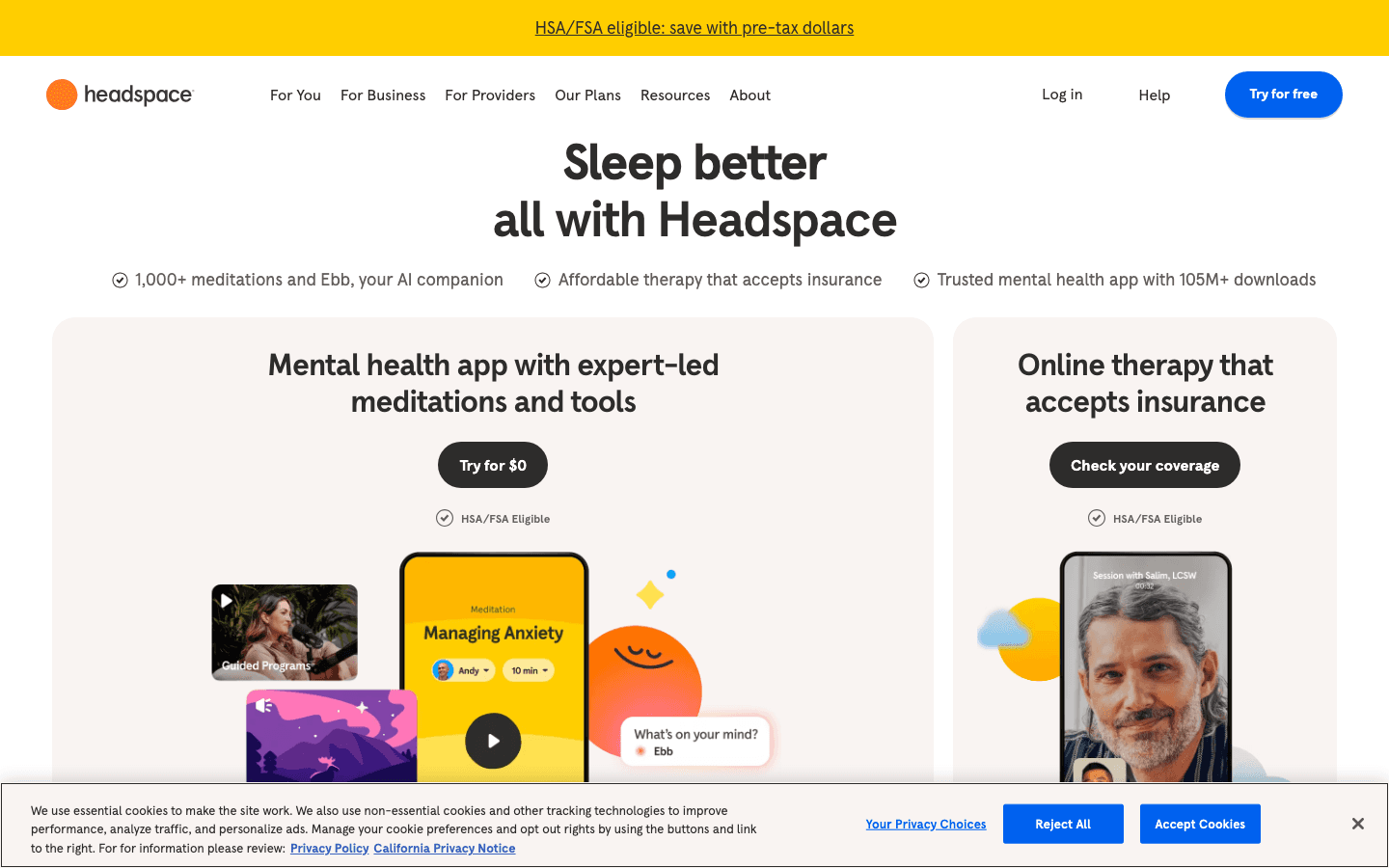
Headspace has been one of the most widely used meditation apps for years, but its 2026 version is meaningfully different from what launched the brand. The addition of Ebb, an AI companion, shifts the experience from a content library you browse to something that responds to what you tell it. Describe how you're feeling, and Ebb suggests a session, runs a quick check-in, or guides you through a short reset without requiring any navigation.
The personalization shows up most clearly in the sleep and stress modules. Headspace tracks which content you engage with, how often you complete sessions, and how you rate your sleep and mood afterward. Over time, recommendations start to reflect your actual usage patterns rather than just what's popular. It won't replace a dedicated health coaching app if you need structured behavioral support, but for meditation specifically it's among the most approachable options at this level.
Key Features
Ebb AI companion for real-time meditation guidance and check-ins
Guided sessions for sleep, stress, focus, and emotional wellbeing
Sleepcasts and sleep sounds with 1,000+ hours of content
Mood and sleep tracking that refines future recommendations
Available on iOS, Android, and Apple Watch
What Works
Ebb makes the experience feel interactive rather than passive
Strong onboarding adapts content based on goals and experience level
Huge content library means sessions rarely repeat
Limitations
No energy-aware scheduling or connection to calendar workflows
Some users find Ebb feels scripted after extended use
Priced higher than comparable meditation apps
Pricing: $12.99/month or $69.99/year (14-day free trial)
Best for: People who want guided meditation with adaptive AI-assisted recommendations
3. Noom
Behavioral coaching meets personalized nutrition
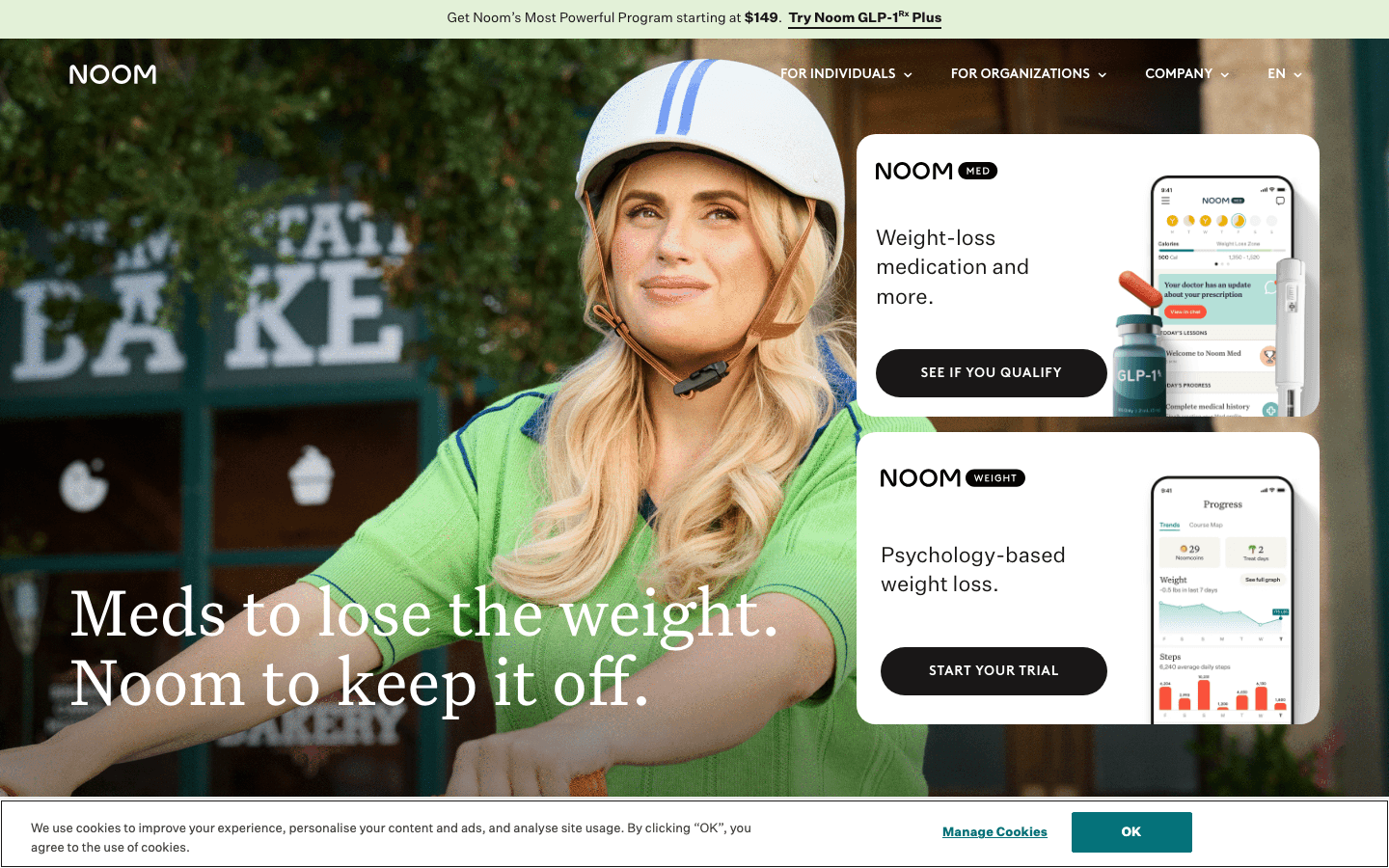
Noom's strongest feature has always been its psychology-first approach. Where other nutrition apps track what you eat and leave you to figure out the rest, Noom pairs food logging with daily lessons on behavior change built around cognitive behavioral therapy principles. The app assigns you a personal coach and groups you into small communities for accountability. The personalization runs deeper than most apps in this category because Noom is actively trying to understand why you eat the way you do, not just what you eat.
Setup includes a detailed intake questionnaire covering your goals, eating patterns, lifestyle, and challenges. The app then generates a curriculum specific to your situation, adjusting lesson content and check-in frequency as you progress. For people who have tried calorie counting alone and found it didn't stick, Noom's behavioral layer is often what makes the difference. If you already use MyFitnessPal integrations in your health stack, Noom can work alongside it, though their approaches overlap enough that most people end up committing to one or the other.
Key Features
Personalized curriculum based on cognitive behavioral therapy
Daily coaching lessons tailored to your intake profile
Personal coach and group accountability community
Food logging with color-coded nutritional guidance
Noom Med program for GLP-1 medication access (separate pricing)
What Works
Behavioral coaching layer is more effective for habit change than tracking alone
Personalized curriculum updates as you progress through the program
Coach access sets it apart from fully automated competitors
Limitations
More expensive than most nutrition-only apps
Lessons can feel repetitive for users who have done behavioral work elsewhere
Food database is less detailed than MyFitnessPal's for macro-level tracking
Pricing: ~$17/month on the annual plan ($209 billed upfront); month-to-month rates are higher
Best for: People who want behavioral coaching alongside nutrition tracking, not just a food log
4. MyFitnessPal
The most detailed nutrition tracker in the category
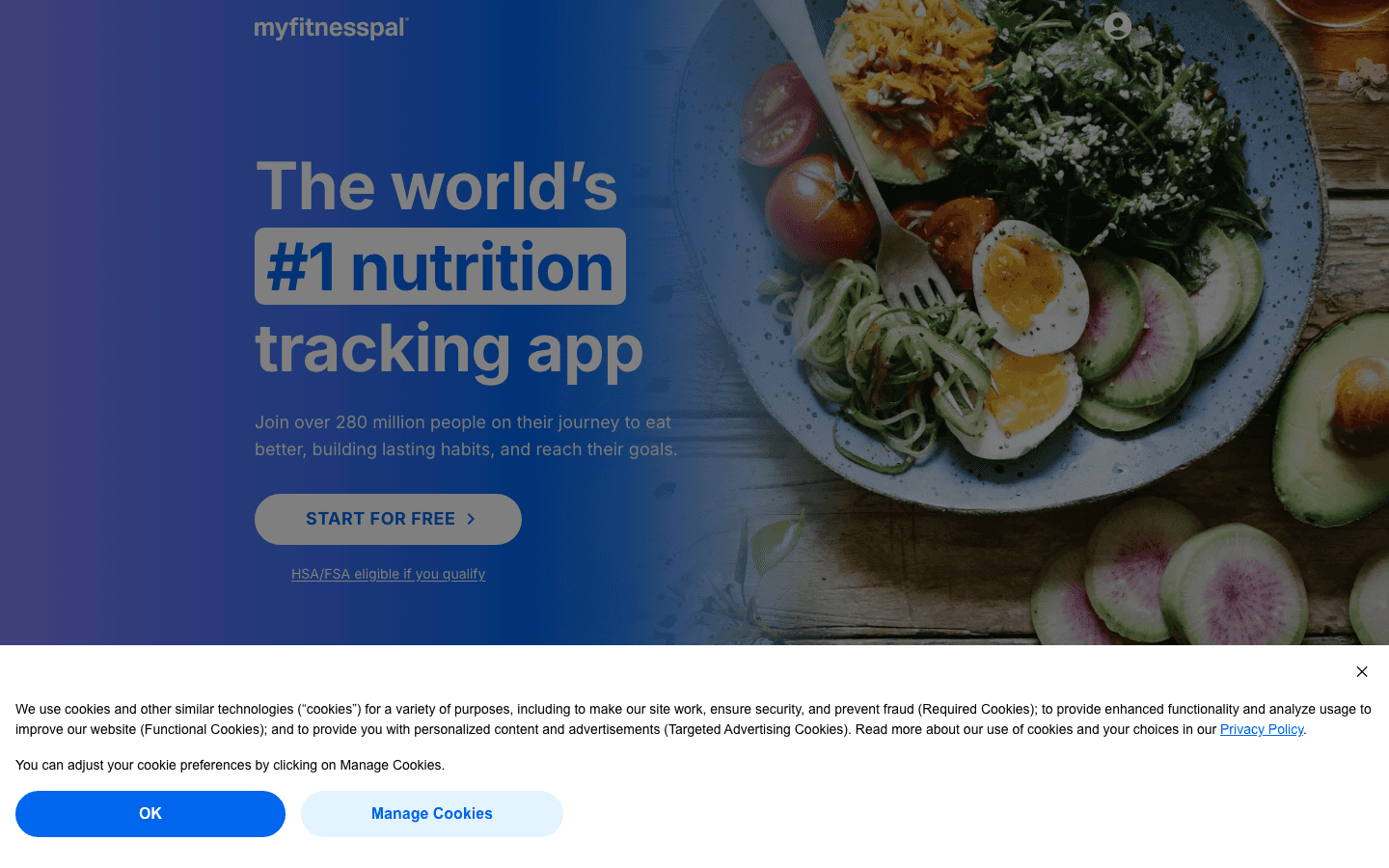
MyFitnessPal doesn't claim to be a wellness coach. It's a nutrition tracker, and it does that job better than almost anything else. With a food database of over 14 million items, it covers nearly any food you'd encounter, from restaurant orders to niche imported ingredients. The personalization is data-driven: you set your goals, it calculates your targets, and your logged history informs increasingly specific recommendations about macros, micronutrients, and meal timing over time.
The Premium+ tier adds a meal planner that generates personalized weekly meal plans from 1,500+ recipes, adjusting for your dietary preferences and logged history. The app also connects with a wide range of devices and apps through Apple Health and its own integration network, making it a reliable data layer for a larger wellness stack. Where it falls short is depth beyond nutrition. No energy awareness, no habit coaching, no scheduling. It does one thing very well, and for many people that's enough.
Key Features
14+ million item food database with barcode scanning
Detailed macro and micronutrient tracking
Personalized meal plans (Premium+ tier)
Integrations with Apple Health, Google Fit, and 50+ apps
Weekly reports with nutrition trend data
What Works
Most accurate and complete nutrition database available
Macro-level tracking is more detailed than most wellness apps
Large integration network makes it compatible with nearly any health stack
Limitations
No energy awareness, scheduling, or behavioral coaching
Meal planner requires Premium+ subscription
Interface feels dated compared to newer entrants in the category
Pricing: $6.67/month ($79.99/year) or $24.99/month; Premium+ is $8.34/month ($99.99/year)
Best for: Serious nutrition trackers who want the most complete food database and detailed macro reporting
5. Sleep Cycle
Personalized sleep analysis that gets smarter every night
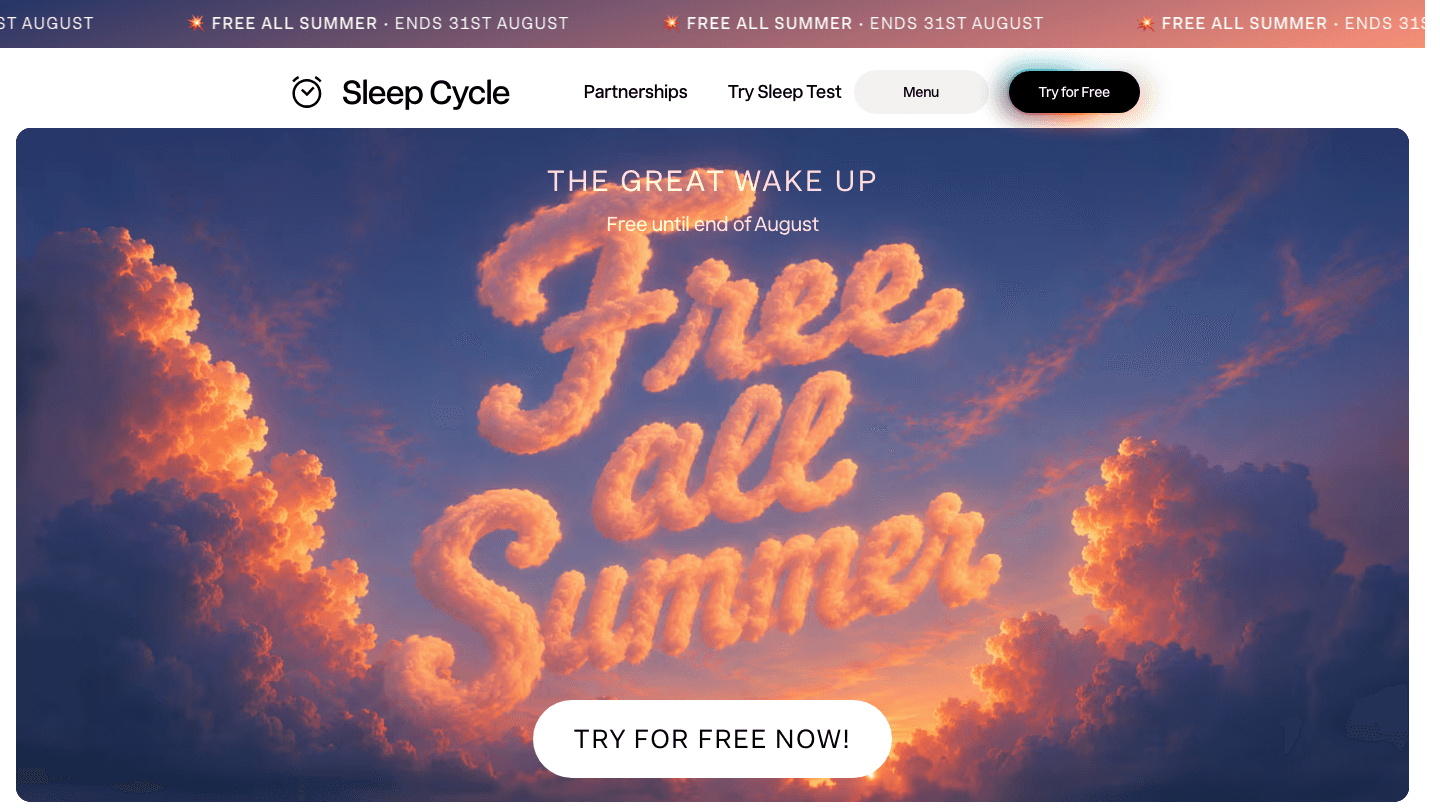
Sleep Cycle tracks your sleep using your phone's microphone and accelerometer, detecting movement and sound to estimate which sleep phase you're in throughout the night. Its smart alarm wakes you during light sleep within a configurable window, which tends to leave you feeling less groggy than a fixed alarm cutting into deep sleep.
The personalization is cumulative. The longer you use Sleep Cycle, the more the app learns about your sleep architecture: your typical cycle length, how sleep quality correlates with exercise, caffeine, and stress, and what time you actually fall asleep versus when you intended to. Weekly reports surface patterns you might not notice on your own. For anyone managing a circadian rhythm disorder or trying to improve sleep consistency, Sleep Cycle provides the kind of longitudinal data that single-night sleep trackers can't. It doesn't replace a wearable for precision, but it requires no hardware beyond the phone you already own.
Key Features
Acoustic and motion-based sleep phase detection
Smart alarm that wakes you during light sleep within a target window
Weekly sleep quality reports with trend analysis
Lifestyle note tracking to identify sleep disruptors
Integration with Apple Health and Google Fit
What Works
Smart alarm system is the standout feature and works reliably
Longitudinal data becomes genuinely useful after a few weeks of use
No hardware required beyond your phone
Limitations
Sleep phase detection is less precise than dedicated wearables
Personalization is passive: the app learns from your data but doesn't coach you
Limited behavioral guidance compared to apps like Noom or Fabulous
Pricing: Free (basic features) + $39.99/year for Premium
Best for: People who want personalized sleep tracking without buying a wearable
6. Balance
The meditation app that builds itself around you
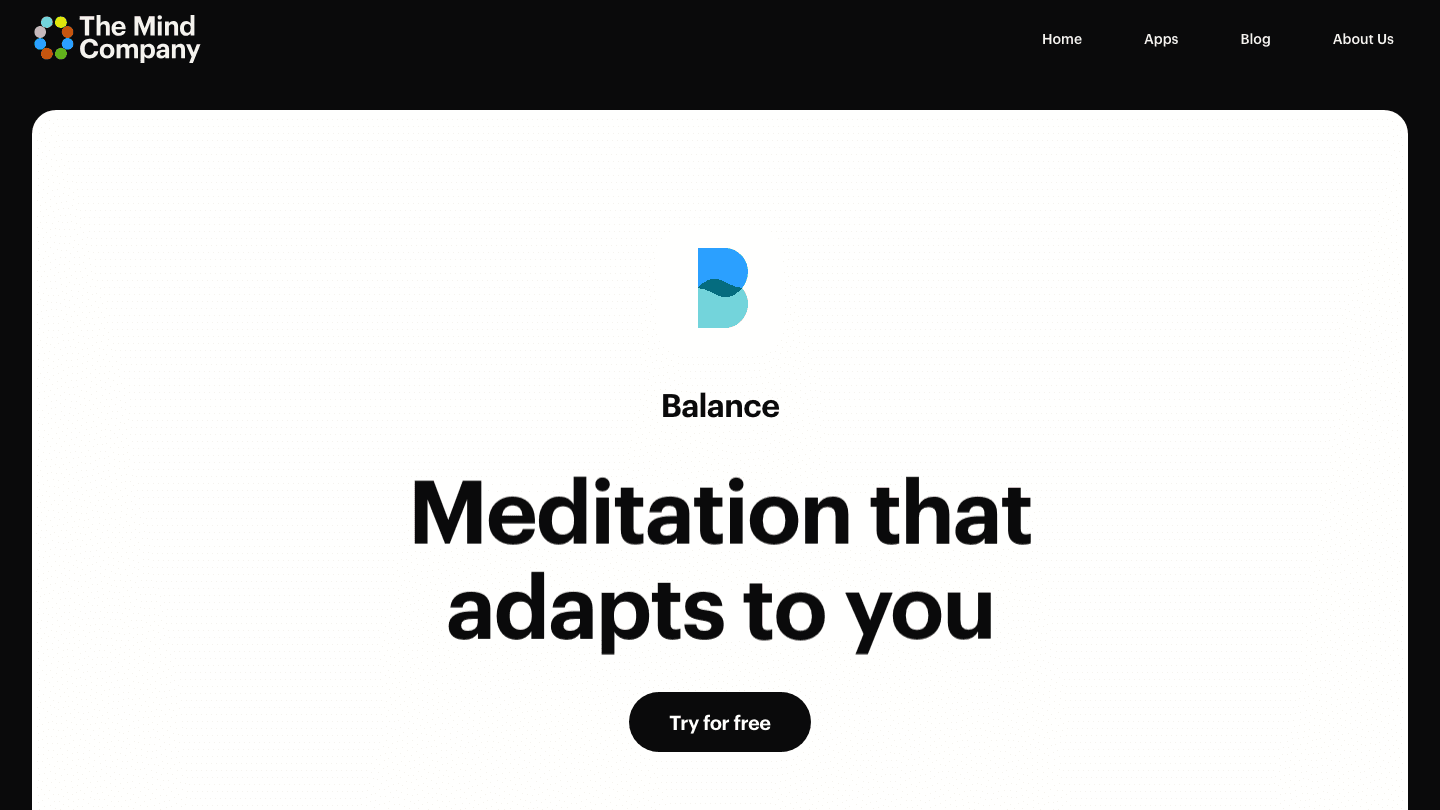
Balance earns its place on this list with one of the most genuinely adaptive meditation experiences available. During onboarding, the app asks detailed questions about your experience level, goals, schedule, and challenges. That intake drives a personalized meditation plan, and the plan keeps updating as you complete sessions and share feedback on how each one landed.
The audio quality and instruction caliber stand out. Balance's guides record sessions specifically for the app's adaptive system, so the content doesn't feel stitched together from a generic library. Sessions that build on previous ones are sequenced intelligently: beginners don't get dropped into advanced breathwork, and experienced meditators aren't stuck reviewing basics. It pairs well with a solid habit tracker if you want to build meditation into a broader daily routine.
Balance also offers the most generous free trial in this category. New users get a full year of premium access, making it effectively risk-free to find out whether personalized meditation works for you. If you've tried other meditation apps and felt like you were choosing from a catalog rather than following a program built for you, Balance is worth trying.
Key Features
Adaptive meditation plans based on detailed intake and ongoing session feedback
Custom-recorded sessions designed for the app's personalization system
Daily meditation series sequenced intelligently by experience level
Sleep sounds, breathing exercises, and focus tools
Available on iOS and Android
What Works
Personalization runs throughout, not just during onboarding
One full year free makes it easy to evaluate before committing
Session quality and instruction depth are higher than most competitors
Limitations
No scheduling, energy-awareness, or nutrition features
Some users find the onboarding intake long
After the free year, pricing is on par with Headspace
Pricing: Free for 1 year (new users), then $11.99/month or $69.99/year
Best for: People who want a meditation app that adapts to every session, not just initial preferences
7. Fabulous
Build personalized daily routines that actually stick
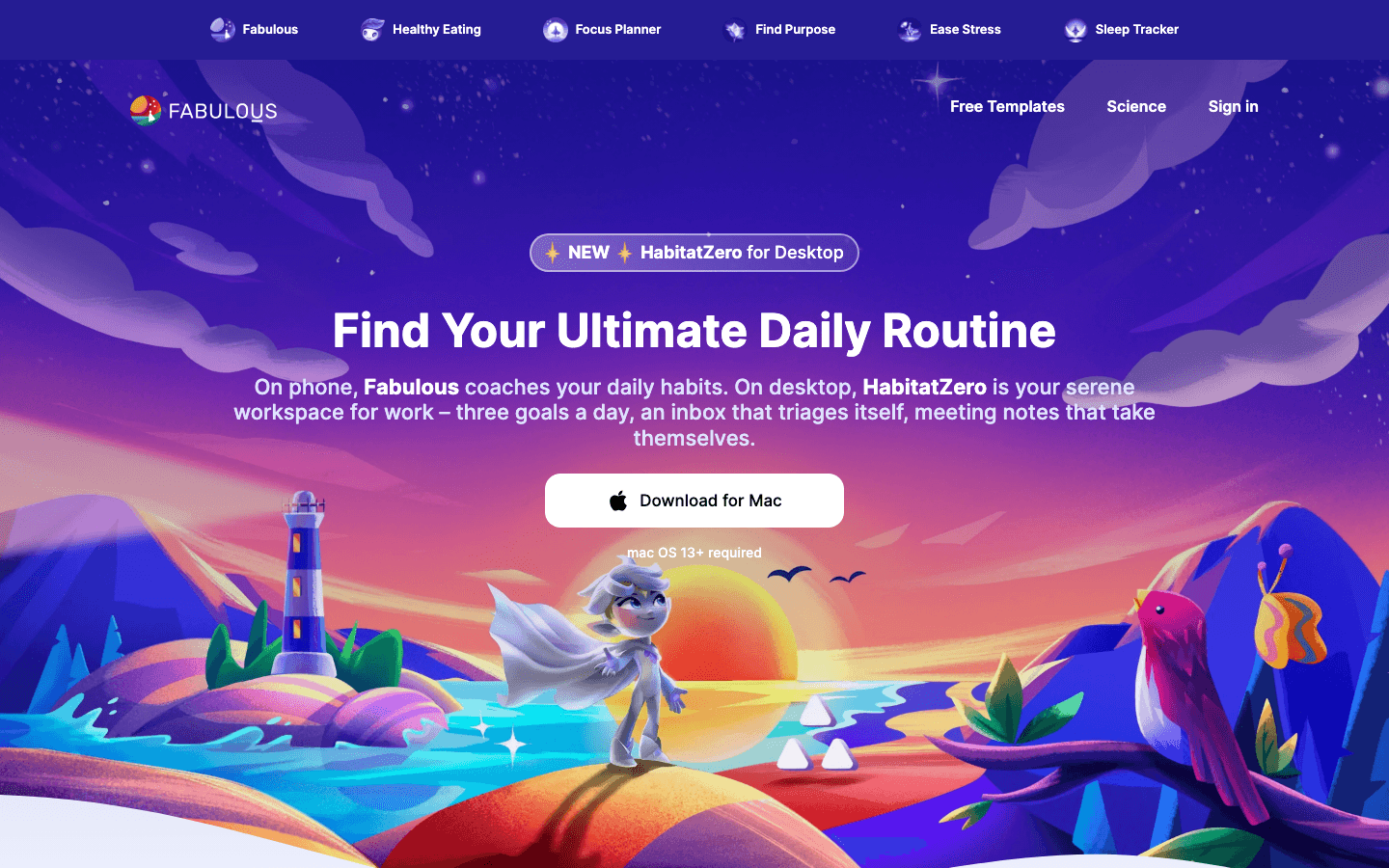
Fabulous takes a habit-building approach to wellness that is distinct from every other app on this list. Rather than tracking a single category like sleep or nutrition, it focuses on daily routines: the scaffolding that determines whether healthy behaviors happen consistently. The app uses behavioral science principles developed with the Duke University Center for Advanced Hindsight to help users build morning, afternoon, and evening routines that fit their actual life.
Personalization happens at the routine level. Fabulous asks about your goals, current habits, and lifestyle during setup, then constructs a schedule of small, buildable actions rather than dropping you into a rigid plan. As you complete daily challenges, the app layers in more behaviors gradually. This "tiny habits" method makes new routines feel sustainable rather than overwhelming. It pairs naturally with Lifestack if you want both the behavioral scaffolding and energy-aware scheduling working together in the same stack.
Key Features
Personalized morning, afternoon, and evening routine builder
Behavioral science-based habit layering system
Daily challenges that adapt based on your progress
HabitZero desktop app for work routines and focus sessions
Integration with Apple Health for activity data
What Works
Habit layering approach is more sustainable than all-at-once behavior change
Routine builder is flexible and adapts as you progress
Desktop integration (HabitZero) adds real value for work wellness
Limitations
Less data-driven than sleep or nutrition-focused apps
Personalization slows down after initial setup if you don't engage with challenges
No energy awareness or calendar integration
Pricing: ~$39.99 to $49.99/year (pricing varies with promotions)
Best for: People who want to build consistent daily routines across multiple wellness areas
Which Personalized Wellness App Is Right for You?
The right app depends on what part of wellness you need most right now:
For scheduling and energy management: Lifestack is the only app here that connects your calendar to your natural energy patterns. Start here if productivity and stress are your main pain points.
For meditation and stress relief: Balance is worth trying first given the free year. Headspace is the better pick if you want AI-assisted check-ins and a larger content library.
For nutrition and weight management: Noom if you need behavioral coaching. MyFitnessPal if you want precise macro tracking without the coaching layer.
For sleep: Sleep Cycle gives you meaningful longitudinal data without any hardware investment.
For daily habits and routines: Fabulous is the most purpose-built option for building new wellness behaviors from scratch.
For a full stack: Lifestack + Sleep Cycle + Noom or MyFitnessPal covers scheduling, sleep, and nutrition with strong integration support between all three.
FAQ
What are personalized wellness apps?
Personalized wellness apps adapt their recommendations based on your individual data: your energy patterns, sleep history, nutrition habits, or mood over time. Unlike generic apps that give everyone the same plan, personalized apps use your behavior and feedback to refine what they show you. The best ones improve the longer you use them.
Do personalized wellness apps actually work?
They work better than generic apps for most people, particularly for habits that require consistency over time. Research on behavioral coaching apps like Noom shows measurable outcomes, and apps like Sleep Cycle generate data insights most users find genuinely useful. That said, the app still needs to fit your lifestyle and you need to engage with it regularly for personalization to take effect.
Which personalized wellness app is best for ADHD?
Lifestack was designed with ADHD in mind. Its energy-aware scheduling and visual planning tools address specific challenges ADHD creates around time management and task initiation. Fabulous also works well for building external structure when internal motivation is inconsistent. For more on this, see our guide to apps for executive functioning.
Can I use multiple wellness apps at once?
Yes, and many people find that two or three apps covering different categories works better than trying to find one app that does everything. A common setup: Lifestack for scheduling, Sleep Cycle for sleep tracking, and either Noom or MyFitnessPal for nutrition. These three integrate well and don't duplicate each other's functions.
Are personalized wellness apps private and secure?
Most major apps in this category publish detailed privacy policies and comply with GDPR and CCPA. Health data is generally not sold to third parties, though some apps share anonymized data for research. Worth reviewing each app's privacy policy before connecting it to your health platform, particularly if you're connecting to Apple Health where data can flow in multiple directions.
What's the cheapest personalized wellness app?
Sleep Cycle has a free tier that is genuinely useful. Balance offers a full year free for new users. Lifestack's annual plan at $50/year is strong value given the depth of features. If budget is the main constraint, start with Sleep Cycle's free tier and Balance's free year, then evaluate from there.
Finding a wellness app that actually fits you is harder than it sounds. Most apps hand you a generic plan and hope for the best. You log your food, pick a meditation session, set a bedtime reminder, and three weeks later you're back to your old habits because nothing adapted to how you actually live. The problem usually isn't willpower. It's that the app never knew who you were.
Personalized wellness apps take a different approach. They learn your patterns, adjust their recommendations based on your data over time, and get more useful the longer you stick with them. The best ones feel less like software and more like a well-calibrated system working in your favor.
We tested dozens of apps across sleep, nutrition, mindfulness, scheduling, and habit-building to find the ones that genuinely deliver on the promise of personalization. This guide covers the seven strongest in 2026, with honest takes on what each does well and where it falls short.
A quick note on what we mean by "personalized": we're looking for apps that adapt based on your individual data, not just apps that let you choose from a preset menu. That distinction matters more than it sounds.
Key Takeaways
Lifestack is the only app here that matches your tasks to your personal energy peaks throughout the day, making it the standout pick for scheduling-driven wellness.
Balance offers the most generous free trial in this category: a full year of premium access with no credit card required.
For nutrition tracking with real behavioral coaching, Noom's psychology-based approach is a cut above basic calorie counters.
Quick Guide
Lifestack: best for scheduling tasks around your energy levels
Headspace: best for guided meditation with AI personalization
Noom: best for personalized nutrition and weight management coaching
MyFitnessPal: best for detailed nutrition tracking and macro logging
Sleep Cycle: best for personalized sleep analysis and smart alarms
Balance: best for adaptive meditation that evolves with your sessions
Fabulous: best for building personalized daily routines and habits
How We Evaluated
Depth of personalization (does it actually adapt to you, or just offer preset options?)
Learning curve and onboarding experience
Quality of data insights and reporting
Integrations with other health apps and platforms
Pricing relative to value delivered
Availability on iOS and Android
1. Lifestack
The only wellness app that schedules around your energy, not just your calendar
Lifestack starts with a different question than most productivity or wellness apps: not "what do you need to do?" but "when are you actually at your best?" The app tracks your energy levels throughout the day and builds a scheduling system around your personal peaks and valleys. Deep work gets routed to your high-energy windows. At 3pm, when focus typically dips, the app queues lighter tasks instead.
This matters for wellness beyond just productivity. Energy-aware scheduling is one of the most underused tools for managing stress, sleep quality, and sustainable performance. When you stop fighting your natural rhythms and start working with them, you tend to sleep better, feel less drained, and make better decisions about nutrition and recovery. Lifestack makes that connection explicit. If you've been looking for an energy calendar that actually adapts rather than just displaying appointments, this is it.
The app integrates with Google Calendar, Apple Calendar, and major health platforms through Apple Health, pulling in your activity and sleep data to refine its understanding of your energy patterns over time. It also connects with tools like Strava and MyFitnessPal, making it a genuine hub for a personalized health stack.
Key Features
Energy-aware task scheduling that adapts to your daily patterns
Calendar sync with Google Calendar and Apple Calendar
Integrations with Apple Health, Strava, and MyFitnessPal
ADHD-friendly design with visual scheduling tools
Available on iOS and Android with a Chrome extension
What Works
Energy mapping is genuinely useful, not just a marketing angle
Clean, low-friction interface that doesn't require daily maintenance
Connects your schedule to your health data in a way most apps don't
Limitations
Takes a week or two to learn your patterns before recommendations sharpen
No dedicated meditation or nutrition modules (pairs best with other apps on this list)
Less useful if your schedule changes unpredictably from week to week
Pricing: $7/month, $50/year, or $120 lifetime
Best for: People who want to optimize their daily schedule around their natural energy rhythms
2. Headspace
Guided meditation with an AI companion built in
Headspace has been one of the most widely used meditation apps for years, but its 2026 version is meaningfully different from what launched the brand. The addition of Ebb, an AI companion, shifts the experience from a content library you browse to something that responds to what you tell it. Describe how you're feeling, and Ebb suggests a session, runs a quick check-in, or guides you through a short reset without requiring any navigation.
The personalization shows up most clearly in the sleep and stress modules. Headspace tracks which content you engage with, how often you complete sessions, and how you rate your sleep and mood afterward. Over time, recommendations start to reflect your actual usage patterns rather than just what's popular. It won't replace a dedicated health coaching app if you need structured behavioral support, but for meditation specifically it's among the most approachable options at this level.
Key Features
Ebb AI companion for real-time meditation guidance and check-ins
Guided sessions for sleep, stress, focus, and emotional wellbeing
Sleepcasts and sleep sounds with 1,000+ hours of content
Mood and sleep tracking that refines future recommendations
Available on iOS, Android, and Apple Watch
What Works
Ebb makes the experience feel interactive rather than passive
Strong onboarding adapts content based on goals and experience level
Huge content library means sessions rarely repeat
Limitations
No energy-aware scheduling or connection to calendar workflows
Some users find Ebb feels scripted after extended use
Priced higher than comparable meditation apps
Pricing: $12.99/month or $69.99/year (14-day free trial)
Best for: People who want guided meditation with adaptive AI-assisted recommendations
3. Noom
Behavioral coaching meets personalized nutrition
Noom's strongest feature has always been its psychology-first approach. Where other nutrition apps track what you eat and leave you to figure out the rest, Noom pairs food logging with daily lessons on behavior change built around cognitive behavioral therapy principles. The app assigns you a personal coach and groups you into small communities for accountability. The personalization runs deeper than most apps in this category because Noom is actively trying to understand why you eat the way you do, not just what you eat.
Setup includes a detailed intake questionnaire covering your goals, eating patterns, lifestyle, and challenges. The app then generates a curriculum specific to your situation, adjusting lesson content and check-in frequency as you progress. For people who have tried calorie counting alone and found it didn't stick, Noom's behavioral layer is often what makes the difference. If you already use MyFitnessPal integrations in your health stack, Noom can work alongside it, though their approaches overlap enough that most people end up committing to one or the other.
Key Features
Personalized curriculum based on cognitive behavioral therapy
Daily coaching lessons tailored to your intake profile
Personal coach and group accountability community
Food logging with color-coded nutritional guidance
Noom Med program for GLP-1 medication access (separate pricing)
What Works
Behavioral coaching layer is more effective for habit change than tracking alone
Personalized curriculum updates as you progress through the program
Coach access sets it apart from fully automated competitors
Limitations
More expensive than most nutrition-only apps
Lessons can feel repetitive for users who have done behavioral work elsewhere
Food database is less detailed than MyFitnessPal's for macro-level tracking
Pricing: ~$17/month on the annual plan ($209 billed upfront); month-to-month rates are higher
Best for: People who want behavioral coaching alongside nutrition tracking, not just a food log
4. MyFitnessPal
The most detailed nutrition tracker in the category
MyFitnessPal doesn't claim to be a wellness coach. It's a nutrition tracker, and it does that job better than almost anything else. With a food database of over 14 million items, it covers nearly any food you'd encounter, from restaurant orders to niche imported ingredients. The personalization is data-driven: you set your goals, it calculates your targets, and your logged history informs increasingly specific recommendations about macros, micronutrients, and meal timing over time.
The Premium+ tier adds a meal planner that generates personalized weekly meal plans from 1,500+ recipes, adjusting for your dietary preferences and logged history. The app also connects with a wide range of devices and apps through Apple Health and its own integration network, making it a reliable data layer for a larger wellness stack. Where it falls short is depth beyond nutrition. No energy awareness, no habit coaching, no scheduling. It does one thing very well, and for many people that's enough.
Key Features
14+ million item food database with barcode scanning
Detailed macro and micronutrient tracking
Personalized meal plans (Premium+ tier)
Integrations with Apple Health, Google Fit, and 50+ apps
Weekly reports with nutrition trend data
What Works
Most accurate and complete nutrition database available
Macro-level tracking is more detailed than most wellness apps
Large integration network makes it compatible with nearly any health stack
Limitations
No energy awareness, scheduling, or behavioral coaching
Meal planner requires Premium+ subscription
Interface feels dated compared to newer entrants in the category
Pricing: $6.67/month ($79.99/year) or $24.99/month; Premium+ is $8.34/month ($99.99/year)
Best for: Serious nutrition trackers who want the most complete food database and detailed macro reporting
5. Sleep Cycle
Personalized sleep analysis that gets smarter every night
Sleep Cycle tracks your sleep using your phone's microphone and accelerometer, detecting movement and sound to estimate which sleep phase you're in throughout the night. Its smart alarm wakes you during light sleep within a configurable window, which tends to leave you feeling less groggy than a fixed alarm cutting into deep sleep.
The personalization is cumulative. The longer you use Sleep Cycle, the more the app learns about your sleep architecture: your typical cycle length, how sleep quality correlates with exercise, caffeine, and stress, and what time you actually fall asleep versus when you intended to. Weekly reports surface patterns you might not notice on your own. For anyone managing a circadian rhythm disorder or trying to improve sleep consistency, Sleep Cycle provides the kind of longitudinal data that single-night sleep trackers can't. It doesn't replace a wearable for precision, but it requires no hardware beyond the phone you already own.
Key Features
Acoustic and motion-based sleep phase detection
Smart alarm that wakes you during light sleep within a target window
Weekly sleep quality reports with trend analysis
Lifestyle note tracking to identify sleep disruptors
Integration with Apple Health and Google Fit
What Works
Smart alarm system is the standout feature and works reliably
Longitudinal data becomes genuinely useful after a few weeks of use
No hardware required beyond your phone
Limitations
Sleep phase detection is less precise than dedicated wearables
Personalization is passive: the app learns from your data but doesn't coach you
Limited behavioral guidance compared to apps like Noom or Fabulous
Pricing: Free (basic features) + $39.99/year for Premium
Best for: People who want personalized sleep tracking without buying a wearable
6. Balance
The meditation app that builds itself around you
Balance earns its place on this list with one of the most genuinely adaptive meditation experiences available. During onboarding, the app asks detailed questions about your experience level, goals, schedule, and challenges. That intake drives a personalized meditation plan, and the plan keeps updating as you complete sessions and share feedback on how each one landed.
The audio quality and instruction caliber stand out. Balance's guides record sessions specifically for the app's adaptive system, so the content doesn't feel stitched together from a generic library. Sessions that build on previous ones are sequenced intelligently: beginners don't get dropped into advanced breathwork, and experienced meditators aren't stuck reviewing basics. It pairs well with a solid habit tracker if you want to build meditation into a broader daily routine.
Balance also offers the most generous free trial in this category. New users get a full year of premium access, making it effectively risk-free to find out whether personalized meditation works for you. If you've tried other meditation apps and felt like you were choosing from a catalog rather than following a program built for you, Balance is worth trying.
Key Features
Adaptive meditation plans based on detailed intake and ongoing session feedback
Custom-recorded sessions designed for the app's personalization system
Daily meditation series sequenced intelligently by experience level
Sleep sounds, breathing exercises, and focus tools
Available on iOS and Android
What Works
Personalization runs throughout, not just during onboarding
One full year free makes it easy to evaluate before committing
Session quality and instruction depth are higher than most competitors
Limitations
No scheduling, energy-awareness, or nutrition features
Some users find the onboarding intake long
After the free year, pricing is on par with Headspace
Pricing: Free for 1 year (new users), then $11.99/month or $69.99/year
Best for: People who want a meditation app that adapts to every session, not just initial preferences
7. Fabulous
Build personalized daily routines that actually stick
Fabulous takes a habit-building approach to wellness that is distinct from every other app on this list. Rather than tracking a single category like sleep or nutrition, it focuses on daily routines: the scaffolding that determines whether healthy behaviors happen consistently. The app uses behavioral science principles developed with the Duke University Center for Advanced Hindsight to help users build morning, afternoon, and evening routines that fit their actual life.
Personalization happens at the routine level. Fabulous asks about your goals, current habits, and lifestyle during setup, then constructs a schedule of small, buildable actions rather than dropping you into a rigid plan. As you complete daily challenges, the app layers in more behaviors gradually. This "tiny habits" method makes new routines feel sustainable rather than overwhelming. It pairs naturally with Lifestack if you want both the behavioral scaffolding and energy-aware scheduling working together in the same stack.
Key Features
Personalized morning, afternoon, and evening routine builder
Behavioral science-based habit layering system
Daily challenges that adapt based on your progress
HabitZero desktop app for work routines and focus sessions
Integration with Apple Health for activity data
What Works
Habit layering approach is more sustainable than all-at-once behavior change
Routine builder is flexible and adapts as you progress
Desktop integration (HabitZero) adds real value for work wellness
Limitations
Less data-driven than sleep or nutrition-focused apps
Personalization slows down after initial setup if you don't engage with challenges
No energy awareness or calendar integration
Pricing: ~$39.99 to $49.99/year (pricing varies with promotions)
Best for: People who want to build consistent daily routines across multiple wellness areas
Which Personalized Wellness App Is Right for You?
The right app depends on what part of wellness you need most right now:
For scheduling and energy management: Lifestack is the only app here that connects your calendar to your natural energy patterns. Start here if productivity and stress are your main pain points.
For meditation and stress relief: Balance is worth trying first given the free year. Headspace is the better pick if you want AI-assisted check-ins and a larger content library.
For nutrition and weight management: Noom if you need behavioral coaching. MyFitnessPal if you want precise macro tracking without the coaching layer.
For sleep: Sleep Cycle gives you meaningful longitudinal data without any hardware investment.
For daily habits and routines: Fabulous is the most purpose-built option for building new wellness behaviors from scratch.
For a full stack: Lifestack + Sleep Cycle + Noom or MyFitnessPal covers scheduling, sleep, and nutrition with strong integration support between all three.
FAQ
What are personalized wellness apps?
Personalized wellness apps adapt their recommendations based on your individual data: your energy patterns, sleep history, nutrition habits, or mood over time. Unlike generic apps that give everyone the same plan, personalized apps use your behavior and feedback to refine what they show you. The best ones improve the longer you use them.
Do personalized wellness apps actually work?
They work better than generic apps for most people, particularly for habits that require consistency over time. Research on behavioral coaching apps like Noom shows measurable outcomes, and apps like Sleep Cycle generate data insights most users find genuinely useful. That said, the app still needs to fit your lifestyle and you need to engage with it regularly for personalization to take effect.
Which personalized wellness app is best for ADHD?
Lifestack was designed with ADHD in mind. Its energy-aware scheduling and visual planning tools address specific challenges ADHD creates around time management and task initiation. Fabulous also works well for building external structure when internal motivation is inconsistent. For more on this, see our guide to apps for executive functioning.
Can I use multiple wellness apps at once?
Yes, and many people find that two or three apps covering different categories works better than trying to find one app that does everything. A common setup: Lifestack for scheduling, Sleep Cycle for sleep tracking, and either Noom or MyFitnessPal for nutrition. These three integrate well and don't duplicate each other's functions.
Are personalized wellness apps private and secure?
Most major apps in this category publish detailed privacy policies and comply with GDPR and CCPA. Health data is generally not sold to third parties, though some apps share anonymized data for research. Worth reviewing each app's privacy policy before connecting it to your health platform, particularly if you're connecting to Apple Health where data can flow in multiple directions.
What's the cheapest personalized wellness app?
Sleep Cycle has a free tier that is genuinely useful. Balance offers a full year free for new users. Lifestack's annual plan at $50/year is strong value given the depth of features. If budget is the main constraint, start with Sleep Cycle's free tier and Balance's free year, then evaluate from there.



FOLLOW ON
FOLLOW ON
FOLLOW ON


Copyright 2026 © Lifestack. All rights reserved
Copyright 2026 © Lifestack. All rights reserved

