
App
Best Welltory Alternatives in 2026
Best Welltory Alternatives in 2026
The Best Welltory Alternatives, Ranked for 2026
Welltory built its reputation on a simple idea: measure your heart rate variability through your phone camera and tell you whether to push hard or rest today. For a lot of people, that idea works. But Welltory has its limits. The camera measurement is less accurate than a chest strap or wearable sensor. The insights can feel abstract. And the premium tier is expensive for what amounts to a single biometric metric.
The apps below each address a different piece of the health optimization puzzle. Some track HRV with greater precision. Some go broader, pulling in sleep, activity, and recovery data. One uses your energy levels to automatically restructure your daily schedule so you stop fighting your own biology.
Whatever drew you to Welltory, there is likely a tool here that does the same job better, costs less, or fits more naturally into how you actually live.
Key Takeaways
Lifestack takes the core Welltory insight (your energy fluctuates) and acts on it, automatically scheduling your day around your natural peaks and troughs.
HRV4Training is the best software alternative if you want camera-based HRV tracking with deeper athletic analytics than Welltory offers.
Oura and WHOOP are the hardware alternatives that outperform any camera-based measurement for accuracy, at the cost of wearing a device.
Quick Guide: Best Welltory Alternatives
1. Lifestack - Turns energy awareness into automatic calendar scheduling
2. HRV4Training - Camera-based HRV with serious athlete analytics
3. Elite HRV - Free HRV tracking with solid team and coaching features
4. Oura Ring - Most accurate wearable for sleep and readiness scoring
5. WHOOP - Recovery-first wearable built for athletic performance
6. Apple Health - Free HRV foundation that connects everything else
How We Evaluated These Alternatives
Measurement accuracy: Camera-based vs. wearable sensor vs. Apple Watch reading
Actionability: Does the app tell you what to actually do with the data?
Value vs. Welltory: Better insight, lower price, or both?
Integration breadth: Does it connect to Apple Health, Strava, or your calendar?
Daily friction: How much does it ask of you each morning?
1. Lifestack: Best for Acting on Your Energy Data
Stop tracking your energy. Start scheduling around it.

Welltory tells you your energy score. Lifestack tells you what to do about it. The app uses AI to learn your natural energy patterns over days and weeks, then automatically moves your most demanding tasks into your peak focus windows and shifts lightweight admin work to your low-energy hours. Your calendar becomes a tool that works with your biology rather than against it.
This is a fundamentally different product from Welltory, but it addresses the same underlying problem: most people waste their sharpest hours on the wrong work. Lifestack reads from Apple Health and your calendar, so if you also use Sleep Cycle or Oura for sleep data, that context flows into how it plans your day. See our guide to building an energy calendar for the theory behind why this matters. There is also a deeper breakdown of circadian rhythm apps if you want to layer in chronotype awareness alongside Lifestack.
AI scheduling that maps task difficulty to your daily energy peaks
Syncs with Apple Calendar, Google Calendar, and Outlook
Reads Apple Health data for sleep and activity context
Automatically reschedules blocked tasks without you touching anything
What Works
The only app here that takes energy insight and converts it into calendar action
Fast to set up; patterns emerge within a few days of use
Limitations
Does not measure HRV directly; relies on Apple Health for raw biometric data
Focused on scheduling and productivity, not athletic performance tracking
Pricing: $7/month or $50/year, with a 7-day free trial on the annual plan. Best for: Anyone who wants their daily schedule to reflect their actual energy, not an arbitrary task list.
2. HRV4Training: Best Camera-Based HRV Alternative
More rigorous HRV science in the same no-hardware format.
HRV4Training is the closest direct Welltory substitute for people who want camera-based morning measurements with deeper analytics. The app was built by researchers and has been validated in peer-reviewed sports science literature. You take a 60-second morning reading using your phone camera, and the app produces a training recommendation: go hard, take it easy, or rest.
Where HRV4Training edges ahead of Welltory is in its data depth. It correlates your HRV trend with training load, lifestyle factors (alcohol, sleep, illness, travel), and performance outcomes over months. For competitive athletes, the pattern analysis is genuinely valuable. The app also connects to Oura and Apple Watch for wrist-based readings if you want to skip the camera.
Camera-based morning HRV measurement without any hardware
Research-validated algorithms used by professional athletes and Olympic teams
Connects to Oura, Apple Watch, Polar, and Garmin for wrist-based readings
Lifestyle tagging to correlate habits with HRV trends
What Works
Science-grade HRV analysis in a camera-only format
One-time purchase eliminates recurring subscription costs
Limitations
The one-time payment may feel steep upfront compared to monthly apps
No energy-to-calendar integration; still gives you data to act on yourself
Pricing: $9.99 one-time purchase (no subscription). Best for: Athletes and data-oriented users who want rigorous HRV analysis without subscribing monthly.
3. Elite HRV: Best Free HRV Tracking App
Welltory-style HRV tracking with a free tier that actually delivers.
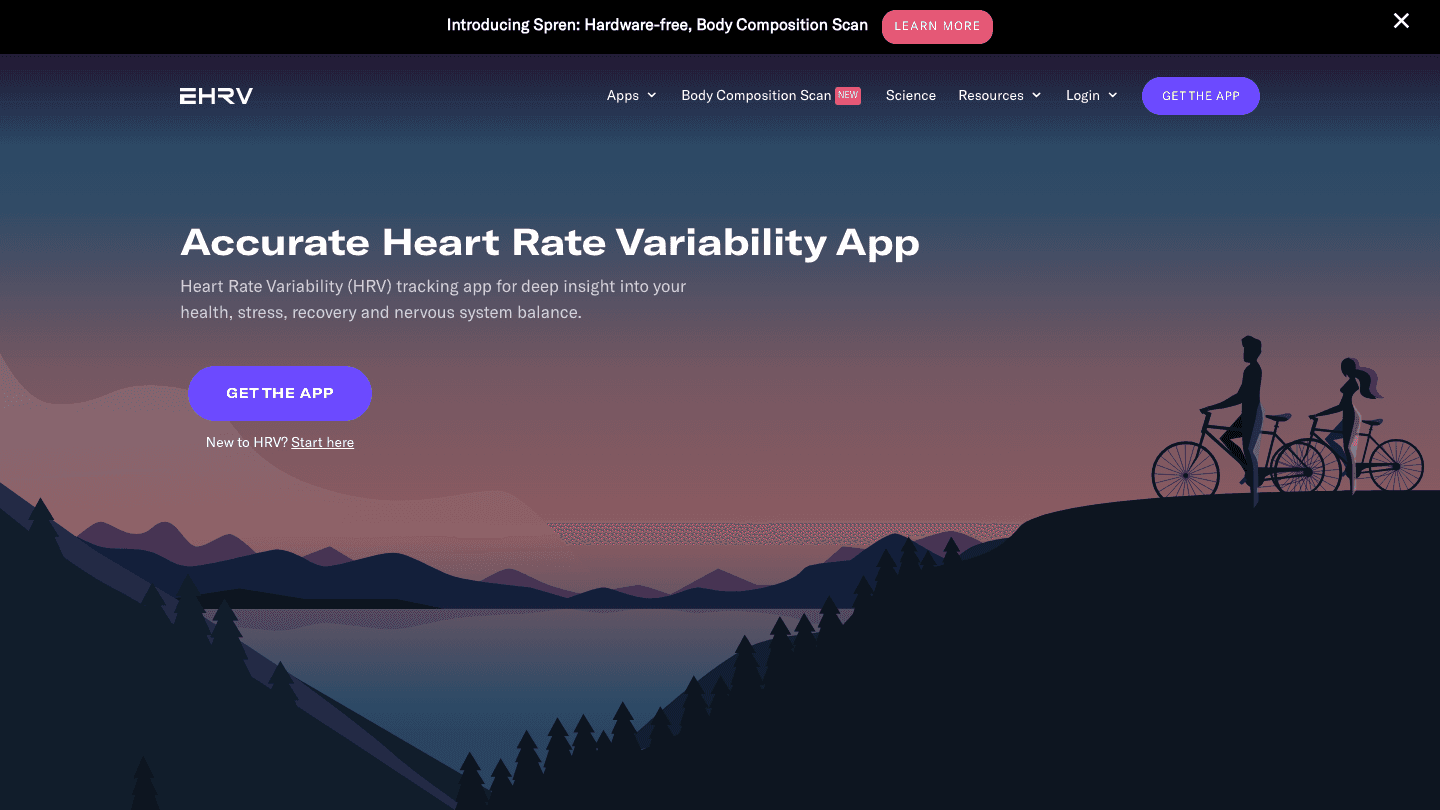
Elite HRV is the go-to free alternative for Welltory users who want to keep HRV measurement as the core practice but without the premium price. The free tier covers daily morning readings, a readiness score, cloud backup, and unlimited data storage. That alone covers what most Welltory users actually use the app for.
The Pro tier adds trending analytics, advanced dashboards, and the ability to share your data with a coach. For casual users, free is genuinely sufficient. The app works with Bluetooth chest straps (Polar H7/H10), wrist sensors, and your phone camera, giving you more hardware flexibility than Welltory. It also feeds data into Apple Health, which means Lifestack and other apps can use that HRV baseline when planning your day.
Camera and Bluetooth strap HRV measurement
Free tier covers daily readings, readiness scores, and cloud backup
Pro tier adds coaching dashboards and trend analysis
Writes to Apple Health for ecosystem integration
What Works
The free tier is genuinely competitive with Welltory's paid plan
Flexible hardware support means you can upgrade accuracy over time
Limitations
UI feels less polished than Welltory or the wearable apps
No scheduling integration; outputs a readiness score, not a calendar action
Pricing: Free personal tier. Pro plan $8/month. Best for: Anyone who wants HRV tracking without paying for it, or coaches who need to monitor multiple athletes.
4. Oura Ring: Best Wearable for Recovery and Sleep
The most accurate passive tracker available at a reasonable price.
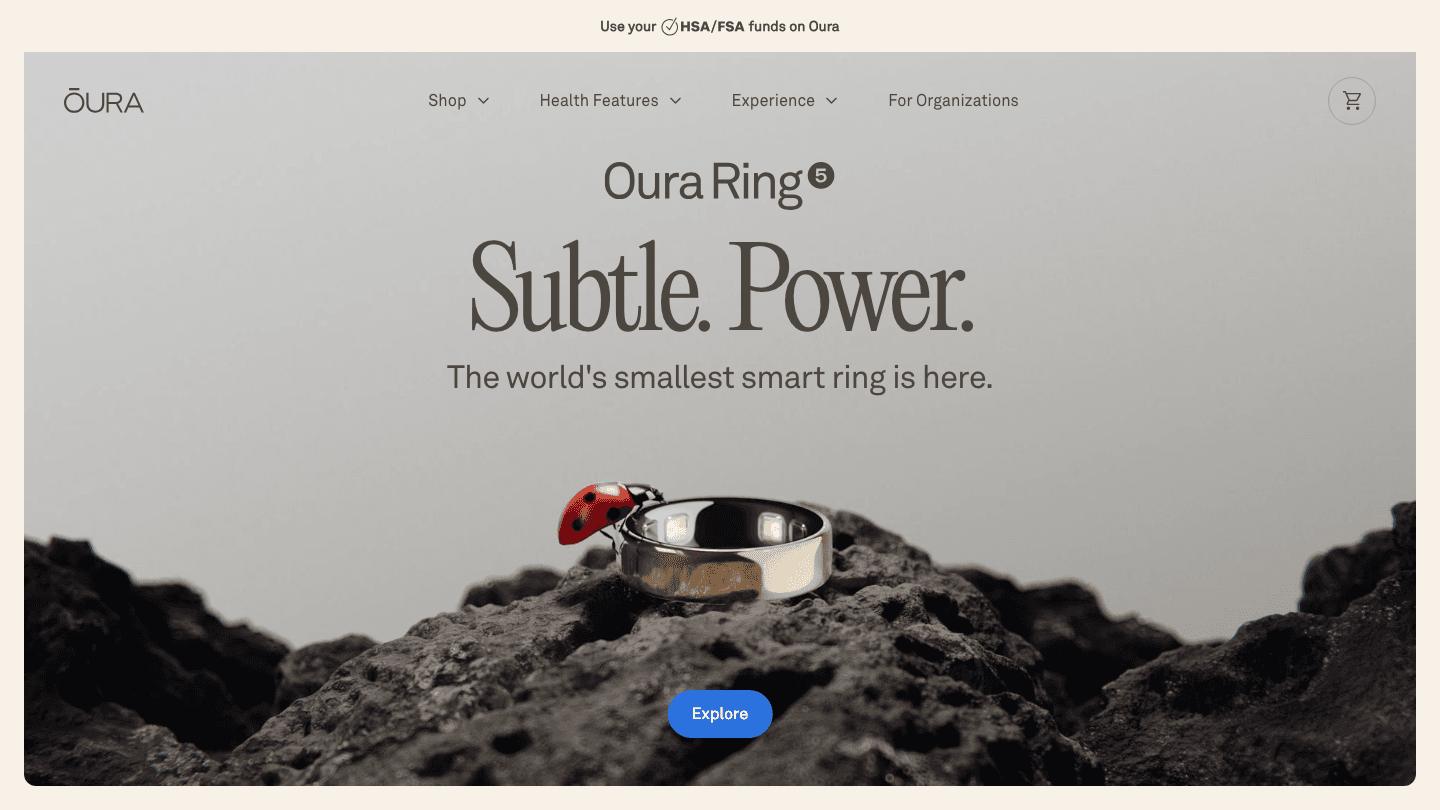
If you want to move beyond camera-based HRV and get passive, all-night tracking, Oura Ring is the wearable that outperforms most alternatives at its price point. The ring tracks HRV continuously through sleep, produces a Readiness Score each morning, and measures body temperature trends that can signal illness or menstrual phase shifts days before symptoms appear.
The Readiness Score is Oura's version of Welltory's energy score, but it draws from 8 hours of passive nighttime data rather than a single 60-second morning reading. That makes it significantly more accurate. The app connects to Apple Health, Strava, and most major fitness platforms. If you wear a ring already and don't want another device on your wrist, Oura is the obvious hardware step up from Welltory. For Apple Watch users, see also our best Apple Watch apps list for apps that read Oura data.
Continuous passive HRV tracking through the night, no morning reading required
Readiness, Sleep, and Activity scores updated each morning
Body temperature trend sensing for illness and cycle tracking
HSA/FSA eligible in the United States
What Works
Passive overnight measurement is far more accurate than a morning camera reading
Ring form factor is less intrusive than a watch during sleep
Limitations
Requires hardware purchase (ring) plus ongoing subscription
No scheduling or calendar integration; still gives you a score to interpret yourself
Pricing: $5.99/month or $69.99/year for membership (ring hardware sold separately). First month of membership free. Best for: Anyone willing to invest in hardware for passive, highly accurate sleep and recovery data.
5. WHOOP: Best for Athletic Recovery Tracking
Recovery science built for people who train hard.
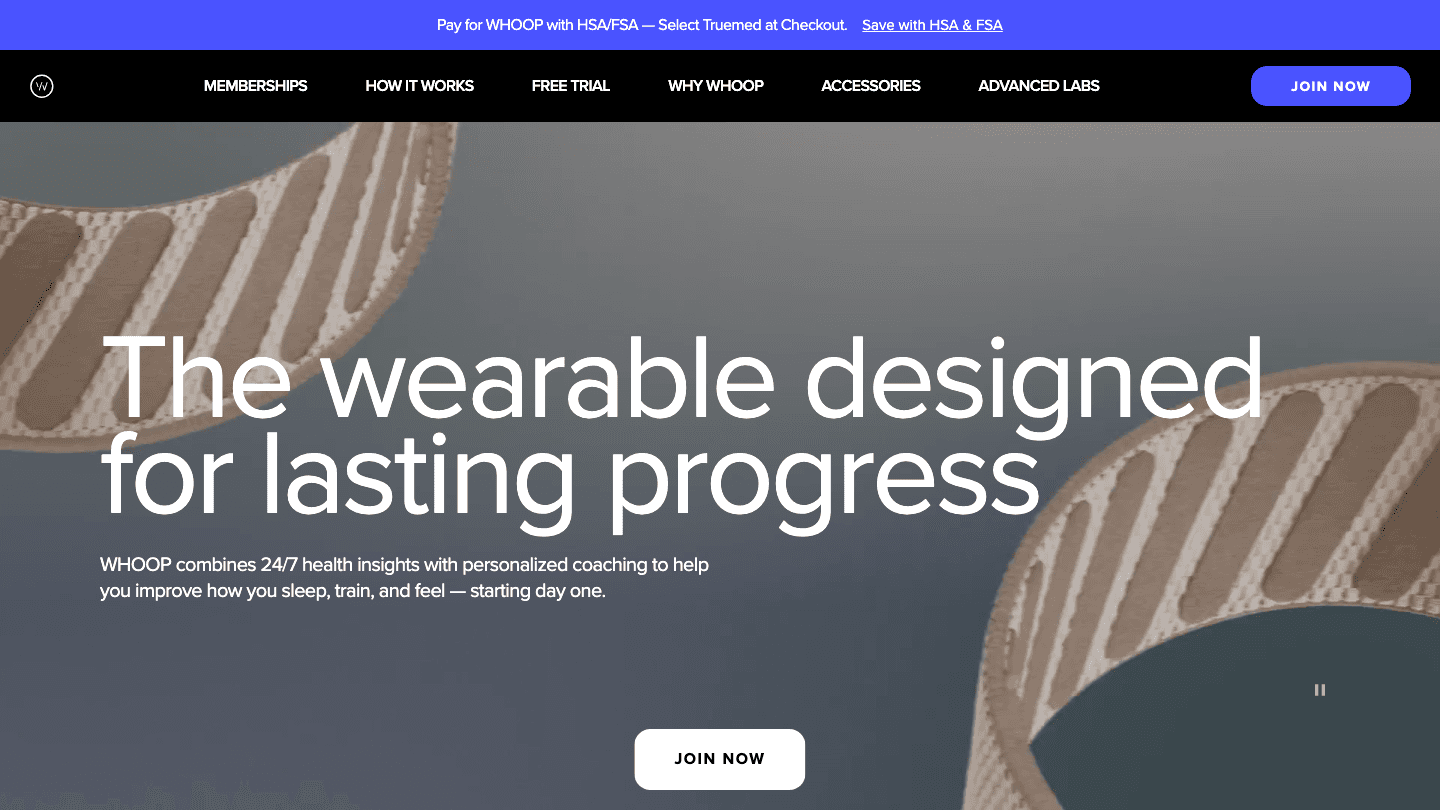
WHOOP takes the recovery-first angle further than any app on this list. The wristband tracks HRV, heart rate, respiratory rate, and skin temperature throughout the day and night, then produces three scores: Recovery (how ready you are to perform), Strain (how hard yesterday was on your body), and Sleep. The feedback loop is tight enough that serious athletes use it to manage overtraining before it becomes injury.
Where WHOOP differs from Oura is focus. Oura covers sleep, readiness, and general wellness. WHOOP is built around athletic performance: did you recover enough from yesterday's workout to push today? The membership includes the wristband at no extra cost, which makes the annual pricing more defensible than it looks. The app pushes daily coaching prompts that actually explain what your numbers mean. WHOOP pairs well with Strava for tracking training load alongside recovery.
Continuous HRV, heart rate, and strain tracking day and night
Recovery, Strain, and Sleep scores with daily coaching context
Wristband device included in the membership
Connects to Strava, TrainingPeaks, and major fitness platforms
What Works
The Strain vs. Recovery framework is the clearest expression of athletic readiness in any app
Device is included in the subscription, unlike Oura
Limitations
High annual cost compared to software-only alternatives
Wristband form factor means you're wearing another device alongside your watch
Pricing: Starts at $199/year (device included). Best for: Athletes who train 4+ days per week and want to manage recovery load seriously.
6. Apple Health: Best Free HRV Foundation
The free baseline that connects everything else on this list.
Apple Health deserves a place on this list because it is what makes most of the other alternatives possible. If you have an Apple Watch Series 4 or later, it measures your HRV automatically during sleep using a heart rate sensor that has been validated against medical-grade devices. That data sits in Apple Health, ready for any app that wants to read it.
On its own, Apple Health shows you raw HRV numbers with trend charts. It does not interpret them the way Welltory or HRV4Training do. But as a free, always-on data layer, it is the best starting point. Pair it with Lifestack for scheduling, HRV4Training for interpretation, or Oura for passive accuracy. Our full list of best apps to use with Apple Health shows how to build out this stack. For people with ADHD, health coaching apps that read Apple Health data can also add useful accountability layers.
Automatic HRV measurement via Apple Watch during sleep
Free, private, on-device data storage
HRV trend charts and weekly health summaries
Integration hub for all other apps on this list
What Works
Free and already available if you own an Apple Watch
Passive measurement requires zero extra effort each morning
Limitations
No readiness score or training recommendation out of the box
Requires Apple Watch for HRV; phone-only users get step and heart rate data only
Pricing: Free (built into iOS). Apple Watch required for HRV measurement. Best for: Apple Watch users who want a free HRV baseline and a hub to connect other health apps.
Which Welltory Alternative Is Right for You?
Want to act on your energy data, not just view it: Lifestack is the only app here that converts your energy state into automatic calendar scheduling.
Want camera-based HRV with more depth than Welltory: HRV4Training is a one-time $9.99 purchase with research-grade analytics.
Want HRV tracking for free: Elite HRV's personal tier matches Welltory's core features at no cost.
Want the most accurate passive tracking: Oura Ring measures HRV all night without you having to do anything each morning.
Training seriously and want recovery coaching: WHOOP's Strain vs. Recovery framework is unmatched for athletes.
Already own an Apple Watch: Apple Health is already logging your HRV. Add Lifestack or HRV4Training to interpret it.
Frequently Asked Questions
What are the best Welltory alternatives?
The best Welltory alternative depends on what you actually want from the app. For acting on energy data, Lifestack. For camera-based HRV with better analytics, HRV4Training. For passive wearable accuracy, Oura Ring. For free HRV tracking, Elite HRV. Each addresses a different gap that Welltory leaves open.
Is Welltory accurate for HRV measurement?
Camera-based HRV measurement is less accurate than a chest strap or wearable sensor. Welltory's morning readings can vary significantly based on lighting, movement, and positioning. For trend tracking over weeks and months, camera-based apps including Welltory are useful. For precise single-measurement accuracy, a Polar chest strap, Apple Watch, Oura, or WHOOP will outperform any camera app.
Can I use multiple Welltory alternatives together?
Yes, and many people do. A common stack: Oura for passive overnight HRV and sleep scoring, Lifestack for translating that readiness into a daily schedule, and Apple Health as the hub connecting them. Each app handles one layer without duplicating the others.
Does Lifestack track HRV?
Lifestack does not measure HRV directly. It reads from Apple Health, which means any HRV data written by Oura, HRV4Training, Apple Watch, or Elite HRV becomes context that informs your schedule. The distinction is that Lifestack focuses on the output of that data: what should you work on today and when, given your current state.
What is the cheapest Welltory alternative?
Elite HRV and Apple Health are both free. If you own an Apple Watch, Apple Health is already measuring your HRV at no extra cost. Elite HRV adds a readiness score and lifestyle tagging on top of that for free. HRV4Training at $9.99 is the cheapest paid option with meaningful depth beyond the free tier.
Do any Welltory alternatives work with ADHD management?
Lifestack was originally designed with ADHD users in mind. Energy-aware scheduling is particularly valuable for people with ADHD because attention and focus windows are less predictable and shorter than average. Knowing when your peak focus is and having your calendar already structured around it reduces the decision fatigue of figuring out what to work on. See our best mobile apps for ADHD for more context.
The Best Welltory Alternatives, Ranked for 2026
Welltory built its reputation on a simple idea: measure your heart rate variability through your phone camera and tell you whether to push hard or rest today. For a lot of people, that idea works. But Welltory has its limits. The camera measurement is less accurate than a chest strap or wearable sensor. The insights can feel abstract. And the premium tier is expensive for what amounts to a single biometric metric.
The apps below each address a different piece of the health optimization puzzle. Some track HRV with greater precision. Some go broader, pulling in sleep, activity, and recovery data. One uses your energy levels to automatically restructure your daily schedule so you stop fighting your own biology.
Whatever drew you to Welltory, there is likely a tool here that does the same job better, costs less, or fits more naturally into how you actually live.
Key Takeaways
Lifestack takes the core Welltory insight (your energy fluctuates) and acts on it, automatically scheduling your day around your natural peaks and troughs.
HRV4Training is the best software alternative if you want camera-based HRV tracking with deeper athletic analytics than Welltory offers.
Oura and WHOOP are the hardware alternatives that outperform any camera-based measurement for accuracy, at the cost of wearing a device.
Quick Guide: Best Welltory Alternatives
1. Lifestack - Turns energy awareness into automatic calendar scheduling
2. HRV4Training - Camera-based HRV with serious athlete analytics
3. Elite HRV - Free HRV tracking with solid team and coaching features
4. Oura Ring - Most accurate wearable for sleep and readiness scoring
5. WHOOP - Recovery-first wearable built for athletic performance
6. Apple Health - Free HRV foundation that connects everything else
How We Evaluated These Alternatives
Measurement accuracy: Camera-based vs. wearable sensor vs. Apple Watch reading
Actionability: Does the app tell you what to actually do with the data?
Value vs. Welltory: Better insight, lower price, or both?
Integration breadth: Does it connect to Apple Health, Strava, or your calendar?
Daily friction: How much does it ask of you each morning?
1. Lifestack: Best for Acting on Your Energy Data
Stop tracking your energy. Start scheduling around it.
Welltory tells you your energy score. Lifestack tells you what to do about it. The app uses AI to learn your natural energy patterns over days and weeks, then automatically moves your most demanding tasks into your peak focus windows and shifts lightweight admin work to your low-energy hours. Your calendar becomes a tool that works with your biology rather than against it.
This is a fundamentally different product from Welltory, but it addresses the same underlying problem: most people waste their sharpest hours on the wrong work. Lifestack reads from Apple Health and your calendar, so if you also use Sleep Cycle or Oura for sleep data, that context flows into how it plans your day. See our guide to building an energy calendar for the theory behind why this matters. There is also a deeper breakdown of circadian rhythm apps if you want to layer in chronotype awareness alongside Lifestack.
AI scheduling that maps task difficulty to your daily energy peaks
Syncs with Apple Calendar, Google Calendar, and Outlook
Reads Apple Health data for sleep and activity context
Automatically reschedules blocked tasks without you touching anything
What Works
The only app here that takes energy insight and converts it into calendar action
Fast to set up; patterns emerge within a few days of use
Limitations
Does not measure HRV directly; relies on Apple Health for raw biometric data
Focused on scheduling and productivity, not athletic performance tracking
Pricing: $7/month or $50/year, with a 7-day free trial on the annual plan. Best for: Anyone who wants their daily schedule to reflect their actual energy, not an arbitrary task list.
2. HRV4Training: Best Camera-Based HRV Alternative
More rigorous HRV science in the same no-hardware format.
HRV4Training is the closest direct Welltory substitute for people who want camera-based morning measurements with deeper analytics. The app was built by researchers and has been validated in peer-reviewed sports science literature. You take a 60-second morning reading using your phone camera, and the app produces a training recommendation: go hard, take it easy, or rest.
Where HRV4Training edges ahead of Welltory is in its data depth. It correlates your HRV trend with training load, lifestyle factors (alcohol, sleep, illness, travel), and performance outcomes over months. For competitive athletes, the pattern analysis is genuinely valuable. The app also connects to Oura and Apple Watch for wrist-based readings if you want to skip the camera.
Camera-based morning HRV measurement without any hardware
Research-validated algorithms used by professional athletes and Olympic teams
Connects to Oura, Apple Watch, Polar, and Garmin for wrist-based readings
Lifestyle tagging to correlate habits with HRV trends
What Works
Science-grade HRV analysis in a camera-only format
One-time purchase eliminates recurring subscription costs
Limitations
The one-time payment may feel steep upfront compared to monthly apps
No energy-to-calendar integration; still gives you data to act on yourself
Pricing: $9.99 one-time purchase (no subscription). Best for: Athletes and data-oriented users who want rigorous HRV analysis without subscribing monthly.
3. Elite HRV: Best Free HRV Tracking App
Welltory-style HRV tracking with a free tier that actually delivers.
Elite HRV is the go-to free alternative for Welltory users who want to keep HRV measurement as the core practice but without the premium price. The free tier covers daily morning readings, a readiness score, cloud backup, and unlimited data storage. That alone covers what most Welltory users actually use the app for.
The Pro tier adds trending analytics, advanced dashboards, and the ability to share your data with a coach. For casual users, free is genuinely sufficient. The app works with Bluetooth chest straps (Polar H7/H10), wrist sensors, and your phone camera, giving you more hardware flexibility than Welltory. It also feeds data into Apple Health, which means Lifestack and other apps can use that HRV baseline when planning your day.
Camera and Bluetooth strap HRV measurement
Free tier covers daily readings, readiness scores, and cloud backup
Pro tier adds coaching dashboards and trend analysis
Writes to Apple Health for ecosystem integration
What Works
The free tier is genuinely competitive with Welltory's paid plan
Flexible hardware support means you can upgrade accuracy over time
Limitations
UI feels less polished than Welltory or the wearable apps
No scheduling integration; outputs a readiness score, not a calendar action
Pricing: Free personal tier. Pro plan $8/month. Best for: Anyone who wants HRV tracking without paying for it, or coaches who need to monitor multiple athletes.
4. Oura Ring: Best Wearable for Recovery and Sleep
The most accurate passive tracker available at a reasonable price.
If you want to move beyond camera-based HRV and get passive, all-night tracking, Oura Ring is the wearable that outperforms most alternatives at its price point. The ring tracks HRV continuously through sleep, produces a Readiness Score each morning, and measures body temperature trends that can signal illness or menstrual phase shifts days before symptoms appear.
The Readiness Score is Oura's version of Welltory's energy score, but it draws from 8 hours of passive nighttime data rather than a single 60-second morning reading. That makes it significantly more accurate. The app connects to Apple Health, Strava, and most major fitness platforms. If you wear a ring already and don't want another device on your wrist, Oura is the obvious hardware step up from Welltory. For Apple Watch users, see also our best Apple Watch apps list for apps that read Oura data.
Continuous passive HRV tracking through the night, no morning reading required
Readiness, Sleep, and Activity scores updated each morning
Body temperature trend sensing for illness and cycle tracking
HSA/FSA eligible in the United States
What Works
Passive overnight measurement is far more accurate than a morning camera reading
Ring form factor is less intrusive than a watch during sleep
Limitations
Requires hardware purchase (ring) plus ongoing subscription
No scheduling or calendar integration; still gives you a score to interpret yourself
Pricing: $5.99/month or $69.99/year for membership (ring hardware sold separately). First month of membership free. Best for: Anyone willing to invest in hardware for passive, highly accurate sleep and recovery data.
5. WHOOP: Best for Athletic Recovery Tracking
Recovery science built for people who train hard.
WHOOP takes the recovery-first angle further than any app on this list. The wristband tracks HRV, heart rate, respiratory rate, and skin temperature throughout the day and night, then produces three scores: Recovery (how ready you are to perform), Strain (how hard yesterday was on your body), and Sleep. The feedback loop is tight enough that serious athletes use it to manage overtraining before it becomes injury.
Where WHOOP differs from Oura is focus. Oura covers sleep, readiness, and general wellness. WHOOP is built around athletic performance: did you recover enough from yesterday's workout to push today? The membership includes the wristband at no extra cost, which makes the annual pricing more defensible than it looks. The app pushes daily coaching prompts that actually explain what your numbers mean. WHOOP pairs well with Strava for tracking training load alongside recovery.
Continuous HRV, heart rate, and strain tracking day and night
Recovery, Strain, and Sleep scores with daily coaching context
Wristband device included in the membership
Connects to Strava, TrainingPeaks, and major fitness platforms
What Works
The Strain vs. Recovery framework is the clearest expression of athletic readiness in any app
Device is included in the subscription, unlike Oura
Limitations
High annual cost compared to software-only alternatives
Wristband form factor means you're wearing another device alongside your watch
Pricing: Starts at $199/year (device included). Best for: Athletes who train 4+ days per week and want to manage recovery load seriously.
6. Apple Health: Best Free HRV Foundation
The free baseline that connects everything else on this list.
Apple Health deserves a place on this list because it is what makes most of the other alternatives possible. If you have an Apple Watch Series 4 or later, it measures your HRV automatically during sleep using a heart rate sensor that has been validated against medical-grade devices. That data sits in Apple Health, ready for any app that wants to read it.
On its own, Apple Health shows you raw HRV numbers with trend charts. It does not interpret them the way Welltory or HRV4Training do. But as a free, always-on data layer, it is the best starting point. Pair it with Lifestack for scheduling, HRV4Training for interpretation, or Oura for passive accuracy. Our full list of best apps to use with Apple Health shows how to build out this stack. For people with ADHD, health coaching apps that read Apple Health data can also add useful accountability layers.
Automatic HRV measurement via Apple Watch during sleep
Free, private, on-device data storage
HRV trend charts and weekly health summaries
Integration hub for all other apps on this list
What Works
Free and already available if you own an Apple Watch
Passive measurement requires zero extra effort each morning
Limitations
No readiness score or training recommendation out of the box
Requires Apple Watch for HRV; phone-only users get step and heart rate data only
Pricing: Free (built into iOS). Apple Watch required for HRV measurement. Best for: Apple Watch users who want a free HRV baseline and a hub to connect other health apps.
Which Welltory Alternative Is Right for You?
Want to act on your energy data, not just view it: Lifestack is the only app here that converts your energy state into automatic calendar scheduling.
Want camera-based HRV with more depth than Welltory: HRV4Training is a one-time $9.99 purchase with research-grade analytics.
Want HRV tracking for free: Elite HRV's personal tier matches Welltory's core features at no cost.
Want the most accurate passive tracking: Oura Ring measures HRV all night without you having to do anything each morning.
Training seriously and want recovery coaching: WHOOP's Strain vs. Recovery framework is unmatched for athletes.
Already own an Apple Watch: Apple Health is already logging your HRV. Add Lifestack or HRV4Training to interpret it.
Frequently Asked Questions
What are the best Welltory alternatives?
The best Welltory alternative depends on what you actually want from the app. For acting on energy data, Lifestack. For camera-based HRV with better analytics, HRV4Training. For passive wearable accuracy, Oura Ring. For free HRV tracking, Elite HRV. Each addresses a different gap that Welltory leaves open.
Is Welltory accurate for HRV measurement?
Camera-based HRV measurement is less accurate than a chest strap or wearable sensor. Welltory's morning readings can vary significantly based on lighting, movement, and positioning. For trend tracking over weeks and months, camera-based apps including Welltory are useful. For precise single-measurement accuracy, a Polar chest strap, Apple Watch, Oura, or WHOOP will outperform any camera app.
Can I use multiple Welltory alternatives together?
Yes, and many people do. A common stack: Oura for passive overnight HRV and sleep scoring, Lifestack for translating that readiness into a daily schedule, and Apple Health as the hub connecting them. Each app handles one layer without duplicating the others.
Does Lifestack track HRV?
Lifestack does not measure HRV directly. It reads from Apple Health, which means any HRV data written by Oura, HRV4Training, Apple Watch, or Elite HRV becomes context that informs your schedule. The distinction is that Lifestack focuses on the output of that data: what should you work on today and when, given your current state.
What is the cheapest Welltory alternative?
Elite HRV and Apple Health are both free. If you own an Apple Watch, Apple Health is already measuring your HRV at no extra cost. Elite HRV adds a readiness score and lifestyle tagging on top of that for free. HRV4Training at $9.99 is the cheapest paid option with meaningful depth beyond the free tier.
Do any Welltory alternatives work with ADHD management?
Lifestack was originally designed with ADHD users in mind. Energy-aware scheduling is particularly valuable for people with ADHD because attention and focus windows are less predictable and shorter than average. Knowing when your peak focus is and having your calendar already structured around it reduces the decision fatigue of figuring out what to work on. See our best mobile apps for ADHD for more context.



FOLLOW ON
FOLLOW ON
FOLLOW ON


Copyright 2026 © Lifestack. All rights reserved
Copyright 2026 © Lifestack. All rights reserved

